


 |
市場調查報告書
商品編碼
2124746
美國老年住宅:市場佔有率分析、行業趨勢和統計數據以及成長預測(2026-2031 年)United States Senior Living - Market Share Analysis, Industry Trends & Statistics, Growth Forecasts (2026 - 2031) |
||||||

※ 本網頁內容可能與最新版本有所差異。詳細情況請與我們聯繫。
根據 Mordor Intelligence 估計,美國老年住宅市場在 2026 年的價值將達到 763.9 億美元,高於 2025 年的 721.1 億美元,預計到 2031 年將達到 1018.6 億美元。
預計 2026 年至 2031 年的複合年成長率為 5.92%。
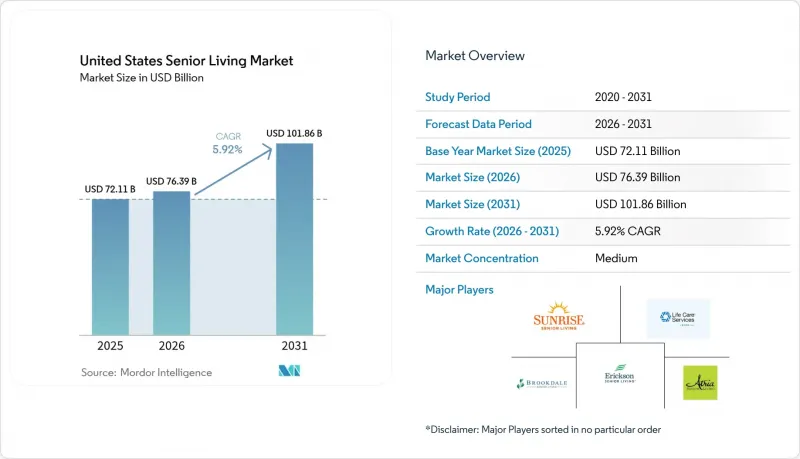
本報告按物業類型(輔助生活、自主型、失智症護理、護理之家)、經營模式(完全出售(永久產權)、長期租賃/出租、混合模式(出售+租賃))、年齡(55-64歲、65-74歲及以上)和州(德克薩斯州、加利福尼亞州、佛羅裡達州、紐約州、伊利諾伊州及其他州)進行細分。市場預測以美元(USD)計價。
美國老年住宅市場的趨勢和洞察
隨著嬰兒潮世代逐漸老化,各級照護服務的需求持續成長。
到2033年,近6,900萬嬰兒潮世代將全部年過七旬,這將大大擴大美國老年住宅市場的規模。這一代人的高住宅擁有率和淨資產為減輕自費住房的經濟負擔奠定了基礎,而科技的日益普及也使得數位化照護更容易被接受。預計到2040年,85歲及以上人口(他們最有可能需要專業的護理和失智症照顧)將加倍,從而保證對先進醫療保健服務的強勁需求。像德克薩斯州和佛羅裡達州這樣利用稅收和氣候優勢吸引退休人員的州,預計將迎來尤為強勁的成長。那些最佳化設施、支付方案和行銷策略以迎合這一富裕且精通技術的群體的服務提供商,將佔據有利地位,從而獲得終身價值。 Green Street估計,超過40%的老年人無需出售資產即可負擔得起老年住宅,這表明市場存在巨大的潛在需求。
活躍的資本市場和醫療保健房地產投資信託基金支持開發和整合。
醫療保健房地產投資信託基金(REITs)正以創紀錄的規模投資美國退休住宅市場。 Ventas在2024年投資20億美元後,已將2025年的投資目標提高至15億美元,顯示對該產業基本面的長期信心。 Welltower以32億美元收購Amica Senior Lifestyles的交易,清楚地展現了REITs為獲得高品質投資組合而進行的大規模交易。債務資本仍充裕,Walker & Dunlop在2024年安排了6億美元的優先房屋抵押貸款。 Fortress等私募股權巨頭也積極參與競爭,推高估值並推動營運改善。充裕的流動性正在加速整個生態系統的整合和專業化,支持在供不應求的大都市區新建設,並為當地業主運營商提供退出途徑。
人手不足和工資上漲給利潤率和服務水準帶來了壓力。
嚴重的員工短缺幾乎影響到各個層級的照護機構,迫使它們提高時薪、擴大福利,並更加依賴臨時工。美國醫療保險和醫療服務中心 (CMS) 新訂定的員工配備規定,要求每位居民每天接受 3.48 小時的護理服務,這一規定正透過對合格護士的競爭蔓延到輔助住宅和獨立生活設施中。目前,只有 6% 的護理機構能夠滿足 24/7 全天候護理人員配備的要求,這導致跨行業的競標競爭加劇,並擠壓了利潤空間。護理人員的加薪運動,例如內華達州呼籲將時薪提高到 16 至 20 美元,凸顯了通膨壓力。聯邦貿易委員會 (FTC) 提議禁止競業禁止條款,這可能會進一步加劇離職率,並破壞照護的連續性。地方業者面臨最大的挑戰,有時不得不限制入住人數以維持規定的員工與居民比例。
細分市場分析
到2025年,長期照護機構將佔市場規模的40.62%,預計2031年將維持最高的成長率,複合年成長率(CAGR)為6.29%。這項需求源自於患有多種慢性疾病的居民,他們希望在晚年能夠在提供持續照顧的家中度過,而不是被送往醫院。雖然輔助生活仍然是主流,但營運商正在維修設施,以提供記憶護理和亞急性護理,從而留住居民並提升價值。自主型社區則專注於以生活方式為導向的設施,例如健身中心、由廚師監督的膳食和文化活動,目標客戶是重視獨立性的相對年輕的老年人。記憶護理單元的成熟,包括安全佈局和接受過失智症護理培訓的員工,顯示護理水平正在向更高層次發展,同時保持居住的氛圍。持續照顧退休社區雖然仍屬於小眾領域,但正受到希望透過合約獲得多層次照護服務的富裕老年人的青睞。
隨著長期照護逐漸成為主流照護模式,對臨床人員培訓、負壓病房和院內復健室的投資勢在必行。營運商正在引入電子藥物管理記錄和智慧電梯,以提高安全性和效率。隨著照護水準的提高,旨在降低再入院率的與保險公司的合作也日益增多,為美國老年住宅市場新增了由保險公司主導的收入來源。然而,對人員配備比例、感染控制和報銷的監管依然嚴格,要求高度遵守。
其他好處:
- Excel格式的市場預測(ME)表
- 3個月的分析師支持
目錄
第1章:引言
- 研究假設和市場定義
- 調查範圍
第2章:調查方法
第3章執行摘要
第4章 市場趨勢與分析
- 市場概覽
- 市場促進因素
- 嬰兒潮世代的老化導致對自主型、輔助生活和失智症照護設施的需求持續成長。
- 穩健的資本市場和活躍的醫療保健房地產投資信託基金為發展和整合提供了支持。
- 向醫療保健協作模式(基層醫療、復健、失智症照護)的轉變正在增強其價值提案。
- 在許多大都會圈,出售住宅所得款項和退休儲蓄使得人們可以自掏腰包使用這些資金。
- 科技(遠端監控、電子健康記錄、跌倒檢測)的引入提高了護理的品質和效率。
- 市場限制因素
- 人手不足和工資上漲給利潤率和服務水準帶來了壓力。
- 州級法規日益複雜,導致合規成本和時間增加。
- 特定二次性市場經濟適用住宅短缺和入住率恢復情況的差異
- 價值供應鏈分析
- 政策和法律規範(州指導方針、許可、獎勵)
- 對即將開展和正在進行的項目的見解
- 對數位化和技術促進因素(遠端醫療、智慧設施)的洞察
- 深入了解經營模式和營運商的演變
- 投資和資金籌措趨勢分析
- 洞察:永續性和設計創新
- 波特五力模型
第5章 市場規模與成長預測
- 按屬性類型
- 在協助下
- 自主型
- 失智症護理
- 護理
- 按經營模式
- 完全出售(永久產權)
- 長期租賃/出租
- 混合模式(銷售+租賃)
- 按年齡層
- 55至64歲
- 65至74歲
- 75至85歲
- 超過85歲
- 按州
- 德克薩斯州
- 加州
- 佛羅裡達
- 紐約州
- 伊利諾州
- 其他地區
第6章 競爭情勢
- 市場集中度
- 策略趨勢
- 公司簡介
- Brookdale Senior Living Inc.
- Atria Senior Living Inc.
- LCS(Life Care Services)
- Erickson Senior Living
- Sunrise Senior Living
- Five Star Senior Living
- Holiday by Atria
- Kisco Senior Living
- Sonida Senior Living
- Watermark Retirement Communities
- Silverado Senior Living
- Trilogy Health Services
- Benchmark Senior Living
- Ensign Group Inc.
- Ventas Inc.
- Welltower Inc.
- Capital Senior Living(Grace Management)
- Pegasus Senior Living
- Frontier Management
- Merrill Gardens
第7章 市場機會與未來展望
According to Mordor Intelligence, United States senior living market size in 2026 is estimated at USD 76.39 billion, growing from 2025 value of USD 72.11 billion with 2031 projections showing USD 101.86 billion, growing at 5.92% CAGR over 2026-2031.
This report is Segmented by Property Type (Assisted Living, Independent Living, Memory Care, Nursing Care), by Business Model (Outright Sale (Freehold), Long-Lease / Rental, Hybrid (Sale + Lease)), by Age (55 To 64 Years, 65 To 74 Years, and More), and by States (Texas, California, Florida, New York, Illinois, Rest of US). The Market Forecasts are Provided in Terms of Value (USD).
United States Senior Living Market Trends and Insights
Aging Baby-Boomer Cohort Driving Sustained Demand Across Care Levels
Nearly all 69 million baby boomers will be 70 or older by 2033, dramatically enlarging the resident pool for the United States senior living market. Higher home ownership and net worth among this cohort underpin private-pay affordability, while broader acceptance of technology raises comfort with digitally enabled care. The 85-plus population, most likely to require skilled nursing and memory care, is set to double by 2040, guaranteeing demand for high-acuity services. States attracting retirees through favorable taxes and climate, such as Texas and Florida, will see especially strong growth. Operators that tailor amenities, payment plans, and marketing to this wealthier, tech-savvy generation are positioned to capture lifetime value. Green Street estimates show more than 40% of seniors can pay for senior housing without liquidating assets, indicating significant latent demand.
Deep Capital Markets and Active Healthcare REITs Supporting Development and Consolidation
Healthcare REITs are pouring record funds into United States senior living market assets. Ventas lifted its 2025 investment target to USD 1.5 billion after deploying USD 2 billion in 2024, signaling long-term conviction in sector fundamentals. Welltower's USD 3.2 billion acquisition of Amica Senior Lifestyles illustrates the scale REITs will transact to secure premier portfolios. Debt capital remains abundant, with Walker & Dunlop arranging USD 600 million in seniors-housing loans during 2024. Private equity heavyweights such as Fortress add further competition for assets, driving valuations and spurring operational upgrades. Strong liquidity supports new builds in undersupplied metros and offers exit paths for regional owner-operators, accelerating consolidation and professionalization across the ecosystem.
Labor Shortages and Wage Inflation Pressuring Margins and Service Levels
Severe staffing shortages plague virtually every care level, forcing communities to raise hourly wages, expand benefits, and rely heavily on agency labor. New CMS nursing-home staffing rules requiring 3.48 nursing hours per resident per day ripple into assisted and independent living through competition for licensed nurses. Only 6% of nursing homes currently meet the 24/7 RN mandate, driving cross-sector bidding wars that compress margins. Caregiver wage campaigns, such as Nevada's push from USD 16 to USD 20 per hour, spotlight inflationary pressures. The FTC's pending ban on non-compete clauses may further elevate turnover, undermining continuity of care. Operators in rural areas confront the steepest hurdles, sometimes restricting admissions to maintain mandated staff-resident ratios.
Other drivers and restraints analyzed in the detailed report include:
- Shift to Healthcare-Integrated Models Enhancing Value Proposition and Resident Outcomes
- Home-Sale Equity and Retirement Savings Enabling Private-Pay Affordability
- State-by-State Regulatory Complexity Increasing Compliance Costs and Development Timelines
For complete list of drivers and restraints, kindly check the Table Of Contents.
Segment Analysis
Nursing care facilities controlled 40.62% of the United States senior living market size in 2025 and will post the quickest 6.29% CAGR through 2031. Demand stems from residents with multiple chronic conditions who prefer aging in place within a continuum-of-care setting instead of hospital transfers. Assisted-living remains the mainstream entry point, yet operators retrofit wings for memory-care or sub-acute services to retain residents and capture value. Independent-living communities focus on lifestyle amenities, fitness centers, chef-led dining, and cultural programs, geared toward younger seniors who prize autonomy. The maturation of memory-care units, complete with secured layouts and dementia-trained staff, illustrates the sector's pivot to higher acuity while preserving residential ambience. Continuing-care retirement communities, though niche, gain traction among affluent seniors desiring contractual access to multiple care levels.
Nursing-care dominance compels capital investment in clinical staff training, negative-pressure rooms, and on-site therapy suites. Operators deploy electronic medication-administration records and smart lifts to boost safety and efficiency. Rising acuity also attracts insurer partnerships seeking reduced readmissions, adding payer-driven revenue to the United States senior living market. However, regulatory scrutiny on staffing ratios, infection control, and reimbursement adequacy remains intense, requiring sophisticated compliance infrastructures.
Complete Report Scope:
- By Property Type
- Assisted Living
- Independent Living
- Memory Care
- Nursing Care
- By Business Model
- Outright Sale (Freehold)
- Long-Lease / Rental
- Hybrid (Sale + Lease)
- By Age
- 55 to 64 years
- 65 to 74 years
- 75 to 85 years
- Above 85 years
- By States
- Texas
- California
- Florida
- New York
- Illinois
- Rest of US
List of Companies Covered in this Report:
- Brookdale Senior Living Inc.
- Atria Senior Living Inc.
- LCS (Life Care Services)
- Erickson Senior Living
- Sunrise Senior Living
- Five Star Senior Living
- Holiday by Atria
- Kisco Senior Living
- Sonida Senior Living
- Watermark Retirement Communities
- Silverado Senior Living
- Trilogy Health Services
- Benchmark Senior Living
- Ensign Group Inc.
- Ventas Inc.
- Welltower Inc.
- Capital Senior Living (Grace Management)
- Pegasus Senior Living
- Frontier Management
- Merrill Gardens
Additional Benefits:
- The market estimate (ME) sheet in Excel format
- 3 months of analyst support
TABLE OF CONTENTS
1 Introduction
- 1.1 Study Assumptions & Market Definition
- 1.2 Scope of the Study
2 Research Methodology
3 Executive Summary
4 Market Insights and dynamics
- 4.1 Market Overview
- 4.2 Market Drivers
- 4.2.1 Aging baby-boomer cohort driving sustained demand across independent, assisted, and memory care
- 4.2.2 Deep capital markets and active healthcare REITs supporting development and consolidation
- 4.2.3 Shift to healthcare-integrated models (primary care, rehab, memory care) enhancing value proposition
- 4.2.4 Home-sale equity and retirement savings enabling private-pay affordability in many metros
- 4.2.5 Technology adoption (remote monitoring, EHRs, fall detection) elevating care quality and efficiency
- 4.3 Market Restraints
- 4.3.1 Labor shortages and wage inflation pressuring margins and service levels
- 4.3.2 State-by-state regulatory complexity increasing compliance costs and timelines
- 4.3.3 Affordability gaps and uneven occupancy recovery in certain secondary markets
- 4.4 Value / Supply-Chain Analysis
- 4.5 Policy & Regulatory Framework (state guidelines, licensing, incentives)
- 4.6 Insight on Upcoming and Ongoing Projects
- 4.7 Insights on Digital & Tech Enablers (telemedicine, smart amenities)
- 4.8 Insights on Business Model & Operator Evolution
- 4.9 Insights on Investment & Financing Trends
- 4.10 Insights Sustainability & Design Innovation
- 4.11 Porter's Five Forces
- 4.11.1 Bargaining Power of Suppliers
- 4.11.2 Bargaining Power of Buyers/Consumers
- 4.11.3 Threat of New Entrants
- 4.11.4 Threat of Substitutes
- 4.11.5 Competitive Rivalry
5 Market Size & Growth Forecasts (Value)
- 5.1 By Property Type
- 5.1.1 Assisted Living
- 5.1.2 Independent Living
- 5.1.3 Memory Care
- 5.1.4 Nursing Care
- 5.2 By Business Model
- 5.2.1 Outright Sale (Freehold)
- 5.2.2 Long-Lease / Rental
- 5.2.3 Hybrid (Sale + Lease)
- 5.3 By Age
- 5.3.1 55 to 64 years
- 5.3.2 65 to 74 years
- 5.3.3 75 to 85 years
- 5.3.4 Above 85 years
- 5.4 By States
- 5.4.1 Texas
- 5.4.2 California
- 5.4.3 Florida
- 5.4.4 New York
- 5.4.5 Illinois
- 5.4.6 Rest of US
6 Competitive Landscape
- 6.1 Market Concentration
- 6.2 Strategic Moves
- 6.3 Company Profiles (includes Global level Overview, Market level overview, Core Segments, Financials as available, Strategic Information, Products & Services, and Recent Developments)
- 6.3.1 Brookdale Senior Living Inc.
- 6.3.2 Atria Senior Living Inc.
- 6.3.3 LCS (Life Care Services)
- 6.3.4 Erickson Senior Living
- 6.3.5 Sunrise Senior Living
- 6.3.6 Five Star Senior Living
- 6.3.7 Holiday by Atria
- 6.3.8 Kisco Senior Living
- 6.3.9 Sonida Senior Living
- 6.3.10 Watermark Retirement Communities
- 6.3.11 Silverado Senior Living
- 6.3.12 Trilogy Health Services
- 6.3.13 Benchmark Senior Living
- 6.3.14 Ensign Group Inc.
- 6.3.15 Ventas Inc.
- 6.3.16 Welltower Inc.
- 6.3.17 Capital Senior Living (Grace Management)
- 6.3.18 Pegasus Senior Living
- 6.3.19 Frontier Management
- 6.3.20 Merrill Gardens
7 Market Opportunities & Future Outlook
- 7.1 White-space & Unmet-Need Assessment

 全球生活協助軟體市場(2026-2030 年)
 中國老年人住宅:市場佔有率分析、產業趨勢與統計及成長預測(2026-2031年)環境生活輔助(AAL):市場佔有率分析、產業趨勢與統計、成長預測(2026-2031)
 老年人住宅產品:市場規模、佔有率和成長分析(按產品類型、應用、最終用戶、分銷管道、產品類型和地區分類)-2026-2033年產業預測
 養老住家周邊設施市場規模、佔有率和成長分析:按設施類型、服務類型、支付/資金來源和地區分類-2026-2033年產業預測
 2026-2030年全球退休市場
 輔助生活市場規模、佔有率和成長率;全球產業分析;按類型、應用和地區進行分析;以及未來預測(2026-2034 年)。
 老年居住市場:按設施類型、服務提供者、服務類型、性別、年齡層、技能水平、主要支付來源和地區分類。
 環保生活市場:按組件、技術、最終用戶、部署模式、連接類型、應用和分銷管道分類-2026-2032年全球預測
 美國老年住宅市場:市場規模、佔有率和趨勢分析(按設施和地區分類),細分市場預測(2026-2033 年)