


 |
市場調查報告書
商品編碼
2124523
歐洲生質柴油:市場佔有率分析、產業趨勢與統計及成長預測(2026-2031)Europe Biodiesel - Market Share Analysis, Industry Trends & Statistics, Growth Forecasts (2026 - 2031) |
||||||

※ 本網頁內容可能與最新版本有所差異。詳細情況請與我們聯繫。
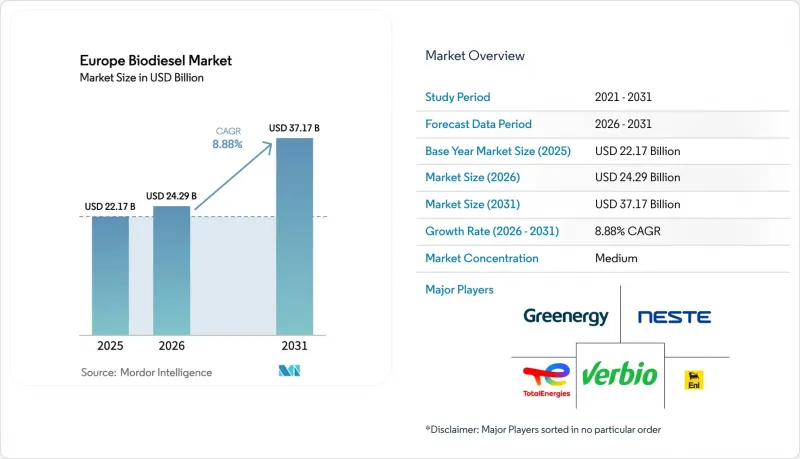
根據 Mordor Intelligence 預測,歐洲生質柴油市場規模將從 2025 年的 221.7 億美元成長到 2026 年的 242.9 億美元,到 2031 年將達到 371.7 億美元,2026 年至 2031 年的複合年成長率為 8.8%。
本報告按原料(菜籽油、廢棄食用油、大豆油、棕櫚油、葵花籽油、動物脂肪和牛油、藻類及其他先進原料)、生物柴油混合比例(B5、B7、B10 及更高混合比例)和地區(德國、法國、西班牙、英國、義大利、荷蘭、波蘭、瑞典、芬蘭等)進行細分。市場規模和預測均以美元計價。
歐洲生物柴油市場趨勢與洞察
菜籽油相對於其他低碳燃料的成本優勢
2026年初,菜籽油的交易價格為每噸580至620歐元,比大豆油的進口價格低60至100歐元。這使得煉油商在生產符合EN 14214標準的脂肪酸甲酯(FAME)時擁有結構性優勢。由於從法國和德國農場到附近工廠的物流運輸,運費成本得以降低,而且這種原料避免了RED III指令中對棕櫚油衍生生物柴油徵收的森林砍伐風險溢價。因此,與化石柴油相比,每公升菜籽油具有0.08至0.12歐元的成本優勢,無需額外補貼即可履行摻混義務。然而,從2024年到2025年,由於乾旱和洪水導致產量下降到每公頃不足3.2噸,菜籽價格上漲到每噸620歐元以上,這一優勢迅速縮小。這表明,農業衝擊會多麼迅速地削弱看似穩固的優勢。因此,煉油商將注意力轉向了大豆油,但FuelEU規定的碳排放強度評分不斷上升,使得大豆油的盈利降低,已經證實,一旦收成恢復正常,本地種植的油菜籽將更有價值。
RED III 的雙重計數系統將加速對廢油的需求。
自2023年11月起,廢油和動物脂肪的經濟價值實際上加倍,因為它們現在可以獲得兩倍的國家運輸目標合規積分。由於煉油商競相爭奪有限的供應,廢棄食用油的現貨價格從2024年初的每噸850歐元上漲至2025年中的每噸1150歐元。為此,投資者擴大了西班牙、義大利和波蘭的回收網路,這些國家先前的系統性回收系統並不完善。這項獎勵也助長了非法進口,導致自2026年1月起,所有來自歐盟以外的廢棄油脂運輸都必須接受ISCC PLUS審核。雖然這項法規加速了原料的多樣化,但隨著航空業對道路生物柴油的需求不斷成長,也加劇了道路生物柴油的供應緊張,迫使生產商在對菜籽油的依賴與合規積分帶來的經濟效益之間尋求平衡。
2024年至2026年,由於收成減少,油菜籽供應將出現短缺。
作物歉收導致2024-2025年歐洲油菜籽產量下降,從兩年前的1820萬噸降至1680萬噸。這導致油價超過每噸620歐元。供應短缺迫使煉油廠進口大豆油,而大豆油的生命週期排放量較高,根據RED III排放標準,這將降低煉油廠的利潤率。來自波蘭和羅馬尼亞的油菜籽盈餘只能部分彌補短缺。這種情況凸顯了原料多樣化的必要性以及氣候變遷所帶來的產量風險。由於氣候波動持續,油菜籽成本預計將持續高企至2027年,將減緩歐洲生質柴油市場中作物衍生產品的成長。
細分市場分析
預計到2025年,歐洲生質柴油總需求量將達到2,200萬噸,其中菜籽油將佔62.5%(1,380萬噸),鞏固其作為歐洲生物柴油原料的穩固地位。然而,預計到2031年,動物脂肪和奶油的複合年成長率將達到12.5%,超過所有其他原料。廢棄食用油(UCO)目前位居第二,但由於海關當局在2024年查獲了非法混合進口產品,其可追溯性將受到更嚴格的審查。大豆油和棕櫚油合計佔比仍低於10%,因為碳排放強度和物流成本方面的罰款降低了它們的吸引力。葵花籽油在菜籽油供不應求期間需求曾出現短暫激增,但其高碘值限制了其在北歐冬季的混合用途。藻類等先進脂質的比例仍不到1%,且僅限於尚未達到商業規模的先導工廠。
自2023年以來,RED III碳權額度使廢棄油脂的價值加倍,刺激了南歐和東歐地區對回收車輛的投資。然而,2027年強制航空燃料要求可能會轉移15-20%的廢棄油脂供應,這可能會加劇道路燃料供應緊張和價格波動。擁有垂直整合廢棄油採購管道的生產商可以獲得高利潤,而現貨市場買家則面臨更高的信用風險。獎勵將決定歐洲生物柴油市場的下一階段,靈活利用這兩種原料的能力將成為關鍵的競爭優勢。
其他好處:
- Excel格式的市場預測(ME)表
- 3個月的分析師支持
目錄
第1章:引言
- 研究假設和市場定義
- 調查範圍
第2章:調查方法
第3章執行摘要
第4章 市場狀況
- 市場概覽
- 市場促進因素
- 與其他低碳燃料相比,菜籽油具有成本優勢。
- RED III 造成的重複累計導致廢油需求激增。
- 西班牙、法國和北歐國家正在將HVO(氫化植物油)產能擴大到前所未有的規模。
- FuelEU對航運業FAME/HVO混合燃料的需求
- 2024年及以後歐盟價格暴跌後,對美出口套利機會將會出現。
- B30/B100卡車引擎符合歐盟ETS道路排放法規的OEM預認證。
- 市場限制因素
- 2024年至2026年,由於收成不足,油菜籽供應將出現短缺。
- 由於非法進口廢棄食用油,可追溯性審計工作已加強。
- 推廣基於AFIR技術的電池電動貨車對都市區的生物柴油混合燃料產生了負面影響。
- 從 2027 年開始,隨著 SAF(永續脂肪量)的強制實施,廢棄脂質資源將被吸收。
- 供應鏈分析
- 監理情勢
- 技術展望
- 波特五力模型
第5章 市場規模與成長預測
- 按原料
- 菜籽油
- 廢棄食用油(UCO)
- 大豆油
- 棕櫚油
- 葵花籽油
- 動物脂肪和奶油
- 藻類和其他先進原料
- 生物柴油混合燃料
- B5
- B7
- B10
- 高混合比例(B20、B30、B100)
- 按地區
- 德國
- 法國
- 西班牙
- 英國
- 義大利
- 荷蘭
- 波蘭
- 瑞典
- 芬蘭
- 其他歐洲國家
第6章 競爭情勢
- 市場集中度
- 策略趨勢(併購、聯盟、購電協議)
- 市場佔有率分析(主要公司的市場排名和佔有率)
- 公司簡介
- Neste Oyj
- TotalEnergies SE
- Eni SpA
- Preem AB
- Cepsa
- Repsol SA
- Greenergy International Ltd.
- Verbio AG
- Argent Energy
- ADM
- Cargill
- Shell plc
- BP plc
- Bunge Limited
- Louis Dreyfus Company
- Envien Group
- Abengoa Bioenergia
- German Biofuels GmbH
- BDI-BioEnergy
- Verbund BioPower
第7章 市場機會與未來展望
According to Mordor Intelligence, the Europe biodiesel market size is expected to grow from USD 22.17 billion in 2025 to USD 24.29 billion in 2026 and is forecast to reach USD 37.17 billion by 2031 at 8.88% CAGR over 2026-2031.
This report is Segmented by Feedstock (Rapeseed Oil, Used Cooking Oil, Soybean Oil, Palm Oil, Sunflower Oil, Animal Fats and Tallow, and Algal and Other Advanced Feedstocks), Biodiesel Blends (B5, B7, B10, and Higher Blends), and Geography (Germany, France, Spain, United Kingdom, Italy, Netherlands, Poland, Sweden, Finland, and More). The Market Sizes and Forecasts are Provided in Terms of Value (USD).
Europe Biodiesel Market Trends and Insights
Rapeseed-Oil Cost Advantage Versus Competing Low-Carbon Fuels
Rapeseed oil traded at EUR 580-620 per tonne in early 2026, a EUR 60-100 discount to landed soybean oil, giving refiners a structural edge when producing FAME that meets EN 14214 specs. Logistics from French and German farms to nearby plants keep freight low, and the feedstock avoids the deforestation risk premiums tied to palm-derived biodiesel under RED III. The resulting cost cushion of EUR 0.08-0.12 per liter versus fossil diesel supports blending mandates without extra subsidies. Weather volatility narrowed that margin in 2024-2025, when drought and flooding cut yields below 3.2 tonnes per hectare and lifted rapeseed prices above EUR 620 per tonne, showing how agronomic shocks can rapidly erode a seemingly durable advantage. Refiners then turned to soybean oil, but higher carbon-intensity scores under FuelEU shrank profitability and reinforced the value of local rapeseed when harvests normalize.
RED III Double-Counting That Turbo-Charges Waste-Oil Demand
Since November 2023, waste oils and animal fats earn double compliance credits toward national transport targets, effectively doubling their economic value. Spot UCO prices climbed from EUR 850 per tonne in early 2024 to EUR 1,150 by mid-2025 as refiners competed for limited supply. Investors responded by expanding collection networks across Spain, Italy, and Poland, regions previously underserved by structured pick-up systems. The incentive also spurred fraudulent imports, prompting mandatory ISCC PLUS audits on all non-EU waste-lipid cargoes from January 2026. While the rule accelerates feedstock diversification, it tightens supply for road biodiesel as aviation mandates rise, forcing producers to balance rapeseed reliance with compliance credit economics.
Rapeseed Supply Crunch From 2024-2026 Harvest Deficits
Crop shortfalls cut European rapeseed output to 16.8 million tonnes in 2024-2025, versus 18.2 million tonnes two years earlier, lifting oil prices above EUR 620 per tonne. The squeeze forced refiners to import soybean oil that carries higher lifecycle emissions, reducing margin under RED III rules. Surpluses from Poland and Romania offset only part of the deficit. The episode underscored the need to diversify feedstocks and highlighted yield risk in a warming climate. Continued weather volatility is likely to keep rapeseed costs elevated into 2027, muting growth for the crop-based tier of the European biodiesel market.
Other drivers and restraints analyzed in the detailed report include:
- Record HVO Capacity Build-Out Across Spain, France & the Nordics
- Maritime FuelEU Bunker Demand for FAME/HVO Blends
- SAF Mandates Cannibalizing Waste-Lipid Pools From 2027
For complete list of drivers and restraints, kindly check the Table Of Contents.
Segment Analysis
Rapeseed retained 62.5% of the 2025 volume, equal to 13.8 million tonnes out of a 22 million tonne pool, underlining its entrenched position in the European biodiesel market for feedstocks. Yet animal fats and tallow are forecast to expand at a 12.5% CAGR through 2031, outpacing every other input. UCO sits second today but faces traceability scrutiny after customs uncovered adulterated imports in 2024. Soybean and palm oils together stay below 10% because carbon-intensity penalties and logistical costs blunt their appeal. Sunflower oil experienced a temporary bump during the rapeseed shortfall, though its high iodine number limits winter blending in northern Europe. Advanced lipids such as algae remain below 1%, confined to pilot plants that have yet to hit commercial scale.
Waste-lipid valuation has doubled since 2023 on RED III credits, sparking investment in collection fleets across southern and eastern Europe. However, the 2027 aviation mandate threatens to siphon 15-20% of that pool, tightening road-fuel supply and lifting volatility. Producers with vertically integrated waste-oil sourcing enjoy premium margins, while spot-market buyers face elevated credit risk. The tussle between rapeseed stability and waste-lipid incentives will determine the next phase of the European biodiesel market, with dual-feedstock flexibility emerging as a key competitive lever.
Complete Report Scope:
- By Feedstock
- Rapeseed Oil
- Used Cooking Oil (UCO)
- Soybean Oil
- Palm Oil
- Sunflower Oil
- Animal Fats and Tallow
- Algal and Other Advanced Feedstocks
- By Biodiesel Blends
- B5
- B7
- B10
- Higher Blends (B20, B30, B100)
- By Geography
- Germany
- France
- Spain
- United Kingdom
- Italy
- Netherlands
- Poland
- Sweden
- Finland
- Rest of Europe
List of Companies Covered in this Report:
- Neste Oyj
- TotalEnergies SE
- Eni S.p.A.
- Preem AB
- Cepsa
- Repsol S.A.
- Greenergy International Ltd.
- Verbio AG
- Argent Energy
- ADM
- Cargill
- Shell plc
- BP plc
- Bunge Limited
- Louis Dreyfus Company
- Envien Group
- Abengoa Bioenergia
- German Biofuels GmbH
- BDI-BioEnergy
- Verbund BioPower
Additional Benefits:
- The market estimate (ME) sheet in Excel format
- 3 months of analyst support
TABLE OF CONTENTS
1 Introduction
- 1.1 Study Assumptions & Market Definition
- 1.2 Scope of the Study
2 Research Methodology
3 Executive Summary
4 Market Landscape
- 4.1 Market Overview
- 4.2 Market Drivers
- 4.2.1 Rapeseed-oil cost advantage versus competing low-carbon fuels
- 4.2.2 RED III double-counting that turbo-charges waste-oil demand
- 4.2.3 Record HVO capacity build-out across Spain, France & the Nordics
- 4.2.4 Maritime "FuelEU" bunker demand for FAME/HVO blends
- 4.2.5 Export arbitrage to the US post-2024 EU price crash
- 4.2.6 OEM pre-approval of B30/B100 truck engines for EU ETS-road compliance
- 4.3 Market Restraints
- 4.3.1 Rapeseed supply crunch from 2024-26 harvest deficits
- 4.3.2 Fraudulent UCO imports triggering tighter traceability audits
- 4.3.3 Fast-tracking of battery-electric vans under AFIR hurting urban biodiesel blends
- 4.3.4 SAF mandates cannibalising waste-lipid pools from 2027
- 4.4 Supply-Chain Analysis
- 4.5 Regulatory Landscape
- 4.6 Technological Outlook
- 4.7 Porter's Five Forces
- 4.7.1 Bargaining Power of Suppliers
- 4.7.2 Bargaining Power of Consumers
- 4.7.3 Threat of New Entrants
- 4.7.4 Threat of Substitutes
- 4.7.5 Intensity of Competitive Rivalry
5 Market Size & Growth Forecasts
- 5.1 By Feedstock
- 5.1.1 Rapeseed Oil
- 5.1.2 Used Cooking Oil (UCO)
- 5.1.3 Soybean Oil
- 5.1.4 Palm Oil
- 5.1.5 Sunflower Oil
- 5.1.6 Animal Fats and Tallow
- 5.1.7 Algal and Other Advanced Feedstocks
- 5.2 By Biodiesel Blends
- 5.2.1 B5
- 5.2.2 B7
- 5.2.3 B10
- 5.2.4 Higher Blends (B20, B30, B100)
- 5.3 By Geography
- 5.3.1 Germany
- 5.3.2 France
- 5.3.3 Spain
- 5.3.4 United Kingdom
- 5.3.5 Italy
- 5.3.6 Netherlands
- 5.3.7 Poland
- 5.3.8 Sweden
- 5.3.9 Finland
- 5.3.10 Rest of Europe
6 Competitive Landscape
- 6.1 Market Concentration
- 6.2 Strategic Moves (M&A, Partnerships, PPAs)
- 6.3 Market Share Analysis (Market Rank/Share for key companies)
- 6.4 Company Profiles (includes Global level Overview, Market level overview, Core Segments, Financials as available, Strategic Information, Products & Services, and Recent Developments)
- 6.4.1 Neste Oyj
- 6.4.2 TotalEnergies SE
- 6.4.3 Eni S.p.A.
- 6.4.4 Preem AB
- 6.4.5 Cepsa
- 6.4.6 Repsol S.A.
- 6.4.7 Greenergy International Ltd.
- 6.4.8 Verbio AG
- 6.4.9 Argent Energy
- 6.4.10 ADM
- 6.4.11 Cargill
- 6.4.12 Shell plc
- 6.4.13 BP plc
- 6.4.14 Bunge Limited
- 6.4.15 Louis Dreyfus Company
- 6.4.16 Envien Group
- 6.4.17 Abengoa Bioenergia
- 6.4.18 German Biofuels GmbH
- 6.4.19 BDI-BioEnergy
- 6.4.20 Verbund BioPower
7 Market Opportunities & Future Outlook
- 7.1 White-space & Unmet-Need Assessment

 酯交換催化劑市場:全球市場預測,2026-2032年
 生質柴油:市場佔有率分析、產業趨勢與統計、成長預測(2026-2031)可再生柴油市場:全球市場預測,2026-2032年生質柴油市場:依原料、純度等級、形態、應用及通路分類-2026-2032年全球市場預測
 生物柴油市場規模、佔有率和成長分析:按生質燃料類型、混合比例、生產技術、原料類型、應用、最終用戶、分銷管道和地區分類-2026-2033年產業預測
 生質柴油市場規模、佔有率、趨勢和預測:按原料、應用、類型、製造技術和地區分類,2026-2034年
 生物柴油市場機會、成長要素、產業趨勢分析及2026-2035年預測
 可再生柴油市場規模、佔有率和趨勢分析報告:按來源、應用、地區和細分市場預測(2026-2033 年)
 2026-2034年全球生物柴油催化劑市場規模、佔有率、趨勢和成長分析報告全球生物柴油市場規模、佔有率、趨勢和成長分析報告(2026-2034年)