


 |
市場調查報告書
商品編碼
2124484
美國機電工程服務:市場佔有率分析、產業趨勢與統計、成長預測(2026-2031)United States (US) MEP Services - Market Share Analysis, Industry Trends & Statistics, Growth Forecasts (2026 - 2031) |
||||||

※ 本網頁內容可能與最新版本有所差異。詳細情況請與我們聯繫。
根據 Mordor Intelligence 預測,美國機電工程服務市場規模將從 2025 年的 325.5 億美元成長到 2026 年的 346.1 億美元,然後在 2031 年達到 470.5 億美元,2026 年至 2031 年的複合年成長率為 6.33%。
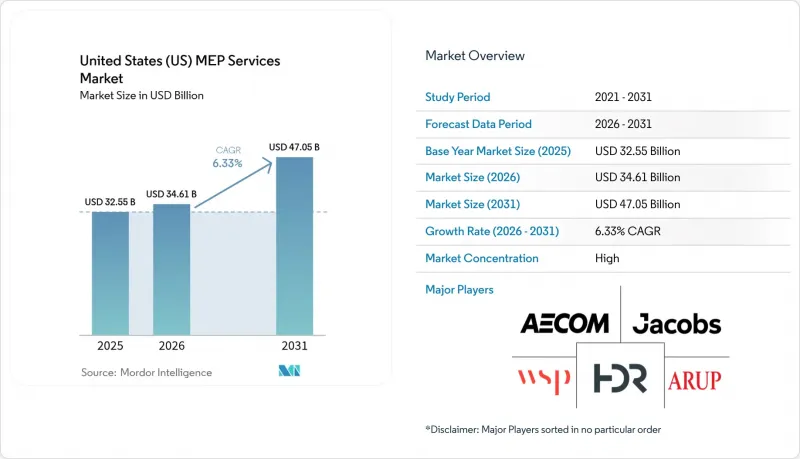
本報告按類型(新建、維修/整修及其他)、最終用戶行業(醫療保健、商業辦公、教育機構、公共設施及其他)和服務類型(機械設備服務、電氣設備服務和管道服務)進行分類。市場預測以美元計價。
美國機電工程服務市場的趨勢與洞察
外包旨在專注於核心能力
目前,機械設備佔建築物能源負荷的40%至60%,促使業主選擇將相關工作外包給專業公司,而不是維持內部團隊。 ServiceTitan等技術平台幫助承包商建立直接合作關係,無需透過總承包商的利潤分成,Southland Industries在實施平台後生產力顯著提升便證明了這一點。醫療保健網路正將更大比例的資本預算分配給專業合作夥伴,預計到2025年,非醫院項目的設施管理成本將增加27%。像Limbach這樣的承包商透過提供能夠提升建築全生命週期性能的系統解決方案契約,實現了持續的收入成長。
醫療建築業的持續需求
2024年,醫療建築市場規模達650億美元。這主要歸功於感染控制規程和負壓通風系統對複雜機械設備規格的要求。例如,亞利桑那州梅奧診所140萬平方英尺的擴建工程就需要配備冗餘的暖通空調、過濾和緊急電源系統,並全天候運作。醫院業主現在要求80%的專案試運行,以證明其已達到營運就緒狀態,這推動了對專業機電顧問的需求成長。
勞動力短缺和工資上漲
隨著嬰兒潮世代加速退休,能源產業面臨65萬名技術純熟勞工的缺口,導致2020年以來薪資上漲了20%。能源相關產業學徒的平均起薪已達7.7萬美元,這給公共部門合約的競標利潤率帶來了壓力。中西部地區有68%的機械承包商表示,他們在招募機械工程相關職位方面遇到困難,49%的公司被迫放棄一些訂單,儘管訂單前景良好。
細分市場分析
到2025年,維修整修項目將佔機械設備服務市場的46.72%,因為業主紛紛趕在潛在的監管變化之前爭取聯邦政府的激勵措施。隨著性能檢驗在醫療保健和公共部門項目中成為強制性要求,預計到2031年,試運行和試運行將推動機械設備服務市場規模擴大至45.8億美元,年複合成長率達7.35%。
基於績效的合約正在重塑服務範圍。目前,在80%的醫院專案中,性能驗證、能源建模和維護分析已整合到一份合約中。數位孿生技術的引入提高了檢驗的準確性,而基於IFC的工作流程則將糾正措施清單減少了28%。
其他好處:
- Excel格式的市場預測(ME)表
- 3個月的分析師支持
目錄
第1章:引言
- 研究假設和市場定義
- 調查範圍
第2章:調查方法
第3章執行摘要
第4章 市場狀況
- 市場概覽
- 市場促進因素
- 外包側重於核心能力
- 醫療設施建設帶來的持續需求
- 空調系統的電氣化和效率維修
- 通貨膨脹控制法下稅額扣抵效果的擴散
- 併網建築與分散式能源(DER)的整合需求
- 增加對人工智慧驅動的機電設計工具的創業投資投資
- 市場限制因素
- 勞動力短缺和工資上漲
- 設計與施工的整合給中小企業的利潤帶來了壓力。
- 智慧建築專案中的網路安全責任
- 暖通空調/冷氣材料價格波動風險的轉移
- 價值鏈分析
- 監理情勢
- 技術展望
- BIM、數位孿生、衍生設計
- 模組化機電支架和預製件
- 波特五力模型
- 美國機電工程師當前就業指數
第5章 市場規模與成長預測
- 按類型
- 新建工程
- 維修和改造
- 試運行/復測試運行
- 設施評估及其他服務
- 按最終用戶行業分類
- 衛生保健
- 商業辦公
- 教育機構
- 公共設施(政府機構、交通運輸、博物館)
- 工業和倉儲
- 資料中心高科技
- 按服務類型
- 機械服務
- 電力服務
- 管道服務
第6章 競爭情勢
- 市場集中度
- 策略趨勢
- 市佔率分析
- 公司簡介
- AECOM Technology Corporation
- Arup Group
- HDR Inc.
- Jacobs Engineering Group Inc.
- WSP USA
- Stantec Inc.
- Affiliated Engineers Inc.
- Syska Hennessy Group
- IMEG Corp.
- Vanderweil Engineers
- KPFF Consulting Engineers
- Burns & McDonnell
- Dewberry Consultants LLC
- TLC Engineering Solutions
- RTM Engineering Consultants
- EXP US Services
- Tetra Tech, Inc.
- C&S Companies
- Simpson Gumpertz & Heger
- WGI Inc.
第7章 市場機會與未來展望
According to Mordor Intelligence, the United States MEP services market size is expected to grow from USD 32.55 billion in 2025 to USD 34.61 billion in 2026 and is forecast to reach USD 47.05 billion by 2031 at 6.33% CAGR over 2026-2031.
This report is Segmented by Type (New Construction, Retrofit and Renovation, and More), End-User Vertical (Healthcare, Commercial Offices, Educational Institutions, Public Facilities, and More), and Service Type (Mechanical Services, Electrical Services, and Plumbing Services). The Market Forecasts are Provided in Terms of Value (USD).
United States (US) MEP Services Market Trends and Insights
Outsourcing Focus on Core Competencies
Mechanical systems now form 40-60% of building energy loads, encouraging owners to outsource to specialist firms rather than carry in-house teams. Technology platforms such as ServiceTitan help contractors build direct relationships that bypass general-contractor markups, evidenced by Southland Industries' productivity gains after adopting the platform. Healthcare networks allocate higher portions of capital budgets to specialized partners, with facilities-management spending on non-hospital projects up 27% in 2025. Contractors like Limbach report recurring revenue increases from building-systems solution contracts that improve lifecycle performance.
Sustained Demand from Healthcare Construction
Healthcare construction reached USD 65 billion in 2024 as infection-control protocols and negative-pressure ventilation drove complex mechanical specifications. Projects such as Mayo Clinic's 1.4 million sq ft expansion in Arizona require redundant HVAC, filtration, and emergency power systems with 24/7 uptime. Hospital owners now specify commissioning on 80% of projects to certify operational readiness, expanding demand for specialized MEP consultants.
Talent Scarcity and Wage Escalation
The sector faces a gap of 650,000 skilled workers as baby-boom retirements accelerate, leading to 20% wage growth since 2020. Apprentice compensation in energy trades averages USD 77,000 in year one, pressuring bid margins for public-sector contracts. Mechanical contractors in the Midwest report 68% difficulty filling mechanical-engineering positions, forcing 49% of firms to decline projects despite strong pipelines.
Other drivers and restraints analyzed in the detailed report include:
- Electrification and HVAC Efficiency Retrofits
- Inflation Reduction Act Tax-Credit Pull-Through
- Small-Firm Margin Squeeze from Design-Build Consolidation
For complete list of drivers and restraints, kindly check the Table Of Contents.
Segment Analysis
Retrofit and renovation captured 46.72% of the mechanical services market share in 2025 as building owners raced to secure federal incentives ahead of potential rule changes. Commissioning and re-commissioning are projected to generate USD 4.58 billion of additional mechanical services market size by 2031, posting a 7.35% CAGR as performance verification becomes mandatory for healthcare and public-sector projects.
Performance-based contracts are reshaping service scopes; eighty percent of hospital projects now bundle commissioning, energy modeling, and maintenance analytics into single awards. Digital-twin adoption accelerates verification accuracy, with IFC-based workflows reducing corrective-action lists by 28%.
Complete Report Scope:
- By Type
- New Construction
- Retrofit and Renovation
- Commissioning / Re-commissioning
- Facility Assessment and Other Services
- By End-user Vertical
- Healthcare
- Commercial Offices
- Educational Institutions
- Public Facilities (Govt, Transport, Museums)
- Industrial and Warehousing
- Data Centers and High-Tech
- By Service Type
- Mechanical Services
- Electrical Services
- Plumbing Services
List of Companies Covered in this Report:
- AECOM Technology Corporation
- Arup Group
- HDR Inc.
- Jacobs Engineering Group Inc.
- WSP USA
- Stantec Inc.
- Affiliated Engineers Inc.
- Syska Hennessy Group
- IMEG Corp.
- Vanderweil Engineers
- KPFF Consulting Engineers
- Burns & McDonnell
- Dewberry Consultants LLC
- TLC Engineering Solutions
- RTM Engineering Consultants
- EXP US Services
- Tetra Tech, Inc.
- C&S Companies
- Simpson Gumpertz & Heger
- WGI Inc.
Additional Benefits:
- The market estimate (ME) sheet in Excel format
- 3 months of analyst support
TABLE OF CONTENTS
1 INTRODUCTION
- 1.1 Study Assumptions and Market Definition
- 1.2 Scope of the Study
2 RESEARCH METHODOLOGY
3 EXECUTIVE SUMMARY
4 MARKET LANDSCAPE
- 4.1 Market Overview
- 4.2 Market Drivers
- 4.2.1 Outsourcing focus on core competencies
- 4.2.2 Sustained demand from healthcare construction
- 4.2.3 Electrification and HVAC efficiency retrofits
- 4.2.4 Inflation Reduction Act tax-credit pull-through
- 4.2.5 Grid-interactive buildings and DER integration needs
- 4.2.6 Growing VC funding for AI-driven MEP design tools
- 4.3 Market Restraints
- 4.3.1 Talent scarcity and wage escalation
- 4.3.2 Small-firm margin squeeze from design-build consolidation
- 4.3.3 Cyber-security liability on smart-building projects
- 4.3.4 Volatile HVAC/R material pricing risk transfer
- 4.4 Value Chain Analysis
- 4.5 Regulatory Landscape
- 4.6 Technological Outlook
- 4.6.1 BIM, Digital Twins and Generative Design
- 4.6.2 Modular MEP Racks and Prefabrication
- 4.7 Porter's Five Forces
- 4.7.1 Bargaining Power of Suppliers
- 4.7.2 Bargaining Power of Buyers
- 4.7.3 Threat of New Entrants
- 4.7.4 Threat of Substitutes
- 4.7.5 Competitive Rivalry
- 4.8 Current Employment Index of US MEP Engineers
5 MARKET SIZE AND GROWTH FORECASTS (VALUES)
- 5.1 By Type
- 5.1.1 New Construction
- 5.1.2 Retrofit and Renovation
- 5.1.3 Commissioning / Re-commissioning
- 5.1.4 Facility Assessment and Other Services
- 5.2 By End-user Vertical
- 5.2.1 Healthcare
- 5.2.2 Commercial Offices
- 5.2.3 Educational Institutions
- 5.2.4 Public Facilities (Govt, Transport, Museums)
- 5.2.5 Industrial and Warehousing
- 5.2.6 Data Centers and High-Tech
- 5.3 By Service Type
- 5.3.1 Mechanical Services
- 5.3.2 Electrical Services
- 5.3.3 Plumbing Services
6 COMPETITIVE LANDSCAPE
- 6.1 Market Concentration
- 6.2 Strategic Moves
- 6.3 Market Share Analysis
- 6.4 Company Profiles (includes Global level Overview, Market level overview, Core Segments, Financials as available, Strategic Information, Market Rank/Share for key companies, Products and Services, and Recent Developments)
- 6.4.1 AECOM Technology Corporation
- 6.4.2 Arup Group
- 6.4.3 HDR Inc.
- 6.4.4 Jacobs Engineering Group Inc.
- 6.4.5 WSP USA
- 6.4.6 Stantec Inc.
- 6.4.7 Affiliated Engineers Inc.
- 6.4.8 Syska Hennessy Group
- 6.4.9 IMEG Corp.
- 6.4.10 Vanderweil Engineers
- 6.4.11 KPFF Consulting Engineers
- 6.4.12 Burns & McDonnell
- 6.4.13 Dewberry Consultants LLC
- 6.4.14 TLC Engineering Solutions
- 6.4.15 RTM Engineering Consultants
- 6.4.16 EXP US Services
- 6.4.17 Tetra Tech, Inc.
- 6.4.18 C&S Companies
- 6.4.19 Simpson Gumpertz & Heger
- 6.4.20 WGI Inc.
7 MARKET OPPORTUNITIES AND FUTURE OUTLOOK
- 7.1 White-space and Unmet-need Assessment

 管道服務軟體市場:全球市場預測,2026-2032年機械、電氣和管道服務市場:全球市場預測,2026-2032年
 中東歐機械、電氣和管道 (MEP) 服務:市場佔有率分析、行業趨勢和統計數據以及成長預測 (2026-2031)東協機械、電氣和管道(MEP)服務:市場佔有率分析、行業趨勢和統計數據以及成長預測(2026-2031 年)中東和北非地區的機電管道(MEP)服務:市場佔有率分析、行業趨勢與統計數據以及成長預測(2026-2031 年)亞太地區機電管道(MEP)服務:市場佔有率分析、產業趨勢與統計及成長預測(2026-2031)歐洲機電管道(MEP)服務:市場佔有率分析、產業趨勢與統計及成長預測(2026-2031 年)北美機電管道(MEP)服務:市場佔有率分析、行業趨勢和統計數據以及成長預測(2026-2031 年)南美洲機電管道(MEP)服務:市場佔有率分析、行業趨勢和統計數據以及成長預測(2026-2031 年)
 機械、電氣和管道服務市場:按服務類型、最終用戶和地區分類