


 |
市場調查報告書
商品編碼
2124357
非洲 CNG 和 LPG 汽車:市場佔有率分析、行業趨勢和統計數據以及成長預測(2026-2031 年)Africa CNG And LPG Vehicle - Market Share Analysis, Industry Trends & Statistics, Growth Forecasts (2026 - 2031) |
||||||

※ 本網頁內容可能與最新版本有所差異。詳細情況請與我們聯繫。
據 Mordor Intelligence 稱,非洲 CNG 和 LPG 汽車市場規模預計在 2026 年達到 16.5 億美元,高於 2025 年的 15.4 億美元,預計到 2031 年將達到 22.9 億美元。
預計從 2026 年到 2031 年,其複合年成長率將達到 6.84%。
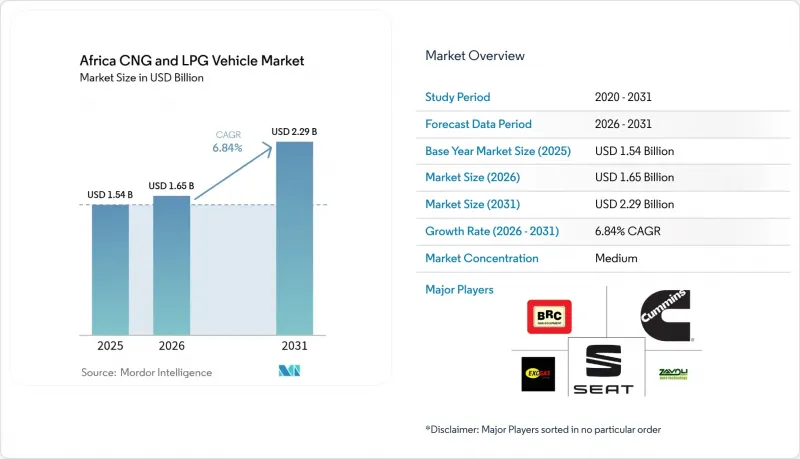
本報告按燃料類型(壓縮天然氣和液化石油氣)、車輛類型(乘用車、輕型商用車等)、銷售管道(OEM 和售後市場)、改裝技術(專用 CNG/LPG、汽油-天然氣雙燃料、柴油-CNG 雙燃料)以及地區進行細分。市場預測以價值(美元)和銷售(輛)表示。
非洲CNG與LPG汽車市場趨勢與分析
加大對加油基礎建設的投資
奈及利亞國家石油公司(NNPC)計劃在2025年前建成多個壓縮天然氣(CNG)加氣站,而埃及已擁有眾多運作的加氣站,這使得兩國在網路覆蓋方面擁有顯著的先發優勢。此外,大量資金正湧入微型液化天然氣(LNG)轉CNG樞紐,這些樞紐能夠將先前被燃燒掉的聯產氣轉化為經濟效益,從而降低當地營運商的單位運輸成本。奈及利亞-摩洛哥天然氣管道和奈及利亞-赤道幾內亞天然氣連接協議凸顯了該地區統一天然氣供應標準的願望。基礎設施建設通常先於需求發展,這使得早期投資者能夠獲得位置優勢,並佔據交通繁忙的城市走廊地帶。隨著加氣站的擴張,車主在購車時越來越傾向於選擇接近性最近的可靠加氣點,而不是考慮未來建設計畫的不確定性。
政府對天然氣燃料的獎勵措施和補貼
奈及利亞總統主導的壓縮天然氣(CNG)舉措包含改裝補貼、稅收優惠以及強制公共部門車輛過渡到CNG的政策,目標是到2027年實現100萬輛CNG車輛(約佔目前商用車輛的一半)。坦尚尼亞已完成的CNG轉型表明,即使是適度的財政支持,如果與試點車隊結合,也能產生催化作用。雖然此類框架在總擁有成本(TCO)計算中明顯有利於天然氣燃料,但其財務永續性取決於基礎設施和服務提供的配套私人資本。公私合營投資結構的重要性在於,無限制的補貼支出可能會損害能源轉型中的其他優先事項。因此,政策制定者擴大設計“日落條款”,隨著網路密度接近經濟自給自足,逐步取消獎勵。
法律規範不足
監管不力導致大量非正規維修廠安裝未經認證的高壓儲罐,引發安全隱患,並損害消費者信心。非洲各國的核准程序差異顯著,導致套件供應商必須為每個司法管轄區準備文件,推高了合規成本。由於缺乏統一的燃油品質法規,跨國行駛的車輛如果甲烷濃度或液化石油氣辛烷值出現意外波動,則面臨引擎損壞的風險。此類摩擦阻礙了規模經濟的實現,也使原始設備製造商(OEM)難以建立專用組裝。西非國家經濟共同體(ECOWAS)內部關於燃氣燃料標準的討論或許能夠減少這些障礙,但進展緩慢,且該問題具有政治敏感性。
細分市場分析
預計到2025年,壓縮天然氣(CNG)將佔銷售佔有率的76.79%,這反映了埃及密集的加氣站網路以及奈及利亞新興的交通走廊。在非洲CNG和LPG汽車市場,預計到2031年,CNG汽車市場將以6.74%的複合年成長率成長。這主要得益於隨著管道擴建的增加,甲烷批發價格下降,使零售價格更具競爭力。基礎設施建設的需求正在都市區催生寡頭壟斷,促進了汽車營運商與加氣站聯盟之間簽訂長期供應合約。在沒有管道的地區,LPG仍然被廣泛使用,在道路密度低且已有烹飪燃氣分銷網路的地區,液化石油氣鋼瓶的使用更為便捷。
然而,隨著管道供應進一步向內陸延伸,投資合理性將轉向高利用率貨運的壓縮天然氣(CNG)。奈及利亞和摩洛哥之間主幹管道的運作預計將擴大西非內陸地區的CNG市場。這項擴張將進一步拉大CNG和液化石油氣(LPG)之間的成本差距,使用混合燃料的車隊可能會轉向單一燃料策略,以簡化維護。
到2025年,乘用車將佔車輛改裝總量的62.88%,而巴士和長途客車預計將以6.90%的年複合成長率(CAGR)推動成長,直至2031年。在長途都市區客運中,成本節約效果更為顯著。對於實行三班制的城市公車而言,改裝成本可在一年內收回,因此投資報酬率極具吸引力。貨運物流領域也對CNG(壓縮天然氣)汽車表現出濃厚的興趣,例如,丹格特集團引進了多輛CNG卡車,這些卡車共同取代了大量的柴油燃料。
隨著電子商務的擴張和貨車使用量的增加,以及企業尋求規避原油價格波動風險的途徑,商用車在非洲CNG和LPG汽車市場的佔有率預計將會成長。雖然私家車的普及速度緩慢,但隨著車輛部門的增加和加氣站密度的提高,民眾信心也隨之增強,私家車的普及率也相應提高。這一趨勢表明,商用車行業將引領領先,一旦基礎設施的便利性達到與傳統燃料相同的水平,普通消費者也將隨之跟進。
其他好處:
- Excel格式的市場預測(ME)表
- 3個月的分析師支持
目錄
第1章:引言
- 研究假設和市場定義
- 調查範圍
第2章:調查方法
第3章執行摘要
第4章 市場狀況
- 市場概覽
- 市場促進因素
- 加大對加油基礎建設的投資
- 政府對氣體燃料的激勵和補貼
- 汽油和柴油價格波動
- 加強汽車排放氣體法規
- 微型液化天然氣-壓縮天然氣樞紐可為農村地區提供供應
- 將共享出行車輛改裝為 CNG/LPG 動力
- 市場限制因素
- 法律規範不足
- 各汽車製造商提供的燃油車型種類有限。
- 天然氣供應中斷對加油站運作的影響
- 未經授權的轉換器引發的安全隱患
- 價值供應鏈分析
- 監理情勢
- 技術展望
- 波特五力模型
- 投資和基礎設施分析
第5章 市場規模與成長預測
- 按燃料類型
- 壓縮天然氣(CNG)
- 液化石油氣(LPG)
- 車輛類型
- 搭乘用車
- 輕型商用車
- 中型和重型商用車輛
- 巴士和長途汽車
- 按銷售管道
- 目的地設備製造商 (OEM)
- 售後市場
- 轉換技術
- 專用 CNG/LPG
- 雙燃料(汽油/天然氣)
- 雙燃料(柴油/壓縮天然氣)(重型車輛)
- 國家
- 埃及
- 奈及利亞
- 南非
- 摩洛哥
- 衣索比亞
- 其他非洲國家
第6章 競爭情勢
- 市場集中度
- 策略趨勢
- 市佔率分析
- 公司簡介
- Iveco SpA
- Volkswagen AG
- AB Volvo
- Ford Motor Company
- Cummins Inc.
- Toyota South Africa Motors
- Hyundai Motor Company
- Kia Corporation
- Stellantis NV(Fiat Professional)
- Landi Renzo SpA
- BRC Gas Equipment
- Westport Fuel Systems
- Prins Autogassystemen
- Zavoli Srl
- Valtec
- African Gas Equipment
- ExoGas
- Clean Energy NG
- NGVAfrica
- SEAT SA
第7章 市場機會與未來展望
According to Mordor Intelligence, the Africa CNG and LPG Vehicle Market size in 2026 is estimated at USD 1.65 billion, growing from 2025 value of USD 1.54 billion with 2031 projections showing USD 2.29 billion, growing at 6.84% CAGR over 2026-2031.
This report is Segmented by Fuel Type (Compressed Natural Gas and Liquefied Petroleum Gas), Vehicle Type (Passenger Cars, Light Commercial Vehicles, and More), Sales Channel (Original Equipment Manufacturer and Aftermarket), Conversion Technology (Dedicated CNG/LPG, Bi-Fuel Gasoline-Gas, and Dual-Fuel Diesel-CNG), and Geography. The Market Forecasts are Provided in Terms of Value (USD) and Volume (Units).
Africa CNG And LPG Vehicle Market Trends and Insights
Rising Investments in Refueling Infrastructure
Nigeria's NNPC targets multiple CNG stations by 2025, and Egypt already operates numerous sites, giving both nations a substantial first-mover advantage in network coverage . Capital also flows into micro-LNG-to-CNG hubs that monetize previously flared associated gas volumes, lowering unit transportation costs for rural operators. The Nigeria-Morocco pipeline and Nigeria-Equatorial Guinea gas-link agreements underscore regional ambitions to unify supply specifications. Early investors gain location advantages because infrastructure typically precedes demand, locking in high-traffic urban corridors. As stations spread, fleet owners increasingly base procurement plans on assured refueling proximity rather than speculative future builds.
Government Incentives & Subsidies for Gaseous Fuels
Nigeria's Presidential CNG Initiative bundles conversion rebates, tax holidays, and mandatory public-sector fleet transitions that target one million vehicles-or roughly half of the current commercial fleet-by 2027 . Tanzania's completed conversions illustrate the catalytic effect of even modest fiscal support when paired with visible pilot fleets. Such frameworks tilt total cost-of-ownership calculations decidedly toward gaseous fuels, but fiscal sustainability hinges on complementary private capital in infrastructure and service delivery. Coordinated public-private investment structures matter because unchecked subsidy outlays risk crowding out other energy-transition priorities. Thus, policy architects increasingly design sunset clauses that phase incentives out as network density approaches economic self-sufficiency.
Inadequate Regulatory Frameworks
Regulation gaps foster informal workshops that install uncertified high-pressure tanks, raising safety concerns that erode consumer confidence. Approval protocols differ widely among African states, driving up compliance costs for kit suppliers who must customize paperwork for each jurisdiction. Absent harmonized fuel-quality rules, cross-border fleets face engine-damage risk when methane numbers or LPG octane levels vary unexpectedly. Such friction fragments scale economies, inhibiting OEMs from committing to dedicated assembly lines. ECOWAS discussions on standard gaseous-fuel specification could lower these barriers, but progress remains incremental and politically sensitive.
Other drivers and restraints analyzed in the detailed report include:
- Volatile Gasoline and Diesel Prices
- Stricter Vehicle-Emission Standards
- Limited OEM Gaseous-Fuel Vehicle Portfolio
For complete list of drivers and restraints, kindly check the Table Of Contents.
Segment Analysis
Compressed Natural Gas commanded a 76.79% 2025 revenue share, reflecting the dense station networks in Egypt and emerging corridors in Nigeria. The Africa CNG and LPG vehicle market size for CNG-powered units is forecast to climb at a 6.74% CAGR through 2031 as additional pipelines lower wholesale methane costs and make retail pricing more competitive. Infrastructure prerequisites create natural oligopolies in urban centers, incentivizing long-term supply contracts between fleet operators and station consortia. LPG continues serving territories without pipeline access, offering bottled-gas convenience where road density is low yet cooking-gas distribution already exists.
Nonetheless, as pipeline-based supply pushes deeper inland, investment logic tilts toward CNG for high-utilization freight. Once commissioned, the Nigeria-Morocco trunk line will likely expand CNG market access into interior West Africa. That extension will further widen the cost gap between CNG and LPG, nudging mixed-fuel fleets toward single-fuel strategies that simplify maintenance.
Passenger cars held 62.88% of cumulative conversions in 2025, yet buses and coaches are projected to lead growth at a 6.90% CAGR to 2031. High-mileage urban passenger transport amplifies savings: a city bus completing triple-shift duty can recoup conversion costs within one fiscal year, compelling payback calculations. Freight logistics likewise sees mounting interest, illustrated by Dangote Group's rollout of multiple CNG trucks that collectively displace sizable diesel volumes.
The Africa CNG and LPG vehicle market share captured by commercial categories will expand as e-commerce accelerates delivery-van utilization and operators seek a shield against oil-price swings. Private car uptake, though slower, rises in lockstep with public confidence built by visible fleet examples and growing station density. The trajectory implies a commercial-first adoption curve, with retail consumers following once infrastructural convenience reaches parity with legacy fuels.
Complete Report Scope:
- By Fuel Type
- Compressed Natural Gas (CNG)
- Liquefied Petroleum Gas (LPG)
- By Vehicle Type
- Passenger Cars
- Light Commercial Vehicles
- Medium and Heavy Commercial Vehicles
- Buses & Coaches
- By Sales Channel
- Original Equipment Manufacturer (OEM)
- Aftermarket
- By Conversion Technology
- Dedicated CNG/LPG
- Bi-fuel (Gasoline-Gas)
- Dual-fuel Diesel-CNG (HDVs)
- By Country
- Egypt
- Nigeria
- South Africa
- Morocco
- Ethiopia
- Rest of Africa
List of Companies Covered in this Report:
- Iveco S.p.A.
- Volkswagen AG
- AB Volvo
- Ford Motor Company
- Cummins Inc.
- Toyota South Africa Motors
- Hyundai Motor Company
- Kia Corporation
- Stellantis N.V. (Fiat Professional)
- Landi Renzo S.p.A.
- BRC Gas Equipment
- Westport Fuel Systems
- Prins Autogassystemen
- Zavoli S.r.l.
- Valtec
- African Gas Equipment
- ExoGas
- Clean Energy NG
- NGVAfrica
- SEAT S.A.
Additional Benefits:
- The market estimate (ME) sheet in Excel format
- 3 months of analyst support
TABLE OF CONTENTS
1 Introduction
- 1.1 Study Assumptions & Market Definition
- 1.2 Scope of the Study
2 Research Methodology
3 Executive Summary
4 Market Landscape
- 4.1 Market Overview
- 4.2 Market Drivers
- 4.2.1 Rising Investments in Refueling Infrastructure
- 4.2.2 Government Incentives & Subsidies for Gaseous Fuels
- 4.2.3 Volatile Gasoline and Diesel Prices
- 4.2.4 Stricter Vehicle-Emission Standards
- 4.2.5 Micro-LNG-To-CNG Hubs Enabling Rural Supply
- 4.2.6 Ride-Hailing Fleet Conversion to CNG/LPG
- 4.3 Market Restraints
- 4.3.1 Inadequate Regulatory Frameworks
- 4.3.2 Limited OEM Gaseous-Fuel Vehicle Portfolio
- 4.3.3 Gas-Supply Disruptions Impacting Station Uptime
- 4.3.4 Safety-Perception Issues From Informal Converters
- 4.4 Value / Supply-Chain Analysis
- 4.5 Regulatory Landscape
- 4.6 Technological Outlook
- 4.7 Porter's Five Forces
- 4.7.1 Threat of New Entrants
- 4.7.2 Bargaining Power of Buyers
- 4.7.3 Bargaining Power of Suppliers
- 4.7.4 Threat of Substitutes
- 4.7.5 Intensity of Competitive Rivalry
- 4.8 Investment & Infrastructure Analysis
5 Market Size & Growth Forecasts (Value (USD) and Volume (Units))
- 5.1 By Fuel Type
- 5.1.1 Compressed Natural Gas (CNG)
- 5.1.2 Liquefied Petroleum Gas (LPG)
- 5.2 By Vehicle Type
- 5.2.1 Passenger Cars
- 5.2.2 Light Commercial Vehicles
- 5.2.3 Medium and Heavy Commercial Vehicles
- 5.2.4 Buses & Coaches
- 5.3 By Sales Channel
- 5.3.1 Original Equipment Manufacturer (OEM)
- 5.3.2 Aftermarket
- 5.4 By Conversion Technology
- 5.4.1 Dedicated CNG/LPG
- 5.4.2 Bi-fuel (Gasoline-Gas)
- 5.4.3 Dual-fuel Diesel-CNG (HDVs)
- 5.5 By Country
- 5.5.1 Egypt
- 5.5.2 Nigeria
- 5.5.3 South Africa
- 5.5.4 Morocco
- 5.5.5 Ethiopia
- 5.5.6 Rest of Africa
6 Competitive Landscape
- 6.1 Market Concentration
- 6.2 Strategic Moves
- 6.3 Market Share Analysis
- 6.4 Company Profiles (includes Global Level Overview, Market Level Overview, Core Segments, Financials as Available, Strategic Information, Market Rank/Share for Key Companies, Products and Services, SWOT Analysis, and Recent Developments)
- 6.4.1 Iveco S.p.A.
- 6.4.2 Volkswagen AG
- 6.4.3 AB Volvo
- 6.4.4 Ford Motor Company
- 6.4.5 Cummins Inc.
- 6.4.6 Toyota South Africa Motors
- 6.4.7 Hyundai Motor Company
- 6.4.8 Kia Corporation
- 6.4.9 Stellantis N.V. (Fiat Professional)
- 6.4.10 Landi Renzo S.p.A.
- 6.4.11 BRC Gas Equipment
- 6.4.12 Westport Fuel Systems
- 6.4.13 Prins Autogassystemen
- 6.4.14 Zavoli S.r.l.
- 6.4.15 Valtec
- 6.4.16 African Gas Equipment
- 6.4.17 ExoGas
- 6.4.18 Clean Energy NG
- 6.4.19 NGVAfrica
- 6.4.20 SEAT S.A.
7 Market Opportunities & Future Outlook
- 7.1 White-Space & Unmet-Need Assessment

 壓縮氣體儲存解決方案市場報告:趨勢、預測和競爭分析(至2035年)
 CNG汽車:市佔率分析、產業趨勢與統計、成長預測(2026-2031年)
 2026-2030年全球壓縮天然氣燃料箱市場CNG 和 LPG 汽車:市場佔有率分析、行業趨勢和統計數據以及成長預測(2026-2031 年)
 CNG 和 LPG 汽車市場:按燃料類型、引擎系統、汽缸類型、車輛類型、應用和銷售管道分類 - 全球市場預測(2026-2032 年)
 CNG 和 LPG 汽車市場 - 全球產業規模、佔有率、趨勢、機會和預測:按燃料類型、車輛類型、需求類別、地區和競爭格局分類,2021-2031 年
 2026年全球CNG和LPG汽車市場報告
 壓縮天然氣(CNG)汽車系統市場機會、成長促進因素、產業趨勢分析及預測(2025-2034年)印度 CNG 汽車市場:市場佔有率分析、行業趨勢和統計數據、成長預測(2025-2030 年)