

 |
市場調查報告書
商品編碼
2124022
東協施工機械租賃:市場佔有率分析、產業趨勢與統計及成長預測(2026-2031)ASEAN Construction Equipment Rental - Market Share Analysis, Industry Trends & Statistics, Growth Forecasts (2026 - 2031) |
||||||

※ 本網頁內容可能與最新版本有所差異。詳細情況請與我們聯繫。
據 Mordor Intelligence 稱,2025 年東協施工機械租賃市場價值 50.5 億美元,預計到 2031 年將從 2026 年的 54 億美元成長至 75.7 億美元,預測期(2026-2031 年)複合年成長率為 6.98%。
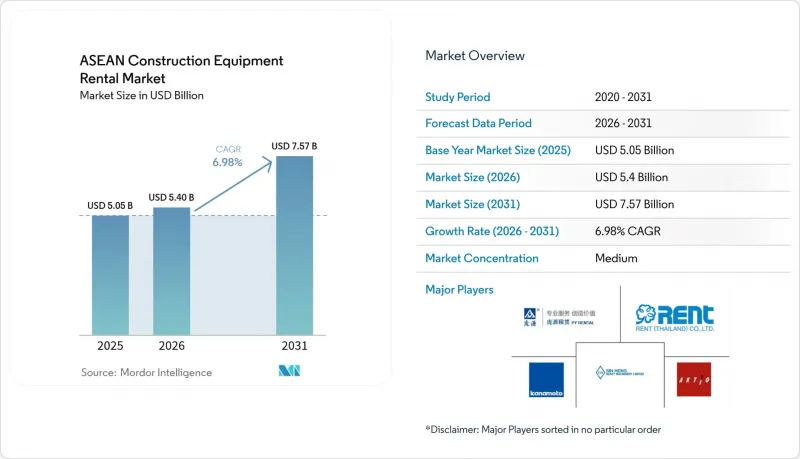
本報告按車輛類型(例如,土木工程機具)、驅動系統(內燃機、混合動力、電動)、終端用戶產業(例如,基礎設施、商業房地產)、租賃期限(短期和長期)以及地區進行細分。市場預測以美元計價。
東協施工機械租賃市場趨勢與洞察
以基礎建設主導的經濟獎勵策略
東協施工機械租賃市場持續的公共支出推動了交通、能源和城市發展項目訂單的穩定成長。印尼的國家戰略計劃(PSN)為重點項目撥出大量預算,重點發展道路、港口和水資源項目,這些項目高度依賴大規模土木機械的部署。越南已投入今年公共投資預算的相當一部分,這種積極主動的做法正在推動長期租賃合約的簽訂。同時,泰國將在未來幾年內投入大量資金用於交通網路建設,這將增加對混凝土攤舖和壓實設備的需求。經合組織預測,印尼未來十年將需要對氣候適應型基礎設施進行大規模投資。這項預測凸顯了需求的迫切性,因為它表明租賃設備中對專用機械的需求不斷成長,尤其是在排水和防洪領域。此外,亞洲開發銀行(亞銀)指出,到本十年末,亞洲各地仍將存在巨大的基礎設施缺口,這意味著對多元化租賃組合的長期強勁需求。
工業園區和物流中心的擴建
近年來,越南吸引了大量外商直接投資,並已開始在北寧省建造大規模物流樞紐。隨著東協計劃在未來幾年擴大工業用地,對打樁機、加長型堆高機和臨時電力發電機等設備的穩定需求將得到保障。同時,馬來西亞和印尼正吸引尋求供應鏈多元化的電子組裝製造商的關注,依靠靈活租賃協議的多階段設備擴張正在推進。在東協施工機械租賃市場,受近岸外包和電子商務推動的倉庫和工廠建設的帶動,對精密起重設備、無塵室適用設備和小型土木工程機具的需求激增。
縮短專案週期會導致運轉率波動。
在東協施工機械租賃市場,工期縮短導致設備閒置時間激增,利潤率面臨壓力。這主要是由於多種因素造成的:核准流程不良、季節性季風、資金籌措延遲到位。在泰國,預算批准經常被推遲到財政季度的後半段。因此,設備同時調配的情況時有發生,加劇了租賃供應的緊張。近期,一家大型建設公司雖然獲利頗豐,但由於專案開工延誤,未能完成銷售目標,凸顯了這種波動性對設備規劃的影響。為了應對這些挑戰,租賃公司被迫要麼持有大量閒置庫存,要麼在淡季收取附加費,最終推高了專案成本。
細分市場分析
受印尼土地開發和馬來西亞工業園區建設的推動,預計到2025年,土木工程機具將佔東協施工機械租賃市場的46.05%。隨著泰國資本投資的增加,道路和鋪路建設加速推進,預計2031年,混凝土和道路施工機械的複合年成長率將達到7.09%。在新加坡狹窄的建築工地上,滑移裝載機和小型履帶裝載機越來越受歡迎,而振動壓路機在越南仍然是高速公路路基建設的必備設備。
在新加坡試點建設現場充電樁和泰國建設電池更換站的支持下,電動和混合動力傳動系統正開始應用於混凝土攪拌機和小型裝載機。 2024年,日本小松公司的整機出貨量有所下降,但零件銷售額卻有所成長,這表明其車隊運轉率較高,從而支撐了售後租賃市場的需求。在越南,高精度起重機正協助多層物流設施的建設;而在印度尼西亞,防洪工程推動了專用疏浚挖土機的需求成長。
2025年,內燃機系統在東協施工機械租賃市場仍將佔72.40%的佔有率。這是因為柴油動力在偏遠地區和重型作業中仍然具有無可比擬的性能。然而,受新加坡強制推行低排放氣體政策以及泰國開展電池動力混凝土攪拌車試點計畫的推動,預計到2031年,電動車型的年複合成長率將達到7.04%。混合動力系統則應用於橋樑建造等對運作要求高且燃油成本節約要求高的領域。
電池能量密度的提升和集中式充電站的建設,使得租賃公司能夠更有效率地運作電動車。根據H&E設備服務公司的報告顯示,運作中的租賃車輛中有三分之一是電動車,這充分證明了電動車能夠大幅降低成本。雖然在電力系統尚不發達的印尼礦業項目中,柴油引擎仍然佔據主導地位,但隨著電池成本競爭力的增強,汽油引擎預計將僅限於小型工具應用。
其他好處:
- Excel格式的市場預測(ME)表
- 3個月的分析師支持
目錄
第1章:引言
- 研究假設和市場定義
- 調查範圍
第2章:調查方法
第3章執行摘要
第4章 市場狀況
- 市場概覽
- 市場促進因素
- 以基礎建設主導的經濟獎勵策略
- 工業園區和物流中心的擴建
- 承包商越來越傾向於使用營運支出(OPEX)而不是資本支出(CAPEX)。
- 數位化車隊管理和遠端資訊處理整合
- 新加坡和泰國早期電氣設備試點項目
- 與環境、社會及公司治理 (ESG) 相關的綠色金融獎勵,適用於租賃車輛
- 市場限制因素
- 專案週期縮短導致運轉率波動
- 二手機械設備的進口關稅仍然很高。
- 分散的設備維護生態系統
- 大型電池動力機械的型式認證延誤
- 價值供應鏈分析
- 監理情勢
- 技術展望
- 波特五力模型
第5章 市場規模與成長預測
- 車輛類型
- 土木工程施工機械
- 挖土機
- 裝載機
- 推土機
- 滑移裝載機和小型履帶裝載機
- 物料輸送設備
- 起重機(履帶式、移動式、塔式)
- 堆高機和加長型堆高機
- 混凝土及道路施工機械
- 壓實設備
- 土木工程施工機械
- 透過推進力
- 內燃機
- 柴油引擎
- 汽油
- 油電混合驅動
- 電動驅動
- 內燃機
- 按最終用戶行業分類
- 基礎設施
- 商業地產
- 工業與物流
- 採礦和採石
- 石油和天然氣
- 其他專業領域
- 租賃期
- 短期
- 長期
- 國家
- 印尼
- 泰國
- 越南
- 新加坡
- 馬來西亞
- 菲律賓
- 柬埔寨
- 寮國
- 緬甸
- 汶萊
第6章 競爭情勢
- 市場集中度
- 策略趨勢
- 市佔率分析
- 公司簡介
- Kanamoto Co. Ltd
- Aktio Corp.
- Sin Heng Heavy Machinery Ltd
- Nishio Rent All Co. Ltd
- Tat Hong Holdings Ltd
- Guzent Inc.
- Superkrane Mitra Utama
- Rent(Thailand)Co. Ltd
- Asia Machinery Solutions Vietnam Co. Ltd
- Shanghai Pangyuan Machinery Rental Co. Ltd
- United Tractors Tbk
- Hexindo Adiperkasa Tbk
- Multicrane Perkasa
- UMW Equipment Division
- Coates Hire Indonesia
- Multicore Machinery(Philippines)
- Nikken Corporation
- Caterpillar Rental Services(SEA)
- Komatsu Rental Asia
- Zoomlion Leasing(SEA)
第7章 市場機會與未來展望
According to Mordor Intelligence, the ASEAN construction equipment rental market size was valued at USD 5.05 billion in 2025 and estimated to grow from USD 5.4 billion in 2026 to reach USD 7.57 billion by 2031, at a CAGR of 6.98% during the forecast period (2026-2031).
This report is Segmented by Vehicle Type (Earthmoving Equipment and More), Propulsion (IC Engine, Hybrid Drive, and Electric Drive), End-User Industry (Infrastructure, Commercial Real-Estate, and More), Rental Duration (Short-Term and Long-Term), and Geography. The Market Forecasts are Provided in Terms of Value (USD).
ASEAN Construction Equipment Rental Market Trends and Insights
Infrastructure-Led Stimulus Programs
Consistent public spending in the ASEAN construction equipment rental market fuels steady work backlogs in transport, energy, and urban projects. Indonesia's PSN has allocated a significant budget for key initiatives, focusing on roads, ports, and water projects that heavily rely on expansive earthmoving fleets. Vietnam's proactive approach is evident as it has already disbursed a substantial portion of its public-investment budget for the year, a move that bolsters longer rental contracts. Meanwhile, Thailand has earmarked considerable funds for transport links over the next few years, driving up the demand for concrete pavers and compaction equipment. The OECD projects that Indonesia will require a massive investment in climate-resilient infrastructure within the next decade. This forecast highlights the urgency and signals a growing need for specialty machinery, particularly in drainage and flood protection, within rental fleets. Adding to the momentum, the Asian Development Bank points to a significant infrastructure gap across Asia through the decade's end, suggesting a robust, multi-year demand for diversified rental portfolios .
Expansion of Industrial Parks & Logistics Hubs
In recent times, Vietnam has attracted substantial foreign direct investment and initiated the development of a significant logistics space in Bac Ninh. As ASEAN plans to expand its industrial land over the next few years, this ensures a consistent demand for equipment like piling rigs, telehandlers, and temporary power units. Meanwhile, Malaysia and Indonesia are becoming hotspots for electronics assemblers aiming for diversified supply chains, leading to multistage buildouts reliant on adaptable rental agreements. The ASEAN construction equipment rental market is witnessing a surge in demand for precision lifting tools, clean-room compatible gear, and compact earthmovers, fueled by nearshoring and e-commerce-driven warehouse and factory constructions.
Short Project Cycles Causing Utilization Volatility
In the ASEAN construction equipment rental market, construction timelines are compressed, and idle-time spikes emerge, eroding margins. This is due to a combination of stop-start approvals, seasonal monsoons, and financing delays. In Thailand, budget approvals frequently push into the latter part of fiscal quarters. This results in simultaneous mobilizations, putting a strain on rental supply. Recently, a major construction company reported significant profits but fell short of its revenue targets due to delayed project starts, underscoring the volatility's impact on equipment planning. To navigate these challenges, rental companies either maintain larger idle inventories or impose higher premiums during slack periods, ultimately inflating project costs.
Other drivers and restraints analyzed in the detailed report include:
- Growing Contractor Preference for OPEX over CAPEX
- Digital Fleet-Management & Telematics Integration
- Persistently High Import Tariffs on Used Machinery
For complete list of drivers and restraints, kindly check the Table Of Contents.
Segment Analysis
Due to Indonesia's land-development drives and Malaysia's industrial-park grading, earthmoving equipment captured 46.05% of the ASEAN construction equipment rental market in 2025. Concrete and road machinery should post a 7.09% CAGR through 2031 as Thailand's capex push accelerates paving and surface works. Skid-steer and compact track loaders gain favor in Singapore's cramped sites, while vibratory rollers stay essential for expressway sub-grades across Vietnam.
Electric and hybrid powertrains emerge in concrete mixers and small loaders, supported by Singapore's job-site chargers and Thailand's pilot battery-swap depots. Komatsu unit deliveries fell in 2024, yet parts revenue climbed, showing high fleet utilization that sustains aftermarket rentals. Precision lifting cranes support Vietnam's multi-story logistics builds, and demand for specialty dredging excavators rises for Indonesia's flood-control projects.
Internal combustion systems retained a 72.40% share of the ASEAN construction equipment rental market in 2025, as diesel power remains unrivaled for remote or heavy-duty. Electric units, however, are forecast to grow 7.04% CAGR through 2031, led by Singapore mandates for low-emission sites and Thai pilots of battery concrete trucks. Hybrid drives serve bridge applications where long runtimes are essential, yet fuel savings are prized.
Battery density improvements and clustered charging depots allow rental firms to rotate electric fleets efficiently. H&E Equipment Services reports one-third of its active rental units are electric, validating operating-cost savings. Diesel engines stay prevalent in Indonesian mining projects lacking grid power, while gasoline engines shrink to small tools as battery parity approaches.
Complete Report Scope:
- By Vehicle Type
- Earthmoving Equipment
- Excavators
- Loaders
- Bulldozers
- Skid-steer & Compact Track Loaders
- Material Handling Equipment
- Cranes (Crawler, Mobile, Tower)
- Forklifts & Telehandlers
- Concrete & Road Construction Machinery
- Compaction Equipment
- Earthmoving Equipment
- By Propulsion
- IC Engine
- Diesel
- Gasoline
- Hybrid Drive
- Electric Drive
- IC Engine
- By End-User Industry
- Infrastructure
- Commercial Real-Estate
- Industrial & Logistics
- Mining & Quarrying
- Oil & Gas
- Other Specialised Sectors
- By Rental Duration
- Short-term
- Long-term
- By Country
- Indonesia
- Thailand
- Vietnam
- Singapore
- Malaysia
- Philippines
- Cambodia
- Laos
- Myanmar
- Brunei
List of Companies Covered in this Report:
- Kanamoto Co. Ltd
- Aktio Corp.
- Sin Heng Heavy Machinery Ltd
- Nishio Rent All Co. Ltd
- Tat Hong Holdings Ltd
- Guzent Inc.
- Superkrane Mitra Utama
- Rent (Thailand) Co. Ltd
- Asia Machinery Solutions Vietnam Co. Ltd
- Shanghai Pangyuan Machinery Rental Co. Ltd
- United Tractors Tbk
- Hexindo Adiperkasa Tbk
- Multicrane Perkasa
- UMW Equipment Division
- Coates Hire Indonesia
- Multicore Machinery (Philippines)
- Nikken Corporation
- Caterpillar Rental Services (SEA)
- Komatsu Rental Asia
- Zoomlion Leasing (SEA)
Additional Benefits:
- The market estimate (ME) sheet in Excel format
- 3 months of analyst support
TABLE OF CONTENTS
1 Introduction
- 1.1 Study Assumptions & Market Definition
- 1.2 Scope of the Study
2 Research Methodology
3 Executive Summary
4 Market Landscape
- 4.1 Market Overview
- 4.2 Market Drivers
- 4.2.1 Infrastructure-Led Stimulus Programmes
- 4.2.2 Expansion of Industrial Parks & Logistics Hubs
- 4.2.3 Growing Contractor Preference for OPEX Over CAPEX
- 4.2.4 Digital Fleet-Management & Telematics Integration
- 4.2.5 Early-Stage Electrified Equipment Pilots in Singapore & Thailand
- 4.2.6 ESG-Linked Green-Financing Incentives for Rental Fleets
- 4.3 Market Restraints
- 4.3.1 Short Project Cycles Causing Utilization Volatility
- 4.3.2 Persistently High Import Tariffs on Used Machinery
- 4.3.3 Fragmented Equipment-Maintenance Ecosystem
- 4.3.4 Slow Homologation of Battery-Electric Heavy Machines
- 4.4 Value / Supply-Chain Analysis
- 4.5 Regulatory Landscape
- 4.6 Technological Outlook
- 4.7 Porter's Five Forces
- 4.7.1 Threat of New Entrants
- 4.7.2 Bargaining Power of Buyers/Consumers
- 4.7.3 Bargaining Power of Suppliers
- 4.7.4 Threat of Substitute Products
- 4.7.5 Intensity of Competitive Rivalry
5 Market Size & Growth Forecasts (Value (USD))
- 5.1 By Vehicle Type
- 5.1.1 Earthmoving Equipment
- 5.1.1.1 Excavators
- 5.1.1.2 Loaders
- 5.1.1.3 Bulldozers
- 5.1.1.4 Skid-steer & Compact Track Loaders
- 5.1.2 Material Handling Equipment
- 5.1.2.1 Cranes (Crawler, Mobile, Tower)
- 5.1.2.2 Forklifts & Telehandlers
- 5.1.3 Concrete & Road Construction Machinery
- 5.1.4 Compaction Equipment
- 5.1.1 Earthmoving Equipment
- 5.2 By Propulsion
- 5.2.1 IC Engine
- 5.2.1.1 Diesel
- 5.2.1.2 Gasoline
- 5.2.2 Hybrid Drive
- 5.2.3 Electric Drive
- 5.2.1 IC Engine
- 5.3 By End-User Industry
- 5.3.1 Infrastructure
- 5.3.2 Commercial Real-Estate
- 5.3.3 Industrial & Logistics
- 5.3.4 Mining & Quarrying
- 5.3.5 Oil & Gas
- 5.3.6 Other Specialised Sectors
- 5.4 By Rental Duration
- 5.4.1 Short-term
- 5.4.2 Long-term
- 5.5 By Country
- 5.5.1 Indonesia
- 5.5.2 Thailand
- 5.5.3 Vietnam
- 5.5.4 Singapore
- 5.5.5 Malaysia
- 5.5.6 Philippines
- 5.5.7 Cambodia
- 5.5.8 Laos
- 5.5.9 Myanmar
- 5.5.10 Brunei
6 Competitive Landscape
- 6.1 Market Concentration
- 6.2 Strategic Moves
- 6.3 Market Share Analysis
- 6.4 Company Profiles (includes Global Level Overview, Market Level Overview, Core Segments, Financials as Available, Strategic Information, Market Rank/Share for Key Companies, Products and Services, SWOT Analysis, and Recent Developments)
- 6.4.1 Kanamoto Co. Ltd
- 6.4.2 Aktio Corp.
- 6.4.3 Sin Heng Heavy Machinery Ltd
- 6.4.4 Nishio Rent All Co. Ltd
- 6.4.5 Tat Hong Holdings Ltd
- 6.4.6 Guzent Inc.
- 6.4.7 Superkrane Mitra Utama
- 6.4.8 Rent (Thailand) Co. Ltd
- 6.4.9 Asia Machinery Solutions Vietnam Co. Ltd
- 6.4.10 Shanghai Pangyuan Machinery Rental Co. Ltd
- 6.4.11 United Tractors Tbk
- 6.4.12 Hexindo Adiperkasa Tbk
- 6.4.13 Multicrane Perkasa
- 6.4.14 UMW Equipment Division
- 6.4.15 Coates Hire Indonesia
- 6.4.16 Multicore Machinery (Philippines)
- 6.4.17 Nikken Corporation
- 6.4.18 Caterpillar Rental Services (SEA)
- 6.4.19 Komatsu Rental Asia
- 6.4.20 Zoomlion Leasing (SEA)
7 Market Opportunities & Future Outlook
- 7.1 White-space & Unmet-need Assessment

 印度施工機械租賃:市場佔有率分析、產業趨勢與統計及成長預測(2026-2031)施工機械租賃:市場佔有率分析、產業趨勢與統計、成長預測(2026-2031)
 2026-2030年全球施工機械租賃市場
 施工機械租賃市場:2026-2032年全球市場預測(依設備類型、租賃期限、動力來源、營運方式、租賃模式及應用領域分類)
 施工機械租賃市場-全球產業規模、佔有率、趨勢、機會和預測:按設備類型、產品類型、應用類型、驅動類型、地區和競爭格局分類,2021-2031年
 施工機械租賃市場報告:按型號、驅動系統、應用和地區分類(2026-2034 年)
 施工機械租賃市場:按機器類型和地區分類
 2026年全球施工機械租賃市場報告2026年全球重型建築設備租賃市場報告
 施工機械及工具租賃平台市場預測至2034年-全球分析(依設備類型、租賃模式、定價模式、客戶類型、最終用戶及地區分類)