


 |
市場調查報告書
商品編碼
2121635
中東和非洲軟性飲料包裝:市場佔有率分析、行業趨勢和統計數據以及成長預測(2026-2031 年)Middle East And Africa Soft Drinks Packaging - Market Share Analysis, Industry Trends & Statistics, Growth Forecasts (2026 - 2031) |
||||||

※ 本網頁內容可能與最新版本有所差異。詳細情況請與我們聯繫。
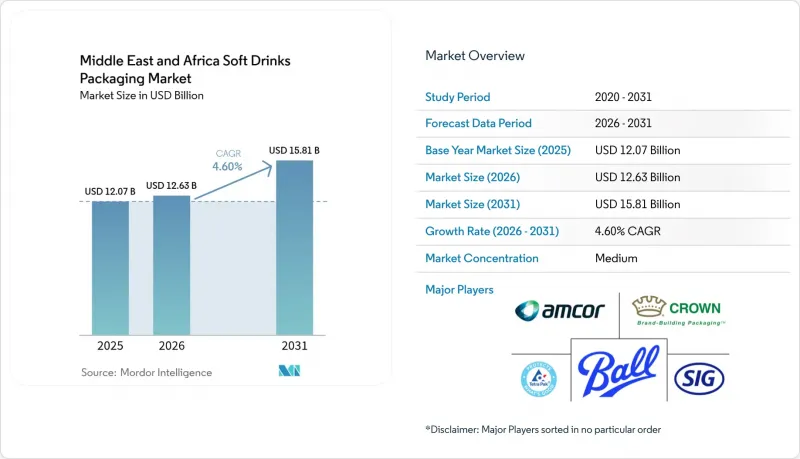
據 Mordor Intelligence 稱,中東和非洲地區軟性飲料包裝市場的規模預計在 2026 年達到 126.3 億美元,高於 2025 年的 120.7 億美元,預計到 2031 年將達到 158.1 億美元。
預計從 2026 年到 2031 年,其複合年成長率將達到 4.60%。
本報告按主要材料(塑膠、紙/紙板、其他)、包裝類型(瓶裝、罐裝、其他)、飲料類型(瓶裝水、果汁/水果、其他)、包裝容量(330毫升以下、331-500毫升、501-1000毫升、1000毫升以上)和地區進行細分。市場預測以美元計價。
中東和非洲軟性飲料包裝市場的趨勢和見解。
海灣合作理事會國家瓶裝水消費量增加
由於沿岸地區持續缺水和水質不一的問題,瓶裝飲用水仍然是家庭的熱門選擇。沙烏地阿拉伯的《2030年國家水資源戰略》優先考慮水源多元化,而水利基礎設施的現代化間接支撐了瓶裝水的需求。當地瓶裝商安裝的Seidel公司8萬瓶/小時的PET生產線,正是工廠投資以滿足此激增需求的例證。年輕一代(其中超過60%的人年齡在30歲以下)傾向於選擇高階和機能水,這提高了包裝的單位價值,並進一步鞏固了PET容器在中東和非洲軟性飲料包裝市場的主導地位。
方便攜帶的單份包裝產品需求激增。
繁忙的工作日程和便利商店的擴張使得330毫升以下的包裝產品變得司空見慣。隨著消費者在控制份量和便攜性之間尋求平衡,這項規格的銷售量正以5.8%的複合年成長率成長,超過了更大規格的銷售量。 SIG的「DomeMini」紙盒裝飲料(180-350毫升)兼具便攜性和無菌性,是外出飲用的理想選擇。這一趨勢在利雅德、杜拜和約翰尼斯堡尤為明顯,這些城市快節奏的生活方式和餐飲服務業的蓬勃發展,推動中東和非洲軟性飲料包裝市場向利潤更高的單份包裝轉型。
阿拉伯聯合大公國和沙烏地阿拉伯可能提高電子塑膠製品責任費率 (EPR) 並引入塑膠稅
阿拉伯聯合大公國的「生產者延伸責任制」(EPR)試點計畫已經推高了瓶裝水等高銷售領域的合規成本。立法者計劃在2026年前更廣泛地禁止使用一次性塑膠,這將進一步加劇PET包裝的價格壓力。沙烏地阿拉伯正在考慮在其循環經濟藍圖中採取類似的課稅措施,這可能會帶來不確定性,導致資本投資延遲,並促使品牌轉向鋁和紙板等替代品。因此,中東和非洲的軟性飲料包裝市場正面臨傳統包裝利潤率下降的困境,而永續替代品則發展勢頭強勁。
細分市場分析
2025年,塑膠在中東和非洲軟性飲料包裝市場仍佔據52.05%的佔有率。這得歸功於沿岸地區豐富的原料供應和成熟的PET吹塑成型成型基礎設施。由於PET樹脂經濟性良好,它已成為瓶裝水、碳酸飲料和運動飲料的標準包裝材料。然而,紙和紙板的複合年成長率達到6.05%,由於植物來源飲料的推出,其成長速度正在加快。植物性飲料充分利用了紙盒包裝的長保存期限和永續性優勢。
生產者責任延伸(EPR)成本的不斷上漲以及對固定瓶蓋的要求,迫使品牌所有者實現基材多元化,從而提升了紙盒供應商的戰略重要性。 SIG在埃及所進行的回收試點計畫以及與Pulpac在紙瓶蓋方面的合作,正是旨在減少整體環境影響的創新週期的典型例證。玻璃仍繼續用於高階果汁和精釀汽水產品線,而鋁則在能量飲料和高階飲用水領域日益受到關注。這些材料成分的變化凸顯了法規和消費者期望如何重塑中東和非洲軟性飲料包裝市場供應商的商業策略。
預計到2025年,瓶裝產品將佔總銷售額的61.10%,這主要得益於PET材質的廣泛應用以及灌裝商和消費者對其的熟悉程度。大型生產線,例如Seidel公司每小時8萬瓶的生產系統,在維持高產能的同時,也能有效降低單位成本。然而,紙盒和無菌包裝的成長速度最快,年複合成長率達到5.78%,這主要得益於乳製品替代品、益生菌飲料和高階果汁等產品轉向更注重永續性的常溫保存包裝。
SIG的「DomeMini」瓶裝飲料表明,紙盒包裝技術正瞄準先前由塑膠主導的「便利飲料市場」。鋁罐因其可無限循環利用的特性,在碳酸飲料和能量飲料領域,尤其是在透過體育行銷進行推廣的飲料中,仍保持著穩定的市場佔有率。袋裝和小袋則迎合了農村居民和價格敏感型消費者的需求,凸顯了中東和非洲軟性飲料包裝市場必須滿足的多樣化需求,而這些需求不應受社會經濟階層的影響。
其他好處:
- Excel格式的市場預測(ME)表
- 3個月的分析師支持
目錄
第1章:引言
- 研究假設和市場定義
- 調查範圍
第2章:調查方法
第3章執行摘要
第4章 市場狀況
- 市場概覽
- 市場促進因素
- 海灣合作理事會國家瓶裝水消費量增加
- 由於方便攜帶和便於外出使用,一次性包裝的需求正在激增。
- 由於從碳氫化合物到聚合物的生產能力提高,PET 的成本正在下降。
- 為了遵守歐盟法規,各大品牌紛紛轉向採用抽繩和輕便的帽子。
- 基於「沙烏地阿拉伯2030願景」的在地化獎勵正在推動罐頭食品產業的發展。
- 擴建發酵飲料和植物來源飲料的無菌填充設施
- 市場限制因素
- 阿拉伯聯合大公國和沙烏地阿拉伯提高了生產者責任延伸(EPR)費用,並有可能引入塑膠稅。
- 用於食品生產的rPET回收基礎設施長期短缺。
- 缺水措施阻礙了寶特瓶。
- 鋁原料價格波動加劇,影響了罐裝產品的普及。
- 產業價值鏈分析
- 宏觀經濟因素的影響
- 監理情勢
- 技術展望
- 波特五力分析
第5章 市場規模與成長預測
- 按主要材料使用情況
- 塑膠
- 紙張和紙板
- 玻璃
- 金屬
- 其他
- 按包裝類型
- 瓶子
- 坎
- 紙箱/無菌磚
- 小袋和小袋
- 其他
- 按飲料類型
- 瓶裝水
- 果汁和花蜜
- 碳酸飲料
- 即飲茶和咖啡
- 運動飲料和能量飲料
- 其他
- 按包裝容量
- 330毫升或以下
- 331~500 mL
- 501~1,000 mL
- 超過1000毫升
- 按地區
- 中東
- 沙烏地阿拉伯
- 阿拉伯聯合大公國
- 卡達
- 其他中東國家
- 非洲
- 南非
- 埃及
- 奈及利亞
- 其他非洲國家
- 中東
第6章 競爭情勢
- 市場集中度
- 策略趨勢
- 市佔率分析
- 公司簡介
- Tetra Pak International SA
- SIG Group AG
- Amcor plc
- Ball Corporation
- Crown Holdings Inc.
- ALPLA Werke Alwin Lehner GmbH and Co KG
- Plastipak Holdings Inc.
- Nampak Ltd.
- Takween Advanced Industries Co.
- Arabian Plastic Industrial Co.(Apico)
- GZI Industries Ltd.
- Huhtamaki Oyj
- Owens-Illinois Inc.
- Ardagh Metal Packaging SA
- Krones AG
- Sidel Group
- Mondi plc
- Greif Inc.
- Vetropack Holding AG
- AL-Jomaih Beverage Cans and Ends Co.
第7章 市場機會與未來展望
According to Mordor Intelligence, the Middle East and Africa soft drinks packaging market size in 2026 is estimated at USD 12.63 billion, growing from 2025 value of USD 12.07 billion with 2031 projections showing USD 15.81 billion, growing at 4.60% CAGR over 2026-2031.
This report is Segmented by Primary Material Used (Plastic, Paper and Paperboard, and More), Packaging Format (Bottles, Cans, and More), Beverage Type (Bottled Water, Juices and Nectars, and More), Pack Capacity (<=330 ML, 331-500 ML, 501-1000 ML, and >1000 ML), and Region. The Market Forecasts are Provided in Terms of Value (USD).
Middle East And Africa Soft Drinks Packaging Market Trends and Insights
Rising Bottled-Water Consumption in GCC
Persistent water-scarcity concerns and variable municipal supply quality continue to steer Gulf households toward packaged hydration. Saudi Arabia's National Water Strategy 2030 has prioritized diversified sourcing, indirectly sustaining bottled water demand as utilities modernize. Sidel's 80,000-bph PET lines, deployed with regional bottlers, illustrate how plant investments capture this surge. A youthful population, more than 60% under 30, gravitates to premium and functional waters, lifting packaging value per unit and reinforcing the primacy of PET containers in the Middle East and Africa soft drinks packaging market.
Surge in Demand for Convenience and On-the-Go Single-Serve Packs
Compressed work routines and the expansion of convenience retail have made sub-330 mL packs commonplace. Unit volumes in this size band are rising at a 5.8% CAGR, outpacing larger formats as consumers blend portion control with mobility. SIG's DomeMini carton bottle (180-350 mL) pairs portability with aseptic integrity, making carton options viable for on-the-go consumption. Uptake concentrates in Riyadh, Dubai, and Johannesburg, where busy lifestyles and food-service channels intersect, propelling the Middle East and Africa soft drinks packaging market toward higher-margin, single-serve applications.
Heightened EPR Fees and Potential Plastic-Tax Roll-out in UAE and KSA
Pilot EPR schemes in the UAE already lift compliance costs for high-volume segments such as bottled water. Legislators plan broader single-use plastic bans by 2026, sharpening price pressure on PET packaging. Saudi Arabia is evaluating comparable levies within its circular-economy roadmap, injecting uncertainty that could delay capital deployment or push brands toward aluminum and paperboard options. The Middle East and Africa soft drinks packaging market accordingly faces margin compression on legacy formats while sustainable alternatives gain traction.
Other drivers and restraints analyzed in the detailed report include:
- Hydrocarbon-to-Polymer Capacity Expansions Lowering PET Cost
- Brand Shift Toward Tethered and Lightweight Caps
- Chronic Deficit in Food-Grade rPET Collection Infrastructure
For complete list of drivers and restraints, kindly check the Table Of Contents.
Segment Analysis
Plastic retained a 52.05% share of the Middle East and Africa soft drinks packaging market in 2025, supported by abundant Gulf feedstocks and established PET blowing infrastructure. Favorable resin economics make PET the default for bottled water, carbonates, and sports drinks. However, paper and paperboard registered a 6.05% CAGR, accelerating on the back of plant-based beverage launches that leverage cartons' extended shelf life and sustainable positioning.
Rising EPR fees and tethered-cap requirements push brand owners to diversify substrates, elevating carton suppliers as strategic partners. SIG's Egyptian recycling pilot and Pulpac collaborations on paper closures exemplify innovation cycles aimed at lowering total environmental impact. Glass continues to serve premium juice and craft soda lines, whereas aluminum garners attention for energy drinks and premium waters. The material mix shift underscores how regulatory and consumer expectations reshape vendor roadmaps within the Middle East and Africa soft drinks packaging market.
Bottles commanded 61.10% of 2025 revenues, anchored by the widespread PET base and familiarity among fillers and consumers. Large-scale lines such as Sidel's 80,000-bph systems keep throughput high and unit costs low. Yet cartons and aseptic bricks grew fastest, clocking a 5.78% CAGR as dairy alternatives, probiotic drinks, and premium juices move into ambient-stable packs that signal sustainability.
SIG's DomeMini bottle confirms how carton technology now targets traditionally plastic-dominated convenience occasions. Aluminum cans hold steady due to infinite recyclability, particularly for carbonates and energy drinks promoted through sports marketing. Pouches and sachets serve rural and price-sensitive shoppers, highlighting the divergent needs the Middle East and Africa soft drinks packaging market must satisfy across socio-economic tiers.
Complete Report Scope:
- By Primary Material Used
- Plastic
- Paper and Paperboard
- Glass
- Metal
- Others
- By Packaging Format
- Bottles
- Cans
- Cartons / Aseptic Bricks
- Pouches and Sachets
- Others
- By Beverage Type
- Bottled Water
- Juices and Nectars
- Carbonated Soft Drinks
- Ready-to-Drink Tea and Coffee
- Sports and Energy Drinks
- Others
- By Pack Capacity
- <=330 mL
- 331 - 500 mL
- 501 - 1 000 mL
- >1 000 mL
- By Region
- Middle East
- Saudi Arabia
- United Arab Emirates
- Qatar
- Rest of Middle East
- Africa
- South Africa
- Egypt
- Nigeria
- Rest of Africa
- Middle East
List of Companies Covered in this Report:
- Tetra Pak International SA
- SIG Group AG
- Amcor plc
- Ball Corporation
- Crown Holdings Inc.
- ALPLA Werke Alwin Lehner GmbH and Co KG
- Plastipak Holdings Inc.
- Nampak Ltd.
- Takween Advanced Industries Co.
- Arabian Plastic Industrial Co. (Apico)
- GZI Industries Ltd.
- Huhtamaki Oyj
- Owens-Illinois Inc.
- Ardagh Metal Packaging S.A.
- Krones AG
- Sidel Group
- Mondi plc
- Greif Inc.
- Vetropack Holding AG
- AL-Jomaih Beverage Cans and Ends Co.
Additional Benefits:
- The market estimate (ME) sheet in Excel format
- 3 months of analyst support
TABLE OF CONTENTS
1 INTRODUCTION
- 1.1 Study Assumptions and Market Definition
- 1.2 Scope of the Study
2 RESEARCH METHODOLOGY
3 EXECUTIVE SUMMARY
4 MARKET LANDSCAPE
- 4.1 Market Overview
- 4.2 Market Drivers
- 4.2.1 Rising bottled-water consumption in GCC
- 4.2.2 Surge in demand for convenience and on-the-go single-serve packs
- 4.2.3 Hydrocarbon-to-polymer capacity expansions lowering PET cost
- 4.2.4 Brand shift toward tethered and lightweight caps to meet EU-style rules
- 4.2.5 Localisation incentives under Saudi Vision 2030 encouraging can lines
- 4.2.6 Growth of aseptic filling hubs for fermented and plant-based drinks
- 4.3 Market Restraints
- 4.3.1 Heightened EPR fees and potential plastic-tax roll-out in UAE and KSA
- 4.3.2 Chronic deficit in food-grade rPET collection infrastructure
- 4.3.3 Water-scarcity policies discouraging high-volume PET bottling licences
- 4.3.4 Rising aluminium feedstock price volatility impacting can adoption
- 4.4 Industry Value Chain Analysis
- 4.5 Impact of Macroeconomic Factors
- 4.6 Regulatory Landscape
- 4.7 Technological Outlook
- 4.8 Porter's Five Forces Analysis
- 4.8.1 Bargaining Power of Suppliers
- 4.8.2 Bargaining Power of Consumers
- 4.8.3 Threat of New Entrants
- 4.8.4 Threat of Substitute Products and Services
- 4.8.5 Intensity of Competitive Rivalry
5 MARKET SIZE AND GROWTH FORECASTS (VALUES)
- 5.1 By Primary Material Used
- 5.1.1 Plastic
- 5.1.2 Paper and Paperboard
- 5.1.3 Glass
- 5.1.4 Metal
- 5.1.5 Others
- 5.2 By Packaging Format
- 5.2.1 Bottles
- 5.2.2 Cans
- 5.2.3 Cartons / Aseptic Bricks
- 5.2.4 Pouches and Sachets
- 5.2.5 Others
- 5.3 By Beverage Type
- 5.3.1 Bottled Water
- 5.3.2 Juices and Nectars
- 5.3.3 Carbonated Soft Drinks
- 5.3.4 Ready-to-Drink Tea and Coffee
- 5.3.5 Sports and Energy Drinks
- 5.3.6 Others
- 5.4 By Pack Capacity
- 5.4.1 <=330 mL
- 5.4.2 331 - 500 mL
- 5.4.3 501 - 1 000 mL
- 5.4.4 >1 000 mL
- 5.5 By Region
- 5.5.1 Middle East
- 5.5.1.1 Saudi Arabia
- 5.5.1.2 United Arab Emirates
- 5.5.1.3 Qatar
- 5.5.1.4 Rest of Middle East
- 5.5.2 Africa
- 5.5.2.1 South Africa
- 5.5.2.2 Egypt
- 5.5.2.3 Nigeria
- 5.5.2.4 Rest of Africa
- 5.5.1 Middle East
6 COMPETITIVE LANDSCAPE
- 6.1 Market Concentration
- 6.2 Strategic Moves
- 6.3 Market Share Analysis
- 6.4 Company Profiles (includes Global level overview, Market level overview, Core Segments, Financials as available, Strategic Information, Market Rank/Share for key companies, Products and Services, and Recent Developments)
- 6.4.1 Tetra Pak International SA
- 6.4.2 SIG Group AG
- 6.4.3 Amcor plc
- 6.4.4 Ball Corporation
- 6.4.5 Crown Holdings Inc.
- 6.4.6 ALPLA Werke Alwin Lehner GmbH and Co KG
- 6.4.7 Plastipak Holdings Inc.
- 6.4.8 Nampak Ltd.
- 6.4.9 Takween Advanced Industries Co.
- 6.4.10 Arabian Plastic Industrial Co. (Apico)
- 6.4.11 GZI Industries Ltd.
- 6.4.12 Huhtamaki Oyj
- 6.4.13 Owens-Illinois Inc.
- 6.4.14 Ardagh Metal Packaging S.A.
- 6.4.15 Krones AG
- 6.4.16 Sidel Group
- 6.4.17 Mondi plc
- 6.4.18 Greif Inc.
- 6.4.19 Vetropack Holding AG
- 6.4.20 AL-Jomaih Beverage Cans and Ends Co.
7 MARKET OPPORTUNITIES AND FUTURE OUTLOOK
- 7.1 White-space and Unmet-need Assessment

 軟性飲料包裝:市場佔有率分析、產業趨勢與統計、成長預測(2026-2031)
 軟性飲料包裝市場:2026-2032年全球市場預測(依包裝材料、包裝形式、產品類型、包裝規格及最終用途產業分類)
 軟性飲料包裝市場機會、成長促進因素、產業趨勢分析及預測(2026-2035年)南美軟性飲料包裝:市場佔有率分析、產業趨勢與統計、成長預測(2026-2031)
 軟性飲料包裝市場-2026-2031年預測北美軟性飲料包裝:市場佔有率分析、行業趨勢和成長預測(2025-2030 年)拉丁美洲軟性飲料包裝:市場佔有率分析、行業趨勢和成長預測(2025-2030 年)歐洲軟性飲料包裝:市場佔有率分析、產業趨勢、成長預測(2025-2030)美國軟性飲料包裝:市場佔有率分析、行業趨勢和統計、成長預測(2025-2030 年)