


 |
市場調查報告書
商品編碼
2119637
非洲瀝青市場:市場佔有率分析、產業趨勢與統計、成長預測(2026-2031)Africa Bitumen - Market Share Analysis, Industry Trends & Statistics, Growth Forecasts (2026 - 2031) |
||||||

※ 本網頁內容可能與最新版本有所差異。詳細情況請與我們聯繫。
根據 Mordor Intelligence 預測,非洲瀝青市場將從 2025 年的 415 萬噸成長到 2026 年的 434 萬噸,然後在 2031 年達到 542 萬噸,2026 年至 2031 年的複合年成長率為 4.54%。
儘管各國財政狀況日益緊張,但受城市人口快速成長、公共部門在道路建設方面創紀錄的支出以及逐步轉向專用粘合劑的推動,非洲瀝青市場預計將實現長期成長。
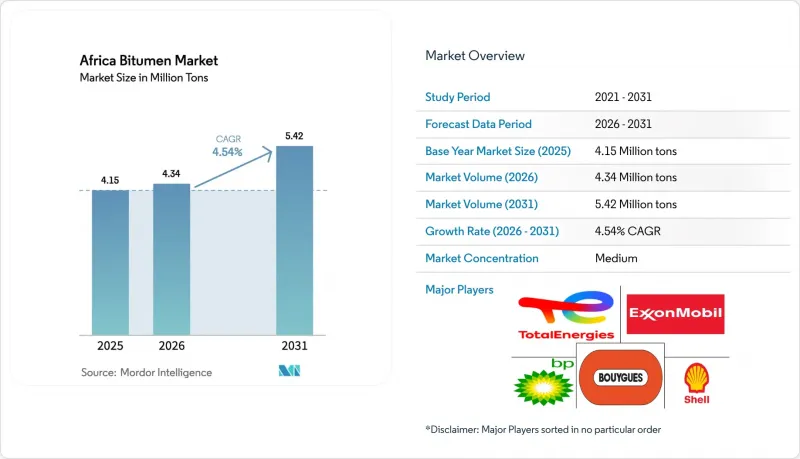
本報告按產品類型(鋪路用、硬化用、氧化用、瀝青乳液、聚合物改質瀝青及其他)、應用領域(道路建設、防水、黏合劑及其他應用)和地區(南非、奈及利亞、埃及、阿爾及利亞、摩洛哥、肯亞、衣索比亞、坦尚尼亞、象牙海岸共和國及其他非洲地區)進行細分。市場預測以噸為單位。
非洲瀝青市場趨勢與洞察
政府資助的道路網路擴建工程正在進行中。
2024年至2026年間,非洲各國政府已撥款超過250億美元用於戰略公路走廊建設,這項財政投入正在增加非洲對瀝青的潛在需求。光是奈及利亞的拉各斯-卡拉巴爾沿海公路一項,預算就高達20億美元,累計2029年通車時,每年將消耗約18萬噸聚合物改質瀝青。肯亞已為全長440公里的烏薩希希公路計畫獲得36億美元的混合融資,該計畫將於2026年動工。專案競標文件中包含一項使用溫拌瀝青的條款。阿爾及利亞南北公路的錫法-貝瓦吉亞段已於2025年7月通車,這表明「一帶一路」舉措的資金傾向於在炎熱乾燥的小氣候條件下優先使用瀝青而非混凝土。摩洛哥蓋爾西夫-納祖爾公路的建設由非洲開發銀行提供2.46億歐元貸款,確保到2028年,從納祖爾西地中海港口出發的貨物運輸將使用符合性能等級認證的瀝青路面。如今,多邊金融機構要求提交生命週期成本模型,因此,在大多數土木工程合約中,採用高性能聚合物改質路面(可將路面使用壽命延長一倍)的做法是合理的,即使路面預算保持不變,也能產生結構性需求。
對防水和屋頂防水卷材的需求正在加速成長。
在撒哈拉以南的城市,人口正以每年3.5%的速度成長,導致中層混凝土建築數量激增,這些建築開始採用無規聚丙烯(APP)或苯乙烯-丁二烯-苯乙烯(SBS)防水卷材,而非傳統的油氈紙。南非科學與工業研究理事會在2024年發布報告稱,奈米改質乳液可將屋頂表面溫度降低高達18%。為此,約翰尼斯堡的開發商正在推廣使用反射塗層,以延長屋頂的使用壽命,從10年延長至25年。奈及利亞房地產行業在2024年成長了6.2%,拉各斯的建築商現在開始採用耐鹽水地下水的自黏防水卷材,鹽水地下水是垃圾掩埋場長期存在的問題。肯亞2025年《建築標準法》規定,所有三層以上的建築物都必須進行防水處理,這將自動為瀝青防水卷材供應商在都市區贏得固定客群群。由於防水工程的收入相對不受公共預算波動的影響,因此即使公路建設預算的分配延遲,已多角化經營防水捲材業務的製造商也能減輕其收入的波動。
加強揮發性有機化合物/溫室氣體排放法規
南非的《氣候變遷法案》引進了碳預算體系,強制要求瀝青生產商在2030年之前每年減少2-3%的工廠排放量。這項規定直接提高了透水瀝青的生產成本。此外,《碳稅法案》規定,每噸二氧化碳當量(CO2e)徵收190蘭特的課稅,該稅額基於每噸瀝青3.15噸二氧化碳當量計算。該稅率每年4月調高2%加上通貨膨脹率。肯亞國家環境管理局設定了2025年菸氣中揮發性有機化合物(VOC)濃度上限為50毫克/立方公尺。這將導致內羅畢工業區的工廠維修費用超過50萬美元。埃及環境部現在強制要求所有生產瀝青的蒸餾塔安裝連續排放氣體監測系統,這實際上將無力承擔100萬美元合規設備成本的小規模私人煉油廠排除在外。由於由此產生的監管合規套利,混合生產商被迫遷往莫三比克和坦尚尼亞,現在將成品重新進口到受監管的市場。這導致供應鏈碎片化,損害了國內投資。
細分市場分析
到2025年,路面黏合劑將在非洲瀝青市場維持57.45%的市場佔有率,滿足穿越阿爾及利亞、埃及和坦尚尼亞的長途公路的最低競標要求。同時,聚合物改質瀝青的複合年成長率達到7.12%,重新定義了南非和肯亞主要交通走廊的規範。乳化瀝青的市佔率穩定成長,陽離子表面處理技術能夠以三分之一的成本將路面使用壽命延長五年。在奈及利亞和埃及,氧化瀝青的需求與屋頂施工週期同步波動,而硬瀝青仍是用於管道塗層的利基產品。 Sasol公司正在進行木質素增強生物黏合劑的試驗,以甘蔗渣衍生的化合物取代15%的瀝青,這表明未來有望開發出既能滿足碳排放稅要求又不影響抗車轍性能的混合料。
價格實現方面存在顯著差異。鋪路級瀝青與真空殘渣瀝青的交易價格相同,而聚合物改質級瀝青則可獲得每噸140至180美元的溢價,乳化瀝青在與承包微表面處理服務合約捆綁銷售時,利潤可達每噸110美元。由於碳排放稅是按黏結劑噸數徵收的,特種級瀝青的鋪路週期較長,因此其稅負可以分攤到更長的時期內,即使原油價格波動,聚合物改質級瀝青供應商也能維持定價權。投資者評估專案盈利不僅取決於加工量,還取決於添加劑生產線的柔軟性。 Tema公司新建的7500噸儲存中心展示了其透過線上計量在1小時內切換SBS和EVA改質劑的能力,從而最大限度地提高了資產運轉率。
其他好處:
- Excel格式的市場預測(ME)表
- 3個月的分析師支持
目錄
第1章:引言
- 研究假設和市場定義
- 調查範圍
第2章:調查方法
第3章執行摘要
第4章 市場狀況
- 市場概覽
- 市場促進因素
- 政府正在撥款擴建公路網。
- 防水和屋頂防水卷材的需求正在加速成長
- 聚合物改質瀝青和乳化瀝青的快速鋪展
- 都市化相關的道路維護與維修成本
- 奈及利亞天然瀝青蘊藏量的商業化
- 市場限制因素
- 加強揮發性有機化合物和溫室氣體排放法規
- 都市區主幹道上混凝土和磚塊路面的替代方案
- 原油價格波動推高了原物料成本。
- 價值鏈分析
- 波特五力模型
第5章 市場規模與成長預測
- 依產品類型
- 鋪路等級
- 硬級
- 氧化等級
- 瀝青乳液
- 聚合物改質瀝青
- 其他(稀釋瀝青、天然/再生瀝青)
- 透過使用
- 道路建設
- 防水的
- 黏合劑
- 其他用途(道路養護維修、工業塗料等)
- 按地區
- 南非
- 奈及利亞
- 埃及
- 阿爾及利亞
- 摩洛哥
- 肯亞
- 迦納
- 衣索比亞
- 坦尚尼亞
- 象牙海岸共和國
- 其他非洲國家
第6章 競爭情勢
- 市場集中度
- 策略趨勢
- 市佔率(%)分析
- 公司簡介
- All bitumen Cameroon
- Asphalt and Bitumen West Co.
- BP plc
- Exxon Mobil Corporation
- GOIL Plc
- HOLCIM
- Indian Oil Corporation Ltd
- Kraton Corporation
- Marathon Petroleum Corporation
- Nynas AB
- RAHA Bitumen, Inc.
- Richmond Group(Nigeria)
- Rubis Asphalt
- Sasol
- Shell plc
- Suncor Energy Inc.
- Tekfalt Binders(Pty)Ltd
- THE Bouygues group
- Tiger Bitumen
- TotalEnergies
- Wabeco Petroleum Ltd
第7章 市場機會與未來展望
According to Mordor Intelligence, the Africa bitumen market size is expected to grow from 4.15 Million tons in 2025 to 4.34 Million tons in 2026 and is forecast to reach 5.42 Million tons by 2031 at 4.54% CAGR over 2026-2031.The combination of rapid urban population growth, record public-sector spending on roads, and a gradual pivot toward specialty binders positions the Africa bitumen market for lengthy expansion even as sovereign balance sheets tighten.
This report is Segmented by Product Type (Paving Grade, Hard Grade, Oxidised Grade, Bitumen Emulsions, Polymer-Modified Bitumen, and Others), Application (Road Construction, Waterproofing, Adhesives, and Other Applications), and Geography (South Africa, Nigeria, Egypt, Algeria, Morocco, Kenya, Ethiopia, Tanzania, Cote D'Ivoire, and Rest of Africa). The Market Forecasts are Provided in Terms of Volume (Tons).
Africa Bitumen Market Trends and Insights
Growing Government-Funded Road-Network Expansion
Between 2024 and 2026, African sovereigns earmarked more than USD 25 billion for strategic highway corridors, a fiscal commitment that elevates the addressable volume for the Africa bitumen market. Nigeria's Lagos-Calabar coastal highway alone is budgeted at USD 2 billion and will consume roughly 180,000 tons of polymer-modified binder annually before commissioning in 2029. Kenya secured USD 3.6 billion in blended finance for the 440-kilometer Usahihi Expressway, unlocking a 2026 ground-breaking that embeds warm-mix-asphalt clauses into bid documents. Algeria's Chiffa-Berrouaghia stretch of the North-South highway, opened in July 2025, demonstrated how Belt and Road Initiative capital prefers asphalt over concrete in hot, arid micro-climates. Morocco's Guercif-Nador link received a EUR 246 million African Development Bank loan, ensuring freight traffic from the Nador West Med port will ride on performance-graded asphalt by 2028. Because multilateral lenders now require lifecycle-cost models, most engineering contracts justify premium polymer-modified overlays that double pavement life, adding structural demand even where headline budgets stay flat.
Accelerating Demand for Waterproofing and Roofing Membranes
Sub-Saharan cities are adding residents at 3.5% per year, propelling a surge in mid-rise concrete structures that specify atactic-polypropylene (APP) or styrene-butadiene-styrene (SBS) membranes over outdated tar-paper. The South African Council for Scientific and Industrial Research reported in 2024 that nano-modified emulsions lower rooftop surface temperatures by up to 18%, prompting Johannesburg developers to standardize reflective coatings that extend roof life from 10 to 25 years. Nigeria's real-estate sector grew 6.2% in 2024, and builders in Lagos now specify self-adhesive membranes capable of resisting saline groundwater, a chronic problem on reclaimed land. Kenya's 2025 building code mandates waterproofing for any structure exceeding three stories, automatically granting bitumen membrane suppliers a captive urban client base. Because waterproofing revenue is relatively immune to public-budget cycles, refiners that diversify into membranes cushion volatility when highway allocations are delayed.
Tightening VOC / GHG Emission Regulations
South Africa's Climate Change Act imposes a carbon-budget system that forces asphalt producers to trim plant-level emissions 2-3% annually until 2030, a rule that directly inflates production costs for penetration-grade bitumen. The Carbon Tax Act further levies ZAR 190 per ton CO2e, calculated at 3.15 tons CO2e per ton of bitumen, and the rate escalates at inflation plus 2% every April. Kenya's National Environment Management Authority capped stack VOCs at 50 mg/m3 in 2025, triggering retrofit bills topping USD 500,000 for every plant in Nairobi's industrial belt. Egypt's environment ministry now requires continuous emissions monitors on every distillation column producing bitumen, effectively sidelining small private refiners that cannot justify USD 1 million of compliance gear. The resulting compliance arbitrage encourages blenders to relocate to Mozambique and Tanzania, then back-haul finished product into regulated markets, fragmenting supply chains and undermining in-country investment.
Other drivers and restraints analyzed in the detailed report include:
- Rapid Adoption of Polymer-Modified and Emulsified Bitumen
- Urbanization-Led Road Maintenance and Rehabilitation Spend
- Concrete and Block-Paving Substitution in Urban Arterials
For complete list of drivers and restraints, kindly check the Table Of Contents.
Segment Analysis
Paving-grade binder retained 57.45% Africa bitumen market share in 2025, satisfying lowest-cost bids on long-haul highways across Algeria, Egypt, and Tanzania. Yet polymer-modified grades are registering a 7.12% CAGR, redefining specifications for corridors in South Africa and Kenya. Emulsions are climbing steadily because cationic surface dressing extends pavement life five years for one-third of overlay cost. Oxidized-grade demand tracks roofing cycles in Nigeria and Egypt, while hard-grade remains a niche used in pipe coating. Sasol's lignin-enhanced bio-binder trial, swapping 15% of bitumen for bagasse derivatives, hints at future blends that satisfy carbon levies without sacrificing rut resistance.
Price realization differs markedly: paving-grade trades at vacuum-residue parity; polymer-modified grades fetch premiums of USD 140-180 per ton; emulsions deliver USD 110 margins when sold with turnkey micro-surfacing service contracts. Because carbon taxes apply per ton of binder, specialty grades amortize levies over longer pavement cycles, giving polymer-modified suppliers pricing power even when crude swings. Investors gauge project returns not only on throughput but also on additive-line optionality; Tema's new 7,500-ton storage hub illustrates how in-line dosing can pivot between SBS and EVA modifiers in under an hour, maximizing asset utilization.
Complete Report Scope:
- By Product Type
- Paving Grade
- Hard Grade
- Oxidised Grade
- Bitumen Emulsions
- Polymer-Modified Bitumen
- Others (Cut-back Bitumen, natural / recycled)
- By Application
- Road Construction
- Waterproofing
- Adhesives
- Other Applications (Road Maintenance and Rehabilitation, Industrial Coatings, etc.)
- By Geography
- South Africa
- Nigeria
- Egypt
- Algeria
- Morocco
- Kenya
- Ghana
- Ethiopia
- Tanzania
- Cote d'Ivoire
- Rest of Africa
List of Companies Covered in this Report:
- All bitumen Cameroon
- Asphalt and Bitumen West Co.
- BP p.l.c.
- Exxon Mobil Corporation
- GOIL Plc
- HOLCIM
- Indian Oil Corporation Ltd
- Kraton Corporation
- Marathon Petroleum Corporation
- Nynas AB
- RAHA Bitumen, Inc.
- Richmond Group (Nigeria)
- Rubis Asphalt
- Sasol
- Shell plc
- Suncor Energy Inc.
- Tekfalt Binders (Pty) Ltd
- THE Bouygues group
- Tiger Bitumen
- TotalEnergies
- Wabeco Petroleum Ltd
Additional Benefits:
- The market estimate (ME) sheet in Excel format
- 3 months of analyst support
TABLE OF CONTENTS
1 Introduction
- 1.1 Study Assumptions and Market Definition
- 1.2 Scope of the Study
2 Research Methodology
3 Executive Summary
4 Market Landscape
- 4.1 Market Overview
- 4.2 Market Drivers
- 4.2.1 Growing Government-Funded Road-Network Expansion
- 4.2.2 Accelerating Demand for Waterproofing and Roofing Membranes
- 4.2.3 Rapid Adoption of Polymer-Modified and Emulsified Bitumen
- 4.2.4 Urbanization-Led Road Maintenance and Rehabilitation Spend
- 4.2.5 Commercialization of Nigeria's Native Bitumen Reserves
- 4.3 Market Restraints
- 4.3.1 Tightening VOC / GHG Emission Regulations
- 4.3.2 Concrete And Block-Paving Substitution in Urban Arterials
- 4.3.3 Crude Oil Price Volatility Inflating Feedstock Costs
- 4.4 Value Chain Analysis
- 4.5 Porter's Five Forces
- 4.5.1 Bargaining Power of Suppliers
- 4.5.2 Bargaining Power of Buyers
- 4.5.3 Threat of New Entrants
- 4.5.4 Threat of Substitutes
- 4.5.5 Degree of Competition
5 Market Size and Growth Forecasts (Volume)
- 5.1 By Product Type
- 5.1.1 Paving Grade
- 5.1.2 Hard Grade
- 5.1.3 Oxidised Grade
- 5.1.4 Bitumen Emulsions
- 5.1.5 Polymer-Modified Bitumen
- 5.1.6 Others (Cut-back Bitumen, natural / recycled)
- 5.2 By Application
- 5.2.1 Road Construction
- 5.2.2 Waterproofing
- 5.2.3 Adhesives
- 5.2.4 Other Applications (Road Maintenance and Rehabilitation, Industrial Coatings, etc.)
- 5.3 By Geography
- 5.3.1 South Africa
- 5.3.2 Nigeria
- 5.3.3 Egypt
- 5.3.4 Algeria
- 5.3.5 Morocco
- 5.3.6 Kenya
- 5.3.7 Ghana
- 5.3.8 Ethiopia
- 5.3.9 Tanzania
- 5.3.10 Cote d'Ivoire
- 5.3.11 Rest of Africa
6 Competitive Landscape
- 6.1 Market Concentration
- 6.2 Strategic Moves
- 6.3 Market Share(%) Analysis
- 6.4 Company Profiles (includes Global-level Overview, Market-level Overview, Core Segments, Financials, Strategic Information, Market Rank / Share, Products and Services, Recent Developments)
- 6.4.1 All bitumen Cameroon
- 6.4.2 Asphalt and Bitumen West Co.
- 6.4.3 BP p.l.c.
- 6.4.4 Exxon Mobil Corporation
- 6.4.5 GOIL Plc
- 6.4.6 HOLCIM
- 6.4.7 Indian Oil Corporation Ltd
- 6.4.8 Kraton Corporation
- 6.4.9 Marathon Petroleum Corporation
- 6.4.10 Nynas AB
- 6.4.11 RAHA Bitumen, Inc.
- 6.4.12 Richmond Group (Nigeria)
- 6.4.13 Rubis Asphalt
- 6.4.14 Sasol
- 6.4.15 Shell plc
- 6.4.16 Suncor Energy Inc.
- 6.4.17 Tekfalt Binders (Pty) Ltd
- 6.4.18 THE Bouygues group
- 6.4.19 Tiger Bitumen
- 6.4.20 TotalEnergies
- 6.4.21 Wabeco Petroleum Ltd
7 Market Opportunities and Future Outlook
- 7.1 White-space and Unmet-Need Assessment
- 7.2 Research and Development on High Performance Bitumen Products

 歐洲瀝青:市場佔有率分析、產業趨勢與統計、成長預測(2026-2031 年)瀝青乳化劑:市場佔有率分析、產業趨勢與統計、成長預測(2026-2031)
 瀝青乳化劑市場報告:趨勢、預測及競爭分析(至2035年)
 2035年環保道路路面技術市場分析與預測:按類型、產品類型、服務、技術、應用、材料類型、製程、最終用戶和解決方案分類
 瀝青市場:全球市場預測,2026-2032年瀝青:市場佔有率分析、產業趨勢與統計、成長預測(2026-2031)
 環保瀝青市場報告:按原料、等級、應用和地區分類(2026-2034 年)
 瀝青市場:按產品類型、應用和地區分類
 全球瀝青市場規模、佔有率、趨勢和成長分析報告(2026-2034年)瀝青乳化劑市場規模、佔有率、成長及全球產業分析:按類型、應用和地區分類,並預測至2026-2034年