


 |
市場調查報告書
商品編碼
2115059
亞太地區旅遊車輛租賃:市場佔有率分析、行業趨勢和統計數據以及成長預測(2026-2031 年)Asia Pacific Tourism Vehicle Rental - Market Share Analysis, Industry Trends & Statistics, Growth Forecasts (2026 - 2031) |
||||||

※ 本網頁內容可能與最新版本有所差異。詳細情況請與我們聯繫。
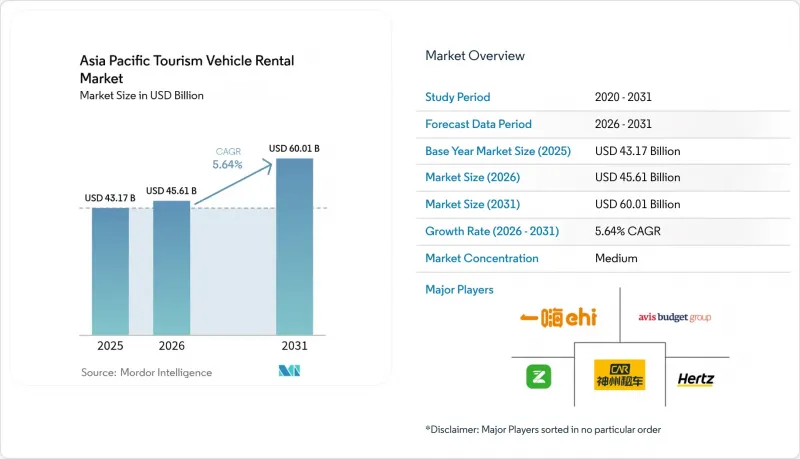
根據 Mordor Intelligence 預測,亞太地區旅遊車輛租賃市場規模將從 2025 年的 431.7 億美元成長到 2026 年的 456.1 億美元,然後在 2031 年達到 600.1 億美元,2026 年至 2031 年的複合年成長率為 5.64%。
本報告按車輛類型(經濟型轎車、SUV/MUV 及其他)、預訂方式(線上和線下)、最終用戶(自駕和代駕/租賃公司代駕)、租賃期限(短期及其他)、服務管道(機場內和機場外)以及國家/地區進行細分。市場預測以美元計價。
亞太地區旅遊車輛租賃市場趨勢及洞察。
入境和國內旅遊的復甦
赴日海外遊客數量正迅速復甦。日本的目標是到2024年接待超過3500萬遊客,並根據《日本旅遊國建設基本計劃》,力爭到2030年達到6000萬遊客,這成為該地區租車需求的新驅動力。中國國內遊客數量已超過疫情前的峰值,並計畫在2030年超越美國,成為全球最大的旅遊市場。人們對「慢旅行」和探索偏遠路線的興趣日益濃厚,推動了自駕遊和異地還車租賃的需求,尤其是在前往地區機場和歷史旅遊路線的途中。隨著遊客尋求傳統團隊遊以外的更多選擇,亞太地區的旅遊車輛租賃市場受益於從短途假期到多日遊等多樣化的預訂需求。這種復甦也刺激了對可容納多代家庭一同出行的大型車輛的需求,從而提升了SUV/MUV在亞太旅遊車輛租賃市場的受歡迎程度。
行動OTA和超級應用程式的普及
預計到2025年,東北亞地區的行動端預訂總量將創歷史新高,超過2019年的水平,進一步鞏固線上預訂的主導地位。 Grab、Gojek和滴滴等超級應用程式正在將租車功能整合到其叫車服務選單中,用戶無需切換應用程式即可完成預訂,從而將臨時出行轉變為計劃好的租車服務。對於傳統業者而言,從線下門市轉向線上管道意味著需要重新思考收費結構,並透過API整合即時庫存資訊。在泰國和印度尼西亞,整合了叫車、租車和最後一公里配送服務的超級應用行程通行證正在推動都市區千禧世代用戶數量的成長。因此,亞太地區的旅遊車輛租賃市場正在將其分銷系統重組為「任意地點取車」模式,並重新思考傳統的還車政策和後端車輛管理邏輯。
燃油價格波動
汽油價格波動給租車業者的利潤率帶來壓力,並加劇了消費者的價格敏感度,尤其是那些預付套餐費用的休閒旅客。在菲律賓和韓國等進口成品油的市場,業者正面臨貨幣貶值,這進一步推高了採購成本。動態燃油額外費用可以維持盈利,但通常會降低線上旅行社 (OTA) 定價的透明度,從而嚇退注重廉價的消費者。採用電動車 (EV) 是一種戰略性對沖,但充電基礎設施的匱乏和高昂的實施成本阻礙了成本的即時降低。因此,亞太地區的旅遊車輛租賃市場優先考慮燃油效率高的引擎和混合動力傳動系統(在有補貼的情況下),同時保持謹慎的車輛更換週期。
細分市場分析
即使到了2025年,經濟型轎車仍將佔據亞太地區旅遊車輛租賃市場41.02%的佔有率,但未來的車輛結構正向跨界車和7座MPV轉變。對SUV/MUV的需求正在改變亞太地區旅遊車輛租賃市場的經濟格局。預計到2031年,該細分市場的複合年成長率將達到5.98%,超過核心經濟型轎車,因為中等收入家庭往往更注重車內舒適性、載貨空間和安全性。來自日本的遊客經常需要適合在鄉村地區長途駕駛的混合動力SUV,而中國千禧世代則傾向選擇MUV進行海南島自駕遊。在高階市場, Lexus和BMWX5等豪華轎車正吸引著能夠報銷這些費用的澳洲商務旅客。
租車公司正享有雙重利多:一方面,由於高階車輛殘值高,平均每日租金較高;另一方面,每公里折舊免稅額成本較低。因此,許多營運商正與汽車製造商合作,為其車隊提供回購保證,以防止因供應過剩而導致殘值下降。比亞迪和MG的電動SUV已開始在新加坡和深圳的試點車隊中投入使用,為優質化趨勢增添了新的發展方向:電動車。隨著零件短缺情況的緩解,各公司正在加快訂購2026款車型,以對沖未來的供應風險。
到2025年,線上平台將佔據亞太地區旅遊車輛租賃市場63.62%的佔有率,憑藉只需輕按幾下即可完成搜尋和預訂的便利性,吸引韓國和台灣等行動網路用戶。預計到2031年,線上市場將以5.73%的複合年成長率成長。隨著與超級應用程式的整合,亞太地區旅遊車輛租賃市場已出現在叫車服務介面中,用戶只需隨意瀏覽即可產生租車意圖。然而,在寮國和柬埔寨等地區,線下門市仍然發揮著至關重要的作用,因為遊客更傾向於選擇當地的保險方案和語言翻譯服務。
將燃油政策、碰撞險豁免 (CDW) 和會員權益捆綁在一起的比價Widgets正在縮小知名品牌和獨立營運商之間的價格差距。因此,加盟商正在實施通路管理軟體,以統一其全球分銷系統 (GDS) 中的價格一致性和取消費用,從而防止收入流失。
其他好處:
- Excel格式的市場預測(ME)表
- 3個月的分析師支持
目錄
第1章:引言
- 研究假設和市場定義
- 調查範圍
第2章:調查方法
第3章執行摘要
第4章 市場狀況
- 市場概覽
- 市場促進因素
- 入境和國內旅遊的復甦
- 行動OTA與超級應用程式採用率
- 公路旅行文化的興起伴隨著中產階級的壯大。
- 透過超級應用程式購買旅遊通行證套餐
- 東協數位授權的互通性
- 電動車租賃排碳權獎勵
- 市場限制因素
- 燃油價格波動
- 叫車與旅遊即服務替代方案
- 一線城市的無移民區
- 半導體短缺導致車輛短缺
- 價值供應鏈分析
- 監理情勢
- 技術展望
- 波特五力模型
第5章 市場規模與成長預測
- 車輛類型
- 經濟
- SUV/MUV
- 豪華車/高級車
- 透過預訂方式
- 線上
- 離線
- 最終用戶
- 自動駕駛(休閒和商務)
- 駕駛人/租車公司主導
- 租賃期
- 短期(7天或更短)
- 中期(8-30天)
- 長期(超過30天)
- 服務管道
- 機場內部
- 機場外
- 國家
- 中國
- 印度
- 日本
- 澳洲和紐西蘭
- 韓國
- 印尼
- 新加坡
- 泰國
- 其他亞太國家
第6章 競爭情勢
- 市場集中度
- 策略趨勢
- 市佔率分析
- 公司簡介
- Beijing China Auto Rental(CAR Inc.)
- eHi Car Services
- Hertz Corporation
- Avis Budget Group
- Sixt SE
- Zoomcar
- Carzonrent
- Drivezy
- Shouqi Car Rental
- Top One Car Rental
- Enterprise Mobility
- Europcar Mobility Group
- Zuzuche
- Didi Chuxing(Hello Car)
- Ola Drive
- Uber Rent
- Klook Mobility
- Gojek GoCar
- GrabRentals
- Thai Rent-a-Car
第7章 市場機會與未來展望
According to Mordor Intelligence, the Asia Pacific tourism vehicle rental market size market is expected to grow from USD 43.17 billion in 2025 to USD 45.61 billion in 2026 and is forecast to reach USD 60.01 billion by 2031 at 5.64% CAGR over 2026-2031.
This report is Segmented by Vehicle Type (Economy, SUV / MUV, and More), Booking Mode (Online and Offline), End User (Self-Drive and Chauffeur / Rental-Agency Driven), Rental Duration (Short-Term and More), Service Channel (On-Airport and Off-Airport), and Country. The Market Forecasts are Provided in Terms of Value (USD).
Asia Pacific Tourism Vehicle Rental Market Trends and Insights
Rebound of inbound & domestic tourism
International arrivals are bouncing back sharply: Japan hosted more than 35 million visitors in 2024 and targets 60 million by 2030 under its Tourism Nation Promotion Basic Plan, anchoring fresh demand for regional car rentals. Domestic excursions in China already exceed pre-COVID peaks, and the country intends to eclipse the United States as the world's largest travel market by 2030. The widening appetite for "slow travel" and off-grid itineraries is driving self-drive and one-way rental uptake, particularly on secondary airport routes and heritage trails. As passengers look beyond standard group tours, the Asia Pacific tourism vehicle rental market benefits from diverse booking durations, including micro-vacations and multiday itineraries. This recovery is also sparking demand for larger vehicle classes that allow multigenerational families to travel together, fueling SUV/MUV penetration across the Asia Pacific tourism vehicle rental market.
Mobile OTA & super-app penetration
Mobile gross bookings in Northeast Asia are set to reach a new high in 2025, outpacing 2019 levels and consolidating online dominance. Super-apps such as Grab, Gojek, and Didi are embedding rental modules inside ride-hailing menus, eliminating app-switching friction and turning spontaneous trips into structured rentals. For traditional operators, the pivot from offline counters to digital funnels means repricing commission structures and integrating API-based inventory feeds in real time. In Thailand and Indonesia, super-app mobility passes that bundle rides, rentals, and last-mile delivery services are driving higher frequency among urban millennials. Consequently, the Asia Pacific tourism vehicle rental market is re-architecting distribution toward "anywhere pick-up" models, reshaping legacy return policies and backend fleet-management logic.
Volatile fuel prices
Fluctuating pump prices compress rental margins and stoke consumer price sensitivity, especially among leisure travelers who pre-pay bundles. Operators in markets importing refined products-such as the Philippines and South Korea-face currency depreciation that compounds procurement costs. Dynamic fuel surcharges can preserve yields but often erode price transparency on OTA listings, deterring bargain hunters. While EV uptake offers a strategic hedge, charging infrastructure gaps and higher acquisition costs limit immediate relief. The Asia Pacific tourism vehicle rental market therefore maintains cautious fleet renewal cycles, prioritizing fuel-efficient engine variants and hybrid powertrains where subsidies apply.
Other drivers and restraints analyzed in the detailed report include:
- Rising middle-class road-trip culture
- ASEAN digital licence interoperability
- Ride-hailing & MaaS substitution
For complete list of drivers and restraints, kindly check the Table Of Contents.
Segment Analysis
In 2025 the economy class still supplied 41.02% of Asia Pacific tourism vehicle rental market share, but future mixes skew toward crossovers and seven-seat MPVs. SUV/MUV demand is rewriting fleet economics in the Asia Pacific tourism vehicle rental market. The segment's 5.98% CAGR to 2031 outpaces the core economy class as middle-income families prioritize cabin comfort, luggage volume, and perceived safety. Japanese inbound arrivals frequently request hybrid SUVs to match long countryside drives, while Chinese millennials opt for MUVs on road trips to Hainan Island. At the high end, luxury marques like Lexus RX and BMW X5 lure corporate travelers in Australia who can offset fees via business expense claims.
Rental companies enjoy a dual benefit: higher average daily rates and lower per-kilometer depreciation due to stronger residual values of premium vehicles. Many operators therefore partner with automakers for fleet buy-back guarantees, protecting residuals against oversupply. Electric SUVs from BYD and MG are entering pilot fleets in Singapore and Shenzhen, signaling an EV twist in premiumization. With component shortages easing, firms are front-loading orders for 2026 models to hedge future supply risk.
Online portals account for 63.62% of Asia Pacific tourism vehicle rental market share in 2025, converting discovery to booking within a few taps and capturing mobile-native travelers across South Korea and Taiwan, the online segment grows at a CAGR of 5.73% through 2031. Super-app integration means the Asia Pacific tourism vehicle rental market now surfaces inside ride-hailing dashboards, turning casual scrolling into rental intent. Offline counters, however, retain importance in regions such as Laos and Cambodia where tourists prefer assistance with local insurance options and language translation.
Comparison widgets that bundle fuel policies, collision-damage waivers, and loyalty perks are narrowing perceived price gaps between big brands and independents. As a corollary, franchise operators embrace channel-management software to synchronize rate parity and cancel penalties across GDS feeds, preventing revenue leakage.
Complete Report Scope:
- By Vehicle Type
- Economy
- SUV / MUV
- Luxury / Premium
- By Booking Mode
- Online
- Offline
- By End User
- Self-drive (Leisure & Business)
- Chauffeur / Rental-agency driven
- By Rental Duration
- Short-term (Less than or equal to 7 days)
- Medium-term (8 to 30 days)
- Long-term (More than 30 days)
- By Service Channel
- On-airport
- Off-airport
- By Country
- China
- India
- Japan
- Australia & New Zealand
- South Korea
- Indonesia
- Singapore
- Thailand
- Rest of Asia Pacific
List of Companies Covered in this Report:
- Beijing China Auto Rental (CAR Inc.)
- eHi Car Services
- Hertz Corporation
- Avis Budget Group
- Sixt SE
- Zoomcar
- Carzonrent
- Drivezy
- Shouqi Car Rental
- Top One Car Rental
- Enterprise Mobility
- Europcar Mobility Group
- Zuzuche
- Didi Chuxing (Hello Car)
- Ola Drive
- Uber Rent
- Klook Mobility
- Gojek GoCar
- GrabRentals
- Thai Rent-a-Car
Additional Benefits:
- The market estimate (ME) sheet in Excel format
- 3 months of analyst support
TABLE OF CONTENTS
1 Introduction
- 1.1 Study Assumptions & Market Definition
- 1.2 Scope of the Study
2 Research Methodology
3 Executive Summary
4 Market Landscape
- 4.1 Market Overview
- 4.2 Market Drivers
- 4.2.1 Rebound of inbound & domestic tourism
- 4.2.2 Mobile OTA & super-app penetration
- 4.2.3 Rising middle-class road-trip culture
- 4.2.4 Mobility-pass bundles via super-apps
- 4.2.5 ASEAN digital licence interoperability
- 4.2.6 Carbon-credit incentives for EV rentals
- 4.3 Market Restraints
- 4.3.1 Volatile fuel prices
- 4.3.2 Ride-hailing & MaaS substitution
- 4.3.3 Urban ICE-free zones in tier-1 cities
- 4.3.4 Semiconductor-linked fleet shortages
- 4.4 Value / Supply-Chain Analysis
- 4.5 Regulatory Landscape
- 4.6 Technological Outlook
- 4.7 Porter's Five Forces
- 4.7.1 Bargaining Power of Suppliers
- 4.7.2 Bargaining Power of Buyers / Consumers
- 4.7.3 Threat of New Entrants
- 4.7.4 Threat of Substitutes
- 4.7.5 Intensity of Competitive Rivalry
5 Market Size & Growth Forecasts (Value (USD))
- 5.1 By Vehicle Type
- 5.1.1 Economy
- 5.1.2 SUV / MUV
- 5.1.3 Luxury / Premium
- 5.2 By Booking Mode
- 5.2.1 Online
- 5.2.2 Offline
- 5.3 By End User
- 5.3.1 Self-drive (Leisure & Business)
- 5.3.2 Chauffeur / Rental-agency driven
- 5.4 By Rental Duration
- 5.4.1 Short-term (Less than or equal to 7 days)
- 5.4.2 Medium-term (8 to 30 days)
- 5.4.3 Long-term (More than 30 days)
- 5.5 By Service Channel
- 5.5.1 On-airport
- 5.5.2 Off-airport
- 5.6 By Country
- 5.6.1 China
- 5.6.2 India
- 5.6.3 Japan
- 5.6.4 Australia & New Zealand
- 5.6.5 South Korea
- 5.6.6 Indonesia
- 5.6.7 Singapore
- 5.6.8 Thailand
- 5.6.9 Rest of Asia Pacific
6 Competitive Landscape
- 6.1 Market Concentration
- 6.2 Strategic Moves
- 6.3 Market Share Analysis
- 6.4 Company Profiles (includes Global Level Overview, Market Level Overview, Core Segments, Financials as Available, Strategic Information, Market Rank/Share for Key Companies, Products and Services, SWOT Analysis, and Recent Developments)
- 6.4.1 Beijing China Auto Rental (CAR Inc.)
- 6.4.2 eHi Car Services
- 6.4.3 Hertz Corporation
- 6.4.4 Avis Budget Group
- 6.4.5 Sixt SE
- 6.4.6 Zoomcar
- 6.4.7 Carzonrent
- 6.4.8 Drivezy
- 6.4.9 Shouqi Car Rental
- 6.4.10 Top One Car Rental
- 6.4.11 Enterprise Mobility
- 6.4.12 Europcar Mobility Group
- 6.4.13 Zuzuche
- 6.4.14 Didi Chuxing (Hello Car)
- 6.4.15 Ola Drive
- 6.4.16 Uber Rent
- 6.4.17 Klook Mobility
- 6.4.18 Gojek GoCar
- 6.4.19 GrabRentals
- 6.4.20 Thai Rent-a-Car
7 Market Opportunities & Future Outlook
- 7.1 White-space & Unmet-need Assessment

 美國堆高機租賃:市場佔有率分析、產業趨勢與統計、成長預測(2026-2031)堆高機租賃:市場佔有率分析、產業趨勢與統計、成長預測(2026-2031)歐洲旅遊車輛租賃:市場佔有率分析、產業趨勢與統計及成長預測(2026-2031 年)
 印度商用車租賃市場:規模、佔有率、成長、全球產業分析、區域趨勢以及 2026 年至 2034 年的預測。
 2026 年至 2035 年商用車租賃市場的商業機會、成長要素、產業趨勢與預測。
 冷藏車租賃市場分析及預測(至2035年):類型、產品、服務、技術、應用、最終用戶、功能、設備、解決方案對商用車租賃市場進行分析和預測,直至 2035 年:按類型、產品、服務、技術、組件、應用、部署、最終用戶和解決方案進行分析和預測。
 旅遊車輛租賃市場規模、佔有率、趨勢和預測:按車輛類型、預訂方式、最終用戶和地區分類(2026-2034 年)商用車租賃市場規模、佔有率、成長及全球產業分析:按類型、應用和地區分類,並預測至2026-2034年
 堆高機租賃市場:2026-2032年全球市場預測(按型號、負載容量、租賃期限、應用和最終用途行業分類)