


 |
市場調查報告書
商品編碼
2113885
拉丁美洲作物保護化學品(殺蟲劑):市場佔有率分析、行業趨勢和統計數據以及成長預測(2026-2031 年)Latin America Crop Protection Chemicals (Pesticides) - Market Share Analysis, Industry Trends & Statistics, Growth Forecasts (2026 - 2031) |
||||||

※ 本網頁內容可能與最新版本有所差異。詳細情況請與我們聯繫。
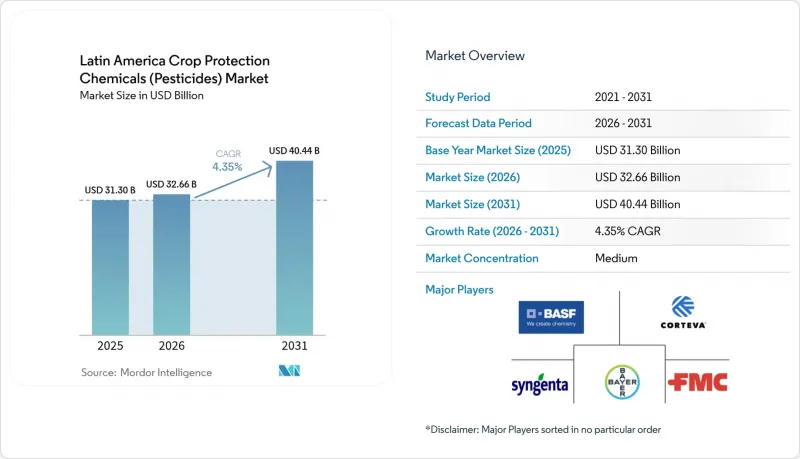
根據 Mordor Intelligence 預測,拉丁美洲作物保護化學品(殺蟲劑)的市場規模預計將從 2025 年的 313 億美元成長到 2026 年的 326.6 億美元,到 2031 年將達到 404.4 億美元,2026 年至 2031 年的複合年成長率為 4.35%。
本報告依作用機制(除草劑、殺菌劑等)、應用領域(穀物、豆類和油籽、水果和蔬菜、經濟作物、草坪和觀賞植物)以及地區(巴西、阿根廷、智利和其他拉丁美洲國家)進行分類。市場預測以美元計價。
拉丁美洲作物保護化學品(殺蟲劑)市場的趨勢和洞察。
大豆和玉米種植面積迅速擴大
2024年,巴西大豆種植面積增加了120萬公頃,由於抗Glyphosate品種的出現,每季需要多次施藥,這推高了除草劑的需求。阿根廷玉米種植面積的恢復,也帶動了發芽前除草劑需求的復甦。在巴西中部和西部,為了縮短施藥週期,雙季玉米種植者更傾向於使用速效配方。巴拉圭和玻利維亞種植面積的擴大,以及由於無毀林認證而增加的投入品使用量,正在擴大市場範圍。這些趨勢共同推動了拉丁美洲作物保護化學品(農藥)市場除草劑的強勁銷售量。
害蟲對傳統化學物質的抗藥性增強
2024年,馬托格羅索州的一項田間調查證實了抗氰蟲醯胺的秋鶯的存在,迫使種植者改用新型二醯胺類除草劑。在阿根廷的大豆種植帶,與抗Glyphosate的長芒莧的鬥爭仍在繼續,這場鬥爭已蔓延至30%的種植面積,導致多層施用殘效除草劑的成本增加了20%至25%。在墨西哥的蔬菜種植業,擬除蟲菊酯類除草劑的藥效下降已被報道,加速了新菸鹼類種子處理劑的推廣應用。日益嚴重的抗藥性推高了投入成本,使差異化活性成分更具優勢,並使拉丁美洲作物保護化學品(農藥)市場的創新企業受益。
主要出口市場嚴格的最高殘留標準
由於歐盟和北美買家降低了農藥殘留基準值,智利藍莓產業被迫轉向生物來源殺菌劑,儘管成本更高。秘魯酪梨出口商在2024年面臨採前合規相關成本增加12%的局面。雖然墨西哥莓果產業已投資實驗室檢測,但小規模仍落後。因此,出口導向企業傾向於使用殘留量較低的優質產品,而國內生產商則繼續使用傳統的合成農藥,這導致拉丁美洲作物保護化學品(農藥)市場的需求兩極化。
細分市場分析
到2025年,除草劑將佔銷售額的46.60%,這反映了其在犁地大豆和玉米項目中的基礎性作用。監管方面的阻力正在推動製劑生產商進行創新,例如研發低揮發性麥草畏、草銨膦和新型HPPD抑制劑。殺菌劑雖然市場規模較小,但其複合年成長率(CAGR)高達4.95%,超過了所有其他類別。智利和秘魯的出口水果種植者正在採用芽孢桿菌和植物來源混合物來滿足超級市場標準。
殺蟲劑的需求呈現兩極化:合成擬除蟲菊酯類殺蟲劑在蔬菜種植中的使用量下降,而二醯胺類殺蟲劑則在玉米和棉花種植中作為防治黏蟲的手段而不斷擴大。這種作用機制的多樣化正在加速作物輪作,並對市場價值起到緩衝作用,使其免受單一活性成分禁用的影響。抗藥性管理正在推動產品組合的變化。種植者目前透過輪換使用三唑類、甲氧基丙烯酸酯類和SDHI類殺菌劑來防治大豆銹病,延長合成殺菌劑的藥效。供應商正透過預混合料和客製化的管理方案來滿足這一需求,從而提高拉丁美洲作物保護化學品(農藥)市場的客戶留存率。
其他好處:
- Excel格式的市場預測(ME)表
- 3個月的分析師支持
目錄
第1章:引言
- 研究假設和市場定義
- 調查範圍
第2章:調查方法
第3章執行摘要
第4章 市場狀況
- 市場概覽
- 市場促進因素
- 大豆和玉米種植面積迅速擴大
- 害蟲對傳統殺蟲劑的抗藥性增強
- 入侵物種(如棉鈴蟲)造成的壓力增加
- 具有多種性狀的基因改造種子正被廣泛使用。
- 整合人工智慧驅動的處方配藥平台
- 排碳權計劃,旨在獎勵有助於提高產量的投入材料。
- 市場限制因素
- 主要出口市場對殘留物含量有嚴格的基準值
- 由活動人士主導的禁止使用殺蟲劑的運動正在加劇。
- 在商品價格波動劇烈的情況下,農民的銷售利潤空間越來越小。
- 亞洲仿冒品跨境湧入
- 監理情勢
- 技術展望
- 波特五力分析
第5章 市場區隔
- 作用機制
- 除草劑
- 消毒劑
- 殺蟲劑
- 其他作用機制
- 目的
- 穀物和穀類
- 豆類和油籽
- 水果和蔬菜
- 經濟作物
- 草坪和觀賞植物
- 地區
- 巴西
- 阿根廷
- 智利
- 其他拉丁美洲國家
第6章 競爭情勢
- 市佔率分析
- 最常採用的策略
- 公司簡介
- BASF SE
- Bayer CropScience AG
- Syngenta AG
- Corteva Agriscience
- FMC Corporation
- Sumitomo Chemical Company Limited
- UPL Limited
- American Vanguard Corporation
- ADAMA Ltd
- Isagro SpA
- Nutrien Ltd
- Bioceres Crop Solutions Corp
- Albaugh LLC
- Sipcam-Oxon Group
- Ihara do Brasil
- Ourofino Agrociencia
- Nortox SA
- Rainbow Agro
第7章 市場機會與未來展望
According to Mordor Intelligence, the Latin America crop protection chemicals (Pesticides) market size is expected to grow from USD 31.30 billion in 2025 to USD 32.66 billion in 2026 and is forecast to reach USD 40.44 billion by 2031 at 4.35% CAGR over 2026-2031.
This report is Segmented by Mode of Action (Herbicide, Fungicide, and More), by Application (Grains and Cereals, Pulses and Oilseeds, Fruits and Vegetables, Commercial Crops, and Turf and Ornamentals), and by Geography (Brazil, Argentina, Chile, and Rest of Latin America). The Market Forecasts are Provided in Terms of Value (USD).
Latin America Crop Protection Chemicals (Pesticides) Market Trends and Insights
Rapid Expansion of Soybean and Corn Acreage
Brazil added 1.2 million hectares of soybeans in 2024, lifting herbicide demand as glyphosate-tolerant varieties require multiple passes per season. Argentina's corn area rebounded, renewing appetite for pre-emergence herbicides. Second-crop corn in Brazil's Center-West compresses application windows, favoring quick-acting formulations. Acreage growth in Paraguay and Bolivia extends market reach as deforestation-free certification raises input intensity. Together, these trends underpin herbicide volume resilience in the Latin America crop protection chemicals (Pesticides) market.
Increasing Pest Resistance to Older Chemistries
Field research confirmed cyantraniliprole-resistant Fall armyworm in Mato Grosso during 2024, forcing growers into newer diamide options. Argentina's soybean belt battles glyphosate-resistant Palmer amaranth across 30% of area, lifting residual herbicide layering costs by 20% to 25%. Mexico's vegetable sector reports declining pyrethroid efficacy, accelerating uptake of neonicotinoid seed treatments. Resistance escalates input spending and favors differentiated actives, benefiting innovators in the Latin America crop protection chemicals (Pesticides) market.
Stringent Maximum-Residue Limits in Key Export Markets
EU and North American buyers lowered residue thresholds, compelling Chile's blueberry sector to swap into biological fungicides despite higher costs. Peru's avocado exporters saw pre-harvest compliance expenses rise 12% in 2024. Mexico's berry industry invested in laboratory testing, yet smallholders lag. Export-oriented segments therefore gravitate to premium low-residue products, while domestic growers stay with legacy synthetics, segmenting demand in the Latin America crop protection chemicals (Pesticides) market.
Other drivers and restraints analyzed in the detailed report include:
- Intensifying Pressure from Invasive Species Such as Helicoverpa armigera
- Growing Adoption of Stacked-Trait Genetically Modified (GM) Seeds
- Escalating Activist-Driven Pesticide Bans
For complete list of drivers and restraints, kindly check the Table Of Contents.
Segment Analysis
Herbicides accounted for 46.60% of revenue in 2025, reflecting their foundational role in no-till soybean and corn programs. Regulatory headwinds spur formulators to innovate with lower-volatility dicamba, glufosinate, and novel HPPD inhibitors. Fungicides, although smaller in base, advance at a 4.95% CAGR, outpacing all other categories. Export fruit growers in Chile and Peru deploy Bacillus and botanical blends to satisfy supermarket standards.
Insecticide demand bifurcates, where synthetic pyrethroids taper in vegetables, while diamide classes grow in corn and cotton to combat armyworm. Mode-of-action diversification, therefore, accelerates rotation practices and cushions market value against individual active ingredient bans. Resistance management drives product mix shifts. Growers now rotate triazole, strobilurin, and SDHI fungicides for soybean rust to prolong synthetic efficacy. Suppliers leverage this need with pre-mix packs and tailored stewardship programs, enhancing stickiness within the Latin America crop protection chemicals (pesticides) market.
Complete Report Scope:
- Mode of Action
- Herbicide
- Fungicide
- Insecticide
- Other Modes of Action
- Application
- Grains and Cereals
- Pulses and Oilseeds
- Fruits and Vegetables
- Commercial Crops
- Turf and Ornamentals
- Geography
- Brazil
- Argentina
- Chile
- Rest of Latin America
List of Companies Covered in this Report:
- BASF SE
- Bayer CropScience AG
- Syngenta AG
- Corteva Agriscience
- FMC Corporation
- Sumitomo Chemical Company Limited
- UPL Limited
- American Vanguard Corporation
- ADAMA Ltd
- Isagro SpA
- Nutrien Ltd
- Bioceres Crop Solutions Corp
- Albaugh LLC
- Sipcam-Oxon Group
- Ihara do Brasil
- Ourofino Agrociencia
- Nortox S.A.
- Rainbow Agro
Additional Benefits:
- The market estimate (ME) sheet in Excel format
- 3 months of analyst support
TABLE OF CONTENTS
1 INTRODUCTION
- 1.1 Study Assumptions and Market Definition
- 1.2 Scope of the Study
2 RESEARCH METHODOLOGY
3 EXECUTIVE SUMMARY
4 MARKET LANDSCAPE
- 4.1 Market Overview
- 4.2 Market Drivers
- 4.2.1 Rapid expansion of soybean and corn acreage
- 4.2.2 Increasing pest resistance to older chemistries
- 4.2.3 Intensifying pressure from invasive species such as Helicoverpa armigera
- 4.2.4 Growing adoption of stacked-trait GM seeds
- 4.2.5 Integration of AI-based prescription spraying platforms
- 4.2.6 Carbon-credit programs rewarding yield-boosting inputs
- 4.3 Market Restraints
- 4.3.1 Stringent maximum-residue limits in key export markets
- 4.3.2 Escalating activist-driven pesticide bans
- 4.3.3 Tight farm-gate margins amid volatile commodity prices
- 4.3.4 Cross-border counterfeit product inflows from Asia
- 4.4 Regulatory Landscape
- 4.5 Technological Outlook
- 4.6 Porter's Five Forces Analysis
- 4.6.1 Bargaining Power of Suppliers
- 4.6.2 Bargaining Power of Buyers
- 4.6.3 Threat of New Entrants
- 4.6.4 Threat of Substitute Products
- 4.6.5 Intensity of Competitive Rivalry
5 MARKET SEGMENTATION
- 5.1 Mode of Action
- 5.1.1 Herbicide
- 5.1.2 Fungicide
- 5.1.3 Insecticide
- 5.1.4 Other Modes of Action
- 5.2 Application
- 5.2.1 Grains and Cereals
- 5.2.2 Pulses and Oilseeds
- 5.2.3 Fruits and Vegetables
- 5.2.4 Commercial Crops
- 5.2.5 Turf and Ornamentals
- 5.3 Geography
- 5.3.1 Brazil
- 5.3.2 Argentina
- 5.3.3 Chile
- 5.3.4 Rest of Latin America
6 COMPETITIVE LANDSCAPE
- 6.1 Market Share Analysis
- 6.2 Most Adopted Strategies
- 6.3 Company Profiles (Includes Global Level Overview, Market Level Overview, Core Segments, Financials as Available, Strategic Information, Market Rank/Share for Key Companies, Products and Services, and Recent Developments)
- 6.3.1 BASF SE
- 6.3.2 Bayer CropScience AG
- 6.3.3 Syngenta AG
- 6.3.4 Corteva Agriscience
- 6.3.5 FMC Corporation
- 6.3.6 Sumitomo Chemical Company Limited
- 6.3.7 UPL Limited
- 6.3.8 American Vanguard Corporation
- 6.3.9 ADAMA Ltd
- 6.3.10 Isagro SpA
- 6.3.11 Nutrien Ltd
- 6.3.12 Bioceres Crop Solutions Corp
- 6.3.13 Albaugh LLC
- 6.3.14 Sipcam-Oxon Group
- 6.3.15 Ihara do Brasil
- 6.3.16 Ourofino Agrociencia
- 6.3.17 Nortox S.A.
- 6.3.18 Rainbow Agro
7 MARKET OPPORTUNITIES AND FUTURE OUTLOOK

 義大利作物保護化學品(殺蟲劑):市場佔有率分析、行業趨勢和統計數據以及成長預測(2026-2031 年)泰國作物保護化學品:市場佔有率分析、產業趨勢與統計及成長預測(2026-2031)
 作物保護化學品市場:2026-2032年全球市場預測(依產品類型、作物類型、施用方法、製劑形式及銷售管道)
 作物保護化學殺蟲劑市場預測至2034年-全球分析(按產品類型、產地、劑型、施用方法、作物類型、害蟲類型、通路和地區分類)永續作物保護市場預測至2034年—按產品類型、作物類型、應用、原料、最終用戶和地區分類的全球分析
 作物保護化學品市場機會、成長促進因素、產業趨勢分析及預測(2026-2035)作物保護化學品市場預測至2034年-按產品類型、作物類型、產地、配方、應用方法和地區分類的全球分析
 作物保護化學品市場規模、佔有率、趨勢和預測:按產品類型、產地、作物類型、劑型、應用方法和地區分類,2026-2034年
 農藥市場:依產地、類型、應用及地區分類
 作物保護化學品市場規模、佔有率和趨勢分析報告:按產品、應用、地區和細分市場分類(2026-2033 年)