


 |
市場調查報告書
商品編碼
2100648
中東和非洲生物肥料:市場佔有率分析、行業趨勢和統計數據以及成長預測(2026-2031 年)Middle East and Africa Biofertilizers - Market Share Analysis, Industry Trends & Statistics, Growth Forecasts (2026 - 2031) |
||||||

※ 本網頁內容可能與最新版本有所差異。詳細情況請與我們聯繫。
據 Mordor Intelligence 稱,2025 年中東和非洲的生物肥料市場價值為 3.151 億美元,預計到 2031 年將達到 5.427 億美元,而 2026 年為 3.439 億美元,預測期(2026-2031 年)的複合成長率為 9.55%。
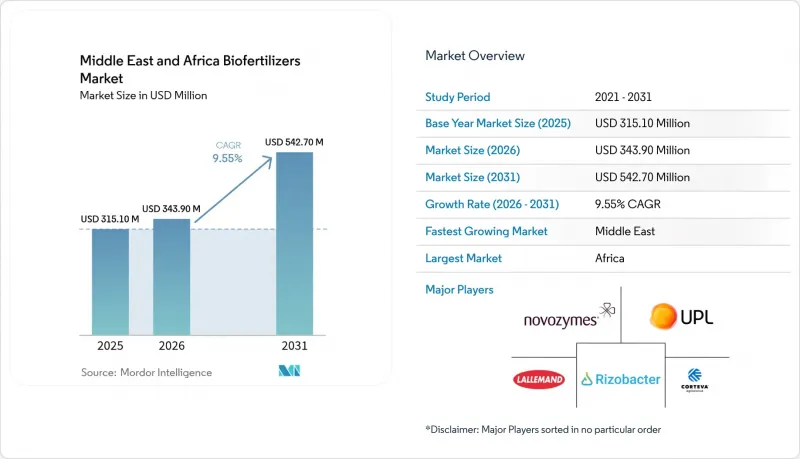
本報告按微生物類型(根瘤菌屬、固氮螺菌、固氮菌、菌根真菌、磷溶性細菌及其他微生物)、作物類型(大田作物、園藝作物、經濟作物)和地區(非洲和中東)進行細分。市場預測以價值(美元)和數量(公噸)表示。
中東和非洲生物肥料市場的趨勢和洞察
有機認證農地快速擴張
根據《2025年世界有機農業報告》,2023年非洲有機認證農地面積達340萬公頃,較去年同期成長24%。中東和非洲主要市場的有機認證面積在2019年至2024年間持續成長,其中埃及、肯亞和南非的普及率最高。這一成長趨勢正在加速對生物肥料的需求,因為有機認證標準要求使用生物來源投入物而非合成替代品。有機農業法規禁止使用大多數合成營養素,迫使生產合作社採用根瘤菌和固氮螺菌接種劑進行氮磷管理。非洲大陸自由貿易區(AfCFTA)下的貿易協調進一步擴大了目標基本客群,使肯亞供應商無需重複註冊即可觸及北非和西非的買家。摩洛哥的「綠色摩洛哥」計畫投入大量資源支持向有機農業轉型,優先發展生物來源材料,並建立品質認證的法律規範。分銷網路的擴張直接推動了中東和非洲生物肥料市場對生物基材料的需求。
政府對生物材料的補貼和優惠進口關稅
全部區域政府的補貼計畫正日益傾向生物來源投入品。摩洛哥的有機投入品補貼計畫降低了農民採用生物基投入品的成本,使其低於未獲補貼的合成替代品。沙烏地阿拉伯環境、水利和農業部正根據其「2030願景」永續性目標,為實施生物營養管理系統的溫室經營者提供有針對性的支援。這些政策轉變體現了一項戰略性認知,即生物來源投入品有助於實現糧食安全目標,同時降低對進口的依賴。阿拉伯聯合大公國(阿拉伯聯合大公國)的《2051年國家糧食安全戰略》明確優先考慮本地生產技術,包括用於可控環境農業的微生物接種劑。南非的《肥料、飼料、農業化學品和畜牧化學品法》下的法律規範為生物肥料的註冊提供了明確的途徑。這些財政獎勵透過縮小與補貼尿素的成本差距並鼓勵初步試驗,正在加速中東和非洲生物肥料市場的普及。
合成肥料的優點在於其獲得了大量補貼。
奈及利亞和埃及等國的國家級化肥補貼計畫為合成肥料提供了結構性優勢,限制了價格敏感型市場領域對生物來源肥料的採用。在奈及利亞,化肥補貼旨在提高糧食安全,但卻無意中透過維持進口合成肥料的人為價格優勢限制了生物基肥料的使用。同樣,在埃及,尿素價格受到管制,其價格遠低於自由市場價格,這為微生物肥料的推廣設置了成本壁壘。儘管有旨在改善土壤健康的管理方案,但這些定價政策導致農民更傾向於選擇快速釋放養分的肥料。然而,隨著各國政府尋求在緩解預算壓力的同時提高農業生產力的成本效益解決方案,維持這些補貼計畫的財政負擔未來可能為生物來源肥料的發展帶來機會。
細分市場分析
至2025年,根瘤菌接種劑將佔中東和非洲生物肥料市場佔有率的44.5%,並在2026年至2031年間保持9.8%的最高複合年成長率。這反映了肯亞、摩洛哥和南非鷹嘴豆、扁豆和大豆輪作的普遍性。由於磷酸二銨價格飆升,生產者需要溶磷細菌來有效利用土壤中的天然磷。固氮螺菌和固氮菌屬在穀物種植系統中正在擴張,因為固氮作用可以在不降低產量的情況下減少合成尿素的使用。菌根產品在海灣國家和北非的園藝領域越來越受歡迎,用於提高鹽鹼土壤的水分利用效率。
在機械化農場中,根瘤菌種子處理已成為主流,因為包衣生產線能夠確保均勻覆蓋並快速形成根瘤。顆粒狀混合土壤施用產品在犁地中施用微生物的小規模農戶中仍然很受歡迎,儘管其田間效果會因土壤濕度而異。結合固氮菌和溶磷菌的複合配方正日益普及,因為它們一次施用即可提供多種營養,並減少人工投入。微生物作用機制的多樣性正在擴大基本客群,並支撐著中東和非洲生物肥料市場的穩定銷售量成長。
其他好處:
- Excel格式的市場預測(ME)表
- 3個月的分析師支持
目錄
第1章:引言
- 研究假設和市場定義
- 調查範圍
第2章:調查方法
第3章執行摘要
第4章 市場狀況
- 市場概覽
- 市場促進因素
- 有機認證農地快速擴張
- 政府對生物投入材料的補貼和優惠進口關稅
- 合成肥料價格的波動正在推動投入材料的替代。
- 沿岸地區土壤鹽漬防治方案
- 乾旱地區高科技溫室的面積正在迅速增加。
- 土壤微生物組排碳權試點項目
- 市場限制因素
- 補貼化肥的優勢
- 農民意識薄弱,推廣體係不健全。
- 由於監管漏洞,仿冒品/劣質接種劑氾濫
- 液體藥品低溫運輸物流面臨的挑戰
- 監理情勢
- 技術展望
- 波特五力分析
第5章 市場規模與成長預測
- 依微生物類型
- 根瘤菌
- 固氮菌
- 固氮螺菌
- 磷酸鹽可溶性細菌
- 菌根
- 其他微生物
- 按作物類型
- 大田作物
- 園藝作物
- 經濟作物
- 按地區
- 非洲
- 南非
- 奈及利亞
- 埃及
- 其他非洲國家
- 中東
- 伊朗
- 沙烏地阿拉伯
- 其他中東國家
- 非洲
第6章 競爭情勢
- 市場集中度
- 策略趨勢
- 市佔率分析
- 公司簡介
- Novonesis Group
- UPL Limited
- Lallemand Inc.
- Rizobacter Argentina SA(Bioceres Crop Solutions Corp.)
- FMC Corporation
- Koppert BV
- IPL Biologicals Limited
- Groundwork BioAg Ltd.
- Biobest Group NV(Floridienne)
- Biomax Technologies Pte. Ltd.
- Mapleton Agri Biotec Pty Ltd
- BASF SE
- Bayer AG
- Corteva Agriscience
第7章 市場機會與未來展望
According to Mordor Intelligence, the Middle East and Africa biofertilizers market size was valued at USD 315.10 million in 2025 and estimated to grow from USD 343.90 million in 2026 to reach USD 542.70 million by 2031, at a CAGR of 9.55% during the forecast period (2026-2031).
This report is Segmented by Microorganism Type (Rhizobium, Azospirillum, Azotobacter, Mycorrhiza, Phosphate Solubilizing Bacteria, and Other Microorganism Types), by Crop Type (Row Crops, Horticultural Crops and Cash Crops), and by Geography (Africa and the Middle East). The Market Forecasts are Provided in Terms of Value (USD) and Volume (Metric Tons).
Middle East and Africa Biofertilizers Market Trends and Insights
Rapid Expansion of Organically Certified Farmland
The "World of Organic Agriculture 2025" report states that certified organic farmland in Africa has reached 3.4 million hectares in 2023, recording a 24% increase in organic farmland. Certified organic acreage across key Middle East and Africa markets expanded between 2019 and 2024, with Egypt, Kenya, and South Africa leading adoption rates. This growth trajectory accelerates biofertilizer demand as organic certification standards mandate biological inputs over synthetic alternatives. The organic rule set prohibits most synthetic nutrients and has pushed grower cooperatives to adopt Rhizobium and Azospirillum inoculants for nitrogen and phosphorus management. Trade harmonization under the African Continental Free Trade Area is letting Kenyan suppliers reach North and West African buyers without duplicate registrations, further widening the addressable customer base. Morocco's Green Morocco Plan has allocated significant resources to organic transition support, creating regulatory frameworks that favor biological inputs and establish quality certification pathways. The enlarged distribution footprint directly lifts demand for biobased inputs within the Middle East and Africa biofertilizers market.
Government Subsidies and Preferential Import Duty Waivers for Bio Inputs
Government subsidy schemes across the region increasingly favor biological inputs, with Morocco's organic-input subsidy program reducing farmer adoption costs compared to unsubsidized synthetic alternatives. Saudi Arabia's Ministry of Environment, Water, and Agriculture has implemented targeted support for greenhouse operators adopting biological nutrient management systems, aligning with Vision 2030 sustainability objectives. These policy shifts reflect strategic recognition that biological inputs support food security goals while reducing import dependency. The UAE's National Food Security Strategy 2051 explicitly prioritizes local production technologies, including microbial inoculants for controlled environment agriculture. South Africa's regulatory framework under the Fertilizers, Farm Feeds, Agricultural Remedies and Stock Remedies Act provides clear pathways for biofertilizer registration. These fiscal incentives shrink the cost gap with subsidized urea and encourage first-time trials, accelerating penetration across the Middle East and Africa biofertilizers market.
Dominance of Heavily Subsidized Synthetic Fertilizers
National fertilizer subsidy programs in countries such as Nigeria and Egypt provide structural advantages to synthetic inputs, limiting the adoption of biological alternatives in price-sensitive market segments. In Nigeria, the fertilizer subsidy program, while aimed at enhancing food security, unintentionally restricts the use of biofertilizers by sustaining artificial price advantages for imported synthetic fertilizers. Similarly, Egypt enforces a controlled price for urea, which is significantly lower than the free-market price, creating a cost barrier for microbial alternatives. These pricing policies encourage farmers to favor fertilizers with quick nutrient release, despite stewardship programs promoting practices for improved soil health. However, the fiscal burden of maintaining these subsidy programs may present future opportunities for biological inputs, as governments explore cost-effective solutions to enhance agricultural productivity while alleviating budgetary pressures.
Other drivers and restraints analyzed in the detailed report include:
- Volatile Synthetic Fertilizer Prices Driving Input Substitution
- Boom in High Tech Greenhouse Acreage in Arid Economies
- Low Farmer Awareness and Weak Extension Networks
For complete list of drivers and restraints, kindly check the Table Of Contents.
Segment Analysis
Rhizobium inoculants captured 44.5% of the Middle East and Africa biofertilizers market share in 2025 and exhibited the fastest growing CAGR of 9.8% from 2026-2031, reflecting the dominance of chickpea, lentil, and soybean rotations in Kenya, Morocco, and South Africa. Phosphate-solubilizing bacteria are being sought by growers to unlock native phosphorus in soils facing high diammonium phosphate prices. Azospirillum and Azotobacter segments are expanding in cereal systems where nitrogen fixation can trim synthetic urea without yield losses. Mycorrhizal products are penetrating Gulf and North African horticulture because they improve water-use efficiency in saline soils.
Rhizobium seed treatments now dominate mechanized farms because coating lines ensure uniform coverage and rapid nodulation. Soil-applied granular blends remain popular among smallholders who broadcast microbes during land preparation, even though field performance varies with moisture. Bundled consortia that pair nitrogen fixers with phosphate solubilizers are gaining favor because they deliver multiple nutrients in one pass, lowering labor. The diversity of microbial modes of action broadens the customer base and supports steady volume growth for the Middle East and Africa biofertilizers market.
Complete Report Scope:
- By Microorganism Type
- Rhizobium
- Azotobacter
- Azospirillum
- Phosphate-solubilizing Bacteria
- Mycorrhiza
- Other Microorganisms
- By Crop Type
- Row Crops
- Horticultural Crops
- Cash Crops
- By Geography
- Africa
- South Africa
- Nigeria
- Egypt
- Rest of Africa
- Middle East
- Iran
- Saudi Arabia
- Rest of Middle East
- Africa
List of Companies Covered in this Report:
- Novonesis Group
- UPL Limited
- Lallemand Inc.
- Rizobacter Argentina S.A. (Bioceres Crop Solutions Corp.)
- FMC Corporation
- Koppert B.V.
- IPL Biologicals Limited
- Groundwork BioAg Ltd.
- Biobest Group N.V. (Floridienne)
- Biomax Technologies Pte. Ltd.
- Mapleton Agri Biotec Pty Ltd
- BASF SE
- Bayer AG
- Corteva Agriscience
Additional Benefits:
- The market estimate (ME) sheet in Excel format
- 3 months of analyst support
TABLE OF CONTENTS
1 Introduction
- 1.1 Study Assumptions and Market Definition
- 1.2 Scope of the Study
2 Research Methodology
3 Executive Summary
4 Market Landscape
- 4.1 Market Overview
- 4.2 Market Drivers
- 4.2.1 Rapid expansion of organically certified farmland
- 4.2.2 Government subsidies and preferential import-duty waivers for bio-inputs
- 4.2.3 Volatile synthetic fertilizer prices driving input substitution
- 4.2.4 Salinity-mitigation programs in Gulf soils
- 4.2.5 Boom in high-tech greenhouse acreage in arid economies
- 4.2.6 Carbon-credit pilots for soil microbiome projects
- 4.3 Market Restraints
- 4.3.1 Dominance of subsidized synthetic fertilizers
- 4.3.2 Low farmer awareness and weak extension networks
- 4.3.3 Counterfeit / low-quality inoculants from regulatory gaps
- 4.3.4 Cold-chain logistics hurdles for liquid formulations
- 4.4 Regulatory Landscape
- 4.5 Technological Outlook
- 4.6 Porter's Five Forces Analysis
- 4.6.1 Threat of New Entrants
- 4.6.2 Bargaining Power of Buyers
- 4.6.3 Bargaining Power of Suppliers
- 4.6.4 Threat of Substitutes
- 4.6.5 Intensity of Competitive Rivalry
5 Market Size and Growth Forecasts (Value and Volume)
- 5.1 By Microorganism Type
- 5.1.1 Rhizobium
- 5.1.2 Azotobacter
- 5.1.3 Azospirillum
- 5.1.4 Phosphate-solubilizing Bacteria
- 5.1.5 Mycorrhiza
- 5.1.6 Other Microorganisms
- 5.2 By Crop Type
- 5.2.1 Row Crops
- 5.2.2 Horticultural Crops
- 5.2.3 Cash Crops
- 5.3 By Geography
- 5.3.1 Africa
- 5.3.1.1 South Africa
- 5.3.1.2 Nigeria
- 5.3.1.3 Egypt
- 5.3.1.4 Rest of Africa
- 5.3.2 Middle East
- 5.3.2.1 Iran
- 5.3.2.2 Saudi Arabia
- 5.3.2.3 Rest of Middle East
- 5.3.1 Africa
6 Competitive Landscape
- 6.1 Market Concentration
- 6.2 Strategic Moves
- 6.3 Market Share Analysis
- 6.4 Company Profiles (Includes Global Level Overview, Market Level Overview, Core Segments, Financials as Available, Strategic Information, Market Rank/Share, Products and Services, Recent Developments)
- 6.4.1 Novonesis Group
- 6.4.2 UPL Limited
- 6.4.3 Lallemand Inc.
- 6.4.4 Rizobacter Argentina S.A. (Bioceres Crop Solutions Corp.)
- 6.4.5 FMC Corporation
- 6.4.6 Koppert B.V.
- 6.4.7 IPL Biologicals Limited
- 6.4.8 Groundwork BioAg Ltd.
- 6.4.9 Biobest Group N.V. (Floridienne)
- 6.4.10 Biomax Technologies Pte. Ltd.
- 6.4.11 Mapleton Agri Biotec Pty Ltd
- 6.4.12 BASF SE
- 6.4.13 Bayer AG
- 6.4.14 Corteva Agriscience
7 Market Opportunities and Future Outlook

 2026-2030年全球生物肥料市場
 化肥工程解決方案市場-2026-2032年全球預測
 2034年生物肥料微生物材料市場預測-按微生物類型、製劑形式、作物類型、應用、最終用戶和地區分類的全球分析
 歐洲生物肥料:市場佔有率分析、產業趨勢與統計及成長預測(2026-2031 年)歐洲生物來源有機肥料:市場佔有率分析、產業趨勢與統計及成長預測(2026-2031 年)以固氮菌的生物肥料市場-2026-2032年全球市場預測生物來源肥料:市場佔有率分析、行業趨勢和統計數據以及成長預測(2026-2031 年)生物肥料市場-2026-2032年全球市場預測生物肥料市場預測至2034年—按產品類型、作物類型、微生物、配方、應用方法和地區分類的全球分析
 基於固氮菌的生物肥料市場規模、佔有率和成長分析:按產品形式、作物類型、應用方法、最終用戶、銷售管道、分銷通路和地區分類-2026-2033年產業預測