


 |
市場調查報告書
商品編碼
2099048
印度綠色物流:市場佔有率分析、產業趨勢與統計及成長預測(2026-2031)India Green Logistics - Market Share Analysis, Industry Trends & Statistics, Growth Forecasts (2026 - 2031) |
||||||

※ 本網頁內容可能與最新版本有所差異。詳細情況請與我們聯繫。
根據 Mordor Intelligence 預測,印度綠色物流市場預計將從 2025 年的 456.5 億美元成長到 2026 年的 507 億美元,到 2031 年達到 836.8 億美元,2026 年至 2031 年的複合年成長率為 10.54%。
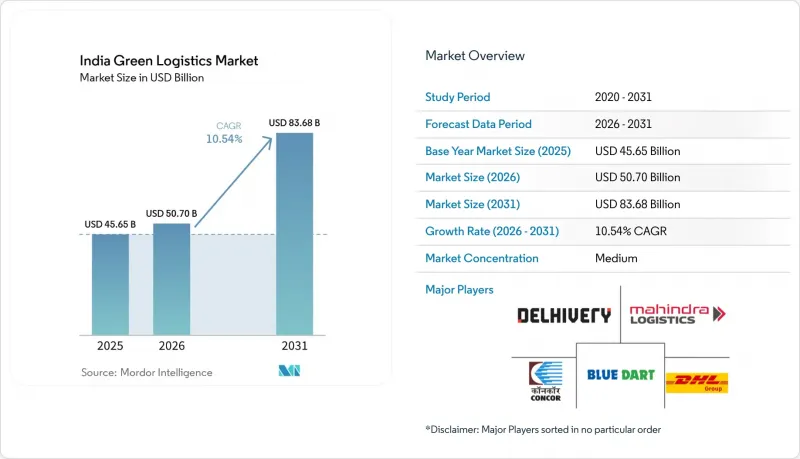
印度綠色物流市場正邁入更規範化的營運階段。這是因為貨運脫碳不再只是一項自願的永續性目標,而是與合規性、網路設計和採購決策密切相關。本報告按物流功能(綠色運輸、綠色倉儲配送及其他)、燃料和能源類型(電力驅動、生質燃料驅動、氫能驅動)、終端用戶行業(零售和電子商務、食品飲料及其他)以及地區(北部、中部、西部、東部和南部)進行細分。市場預測以美元計價。
印度綠色物流市場的趨勢與洞察
ESG主導貨運採購的興起
印度綠色物流市場的大型企業如今正將貨運脫碳不再僅僅視為可有可無的ESG附加選項,而是將其作為採購標準。根據印度證券交易委員會(SEBI)的BRSR核心框架,排名前250位的上市公司將從2025-26會計年度開始自願擴大其價值鏈資訊揭露義務,迫使企業在其大部分業務所在地更詳細地審查供應商的排放強度。隨著托運人開始衡量與貨運相關的範圍3排放,運輸合作夥伴必須展現出更乾淨的營運、更完善的數據收集和可靠的報告,才能保住合約。這點從大型消費品公司開始積極採用電動車隊、鐵路運輸和可再生能源營運作為切實可行的物流方案(而不僅僅是公關噱頭)便可見一斑。因此,印度綠色物流市場正在為那些能夠記錄自身碳排放績效的中型綠色運輸企業創造更多空間,即使它們的規模不如傳統的以柴油為主的營運商那樣遍布全國。
政府主導的多模態脫碳促進
印度的綠色物流市場正受益於一項將基礎設施效率與減少運輸排放相結合的政策環境。 「綠色物流計畫」(PM Gati Shakti)將57個中央政府部會整合到一個擁有超過1700個資料層的單一地理空間平台,從而改善了公路、鐵路、港口、公共產業和工業區的規劃。透過預算措施和走廊開發,這項方法已擴展到貨運領域,推動了新的專用貨運走廊的建設,擴大了國家水路規劃,並加強了沿海貨運目標,所有這些都共同支持長期採用更清潔的運輸方式。 「綠色物流計畫」貨運碼頭計畫已在2026年初吸引了私人投資。這些發展得益於主導貨運轉型預計將帶來的顯著碳減排,也顯示營運商現在為何將綠色物流資產視為具有商業性可行性的基礎設施,而非實驗平台。這種協調至關重要。因為同一條公共投資管道可以同時支持成本降低和脫碳,使印度的綠色物流市場更快擴張。
車輛和基礎設施改造需要大量資金投入
資金仍然是印度綠色物流市場發展的主要障礙。這是因為大部分卡車所有權集中在難以獲得低成本資金籌措的小規模企業手中。儘管印度有超過400萬輛卡車在運作,但其所有權高度分散,限制了企業投資清潔車輛和配套基礎設施的能力。此外,公共充電基礎設施尚未達到2030年所需的水平,這意味著企業在考慮購買新車時無法始終確保充電網路的可用性。因此,在業務分散程度日益加劇且資產利用率尚未達到足以支撐早期基礎設施投資的運輸路線上,印度綠色物流市場的成長最為緩慢。
細分市場分析
到2025年,綠色運輸將佔印度綠色物流市場佔有率的58.07%,成為整體、鐵路、沿海和內陸貨運的主要運輸方式。其規模反映出,脫碳工作在很大程度上仍取決於貨物的運輸方式、路線設計以及各走廊採用的運輸方式組合。鐵路貨運在這一領域的重要性日益凸顯,貨運站和專用貨運走廊將工業貨物直接輸送到汽車、化學和鋼鐵等行業的低排放鐵路網。此外,合規性正日益影響印度綠色物流市場的運輸選擇,因為托運人越來越需要符合碳排放揭露要求並降低每噸公里排放量的貨運系統。
預計到2031年,綠色附加價值服務將以15.13%的複合年成長率成長,顯示整個實體貨運網路對軟體、碳計量、路線最佳化和排放報告的需求日益成長。這一成長至關重要,因為這些服務能夠提高透明度和可審計性,並且在合約選擇和出口合規方面的重要性也日益凸顯。綠色倉儲和配送仍然是第二大功能,這得益於擴大認證倉庫空間的計劃以及能夠大規模容納有序供應鏈的大規模整合專案。此外,可再生能源設備製造商對倉儲的需求也在不斷成長,隨著清潔能源生產的擴大,一個與印度綠色物流行業結構高度契合的新基本客群正在形成。
其他好處:
- Excel格式的市場預測(ME)表
- 3個月的分析師支持
目錄
第1章:引言
- 研究假設和市場定義
- 調查範圍
第2章:調查方法
第3章執行摘要
第4章 市場狀況
- 市場概況及綠色物流在物流中的作用
- ESG相關支出趨勢
- 市場促進因素
- 受環境、社會及公司治理因素驅動,貨運採購量增加。
- 促進政府主導的多模態脫碳
- 快速推進最後一公里和都市區貨運電氣化
- 引進太陽能發電設備並廣泛採用節能倉庫
- 出口導向供應鏈給碳排放彙報帶來了壓力
- 對低排放量低溫運輸物流的需求
- 市場限制因素
- 車輛和基礎設施轉型需要大量資金投入。
- 公共充電設施和替代燃料加註設施的密度有限。
- 企業基礎分散和技術採用不均衡
- 綠色倉庫的土地、電力和授權限制
- 法律規範
- 價值鍊和分銷管道的結構分析
- 技術創新前景
- 波特五力模型
- 綠色物流需求的演變
- 地緣政治事件對供應鏈變化的影響
第5章 市場規模及成長預測(價值,2026-2031 年)
- 透過物流功能
- 綠色交通
- 路
- 航空
- 海路和內河航道
- 鐵路
- 綠色倉庫及配送
- 綠色附加價值服務及其他
- 綠色交通
- 按燃料/能源類型
- 動力驅動
- 生質燃料基地
- 氫動力
- 其他
- 按最終用戶行業分類
- 零售與電子商務
- 製造業和工業
- 車
- 醫療和藥品
- 食品/飲料
- 化學品/危險物質
- 其他
- 按地區
- 約內貝
- 中部
- 西
- 東
- 南部
第6章 競爭情勢
- 市場集中度
- 關鍵策略趨勢
- 市佔率分析
- 公司簡介
- DHL Group
- Delhivery Limited
- Mahindra Logistics Limited
- Blue Dart Express Limited
- Container Corporation of India(CONCOR)
- Transport Corporation of India(TCI)
- TVS Supply Chain Solutions
- Allcargo Gati
- DP World Logistics India
- GreenLine Mobility Solutions
- FedEx
- DSV
- Kuehne+Nagel
- Safexpress
- TCI Express
- UPS
- Adani Logistics
- Gateway Distriparks(Gateway Rail)
- Xpressbees
- Ecom Express
- Shadowfax
- Ekart Logistics
第7章 市場機會與未來展望
According to Mordor Intelligence, the India green logistics market size is expected to increase from USD 45.65 billion in 2025 to USD 50.70 billion in 2026 and reach USD 83.68 billion by 2031, growing at a CAGR of 10.54% over 2026-2031.
The India green logistics market is moving into a more formal operating phase, as freight decarbonization is now tied to compliance, network design, and procurement decisions rather than solely to voluntary sustainability goals. This report is Segmented by Logistics Function (Green Transportation, Warehousing and Distribution, and More), by Fuel and Energy Type (Electric-Powered Logistics, Biofuel-Based Logistics, Hydrogen-Powered Logistics), by End-User Industry (Retail and E-Commerce, Food and Beverages, and More), and by Region (North, Central, West, East, and South). The Market Forecasts are Provided in Terms of Value (USD).
India Green Logistics Market Trends and Insights
Rising ESG-Led Freight Procurement
Large enterprises in the India green logistics market are now treating freight decarbonization as a procurement standard, not as an optional ESG add-on. Under SEBI's BRSR Core framework, value chain disclosure obligations widened voluntarily for the top 250 listed entities from FY 2025-26, pushing companies to look more closely at supplier-side emission intensity across large parts of their operating base. Once a shipper begins measuring freight-related Scope 3 emissions, transport partners must demonstrate cleaner operations, improved data capture, and credible reporting to retain access to the contract. This is evident in the way major consumer companies have begun using EV fleets, rail transport, and renewable energy-backed operations as practical logistics choices rather than public relations signals. The result is that the India green logistics market is opening up more space for mid-sized green carriers that can document their carbon performance, even when they do not match the national scale of older diesel-led operators.
Government-Backed Multimodal Decarbonization Push
The India green logistics market is benefiting from a policy environment that now links infrastructure efficiency with lower transport emissions. PM Gati Shakti has integrated 57 central ministries and departments onto a single geospatial platform with more than 1,700 data layers, improving the planning of roads, rail lines, ports, utilities, and industrial zones. Budget and corridor measures have extended that approach into freight through new Dedicated Freight Corridors, added national waterway plans, and stronger coastal cargo targets, which together support a cleaner modal mix over time. Gati Shakti Cargo Terminals had already attracted private investment by early 2026. They were associated with large estimated carbon savings from rail-led freight shifts, which shows why operators now see green logistics assets as commercially usable infrastructure rather than experimental platforms. This alignment matters because the India green logistics market can expand faster when the same public investment pipeline supports cost reduction and decarbonization.
High Capex for Fleet and Infrastructure Transition
Capital remains a major brake on the India green logistics market because a large part of the truck base still sits with small operators that do not have easy access to low-cost finance. More than 4 million trucks operate in India, many of them tied to fragmented ownership structures that limit investment capacity for cleaner fleets and supporting infrastructure. Public charging deployment is also behind what will be needed by 2030, meaning operators cannot always count on network availability when evaluating new fleet purchases. These conditions slow the India green logistics market most in corridors where operator fragmentation is high, and asset utilization is not yet strong enough to justify early infrastructure bets.
Other drivers and restraints analyzed in the detailed report include:
- Rapid Electrification of Last-Mile and Urban Freight
- Solarized and Energy-Efficient Warehousing Adoption
- Limited Public Charging and Alternate Fuel Refueling Density
For complete list of drivers and restraints, kindly check the Table Of Contents.
Segment Analysis
Green transportation held 58.07% of the India green logistics market share in 2025, making it the dominant mode across road, rail, coastal, and inland freight movements. Its scale reflects the fact that most decarbonization gains still depend on how freight is moved, how routes are designed, and which modal combinations are used for each corridor. Rail-linked cargo handling is becoming increasingly important within the function, as cargo terminals and dedicated freight corridors are diverting industrial traffic toward lower-emission rail networks in sectors such as automotive, chemicals, and steel. The India green logistics market is also seeing modal choice shaped by compliance, since shippers increasingly need freight systems that can support carbon disclosure and lower emissions per ton-kilometer.
Green value-added services and others are projected to grow at a 15.13% CAGR through 2031, indicating rising demand for software, carbon accounting, route optimization, and emissions reporting across the physical freight network. That growth is significant because these services add visibility and auditability, which are becoming more important in contract selection and export compliance. Green warehousing and distribution remains the second major function, supported by the planned expansion of certified warehouse space and by large integrated projects that can serve organized supply chains at scale. Renewable energy equipment manufacturers are also increasing warehouse demand, which gives the India green logistics industry another structurally aligned customer base as clean energy manufacturing expands.
Complete Report Scope:
- By Logistics Function
- Green Transportation
- Road
- Air
- Sea and Inland Waterways
- Rail
- Green Warehousing & Distribution
- Green Value-added Services and Others
- Green Transportation
- By Fuel / Energy Type
- Electric-Powered Logistics
- Biofuel-Based Logistics
- Hydrogen-Powered Logistics
- Others
- By End-user Industry
- Retail & E-commerce
- Manufacturing & Industrial
- Automotive
- Healthcare & Pharmaceuticals
- Food & Beverages
- Chemicals & Hazardous Materials
- Others
- By Region
- North
- Central
- West
- East
- South
List of Companies Covered in this Report:
- DHL Group
- Delhivery Limited
- Mahindra Logistics Limited
- Blue Dart Express Limited
- Container Corporation of India (CONCOR)
- Transport Corporation of India (TCI)
- TVS Supply Chain Solutions
- Allcargo Gati
- DP World Logistics India
- GreenLine Mobility Solutions
- FedEx
- DSV
- Kuehne + Nagel
- Safexpress
- TCI Express
- UPS
- Adani Logistics
- Gateway Distriparks (Gateway Rail)
- Xpressbees
- Ecom Express
- Shadowfax
- Ekart Logistics
Additional Benefits:
- The market estimate (ME) sheet in Excel format
- 3 months of analyst support
TABLE OF CONTENTS
1 Introduction
- 1.1 Study Assumptions & Market Definition
- 1.2 Scope of the Study
2 Research Methodology
3 Executive Summary
4 Market Landscape
- 4.1 Market Overview and Role of Green Logistics in Logistics
- 4.2 ESG Spending Trends
- 4.3 Market Drivers
- 4.3.1 Rising ESG-Led Freight Procurement
- 4.3.2 Government-Backed Multimodal Decarbonization Push
- 4.3.3 Rapid Electrification of Last-Mile and Urban Freight
- 4.3.4 Solarized and Energy-Efficient Warehousing Adoption
- 4.3.5 Carbon Reporting Pressure From Export-Oriented Supply Chains
- 4.3.6 Demand for Low-Emission Cold Chain Logistics
- 4.4 Market Restraints
- 4.4.1 High Capex for Fleet and Infrastructure Transition
- 4.4.2 Limited Public Charging and Alternate Fuel Refueling Density
- 4.4.3 Fragmented Operator Base and Uneven Technology Adoption
- 4.4.4 Land, Power, and Permitting Constraints for Green Warehousing
- 4.5 Regulatory Framework
- 4.6 Value Chain and Distribution Channel Architecture Analysis
- 4.7 Technology Innovations Outlook
- 4.8 Porter's Five Forces
- 4.8.1 Threat of New Entrants
- 4.8.2 Bargaining Power of Suppliers
- 4.8.3 Bargaining Power of Buyers
- 4.8.4 Threat of Substitutes
- 4.8.5 Rivalry Among Competitors
- 4.9 Evolution of Green Logistics Requirements
- 4.10 Impact of Geo-Political Events on Supply Chain Shifts
5 Market Size & Growth Forecasts (Value, 2026-2031)
- 5.1 By Logistics Function
- 5.1.1 Green Transportation
- 5.1.1.1 Road
- 5.1.1.2 Air
- 5.1.1.3 Sea and Inland Waterways
- 5.1.1.4 Rail
- 5.1.2 Green Warehousing & Distribution
- 5.1.3 Green Value-added Services and Others
- 5.1.1 Green Transportation
- 5.2 By Fuel / Energy Type
- 5.2.1 Electric-Powered Logistics
- 5.2.2 Biofuel-Based Logistics
- 5.2.3 Hydrogen-Powered Logistics
- 5.2.4 Others
- 5.3 By End-user Industry
- 5.3.1 Retail & E-commerce
- 5.3.2 Manufacturing & Industrial
- 5.3.3 Automotive
- 5.3.4 Healthcare & Pharmaceuticals
- 5.3.5 Food & Beverages
- 5.3.6 Chemicals & Hazardous Materials
- 5.3.7 Others
- 5.4 By Region
- 5.4.1 North
- 5.4.2 Central
- 5.4.3 West
- 5.4.4 East
- 5.4.5 South
6 Competitive Landscape
- 6.1 Market Concentration
- 6.2 Key Strategic Moves
- 6.3 Market Share Analysis
- 6.4 Company Profiles (includes Global level Overview, Market level overview, Core Segments, Financials as available, Strategic Information, Market Rank/Share for key companies, Products & Services, and Recent Developments)
- 6.4.1 DHL Group
- 6.4.2 Delhivery Limited
- 6.4.3 Mahindra Logistics Limited
- 6.4.4 Blue Dart Express Limited
- 6.4.5 Container Corporation of India (CONCOR)
- 6.4.6 Transport Corporation of India (TCI)
- 6.4.7 TVS Supply Chain Solutions
- 6.4.8 Allcargo Gati
- 6.4.9 DP World Logistics India
- 6.4.10 GreenLine Mobility Solutions
- 6.4.11 FedEx
- 6.4.12 DSV
- 6.4.13 Kuehne + Nagel
- 6.4.14 Safexpress
- 6.4.15 TCI Express
- 6.4.16 UPS
- 6.4.17 Adani Logistics
- 6.4.18 Gateway Distriparks (Gateway Rail)
- 6.4.19 Xpressbees
- 6.4.20 Ecom Express
- 6.4.21 Shadowfax
- 6.4.22 Ekart Logistics
7 Market Opportunities & Future Outlook
- 7.1 White-space & Unmet-Need Assessment

 德國綠色物流:市場佔有率分析、產業趨勢與統計及成長預測(2026-2031)美國綠色物流:市場佔有率分析、產業趨勢與統計及成長預測(2026-2031)綠色物流:市場佔有率分析、產業趨勢與統計、成長預測(2026-2031)
 綠色物流市場分析及預測(至2035年):依類型、產品、服務、技術、組件、應用、部署、最終用戶及解決方案分類
 2026年全球綠色物流市場報告
 2034年全球電動貨運和綠色物流走廊市場預測-按商業模式、運輸方式、走廊基礎設施、技術、最終用戶和區域分類的全球分析
 綠色物流市場:按車隊遠端資訊處理、電動車充電基礎設施、類型和最終用途分類-全球預測,2026-2032年
 2026-2030年全球綠色物流認證服務市場綠色物流市場預測至2032年:按組件、運輸方式、業務類型、最終用戶和地區分類的全球分析
 全球綠色物流市場