

 |
市場調查報告書
商品編碼
2097240
日本二手車市場:市佔率分析、產業趨勢與統計及成長預測(2026-2031)Japan Used Car - Market Share Analysis, Industry Trends & Statistics, Growth Forecasts (2026 - 2031) |
||||||

※ 本網頁內容可能與最新版本有所差異。詳細情況請與我們聯繫。
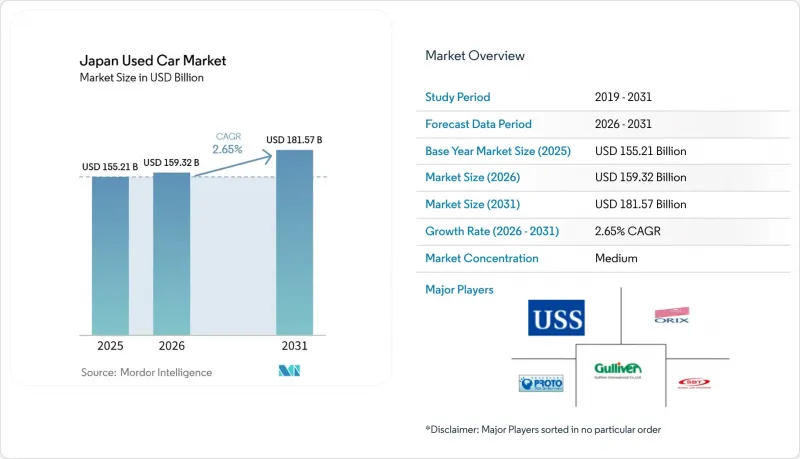
根據 Mordor Intelligence 預測,日本二手車市場規模將從 2025 年的 1,552.1 億美元成長到 2026 年的 1,593.2 億美元,到 2031 年將達到 1815.7 億美元,2026 年至 2031 年的複合年成長率為 2.65%。
本報告按車輛類型(掀背車、轎車、SUV等)、燃料類型(汽油、柴油等)、車齡(0-2年、3-5年等)、預訂管道(線上、OEM授權經銷商或官方經銷商、多品牌經銷商等)以及交易方式(一次性付款、貸款)進行分類。市場預測以貨幣價值(美元)和銷售(輛)兩種形式呈現。
日本二手車市場趨勢與分析
新車價格上漲加劇了購買力差距。
由於廠商建議零售價居高不下,消費者對二手車的興趣日益濃厚。消費者物價指數(CPI)預計將上漲2.5%至3%,這將進一步加劇這一趨勢,使許多家庭難以負擔新車。豐田汽車2025會計年度的國內銷售量預計將下降10.8%,凸顯了消費者對新車價格的抵觸情緒以及對二手車市場需求的轉移。目前,車齡3至5年的二手車越來越受歡迎,它們兼具最新的駕駛輔助功能和較低的初始成本。儘管薪資水準正在逐步提高,但仍未能跟上汽車價格上漲的速度,因此,日本二手車市場持續吸收那些原本可能延後購車的消費者。
縮短三年折舊免稅額週期將為市場提供高品質的庫存。
企業車隊計畫和訂閱模式的普及縮短了車輛更換週期,導致每36個月就有大量近乎全新、低里程的車輛湧入二手市場。本田和三菱汽車的合資企業ALTNA正是這一趨勢的典型代表,他們透過租賃電池和回收退役電動車來實現這一目標。東京世紀汽車集團旗下汽車出行部門在2024年累計了歷史新高,反映了這些高性能車輛在二手市場的活躍交易。因此,二手車庫存範圍不斷擴大,提振了消費者信心,並在新車供應仍然緊張的情況下抑制了二手車價格上漲。
受疫情影響,國內產量下降,導致供應趨緊。
2021年,日本汽車產量降至785萬輛,創45年來新低,二手車市場(車車齡3-5年)目前也缺少相同數量的車輛。由於進入競標市場的置換車輛和租賃到期車輛減少,批發價格居高不下,迫使零售商從海外進口右舵車輛。儘管海外產量有所恢復,但國內供不應求仍然限制了庫存多樣性,減緩了日本二手車市場的成長。
細分市場分析
受都市區停車位有限和道路狹窄的影響,掀背車預計在2025年仍將佔據日本二手車市場34.86%的佔有率。同時,受生活方式改變的推動,人們對更高座椅位置和靈活多變的載物空間的需求日益成長,預計到2031年,緊湊型SUV的複合年成長率將達到6.02%。三年折舊免稅額週期導致配備升級版自動駕駛輔助功能和資訊娛樂系統的最新SUV車型在二手車競標會上大量湧現。
人口從農村向都市區遷移推動了掀背車的淘汰,而年輕家庭可支配收入的成長則促使他們更傾向於兼具操控性和高離地間隙的兩排座跨界車。同時擁有這兩類車型庫存的經銷商,既能分散風險,又能滿足日本二手車市場日益多元化的偏好。
儘管汽油動力車在2025年仍佔汽車銷量的53.92%,但預計到2031年,電池式電動車(EV)和插電式混合動力汽車將以每年14.15%的速度縮小與汽油車的差距。政府對每輛電動車最高85萬日圓的補貼降低了購車門檻。隨著現有租賃協議的到期,日本二手電動車市場預計將迅速擴張。
電池租賃方案緩解了車主對車輛轉售價值的擔憂,並為第二代車主提供了一套系統化的升級途徑。同時,由於主要城市排放氣體法規日益嚴格,柴油車的需求正在下降,而混合動力汽車則透過讓使用者保持熟悉的加油習慣,同時逐步提高燃油效率,從而彌合了這段過渡時期。
其他好處:
- Excel格式的市場預測(ME)表
- 3個月的分析師支持
目錄
第1章:引言
- 研究假設和市場定義
- 調查範圍
第2章:調查方法
第3章執行摘要
第4章 市場狀況
- 市場概覽
- 市場促進因素
- 新車價格上漲加劇了購買力差距。
- 三年加速折舊週期可將高品質庫存投放市場。
- 以線上為主導的經銷商平台正在全國擴大庫存。
- 對輕型汽車(微型汽車)的稅收優惠政策刺激了二手輕型汽車的需求。
- 由於租賃期滿,大量 OEM 訂閱車輛正在進入二手車市場。
- 循環經濟的獎勵鼓勵車輛再利用,而不是報廢。
- 市場限制因素
- 疫情期間減產導致國內供應趨緊。
- 里程表造假醜聞正在損害消費者信任。
- 由於人口老化速度加快,持證擁有者的數量正在減少。
- 2027 年更嚴格的排放氣體法規可能會導致舊款內燃機汽車的價值下降。
- 價值鏈分析
- 監理情勢
- 技術展望
- 波特五力模型
第5章 市場規模與成長預測
- 車輛類型
- 掀背車
- 轎車
- 運動型多用途車(SUV)
- 多用途汽車(MPV)
- 按燃料類型
- 汽油
- 柴油引擎
- 混合
- 電池式電動車(BEV)
- 插電式混合動力車(PHEV)
- 車輛年份
- 0-2歲
- 3-5年
- 6-8歲
- 8年以上
- 透過預訂管道
- 線上
- OEM認證/授權經銷商
- 多品牌零售商
- C2C數位市場
- 按交易類型
- 全額付款
- 融資(貸款/租賃)
第6章 競爭情勢
- 市場集中度
- 策略趨勢
- 市佔率分析
- 公司簡介
- USS Co., Ltd.
- PROTO Corporation
- IDOM Inc.(Gulliver)
- ORIX Auto Corporation
- SBT Japan
- Trust Co. Ltd.
- Yokohama Toyopet
- Mobilico Inc.
- Autocom Japan Inc.
- Crown Japan Co.
- Aucnet Inc.
- Toyota Auto Auction(TAA)
- NAA Nagoya Auto Auction
- HAA Kobe
- BIGMOTOR Co.
- CarSeven Co.
- Nextage Co.
- BAYAUC Co.
- BeForward Japan
- Carsensor.net
第7章 市場機會與未來展望
According to Mordor Intelligence, the Japan used car market size is expected to grow from USD 155.21 billion in 2025 to USD 159.32 billion in 2026, and is forecast to reach USD 181.57 billion by 2031, at a 2.65% CAGR over 2026-2031.
This report is Segmented by Vehicle Type (Hatchback, Sedan, Sport Utility Vehicle, and More), Fuel (Gasoline, Diesel, and More), Vehicle Age (0 -2 Years, 3 -5 Years, and More), Booking Channel (Online, OEM Certified or Authorized Dealerships, Multi-Brand Dealerships, and More), and Transaction Type (Full Payment and Finance). The Market Forecasts are Provided in Terms of Value (USD) and Volume (Units).
Japan Used Car Market Trends and Insights
Soaring New Car Prices Widen Affordability Gap
Persistently high factory-gate prices have shifted buyers toward used vehicles, a trend reinforced by a 2.5-3% CPI outlook, which keeps new-car ownership out of reach for many households. Toyota's FY2025 domestic volume fell by 10.8%, underscoring price resistance and shifting demand toward pre-owned channels. Late-model cars in the 3-5-year bracket now combine modern driver-assistance features with lower capital costs, strengthening their appeal. As wages inch upward but still trail vehicle inflation, the Japanese used car market continues to absorb buyers who might otherwise delay purchasing.
Accelerated 3 Year Depreciation Cycles Release High Quality Stock
Corporate fleet programs and subscription models have shortened replacement intervals, sending newer, low-mileage vehicles into resale lanes every 36 months. Honda and Mitsubishi's ALTNA joint venture exemplifies this pattern by leasing batteries and repurposing returned EVs. Tokyo Century's automobility division posted record earnings in 2024, reflecting brisk secondary-market turnover of these high-spec units. The resulting breadth of inventory bolsters consumer confidence and limits price spikes, even when new-car supply remains tight.
Tight Domestic Supply After Pandemic Era Production Cuts
Japanese output touched a 45-year low of 7.85 million units in 2021, and those missing vehicles are now absent from the 3-5 year-old pool. With fewer trade-ins and lease returns entering the auction market, wholesale prices have firmed, forcing retailers to seek right-hand-drive imports abroad. Although overseas production rebounded, domestic scarcity still limits stock diversity, slowing growth in the Japanese used car market.
Other drivers and restraints analyzed in the detailed report include:
- Online First Dealer Platforms Scale Nationwide Inventory
- Kei Car Tax Advantage Sustains Demand for Used Micro Cars
- Odometer Fraud Scandals Erode Consumer Trust
For complete list of drivers and restraints, kindly check the Table Of Contents.
Segment Analysis
Hatchbacks retained a 34.86% share of the Japanese used car market in 2025, anchored by tight urban parking and narrow streets. Compact SUVs, however, are set to post a 6.02% CAGR to 2031, propelled by lifestyle shifts toward higher seating and versatile cargo layouts. Used-car auctions now list more late-model SUVs as three-year depreciation cycles deliver stock with autonomous-driving aids and infotainment upgrades.
Rural migration to urban centers supports hatchback turnover, yet rising disposable income among young families favors two-row crossovers that combine maneuverability with extra ride height. Dealers stocking both categories hedge risk while capturing the broadening taste spectrum in the Japanese used car market.
Gasoline vehicles held 53.92% of 2025 sales, but battery electric and plug-in hybrids will clip that lead by 14.15% annually to 2031. Government rebates of up to JPY 850,000 per EV lower entry barriers. The Japanese used car market for electric models will expand rapidly once the current fleet leases mature.
Battery-leasing schemes address resale-value anxiety, providing structured pathways for second owners. Meanwhile, diesel demand wanes as emission rules tighten in major cities, and hybrids bridge the transition by offering familiar refueling habits with incremental efficiency gains.
Complete Report Scope:
- By Vehicle Type
- Hatchbacks
- Sedan
- Sport-Utility Vehicle (SUV)
- Multi-Purpose Vehicle (MPV)
- By Fuel Type
- Gasoline
- Diesel
- Hybrid
- Battery Electric Vehicle (BEV)
- Plug-in Hybrid Electric Vehicle (PHEV)
- By Vehicle Age
- 0-2 Years
- 3-5 Years
- 6-8 Years
- Above 8 Years
- By Booking Channel
- Online
- OEM Certified / Authorised Dealerships
- Multi-Brand Dealerships
- C2C Digital Marketplaces
- By Transaction Type
- Full Payment
- Finance (Loan / Lease)
List of Companies Covered in this Report:
- USS Co., Ltd.
- PROTO Corporation
- IDOM Inc. (Gulliver)
- ORIX Auto Corporation
- SBT Japan
- Trust Co. Ltd.
- Yokohama Toyopet
- Mobilico Inc.
- Autocom Japan Inc.
- Crown Japan Co.
- Aucnet Inc.
- Toyota Auto Auction (TAA)
- NAA Nagoya Auto Auction
- HAA Kobe
- BIGMOTOR Co.
- CarSeven Co.
- Nextage Co.
- BAYAUC Co.
- BeForward Japan
- Carsensor.net
Additional Benefits:
- The market estimate (ME) sheet in Excel format
- 3 months of analyst support
TABLE OF CONTENTS
1 Introduction
- 1.1 Study Assumptions & Market Definition
- 1.2 Scope of the Study
2 Research Methodology
3 Executive Summary
4 Market Landscape
- 4.1 Market Overview
- 4.2 Market Drivers
- 4.2.1 Soaring New-car Prices Widen Affordability Gap
- 4.2.2 Accelerated 3-year Depreciation Cycles release high-quality stock
- 4.2.3 Online-first Dealer Platforms Scale Nationwide Inventory
- 4.2.4 Kei-car Tax Advantage Sustains Demand for Used Micro-Cars
- 4.2.5 End-Of-Lease OEM Subscription Fleets Flood Secondary Market
- 4.2.6 Circular-Economy Incentives Favor Vehicle Reuse Over Scrappage
- 4.3 Market Restraints
- 4.3.1 Tight Domestic Supply After Pandemic-Era Production Cuts
- 4.3.2 Odometer Fraud Scandals Erode Consumer Trust
- 4.3.3 Shrinking Licensed-Driver Pool Amid Rapid Ageing
- 4.3.4 Stricter 2027 Emission Norms May De-Value Older ICE Stock
- 4.4 Value-Chain Analysis
- 4.5 Regulatory Landscape
- 4.6 Technological Outlook
- 4.7 Porter's Five Forces
- 4.7.1 Threat of New Entrants
- 4.7.2 Bargaining Power of Buyers
- 4.7.3 Bargaining Power of Suppliers
- 4.7.4 Threat of Substitutes
- 4.7.5 Competitive Rivalry
5 Market Size & Growth Forecasts (Value (USD), Volume (Units))
- 5.1 By Vehicle Type
- 5.1.1 Hatchbacks
- 5.1.2 Sedan
- 5.1.3 Sport-Utility Vehicle (SUV)
- 5.1.4 Multi-Purpose Vehicle (MPV)
- 5.2 By Fuel Type
- 5.2.1 Gasoline
- 5.2.2 Diesel
- 5.2.3 Hybrid
- 5.2.4 Battery Electric Vehicle (BEV)
- 5.2.5 Plug-in Hybrid Electric Vehicle (PHEV)
- 5.3 By Vehicle Age
- 5.3.1 0-2 Years
- 5.3.2 3-5 Years
- 5.3.3 6-8 Years
- 5.3.4 Above 8 Years
- 5.4 By Booking Channel
- 5.4.1 Online
- 5.4.2 OEM Certified / Authorised Dealerships
- 5.4.3 Multi-Brand Dealerships
- 5.4.4 C2C Digital Marketplaces
- 5.5 By Transaction Type
- 5.5.1 Full Payment
- 5.5.2 Finance (Loan / Lease)
6 Competitive Landscape
- 6.1 Market Concentration
- 6.2 Strategic Moves
- 6.3 Market Share Analysis
- 6.4 Company Profiles (includes Global level Overview, Market level overview, Core Segments, Financials as available, Strategic Information, Market Rank/Share for key companies, Products & Services, and Recent Developments)
- 6.4.1 USS Co., Ltd.
- 6.4.2 PROTO Corporation
- 6.4.3 IDOM Inc. (Gulliver)
- 6.4.4 ORIX Auto Corporation
- 6.4.5 SBT Japan
- 6.4.6 Trust Co. Ltd.
- 6.4.7 Yokohama Toyopet
- 6.4.8 Mobilico Inc.
- 6.4.9 Autocom Japan Inc.
- 6.4.10 Crown Japan Co.
- 6.4.11 Aucnet Inc.
- 6.4.12 Toyota Auto Auction (TAA)
- 6.4.13 NAA Nagoya Auto Auction
- 6.4.14 HAA Kobe
- 6.4.15 BIGMOTOR Co.
- 6.4.16 CarSeven Co.
- 6.4.17 Nextage Co.
- 6.4.18 BAYAUC Co.
- 6.4.19 BeForward Japan
- 6.4.20 Carsensor.net
7 Market Opportunities & Future Outlook
- 7.1 White-space & Unmet-Need Assessment

 二手車市場-2026-2032年全球市場預測
 美國二手車市場:市場佔有率分析、產業趨勢與統計及成長預測(2026-2031)泰國二手車市場:市場佔有率分析、產業趨勢與統計及成長預測(2026-2031)
 二手車交易服務市場:依車輛類型、燃料類型、銷售管道、銷售形式及地區分類。
 二手電動車市場規模、佔有率和成長分析:按車輛類型、驅動方式、年份、續航里程、電池狀況、電池容量和地區分類-2026-2033年產業預測
 2026-2030年全球二手車市場二手車市場:依供應商、車款、銷售管道、地區分類
 全球二手車市場規模、佔有率、趨勢和成長分析報告(2026-2034)
 二手半拖車市場分析及預測(至2035年):按類型、產品類型、服務、技術、組件、應用、流程及最終用戶二手東南亞二手車市場:市場佔有率分析、產業趨勢與統計、成長預測(2026-2031)