

 |
市場調查報告書
商品編碼
1928896
泳裝市場機會、成長要素、產業趨勢分析及2026年至2035年預測Swimwear Market Opportunity, Growth Drivers, Industry Trend Analysis, and Forecast 2026 - 2035 |
||||||

全球泳裝市場預計到 2025 年將達到 229 億美元,預計到 2035 年將達到 417 億美元,年複合成長率為 6.3%。
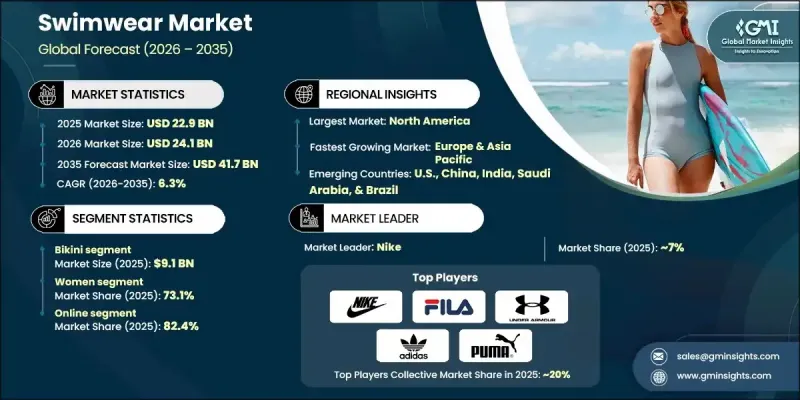
全球對健康、養生和積極生活方式的日益關注推動了泳裝行業的成長,也促使更多人參與水上健身和休閒活動。隨著游泳和水上活動在全年都變得越來越重要,泳裝也逐漸被視為日常必需品,而非季節性消費品。消費者越來越重視舒適、耐用、速乾等高性能布料,同時布料的防護性能也影響他們的購買決策。休閒旅遊的興起以及前往沿海度假勝地的便利性進一步刺激了各個年齡層對泳裝的需求。同時,泳裝的功能也從單純的實用服飾演變成展現個人風格和生活方式的單品。設計創新、布料進步和產品種類的豐富正在推動消費者在各種場合下對泳裝的接受度。在健身、旅行和時尚意識的交匯點,泳裝產業蓄勢待發,將繼續保持其全球持續擴張的勢頭。
| 市場覆蓋範圍 | |
|---|---|
| 開始年份 | 2025 |
| 預測年份 | 2026-2035 |
| 起始值 | 229億美元 |
| 預測金額 | 417億美元 |
| 複合年成長率 | 6.3% |
預計到 2025 年,比基尼類別市場規模將達到 91 億美元,2026 年至 2035 年的複合年成長率將達到 7.1%。這個細分市場的成長動力源於其與休閒和旅行服裝的緊密聯繫,以及對視覺獨特和潮流成長要素日益成長的需求,這使得泳裝成為一種高階時尚產品。
預計到 2025 年,女性泳裝市佔率將達到 73.1%,到 2035 年將以 6.7% 的複合年成長率成長。需求成長的促進因素包括不斷變化的時尚偏好、生活方式的改變以及人們更多地參與水上活動,這些因素促使人們頻繁購買兼具功能性和設計感的泳裝。
美國泳裝市場預計到 2025 年將達到 59 億美元,從 2026 年到 2035 年將以 6.3% 的複合年成長率成長。市場成長的促進因素包括健康意識的提高、休閒旅遊文化的興起以及消費者對兼具功能性和時尚性的多功能泳裝日益成長的興趣。
目錄
第1章調查方法和範圍
第2章執行摘要
第3章業界考察
- 生態系分析
- 供應商情況
- 利潤率
- 每個階段的附加價值
- 影響價值鏈的因素
- 產業影響因素
- 促進要素
- 提高人們對健康和健身的認知
- 海灘度假旅遊激增
- 可支配所得增加和生活方式改變
- 注重客製化和個人化
- 產業潛在風險與挑戰
- 激烈的競爭和快時尚的週期
- 成本和供應鏈波動
- 機會
- 專注於全面且可自訂的設計
- 電子商務成長與數位化演進
- 促進要素
- 成長潛力分析
- 未來市場趨勢
- 科技與創新趨勢
- 當前技術趨勢
- 新興技術
- 價格趨勢
- 按地區
- 依產品類型
- 監管環境
- 標準和合規要求
- 區域法規結構
- 認證標準
- 貿易統計
- 主要進口國
- 主要出口國
- 波特分析
- PESTEL 分析
- 消費行為分析
- 購買模式
- 偏好分析
- 消費行為的區域差異
- 電子商務如何影響購買決策
第4章 競爭情勢
- 介紹
- 公司市佔率分析
- 按地區
- 北美洲
- 歐洲
- 亞太地區
- 拉丁美洲
- 中東和非洲
- 按地區
- 企業矩陣分析
- 主要市場公司的競爭分析
- 競爭定位矩陣
- 重大進展
- 併購
- 夥伴關係與合作
- 新產品發布
- 擴張計劃
第5章 依產品類型分類的市場估算與預測,2022-2035年
- 連身泳衣
- 兩件式泳衣
- 男士泳裝
- 比基尼
- 其他
第6章 按材料分類的市場估算與預測,2022-2035年
- 聚酯纖維/尼龍
- 氨綸
- 其他
第7章 2022-2035年按價格分類的市場估計與預測
- 低價位
- 中號
- 高價位範圍
第8章 依最終用途分類的市場估算與預測,2022-2035年
- 男性
- 女士
- 孩子們
9. 2022-2035年按分銷管道分類的市場估算與預測
- 線上
- 電子商務網站
- 我們的網站
- 離線
- 百貨公司和大型超級市場
- 專賣店
- 其他
第10章 2022-2035年各地區市場估計與預測
- 北美洲
- 美國
- 加拿大
- 歐洲
- 德國
- 英國
- 法國
- 義大利
- 西班牙
- 亞太地區
- 中國
- 印度
- 日本
- 韓國
- 澳洲
- 印尼
- 馬來西亞
- 拉丁美洲
- 巴西
- 墨西哥
- 阿根廷
- 中東和非洲
- 沙烏地阿拉伯
- 阿拉伯聯合大公國
- 南非
第11章 公司簡介
- Adidas AG
- American Apparel Inc.
- Arena SpA(Berkshire Hathaway)
- La Jolla Group
- LVMH Moet Hennessy Louis Vuitton
- Marysia LLC
- Nike Inc.
- Pentland Group
- Perry Ellis International
- Puma
- PVH Corp.
- Quiksilver Inc.
- Swimwear Anywhere Inc.(TYR Sports Inc.)
- Tennor Holding BV(La Perla)
- TJ Swim
The Global Swimwear Market was valued at USD 22.9 billion in 2025 and is estimated to grow at a CAGR of 6.3% to reach USD 41.7 billion by 2035.
Growth is supported by rising global focus on health, wellness, and active lifestyles, which has increased participation in water-based fitness and recreational activities. As swimming and aquatic exercise gain year-round relevance, swimwear is increasingly viewed as essential apparel rather than a seasonal purchase. Consumers place growing importance on performance-oriented materials that offer comfort, durability, and quick-drying characteristics, while protection-focused fabric features also influence buying decisions. Expanding leisure travel and improved access to coastal and resort destinations further stimulate demand for swimwear across age groups. At the same time, swimwear has evolved beyond utility, becoming an expression of personal style and lifestyle identity. Design innovation, fabric advancements, and broader product availability have expanded consumer adoption across multiple use cases. As fitness engagement, travel activity, and fashion consciousness continue to intersect, the swimwear industry remains positioned for sustained global expansion.
| Market Scope | |
|---|---|
| Start Year | 2025 |
| Forecast Year | 2026-2035 |
| Start Value | $22.9 Billion |
| Forecast Value | $41.7 Billion |
| CAGR | 6.3% |
The bikini category generated USD 9.1 billion in 2025 and is forecast to grow at a CAGR of 7.1% from 2026 to 2035. This segment benefits from its strong association with leisure and travel apparel, along with rising demand for visually distinctive and trend-driven designs that elevate swimwear as a fashion-focused product.
The women segment held 73.1% share in 2025, and this segment is projected to grow at a CAGR of 6.7% through 2035. Demand is driven by evolving fashion preferences, lifestyle shifts, and higher engagement in water-related activities, which encourage frequent purchases of both functional and design-forward swimwear options.
United States Swimwear Market captured USD 5.9 billion in 2025 and is expected to grow at a CAGR of 6.3% from 2026 to 2035. Market growth is supported by strong wellness awareness, leisure travel culture, and rising consumer interest in versatile swimwear that blends performance with style.
Key companies operating in the Global Swimwear Market include Nike Inc., Adidas AG, Puma, Arena SpA (Berkshire Hathaway), LVMH Moet Hennessy Louis Vuitton, PVH Corp., Pentland Group, Perry Ellis International, Quiksilver Inc., Swimwear Anywhere Inc. (TYR Sports Inc.), La Jolla Group, Tennor Holding BV (La Perla), American Apparel Inc., Marysia LLC, and TJ Swim. Companies in the Global Swimwear Market strengthen their market presence through continuous design innovation and material advancement. Brands invest in developing performance-driven fabrics that improve comfort, durability, and versatility. Strategic branding and targeted marketing campaigns help companies connect with evolving consumer lifestyles and fashion preferences. Expanding direct-to-consumer channels and strengthening retail partnerships improve global reach and customer engagement. Many players focus on seasonal product refreshes and inclusive sizing to broaden their customer base.
Table of Contents
Chapter 1 Methodology & Scope
- 1.1 Market scope and definition
- 1.2 Research design
- 1.2.1 Research approach
- 1.2.2 Data collection methods
- 1.3 Data mining sources
- 1.3.1 Global
- 1.3.2 Regional/Country
- 1.4 Base estimates and calculations
- 1.4.1 Base year calculation
- 1.4.2 Key trends for market estimation
- 1.5 Primary research and validation
- 1.5.1 Primary sources
- 1.6 Forecast model
- 1.7 Research assumptions and limitations
Chapter 2 Executive Summary
- 2.1 Industry 360° synopsis
- 2.2 Key market trends
- 2.2.1 Regional
- 2.2.2 Product type
- 2.2.3 Material
- 2.2.4 Price
- 2.2.5 End use
- 2.2.6 Distribution channel
- 2.3 CXO perspectives: Strategic imperatives
- 2.3.1 Key decision points for industry executives
- 2.3.2 Critical success factors for market players
- 2.4 Future outlook and strategic recommendations
Chapter 3 Industry Insights
- 3.1 Industry ecosystem analysis
- 3.1.1 Supplier landscape
- 3.1.2 Profit margin
- 3.1.3 Value addition at each stage
- 3.1.4 Factor affecting the value chain
- 3.2 Industry impact forces
- 3.2.1 Growth drivers
- 3.2.1.1 Heightened awareness of health and fitness
- 3.2.1.2 Surge in beach and resort tourism
- 3.2.1.3 Increasing disposable incomes and evolving lifestyles
- 3.2.1.4 Emphasis on customization and personalization
- 3.2.2 Industry pitfalls & challenges
- 3.2.2.1 Intense competition & swift fashion cycles
- 3.2.2.2 Fluctuations in costs & supply chain
- 3.2.3 Opportunities
- 3.2.3.1 Emphasis on inclusive & customizable designs
- 3.2.3.2 Growth of e-commerce & digital evolution
- 3.2.1 Growth drivers
- 3.3 Growth potential analysis
- 3.4 Future market trends
- 3.5 Technology and innovation landscape
- 3.5.1 Current technological trends
- 3.5.2 Emerging technologies
- 3.6 Price trends
- 3.6.1 By region
- 3.6.2 By product type
- 3.7 Regulatory landscape
- 3.7.1 Standards and compliance requirements
- 3.7.2 Regional regulatory frameworks
- 3.7.3 Certification standards
- 3.8 Trade statistics
- 3.8.1 Major importing countries
- 3.8.2 Major exporting countries
- 3.9 Porter';s analysis
- 3.10 PESTEL analysis
- 3.11 Consumer behavior analysis
- 3.11.1 Purchasing patterns
- 3.11.2 Preference analysis
- 3.11.3 Regional variations in consumer behavior
- 3.11.4 Impact of e-commerce on buying decisions
Chapter 4 Competitive Landscape, 2025
- 4.1 Introduction
- 4.2 Company market share analysis
- 4.2.1 By Region
- 4.2.1.1 North America
- 4.2.1.2 Europe
- 4.2.1.3 Asia Pacific
- 4.2.1.4 Latin America
- 4.2.1.5 Middle East & Africa
- 4.2.1 By Region
- 4.3 Company matrix analysis
- 4.4 Competitive analysis of major market players
- 4.5 Competitive positioning matrix
- 4.6 Key developments
- 4.6.1 Mergers & acquisitions
- 4.6.2 Partnerships & collaborations
- 4.6.3 New product launches
- 4.6.4 Expansion plans
Chapter 5 Market Estimates & Forecast, By Product Type, 2022 - 2035, (USD Billion) (Million Units)
- 5.1 Key trends
- 5.2 One-piece swimsuit
- 5.3 Two-piece swimsuit
- 5.4 Swimming trunks
- 5.5 Bikini
- 5.6 Others
Chapter 6 Market Estimates & Forecast, By Material, 2022 - 2035, (USD Billion) (Million Units)
- 6.1 Key trends
- 6.2 Polyester/Nylon
- 6.3 Spandex
- 6.4 Others
Chapter 7 Market Estimates & Forecast, By Price, 2022 - 2035, (USD Billion) (Million Units)
- 7.1 Key trends
- 7.2 Low
- 7.3 Medium
- 7.4 High
Chapter 8 Market Estimates & Forecast, By End Use, 2022 - 2035, (USD Billion) (Million Units)
- 8.1 Key trends
- 8.2 Men
- 8.3 Women
- 8.4 Kids
Chapter 9 Market Estimates & Forecast, By Distribution Channel, 2022 - 2035, (USD Billion) (Million Units)
- 9.1 Key trends
- 9.2 Online
- 9.2.1 E-commerce website
- 9.2.2 Company website
- 9.3 Offline
- 9.3.1 Department stores & hypermarkets
- 9.3.2 Specialty stores
- 9.3.3 Others
Chapter 10 Market Estimates & Forecast, By Region, 2022 - 2035, (USD Billion) (Million Units)
- 10.1 Key trends
- 10.2 North America
- 10.2.1 U.S.
- 10.2.2 Canada
- 10.3 Europe
- 10.3.1 Germany
- 10.3.2 UK
- 10.3.3 France
- 10.3.4 Italy
- 10.3.5 Spain
- 10.4 Asia Pacific
- 10.4.1 China
- 10.4.2 India
- 10.4.3 Japan
- 10.4.4 South Korea
- 10.4.5 Australia
- 10.4.6 Indonesia
- 10.4.7 Malaysia
- 10.5 Latin America
- 10.5.1 Brazil
- 10.5.2 Mexico
- 10.5.3 Argentina
- 10.6 MEA
- 10.6.1 Saudi Arabia
- 10.6.2 UAE
- 10.6.3 South Africa
Chapter 11 Company Profiles
- 11.1 Adidas AG
- 11.2 American Apparel Inc.
- 11.3 Arena SpA (Berkshire Hathaway)
- 11.4 La Jolla Group
- 11.5 LVMH Moet Hennessy Louis Vuitton
- 11.6 Marysia LLC
- 11.7 Nike Inc.
- 11.8 Pentland Group
- 11.9 Perry Ellis International
- 11.10 Puma
- 11.11 PVH Corp.
- 11.12 Quiksilver Inc.
- 11.13 Swimwear Anywhere Inc. (TYR Sports Inc.)
- 11.14 Tennor Holding BV (La Perla)
- 11.15 TJ Swim

 泳裝市場:2026-2032年全球市場預測(依材質、性別、產品類型、應用及銷售管道分類)女性用運動服及泳裝市場:2026-2032年全球市場預測(依產品類型、銷售管道、價格範圍、運動項目及布料分類)
 泳裝市場報告:趨勢、預測及競爭分析(至2035年)
 泳裝市場規模、佔有率和成長分析:依泳裝類型、性別、材質、應用、年齡層、銷售管道、價格範圍和地區分類-2026-2033年產業預測
 全球泳裝市場規模、佔有率、趨勢和成長分析報告(2026-2034)全球泳裝市場規模、佔有率、成長率、按類型和應用分類的全球產業分析、區域趨勢以及 2026-2034 年預測。
 2021-2031年全球女性用運動及泳裝市場-依材質類型、銷售管道、地區及競爭格局分類的產業規模、佔有率、趨勢、機會及預測男士泳裝市場-全球產業規模、佔有率、趨勢、機會及預測(依材料、銷售管道、地區及競爭格局分類,2021-2031年)
 女式運動服和泳裝市場規模、佔有率和成長分析(按產品類型、種類、分銷通路、最終用戶和地區分類)-2026-2033年產業預測
 男士泳裝市場規模、佔有率及成長分析(依產品類型、布料類型、價格分佈、通路及地區分類)-2026-2033年產業預測