


 |
市場調查報告書
商品編碼
1913410
無醇啤酒市場機會、成長要素、產業趨勢分析及2026年至2035年預測Non-Alcoholic Beer Market Opportunity, Growth Drivers, Industry Trend Analysis, and Forecast 2026 - 2035 |
||||||

全球無醇啤酒市場預計到 2025 年將達到 240 億美元,到 2035 年將達到 508 億美元,年複合成長率為 7.8%。
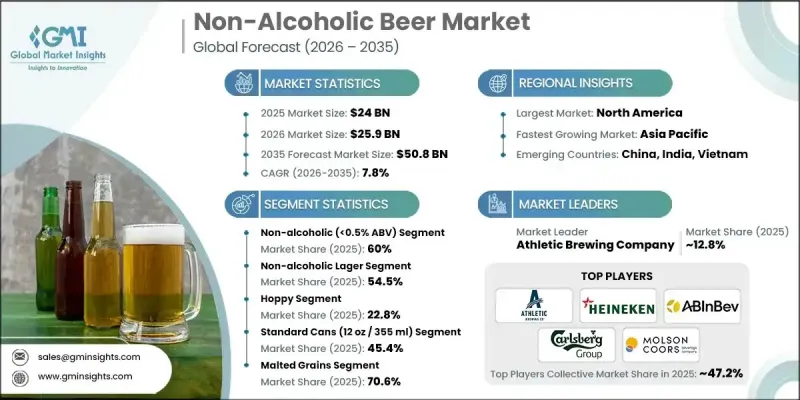
無醇啤酒,包括零酒精(0% ABV)、低酒精(0.5% ABV)和低酒精(0.5%-2.5% ABV)等品種,已成為全球飲料產業的重要組成部分。這些飲品迎合了注重健康的消費者、指定駕駛員以及那些希望品嚐正宗啤酒風味卻又不想承受酒精副作用的人群的需求。市場涵蓋了從拉格啤酒和印度淡色艾爾啤酒到小麥啤酒、烈性黑啤酒和特色啤酒等各種類型,提供純正的啤酒風味體驗,同時最大限度地減少或消除酒精攝入。市場成長的驅動力來自人們日益增強的健康意識、不斷變化的生活方式偏好以及消費者對優質創新釀造產品的興趣。真空蒸餾、逆滲透和發酵終止等釀造技術的進步,使生產商能夠提升啤酒的口感和香氣,從而提高無醇啤酒的接受度,並消除人們以往對無醇啤酒的疑慮。
| 市場覆蓋範圍 | |
|---|---|
| 開始年份 | 2025 |
| 預測年份 | 2026-2035 |
| 起始值 | 240億美元 |
| 預測金額 | 508億美元 |
| 複合年成長率 | 7.8% |
預計到2025年,酒精酒精濃度低於0.5%的無酒精飲品將佔據60%的市場佔有率,並在2035年之前以7.6%的複合年成長率成長。該細分市場提供的飲用體驗最接近傳統啤酒,在滿足法定無酒精標準的同時,保留了啤酒的純正風味,並最大限度地減少了酒精含量。與完全不含酒精的產品相比,成熟的釀造過程能夠更好地保留風味的複雜性、口感和香氣。
預計到 2025 年,無醇啤酒市佔率將達到 54.5%,到 2035 年將以 7.6% 的複合年成長率成長。其全球吸引力、清爽的口感、淡淡的苦味和順滑的餘味使其成為無醇啤酒品類中新老消費者的熱門選擇。
預計2025年,美國無醇啤酒市場規模將達64億美元。健康意識的提升、「清醒飲酒」運動的興起以及重視創新的蓬勃發展的精釀啤酒文化,都是推動美國市場成長的主要因素。千禧世代和Z世代消費者對理性飲酒的重視、對高階精釀產品的青睞,以及將無醇啤酒定位為一種生活方式選擇的行銷策略,都進一步推動了市場需求的持續成長。
目錄
第1章調查方法和範圍
第2章執行摘要
第3章業界考察
- 生態系分析
- 供應商情況
- 利潤率
- 每個階段的附加價值
- 影響價值鏈的因素
- 中斷
- 產業影響因素
- 促進要素
- 產業潛在風險與挑戰
- 市場機遇
- 成長潛力分析
- 監管環境
- 北美洲
- 歐洲
- 亞太地區
- 拉丁美洲
- 中東和非洲
- 波特五力分析
- PESTEL 分析
- 科技與創新趨勢
- 當前技術趨勢
- 新興技術
- 價格趨勢
- 按地區
- 按酒精濃度
- 未來市場趨勢
- 科技與創新趨勢
- 當前技術趨勢
- 新興技術
- 專利趨勢
- 貿易統計(HS編碼)(註:僅提供主要國家的貿易統計)
- 主要進口國
- 主要出口國
- 永續性和環境方面
- 永續努力
- 減少廢棄物策略
- 生產中的能源效率
- 環保舉措
- 考慮到碳足跡
第4章 競爭情勢
- 介紹
- 公司市佔率分析
- 按地區
- 北美洲
- 歐洲
- 亞太地區
- 拉丁美洲
- 中東和非洲
- 按地區
- 企業矩陣分析
- 主要市場公司的競爭分析
- 競爭定位矩陣
- 重大進展
- 併購
- 夥伴關係與合作
- 新產品發布
- 擴張計劃
第5章 依酒精濃度分類的市場估計與預測,2022-2035年
- 無酒精飲料(0% ABV)
- 無酒精飲料(酒精濃度低於0.5%)
- 低酒精飲料(酒精濃度0.5%至2.5%)
第6章 2022-2035年按啤酒類型分類的市場估算與預測
- 無酒精淡啤酒
- 無酒精IPA
- 無醇小麥啤酒
- 無醇烈性烈性黑啤酒及波特啤酒
- 無酒精淡啤酒
- 無酒精金啤酒和淡啤酒
- 無銅纜銅琥珀啤酒
- 無酒精酸啤酒
- 無酒精戈茲
- 其他
7. 按口味分類的市場估算與預測,2022-2035年
- 柑橘
- 霍皮
- 麥芽基
- 松木和樹脂的香味
- 咖啡與烘焙
- 果味
- 蜂蜜
- 麵包和穀物
- 其他
8. 按包裝類型分類的市場估價與預測,2022-2035年
- 標準罐裝(12盎司/355毫升)
- 大罐裝(19.2盎司/568毫升)
- 玻璃瓶
- 桶裝/生啤酒
- 其他
第9章 按材料分類的市場估算與預測,2022-2035年
- 麥芽
- 跳
- 酵母菌
- 酵素
第10章 按分銷管道分類的市場估算與預測,2022-2035年
- 零售(零售商店)
- 超級市場和大賣場
- 便利商店
- 專賣店
- 線上零售/電子商務
- 其他
- On-Trade(Horeca)
- 直接面對消費者
- 其他
第11章 2022-2035年各地區市場估計與預測
- 北美洲
- 美國
- 加拿大
- 歐洲
- 德國
- 英國
- 法國
- 西班牙
- 義大利
- 其他歐洲地區
- 亞太地區
- 中國
- 印度
- 日本
- 澳洲
- 韓國
- 亞太其他地區
- 拉丁美洲
- 巴西
- 墨西哥
- 阿根廷
- 其他拉丁美洲地區
- 中東和非洲
- 沙烏地阿拉伯
- 南非
- 阿拉伯聯合大公國
- 其他中東和非洲地區
第12章:公司簡介
- Athletic Brewing Company
- Heineken NV
- Anheuser-Busch InBev
- Carlsberg Group
- Molson Coors
- Clausthaler/Radeberger Group
- BrewDog
- Partake Brewing
- Bravus Brewing Company
- Nirvana Brewery
- Big Drop Brewing Co.
- Erdinger Alkoholfrei
- WellBeing Brewing
- Gruvi
- Surreal Brewing Company
- Hairless Dog Brewing
- Mikkeller
- Infinite Session
- Rightside Brewing
The Global Non-Alcoholic Beer Market was valued at USD 24 billion in 2025 and is estimated to grow at a CAGR of 7.8% to reach USD 50.8 billion by 2035.
Non-alcoholic beer, including alcohol-free (0% ABV), non-alcoholic (0.5% ABV), and low-alcohol (0.5% to 2.5% ABV) varieties, has become a notable segment in the global beverage industry. These beverages cater to health-conscious consumers, designated drivers, and those seeking the authentic taste of beer without alcohol's effects. The market spans multiple beer styles, from lagers and IPAs to wheat beers, stouts, and specialty brews, delivering genuine flavor experiences with minimal or no alcohol. Growth is driven by increasing health awareness, changing lifestyle preferences, and consumer interest in premium, innovative brewing options. Advancements in brewing technology, including vacuum distillation, reverse osmosis, and arrested fermentation, allow producers to improve taste and aroma, enhancing acceptance and reducing historical skepticism around non-alcoholic beers.
| Market Scope | |
|---|---|
| Start Year | 2025 |
| Forecast Year | 2026-2035 |
| Start Value | $24 Billion |
| Forecast Value | $50.8 Billion |
| CAGR | 7.8% |
The Non-alcoholic (0.5% ABV) segment held a 60% share in 2025 and is expected to grow at a CAGR of 7.6% through 2035. This segment balances authentic beer flavor with minimal alcohol, aligning with legal non-alcoholic standards while delivering a drinking experience closest to traditional beer. Established brewing techniques preserve flavor complexity, mouthfeel, and aroma better than fully alcohol-free alternatives.
The non-alcoholic lager segment accounted for a 54.5% share in 2025 and is forecast to grow at a CAGR of 7.6% through 2035. Its global appeal, clean taste, mild bitterness, and smooth finish make it a preferred choice for new and existing consumers in the non-alcoholic category.
U.S. Non-Alcoholic Beer Market was valued at USD 6.4 billion in 2025. The country leads North America's market due to strong health and wellness awareness, the mainstream adoption of the sober-curious movement, and a vibrant craft brewing culture that embraces innovation. Millennials and Gen Z consumers' emphasis on mindful drinking, premium craft product adoption, and marketing that positions non-alcoholic beer as a lifestyle choice drives sustained demand.
Major players in the Global Non-Alcoholic Beer Market include Athletic Brewing Company, Heineken N.V., Anheuser-Busch InBev, Carlsberg Group, Molson Coors, Clausthaler/Radeberger Group, BrewDog, Partake Brewing, Bravus Brewing Company, Nirvana Brewery, Big Drop Brewing Co., Erdinger Alkoholfrei, WellBeing Brewing, Gruvi, Surreal Brewing Company, Hairless Dog Brewing, Mikkeller, Infinite Session, and Rightside Brewing. Companies in the Non-Alcoholic Beer Market strengthen their position through strategies such as investing in advanced brewing technologies to enhance taste, aroma, and mouthfeel. They expand product portfolios across multiple ABV categories and beer styles to attract diverse consumer segments. Geographic expansion into emerging markets and urban centers helps tap growing health-conscious populations. Marketing campaigns focus on lifestyle branding, emphasizing wellness, mindful drinking, and premium craft experiences. Partnerships with distributors, retailers, and e-commerce platforms ensure wider availability, while collaborations with influencers and event sponsorships increase brand visibility.
Table of Contents
Chapter 1 Methodology & Scope
- 1.1 Market scope and definition
- 1.2 Research design
- 1.2.1 Research approach
- 1.2.2 Data collection methods
- 1.3 Data mining sources
- 1.3.1 Global
- 1.3.2 Regional/Country
- 1.4 Base estimates and calculations
- 1.4.1 Base year calculation
- 1.4.2 Key trends for market estimation
- 1.5 Primary research and validation
- 1.5.1 Primary sources
- 1.6 Forecast model
- 1.7 Research assumptions and limitations
Chapter 2 Executive Summary
- 2.1 Industry 3600 synopsis
- 2.2 Key market trends
- 2.2.1 Alcohol content
- 2.2.2 Beer style
- 2.2.3 Flavor profile
- 2.2.4 Packaging type
- 2.2.5 Material
- 2.2.6 Distribution channel
- 2.2.7 Regional
- 2.3 TAM Analysis, 2025-2035
- 2.4 CXO perspectives: Strategic imperatives
- 2.4.1 Executive decision points
- 2.4.2 Critical success factors
- 2.5 Future outlook and strategic recommendations
Chapter 3 Industry Insights
- 3.1 Industry ecosystem analysis
- 3.1.1 Supplier landscape
- 3.1.2 Profit margin
- 3.1.3 Value addition at each stage
- 3.1.4 Factor affecting the value chain
- 3.1.5 Disruptions
- 3.2 Industry impact forces
- 3.2.1 Growth drivers
- 3.2.2 Industry pitfalls and challenges
- 3.2.3 Market opportunities
- 3.3 Growth potential analysis
- 3.4 Regulatory landscape
- 3.4.1 North America
- 3.4.2 Europe
- 3.4.3 Asia Pacific
- 3.4.4 Latin America
- 3.4.5 Middle East & Africa
- 3.5 Porter's analysis
- 3.6 PESTEL analysis
- 3.7 Technology and innovation landscape
- 3.7.1 Current technological trends
- 3.7.2 Emerging technologies
- 3.8 Price trends
- 3.8.1 By region
- 3.8.2 By alcohol content
- 3.9 Future market trends
- 3.10 Technology and innovation landscape
- 3.10.1 Current technological trends
- 3.10.2 Emerging technologies
- 3.11 Patent landscape
- 3.12 Trade statistics (HS code) ( Note: the trade statistics will be provided for key countries only)
- 3.12.1 Major importing countries
- 3.12.2 Major exporting countries
- 3.13 Sustainability and environmental aspects
- 3.13.1 Sustainable practices
- 3.13.2 Waste reduction strategies
- 3.13.3 Energy efficiency in production
- 3.13.4 Eco-friendly initiatives
- 3.14 Carbon footprint consideration
Chapter 4 Competitive Landscape, 2025
- 4.1 Introduction
- 4.2 Company market share analysis
- 4.2.1 By region
- 4.2.1.1 North America
- 4.2.1.2 Europe
- 4.2.1.3 Asia Pacific
- 4.2.1.4 LATAM
- 4.2.1.5 MEA
- 4.2.1 By region
- 4.3 Company matrix analysis
- 4.4 Competitive analysis of major market players
- 4.5 Competitive positioning matrix
- 4.6 Key developments
- 4.6.1 Mergers & acquisitions
- 4.6.2 Partnerships & collaborations
- 4.6.3 New product launches
- 4.6.4 Expansion plans
Chapter 5 Market Estimates and Forecast, By Alcohol Content, 2022-2035 (USD Billion) (Million Liters)
- 5.1 Key trends
- 5.2 Alcohol-free (0% ABV)
- 5.3 Non-alcoholic (<0.5% ABV)
- 5.4 Low alcohol (0.5% to 2.5% ABV)
Chapter 6 Market Estimates and Forecast, By Beer Style, 2022-2035 (USD Billion) (Million Liters)
- 6.1 Key trends
- 6.2 Non-alcoholic lager
- 6.3 Non-alcoholic IPA
- 6.4 Non-alcoholic wheat beer
- 6.5 Non-alcoholic stout & porter
- 6.6 Non-alcoholic light beer
- 6.7 Non-alcoholic golden & blonde ale
- 6.8 Non-alcoholic copper & amber ale
- 6.9 Non-alcoholic sour beer
- 6.10 Non-alcoholic gose
- 6.11 Others
Chapter 7 Market Estimates and Forecast, By Flavor Profile, 2022-2035 (USD Billion) (Million Liters)
- 7.1 Key trends
- 7.2 Citrus
- 7.3 Hoppy
- 7.4 Malt-forward
- 7.5 Pine & resinous
- 7.6 Coffee & roasted
- 7.7 Fruit-forward
- 7.8 Honey
- 7.9 Bread & grain
- 7.10 Others
Chapter 8 Market Estimates and Forecast, By Packaging Type, 2022-2035 (USD Billion) (Million Liters)
- 8.1 Key trends
- 8.2 Standard cans (12 oz / 355 ml)
- 8.3 Tall cans (19.2 oz / 568 ml)
- 8.4 Glass bottles
- 8.5 Kegs & draft
- 8.6 Others
Chapter 9 Market Estimates and Forecast, By Material, 2022-2035 (USD Billion) (Million Liters)
- 9.1 Key trends
- 9.2 Malted grains
- 9.3 Hops
- 9.4 Yeasts
- 9.5 Enzymes
Chapter 10 Market Estimates and Forecast, By Distribution Channel, 2022-2035 (USD Billion) (Million Liters)
- 10.1 Off-trade (Retail)
- 10.1.1 Supermarkets & Hypermarkets
- 10.1.2 Convenience Stores
- 10.1.3 Specialty Beverage Stores
- 10.1.4 Online Retail / E-Commerce
- 10.1.5 Other
- 10.2 On-trade (HORECA)
- 10.3 Direct-to-consumer
- 10.4 Others
Chapter 11 Market Estimates and Forecast, By Region, 2022-2035 (USD Billion) (Million Liters)
- 11.1 Key trends
- 11.2 North America
- 11.2.1 U.S.
- 11.2.2 Canada
- 11.3 Europe
- 11.3.1 Germany
- 11.3.2 UK
- 11.3.3 France
- 11.3.4 Spain
- 11.3.5 Italy
- 11.3.6 Rest of Europe
- 11.4 Asia Pacific
- 11.4.1 China
- 11.4.2 India
- 11.4.3 Japan
- 11.4.4 Australia
- 11.4.5 South Korea
- 11.4.6 Rest of Asia Pacific
- 11.5 Latin America
- 11.5.1 Brazil
- 11.5.2 Mexico
- 11.5.3 Argentina
- 11.5.4 Rest of Latin America
- 11.6 Middle East and Africa
- 11.6.1 Saudi Arabia
- 11.6.2 South Africa
- 11.6.3 UAE
- 11.6.4 Rest of Middle East and Africa
Chapter 12 Company Profiles
- 12.1 Athletic Brewing Company
- 12.2 Heineken N.V.
- 12.3 Anheuser-Busch InBev
- 12.4 Carlsberg Group
- 12.5 Molson Coors
- 12.6 Clausthaler / Radeberger Group
- 12.7 BrewDog
- 12.8 Partake Brewing
- 12.9 Bravus Brewing Company
- 12.10 Nirvana Brewery
- 12.11 Big Drop Brewing Co.
- 12.12 Erdinger Alkoholfrei
- 12.13 WellBeing Brewing
- 12.14 Gruvi
- 12.15 Surreal Brewing Company
- 12.16 Hairless Dog Brewing
- 12.17 Mikkeller
- 12.18 Infinite Session
- 12.19 Rightside Brewing


