


 |
市場調查報告書
商品編碼
1871246
有機食品市場機會、成長促進因素、產業趨勢分析及預測(2025-2034年)Organic Food Market Opportunity, Growth Drivers, Industry Trend Analysis, and Forecast 2025 - 2034 |
||||||

2024年全球有機食品市場價值為1,543億美元,預計到2034年將以9%的複合年成長率成長至3,644億美元。
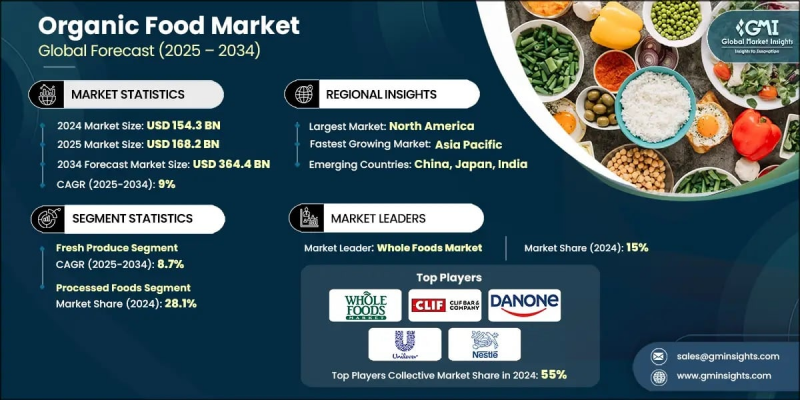
日益增強的環保意識和不斷變化的消費習慣正深刻影響著人們對有機和永續來源食品的需求。人們對土壤健康退化、氣候變遷和碳排放的認知不斷提高,促使他們更傾向於選擇能夠促進生物多樣性、節約用水並最大限度地減少污染的有機耕作方式。這種轉變激勵農民採用永續的農業方法,同時也推動了市場的持續擴張。政府政策和認證系統透過確保產品真實性和增強消費者信心,進一步加速了這一趨勢。近一半的產業成長都得益於支持環保生產的公共計畫和認證。植物性和純素食潮流與有機產品的融合,正在擴大飲料、功能性食品和富含蛋白質產品的消費群體,重新定義著現代注重健康的消費者消費有機食品的方式。
| 市場範圍 | |
|---|---|
| 起始年份 | 2024 |
| 預測年份 | 2025-2034 |
| 起始值 | 1543億美元 |
| 預測值 | 3644億美元 |
| 複合年成長率 | 9% |
2024年,新鮮農產品市佔率達37%。此細分市場受益於較高的購買頻率以及消費者對其健康益處的認知度。包裝有機食品因其便利性、保存期限和來源透明度而持續吸引消費者。飲料仍然是最具創新性的細分市場,不斷湧現以功能性成分和天然香料為特色的新產品。成熟品牌強調品質、可追溯性和感官吸引力以維持品牌忠誠度,而自有品牌產品則在零售連鎖店中拓展市場佔有率。
2024年,高度加工的有機產品市佔率為4.7%,預計到2034年將以9.3%的複合年成長率成長,這主要得益於膳食補充劑、蛋白粉和其他功能性產品在小眾健康通路中日益成長的人氣。這些品類的消費者更願意為產品的完整性、來源和最低加工標準支付溢價,增強了專賣店和電商平台的需求。
2024年,歐洲有機食品市佔率達到40.2%,預計2034年將維持7.8%的複合年成長率。成長的主要驅動力來自德國、法國和英國強力的有機政策以及消費者的信任。歐盟在第三個有機農業行動計畫下的支持,持續提升了有機產品的生產能力,並增強了認證標籤的公信力。德國憑藉著完善的零售基礎設施,引領區域有機食品消費,而英國和法國則在有機產品類別上呈現多元化發展趨勢。
全球有機食品市場的主要參與者包括雀巢、聯合利華、Amy's Kitchen、Clif Bar & Company、Organic Valley、Whole Foods Market、通用磨坊、達能、克羅格、Stonyfield Farm、Earthbound Farm、Eden Foods 和 Nature's Path Foods。為了鞏固市場地位,有機食品產業的公司正推行以創新、永續性和透明度為核心的策略。他們透過在食品和飲料產品線中推出植物性和清潔標章產品,不斷拓展有機產品組合。各大品牌正投資於認證採購項目和本地合作夥伴關係,以確保供應鏈的可追溯性和環保性。持續的產品創新,尤其是在功能性食品和即食食品領域,正幫助企業吸引更年輕、更注重健康的消費者。
目錄
第1章:方法論與範圍
第2章:執行概要
第3章:行業洞察
- 產業生態系分析
- 供應商格局
- 利潤率
- 每個階段的價值增加
- 影響價值鏈的因素
- 中斷
- 產業影響因素
- 成長促進因素
- 產業陷阱與挑戰
- 市場機遇
- 成長潛力分析
- 監管環境
- 波特的分析
- PESTEL 分析
- 價格趨勢
- 按地區
- 未來市場趨勢
- 技術與創新格局
- 當前技術趨勢
- 新興技術
- 專利格局
- 貿易統計(HS編碼)(註:僅提供重點國家的貿易統計資料)
- 主要進口國
- 主要出口國
- 永續性和環境方面
- 永續實踐
- 減少廢棄物策略
- 生產中的能源效率
- 環保舉措
- 碳足跡考量
第4章:競爭格局
- 介紹
- 公司市佔率分析
- 按地區
- 公司矩陣分析
- 主要市場參與者的競爭分析
- 競爭定位矩陣
- 關鍵進展
- 併購
- 合作夥伴關係與合作
- 新產品發布
- 擴張計劃
第5章:市場規模及預測:依產品類別分類,2021-2034年
- 主要趨勢
- 新鮮農產品
- 有機水果
- 有機蔬菜
- 有機香草和香料
- 乳製品和雞蛋
- 有機乳製品
- 有機起起司及發酵乳製品
- 有機蛋製品
- 替代乳製品
- 肉類、家禽和海鮮
- 有機牛肉和豬肉
- 有機家禽
- 有機海鮮和水產養殖
- 包裝食品/雜貨
- 有機罐裝醃製食品
- 有機乾貨和廚房必備品
- 有機零食和簡便食品
- 有機油和醋
- 飲料
- 有機果汁和冰沙
- 有機咖啡和茶
- 有機酒精飲料
- 功能性及健康飲料
- 冷凍食品
- 有機冷凍蔬菜和水果
- 有機冷凍餐食和主菜
- 有機冷凍甜點
- 烘焙食品和糖果
- 有機烘焙食品
- 有機糖果和甜點
- 手工及特色商品
第6章:市場規模及預測:依加工等級分類,2021-2034年
- 主要趨勢
- 新鮮/極少加工
- 加工食品
- 高度加工
第7章:市場規模及預測:依配銷通路分類,2021-2034年
- 主要趨勢
- 超市和雜貨店
- 特色食品店
- 餐飲服務管道
- 直接面對消費者的管道
- 批發分銷
第8章:市場規模及預測:依最終用途產業分類,2021-2034年
- 食品零售業
- 食品服務業
- 食品加工業
- 機構部門
- 其他
第9章:市場規模及預測:依地區分類,2021-2034年
- 主要趨勢
- 北美洲
- 美國
- 加拿大
- 歐洲
- 英國
- 德國
- 法國
- 義大利
- 西班牙
- 歐洲其他地區
- 亞太地區
- 中國
- 印度
- 日本
- 韓國
- 澳洲
- 亞太其他地區
- 拉丁美洲
- 巴西
- 墨西哥
- 阿根廷
- 拉丁美洲其他地區
- 中東和非洲
- 南非
- 沙烏地阿拉伯
- 阿拉伯聯合大公國
- 中東和非洲其他地區
第10章:公司簡介
- Whole Foods Market
- General Mills
- The Kroger
- Danone
- Unilever
- Nestle
- Organic Valley
- Amy's Kitchen
- Clif Bar & Company
- Eden Foods
- Nature's Path Foods
- Stonyfield Farm
- Earthbound Farm
The Global Organic Food Market was valued at USD 154.3 Billion in 2024 and is estimated to grow at a CAGR of 9% to reach USD 364.4 Billion by 2034.
Growing environmental consciousness and changing consumer habits are strongly influencing the demand for organic and sustainably sourced food. Awareness about soil health degradation, climate change, and carbon emissions is leading people to prefer organic farming practices that promote biodiversity, conserve water, and minimize pollution. This transition is motivating farmers to adopt sustainable agricultural methods while fueling consistent market expansion. Government policies and certification frameworks have further accelerated this trend by ensuring product authenticity and building consumer confidence. Nearly half of the industry's growth is driven by public programs and certifications that support environmentally friendly production. The blending of plant-based and vegan trends with organic offerings is expanding the consumer base for beverages, functional foods, and protein-rich products, redefining how the modern health-conscious population consumes organic foods.
| Market Scope | |
|---|---|
| Start Year | 2024 |
| Forecast Year | 2025-2034 |
| Start Value | $154.3 Billion |
| Forecast Value | $364.4 Billion |
| CAGR | 9% |
The fresh produce segment held 37% share in 2024. This segment benefits from high purchase frequency and consumer familiarity with its health benefits. Packaged organic foods continue to attract buyers for their convenience, shelf life, and transparency in sourcing. Beverages remain the most innovative segment, witnessing fast-paced product launches featuring functional ingredients and natural flavors. Established brands emphasize quality, traceability, and sensory appeal to maintain brand loyalty, while private-label products expand their footprint across retail chains.
The highly processed organic formats held a 4.7% share in 2024 and are projected to grow at a CAGR of 9.3% through 2034, propelled by the rising popularity of supplements, protein powders, and other functional products in niche health channels. Consumers in these categories demonstrate a higher willingness to pay premiums when product integrity, provenance, and minimal processing are evident, which strengthens demand across specialty stores and e-commerce platforms.
Europe Organic Food Market held a 40.2% share in 2024 and is expected to maintain a CAGR of 7.8% through 2034. Growth is primarily driven by strong organic policies and consumer trust within Germany, France, and the United Kingdom. EU support under the Third Action Plan for Organic Farming continues to enhance production capabilities and reinforce credibility in certified labeling. Germany leads regional consumption, supported by a well-established retail infrastructure, while the UK and France are experiencing diversification across organic categories.
Prominent players operating in the Global Organic Food Market include Nestle, Unilever, Amy's Kitchen, Clif Bar & Company, Organic Valley, Whole Foods Market, General Mills, Danone, The Kroger, Stonyfield Farm, Earthbound Farm, Eden Foods, and Nature's Path Foods. To strengthen their foothold, companies in the organic food industry are pursuing strategies centered on innovation, sustainability, and transparency. They are expanding their organic product portfolios by introducing plant-based and clean-label variants across food and beverage lines. Major brands are investing in certified sourcing programs and local partnerships to ensure traceable and eco-friendly supply chains. Continuous product innovation, especially in functional foods and ready-to-eat options, is helping companies appeal to younger and health-conscious consumers.
Table of Contents
Chapter 1 Methodology & Scope
- 1.1 Market scope and definition
- 1.2 Research design
- 1.2.1 Research approach
- 1.2.2 Data collection methods
- 1.3 Data mining sources
- 1.3.1 Global
- 1.3.2 Regional/Country
- 1.4 Base estimates and calculations
- 1.4.1 Base year calculation
- 1.4.2 Key trends for market estimation
- 1.5 Primary research and validation
- 1.5.1 Primary sources
- 1.6 Forecast model
- 1.7 Research assumptions and limitations
Chapter 2 Executive Summary
- 2.1 Industry 360° synopsis
- 2.2 Key market trends
- 2.2.1 Product category
- 2.2.2 Processing level
- 2.2.3 Distribution channel
- 2.2.4 End use industry
- 2.3 TAM analysis, 2025-2034
- 2.4 CXO perspectives: Strategic imperatives
- 2.4.1 Executive decision points
- 2.4.2 Critical success factors
- 2.5 Outlook and strategic recommendations
Chapter 3 Industry Insights
- 3.1 Industry ecosystem analysis
- 3.1.1 Supplier landscape
- 3.1.2 Profit margin
- 3.1.3 Value addition at each stage
- 3.1.4 Factor affecting the value chain
- 3.1.5 Disruptions
- 3.2 Industry impact forces
- 3.2.1 Growth drivers
- 3.2.2 Industry pitfalls and challenges
- 3.2.3 Market opportunities
- 3.3 Growth potential analysis
- 3.4 Regulatory landscape
- 3.4.1 North America
- 3.4.2 Europe
- 3.4.3 Asia Pacific
- 3.4.4 Latin America
- 3.4.5 Middle East & Africa
- 3.5 Porter's analysis
- 3.6 PESTEL analysis
- 3.7 Price trends
- 3.7.1 By region
- 3.8 Future market trends
- 3.9 Technology and innovation landscape
- 3.9.1 Current technological trends
- 3.9.2 Emerging technologies
- 3.10 Patent landscape
- 3.11 Trade statistics (HS code) (Note: the trade statistics will be provided for key countries only)
- 3.11.1 Major importing countries
- 3.11.2 Major exporting countries
- 3.12 Sustainability and environmental aspects
- 3.12.1 Sustainable practices
- 3.12.2 Waste reduction strategies
- 3.12.3 Energy efficiency in production
- 3.12.4 Eco-friendly initiatives
- 3.13 Carbon footprint considerations
Chapter 4 Competitive Landscape, 2024
- 4.1 Introduction
- 4.2 Company market share analysis
- 4.2.1 By region
- 4.2.1.1 North America
- 4.2.1.2 Europe
- 4.2.1.3 Asia Pacific
- 4.2.1.4 Latin America
- 4.2.1.5 Middle East & Africa
- 4.2.1 By region
- 4.3 Company matrix analysis
- 4.4 Competitive analysis of major market players
- 4.5 Competitive positioning matrix
- 4.6 Key developments
- 4.6.1 Mergers & acquisitions
- 4.6.2 Partnerships & collaborations
- 4.6.3 New product launches
- 4.6.4 Expansion plans
Chapter 5 Market Size and Forecast, By Product Category, 2021-2034 (USD Billion, Kilo Tons)
- 5.1 Key trends
- 5.2 Fresh produce
- 5.2.1 Organic fruits
- 5.2.2 Organic vegetables
- 5.2.3 Organic herbs & spices
- 5.3 Dairy & eggs
- 5.3.1 Organic milk products
- 5.3.2 Organic cheese & fermented dairy
- 5.3.3 Organic egg products
- 5.3.4 Alternative dairy products
- 5.4 Meat, poultry & seafood
- 5.4.1 Organic beef & pork
- 5.4.2 Organic poultry
- 5.4.3 Organic seafood & aquaculture
- 5.5 Packaged/grocery foods
- 5.5.1 Organic canned & preserved foods
- 5.5.2 Organic dry goods & pantry staples
- 5.5.3 Organic snacks & convenience foods
- 5.5.4 Organic oils & vinegars
- 5.6 Beverages
- 5.6.1 Organic juices & smoothies
- 5.6.2 Organic coffee & tea
- 5.6.3 Organic alcoholic beverages
- 5.6.4 Functional & health beverages
- 5.7 Frozen foods
- 5.7.1 Organic frozen vegetables & fruits
- 5.7.2 Organic frozen meals & entrees
- 5.7.3 Organic frozen desserts
- 5.8 Bakery & confectionery
- 5.8.1 Organic baked goods
- 5.8.2 Organic confectionery & sweets
- 5.8.3 Artisanal & specialty products
Chapter 6 Market Size and Forecast, By Processing Level, 2021-2034 (USD Billion, Kilo Tons)
- 6.1 Key trends
- 6.2 Fresh/minimally processed
- 6.3 Processed foods
- 6.4 Highly processed
Chapter 7 Market Size and Forecast, By Distribution Channel, 2021-2034 (USD Billion, Kilo Tons)
- 7.1 Key trends
- 7.2 Supermarkets & grocery stores
- 7.3 Specialty food stores
- 7.4 Food service channel
- 7.5 Direct-to-consumer channel
- 7.6 Wholesale distribution
Chapter 8 Market Size and Forecast, By End Use Industry, 2021-2034 (USD Billion, Kilo Tons)
- 8.1 Food retail industry
- 8.2 Food service industry
- 8.3 Food processing industry
- 8.4 Institutional sector
- 8.5 Others
Chapter 9 Market Size and Forecast, By Region, 2021-2034 (USD Billion, Kilo Tons)
- 9.1 Key trends
- 9.2 North America
- 9.2.1 U.S.
- 9.2.2 Canada
- 9.3 Europe
- 9.3.1 UK
- 9.3.2 Germany
- 9.3.3 France
- 9.3.4 Italy
- 9.3.5 Spain
- 9.3.6 Rest of Europe
- 9.4 Asia Pacific
- 9.4.1 China
- 9.4.2 India
- 9.4.3 Japan
- 9.4.4 South Korea
- 9.4.5 Australia
- 9.4.6 Rest of Asia Pacific
- 9.5 Latin America
- 9.5.1 Brazil
- 9.5.2 Mexico
- 9.5.3 Argentina
- 9.5.4 Rest of Latin America
- 9.6 Middle East & Africa
- 9.6.1 South Africa
- 9.6.2 Saudi Arabia
- 9.6.3 UAE
- 9.6.4 Rest of Middle East & Africa
Chapter 10 Company Profiles
- 10.1 Whole Foods Market
- 10.2 General Mills
- 10.3 The Kroger
- 10.4 Danone
- 10.5 Unilever
- 10.6 Nestle
- 10.7 Organic Valley
- 10.8 Amy's Kitchen
- 10.9 Clif Bar & Company
- 10.10 Eden Foods
- 10.11 Nature's Path Foods
- 10.12 Stonyfield Farm
- 10.13 Earthbound Farm

 義大利食品市場規模、佔有率和成長分析:按產品類型、分銷管道、類別、最終用戶、價格範圍和地區分類-2026-2033年產業預測
 全球有機食品市場規模、佔有率、趨勢和成長分析報告(2026-2034年)
 有機食品市場預測至2034年-按產品類型、產品形式、分銷管道、價格範圍、最終用戶和地區分類的全球分析有機食品飲料市場預測至2034年:按產品、分銷管道、生產流程和地區分類的全球分析
 有機食品飲料市場規模、佔有率和成長分析:按產品類型、加工方法、分銷管道和地區分類-2026-2033年產業預測
 有機食品市場:按類別、產品類型、分銷管道和地區分類
 有機食品市場規模、佔有率和成長分析:按產品類型、分銷管道、最終用途和地區分類-2026-2033年產業預測
 有機食品市場-全球產業規模、佔有率、趨勢、機會和預測:按類別、工藝、銷售管道、地區和競爭格局分類,2021-2031年有機食品香精市場-全球產業規模、佔有率、趨勢、機會和預測(按類型、應用、形式、地區和競爭格局分類),2021-2031年全球有機農產品市場:預測(至2032年)-按產品類型、形式、通路、最終用戶和地區分類的分析