


 |
市場調查報告書
商品編碼
1952844
AI原生6G革命:從5G-Advanced到6G的供應鏈策略AI-Native 6G Revolution: Supply-Chain Strategies from 5G-Advanced |
||||||

6G的到來標誌著網路架構向完全AI原生架構的根本性轉變,重塑了通訊技術和市場結構。與5G-Advanced相比,6G設計更加重視能源效率(以每比特能量衡量),推動了C-RAN和O-RAN之間新的分工,促進了GaN和SiC材料的更廣泛應用,以及光子和電子互連技術的更深層整合。
AI在無線接取網路(RAN)控制、波束管理、調度最佳化和頻譜分配中扮演著越來越重要的角色。同時,諸如A1N、Ga2O3和鑽石等新興材料展現出超越當前主流半導體性能極限的潛力。技術進步和商業需求正在共同重塑6G時代的競爭格局,釋放出涵蓋工業5.0、自動駕駛、智慧醫療和AI代理等高附加價值市場的潛力。
主要亮點
- 向原生AI的6G架構過渡:6G強調在網路控制、波束管理和頻譜分配中整合AI,從以頻寬為中心轉向以能源效率為中心。這將為自動駕駛和智慧醫療等應用提供邊緣運算和自動化最佳化。
- AI帶來的挑戰與需求:基於邊緣的資料產生和AI推理暴露了異質性和流量不對稱性帶來的瓶頸,因此架構重新設計對於可擴展性至關重要。
- 新興材料的潛力:氮化鋁(AlN)、氧化鎵(Ga2O3)和鑽石具有優異的導熱性和耐壓性,可望推動射頻元件、功率元件和惡劣環境應用的發展。
目錄
第一章:人工智慧時代的通訊瓶頸與6G的必然性
第二章:寬禁帶與III-V族材料革命:建構6G的物理基礎
第三章:TRI的視角
The arrival of 6G marks a fundamental shift toward fully AI-native network architectures, reshaping both communications technologies and market structures. Compared with 5G-Advanced, 6G design places a much stronger emphasis on energy efficiency-measured as energy per bit-driving a new division of labor between C-RAN and O-RAN, broader adoption of GaN and SiC materials, and deeper integration of photonic and electronic interconnect technologies.
AI is becoming increasingly central to RAN control, beam management, scheduling optimization, and spectrum allocation. At the same time, emerging materials such as AIN, Ga2O3, and diamond are demonstrating significant potential to surpass the performance limits of today's mainstream semiconductors. Together, technological advances and commercial imperatives are jointly reshaping competitive dynamics in the 6G era, unlocking high-value markets spanning Industry 5.0, autonomous driving, smart healthcare, and AI agents
Key Highlights
- Shift to AI-Native 6G Architecture: 6G emphasizes AI integration in network control, beam management, and spectrum allocation, moving from bandwidth-focused to energy-efficient designs, enabling edge computing and automated optimization for applications like autonomous driving and smart healthcare.
- AI-Driven Challenges and Necessity: Edge-based data generation and AI inference expose bottlenecks in heterogeneity and traffic asymmetry, making architectural redesign essential for scalability.
- Emerging Materials Potential: AlN, Ga2O3, and diamond offer superior thermal conductivity and breakdown fields, promising advancements in RF, power devices, and extreme environments.
Table of Contents
1. Communication Bottlenecks in the AI Era and the Inevitability of 6G
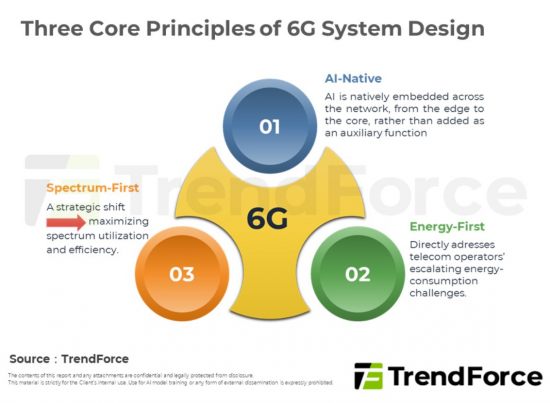
- Figure 1: Three Core Principles of 6G System Design
2. The WBG and III-V Materials Revolution: Laying the Physical Foundation for 6G
- Table 1: Energy Efficiency Assessment of Semiconductor Materials Across Cross-Domain Applications
- Figure 2: Technical and Performance Analysis of SiGe and CMOS in Advanced mmWave Transceivers
- Figure 3: Changes in Power Consumption and Antenna Count in Transmitter Architectures Using CMOS, SiGe, and InP
3. TRI's View

 客戶參與軟體市場:按組件類型、企業規模、互動管道、部署模式和產業分類-2026-2032年全球市場預測
 客戶對客戶 (C2C) 社群市場分析及至 2035 年預測:按類型、產品類型、服務、技術、組件、應用、部署類型、最終用戶和模式分類
 全球客戶參與解決方案市場規模、佔有率、趨勢和成長分析報告(2026-2034)
 客戶參與解決方案市場規模、佔有率和成長分析(按組件、部署類型、解決方案類型、公司規模、最終用戶產業和地區分類)-2026-2033年產業預測全球客戶互動解決方案市場:市場規模、佔有率、成長率、產業分析、依類型、應用和地區劃分的分析及預測(2026-2034 年)
 2026-2030年全球客戶參與解決方案市場
 全球公共演講培訓市場:預測至2032年-按培訓類型、技能重點、交付方式、最終用戶和地區分類的分析
 客戶參與:全球預測(2025年~2030年)
 客戶參與:全球市場佔有率(2024年)客戶旅程地圖軟體市場規模,全球依功能、部署類型、組織規模、地理分類,預測至 2025 年