


 |
市場調查報告書
商品編碼
2163584
印尼島際物流:市場佔有率分析、產業趨勢與統計及成長預測(2026-2031年)Indonesia Inter-Island Logistics - Market Share Analysis, Industry Trends & Statistics, Growth Forecasts (2026 - 2031) |
||||||

※ 本網頁內容可能與最新版本有所差異。詳細情況請與我們聯繫。
據 Mordor Intelligence 稱,2025 年印尼島際物流市場價值為 386.8 億美元,預計到 2031 年將達到 584 億美元,而 2026 年為 416.7 億美元,2026 年至 2031 年預測期內的複合年成長率為 6.99%預計為 6.99%。
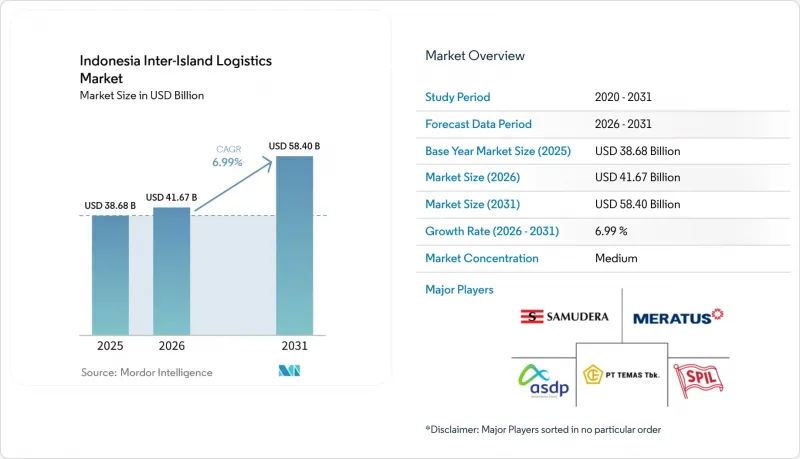
由於印尼是群島國家,海運和多模態對經濟活動至關重要,貨物需求並非由單一運輸方式驅動,而是由島嶼間的貨物流動驅動。本報告按物流功能(運輸、倉儲和配送、附加價值服務)、終端用戶產業(製造業和工業、零售和電子商務、食品飲料、汽車及零件、其他)以及島嶼間走廊(爪哇-蘇門答臘、爪哇-加里曼丹、爪哇-蘇拉威西、其他)進行細分。市場預測以美元計價。
印尼島際物流市場趨勢與洞察
電子商務的擴張增加了對島際物流的需求。
印尼的電商平台正將其配送系統擴展到爪哇島以外,這使得主要島嶼與偏遠城市之間協調小包裹遞送的需求日益成長。 Shopee Express的服務涵蓋全國487個城市,許多爪哇島以外的訂單需要先進行島際運輸,才能進行島內配送。印尼島際物流市場受惠於線上零售的需求,線上零售將都市區分類中心與實體店選擇有限的地區連結起來。在消費者依賴多段配送路線從大型履約中心收貨的地區,這種需求尤其突出。隨著平台路線網路的擴展,貨運代理商可以抓住市場對常規幹線運輸、區域倉儲和最終配送等服務的需求。
工業發展正在擴大島際貨運需求。
隨著製造業的成長,透過連接印尼各島嶼的航線網路運輸原料、零件和成品的需求日益增加。根據印尼中央統計局和工業部報告顯示,2026年第二季非油氣製造業年增5.3%,略高於印尼5.29%的GDP成長速度。 2026年8月,肯達爾經濟特區和巴塘綜合工業園區的土地利用率達到100%,為爪哇島港口系統的貨物流通提供了有力支撐。巴塘工業城內陸港最初設計吞吐能力為60萬至65萬標準箱,可望成為連接工業生產和海運的中心樞紐。在蘇拉威西島,電動車價值鏈中更複雜的鎳加工可能會促使貨物運輸方式從散裝轉向貨櫃運輸。這種轉變將促進爪哇-蘇拉威西走廊高附加價值物流活動的發展,並鼓勵擁有合適設備的營運商投資車輛。
基礎設施差異降低了島際物流效率。
整個網路的基礎設施品質參差不齊,尤其是在印尼東部和偏遠地區。一份於2025年發布的「海上收費」(Sea Toll)計畫的同儕審查評估報告指出,印尼僅有58.7%的港口配備了現代化貨物裝卸所需的設施。設施和港口容量不足導致運輸時間延長、裝卸成本增加,並可能增加非貿易航線上的貨物損壞風險。 ASDP在東努沙登加拉省的首創渡輪服務因資金短缺於2026年7月初暫時停運,但在政府的額外支持下於2026年7月20日恢復運營。這一事件表明,公共服務依賴連接偏遠地區的交通網路。基礎設施和服務資金的匱乏使得回程貨物難以保障,進而降低了私營業者在未獲得補貼的航線上的吸引力。
細分市場分析
預計到2025年,運輸業將佔印尼島際物流市場的58.95%。運輸仍然是島際供應鏈的核心,其中國內海運。國內空運則主要運輸對時間要求較高的貨物,例如醫療產品和電子設備。由於運輸活動規模龐大,擁有廣泛航運網路、船舶可用性和港口通道的成熟營運商具有優勢。反之,船舶註冊、船級和海事合規方面的要求也有利於那些擁有成熟營運能力的業者。
預計到2031年,增值物流服務將以10.37%的複合年成長率成長。隨著製造商和線上零售商對涵蓋包裝、貼標、貨物裝卸、庫存管理和出貨後支援的一體化解決方案的需求日益成長,這些服務的重要性也隨之提升。巴塘和加拉旺的工業發展正在推動港口便利地區對保稅倉庫和轉運設施的需求。此外,對現代化船舶運力和自動化物流樞紐的投資正在加強運輸、倉儲、分類和島際配送服務的整合。
其他好處:
- Excel格式的市場預測(ME)表
- 3個月的分析師支持
目錄
第1章:引言
- 研究假設和市場定義
- 調查範圍
第2章:調查方法
第3章執行摘要
- 市場規模、成長率與未來預測
- 島際物流的主要需求推動要素與趨勢
- 島際主要通道及貨物集中區
- 競爭格局與主要島際物流營運商
第4章 市場狀況
- 市場概況及島際物流的重要性
- 市場促進因素
- 電子商務的擴張增加了對島際物流的需求。
- 隨著各行業的發展,島際貨運需求也不斷成長。
- 基礎設施投資正在加強島際物流協調。
- 透過物流數位化加強港口與運輸之間的合作。
- 回程傳輸利用率低,導致對整合服務的需求增加。
- 一個中心輻射式網路正在擴大印尼東部的分銷覆蓋範圍。
- 市場限制因素
- 基礎設施差異導致島際物流運輸效率降低。
- 燃油價格波動推高了島際運輸的營運成本。
- 回程傳輸不平衡會降低網路的運作效率。
- 各地法規的差異增加了貨物裝卸的複雜性。
- 價值鏈結構及島際物流流分析
- 島際物流的法律規範與合規性分析
- 島際物流技術引進與數位化分析
- 主要港口和國內門戶的集中度分析
- 島際票價與成本趨勢分析
- 依地區分析貨運流量與需求集中度
- 波特五力分析
- 地緣政治事件對供應鏈變化的影響
第5章 市場規模與成長預測
- 按職能分類的物流
- 運輸
- 國內海運
- 貨櫃貨物
- 非貨櫃貨物
- 渡輪和滾裝貨物
- 國內航空貨運
- 國內海運
- 倉儲/物流
- 加值物流服務(包裝、貼標、貨物搬運等)
- 運輸
- 按最終用戶行業分類
- 製造業和工業
- 零售與電子商務
- 食品/飲料
- 汽車及汽車零件
- 化工/石油化工
- 電子與電機工程
- 農業和林業
- 醫療和藥品
- 其他最終用戶
- 通過島嶼走廊
- 爪哇島和蘇門答臘島
- 爪哇加里曼丹
- 爪哇蘇拉威西
- 爪哇島、峇裡島和努沙登加拉群島
- 蘇拉威西島、馬魯古群島和巴布亞
- 其他島際走廊
第6章 競爭情勢
- 市場集中度
- 策略趨勢
- 市佔率分析
- 公司簡介
- Meratus Group
- PT Salam Pacific Indonesia Lines(SPIL)
- PT TEMAS Tbk
- PT Samudera Indonesia Tbk
- PT ASDP Indonesia Ferry(Persero)
- PT Pelayaran Nasional Indonesia(PELNI)
- PT Tanto Intim Line
- PT Dharma Lautan Utama
- PT IMC Pelita Logistik Tbk
- PT Pertamina International Shipping
- PT Humpuss Intermoda Transportasi Tbk
- PT Transcoal Pacific Tbk
- PT Habco Trans Maritima Tbk
- PT Gurita Lintas Samudera
- PT Cipta Krida Bahari(CKB Logistics)
- PT Puninar Logistics
- PT Kamadjaja Logistics
- PT Dunia Express Transindo
- DHL Group
- Kuehne+Nagel International AG
- DSV A/S
- CEVA Logistics
第7章 市場機會與未來展望
第8章附錄
According to Mordor Intelligence, the Indonesia inter-island logistics market size was valued at USD 38.68 billion in 2025 and is estimated to grow from USD 41.67 billion in 2026 to reach USD 58.40 billion by 2031, at a CAGR of 6.99% during the forecast period 2026 to 2031.
Indonesia's archipelagic geography makes maritime and multimodal links essential to economic activity, so freight demand is tied to the movement of goods between islands rather than to a single transport mode. This report is Segmented by Logistics Function (Transportation, Warehousing & Distribution, Value-Added Services), by End-User Industry (Manufacturing and Industrial, Retail and E-Commerce, Food and Beverages, Automotive and Components, and More), by Inter-Island Corridor (Java-Sumatra, Java-kalimantan, Java-sulawesi, and More). The Market Forecasts are Provided in Terms of Value (USD).
Indonesia Inter-Island Logistics Market Trends and Insights
E-commerce Expansion Increasing Inter-Island Distribution Demand
Indonesia's e-commerce platforms are extending distribution systems beyond Java, increasing the need for coordinated parcel movements between major islands and remote cities. Shopee Express serves 487 cities nationally, which means that many deliveries outside Java require an inter-island movement before local distribution begins. The Indonesia inter-island logistics market benefits because online retail demand connects urban sorting sites with places that have fewer physical retail options. This need is strongest where consumers rely on multi-leg delivery routes to reach goods from major fulfillment centers. As platforms add route coverage, freight operators can gain demand for scheduled line-haul transport, regional warehousing, and final distribution support.
Industrial Growth Expanding Inter-Island Freight Movement Requirements
Manufacturing growth is increasing demand for the movement of inputs, components, and finished products across Indonesia's island network. The Central Bureau of Statistics and the Ministry of Industry reported that non-oil and gas manufacturing grew 5.3% year-over-year in the second quarter of 2026, slightly exceeding Indonesia's 5.29% GDP growth. In August 2026, the Kendal Special Economic Zone and Batang Integrated Industrial Park reached 100% land utilization, which supported a pipeline of cargo through Java's port system. The Batang Industropolis dry port is designed for an initial capacity of 600,000 to 650,000 TEUs and can create a consolidation point between industrial production and sea freight. In Sulawesi, more complex nickel processing for electric vehicle supply chains can shift freight from bulk movement toward containerized cargo. That change supports higher-value logistics activity on the Java-Sulawesi corridor and encourages fleet investment by operators with suitable equipment.
Infrastructure Gaps Increasing Inter-Island Logistics Transit Inefficiencies
Infrastructure quality remains uneven across the network, especially in eastern Indonesia and frontier regions. A peer-reviewed assessment of the Sea Toll program, published in 2025, found that 58.7% of Indonesian ports were adequately equipped for modern cargo handling. Gaps in equipment and port capability can lengthen transit times, increase handling costs, and create a greater risk of cargo damage on lower-volume routes. ASDP's pioneer ferry services in Nusa Tenggara Timur were temporarily disrupted in early July 2026 because of funding constraints, before services resumed on July 20, 2026, following additional government support. The episode shows the reliance of frontier connections on public service support. When infrastructure and service funding are insufficient, return cargo is also harder to build, which makes private operations less attractive on routes without subsidy access.
Other drivers and restraints analyzed in the detailed report include:
- Infrastructure Investment Strengthening Inter-Island Logistics Connectivity
- Logistics Digitalization Improving Port and Shipment Coordination
- Fuel Volatility Raising Inter-Island Transportation Operating Costs
For complete list of drivers and restraints, kindly check the Table Of Contents.
Segment Analysis
Transportation accounted for 58.95% of the Indonesia inter-island logistics market share in 2025. Transportation remains central to cross-island supply chains, with domestic sea freight handling substantial containerized and non-containerized cargo, supported by ferry and RoRo services across shorter sea routes. Domestic air freight serves time-sensitive shipments, including healthcare products and electronics. The scale of transportation activity supports established operators with broad route coverage, vessel availability, and port access. In contrast, fleet registration, vessel classification, and maritime compliance requirements favor providers with established operational capabilities.
Value-added logistics services are forecast to register a 10.37% CAGR through 2031. These services are gaining importance as manufacturers and online retailers seek integrated solutions covering packaging, labeling, cargo handling, inventory management, and post-shipment support. Industrial development in Batang and Karawang is supporting demand for bonded warehousing and cross-dock facilities near port connections. Investments in modern vessel capacity and automated logistics hubs are also strengthening the integration of transportation, warehousing, sorting, and inter-island distribution services.
Complete Report Scope:
- By Logistics Function
- Transportation
- Domestic Sea Freight
- Containerized Cargo
- Non-Containerized Cargo
- Ferry and RoRo Freight
- Domestic Air Freight
- Domestic Sea Freight
- Warehousing & Distribution
- Value-Added Logistics Services (Packaging, labeling, handling, etc.)
- Transportation
- By End-User Industry
- Manufacturing and Industrial
- Retail and E-commerce
- Food and Beverage
- Automotive and Components
- Chemicals and Petrochemicals
- Electronics and Electrical
- Agriculture and Forestry
- Healthcare and Pharmaceuticals
- Other End Users
- By Inter-Island Corridor
- Java-Sumatra
- Java-Kalimantan
- Java-Sulawesi
- Java-Bali and Nusa Tenggara
- Sulawesi-Maluku and Papua
- Other Inter-Island Corridors
List of Companies Covered in this Report:
- Meratus Group
- PT Salam Pacific Indonesia Lines (SPIL)
- PT TEMAS Tbk
- PT Samudera Indonesia Tbk
- PT ASDP Indonesia Ferry (Persero)
- PT Pelayaran Nasional Indonesia (PELNI)
- PT Tanto Intim Line
- PT Dharma Lautan Utama
- PT IMC Pelita Logistik Tbk
- PT Pertamina International Shipping
- PT Humpuss Intermoda Transportasi Tbk
- PT Transcoal Pacific Tbk
- PT Habco Trans Maritima Tbk
- PT Gurita Lintas Samudera
- PT Cipta Krida Bahari (CKB Logistics)
- PT Puninar Logistics
- PT Kamadjaja Logistics
- PT Dunia Express Transindo
- DHL Group
- Kuehne+Nagel International AG
- DSV A/S
- CEVA Logistics
Additional Benefits:
- The market estimate (ME) sheet in Excel format
- 3 months of analyst support
TABLE OF CONTENTS
1 INTRODUCTION
- 1.1 Study Assumptions and Market Definition
- 1.2 Scope of the Study
2 RESEARCH METHODOLOGY
3 EXECUTIVE SUMMARY
- 3.1 Market Size, Growth, and Forecast Outlook
- 3.2 Key Demand Drivers and Inter-Island Logistics Trends
- 3.3 Major Inter-Island Corridors and Cargo Concentration
- 3.4 Competitive Landscape and Leading Inter-Island Logistics Providers
4 MARKET LANDSCAPE
- 4.1 Market Overview and Importance of Inter-Island Logistics
- 4.2 Market Drivers
- 4.2.1 E-commerce Expansion Increasing Inter-Island Distribution Demand
- 4.2.2 Industrial Growth Expanding Inter-Island Freight Movement Requirements
- 4.2.3 Infrastructure Investment Strengthening Inter-Island Logistics Connectivity
- 4.2.4 Logistics Digitalization Improving Port and Shipment Coordination
- 4.2.5 Low Backhaul Utilization Increasing Consolidation Service Demand
- 4.2.6 Hub-and-Spoke Networks Expanding Eastern Indonesia Distribution Reach
- 4.3 Market Restraints
- 4.3.1 Infrastructure Gaps Increasing Inter-Island Logistics Transit Inefficiencies
- 4.3.2 Fuel Volatility Raising Inter-Island Transportation Operating Costs
- 4.3.3 Empty Backhaul Imbalances Reducing Network Operating Efficiency
- 4.3.4 Regional Rule Variations Increasing Cargo Handling Complexity
- 4.4 Value Chain Structure and Inter-Island Logistics Flow Analysis
- 4.5 Regulatory Framework and Inter-Island Logistics Compliance Analysis
- 4.6 Technology Adoption and Inter-Island Logistics Digitalization Analysis
- 4.7 Major Port and Domestic Gateway Concentration Analysis
- 4.8 Inter-Island Freight Rate and Cost Trend Analysis
- 4.9 Regional Cargo Flow and Demand Concentration Analysis
- 4.10 Porter's Five Forces Analysis
- 4.10.1 Threat of New Entrants
- 4.10.2 Bargaining Power of Buyers
- 4.10.3 Bargaining Power of Suppliers
- 4.10.4 Threat of Substitute Services
- 4.10.5 Intensity of Competitive Rivalry
- 4.11 Impact of Geo-Political Events on Supply Chain Shifts
5 MARKET SIZE AND GROWTH FORECASTS
- 5.1 By Logistics Function
- 5.1.1 Transportation
- 5.1.1.1 Domestic Sea Freight
- 5.1.1.1.1 Containerized Cargo
- 5.1.1.1.2 Non-Containerized Cargo
- 5.1.1.2 Ferry and RoRo Freight
- 5.1.1.3 Domestic Air Freight
- 5.1.1.1 Domestic Sea Freight
- 5.1.2 Warehousing & Distribution
- 5.1.3 Value-Added Logistics Services (Packaging, labeling, handling, etc.)
- 5.1.1 Transportation
- 5.2 By End-User Industry
- 5.2.1 Manufacturing and Industrial
- 5.2.2 Retail and E-commerce
- 5.2.3 Food and Beverage
- 5.2.4 Automotive and Components
- 5.2.5 Chemicals and Petrochemicals
- 5.2.6 Electronics and Electrical
- 5.2.7 Agriculture and Forestry
- 5.2.8 Healthcare and Pharmaceuticals
- 5.2.9 Other End Users
- 5.3 By Inter-Island Corridor
- 5.3.1 Java-Sumatra
- 5.3.2 Java-Kalimantan
- 5.3.3 Java-Sulawesi
- 5.3.4 Java-Bali and Nusa Tenggara
- 5.3.5 Sulawesi-Maluku and Papua
- 5.3.6 Other Inter-Island Corridors
6 COMPETITIVE LANDSCAPE
- 6.1 Market Concentration
- 6.2 Strategic Moves
- 6.3 Market Share Analysis
- 6.4 Company Profiles (includes Global Level Overview, Market Level Overview, Core Segments, Financials as available, Strategic Information, Geographic Coverage, Products and Services, Recent Developments)
- 6.4.1 Meratus Group
- 6.4.2 PT Salam Pacific Indonesia Lines (SPIL)
- 6.4.3 PT TEMAS Tbk
- 6.4.4 PT Samudera Indonesia Tbk
- 6.4.5 PT ASDP Indonesia Ferry (Persero)
- 6.4.6 PT Pelayaran Nasional Indonesia (PELNI)
- 6.4.7 PT Tanto Intim Line
- 6.4.8 PT Dharma Lautan Utama
- 6.4.9 PT IMC Pelita Logistik Tbk
- 6.4.10 PT Pertamina International Shipping
- 6.4.11 PT Humpuss Intermoda Transportasi Tbk
- 6.4.12 PT Transcoal Pacific Tbk
- 6.4.13 PT Habco Trans Maritima Tbk
- 6.4.14 PT Gurita Lintas Samudera
- 6.4.15 PT Cipta Krida Bahari (CKB Logistics)
- 6.4.16 PT Puninar Logistics
- 6.4.17 PT Kamadjaja Logistics
- 6.4.18 PT Dunia Express Transindo
- 6.4.19 DHL Group
- 6.4.20 Kuehne+Nagel International AG
- 6.4.21 DSV A/S
- 6.4.22 CEVA Logistics
7 MARKET OPPORTUNITIES AND FUTURE OUTLOOK
- 7.1 White-Space Opportunities and Unmet Service Needs
- 7.2 High-Potential End-User Segments and Trade Opportunities
- 7.3 Strategic Growth Priorities Across the Ecosystem
- 7.4 Future Market Outlook and Emerging Demand Pockets
8 APPENDIX

 貨運物流中介市場:全球市場預測,2026-2032年拼箱(LCL)運輸服務市場 - 全球預測 2026-2032空運與海運物流市場:全球市場預測,2026-2032年
 歐洲小批量貨物拼箱運輸:市場佔有率分析、產業趨勢與統計及成長預測(2026-2031 年)新加坡貨運與物流:市場佔有率分析、產業趨勢與統計及成長預測(2026-2031)
 2034年全球貨運市場預測-依運輸方式、貨物類型、燃料和推進方式、所有權類型、最終用戶和地區分類的分析
 全球貨運和物流市場:市場規模、佔有率、趨勢和成長分析(2026-2034 年)
 2026年全球貨車市場報告2026年全球貨運和物流市場報告2026年全球零碳運輸市場報告