


 |
市場調查報告書
商品編碼
2163347
包裝膠帶印刷:市場佔有率分析、產業趨勢與統計、成長預測(2026-2031)Packaging Tape Printing - Market Share Analysis, Industry Trends & Statistics, Growth Forecasts (2026 - 2031) |
||||||

※ 本網頁內容可能與最新版本有所差異。詳細情況請與我們聯繫。
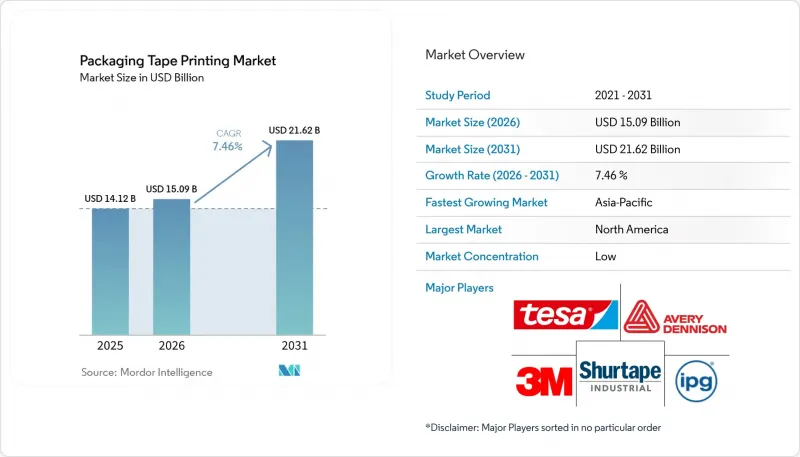
據 Mordor Intelligence 稱,2025 年包裝膠帶印刷市場價值 141.2 億美元,預計到 2031 年將從 2026 年的 150.9 億美元成長至 216.2 億美元,預測期(2026-2031 年)複合年成長率為 7.46%。
全球包裝膠帶印刷市場趨勢及洞察
電子商務和最後一公里小包裹的興起
隨著電子商務的蓬勃發展,需要安全密封、包含處理資訊和視覺識別的小包裹數量不斷增加。這一趨勢推動了履約中心、第三方物流供應商、零售商以及負責日常出貨的D2C(直接面對消費者)品牌對膠帶的需求成長。對於那些需要保持包裝外觀一致性,但又不受訂單量波動影響的公司而言,這無疑是一大福音。自動化紙箱封箱生產線需要黏性穩定的膠帶,因為效能波動會擾亂包裝流程,降低高吞吐量操作所需的可靠性。因此,採購商在更換膠帶配方和基材時,更加重視效能測試。印刷膠帶在不改變核心包裝流程的前提下,增加了視覺功能,使品牌能夠在紙箱封箱和整個配送過程中展示訊息和處理說明。隨著採購商從通用膠帶轉向具有明確印刷、黏性和性能規格,並能根據自身特定操作條件客製化的產品,印刷包裝膠帶的市場需求正在不斷成長。即使小包裹運輸仍然是需求的主要驅動力,這種轉變也能提高每卷膠帶的價值,因為預印膠帶可以替代或補充其他包裝元素,而無需額外的應用流程。
印刷膠帶是一種低成本的品牌傳播和開箱體驗媒介。
客製化印刷膠帶可用於包裝封口、品牌宣傳和產品處理說明。對於某些直接面對消費者 (D2C) 的出貨,它可以減少對單獨標籤、插頁或包裝紙的需求。這種方法簡化了使用標準化瓦楞紙箱並希望在整個配送網路中保持一致外觀的品牌的包裝流程。印刷膠帶對於訂閱企業和需要視覺品牌宣傳但又不想為每個宣傳活動或產品線重新設計包裝箱的小規模品牌來說尤其有用。更改膠帶設計比完全重新設計紙箱要容易得多。據 Sun Chemical 公司稱,其「SunCure Advance ECO UV Ink」系列產品具有色彩一致性和耐磨性,並含有 25-30% 的生物可再生成分。在包裝膠帶上印刷有助於品牌所有者將包裝定位為客戶體驗的一部分,確保印刷圖像在整個分銷鏈中保持清晰。能夠在運輸過程中保護圖案的供應商不僅可以在捲筒價格上競爭,還可以在性能、印刷品質和應用可靠性方面競爭。
石油化學原料和黏合劑價格波動
雙軸延伸聚丙烯(BOPP) 薄膜由原油和天然氣衍生的聚丙烯樹脂製成。樹脂價格的波動會推高薄膜、黏合劑和油墨等原料以及成品膠帶的成本,對整個加工過程造成壓力。對於那些無法控制上游原料價格的供應商而言,這些波動也使得成本規劃變得困難。加工商通常會面臨原物料成本上漲與下游客戶價格調整之間存在時間滯後的問題,尤其是在客戶合約和採購週期限制了價格的即時調整的情況下。買家也可能抵制包裝預算的大幅成長。這種時間滯後會對服務於對價格特別敏感且難以承受包裝成本上漲的客戶的區域供應商的利潤率帶來壓力。在包裝膠帶的印刷市場,鑑於原料價格的持續波動和現金流預測的困難,小規模加工商可能會推遲對數位印刷和加工設備的投資。大規模一體化製造商可以透過協調其整個業務運作中的採購、混煉、印刷和加工環節來應對這些壓力。
細分市場分析
到2025年,熱熔膠帶將佔據包裝膠帶市場43.65%的佔有率。這一市場地位反映了其快速黏合強度、在自動化紙箱封口線上的優異性能以及與原生和再生瓦楞紙板表面的兼容性。這些特性對於小包裹處理量大的履約中心至關重要,因為封口必須在不減慢包裝線速度的情況下完成。在此階段膠帶失效會中斷包裝作業,增加返工,並影響出貨的一致性。熱熔膠帶適用於那些快速黏合比耐日光或耐長時間戶外暴露更為重要的應用場景。其市場地位也反映了加工商和物流買家在標準封口應用中對熱熔膠帶的廣泛應用。
預計到2031年,丙烯酸膠帶市場將以7.85%的複合年成長率成長。這一成長主要得益於市場對具有紫外線穩定性、無溶劑特性和食品接觸安全性的產品的需求。丙烯酸膠帶適用於需要印刷圖案在搬運、運輸和光照後仍保持清晰的應用場合。 2026年1月,舒爾泰普(Shurtape)推出了AP 251定製印刷生產級丙烯酸包裝膠帶,該產品採用鎖印技術,旨在保護印刷圖案免受磨損。這款新產品在黏合性能和印刷圖案耐久性之間實現了平衡。在相關應用中,丙烯酸薄膜與水性油墨和紫外線固化油墨相容,能夠滿足客製化印刷需求。這種相容性使其能夠適應小批量、多種設計或印刷內容波動較大的訂單。同時,其他黏合系統,包括橡膠基產品,在那些對不規則工業基材的黏合性要求高於對複雜圖案要求的應用場合中,仍然發揮著至關重要的作用。
2025年,聚丙烯在印刷包裝膠帶市場佔有61.04%的佔有率。雙軸延伸聚丙烯(BOPP)薄膜因其透明度高、拉伸強度高和薄壁特性,適用於主流膠帶生產。其透明表面可作為印刷訊息、品牌顏色、操作說明和基本安全標記的基底。該材料也適用於大批量加工,這對於經常採購膠帶的小包裹和物流用戶至關重要。其充足的供應和成熟的加工基礎鞏固了其市場地位。聚丙烯廣泛應用於小包裹、零售和物流領域的大批量印刷膠帶。然而,隨著再生材料的使用和包裝表面的變化,供應商需要保持印刷品質和黏合性能。
預計到2031年,聚乙烯將以8.07%的複合年成長率成長,這主要得益於冷鍊和潮濕環境物流應用的擴展。聚乙烯市場的成長主要由需要柔軟性和耐環境性能的應用所驅動,例如藥品和溫敏食品的運輸。這些應用要求膠帶即使在潮濕、溫度波動和不斷變化的搬運條件下也能保持其功能性,而這些因素會影響傳統的包裝材料。因此,聚乙烯滿足了與聚丙烯大批量應用不同的獨特需求。 Magis公司推出了一款採用廢棄食用油衍生的再生聚丙烯製成的雙向拉伸聚丙烯(BOPP)膠帶,並獲得了國際永續碳認證(ISCC)PLUS認證。該案例表明,再生材料解決方案正在薄膜行業整體發展。紙基膠帶和其他材料也越來越受到關注,因為可回收性作為生活垃圾會影響消費者的購買決策。 2025年,舒爾泰普在拉斯維加斯包裝展上發布了“再生系列包裝膠帶”,該產品採用90%的再生聚對苯二甲酸乙二醇酯(PET)製成,這些PET源自廢棄的消費品材料。這些材料選擇豐富了符合回收要求的包裝材料供應商的產品線。
區域分析
2025年,北美將佔據包裝膠帶印刷市場32.21%的佔有率。該地區小包裹密度高,履約基礎設施完善,且D2C(直接面對消費者)和訂閱業務普遍使用定製品牌膠帶。這些用戶在多次出貨中使用標準化的瓦楞紙箱,並在膠帶上印製品牌識別、操作說明和安全訊息。美國醫藥包裝產業的需求也推動了對具有防篡改功能和序列化資訊的印刷膠帶的需求,這就要求膠帶具備卓越的封裝性能和清晰的印刷效果。 2026年2月,Intertape Polymer Group (IPG) 推出了「包裝診斷」項目,整合了iTrack、AF2K和Gear Up等工具,旨在提升包裝生產線的效能。 2026年1月,Shoot Tape推出了“AP 251”,以滿足市場對具有圖案保護功能的丙烯酸印刷膠帶的需求。這些趨勢表明,隨著出貨量的不斷成長,包裝團隊越來越重視營運可靠性和區域產品功能。
預計到2031年,亞太地區將以8.77%的複合年成長率成長。該地區包裝膠帶印刷市場的擴張主要得益於中國、印度和東南亞地區履約業務的成長,這些地區的電子商務和第三方物流(3PL)網路容量持續提升。長江Delta、馬哈拉斯特拉邦拉邦物流走廊以及該地區第三方物流網路對品牌膠帶的需求增加,也支持了市場需求。在這些市場,出貨量的成長比北美成熟的單價模式更為重要。印度官方投資機構已設定目標,2030年實現電子商務商品交易總額(GMV)達到3,500億美元。日東電工擴大了製造地,並於2026年5月開始生產黏合劑。該地區產能的擴張將縮短大規模膠帶需求的供應鏈,並使生產基地更靠近需要持續供應膠帶的客戶。在這個地區,除了需求不斷成長外,黏合劑和膠帶產品的製造地也在擴大。
在歐洲,對雙軸延伸聚丙烯(BOPP) 膠帶和採用再生材料的低致敏油墨的永續性要求和投資正在重塑市場格局。 《包裝和包裝廢棄物法規》提供了一個強調可回收包裝解決方案的政策框架,這提高了膠帶製造商選擇材料的重要性。 Tesa 正在擴建其位於奧芬堡的工廠,新建一座 4,500平方公尺的生產大樓,預計將於 2027 年投產。 Tesa 也宣布將於 2026 年 3 月加入漢堡的氫能網。這些舉措表明,對於服務歐洲客戶的供應商而言,生產方法和檢驗的材料解決方案至關重要。在南美洲,尤其是在巴西和阿根廷,來自國內電子商務和食品製造業的新需求正在不斷成長。在中東和非洲,對冷鏈物流能力的投資正在推動需求成長,而防潮性、產品處理資訊和黏合性能等特性則為特種膠帶應用提供了支援。
其他好處:
- Excel格式的市場預測(ME)表
- 3個月的分析師支持
目錄
第1章:引言
- 研究假設和市場定義
- 調查範圍
第2章:調查方法
第3章執行摘要
第4章 市場狀況
- 市場概覽
- 市場促進因素
- 電子商務和最後一公里小包裹遞送的成長
- 印刷膠帶作為一種低成本的品牌推廣和開箱影片媒介。
- 對防篡改、操作預防措施和可追溯性的需求。
- 客製化和可變數據印刷交貨週期短。
- 與再生紙板的兼容性以及黏合劑配方的創新
- 市場限制因素
- 石油化學原料和黏合劑價格波動
- 再生瓦楞紙板的印刷品質與黏合性之間的權衡
- 高速印刷和加工生產線的資本密集度
- 價值鏈分析
- 波特五力分析
第5章 市場規模與成長預測
- 依產品類型
- 熱熔膠
- 丙烯酸纖維
- 其他
- 材料
- 聚丙烯
- 聚氯乙烯
- 聚乙烯
- 其他材料
- 印刷油墨
- 水性油墨
- UV固化油墨
- 溶劑型油墨
- 透過印刷技術
- 柔版印刷
- 數位印刷和噴墨印刷
- 凹版印刷和膠版印刷
- 其他技術
- 按最終用戶行業分類
- 食品/飲料
- 電子設備
- 物流與電子商務
- 製藥
- 其他終端用戶產業
- 按地區
- 亞太地區
- 中國
- 印度
- 日本
- 韓國
- 東南亞國協
- 其他亞太國家
- 北美洲
- 美國
- 加拿大
- 墨西哥
- 歐洲
- 德國
- 英國
- 法國
- 義大利
- 北歐國家
- 其他歐洲國家
- 南美洲
- 巴西
- 阿根廷
- 其他南美國家
- 中東和非洲
- 沙烏地阿拉伯
- 南非
- 其他中東和非洲國家
- 亞太地區
第6章 競爭情勢
- 市場集中度
- 策略趨勢
- 市佔率和排名分析
- 公司簡介
- 3M
- Avery Dennison Corporation
- Berry Global Inc.
- Canon USA, Inc.
- Cenveo
- DuPont
- Flexcon Company, Inc.
- Henkel AG & Co. KGaA
- IPG
- Nitto Denko Corporation
- RR Donnelley & Sons Company
- Scapa Industrial
- Shurtape Technologies, LLC
- SIAT SPA
- tesa SE
第7章 市場機會與未來展望
According to Mordor Intelligence, the packaging tape printing market size was valued at USD 14.12 billion in 2025 and is estimated to grow from USD 15.09 billion in 2026 to reach USD 21.62 billion by 2031, at a CAGR of 7.46% during the forecast period (2026-2031).
Global Packaging Tape Printing Market Trends and Insights
E-Commerce and Last-Mile Parcel Growth
E-commerce growth increases the number of parcels requiring secure closure, handling information, and visual identification. This trend supports tape consumption across fulfillment centers, third-party logistics providers, retailers, and direct-to-consumer brands that manage recurring shipments. It also supports businesses that need to maintain a consistent package appearance across varying order levels. Automated case-sealing lines require tape with consistent adhesion, as performance variations can disrupt packing processes and reduce the reliability required in high-throughput operations. As a result, buyers place greater importance on performance testing when changing tape formulations or substrates. Printed tapes add visible functionality without altering the core packaging workflow, enabling brands to display messaging or handling instructions at the point of carton sealing and throughout the delivery process. The packaging tape printing market is supported as buyers shift from commodity tape rolls to products with defined print, adhesive, and performance specifications suited to their operating conditions. This shift can increase value per roll, even when parcel shipments remain the primary demand driver, because printed tape can replace or complement other packaging elements without requiring a separate application step.
Printed Tape as a Low-Cost Brand and Unboxing Medium
Custom-printed tape can serve as a package seal, a branded surface, and an instruction carrier. In certain direct-to-consumer shipments, it can reduce the need for separate labels, inserts, or tissue paper. This approach simplifies packing operations for brands that use standardized cartons and seek a consistent presentation across their delivery networks. Printed tape is particularly relevant for subscription businesses and smaller brands that require visible branding without redesigning shipping cartons for every campaign or product line. Changing tape designs is easier to implement than undertaking a full carton redesign. Sun Chemical stated that its SunCure Advance ECO UV ink line provides color consistency and rub resistance and contains 25-30% bio-renewable content. Packaging tape printing helps brand owners treat the outer shipment as part of the customer experience and keeps printed images clear throughout distribution. Suppliers that protect artwork during transport can compete based on performance, print quality, and application reliability rather than roll price alone.
Petrochemical Feedstock and Adhesive Price Volatility
Biaxially oriented polypropylene (BOPP) film is produced from polypropylene resin derived from crude oil and natural gas feedstocks. Fluctuations in resin prices can increase the costs of films, adhesives, ink-related inputs, and finished tape, creating pressure across the converting process. These fluctuations also complicate cost planning for suppliers that do not control upstream inputs. Converters often face a lag between rising input costs and price adjustments for downstream customers, particularly when customer contracts or purchasing cycles restrict immediate price revisions. Buyers may also resist rapid increases in packaging budgets. This lag can compress margins, especially for regional suppliers serving price-sensitive accounts with limited ability to absorb higher packaging costs. In the packaging tape printing market, smaller converters may delay investments in digital printing or converting equipment when input prices remain volatile and cash generation becomes less predictable. Larger integrated producers can manage these pressures by coordinating sourcing, compounding, printing, and converting across broader operations.
Other drivers and restraints analyzed in the detailed report include:
- Demand for Tamper Evidence, Handling Instructions, and Traceability
- Short-Run Customization and Variable-Data Printing
- Print Quality and Adhesion Trade-Offs on Recycled Corrugate
For complete list of drivers and restraints, kindly check the Table Of Contents.
Segment Analysis
Hot-melt tape accounted for 43.65% of the packaging tape market share in 2025. Its position reflects instant tack, performance on automated case-sealing lines, and compatibility with virgin and recycled corrugated surfaces. These properties are relevant in fulfillment centers that process high parcel throughput and require seals to form without slowing packing lines. Tape failures at this stage can disrupt packing operations, increase rework, and affect shipment consistency. Hot-melt tape is used in applications where rapid adhesion is more important than resistance to sunlight or prolonged outdoor exposure. Its market position also reflects the established use of hot-melt tape among converters and logistics buyers for standard sealing applications.
Acrylic tape is forecast to expand at a CAGR of 7.85% through 2031. Growth in the acrylic tape segment is supported by demand for UV-stable, solvent-free, and food-contact-safe formulations. Acrylic tape is relevant when buyers require printed graphics to remain clear after handling, transport, and exposure to light. In January 2026, Shurtape launched AP 251 Custom-Printed Production-Grade Acrylic Packaging Tape, featuring Lock Print Technology designed to protect printed artwork from abrasion. The launch links adhesive performance with printed-image durability. In relevant applications, acrylic films accept water-based and UV-curable inks, supporting custom printing requirements. This compatibility supports orders involving short runs, multiple designs, or variable printed content. Other adhesive systems, including rubber-based products, retain a role in applications where adhesion to irregular industrial substrates is more important than detailed artwork.
Polypropylene accounted for 61.04% of the packaging tape printing market share in 2025. Biaxially oriented polypropylene (BOPP) film offers clarity, tensile strength, and thin-gauge performance for mainstream tape production. Its clear surface provides a base for printed messages, brand colors, handling instructions, and basic security markings. The material also supports high-output converting, which is relevant for parcel and logistics users who purchase tape regularly. Its availability and established converting base support its market position. Polypropylene is used in high-output printed tapes for parcel, retail, and logistics applications. However, recycled content and changing package surfaces require suppliers to maintain print quality and adhesion performance.
Polyethylene is projected to grow at a CAGR of 8.07% through 2031 as cold-chain and moisture-exposed logistics applications expand. Growth in the polyethylene segment is driven by applications requiring flexibility and environmental resistance, including pharmaceutical and temperature-sensitive food shipments. These applications require tape to remain functional despite moisture, temperature fluctuations, and varying handling conditions that can affect conventional packaging materials. Polyethylene, therefore, serves a distinct need from polypropylene's high-output application base. Magis introduced a BOPP adhesive tape made with recycled polypropylene derived from used cooking oil, with International Sustainability and Carbon Certification (ISCC) PLUS certification. This example shows how recycled-content solutions are developing across the broader film category. Paper-backed tapes and other materials also receive attention where curbside recyclability influences purchasing decisions. In 2025, Shurtape presented its Recycled Series Packaging Tapes at Pack Expo Las Vegas, describing products made from 90% post-consumer recycled polyethylene terephthalate (PET). These material options expand the product range for buyers looking for packaging that meets recycling requirements.
Complete Report Scope:
- By Product Type
- Hot Melt
- Acrylic
- Others
- By Material
- Polypropylene
- Polyvinyl Chloride
- Polyethylene
- Other Materials
- By Printing Ink
- Water-Based Ink
- UV-Curable Ink
- Solvent-Based Ink
- By Printing Technology
- Flexography
- Digital and Inkjet Printing
- Gravure and Lithography
- Other Technologies
- By End-User Industry
- Food and Beverages
- Electronics
- Logistics and E-Commerce
- Pharmaceuticals
- Other End-User Industries
- By Geography
- Asia-Pacific
- China
- India
- Japan
- South Korea
- ASEAN Countries
- Rest of Asia-Pacific
- North America
- United States
- Canada
- Mexico
- Europe
- Germany
- United Kingdom
- France
- Italy
- NORDIC Countries
- Rest of Europe
- South America
- Brazil
- Argentina
- Rest of South America
- Middle East and Africa
- Saudi Arabia
- South Africa
- Rest of Middle East and Africa
- Asia-Pacific
Geography Analysis
North America accounted for 32.21% of the packaging tape printing market in 2025. The region combines high parcel density, established fulfillment infrastructure, and the use of custom-branded tape by direct-to-consumer and subscription businesses. These users incorporate branding, handling instructions, and security messaging on tape while using a standardized carton format across multiple shipments. Demand from the U.S. pharmaceutical packaging industry also supports printed tape formats that carry tamper-evident or serialized information, for which closure performance and print clarity are requirements. Intertape Polymer Group (IPG) introduced its Packaging Diagnostics program in February 2026, combining the iTrack, AF2K, and Gear Up tools to improve packaging-line performance. Shurtape launched AP 251 in January 2026, reflecting demand for acrylic printed tape with protected artwork. These developments reflect the regional focus on operational reliability and product features for packaging teams managing more shipments.
Asia-Pacific is projected to grow at a CAGR of 8.77% through 2031. The regional packaging tape printing market size is driven by expanding fulfillment operations in China, India, and Southeast Asia, where e-commerce and third-party logistics networks continue to increase capacity. Demand is supported by the growing use of branded tape in the Yangtze River Delta, the Maharashtra logistics corridor, and regional third-party logistics networks. In these markets, shipment growth plays a larger role than mature unit-value patterns in North America. India's official investment agency has set a target of USD 350 billion in e-commerce gross merchandise value by 2030. Nitto Denko expanded its manufacturing presence in Hung Yen, Vietnam, and adhesive production came online in May 2026. Expanded regional production capacity can shorten supply chains for large-scale tape demand and position producers closer to customers requiring recurring tape supplies. The region combines demand growth with an expanding manufacturing base for adhesive and tape products.
Europe is shaped by sustainability requirements and investments in recycled-substrate Biaxially Oriented Polypropylene (BOPP) tape and low-migration inks. The Packaging and Packaging Waste Regulation provides a policy framework that emphasizes recyclable packaging solutions, increasing the importance of material selection for tape producers. Tesa is expanding its Offenburg site with a new 4,500-square-meter production building, scheduled to begin production in 2027. Tesa also announced its participation in a hydrogen network in Hamburg in March 2026. These initiatives reflect the importance of production methods and verified material solutions for suppliers serving European customers. South America contributes to emerging demand from domestic e-commerce and food manufacturing, particularly in Brazil and Argentina. In the Middle East and Africa, demand is associated with investments in cold-chain logistics capacity, where moisture resistance, product-handling information, and adhesion performance support specialized tape applications.
- 3M
- Avery Dennison Corporation
- Berry Global Inc.
- Canon U.S.A., Inc.
- Cenveo
- DuPont
- Flexcon Company, Inc.
- Henkel AG & Co. KGaA
- IPG
- Nitto Denko Corporation
- RR Donnelley & Sons Company
- Scapa Industrial
- Shurtape Technologies, LLC
- SIAT S.P.A.
- tesa SE
Additional Benefits:
- The market estimate (ME) sheet in Excel format
- 3 months of analyst support
TABLE OF CONTENTS
1 Introduction
- 1.1 Study Assumptions and Market Definition
- 1.2 Scope of the Study
2 Research Methodology
3 Executive Summary
4 Market Landscape
- 4.1 Market Overview
- 4.2 Market Drivers
- 4.2.1 E-Commerce and Last-Mile Parcel Growth
- 4.2.2 Printed Tape as a Low-Cost Brand and Unboxing Medium
- 4.2.3 Demand for Tamper Evidence, Handling Instructions and Traceability
- 4.2.4 Short-Run Customization and Variable-Data Printing
- 4.2.5 Recycled-Corrugate Compatibility and Adhesive Formulation Innovation
- 4.3 Market Restraints
- 4.3.1 Petrochemical Feedstock and Adhesive Price Volatility
- 4.3.2 Print Quality and Adhesion Trade-Offs on Recycled Corrugate
- 4.3.3 Capital Intensity of High-Speed Printing and Converting Lines
- 4.4 Value Chain Analysis
- 4.5 Porter's Five Forces Analysis
- 4.5.1 Bargaining Power of Suppliers
- 4.5.2 Bargaining Power of Buyers
- 4.5.3 Threat of New Entrants
- 4.5.4 Threat of Substitutes
- 4.5.5 Competitive Rivalry
5 Market Size and Growth Forecasts (Value)
- 5.1 By Product Type
- 5.1.1 Hot Melt
- 5.1.2 Acrylic
- 5.1.3 Others
- 5.2 By Material
- 5.2.1 Polypropylene
- 5.2.2 Polyvinyl Chloride
- 5.2.3 Polyethylene
- 5.2.4 Other Materials
- 5.3 By Printing Ink
- 5.3.1 Water-Based Ink
- 5.3.2 UV-Curable Ink
- 5.3.3 Solvent-Based Ink
- 5.4 By Printing Technology
- 5.4.1 Flexography
- 5.4.2 Digital and Inkjet Printing
- 5.4.3 Gravure and Lithography
- 5.4.4 Other Technologies
- 5.5 By End-User Industry
- 5.5.1 Food and Beverages
- 5.5.2 Electronics
- 5.5.3 Logistics and E-Commerce
- 5.5.4 Pharmaceuticals
- 5.5.5 Other End-User Industries
- 5.6 By Geography
- 5.6.1 Asia-Pacific
- 5.6.1.1 China
- 5.6.1.2 India
- 5.6.1.3 Japan
- 5.6.1.4 South Korea
- 5.6.1.5 ASEAN Countries
- 5.6.1.6 Rest of Asia-Pacific
- 5.6.2 North America
- 5.6.2.1 United States
- 5.6.2.2 Canada
- 5.6.2.3 Mexico
- 5.6.3 Europe
- 5.6.3.1 Germany
- 5.6.3.2 United Kingdom
- 5.6.3.3 France
- 5.6.3.4 Italy
- 5.6.3.5 NORDIC Countries
- 5.6.3.6 Rest of Europe
- 5.6.4 South America
- 5.6.4.1 Brazil
- 5.6.4.2 Argentina
- 5.6.4.3 Rest of South America
- 5.6.5 Middle East and Africa
- 5.6.5.1 Saudi Arabia
- 5.6.5.2 South Africa
- 5.6.5.3 Rest of Middle East and Africa
- 5.6.1 Asia-Pacific
6 Competitive Landscape
- 6.1 Market Concentration
- 6.2 Strategic Moves
- 6.3 Market Share (%)/Ranking Analysis
- 6.4 Company Profiles (includes Global Overview, Market Overview, Core Segments, Financials as available, Strategic Information, Products and Services, and Recent Developments)
- 6.4.1 3M
- 6.4.2 Avery Dennison Corporation
- 6.4.3 Berry Global Inc.
- 6.4.4 Canon U.S.A., Inc.
- 6.4.5 Cenveo
- 6.4.6 DuPont
- 6.4.7 Flexcon Company, Inc.
- 6.4.8 Henkel AG & Co. KGaA
- 6.4.9 IPG
- 6.4.10 Nitto Denko Corporation
- 6.4.11 RR Donnelley & Sons Company
- 6.4.12 Scapa Industrial
- 6.4.13 Shurtape Technologies, LLC
- 6.4.14 SIAT S.P.A.
- 6.4.15 tesa SE
7 Market Opportunities and Future Outlook
- 7.1 White-Space and Unmet-Need Assessment

 自動折疊瓦楞紙板封口機市場:全球市場預測,2026-2032年室溫應用膠帶市場:全球市場預測,2026-2032年
 冷纏防腐密封膠帶市場報告:趨勢、預測及競爭分析(至2035年)室溫應用聚丙烯膠帶市場:全球市場預測(2026-2032年)
 紙箱封口機市場機會、成長要素、產業趨勢分析及2026-2035年預測。翻蓋式瓦楞紙板封口機市場:全球市場預測(2026-2032年)
 黏合劑市場:按材料、表面處理、承載能力、應用和地區分類PVC包裝材料市場:按應用、終端用戶行業和地區分類
 北美包裝膠帶:市場佔有率分析、產業趨勢與統計、成長預測(2026-2031)包裝膠帶:市場佔有率分析、產業趨勢與統計、成長預測(2026-2031)