


 |
市場調查報告書
商品編碼
2157098
英國預製產品物流:市場佔有率分析、產業趨勢與統計及成長預測(2026-2031)United Kingdom Prefabricated Product Logistics - Market Share Analysis, Industry Trends & Statistics, Growth Forecasts (2026 - 2031) |
||||||

※ 本網頁內容可能與最新版本有所差異。詳細情況請與我們聯繫。
據 Mordor Intelligence 稱,英國預製貨物物流市場在 2025 年的價值為 8.9 億美元,預計到 2031 年將達到 12 億美元,而 2026 年為 9.6 億美元,預測期(2026-2031 年)的複合年成長率為 4.50%。
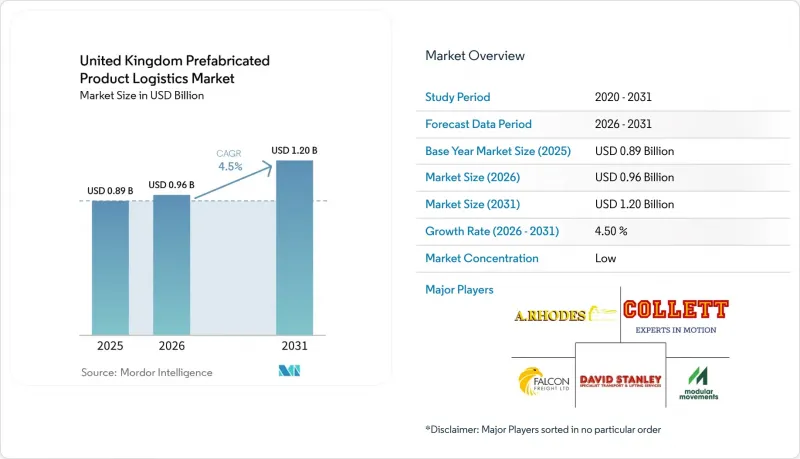
2026年,住宅交付、公共採購和工廠化建造將繼續支撐英國預製件物流市場。本報告按服務(運輸、倉儲和儲存、附加價值服務)、產品類型(模組化建築、板式和組件式系統、其他預製件類型)和應用(住宅、商業建築、其他)進行細分。市場預測以美元計價。
英國預製件物流市場趨勢與洞察
公共住宅框架的供需面臨壓力
在本屆國會任期結束前建成150萬套新住宅的目標,仍是英國預製件物流市場的重要需求訊號。 2026年至2036年的社會住宅和經濟適用住宅計劃取代了先前的經濟適用住宅計劃,並接受採用現代建築方法的競標。這種模式保障了工廠生產的建築材料及其相關運輸活動的持續供應。同時,由於工廠的貨物必須在起重機、勞動力和當地交通設施到位後才能運抵施工現場,因此交付協調變得更加關鍵。交付延誤可能會擾亂安裝工作的順序,因此物流公司在確保專案按計劃進行方面發揮著更為重要的作用。英國預製件物流市場受益於製造商和承包商將運輸規劃視為專案執行的一部分,而不是單獨的採購環節。 Holmes England公司表示,其支援的住宅竣工數量可能從2025年和2026年的每年4萬套增加到2029年和2030年的每年8萬套以上。競標現在可以採用異地建造方法,而無需滿足固定要求,這使得流程可靠性和交貨記錄更加重要。結合路線勘測和時限規劃的供應商更有能力支持需要可靠的工廠到現場交貨的專案。
技術純熟勞工短缺和現場生產效率受限
2025年,英格蘭的建築工人數量下降了1.3%,至223萬人。建築業培訓委員會(CITB)預測,2026年將進一步下降0.9%,但從2027年開始回升。根據國家督察辦公室引用的政府模型估算,到2030年,需要額外31.7萬名工人用於住宅建設,13萬名工人用於“溫暖家園計劃”,而基礎設施建設則需要多達44.5萬名工人。這種人手不足在整個地區分佈不均,並影響工地現場的人力保障。這限制了傳統建築工作的可用產能,尤其是在需要多個工種緊密協作的專案中。製造商可以在工廠內處理更多重複性工作,但這增加了成品運輸、儲存和管理的負擔。專業人員必須調整取貨時間以適應生產計劃,並調整安裝工作以適應有限的工地通道。英國國家審計署的報告顯示,到2025年,英國60%的大學將縮減或關閉建築業的學徒項目,56%的大學將出現候補名單。工廠化生產減少了對部分現場工作的依賴,而需要特殊運輸的成品數量卻增加。因此,隨著建築工作從現場施工轉向可控的生產環境,英國預製件物流市場的工作量也隨之增加。
對工廠的大量資本投資以及與運轉率相關的風險。
預製產品的出貨量取決於異地製造商的財務狀況和工廠運轉率。自動化生產線、品管系統和專用工廠都需要大量的資本投資。一旦生產停止或公司破產,物流供應商可能在幾乎沒有任何預警的情況下失去貨運業務。其影響不僅限於運輸,還包括倉儲、搬運、路線規劃和現場支援方面的需求下降。如果拖車和起重機的選擇僅限於有限的模組尺寸範圍,那麼重新分配資本投資可能會很困難。擴大基本客群和設定合約規定的最低出貨量可以提供一定的保障,但這些措施對於小規模的公司來說有時難以實施。截至2026年3月的一年中,建設產業的破產數量總計為4,411家,比前一年下降了5%,但仍比疫情前水準高出22%。依賴少數幾家製造商的公司,一旦工廠運轉率低於損益平衡點,就會面臨收入下降的困境。對於購買客製化拖車或專為特定模組化格式設計的 HIAB 設備的營運商來說,這種風險更大。
細分市場分析
2025年,運輸業佔英國預製產品物流市場以金額為準的67.20%。這項服務將位於約克郡、亨伯賽德郡、中部地區和西南地區的異地工廠與遍布英國的建築工地連接起來。道路運輸佔據主導地位,因為許多模組化和板式貨物需要配備平板延伸裝置、低平板拖車或吊臂起重機的剛性車輛運輸。這些運輸均依據2003年《特殊類型道路車輛授權總令》進行。根據英國國家警察局長委員會的指南,重量不超過8萬公斤的負載容量需提前兩個工作日通知,重量不超過15萬公斤的貨物需提前五個工作天通知。寬度超過6.1公尺或重量超過15萬公斤的貨物需要透過國家公路管理局獲得特別許可。
到2031年,附加價值服務的複合年成長率將達到6.20%,在所有服務類別中成長最高。這些服務包括交付前路線測量、交通管制(臨時道路使用許可)管理、起重作業、起重機作業、臨時工程、倉儲和數位追蹤。客戶越來越傾向於將這些相關作業(而不僅僅是運輸)委託給單一供應商。綜合服務減少了相關人員之間的交接次數,使承包商能夠更清晰地了解每個組裝零件在交付過程中的位置。此外,它還有助於營運商管理場地準備、交通管制和起重作業可用性等方面的變化,而無需將責任分散到多家公司。這些特點推動了英國預製產品物流市場加值服務的快速成長。 GS1 UK和夥伴關係於2025年合作,將全球貿易項目代碼(GTIN)應用於建築產品,並支援整個供應鏈的標準化標誌。這項措施使從工廠出貨到現場驗收的整個過程記錄更加清晰。此外,當工廠的預定完工日期與現場準備不符時,倉庫儲存和倉儲繼續起到緩衝作用。
其他好處:
- Excel格式的市場預測(ME)表
- 3個月的分析師支持
目錄
第1章:引言
- 研究假設和市場定義
- 調查範圍
第2章:調查方法
第3章執行摘要
第4章 市場狀況
- 市場概覽
- 市場促進因素
- 住宅供應和公共基礎設施需求面臨壓力
- 熟練勞動力短缺和現場生產效率受限
- 堅持淨零廢棄和異地配送,最大限度地減少廢棄物。
- 複雜預製供應鏈對可追溯性的需求。
- 超大貨物的規劃與路線限制
- 工業和物流設施的擴建
- 市場限制因素
- 高額資本投入與運轉率風險
- 認證、評估和房屋抵押貸款核准中的摩擦
- 供應鏈各環節破產導致信心不足
- 模組尺寸限制和運輸複雜性
- 價值供應鏈分析
- 監理情勢
- 技術展望
- 波特五力分析
- 地緣政治事件對市場的影響
第5章 市場規模與成長預測
- 按服務
- 運輸
- 路
- 鐵路
- 航空
- 海路和內河航道
- 倉庫/存儲
- 附加價值服務
- 運輸
- 依產品類型
- 模組化建築
- 板式和組件式系統
- 其他預製類型
- 透過使用
- 住宅大樓
- 商業建築
- 其他
第6章 競爭情勢
- 市場集中度
- 策略趨勢
- 市佔率分析
- 公司簡介
- Modular Movements Ltd
- David Stanley Transport Ltd
- WS Transportation Ltd
- Falcon Freight Ltd
- A. Rhodes Haulage Ltd
- Le Dale Transport Ltd
- AC Lifting Ltd
- Lymer's Assist Ltd
- Collett and Sons Ltd
- Dainton Storage Solutions Ltd
- Neill and Brown Ltd
- Musgrave Transport Ltd
- MRC Crane Hire
- Brookdale Transport
- Nortons Hiab Services
- Network Hiab
- Container Lifting UK
- Warrior Link
- Midlands Portable Buildings
- SJP Transport
第7章 市場機會與未來展望
According to Mordor Intelligence, the United Kingdom prefabricated product logistics market size was valued at USD 0.89 billion in 2025 and estimated to grow from USD 0.96 billion in 2026 to reach USD 1.20 billion by 2031, at a CAGR of 4.50% during the forecast period (2026-2031).
Housing delivery, public procurement, and factory-based construction continued to support the United Kingdom prefabricated product logistics market in 2026. This report is Segmented by Service (Transportation, Warehousing and Storage, Value-Added Services), by Product Type (Modular Buildings, Panelized and Componentized Systems, Other Prefab Types), and by Application (Residential Buildings, Commercial Buildings, Others). The Market Forecasts are Provided in Terms of Value (USD).
United Kingdom Prefabricated Product Logistics Market Trends and Insights
Housing Delivery Pressure and Public Framework Demand
The target of 1.5 million new homes by the end of the current Parliament remained a major demand signal for the United Kingdom prefabricated product logistics market. The Social and Affordable Homes Programme for 2026 to 2036 replaced the prior Affordable Homes Programme and accepted bids that used modern methods of construction. This approach supported a continuing flow of factory-made building components and related transport activity. It also made delivery coordination more important because factory output had to arrive when sites, cranes, labor, and local access arrangements were ready. A missed delivery window could disrupt the sequence of installation work, so logistics firms had a stronger role in protecting project schedules. The United Kingdom prefabricated product logistics market benefited when manufacturers and contractors treated transport planning as part of project delivery rather than a separate purchase. Homes England stated that agency-supported gross housing completions could rise from 40,000 a year in 2025 and 2026 to more than 80,000 a year by 2029 and 2030. Bidders could use off-site methods without a fixed requirement, which placed greater weight on program certainty and delivery performance. Providers that combined route surveys with time-window planning were better placed to support projects that needed dependable factory-to-site delivery.
Skilled Labor Scarcity and On-Site Productivity Constraints
England's construction workforce declined by 1.3% in 2025 to 2.23 million workers, and CITB projected a further 0.9% decline in 2026 before growth returned from 2027. Government modeling cited by the National Audit Office shows that housing delivery requires 317,000 additional workers, while the Warm Homes Plan requires 130,000, and infrastructure commitments require as many as 445,000 by 2030. The shortage is uneven across the country and affects the availability of site labor. It limits the capacity available for conventional construction tasks, particularly where projects need several trades to work in a tight sequence. Manufacturers could complete more repeatable work in factories, but this shifted pressure to the movement, storage, and controlled arrival of finished units. Specialist providers had to coordinate collections with production schedules and installations with site access restrictions. The National Audit Office also reported that 60% of United Kingdom colleges limited or closed construction apprenticeship courses in 2025, while 56% had waiting lists. Factory production reduced dependence on some site activities and raised the number of completed units that needed specialist movement. The United Kingdom prefabricated product logistics market, therefore, gained work as construction tasks moved from sites to controlled production settings.
High Factory CAPEX and Utilization Risk
Prefabricated product logistics volumes depended on the financial condition and factory use rates of off-site manufacturers. Automated production lines, quality systems, and dedicated factory sites required substantial capital investment. A production suspension or insolvency could remove shipment volumes for a logistics provider with little warning. The effect could extend beyond transport because providers also lost demand for storage, lifting, route planning, and site support. Equipment investments can be difficult to redeploy when trailers or cranes are selected for a narrow range of module dimensions. A broader client base and contracted minimum volumes offered some protection, although smaller firms could find these measures difficult to establish. Construction insolvencies totaled 4,411 in the year to March 2026 and remained 22% above pre-pandemic levels despite a 5% year-over-year decline. Firms reliant on a small group of manufacturers faced revenue gaps when factory utilization fell below viable levels. This risk was greater for operators who bought custom trailers or HIAB equipment designed around one module format.
Other drivers and restraints analyzed in the detailed report include:
- Net Zero Compliance and Low-Waste Offsite Delivery
- Industrial and Logistics Facility Expansion
- Certification, Valuation, and Mortgage Acceptance Friction
For complete list of drivers and restraints, kindly check the Table Of Contents.
Segment Analysis
Transportation held 67.20% of the United Kingdom prefabricated product logistics market share by value in 2025. The service linked off-site factories in Yorkshire, Humberside, the Midlands, and the South West with construction sites across the United Kingdom. Road transport dominated because many modular and panelized loads needed flatbed extenders, low-loaders, or HIAB-equipped rigid vehicles. These movements operated under the Road Vehicles Authorisation of Special Types General Order 2003 framework. The National Police Chiefs' Council guidance required 2 working days of notification for loads up to 80,000 kg and 5 days for loads up to 150,000 kg. Loads wider than 6.1 m or heavier than 150,000 kg require a Special Order through National Highways.
Value-added services recorded a 6.20% CAGR through 2031, the highest rate among service categories. These services included pre-delivery route surveys, traffic temporary road order management, lifting, crane work, staging, storage, and digital tracking. Clients increasingly sought one provider for these linked activities instead of transport alone. A combined service reduced the number of handovers between parties and gave the contractor a clearer view of where each assembly was in the delivery process. It also helped providers manage changes in site readiness, traffic controls, and lifting availability without separating responsibilities across several firms. These features supported the faster growth of value-added work within the United Kingdom prefabricated product logistics market. GS1 UK and NBS established a 2025 partnership to apply Global Trade Item Numbers to construction products, supporting standardized identification across supply chains. This approach supported clearer records from factory release through site receipt. Warehousing and storage continued to provide a buffer when factory completion dates and site readiness did not align.
Complete Report Scope:
- By Service
- Transportation
- Road
- Rail
- Air
- Sea and Inland Waterways
- Warehousing and Storage
- Value-Added Services
- Transportation
- By Product Type
- Modular Buildings
- Panelized and Componentized Systems
- Other Prefab Types
- By Application
- Residential Buildings
- Commercial Buildings
- Others
List of Companies Covered in this Report:
- Modular Movements Ltd
- David Stanley Transport Ltd
- WS Transportation Ltd
- Falcon Freight Ltd
- A. Rhodes Haulage Ltd
- Le Dale Transport Ltd
- AC Lifting Ltd
- Lymer's Assist Ltd
- Collett and Sons Ltd
- Dainton Storage Solutions Ltd
- Neill and Brown Ltd
- Musgrave Transport Ltd
- MRC Crane Hire
- Brookdale Transport
- Nortons Hiab Services
- Network Hiab
- Container Lifting UK
- Warrior Link
- Midlands Portable Buildings
- SJP Transport
Additional Benefits:
- The market estimate (ME) sheet in Excel format
- 3 months of analyst support
TABLE OF CONTENTS
1 Introduction
- 1.1 Study Assumptions and Market Definition
- 1.2 Scope of the Study
2 Research Methodology
3 Executive Summary
4 Market Landscape
- 4.1 Market Overview
- 4.2 Market Drivers
- 4.2.1 Housing Delivery Pressure and Public Framework Demand
- 4.2.2 Skilled Labor Scarcity and On-Site Productivity Constraints
- 4.2.3 Net Zero Compliance and Low-Waste Offsite Delivery
- 4.2.4 Traceability Demand for Complex Prefab Supply Chains
- 4.2.5 Planning and Route Constraints on Oversized Loads
- 4.2.6 Industrial and Logistics Facility Expansion
- 4.3 Market Restraints
- 4.3.1 High Factory CAPEX and Utilization Risk
- 4.3.2 Certification, Valuation, and Mortgage Acceptance Friction
- 4.3.3 Insolvency-Driven Trust Deficit Across the Supply Chain
- 4.3.4 Module Size Limits and Transport Complexity
- 4.4 Value / Supply-Chain Analysis
- 4.5 Regulatory Landscape
- 4.6 Technological Outlook
- 4.7 Porter's Five Forces Analysis
- 4.7.1 Bargaining Power of Suppliers
- 4.7.2 Bargaining Power of Buyers
- 4.7.3 Threat of New Entrants
- 4.7.4 Threat of Substitutes
- 4.7.5 Industry Rivalry
- 4.8 Impact of Geopolitical Events on the Market
5 Market Size and Growth Forecasts (Value in USD)
- 5.1 By Service
- 5.1.1 Transportation
- 5.1.1.1 Road
- 5.1.1.2 Rail
- 5.1.1.3 Air
- 5.1.1.4 Sea and Inland Waterways
- 5.1.2 Warehousing and Storage
- 5.1.3 Value-Added Services
- 5.1.1 Transportation
- 5.2 By Product Type
- 5.2.1 Modular Buildings
- 5.2.2 Panelized and Componentized Systems
- 5.2.3 Other Prefab Types
- 5.3 By Application
- 5.3.1 Residential Buildings
- 5.3.2 Commercial Buildings
- 5.3.3 Others
6 Competitive Landscape
- 6.1 Market Concentration
- 6.2 Strategic Moves
- 6.3 Market Share Analysis
- 6.4 Company Profiles (includes Global Level Overview, Market Level Overview, Core Segments, Financials as available, Strategic Information, Geographic Coverage, Products and Services, Recent Developments)
- 6.4.1 Modular Movements Ltd
- 6.4.2 David Stanley Transport Ltd
- 6.4.3 WS Transportation Ltd
- 6.4.4 Falcon Freight Ltd
- 6.4.5 A. Rhodes Haulage Ltd
- 6.4.6 Le Dale Transport Ltd
- 6.4.7 AC Lifting Ltd
- 6.4.8 Lymer's Assist Ltd
- 6.4.9 Collett and Sons Ltd
- 6.4.10 Dainton Storage Solutions Ltd
- 6.4.11 Neill and Brown Ltd
- 6.4.12 Musgrave Transport Ltd
- 6.4.13 MRC Crane Hire
- 6.4.14 Brookdale Transport
- 6.4.15 Nortons Hiab Services
- 6.4.16 Network Hiab
- 6.4.17 Container Lifting UK
- 6.4.18 Warrior Link
- 6.4.19 Midlands Portable Buildings
- 6.4.20 SJP Transport
7 Market Opportunities and Future Outlook
- 7.1 White-Space and Unmet-Need Assessment

 本地配送網路市場預測至2034年-按服務地點類型、網路模型、服務、技術、位置類型和區域分類的全球分析
 伸縮式整平機市場:全球市場預測,2026-2032年
 2026-2030年全球工業物流市場2026-2030年全球電子商務及物流市場城市物流市場預測至2034年-按服務類型、配送模式、車輛類型、技術、最終用戶和地區分類的全球分析智慧物流市場預測至2034年-按解決方案類型、技術、部署模式、組織規模、最終用戶和地區分類的全球分析
 JIT(即時)物流市場規模、佔有率和成長分析:按服務類型、運輸方式、最終用戶、公司規模、部署和地區分類 - 行業預測,2026-2033 年碼頭邊緣整平機市場:全球市場預測,2026-2032年
 印尼製造業和物流業:市場佔有率分析、行業趨勢和統計數據以及成長預測(2026-2031 年)印尼城市物流:市場佔有率分析、產業趨勢與統計、成長預測(2026-2031)