


 |
市場調查報告書
商品編碼
2157019
印尼冷藏運輸市場:市場佔有率分析、產業趨勢與統計及成長預測(2026-2031)Indonesia Refrigerated Trucking - Market Share Analysis, Industry Trends & Statistics, Growth Forecasts (2026 - 2031) |
||||||

※ 本網頁內容可能與最新版本有所差異。詳細情況請與我們聯繫。
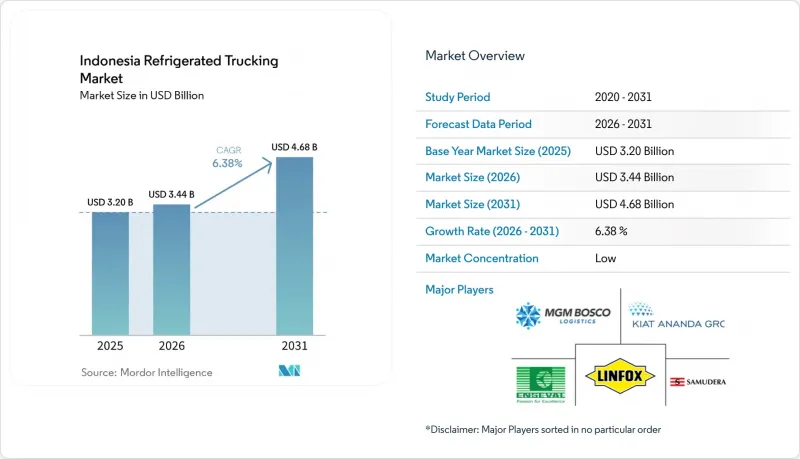
據 Mordor Intelligence 稱,2025 年印尼冷藏卡車運輸市場價值為 32 億美元,預計到 2031 年將達到 46.8 億美元,而 2026 年為 34.4 億美元,預測期(2026-2031 年)的複合年成長率預計為 6.38%。
印尼冷藏車運輸市場的趨勢與洞察
擴大有組織的零售、電子商務食品銷售和多溫區最後一公里配送。
在有組織的零售業中,需要定期配送新鮮、冷藏和冷凍產品的門市數量正在增加。 「暗店」和「微型倉配中心」需要每天多次補貨,而非傳統配送方式每週一次的大宗配送。這種營運模式推動了冷藏運輸能力的共用,並提升了零擔(小批量到大批量)服務在印尼冷藏貨車運輸市場的重要性。隨著小型超市網路向區域城市擴張,它們也需要妥善處理新鮮和冷藏商品。對多溫區配送日益成長的需求迫使營運商部署能夠在同一路線上應對不同貨物狀況的車輛。小規模食品生產商可以利用外包的冷藏運輸服務,而無需承擔專用車輛的購置成本,這擴大了現有物流供應商的基本客群。
水產品、肉類、家禽和冷凍食品的分銷成長
水產品、肉類、家禽和冷凍食品從捕撈到配送都需要溫度控制,這使其成為印尼冷藏運輸市場的穩定運輸量來源。海洋與漁業部正在加強冷藏倉庫的資訊系統,以支持下游水產品加工環節,並實現更一體化的處理。名為「Stelina」的國家海鮮流通和追溯系統計畫從2026年起規範整個水產品供應鏈的文件程序。該部還表示,漁村的冷鏈設施建設正在推進,這可能會催生連接捕撈點、倉儲設施和都市區買家的運輸路線需求。漁村的冰漿(碎冰)可以保持漁獲卸貨時的品質,而冷藏運輸則是冷鏈中下一個必要的環節。此外,都市區零售通路對加工食品和簡便食品的需求不斷成長,也使冷凍食品受益匪淺。
車輛購置和維護成本、能源成本、技能成本都很高。
高昂的購置成本仍然是印尼冷藏車市場的主要障礙,尤其對於小規模物流業者更是如此。冷藏車需要專用的底盤、冷凍裝置、監控設備和預防性維護,而這些對於普通貨車來說並非必要。進口零件不僅增加了成本,而且如果設備在遠離主要服務中心的地區發生故障,還會延長維修時間。在電網不穩定的地區,控制冷凍設備的燃料消耗和能源成本變得更加困難,迫使營運商依賴發電機。與GDP相關的處理要求也增加了校準、溫度記錄和駕駛員訓練等經常性成本。 2026年6月,MGM Bosco Logistics獲得了一筆7,200億印尼幣(約4,100萬美元)的信貸額度,用於支援車輛購置、冷藏倉庫建設和全國範圍內的業務擴張。這清楚地表明了發展一體化冷鏈所需的資金規模。
細分市場分析
截至2025年,肉類、家禽、魚類和水產品佔印尼冷藏車運輸市場的42.25%。同時,醫療和製藥業預計到2031年將以8.23%的複合年成長率成長,在所有應用領域中成長率最高。肉類、家禽、魚類和水產品市場反映了蛋白質分銷在印尼國內食品供應鏈中的重要性,以及從沿海加工區運輸的大量水產品。正規的可追溯性和冷鏈處理使得以往透過非正規管道運輸的貨物能夠納入溫控網路。水產品收集點、冷藏倉庫、批發商和零售商都需要運輸產品並保持其品質。這種需求構成了印尼冷藏車運輸市場中蛋白質貨物利用的基礎。該市場也支援向超級市場、生鮮市場供應商、餐廳和餐飲服務業的客戶提供常規的短途配送服務。
印尼冷藏運輸市場受益於對溫度控制和交付狀態記錄的檢驗。疫苗、生技藥品和特種藥品的運輸通常需要小規模、多點配送路線,目的地包括醫院、診所和經銷商。用於這些運輸合約的監控設備同樣有助於提升食品和乳製品運輸路線的服務水準。乳製品和冷凍甜點、園藝產品以及加工食品透過零售補貨構成了另一個需求領域。其他應用領域包括化學品、花卉和化妝品,根據產品規格和合規要求,溫度控制可能至關重要。
預計到2025年,整車運輸(FTL)將佔印尼冷藏車運輸市場佔有率的64.78%,而零擔運輸(LTL)預計到2031年將以7.65%的複合年成長率成長。整車運輸受到食品生產商、水產品出口商和超級市場等大型運輸企業的青睞,這些企業通常在生產基地和物流中心之間運行固定路線。透過充分利用車輛,冷藏、燃料和維護成本可以分攤到更大的貨物量上,從而提高成本效益。由於整車運輸適合計劃性幹線運輸和可預測的交貨時間表,預計其市場領先地位將繼續保持。
印尼零擔(大批量)冷藏運輸市場主要由線上生鮮食品補貨服務、小規模生產商以及需要多目的地配送的藥品運輸所驅動。共用運輸能力使生產商無需預訂整車即可利用專業的冷藏運輸服務。多溫控調度至關重要,因為每條路線都可能運送具有不同處理需求的產品。藥品運輸由於其頻繁的小批量配送需求,與多點配送模式非常契合。隨著這種模式的擴展,能夠提升貨物整合、路線規劃和溫控可視性的營運商將更有效地參與競爭。
其他好處:
- Excel格式的市場預測(ME)表
- 3個月的分析師支持
目錄
第1章:引言
- 研究假設和市場定義
- 調查範圍
第2章:調查方法
第3章執行摘要
- 市場規模、成長率與未來預測
- 主要需求推動要素與冷鏈趨勢
- 區域冷藏運輸走廊及需求集中度
- 競爭格局與主要冷藏卡車運輸業者
第4章 市場狀況
- 市場概況及冷藏車運輸的重要性
- 市場促進因素
- 有組織的零售和線上食品雜貨銷售的擴張
- 水產品、肉類、家禽和冷凍食品的分銷成長
- 擴大藥品和疫苗冷鏈
- 政府主導的冷鏈和海鮮分銷現代化。
- 多溫區最後一公里配送的需求
- 中小食品製造商將冷鏈外包
- 市場限制因素
- 冷凍設備的車輛購置成本和維護成本高昂
- 群島的轉運和不均衡的道路基礎設施
- 電力供應可靠性與冷氣能源成本
- 訓練有素的冷凍車司機和機械師短缺
- 價值鏈結構與供應鏈動態分析
- 溫控貨物運輸的法律規範
- 冷藏車管理技術引入
- 冷藏卡車運輸的定價和運費分析
- 對燃油價格和冷藏運輸成本的影響
- 冷鏈網路與冷藏運輸路線分析
- 冷藏車擁有數量及其運輸能力的趨勢
- 波特五力分析
- 地緣政治事件對供應鏈變化的影響
第5章 市場規模與成長預測
- 透過使用
- 園藝產品
- 乳製品和冷凍甜點
- 肉類、家禽和魚貝類
- 加工食品
- 醫療和藥品
- 其他用途
- 按規格分類的卡車負載容量
- 全軌道公路(FTL)
- 小批量貨物(零擔)
- 透過容器化
- 容器化
- 容器化
- 按距離
- 長途
- 短程航線
- 按目的地
- 國內的
- 跨境
- 按溫度類型
- 冷藏(0-5 度C)
- 冷凍(-20~0 度C)
- 環境的
- 超低溫冷凍/超低溫(低於-20 度C)
- 按地區
- 爪哇島(雅加達和博多)
- 蘇門答臘
- 加里曼丹
- 蘇拉威西
- 峇裡島和努沙登加拉
- 巴布亞地區和摩鹿加群島
第6章 競爭情勢
- 市場集中度
- 策略趨勢
- 市佔率分析
- 公司簡介
- Kiat Ananda Group
- PT Linfox Logistics Indonesia
- MGM Bosco Logistics
- Samudera Indonesia Group/Adib Cold Logistics
- PT Enseval Putera Megatrading Tbk
- DHL Group
- PT YCH Indonesia
- PT Mitsubishi Logistics Indonesia
- PT Yusen Logistics Indonesia
- WET Logistics/PT Wahana Enviromate Trustindo
- Coldspace
- VITRANS/PT Selaras Mandiri Raya Trans
- AntarEs/PT Agung Solusi Dingin
- Giant Transporter Indonesia
- NX Group/PT NX Lemo Indonesia Logistik
- PT Anugerah Pharmindo Lestari
- Truckinc Logistik Indonesia
- Coolkas
- PT Superkul Amerta Indonesia
- PT Bahari Trans Logistik
- PT Samudra Jaya Cakra
- PT Talenta Gelora Serafim
第7章 市場機會與未來展望
第8章附錄
According to Mordor Intelligence, the Indonesia refrigerated trucking market size was valued at USD 3.20 billion in 2025, and is estimated to grow from USD 3.44 billion in 2026 to reach USD 4.68 billion by 2031, at a CAGR of 6.38% during the forecast period (2026-2031).
Indonesia Refrigerated Trucking Market Trends and Insights
Expansion Of Organized Retail, E-Commerce Grocery, And Multi-Temperature Last-Mile Delivery
Organized retail is increasing the number of locations that need to receive fresh, chilled, and frozen products on a regular schedule. Dark stores and micro-fulfillment sites require several replenishment runs each day, rather than the weekly bulk deliveries used in traditional distribution. This operating pattern supports shared refrigerated capacity and makes LTL services more relevant to the Indonesia refrigerated trucking market. Minimarket networks also require controlled handling for fresh and chilled products as their coverage extends into secondary cities. The demand for multi-temperature delivery adds pressure on operators to deploy vehicles that can protect different cargo conditions in one route. Small food producers can use outsourced refrigerated transport instead of carrying the capital cost of dedicated fleets, which broadens the customer base for established logistics providers.
Growth In Seafood, Meat, Poultry, And Frozen-Food Distribution
Seafood, meat, poultry, and frozen food create a steady volume base for the Indonesia refrigerated trucking market because these products depend on temperature control from collection through delivery. The Ministry of Marine Affairs and Fisheries is strengthening cold-storage information systems to support fisheries downstream activities and more integrated handling. The National Fish Logistics and Traceability System, known as Stelina, is formalizing documentation through seafood supply chains from 2026. The ministry has also stated that cold-chain facilities are being integrated across fishing-village locations, which can create demand for links between collection points, storage sites, and urban buyers. Slurry ice at fishing villages can preserve catch quality at the point of landing, leaving refrigerated transport as the next required connection in the chain. Frozen food also benefits from the growing demand for processed and convenience products in urban retail channels.
High Fleet Acquisition, Maintenance, Energy, And Skills Costs
High acquisition costs remain a central barrier for the Indonesia refrigerated trucking market, especially for smaller logistics operators. Refrigerated vehicles require specialized bodies, refrigeration units, monitoring equipment, and preventive maintenance that dry-cargo fleets do not need. Imported parts add cost and can lengthen repair cycles when equipment fails outside major service centers. Fuel use and refrigeration energy costs are more difficult to manage where grid reliability is weak, and operators depend on generator support. GDP-related handling requirements also add recurring costs for calibration, temperature records, and driver training. MGM Bosco Logistics received an IDR 720 billion (USD 41 million) financing facility in June 2026 to support fleet acquisition, cold-storage construction, and national expansion, illustrating the scale of capital required for integrated cold-chain growth.
Other drivers and restraints analyzed in the detailed report include:
- Pharmaceutical And Vaccine Cold-Chain Expansion
- Government-Led Cold-Chain Modernization And Food-Producer Outsourcing
- Archipelagic Transshipment And Uneven Road Infrastructure
For complete list of drivers and restraints, kindly check the Table Of Contents.
Segment Analysis
Meats, poultry, fish, and seafood held 42.25% of the Indonesia refrigerated trucking market share in 2025, while healthcare and pharmaceutical is forecast to grow at 8.23% CAGR through 2031, the fastest rate among application segments. The meats, poultry, fish, and seafood segment reflects the importance of protein distribution in domestic food supply chains and the large volume of seafood moving from coastal processing areas. Formal traceability and cold-chain handling can bring cargo that previously moved through informal channels into temperature-controlled networks. Fisheries collection points, cold storage, wholesalers, and retailers all need transport links that preserve product condition. This need makes protein cargo a foundational source of utilization for the Indonesia refrigerated trucking market. The segment also supports regular short-haul deliveries to supermarkets, wet-market suppliers, restaurants, and foodservice customers.
The Indonesia refrigerated trucking market size for this application benefits from requirements for validated temperature handling and recorded delivery conditions. Vaccine, biologic, and specialty medicine shipments frequently require smaller, multi-stop routes to hospitals, clinics, and distributors. The same monitoring equipment used for these contracts can improve the service standard of food and dairy routes. Dairy and Frozen Dessert Products, Horticultural Products, and Processed Food Products form another layer of demand through retail replenishment. Other Applications include chemicals, floriculture, and cosmetics, where controlled conditions can become necessary when product specifications or compliance requirements require them.
Full-truckload held 64.78% of the Indonesia refrigerated trucking market share in 2025, while less-than-truckload is expected to advance at 7.65% CAGR through 2031. FTL is preferred by high-volume shippers, such as food manufacturers, fisheries exporters, and supermarket chains, operating regular routes between production sites and distribution centers. Full vehicle utilization spreads refrigeration, fuel, and maintenance costs across larger shipments, improving cost efficiency. Its suitability for planned line-haul operations and predictable delivery schedules is expected to sustain FTL's leading market position.
The Indonesia refrigerated trucking market size for LTL is supported by online grocery replenishment, smaller producers, and pharmaceutical deliveries that need multiple drops. Shared capacity helps producers use professional refrigerated transport without committing to a full vehicle. Multi-temperature scheduling becomes important because each route can carry products with different handling needs. Pharmaceutical shipments often use smaller consignments across hospitals and clinics, which is consistent with a multi-drop model. Operators that improve load consolidation, routing, and temperature visibility can compete more effectively as this model scales.
Complete Report Scope:
- By Application
- Horticultural Products
- Dairy and Frozen Dessert Products
- Meats, Poultry, Fish, and Seafood
- Processed Food Products
- Healthcare and Pharmaceutical
- Other Applications
- By Truckload Specification
- Full-Truckload (FTL)
- Less-than-Truckload (LTL)
- By Containerization
- Containerized
- Non-Containerized
- By Distance
- Long Haul
- Short Haul
- By Destination
- Domestic
- Cross-border
- By Temperature Type
- Chilled (0-5 °C)
- Frozen (-20-0 °C)
- Ambient
- Deep-Frozen / Ultra-Low (Less than -20 °C)
- By Region
- Java (Jakarta & BOD)
- Sumatra
- Kalimantan
- Sulawesi
- Bali and Nusa Tenggara
- Papua Region and Maluku Islands
List of Companies Covered in this Report:
- Kiat Ananda Group
- PT Linfox Logistics Indonesia
- MGM Bosco Logistics
- Samudera Indonesia Group / Adib Cold Logistics
- PT Enseval Putera Megatrading Tbk
- DHL Group
- PT YCH Indonesia
- PT Mitsubishi Logistics Indonesia
- PT Yusen Logistics Indonesia
- WET Logistics / PT Wahana Enviromate Trustindo
- Coldspace
- VITRANS / PT Selaras Mandiri Raya Trans
- AntarEs / PT Agung Solusi Dingin
- Giant Transporter Indonesia
- NX Group / PT NX Lemo Indonesia Logistik
- PT Anugerah Pharmindo Lestari
- Truckinc Logistik Indonesia
- Coolkas
- PT Superkul Amerta Indonesia
- PT Bahari Trans Logistik
- PT Samudra Jaya Cakra
- PT Talenta Gelora Serafim
Additional Benefits:
- The market estimate (ME) sheet in Excel format
- 3 months of analyst support
TABLE OF CONTENTS
1 INTRODUCTION
- 1.1 Study Assumptions and Market Definition
- 1.2 Scope of the Study
2 RESEARCH METHODOLOGY
3 EXECUTIVE SUMMARY
- 3.1 Market Size, Growth, and Forecast Outlook
- 3.2 Key Demand Drivers and Cold Chain Trends
- 3.3 Regional Reefer Corridors and Demand Concentration
- 3.4 Competitive Landscape and Leading Refrigerated Trucking Providers
4 MARKET LANDSCAPE
- 4.1 Market Overview and Importance of Refrigerated Trukcing Transport
- 4.2 Market Drivers
- 4.2.1 Expansion of Organized Retail and E-Commerce Grocery
- 4.2.2 Growth in Seafood, Meat, Poultry, and Frozen-Food Distribution
- 4.2.3 Pharmaceutical and Vaccine Cold-Chain Expansion
- 4.2.4 Government-Led Cold-Chain and Fisheries Logistics Modernization
- 4.2.5 Multi-Temperature Last-Mile Delivery Demand
- 4.2.6 Cold-Chain Outsourcing by Small and Medium-Sized Food Producers
- 4.3 Market Restraints
- 4.3.1 High Fleet Acquisition and Refrigeration Maintenance Costs
- 4.3.2 Archipelagic Transshipment and Uneven Road Infrastructure
- 4.3.3 Electricity Reliability and Refrigeration Energy Costs
- 4.3.4 Shortage of Trained Reefer Drivers and Technicians
- 4.4 Value Chain Structure and Supply Dynamics Analysis
- 4.5 Regulatory Framework for Temperature-Controlled Freight Operations
- 4.6 Technology Adoption in Refrigerated Fleet Management
- 4.7 Refrigerated Trucking Pricing and Freight Rate Analysis
- 4.8 Fuel Prices and Refrigerated Transport Cost Implications
- 4.9 Cold Chain Network and Reefer Route Analysis
- 4.10 Refrigerated Truck Fleet Availability and Capacity Trends
- 4.11 Porter's Five Forces Analysis
- 4.11.1 Threat of New Entrants
- 4.11.2 Bargaining Power of Buyers and Consumers
- 4.11.3 Bargaining Power of Suppliers
- 4.11.4 Threat of Substitute Services
- 4.11.5 Intensity of Competitive Rivalry
- 4.12 Impact of Geo-Political Events on Supply Chain Shifts
5 MARKET SIZE AND GROWTH FORECASTS
- 5.1 By Application
- 5.1.1 Horticultural Products
- 5.1.2 Dairy and Frozen Dessert Products
- 5.1.3 Meats, Poultry, Fish, and Seafood
- 5.1.4 Processed Food Products
- 5.1.5 Healthcare and Pharmaceutical
- 5.1.6 Other Applications
- 5.2 By Truckload Specification
- 5.2.1 Full-Truckload (FTL)
- 5.2.2 Less-than-Truckload (LTL)
- 5.3 By Containerization
- 5.3.1 Containerized
- 5.3.2 Non-Containerized
- 5.4 By Distance
- 5.4.1 Long Haul
- 5.4.2 Short Haul
- 5.5 By Destination
- 5.5.1 Domestic
- 5.5.2 Cross-border
- 5.6 By Temperature Type
- 5.6.1 Chilled (0-5 °C)
- 5.6.2 Frozen (-20-0 °C)
- 5.6.3 Ambient
- 5.6.4 Deep-Frozen / Ultra-Low (Less than -20 °C)
- 5.7 By Region
- 5.7.1 Java (Jakarta & BOD)
- 5.7.2 Sumatra
- 5.7.3 Kalimantan
- 5.7.4 Sulawesi
- 5.7.5 Bali and Nusa Tenggara
- 5.7.6 Papua Region and Maluku Islands
6 COMPETITIVE LANDSCAPE
- 6.1 Market Concentration
- 6.2 Strategic Moves
- 6.3 Market Share Analysis
- 6.4 Company Profiles (includes Global Level Overview, Market Level Overview, Core Segments, Financials as available, Strategic Information, Geographic Coverage, Products and Services, Recent Developments)
- 6.4.1 Kiat Ananda Group
- 6.4.2 PT Linfox Logistics Indonesia
- 6.4.3 MGM Bosco Logistics
- 6.4.4 Samudera Indonesia Group / Adib Cold Logistics
- 6.4.5 PT Enseval Putera Megatrading Tbk
- 6.4.6 DHL Group
- 6.4.7 PT YCH Indonesia
- 6.4.8 PT Mitsubishi Logistics Indonesia
- 6.4.9 PT Yusen Logistics Indonesia
- 6.4.10 WET Logistics / PT Wahana Enviromate Trustindo
- 6.4.11 Coldspace
- 6.4.12 VITRANS / PT Selaras Mandiri Raya Trans
- 6.4.13 AntarEs / PT Agung Solusi Dingin
- 6.4.14 Giant Transporter Indonesia
- 6.4.15 NX Group / PT NX Lemo Indonesia Logistik
- 6.4.16 PT Anugerah Pharmindo Lestari
- 6.4.17 Truckinc Logistik Indonesia
- 6.4.18 Coolkas
- 6.4.19 PT Superkul Amerta Indonesia
- 6.4.20 PT Bahari Trans Logistik
- 6.4.21 PT Samudra Jaya Cakra
- 6.4.22 PT Talenta Gelora Serafim
7 MARKET OPPORTUNITIES AND FUTURE OUTLOOK
- 7.1 White-Space Opportunities and Unmet Cold Chain Needs
- 7.2 High-Potential End-User and Regional Growth Opportunities
- 7.3 Strategic Growth Priorities Across Refrigerated Trucking Ecosystem
- 7.4 Future Market Outlook and Emerging Demand Pockets
8 APPENDIX

 冷藏拖車:市場佔有率分析、行業趨勢和統計數據、成長預測(2026-2031)
 冷藏車市場:2026-2032年全球市場預測(依車輛類型、動力來源、溫度、隔熱材料及應用分類)
 冷藏拖車市場:依產品類型、最終用途產業和地區分類-市場規模、佔有率、前景和機會分析,2025-2032年
 2026年全球冷藏貨物運輸市場報告美國冷藏運輸:市場佔有率分析、行業趨勢和統計數據、成長預測(2026-2031 年)
 冷藏車市場 - 全球產業規模、佔有率、趨勢、機會及預測(按車輛類型、有效載荷、應用、地區和競爭格局分類,2021-2031年)
 日本冷藏車市場規模、佔有率、趨勢及預測(按類型、噸位、應用及地區分類),2026-2034年
 冷藏拖車市場規模、佔有率和成長分析(按拖車類型、軸型、動力來源、最終用途產業和地區分類)-2026-2033年產業預測
 全球冷藏車市場
 冷藏拖車市場規模、佔有率、趨勢分析報告:按拖車、車軸、動力來源、最終用途、地區和細分市場分類,預測,2025 年至 2030 年