


 |
市場調查報告書
商品編碼
2154970
南美洲藥品泡殼包裝:市佔率分析、產業趨勢與統計及成長預測(2026-2031 年)South America Pharmaceutical Blister Packaging - Market Share Analysis, Industry Trends & Statistics, Growth Forecasts (2026 - 2031) |
||||||

※ 本網頁內容可能與最新版本有所差異。詳細情況請與我們聯繫。
據 Mordor Intelligence 稱,2025 年南美洲藥品泡殼包裝市場價值 11.8 億美元,預計從 2026 年的 12.6 億美元成長到 2031 年的 17.2 億美元。
預測期(2026-2031 年)的複合年成長率預計為 6.42%。
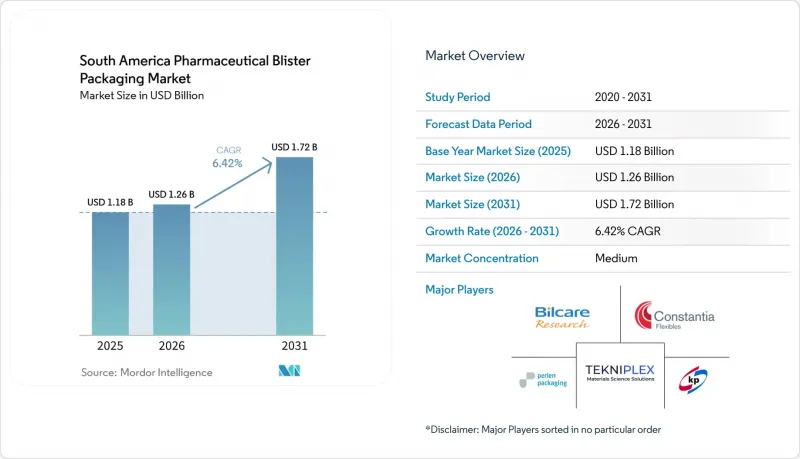
南美洲藥品泡殼包裝市場趨勢及洞察。
對單劑量包裝和用藥依從性支持包裝的需求不斷成長。
單劑量泡殼包裝有助於提高藥品安全性、分發準確性,並在整個藥品供應鏈中實現更清晰的記錄。隨著人口老化導致多重用藥的預期增加,對能夠分隔劑量並有助於患者堅持治療方案的包裝的需求日益成長。此外,醫院藥局的自動化需要統一的腔體尺寸以適應單劑量分發系統。如果醫院採用盒式自動化系統,則切換到不同的初級包裝形式可能需要額外的資金投入和工作流程的變更。阿根廷的「Disposición 8277」規定,供應給醫院的口服固態藥物必須採用可單獨識別且可剝離的單劑量泡殼包裝。隨著藥局在醫療機構和社區內統一分發規範,這些要求也影響零售層面的規範制定。這一點至關重要,因為包裝決策必須符合全部區域既定的藥品品質程序、生產計劃和分銷規範。
藥品序列化和可追溯性要求
在南美洲藥品泡殼包裝市場,序列化使得符合法規要求的印刷和檢驗能力日益重要。阿根廷的「Disposición 3294/2025」法規強制要求在藥品的二級包裝上加上QR碼或資料矩陣碼。這項要求適用於特殊藥品,有助於患者取得產品資訊。包裝加工商在為受監管的製藥業客戶提供服務之前,越來越需要檢驗的編碼印刷和視覺檢測系統。這項能力可能會影響合約的訂單,因為沒有經過檢驗的生產記錄的供應商可能無法滿足客戶的資格要求。由此產生的投資週期也會影響學名藥生產商和契約製造生產商升級其生產線以履行受監管的供應合約。此外,這項要求還會影響製造商如何協調材料資格合格、生產線營運、產品放行以及向藥房的供應活動。
醫療廢棄物和難以回收的多層結構
多層泡殼包裝通常由PVC、PVDC和鋁組成,這使得傳統的機械回收變得困難。智利和哥倫比亞已發布關於包裝回收和再生材料含量的相關規定,這增加了使用此類包裝的加工商的合規負擔。雖然可回收的單一材料替代品可以緩解這個問題,但製藥公司首先必須確保新包裝能夠在指定的儲存條件下保護藥品。 Klockner Pentaplast公司為製藥應用提供可回收的硬質薄膜解決方案,為製造商提供了可供選擇的材料方向。檢驗需要12-24個月,這延緩了現有多層包裝的即時替換。因此,南美洲製藥泡殼包裝市場可能會經歷一個漸進的轉變過程,而不是從傳統結構快速過渡。這項挑戰在於如何將材料選擇與運作可靠性、可記錄的品管以及藥品分銷的日常需求相結合。
細分市場分析
到2025年,卡片式和正面密封式泡殼包裝將佔南美藥品泡殼包裝市場25.83%的佔有率,成為該市場最大的產品類型。這一地位反映了此類包裝在透過零售藥局和醫院分銷管道銷售的固態口服藥物中的廣泛應用。這種包裝形式與常見的熱成型機相容,適用於大批量學名藥專案。它還允許製藥公司對不同片劑產品的包裝標籤進行標準化。對於需要產品可見度和額外保護的診斷試劑盒和非處方藥而言,翻蓋式泡殼包裝仍然十分重要。這一點至關重要,因為包裝決策必須符合全部區域既定的藥品品質程序、生產計劃和分銷規範。對於需要在多種藥品和分銷環境中採用相同包裝配置,同時又能使生產計畫與現有設備和操作人員培訓相匹配的製造商而言,此類包裝仍然十分實用。
預計到2031年,兒童安全規範和老年人專用泡殼包裝的市場將以7.82%的複合年成長率成長。此類別旨在滿足防止兒童誤食藥品,同時方便老年患者開啟處方藥的需求。由於必須以相同的形式滿足這兩個目標,因此在選擇蓋子和包裝設計時需要仔細考慮。對於高階品牌產品,防篡改設計(例如帶鎖扣的結構和全卡結構)提供了更多選擇。南美洲的藥品泡殼包裝產業正在透過設計來應對這項挑戰,這些設計兼顧安全性、易用性和清晰的產品標誌。這項要求也影響製造商如何協調材料合格、生產線操作、產品放行以及向藥房的供應活動,因此供應商需要與製藥團隊密切合作,共同探討開啟性能、包裝資訊、兒童安全措施的要求以及患者定期服藥的實際需求。
預計到2025年,塑膠薄膜將佔據材料市場佔有率的40.71%,這主要歸功於熱成型PVC在固態口服藥物包裝中的廣泛應用。 PVC因其成本、加工性和適中的防潮性能的均衡組合而備受青睞,並已應用於眾多成熟產品中。鋁箔作為蓋子的基材和冷成型包裝的基材仍然至關重要。其需求與對濕度敏感的藥物類別對阻隔性能的需求密切相關。 PCTFE、COC和Akral基材料等特殊薄膜被應用於生物製藥和抗癌藥物領域,這些領域對阻隔性能的要求非常嚴格,且材料替代選擇有限。這些材料的實際效果取決於供應商能否在不影響正常生產計畫的情況下滿足客戶的規格要求,此外,材料選擇還必須考慮成型性能、密封強度、印刷性能、供應穩定性以及一系列在商業化藥品包裝上市前必須滿足的產品要求。
隨著製藥公司努力減少塑膠用量,預計到2031年,紙和紙板市場將以7.51%的複合年成長率成長。智利和哥倫比亞的包裝要求正在強化適用於新型回收系統的結構的商業價值。預計到2031年,南美洲藥品泡殼包裝市場的紙和紙板市場也將以7.51%的複合年成長率成長。康斯坦蒂亞軟性包裝公司(Constantia Flexibles)推出了「PERPETUA」和「REGULA CIRC」兩款專注於可回收或無PVC結構的藥品包裝解決方案。這些方案能否被採用取決於能否證明其穩定性和可生產性符合當地監管要求。因此,材料過渡很可能以產品為單位逐步進行,而不是全面替換PVC。這對於管理具有不同保護和給藥需求的廣泛產品系列的製藥企業尤其重要,這種轉變將有利於那些能夠解釋每種方案在當地儲存條件和現有設施下如何表現的供應商,而不是僅僅將阻隔性能作為一項單獨的技術特性來介紹。
其他好處:
- Excel格式的市場預測(ME)表
- 3個月的分析師支持
目錄
第1章:引言
- 研究假設和市場定義
- 調查範圍
第2章:調查方法
第3章執行摘要
第4章 市場狀況
- 市場概覽
- 市場促進因素
- 對單劑量和用藥依從性支持方案的需求不斷成長。
- 藥品序列化和可追溯性的要求
- 擴大學名藥和契約製造
- 為對濕度敏感的藥品提供阻隔性保護
- 零售藥局的成長,以及用於自我治療和慢性病治療的處方量增加。
- 藥品包裝的在地化生產和近岸外包
- 市場限制因素
- 醫療廢棄物和難以回收的多層結構
- 聚氯乙烯、鋁、樹脂和外匯波動
- 檢驗的特殊阻隔薄膜的區域生產能力短缺。
- 小批量生產中的認證、檢驗和模具製造成本
- 宏觀經濟因素對市場的影響
- 產業價值鏈分析
- 監理情勢
- 技術展望
- 波特五力分析
第5章 市場規模與成長預測
- 依產品類型
- 卡片式和麵封式吸塑包裝
- 翻蓋式吸塑包裝
- 陷阱型與全卡片式吸塑包裝
- 兒童安全包裝與老年人專用吸塑包裝
- 其他產品類型
- 材料
- 塑膠薄膜
- 鋁箔
- 紙張和紙板
- 其他材料
- 透過技術
- 熱成型
- 冷成型
- 熱封和熱收縮
- 透過使用
- 藥片
- 膠囊
- 口服薄膜劑和錠劑
- 診斷試劑盒
- 其他用途
- 最終用戶
- 品牌藥和學名藥生產商
- 合約研發生產組織(CDMO)
- 合約包裝業務
- 按包裝類型
- 推入式吸塑包裝
- 可剝離式吸塑包裝
- 鋁箔吸塑包裝
- PVC-PVDC吸塑包裝
- PVC-PET 與聚丙烯吸塑包裝
- 按地區
- 巴西
- 阿根廷
- 哥倫比亞
- 其他南美國家
第6章 競爭情勢
- 市場集中度
- 策略趨勢
- 市佔率分析
- 公司簡介
- Constantia Flexibles Group GmbH
- Tekni-Plex, Inc.
- Klockner Pentaplast Group
- Bilcare Limited
- Perlen Packaging AG
- ACG Pharmapack Private Limited
- UFlex Limited
- Aluflexpack AG
- Liveo Research GmbH
- Rollprint Packaging Products, Inc.
- R-Pharm Germany GmbH
- Shanghai Haishun New Pharmaceutical Packaging Co., Ltd.
- Zibo Zhongnan Pharmaceutical Packaging Materials Co., Ltd.
- Nantong Huideseng Packaging Co., Ltd.
- Shanghai Hongli Pharmaceutical Packaging Materials Co., Ltd.
- Yangzhou Jerel Pharmaceutical New Material Co., Ltd.
- Svam Toyal Packaging Industries Private Limited
- Blisterpack Embalagens Ltda.
- Blistal SA
- Serpac Embalagens Farmaceuticas Ltda.
- Dapack Embalagens Ltda.
- Berkes SA
- Blipack SA
- Meprec SAS
第7章 市場機會與未來展望
According to Mordor Intelligence, the South America pharmaceutical blister packaging market size was valued at USD 1.18 billion in 2025 and is estimated to expand from USD 1.26 billion in 2026 to reach USD 1.72 billion by 2031, at a CAGR of 6.42% during the forecast period (2026-2031).
South America Pharmaceutical Blister Packaging Market Trends and Insights
Rising Unit-Dose and Adherence Packaging Demand
Unit-dose blisters support medication safety, dispensing accuracy, and clearer records across the pharmaceutical supply chain. An aging population is expected to increase polypharmacy, which strengthens the need for packs that separate doses and make treatment schedules easier to follow. Hospital pharmacy automation also favors consistent cavity dimensions that work with unit-dose dispensing systems. Once hospitals install cassette-based automation, changing to another primary format can require additional equipment spending and workflow changes. Argentina's Disposicion 8277 requires individually identifiable, peelable unit-dose blisters for oral solid medicines supplied to hospitals. These requirements are shaping specifications in retail settings as pharmacies align institutional and community dispensing practices This matters because packaging decisions must fit established pharmaceutical quality procedures, production schedules, and distribution practices across the region.
Pharmaceutical Serialization and Traceability Requirements
Serialization is making compliant printing and verification capacity more important across the South America pharmaceutical blister packaging market. Argentina's Disposicion 3294/2025 requires QR or Data Matrix codes on secondary pharmaceutical packaging. The requirement applies to pharmaceutical specialties and supports patient access to product information. Packaging converters increasingly need validated code printing and vision inspection systems before they can serve regulated pharmaceutical customers. This capability can influence contract awards because a supplier without verified production records may not meet customer qualification requirements. The resulting investment cycle extends to generic manufacturers and contract producers that are upgrading lines for regulated supply arrangements The requirement also affects how manufacturers coordinate material qualification, line operation, product release, and pharmacy supply activities.
Medical-Waste and Difficult-to-Recycle Multilayer Structures
Multilayer blisters commonly combine PVC, PVDC, and aluminum, which makes conventional mechanical recycling difficult. Chile and Colombia have introduced packaging recovery and recycled-content requirements that add compliance work for converters using these structures. Recyclable mono-material alternatives can reduce this issue, but pharmaceutical companies must first confirm that new packs protect medicines under required storage conditions. Klockner Pentaplast offers recyclable rigid film solutions for pharmaceutical applications, illustrating the material direction available to manufacturers. Validation can take 12-24 months, which slows immediate replacement of established multilayer packs. The South America pharmaceutical blister packaging market will therefore see a gradual change rather than a rapid shift away from traditional structures The issue links material selection with operating reliability, documented quality controls, and the everyday requirements of medicine distribution.
Other drivers and restraints analyzed in the detailed report include:
- Expansion of Generic-Drug and Contract-Manufacturing Capacity
- High-Barrier Protection for Moisture-Sensitive Medicines
- PVC, Aluminum, Resin, and Currency Volatility
For complete list of drivers and restraints, kindly check the Table Of Contents.
Segment Analysis
Carded and face-seal blisters held 25.83% of the 2025 product-type share, making them the largest product category in the South America pharmaceutical blister packaging market. Their position reflects their established use for solid oral medicines sold through retail pharmacies and hospital distribution channels. The format works with common thermoforming equipment and suits high-volume generic-drug programs. It also allows pharmaceutical companies to standardize pack presentation across different tablet products. Clamshell blisters remain relevant for diagnostic kits and over-the-counter products that need physical product visibility or added protection This matters because packaging decisions must fit established pharmaceutical quality procedures, production schedules, and distribution practices across the region, and the category also remains useful for manufacturers that need a familiar pack configuration across multiple medicines and distribution settings, while keeping production planning aligned with established equipment and operator training.
Child-resistant and senior-friendly blisters are projected to expand at a 7.82% CAGR through 2031. This category addresses the need to prevent unintended access by children while allowing older patients to open prescribed medicines. It requires careful lidding selection and pack design because both objectives must be met in the same format. Trapped and full-card structures provide further tamper-evidence options for premium branded products. The South America pharmaceutical blister packaging industry is responding with designs that support safety, accessibility, and clear product identification The requirement also affects how manufacturers coordinate material qualification, line operation, product release, and pharmacy supply activities, creating a need for suppliers to work closely with pharmaceutical teams on opening performance, pack information, child protection expectations, and the practical needs of patients who manage recurring medicine schedules.
Plastic films held 40.71% of the 2025 material share, supported by the wide use of thermoforming-grade PVC for solid oral medicines. PVC offers a familiar balance of cost, processing performance, and moderate moisture resistance for many established products. Aluminum foil remains essential as a lidding substrate and as a forming web in cold-form packs. Its demand is linked to the need for barrier protection in moisture-sensitive medicine categories. Specialty films such as PCTFE, COC, and aclar-based materials serve biologic and oncology applications where barrier requirements limit material substitution Its practical effect depends on whether the supplier can meet the customer's stated specification without disrupting routine production planning, while material decisions also require attention to forming behavior, seal integrity, printing, supply availability, and the full set of product requirements that apply before a commercial medicine pack is released.
Paper and paperboard is expected to expand at a 7.51% CAGR through 2031 as pharmaceutical companies seek to reduce plastic content. Chilean and Colombian packaging requirements are strengthening the business case for structures that fit emerging recovery systems. The South America pharmaceutical blister packaging market size for paper and paperboard is projected to expand at a 7.51% CAGR through 2031. Constantia Flexibles presented PERPETUA and REGULA CIRC as pharmaceutical packaging approaches that focus on recyclable or PVC-free structures. Adoption will remain dependent on proving drug stability and manufacturability under regional regulatory expectations. The material shift is therefore likely to proceed product by product rather than through a uniform replacement of PVC This consideration is especially relevant where medicine producers manage broad product portfolios with different protection and dispensing needs, and the change favors providers that can explain how each option works in regional storage conditions and on available equipment, rather than offering barrier performance as a separate technical feature.
Complete Report Scope:
- By Product Type
- Carded and Face-Seal Blisters
- Clamshell Blisters
- Trapped and Full-Card Blisters
- Child-Resistant and Senior-Friendly Blisters
- Other Product Types
- By Material
- Plastic Films
- Aluminum Foil
- Paper and Paperboard
- Other Materials
- By Technology
- Thermoforming
- Cold Forming
- Heat-Seal and Heat-Shrink
- By Application
- Tablets
- Capsules
- Oral Thin Films and Lozenges
- Diagnostic Kits
- Other Applications
- By End User
- Branded and Generic Pharmaceutical Manufacturers
- Contract Development and Manufacturing Organizations
- Contract Packaging Organizations
- By Packaging Format
- Push-Through Blisters
- Peelable Blisters
- Alu-Alu Blisters
- PVC-PVDC Blisters
- PVC-PET and Polypropylene Blisters
- By Geography
- Brazil
- Argentina
- Colombia
- Rest of South America
List of Companies Covered in this Report:
- Constantia Flexibles Group GmbH
- Tekni-Plex, Inc.
- Klockner Pentaplast Group
- Bilcare Limited
- Perlen Packaging AG
- ACG Pharmapack Private Limited
- UFlex Limited
- Aluflexpack AG
- Liveo Research GmbH
- Rollprint Packaging Products, Inc.
- R-Pharm Germany GmbH
- Shanghai Haishun New Pharmaceutical Packaging Co., Ltd.
- Zibo Zhongnan Pharmaceutical Packaging Materials Co., Ltd.
- Nantong Huideseng Packaging Co., Ltd.
- Shanghai Hongli Pharmaceutical Packaging Materials Co., Ltd.
- Yangzhou Jerel Pharmaceutical New Material Co., Ltd.
- Svam Toyal Packaging Industries Private Limited
- Blisterpack Embalagens Ltda.
- Blistal S.A.
- Serpac Embalagens Farmaceuticas Ltda.
- Dapack Embalagens Ltda.
- Berkes S.A.
- Blipack S.A.
- Meprec S.A.S.
Additional Benefits:
- The market estimate (ME) sheet in Excel format
- 3 months of analyst support
TABLE OF CONTENTS
1 INTRODUCTION
- 1.1 Study Assumptions and Market Definition
- 1.2 Scope of the Study
2 RESEARCH METHODOLOGY
3 EXECUTIVE SUMMARY
4 MARKET LANDSCAPE
- 4.1 Market Overview
- 4.2 Market Drivers
- 4.2.1 Rising Unit-Dose and Adherence Packaging Demand
- 4.2.2 Pharmaceutical Serialization and Traceability Requirements
- 4.2.3 Expansion of Generic-Drug and Contract-Manufacturing Capacity
- 4.2.4 High-Barrier Protection for Moisture-Sensitive Medicines
- 4.2.5 Growth of Retail Pharmacy, Self-Medication, and Chronic-Therapy Volumes
- 4.2.6 Localized Production and Near-Shoring of Pharmaceutical Packaging
- 4.3 Market Restraints
- 4.3.1 Medical-Waste and Difficult-to-Recycle Multilayer Structures
- 4.3.2 PVC, Aluminum, Resin, and Currency Volatility
- 4.3.3 Limited Regional Capacity for Validated Specialty Barrier Films
- 4.3.4 Qualification, Validation, and Tooling Costs for Small Batches
- 4.4 Impact of Macroeconomic Factors on the Market
- 4.5 Industry Value Chain Analysis
- 4.6 Regulatory Landscape
- 4.7 Technological Outlook
- 4.8 Porter's Five Forces Analysis
- 4.8.1 Bargaining Power of Suppliers
- 4.8.2 Bargaining Power of Buyers
- 4.8.3 Threat of New Entrants
- 4.8.4 Threat of Substitutes
- 4.8.5 Competitive Rivalry
5 MARKET SIZE AND GROWTH FORECASTS (VALUE)
- 5.1 By Product Type
- 5.1.1 Carded and Face-Seal Blisters
- 5.1.2 Clamshell Blisters
- 5.1.3 Trapped and Full-Card Blisters
- 5.1.4 Child-Resistant and Senior-Friendly Blisters
- 5.1.5 Other Product Types
- 5.2 By Material
- 5.2.1 Plastic Films
- 5.2.2 Aluminum Foil
- 5.2.3 Paper and Paperboard
- 5.2.4 Other Materials
- 5.3 By Technology
- 5.3.1 Thermoforming
- 5.3.2 Cold Forming
- 5.3.3 Heat-Seal and Heat-Shrink
- 5.4 By Application
- 5.4.1 Tablets
- 5.4.2 Capsules
- 5.4.3 Oral Thin Films and Lozenges
- 5.4.4 Diagnostic Kits
- 5.4.5 Other Applications
- 5.5 By End User
- 5.5.1 Branded and Generic Pharmaceutical Manufacturers
- 5.5.2 Contract Development and Manufacturing Organizations
- 5.5.3 Contract Packaging Organizations
- 5.6 By Packaging Format
- 5.6.1 Push-Through Blisters
- 5.6.2 Peelable Blisters
- 5.6.3 Alu-Alu Blisters
- 5.6.4 PVC-PVDC Blisters
- 5.6.5 PVC-PET and Polypropylene Blisters
- 5.7 By Geography
- 5.7.1 Brazil
- 5.7.2 Argentina
- 5.7.3 Colombia
- 5.7.4 Rest of South America
6 COMPETITIVE LANDSCAPE
- 6.1 Market Concentration
- 6.2 Strategic Moves
- 6.3 Market Share Analysis
- 6.4 Company Profiles (includes Global Level Overview, Market Level Overview, Core Segments, Financials as available, Strategic Information, Market Rank/Share, Products and Services, Recent Developments)
- 6.4.1 Constantia Flexibles Group GmbH
- 6.4.2 Tekni-Plex, Inc.
- 6.4.3 Klockner Pentaplast Group
- 6.4.4 Bilcare Limited
- 6.4.5 Perlen Packaging AG
- 6.4.6 ACG Pharmapack Private Limited
- 6.4.7 UFlex Limited
- 6.4.8 Aluflexpack AG
- 6.4.9 Liveo Research GmbH
- 6.4.10 Rollprint Packaging Products, Inc.
- 6.4.11 R-Pharm Germany GmbH
- 6.4.12 Shanghai Haishun New Pharmaceutical Packaging Co., Ltd.
- 6.4.13 Zibo Zhongnan Pharmaceutical Packaging Materials Co., Ltd.
- 6.4.14 Nantong Huideseng Packaging Co., Ltd.
- 6.4.15 Shanghai Hongli Pharmaceutical Packaging Materials Co., Ltd.
- 6.4.16 Yangzhou Jerel Pharmaceutical New Material Co., Ltd.
- 6.4.17 Svam Toyal Packaging Industries Private Limited
- 6.4.18 Blisterpack Embalagens Ltda.
- 6.4.19 Blistal S.A.
- 6.4.20 Serpac Embalagens Farmaceuticas Ltda.
- 6.4.21 Dapack Embalagens Ltda.
- 6.4.22 Berkes S.A.
- 6.4.23 Blipack S.A.
- 6.4.24 Meprec S.A.S.
7 MARKET OPPORTUNITIES AND FUTURE OUTLOOK
- 7.1 White-Space and Unmet-Need Assessment

 藥品泡殼包裝:市佔率分析、產業趨勢與統計、成長預測(2026-2031)
 藥品泡殼包裝市場機會、成長要素、產業趨勢分析及2026-2035年預測。
 全球藥品泡殼包裝市場規模、佔有率、趨勢和成長分析報告(2026-2034年)
 藥品泡殼包裝市場規模、佔有率、成長分析(按產品類型、技術類型、材料類型、應用和地區分類)-2026-2033年產業預測泡罩包裝藥品市場規模、佔有率、成長及全球產業分析:按類型、應用和地區劃分的洞察,以及2024年至2032年的預測
 醫藥泡殼包裝市場規模、佔有率、成長分析(按類型、按材料、按最終用途、按技術和按地區)- 行業預測,2025 年至 2032 年
 全球藥品泡殼包裝市場:按材料、技術、產品、應用、最終用戶、地區 - 趨勢分析、競爭格局、預測,2019-2030