


 |
市場調查報告書
商品編碼
2125715
嬰兒食品玻璃包裝:市場佔有率分析、產業趨勢與統計及成長預測(2026-2031)Baby Food Glass Packaging - Market Share Analysis, Industry Trends & Statistics, Growth Forecasts (2026 - 2031) |
||||||

※ 本網頁內容可能與最新版本有所差異。詳細情況請與我們聯繫。
據 Mordor Intelligence 稱,2025 年嬰兒食品玻璃包裝市場價值為 187.7 億美元,預計到 2031 年將從 2026 年的 194.8 億美元成長至 234.4 億美元,預測期(2026-2031 年)複合年成長率為 3.77%。
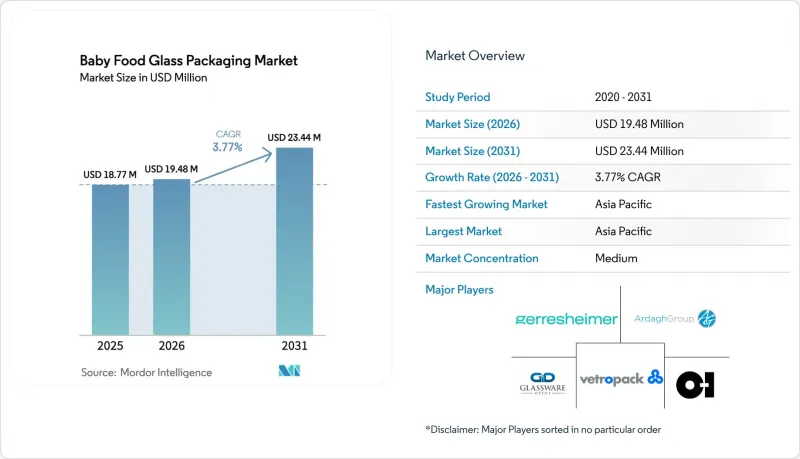
本報告按應用領域(嬰兒食物泥、穀物和零食、飲料和果汁、其他)、容器類型(玻璃瓶(罐)、哺乳玻璃瓶、玻璃杯和分裝杯)、瓶蓋類型(金屬蓋、複合材料蓋、塑膠蓋、綠色瓶蓋、其他)、分銷管道(線下零售、電商/DTC)和地區進行細分。市場預測以美元計價。
全球嬰兒食品玻璃包裝市場趨勢及洞察。
消費者對有機天然嬰幼兒食品的需求日益成長。
隨著父母對不含合成添加劑的產品越來越信任,有機嬰幼兒食品市場正在迅速擴張。各大品牌都將玻璃包裝定位為保存營養成分和香氣的最佳屏障。嘉寶(Gerber)已將其有機產品線全部更換為碳中和玻璃罐,以提升其高階形象。美國食品藥物管理局(FDA)高度重視對嬰幼兒配方奶粉包裝的嚴格安全審查,這一立場自然傾向於惰性玻璃表面。獲得創業投資支持的創新公司也紛紛效仿,例如,Once Upon a Farm累計了5,200 萬美元,用於擴大其冷壓混合配方奶粉的包裝範圍,以更好地維持產品品質。這股勢頭如今正蔓延至中國主要大都會圈的父母,他們願意為有機認證支付更高的價格。所有這些因素共同推動著嬰幼兒食品玻璃包裝市場的發展,貨架上有機產品的種類也日益增加。
由於人們對健康和安全的意識不斷提高,家長們往往更喜歡玻璃製品而不是塑膠製品。
消費者調查顯示,高達70%的新生兒父母對玻璃奶瓶的信任度高於其他任何嬰兒食品容器材質。歐盟決定在2025年初全面禁用雙酚A(BPA)後,這種信任度進一步提升。品牌和零售商也紛紛強調這一趨勢,例如「Mason Bottle」就積極向千禧世代家庭推廣其「無害的玻璃餵食計畫」。日益增強的健康意識使得製造商能夠在限制促銷活動的同時維持較高的價格溢價。由於這種信任源於材質本身的固有特性,而不僅僅是品牌效應,因此軟袋奶瓶很難彌補這一價格差距,這也進一步鞏固了玻璃奶瓶的長期需求。
玻璃比塑膠更貴也更重。
由於熔化沙子、堿灰和石灰石需要極高的溫度,玻璃工廠的能源成本高於聚合物擠出生產商。玻璃容器的重量是同類複合包裝袋的4到6倍,這推高了運輸成本和每卡路里運輸的碳排放量。東南亞對價格的敏感度促使當地品牌採用吸嘴袋,而吸嘴袋目前已佔嬰兒食品包裝的30%以上。能源價格上漲已導致美國玻璃產業的生產者物價指數在2024年上漲4.5%,對加工商的利潤率帶來壓力。除非降低燃油額外費用,否則這種劣勢將限制玻璃產品在高階產品以外的市場滲透。
細分市場分析
到了2025年,嬰兒食物泥將佔嬰兒食品玻璃包裝市場規模的41.85%,這反映其作為嬰兒第一種斷奶食品的地位。所有地區的需求都保持穩定,父母信賴玻璃罐能夠更好地保留食品的色澤、香氣和微量營養素。產品開發商也看重玻璃的熱填充灌裝和蒸餾滅菌性能,有助於減少防腐劑的使用。然而,飲料和果汁市場成長最快,預計到2031年將以5.04%的年複合成長率(CAGR)。這一成長主要得益於冷壓果汁和益生菌冰沙需求的不斷成長,透明瓶身能夠凸顯產品鮮豔的色彩,並在社交媒體上引發熱議。 Beech-Nut的益生元飲料系列就是一個很好的例子,它展示了玻璃容器如何幫助新型液體營養食品的上市。
飲料製造商優先考慮玻璃的氧氣阻隔性,以在不添加任何添加劑的情況下保持飲料新鮮,這也解釋了其高價的合理性。同時,穀物和零食市場持續穩定成長,這得益於玻璃包裝能滿足長期保鮮的需求。一些特殊「其他」產品,例如治療配方食品,由於其嚴格的安全標準,價格最高。在所有品類中,調整份量的趨勢促使品牌轉向更小的SKU,並逐漸推出除傳統4盎司瓶裝以外的更多規格。這些變化共同推動了嬰兒食品玻璃包裝市場的蓬勃發展,即便嬰兒營養品的整體形式不斷擴展。
玻璃罐用途廣泛,適用於食物泥、穀物和零食,預計2025年將佔據嬰兒食品玻璃包裝市場58.15%的佔有率。標準瓶頸設計便於與高速金屬旋蓋機配合使用,有助於控制成本。玻璃杯和分裝罐雖然市場佔有率不如玻璃罐,但成長勢頭強勁,預計到2031年將以4.65%的複合年成長率成長,這主要得益於父母希望減少廢棄物並簡化外出餵養的需求。像WeeSprout的刻度收納容器這樣的設計,兼具精確計量和耐用性,可以直接從冷凍庫取出放入微波爐加熱。
奶瓶市場仍然小眾,其主要驅動力在於高階定位和安全至上的概念,尤其受到那些避免使用聚碳酸酯奶瓶的父母的青睞。目前,研發人員正在探索薄壁瓶身設計和內壓紋工藝,以在保持強度的同時減輕重量。隨著對分裝罐的需求不斷成長,玻璃製造商正在投資能夠進行多腔成型的窄口IS注塑機,嬰兒食品玻璃包裝產業的創新仍在蓬勃發展。
區域分析
預計到2025年,亞太地區將佔全球總價值的32.05%,並在2031年之前維持4.44%的複合年成長率。在中國,儘管本土製造商不斷湧入市場,但進口嬰幼兒食品品牌仍佔國內消費總額的60%,這顯示都市區更重視產品的可靠性和包裝質量,而非價格。印度也呈現類似的趨勢,隨著可支配收入的成長,一線城市現代零售商店貨架上的玻璃瓶裝產品種類日益豐富。同時,在日本,儘管人口老化,但高階產品的銷售仍保持穩定,這得益於微波爐適用粥罐等創新產品的推出。區域供應商正在擴大廢棄玻璃的採購,以滿足城市回收配額的要求,從而保障了嬰幼兒食品玻璃包裝市場的供應穩定。
儘管北美和歐洲的絕對成長率有所放緩,但它們仍然是高階市場的重要樞紐。歐盟的新法規,包括到2030年所有包裝材料必須可回收以及禁止使用雙酚A(BPA),正在鞏固玻璃作為風險最低包裝選擇的地位。在美國,玻璃包裝協會所進行的消費者意識宣傳活動正在提升品牌在純度和口感上的訊息傳遞。零售商在嬰兒產品區設立“無塑膠區”,這有助於玻璃製品市場佔有率的成長,即便袋裝產品在平價產品線中不斷擴張。
其他好處
- Excel格式的市場預測(ME)表
- 3個月的分析師支持
目錄
第1章:引言
- 研究假設和市場定義
- 調查範圍
第2章:調查方法
第3章執行摘要
第4章 市場狀況
- 市場概覽
- 市場促進因素
- 消費者對有機天然嬰幼兒食品的需求日益成長。
- 由於人們對健康和安全的意識不斷提高,家長們往往更喜歡玻璃製品而不是塑膠製品。
- 透過玻璃包裝優質化和品牌差異化
- 政府關於回收和循環經濟的強制性規定
- 針對可重複使用玻璃瓶的「商店補貨」和「容器押金」試辦計畫。
- 直接面對消費者的嬰兒食品新創公司需要能夠承受溫度變化的鋼化玻璃。
- 市場限制因素
- 玻璃比塑膠更貴也更重。
- 玻璃供應鏈中斷和熔爐運作的風險。
- 殺菌袋在新興國家的迅速普及
- 有關輕質包裝的法規有利於塑膠和玻璃複合材料。
- 供應鏈分析
- 監理情勢
- 技術展望
- 永續性和便利性的發展趨勢
- 波特五力分析
第5章 市場規模與成長預測
- 透過使用
- 嬰兒食物泥
- 穀物零食
- 飲料和果汁
- 其他
- 按容器類型
- 玻璃瓶(罐)
- 嬰兒餵食食用的玻璃奶瓶
- 玻璃杯和分裝罐
- 按帽型
- 金屬蓋
- 複合材料蓋
- 塑膠蓋
- 綠帽和其他
- 透過分銷管道
- 線下零售
- 電子商務與直接面對消費者
- 按地區
- 北美洲
- 美國
- 加拿大
- 南美洲
- 巴西
- 阿根廷
- 其他南美國家
- 歐洲
- 德國
- 英國
- 法國
- 西班牙
- 義大利
- 俄羅斯
- 其他歐洲國家
- 亞太地區
- 中國
- 日本
- 印度
- 澳洲和紐西蘭
- 韓國
- 其他亞太國家
- 中東和非洲
- 中東
- 沙烏地阿拉伯
- 阿拉伯聯合大公國
- 土耳其
- 其他中東國家
- 非洲
- 南非
- 奈及利亞
- 埃及
- 其他非洲地區
- 中東
- 北美洲
第6章 競爭情勢
- 市場集中度
- 策略性舉措和近期發展
- 市佔率分析
- 公司簡介
- OI Glass Inc.
- Ardagh Group SA
- Gerresheimer AG
- Vetropack Holding Ltd
- Verallia SA
- Heinz-Glas GmbH
- BA Glass BV
- Stoelzle Glass Group
- Bormioli Rocco SpA
- Piramal Glass Pvt Ltd
- AGI Glaspac
- Hindusthan National Glass and Inds. Ltd
- Toyo Glass Co. Ltd
- Nihon Yamamura Glass Co. Ltd
- SGD Pharma(SGD SA)
- Shandong Pharmaceutical Glass Co. Ltd
- Glassware Depot
- Pigeon Corporation
- Mayborn Group Ltd(Tommee Tippee)
- Evenflo Feeding Inc.
- Sundelight Infant Products Ltd
- Cospak(Orora Packaging)
第7章 市場機會與未來展望
According to Mordor Intelligence, the baby food glass packaging market size was valued at USD 18.77 billion in 2025 and estimated to grow from USD 19.48 billion in 2026 to reach USD 23.44 billion by 2031, at a CAGR of 3.77% during the forecast period (2026-2031).
This report is Segmented by Application (Baby Purees, Cereals and Snacks, Drinks and Juices, Others), Container Type (Glass Jars, Glass Bottles, Glass Cups/Portion Pots), Closure Type (Metal Lids, Composite Closures, Plastic Caps, Green and Others), Distribution Channel (Offline Retail, E-Commerce and DTC), and by Geography. The Market Forecasts are Provided in Terms of Value (USD).
Global Baby Food Glass Packaging Market Trends and Insights
Rising demand for organic and natural baby foods
Organic baby food lines expand quickly because parents trust products free of synthetic additives. Brands position glass as the safest barrier to preserve nutrients and aromas. Gerber has already shifted its Organic range toward carbon-neutral glass jars to strengthen premium cues. The U.S. FDA emphasizes rigorous safety review of packaging intended for infant formula, a stance that naturally favors inert glass surfaces. Venture-backed disruptors follow suit; Once Upon a Farm earmarked USD 52 million to scale cold-pressed blends packed in integrity-focused formats. Momentum is now spreading to China's metropolitan parents who willingly pay more for organic certification. These combined forces lift the baby food glass packaging market as organic SKUs multiply across aisles.
Parental preference for glass over plastics for health-safety perception
Consumer surveys show up to 70% of new parents trust glass jars more than any alternative for baby nutrition.Confidence jumped after the EU confirmed a complete BPA ban in early 2025. Brands and retailers underline this narrative; Mason Bottle actively markets "non-toxic glass feeding solutions" to millennial families. Health-driven sentiment lets manufacturers maintain a price premium while limiting promotions. Because such trust stems from intrinsic material properties rather than branding alone, the differential is hard for flexible pouches to erode, reinforcing a long-term demand tailwind.
Higher cost and weight of glass versus plastics
Melting sand, soda ash and limestone requires extreme temperatures, so glass plants face higher energy bills than polymer extruders. Glass containers weigh 4-6 times more than equivalent laminate pouches, inflating freight spend and carbon emissions per shipped calorie. Price sensitivity in Southeast Asia pushes local brands toward spouted pouches that already command more than 30% of baby food packaging volume. Energy inflation lifted the U.S. glass industry Producer Price Index by 4.5% in 2024, squeezing converters' margins. Unless fuel surcharges retreat, this disadvantage limits penetration outside premium SKUs.
Other drivers and restraints analyzed in the detailed report include:
- Premiumization and brand differentiation through glass packaging
- Government recycling and circular-economy mandates
- Glass supply-chain disruptions and furnace downtime risk
For complete list of drivers and restraints, kindly check the Table Of Contents.
Segment Analysis
In 2025, baby purees held 41.85% of the baby food glass packaging market size, reflecting their role as first weaning meals for infants. Stable demand comes from every region, and parents trust jars to guard color, aroma and micronutrients. Formulators also appreciate glass for hot-fill and retort tolerance, reducing preservatives. However, drinks and juices are rising fastest at a 5.04% CAGR to 2031. Thirst for cold-pressed fruit blends and probiotic smoothies drives this upswing, with transparent jars showcasing vibrant hues that resonate on social media. Beech-Nut's prebiotic beverage line illustrates how glass underpins new liquid nutriment launches.
Beverage producers prize glass's oxygen barrier to uphold fresh taste without additives, underpinning premium price tags. Meanwhile cereals and snacks keep steady momentum, supported by extended shelf life needs that glass fulfills. Specialized "others" such as therapeutic formulations fetch the highest unit prices thanks to stringent safety expectations. Across categories, portion control trends nudge brands toward smaller SKUs, subtly diversifying volume beyond the traditional 4-ounce jar. These shifts collectively reinforce the baby food glass packaging market even as broader infant nutrition formats expand.
Glass jars captured 58.15% of baby food glass packaging market share in 2025 as their versatility suits purees, cereals and snacks alike. Standard neck finishes integrate easily with high-speed metal-lug cappers, aiding cost control. Less dominant but faster-growing glass cups / portion pots clock a 4.65% CAGR by 2031, aligning with parents' wish to minimize waste and simplify on-the-go feeding. Designs like WeeSprout's graduated storage pots blend measurement precision with freezer-to-microwave resilience.
Nursing bottles remain a niche driven by premium positioning and safety narratives, especially among parents avoiding polycarbonate feeders. Developers now explore slim-wall jar geometries and internal embossing to shave weight while safeguarding strength. The momentum toward portion pots encourages glassmakers to invest in narrow-neck IS machines capable of multiple cavity configurations, keeping innovation vibrant inside this baby food glass packaging industry segment.
Complete Report Scope:
- By Application
- Baby Purees
- Cereals and Snacks
- Drinks and Juices
- Others
- By Container Type
- Glass Jars
- Glass Bottles (Nursing/Feeding)
- Glass Cups / Portion Pots
- By Closure Type
- Metal Lids
- Composite Closures
- Plastic Caps
- Green and Others
- By Distribution Channel
- Offline Retail
- E-commerce and DTC
- By Geography
- North America
- United States
- Canada
- South America
- Brazil
- Argentina
- Rest of South America
- Europe
- Germany
- United Kingdom
- France
- Spain
- Italy
- Russia
- Rest of Europe
- Asia-Pacific
- China
- Japan
- India
- Australia and New Zealand
- South Korea
- Rest of Asia-Pacific
- Middle East and Africa
- Middle East
- Saudi Arabia
- United Arab Emirates
- Turkey
- Rest of Middle East
- Africa
- South Africa
- Nigeria
- Egypt
- Rest of Africa
- Middle East
- North America
Geography Analysis
Asia-Pacific held 32.05% of total value in 2025 and leads growth with a 4.44% CAGR to 2031. China's imported baby food brands still account for 60% of local category spending despite rising domestic entrants, a sign that trust and packaging quality trump price among urban households. India mirrors this pattern as disposable incomes climb; glass jar SKUs gain presence on modern-trade shelves in Tier-I cities. Meanwhile Japan's mature demographic sustains premium sales through innovation such as microwavable jars for rice porridge. Regional suppliers increasingly source post-consumer cullet to meet city recycling quotas, anchoring supply stability for the baby food glass packaging market.
North America and Europe post slower absolute growth yet remain essential premium bastions. The forthcoming EU rule that all packaging must be recyclable by 2030 coupled with its BPA ban cements glass as the lowest-risk option. U.S. consumer education from the Glass Packaging Institute supports brand messaging around purity and taste. Retailers emphasize plastic-free zones in baby aisles, amplifying share of wallet for glass even when pouch volumes expand in value lines.
- O-I Glass Inc.
- Ardagh Group S.A.
- Gerresheimer AG
- Vetropack Holding Ltd
- Verallia SA
- Heinz-Glas GmbH
- BA Glass B.V.
- Stoelzle Glass Group
- Bormioli Rocco SpA
- Piramal Glass Pvt Ltd
- AGI Glaspac
- Hindusthan National Glass and Inds. Ltd
- Toyo Glass Co. Ltd
- Nihon Yamamura Glass Co. Ltd
- SGD Pharma (SGD SA)
- Shandong Pharmaceutical Glass Co. Ltd
- Glassware Depot
- Pigeon Corporation
- Mayborn Group Ltd (Tommee Tippee)
- Evenflo Feeding Inc.
- Sundelight Infant Products Ltd
- Cospak (Orora Packaging)
Additional Benefits:
- The market estimate (ME) sheet in Excel format
- 3 months of analyst support
TABLE OF CONTENTS
1 INTRODUCTION
- 1.1 Study Assumptions and Market Definition
- 1.2 Scope of the Study
2 RESEARCH METHODOLOGY
3 EXECUTIVE SUMMARY
4 MARKET LANDSCAPE
- 4.1 Market Overview
- 4.2 Market Drivers
- 4.2.1 Rising demand for organic and natural baby foods
- 4.2.2 Parental preference for glass over plastics for health-safety perception
- 4.2.3 Premiumization and brand differentiation through glass packaging
- 4.2.4 Government recycling and circular-economy mandates
- 4.2.5 Refill-in-store and container-deposit pilots for reusable glass jars
- 4.2.6 DTC baby-food start-ups needing temperature-stable tempered glass
- 4.3 Market Restraints
- 4.3.1 Higher cost and weight of glass versus plastics
- 4.3.2 Glass supply-chain disruptions and furnace downtime risk
- 4.3.3 Rapid uptake of retortable pouches in emerging economies
- 4.3.4 Lightweight-packaging rules favoring plastic-glass laminates
- 4.4 Supply-Chain Analysis
- 4.5 Regulatory Landscape
- 4.6 Technological Outlook
- 4.7 Sustainability and Convenience Trends
- 4.8 Porter's Five Forces Analysis
- 4.8.1 Bargaining Power of Suppliers
- 4.8.2 Bargaining Power of Buyers
- 4.8.3 Threat of New Entrants
- 4.8.4 Threat of Substitutes
- 4.8.5 Competitive Rivalry
5 MARKET SIZE AND GROWTH FORECASTS (VALUE)
- 5.1 By Application
- 5.1.1 Baby Purees
- 5.1.2 Cereals and Snacks
- 5.1.3 Drinks and Juices
- 5.1.4 Others
- 5.2 By Container Type
- 5.2.1 Glass Jars
- 5.2.2 Glass Bottles (Nursing/Feeding)
- 5.2.3 Glass Cups / Portion Pots
- 5.3 By Closure Type
- 5.3.1 Metal Lids
- 5.3.2 Composite Closures
- 5.3.3 Plastic Caps
- 5.3.4 Green and Others
- 5.4 By Distribution Channel
- 5.4.1 Offline Retail
- 5.4.2 E-commerce and DTC
- 5.5 By Geography
- 5.5.1 North America
- 5.5.1.1 United States
- 5.5.1.2 Canada
- 5.5.2 South America
- 5.5.2.1 Brazil
- 5.5.2.2 Argentina
- 5.5.2.3 Rest of South America
- 5.5.3 Europe
- 5.5.3.1 Germany
- 5.5.3.2 United Kingdom
- 5.5.3.3 France
- 5.5.3.4 Spain
- 5.5.3.5 Italy
- 5.5.3.6 Russia
- 5.5.3.7 Rest of Europe
- 5.5.4 Asia-Pacific
- 5.5.4.1 China
- 5.5.4.2 Japan
- 5.5.4.3 India
- 5.5.4.4 Australia and New Zealand
- 5.5.4.5 South Korea
- 5.5.4.6 Rest of Asia-Pacific
- 5.5.5 Middle East and Africa
- 5.5.5.1 Middle East
- 5.5.5.1.1 Saudi Arabia
- 5.5.5.1.2 United Arab Emirates
- 5.5.5.1.3 Turkey
- 5.5.5.1.4 Rest of Middle East
- 5.5.5.2 Africa
- 5.5.5.2.1 South Africa
- 5.5.5.2.2 Nigeria
- 5.5.5.2.3 Egypt
- 5.5.5.2.4 Rest of Africa
- 5.5.5.1 Middle East
- 5.5.1 North America
6 COMPETITIVE LANDSCAPE
- 6.1 Market Concentration
- 6.2 Strategic Moves and Recent Developments
- 6.3 Market Share Analysis
- 6.4 Company Profiles (includes Global level Overview, Market level overview, Core Segments, Financials as available, Strategic Information, Market Rank/Share for key companies, Products and Services, and Recent Developments)
- 6.4.1 O-I Glass Inc.
- 6.4.2 Ardagh Group S.A.
- 6.4.3 Gerresheimer AG
- 6.4.4 Vetropack Holding Ltd
- 6.4.5 Verallia SA
- 6.4.6 Heinz-Glas GmbH
- 6.4.7 BA Glass B.V.
- 6.4.8 Stoelzle Glass Group
- 6.4.9 Bormioli Rocco SpA
- 6.4.10 Piramal Glass Pvt Ltd
- 6.4.11 AGI Glaspac
- 6.4.12 Hindusthan National Glass and Inds. Ltd
- 6.4.13 Toyo Glass Co. Ltd
- 6.4.14 Nihon Yamamura Glass Co. Ltd
- 6.4.15 SGD Pharma (SGD SA)
- 6.4.16 Shandong Pharmaceutical Glass Co. Ltd
- 6.4.17 Glassware Depot
- 6.4.18 Pigeon Corporation
- 6.4.19 Mayborn Group Ltd (Tommee Tippee)
- 6.4.20 Evenflo Feeding Inc.
- 6.4.21 Sundelight Infant Products Ltd
- 6.4.22 Cospak (Orora Packaging)
7 MARKET OPPORTUNITIES AND FUTURE OUTLOOK
- 7.1 White-space and Unmet-need Assessment

 2026-2030年全球嬰幼兒食品包裝市場
 嬰兒食品包裝市場:全球市場預測,2026-2032年
 亞太地區嬰幼兒食品包裝:市場佔有率分析、產業趨勢與統計及成長預測(2026-2031)嬰兒食品包裝:市場佔有率分析、產業趨勢與統計、成長預測(2026-2031)
 全球嬰幼兒食品包裝市場:市場規模、佔有率、成長和行業分析:按材料類型、產品類型和區域預測(至2034年)
 嬰兒食品包裝市場報告:按產品、材料、包裝類型和地區分類(2026-2034 年)
 嬰兒食品包裝市場規模、佔有率、成長及全球產業分析:按類型和應用、區域的洞察,2026-2034年預測
 嬰兒食品包裝市場規模、佔有率和成長分析(按材料、包裝類型、食品類型、分銷管道和地區分類)-2026-2033年產業預測中東和非洲嬰兒食品包裝:市場佔有率分析、產業趨勢、成長預測(2025-2030)北美嬰兒食品包裝:市場佔有率分析、行業趨勢和成長預測(2025-2030)