


 |
市場調查報告書
商品編碼
2125472
歐洲木質顆粒:市場佔有率分析、行業趨勢和統計數據以及成長預測(2026-2031 年)Europe Wood Pellet - Market Share Analysis, Industry Trends & Statistics, Growth Forecasts (2026 - 2031) |
||||||

※ 本網頁內容可能與最新版本有所差異。詳細情況請與我們聯繫。
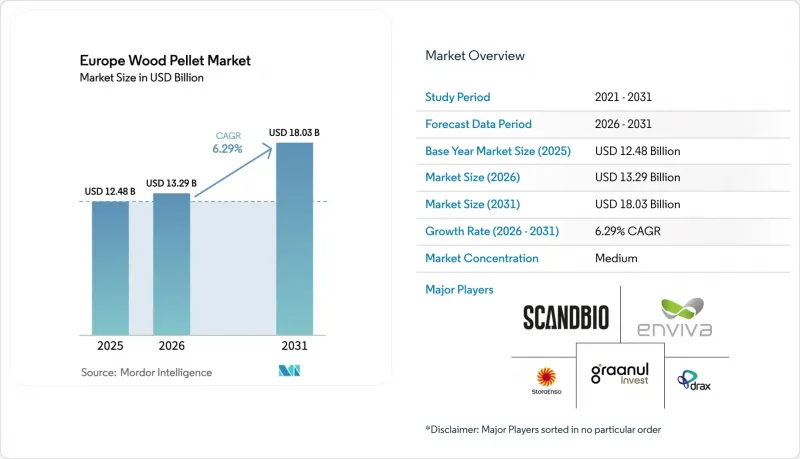
根據 Mordor Intelligence 預測,歐洲木質顆粒市場規模預計將在 2025 年達到 124.8 億美元,2026 年達到 132.9 億美元,到 2031 年達到 180.3 億美元,2026 年至 2031 年的複合年成長率為 6.29%。
本報告按原料(林業和木材殘渣、農業殘渣、能源作物和鋸末的混合物)、等級(公用事業級、優質級、標準級等)、應用(供暖、熱電聯產、其他)、最終用戶(住宅、工業和公共產業、其他)和地區(英國、德國、法國、西班牙、北歐國家、俄羅斯和其他歐洲國家)進行分類。
歐洲木質顆粒市場的趨勢與洞察
儘管石化燃料價格創歷史新高,但住宅供暖需求依然強勁。
2024年全年,歐洲高企的天然氣價格使得木質顆粒成為獨棟住宅和小規模企業取暖的一種具有成本競爭力的選擇。在奧地利,由於獎勵機制未作調整,鍋爐安裝量依然強勁;而在德國和法國,儘管補貼計畫有所調整,但需求依然強勁。 ENplus認證透過保證燃燒質量,促進了跨境木屑顆粒貿易。 2024年,住宅需求佔歐洲總消費量的7%。儘管德國於2024年8月實施的《能源法》改革僅削減了生質能補貼,但住宅供應商正透過設備融資和拓展上門銷售管道來穩定收入。因此,垂直整合對於抵消現貨銷售固有的價格波動至關重要。
歐盟發電廠從煤炭轉向生質能的進程正在加速。
德拉克斯集團4號機組於2024年運作,新增約300萬噸生質顆粒需求,推動英國生質能發電復甦。諸如安賽樂米塔爾位於比利時的托雷羅工廠等新計畫,透過向煉鋼高爐供應生物煤,展示了生質能在難以減排的行業中的應用。在歐洲投資銀行的支持下,西班牙的拉洛布拉發電廠已改用國內農業殘餘物作為燃料,從而減少了物流排放並提高了原料的柔軟性。儘管由於現有電網連接和渦輪機的再利用,現有設施的維修仍然經濟可觀,但英國2027年後的政策不確定性凸顯了需求組合多元化的必要性,因為需求量可能會減半。歐盟的梯級利用原則優先使用殘餘物而非原木,同樣限制了未來供應擴張的潛力。
取消政府對顆粒鍋爐的補貼,並使其與熱泵競爭
德國於2024年8月取消了生質能專項獎勵,導致2023年至2024年間鍋爐銷量下降55%。法國的降幅更為顯著,達到73%,因為獎勵轉向了電熱泵。荷蘭停止了新建住宅生質能供暖的補貼,並將資金全部用於電氣化改造。中國生產規模的擴大使熱泵設備的價格下降了15%至20%,削弱了顆粒燃料的成本優勢。此外,由於都市區空氣品質法規提高了顆粒物排放標準,限制了顆粒燃料在人口密集地區的普及。補貼取消和更便宜的電力替代方案的出現削弱了住宅需求,迫使生產商更加依賴工業買家,而工業買家通常會簽訂利潤率較低的長期合約。
細分市場分析
到2025年,森林和木材殘餘物將佔歐洲木質顆粒市場規模的70.2%,反映了歐洲強大的鋸木廠網路和成熟的ENplus物流系統。同時,農業殘餘物正以7.8%的複合年成長率成長,這主要得益於移動式製粒平台的引入,該平台可將運輸能耗降低38%。在西班牙的拉洛布拉工廠,採用當地秸稈作為原料已被證明能有效減少供應鏈排放。農業原料的灰分含量較高(2-5%),能量密度較低,符合歐盟的森林砍伐法規,促使汽電共生(CHP)設施進行混合測試。生產商正在採用先進的篩分技術和添加劑來控制品質波動,這表明從長遠來看,他們將轉向多元化的原料策略。
2026年至2031年間,森林殘餘物仍將構成歐洲木質顆粒市場的基礎,但農業原料將提供所需的增量成長,以滿足公共產業需求,同時緩解過度採伐森林的壓力。隨著住宅建設週期放緩導致鋸木廠產量下降,混合原料也將有助於應對殘餘物短缺的問題。由於公共產業對合規顆粒的需求不斷成長,能夠認證多樣化原料來源的相關人員有望贏得新的合約。
到2025年,電力公司使用的白色木屑顆粒將佔歐洲木質顆粒市場佔有率的55.8%。這些木屑顆粒供應給大型發電工程,在這些項目中,低交付成本比高品質規格更為重要。歐洲經烘焙處理的木質顆粒市場正以9.4%的複合年成長率成長,主要得益於芬蘭安德里茨約恩蘇生質煤工廠,該工廠年產能達6萬噸。熱解可將能量密度提高到22-28吉焦/噸,使其無需對燃煤發電廠進行大規模設備維修即可與現有燃料混燒。早期採用者包括安賽樂米塔爾,該公司在其煉鋼爐中使用熱解顆粒,展現了其跨產業的應用潛力。由於資本密集度仍維持在100-150歐元/噸,因此其應用主要集中在殘渣豐富的地區,這些地區可以利用熱電聯產(CHP)系統的餘熱來支付乾燥過程的費用。隨著歐洲燃煤發電廠逐步淘汰,電力公司正考慮利用營養再生技術轉型為脫碳。
業內普遍預測,到2031年,熱處理顆粒燃料的市場佔有率將達到兩位數,這一趨勢在北歐和中歐尤為顯著,因為這些地區的煤炭資產在可調節發電容量中佔據重要地位。標準級和高級顆粒燃料在住宅鍋爐中仍將佔據重要地位,但隨著混合動力系統和熱泵的日益普及,其成長速度預計將會放緩。製造商若能實現產品等級多元化,既能緩解需求波動,又能確保獲得高利潤的熱處理顆粒燃料合約。
其他好處:
- Excel格式的市場預測(ME)表
- 3個月的分析師支持
目錄
第1章:引言
- 研究假設和市場定義
- 調查範圍
第2章:調查方法
第3章執行摘要
第4章 市場狀況
- 市場概覽
- 市場促進因素
- 儘管石化燃料價格處於歷史高位,但住宅供暖需求仍然強勁。
- 加速歐盟發電廠從煤炭到生質能的轉型
- 歐盟排放交易體系(EU-ETS)為實現負排放的生物能源碳捕獲與封存(BECCS)計畫提供新的獎勵
- 熱泵/顆粒混合鍋爐的維修激增。
- 快速授權程序,實現供應鏈本地化,減少對俄羅斯的依賴
- 市場限制因素
- 主要市場停止對顆粒鍋爐的國家補貼
- 來自專用熱泵解決方案的競爭日益激烈
- 烏克蘭戰爭後,用於飼料飼料的木纖維供不應求和價格上漲。
- EUDR永續性合規成本
- 供應鏈分析
- 監理情勢
- 技術展望
- 波特五力模型
第5章 市場規模與成長預測
- 按原料
- 森林/木材殘渣
- 農業殘餘物
- 能源作物和鋸末混合物
- 按年級
- 實用級(白色)
- 優質級
- 標準級
- 熱處理“黑色”顆粒
- 透過使用
- 加熱
- 發電
- 熱電聯產(CHP)
- 最終用戶
- 住宅
- 商業的
- 工業和公共產業
- 動物墊料
- 按地區
- 英國
- 德國
- 法國
- 西班牙
- 北歐國家
- 俄羅斯
- 其他歐洲國家
第6章 競爭情勢
- 市場集中度
- 策略趨勢(併購、聯盟、購電協議)
- 市場佔有率分析(主要公司的市場排名和佔有率)
- 公司簡介
- Stora Enso Oyj
- Enviva Inc.
- AS Graanul Invest
- Drax Group plc
- Segezha Group PJSC
- Svenska Cellulosa AB(SCA)
- German Pellets GmbH
- Pure Biofuel Ltd
- Pfeifer Group
- Erdenwerk Gregor Ziegler GmbH
- Scandbio AB
- RZ Pellets GmbH
- Ante-Holz GmbH
- CM Biomass Partners A/S
- Lignetics of Idaho Inc.
- Wismar Pellets GmbH
- Vida AB
- Balcas Energy
- Burpellet SL
- FRP Pellets SpA
第7章 市場機會與未來展望
According to Mordor Intelligence, the Europe wood pellet market size is projected to be USD 12.48 billion in 2025, USD 13.29 billion in 2026, and reach USD 18.03 billion by 2031, growing at a CAGR of 6.29% from 2026 to 2031.
This report is Segmented by Feedstock (Forest/Wood Residue, Agricultural Residue, and Energy-Crop and Sawdust Mix), Grade (Utility-Grade, Premium-Grade, Standard-Grade, and More), Application (Heating, Combined Heat and Power, and More), End-User (Residential, Industrial and Utility, and More), and Geography (United Kingdom, Germany, France, Spain, NORDIC Countries, Russia, and Rest of Europe).
Europe Wood Pellet Market Trends and Insights
Robust Residential Heating Demand Amid Record Fossil-Fuel Prices
Gas prices in Europe stayed elevated through 2024, making wood pellets a cost-competitive option for space heating in single-family homes and small businesses. Austria maintained solid boiler installations thanks to unchanged incentives, while Germany and France still absorbed considerable volumes despite subsidy revisions. ENplus certification encouraged cross-border pellet trade by guaranteeing burn quality. The share of residential demand reached 7% of total European consumption in 2024. Although Germany's August 2024 BEG reform curtailed standalone biomass subsidies, residential suppliers are smoothing earnings by expanding into appliance financing and doorstep retail programs. Vertical integration is therefore becoming essential to offset the inherent volatility of spot-based sales.
Accelerated Coal-to-Biomass Conversion of EU Power Plants
Drax Group's restart of Unit 4 in 2024 injected about 3 million t of extra pellet demand and revived UK biomass electricity output. New projects, such as ArcelorMittal's Torero facility in Belgium, illustrate biomass applications in hard-to-abate industries by delivering bio-coal to steel blast furnaces. Spain's La Robla plant, backed by the European Investment Bank, shifted to domestic agricultural residues, cutting logistics emissions and broadening feedstock flexibility. Retrofit economics remain favorable because existing grid connections and turbines are reused, but post-2027 policy uncertainty in the UK may halve offtake, underscoring the need for diversified demand portfolios. EU cascading-use principles, which prioritize residues over roundwood, likewise cap future supply scalability.
Termination of National Pellet Boiler Subsidies and Heat-Pump Competition
Germany scrapped standalone biomass incentives in August 2024, causing a 55% plunge in boiler sales from 2023 to 2024. France recorded an even steeper 73% drop as incentives shifted toward electric heat pumps. The Netherlands stopped subsidizing biomass heat in new homes, funneling funds exclusively to electrification. Accelerated manufacturing scale in China lowered heat-pump equipment prices by 15-20%, eroding pellets' cost advantage. Urban air-quality rules also tightened particulate limits, limiting pellet uptake in dense areas. Together, subsidy withdrawal and cheaper electric alternatives weaken residential demand, forcing producers to rely more heavily on industrial buyers that negotiate longer-term contracts at thinner margins.
Other drivers and restraints analyzed in the detailed report include:
- New EU-ETS Incentives for Negative-Emission BECCS Projects
- Surge in Heat-Pump / Pellet-Hybrid Boiler Retrofits
- Feed-Wood Fiber Scarcity, Price Spikes, and EUDR Compliance Costs
For complete list of drivers and restraints, kindly check the Table Of Contents.
Segment Analysis
Forest and wood residues generated 70.2% of the European wood pellet market size in 2025, reflecting robust sawmill networks and mature ENplus logistics. Agricultural residues, however, are rising at a 7.8% CAGR, aided by mobile pelletizing platforms that shrink transport energy by 38%. Spain's La Robla plant validated local straw sourcing to cut supply-chain emissions. Even though agricultural streams carry higher ash (2-5%) and lower energy density, the EU Deforestation Regulation treats them preferentially, spurring trial blends at CHP units. Producers are adopting advanced sieving and additive dosing to manage quality variability, signaling a longer-term pivot toward multi-feedstock procurement strategies.
Over 2026-2031, forest residues will still underpin the European wood pellet market, but agricultural inputs provide the incremental growth needed to meet utility demand while easing pressure on over-harvested forests. Blending also hedges against residue shortages when housing cycles slow sawmill output. Stakeholders that can certify diverse feedstock pools stand to capture new contracts as utilities seek compliance-ready pellets.
Utility-grade white pellets accounted for 55.8% of the European wood pellet market share in 2025, supplying large-scale power projects that value low delivered cost over premium specs. The European wood pellet market size for torrefied variants is expanding at a 9.4% CAGR, catalyzed by ANDRITZ's 60,000 t Joensuu Biocoal plant in Finland. Torrefaction raises energy density to 22-28 GJ t, enabling coal-plant co-firing without major retrofit. Early adopters include ArcelorMittal, which feeds torrefied pellets into steel furnaces, demonstrating cross-sector potential. Capital intensity remains EUR 100-150 t cap, so deployment concentrates near residue-rich clusters where CHP waste heat can supply the drying step. As more European coal units face retirement, utilities weigh torrefaction as a transitional decarbonization pathway.
Industry consensus sees torrefied pellets reaching double-digit share by 2031, particularly in Northern and Central Europe, where coal assets represent dispatchable capacity. Standard and premium grades will maintain relevance in residential boilers, but growth moderates as hybrids and heat pumps take hold. Manufacturers that diversify across grade portfolios will mitigate demand swings while capturing high-margin torrefied contracts.
Complete Report Scope:
- By Feedstock
- Forest/Wood Residue
- Agricultural Residue
- Energy-Crop and Sawdust Mix
- By Grade
- Utility-Grade (White)
- Premium-Grade
- Standard-Grade
- Torrefied "Black" Pellets
- By Application
- Heating
- Power Generation
- Combined Heat and Power (CHP)
- By End-user
- Residential
- Commercial
- Industrial and Utility
- Animal Bedding
- By Geography
- United Kingdom
- Germany
- France
- Spain
- NORDIC Countries
- Russia
- Rest of Europe
List of Companies Covered in this Report:
- Stora Enso Oyj
- Enviva Inc.
- AS Graanul Invest
- Drax Group plc
- Segezha Group PJSC
- Svenska Cellulosa AB (SCA)
- German Pellets GmbH
- Pure Biofuel Ltd
- Pfeifer Group
- Erdenwerk Gregor Ziegler GmbH
- Scandbio AB
- RZ Pellets GmbH
- Ante-Holz GmbH
- CM Biomass Partners A/S
- Lignetics of Idaho Inc.
- Wismar Pellets GmbH
- Vida AB
- Balcas Energy
- Burpellet SL
- FRP Pellets SpA
Additional Benefits:
- The market estimate (ME) sheet in Excel format
- 3 months of analyst support
TABLE OF CONTENTS
1 Introduction
- 1.1 Study Assumptions & Market Definition
- 1.2 Scope of the Study
2 Research Methodology
3 Executive Summary
4 Market Landscape
- 4.1 Market Overview
- 4.2 Market Drivers
- 4.2.1 Robust residential-heating demand amid record fossil-fuel prices
- 4.2.2 Accelerated coal-to-biomass conversion of EU power plants
- 4.2.3 New EU-ETS incentives for negative-emission BECCS projects
- 4.2.4 Surge in heat-pump / pellet-hybrid boiler retrofits
- 4.2.5 Fast-track permitting for post-Russia supply-chain localization
- 4.3 Market Restraints
- 4.3.1 Termination of national pellet boiler subsidies in core markets
- 4.3.2 Rising competition from heat-pump only solutions
- 4.3.3 Feed-wood fibre scarcity & price spikes post-Ukraine war
- 4.3.4 EUDR sustainability compliance costs
- 4.4 Supply-Chain Analysis
- 4.5 Regulatory Landscape
- 4.6 Technological Outlook
- 4.7 Porter's Five Forces
- 4.7.1 Bargaining Power of Suppliers
- 4.7.2 Bargaining Power of Consumers
- 4.7.3 Threat of New Entrants
- 4.7.4 Threat of Substitute Products & Services
- 4.7.5 Intensity of Competitive Rivalry
5 Market Size & Growth Forecasts
- 5.1 By Feedstock
- 5.1.1 Forest/Wood Residue
- 5.1.2 Agricultural Residue
- 5.1.3 Energy-Crop and Sawdust Mix
- 5.2 By Grade
- 5.2.1 Utility-Grade (White)
- 5.2.2 Premium-Grade
- 5.2.3 Standard-Grade
- 5.2.4 Torrefied "Black" Pellets
- 5.3 By Application
- 5.3.1 Heating
- 5.3.2 Power Generation
- 5.3.3 Combined Heat and Power (CHP)
- 5.4 By End-user
- 5.4.1 Residential
- 5.4.2 Commercial
- 5.4.3 Industrial and Utility
- 5.4.4 Animal Bedding
- 5.5 By Geography
- 5.5.1 United Kingdom
- 5.5.2 Germany
- 5.5.3 France
- 5.5.4 Spain
- 5.5.5 NORDIC Countries
- 5.5.6 Russia
- 5.5.7 Rest of Europe
6 Competitive Landscape
- 6.1 Market Concentration
- 6.2 Strategic Moves (M&A, Partnerships, PPAs)
- 6.3 Market Share Analysis (Market Rank/Share for key companies)
- 6.4 Company Profiles (includes Global level Overview, Market level overview, Core Segments, Financials as available, Strategic Information, Products & Services, and Recent Developments)
- 6.4.1 Stora Enso Oyj
- 6.4.2 Enviva Inc.
- 6.4.3 AS Graanul Invest
- 6.4.4 Drax Group plc
- 6.4.5 Segezha Group PJSC
- 6.4.6 Svenska Cellulosa AB (SCA)
- 6.4.7 German Pellets GmbH
- 6.4.8 Pure Biofuel Ltd
- 6.4.9 Pfeifer Group
- 6.4.10 Erdenwerk Gregor Ziegler GmbH
- 6.4.11 Scandbio AB
- 6.4.12 RZ Pellets GmbH
- 6.4.13 Ante-Holz GmbH
- 6.4.14 CM Biomass Partners A/S
- 6.4.15 Lignetics of Idaho Inc.
- 6.4.16 Wismar Pellets GmbH
- 6.4.17 Vida AB
- 6.4.18 Balcas Energy
- 6.4.19 Burpellet SL
- 6.4.20 FRP Pellets SpA
7 Market Opportunities & Future Outlook
- 7.1 White-space & Unmet-need Assessment

 北美木質顆粒市場:市場佔有率分析、產業趨勢與統計及成長預測(2026-2031)
 木質顆粒市場-2026-2032年全球市場預測木質顆粒:市場佔有率分析、產業趨勢與統計、成長預測(2026-2031)
 工業木質顆粒市場-全球產業規模、佔有率、趨勢、機會與預測:按應用、最終用途、地區和競爭格局分類,2021-2031年
 全球工業木質顆粒市場規模、佔有率、趨勢和成長分析報告(2026-2034年)木質顆粒市場規模、佔有率、成長及全球產業分析:按類型、應用和地區分類的洞察,2026-2034 年預測
 木質顆粒市場規模、佔有率和趨勢分析報告:按應用、最終用途、地區和細分市場預測(2026-2033 年)
 木質顆粒燃料市場:依原料、應用、終端用戶產業及地區分類
 2026-2030年全球木質顆粒市場全球木質顆粒市場規模、佔有率、趨勢和成長分析報告(2026-2034)