


 |
市場調查報告書
商品編碼
2124787
歐洲電子書:市場佔有率分析、產業趨勢與統計、成長預測(2026-2031)Europe E-Book - Market Share Analysis, Industry Trends & Statistics, Growth Forecasts (2026 - 2031) |
||||||

※ 本網頁內容可能與最新版本有所差異。詳細情況請與我們聯繫。
根據 Mordor Intelligence 預測,歐洲電子書市場規模將從 2025 年的 98.2 億美元成長到 2026 年的 101.6 億美元,到 2031 年將達到 120.3 億美元,2026 年至 2031 年的複合年成長率為 3.46%。
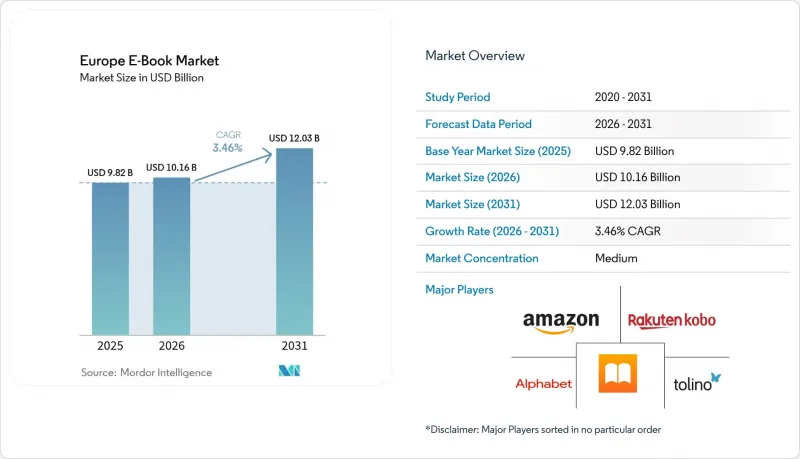
本報告按內容類型(小說等)、設備類型(智慧型手機、專用電子閱讀器等)、存取模式(智慧型手機等)、分發管道(第三方電子書零售商、機構/圖書館入口網站等)和地區進行細分。市場規模和預測以美元計價。
歐洲電子書市場的趨勢與洞察
西歐智慧型手機和寬頻的高普及率正在加速行動閱讀的發展。
行動連線的普及改變了人們的閱讀習慣,到2024年,46%的電子書消費發生在智慧型手機上。這項轉變的驅動力是年輕讀者群體,他們擁有觸手可及的設備,且注意力持續時間較短,更適合數位格式。出版商正在積極應對,重新設計書籍以適應小螢幕,並確保排版和導航符合行動用戶的期望。將電子書與流量套餐捆綁銷售的廣告也擴大了電子書的覆蓋範圍,吸引了更多首次閱讀電子書的用戶。隨著5G網路覆蓋範圍的擴大,應用程式內預覽和一鍵購買等功能進一步簡化了從發現書籍到購買的流程,進一步鞏固了歐洲電子書市場以行動端為中心的趨勢。
歐盟增值稅(VAT)協調:消除數位出版的稅收壁壘
紙本書和電子書增值稅(VAT)待遇的統一,消除了先前限制線上定價柔軟性的成本障礙。法國和德國的出版商目前正在試行限時折扣和版稅獎勵,這些措施先前在固定價格法規下受到限制。訂閱服務受益最大,它們利用自身利潤率降低月費,同時維持作者版稅收入。再加上豐富的語言選擇,這項稅收政策的轉變使得德國2023年電子書銷量成長了5.2%,為其他市場樹立了先例,其他市場也將很快效仿。這正推動著歐洲電子書市場的穩定擴張。
來自播客和有聲讀物等“音頻優先”形式的激烈競爭。
人們對音訊內容的日益關注擠佔了原本可以用於閱讀電子書的空閒時間,據估計,有聲書在北歐國家圖書市場總量中佔比已達4-5%。各大平台以獨家製作預算和配音員參與的行銷活動吸引作者,促使電子書出版商開始同步發行文本版和音訊版。雖然多格式策略可以規避風險,但也推高了成本結構,並加大了歐洲電子書市場獲利的壓力。
細分市場分析
2025年,小說類圖書仍將是收入支柱,佔據歐洲電子書市場34.60%的佔有率。特定類型系列圖書的定期發布和社群行銷推動了頻繁購買,並保持了數位市場的強勁勢頭。讀者擴大使用訂閱應用程式中的自動購買功能,也促進了這一領域的成長。兒童文學雖然規模仍然較小,但卻是成長最快的領域,預計2026年至2031年將以9.35%的複合年成長率成長,這主要得益於專為家庭平板電腦使用而設計的增強型互動功能。改進的朗讀功能、內建遊戲和家長分析功能使數位版圖書與紙本圖書區分開來,並支撐了更高的定價。
疫情封鎖期間教育環境的變化促使低齡兒童廣泛採用螢幕閱讀,緩解了教育工作者對其有效性的擔憂。出版商調整業務模式,透過取得多媒體版權並與教育科技公司合作,確保課程整合。 2024年9月,上訴法院的一項裁決維持了對受控數位借閱的限制,並明確了數位版權管理(DRM)的界限,鼓勵版權所有者將兒童書籍的舊書數位化。這些因素共同推動了青少年讀者的歐洲電子書市場的擴張,使收入來源不再局限於傳統占主導地位的小說類型。
到2025年,智慧型手機將佔消費電子設備的45.40%,這得益於4G/5G網路的廣泛部署以及通勤途中「快速閱讀」的習慣。出版商目前正在設計響應式佈局並壓縮下載包大小,以應對資料通訊流量限制。閱讀進度推播通知正在提高用戶參與度,並直接影響歐洲電子書市場的客戶終身價值(LTV)。
專用電子閱讀器曾被視為小眾市場,如今憑藉電子墨水螢幕、前置光源和更長的電池續航時間等技術,重新獲得關注。這些技術突破了以往的限制,預計將以7.72%的複合年成長率成長。推動這場復興的主要是老年讀者,其中53%的人喜歡電子閱讀器,因為它們對眼睛的負擔較小。歐盟針對數位產品的新網路安全要求將於2024年11月生效,這將提升設備的基本安全性。雖然合規成本可能會給中小型硬體製造商帶來負擔,但也有助於增強消費者信心,並支持持續的硬體更換,從而間接促進電子書的銷售。
其他好處:
- Excel格式的市場預測(ME)表
- 3個月的分析師支持
目錄
第1章:引言
- 研究假設和市場定義
- 調查範圍
第2章:調查方法
第3章執行摘要
第4章 市場狀況
- 市場概覽
- 市場促進因素
- 西歐智慧型手機和寬頻的高普及率正在加速行動閱讀的發展。
- 歐盟增值稅(VAT)的統一將消除數位出版的稅收障礙。
- 訂閱式閱讀平台的激增正在提升其永續收入來源。
- 出版商將以前出版的、用歐洲國家母語寫成的書籍數位化。
- 支持歐洲出版商「從紙本出版轉型為數位出版」的永續發展目標
- 人工智慧驅動的個人化和發現工具正在增加每部影片的平均觀看時間。
- 市場限制因素
- 電子書盜版和非法文件共用網路在歐盟境內十分猖獗。
- 來自播客和有聲讀物等“音頻優先”形式的激烈競爭。
- DACH 國家和法國的固定價格法限制了折扣的柔軟性。
- 監理展望
- 價格分析
- 波特五力分析
- 評估宏觀經濟變化的影響
第5章 市場規模與成長預測
- 按內容類型
- 專業/技術
- 教育和學術
- 小說
- 非虛構類
- 兒童文學
- 漫畫和圖像小說
- 其他類型
- 依設備類型
- 智慧型手機
- 藥片
- 專用電子書閱讀器
- 筆記型電腦/桌上型電腦
- 其他設備
- 訪問模式
- 定期訂閱/無限閱讀
- 每次下載收費
- 免費/含廣告
- 透過分銷管道
- 出版商經營的平台
- 第三方電子商務營運商
- 機構和圖書館入口網站
- 按地區
- 德國
- 英國
- 法國
- 西班牙
- 俄羅斯
- 義大利
- 荷蘭
- 波蘭
- 其他歐洲國家
第6章 競爭情勢
- 策略趨勢
- 市佔率分析
- 公司簡介
- Amazon.com Inc.(Kindle & KDP)
- Rakuten Kobo Inc.
- Apple Inc.(Apple Books)
- Alphabet Inc.(Google Play Books)
- Barnes & Noble Inc.(Nook)
- Tolino Media GmbH & Co. KG
- PocketBook International SA
- Storytel AB
- BookBeat AB
- Skoobe GmbH
- Lulu Press Inc.
- Draft2Digital LLC(incl. Smashwords)
- Georg von Holtzbrinck GmbH & Co. KG
- Penguin Random House LLC
- Hachette Livre
- HarperCollins Publishers LLC
- Bonnier Books AB
- Pearson PLC
- Springer Nature
- Bloomsbury Publishing PLC
第7章 市場機會與未來展望
According to Mordor Intelligence, the Europe e-Book market size is expected to grow from USD 9.82 billion in 2025 to USD 10.16 billion in 2026 and is forecast to reach USD 12.03 billion by 2031 at 3.46% CAGR over 2026-2031.
This report is Segmented by Content Type (Fiction and More), Device Type (Smartphone and Dedicated E-Reader and More), Access Model (Smartphone and More), Distribution Channel (Third-Party E-Retailers, Institutional and Library Portals and More), and Geography. The Market Sizes and Forecasts are Provided in Terms of Value (USD).
Europe E-Book Market Trends and Insights
High Smartphone and Broadband Penetration Accelerating Mobile Reading in Western Europe
Mobile connectivity has transformed reading habits, with 46% of e-book consumption now taking place on smartphones in 2024. Younger readers drive this shift through always-available devices and shorter attention cycles that align with digital formats. Publishers have responded by re-designing titles for smaller screens, ensuring typography and navigation meet mobile expectations. Advertised bundles pairing e-books with telecom plans are also widening reach among first-time digital readers. As 5G coverage deepens, in-app sampling and one-click purchasing further simplify the path from discovery to completed sale, reinforcing the European e-book market's mobile-centric trajectory.
EU VAT Harmonisation Removing Fiscal Barriers to Digital Publishing
Equalised VAT treatment between print and digital books has eliminated a cost handicap that once constrained online price flexibility. French and German publishers now experiment with limited-time discounts and loyalty incentives previously restricted under fixed-price regulations. Subscription services benefit most, using the margin headroom to lower monthly fees while sustaining author royalties. Together with wider language catalogues, this fiscal shift lifted German e-book revenues by 5.2% in 2023 and set a precedent other markets quickly followed, supporting steady enlargement of the European e-book market.
Strong Competition from Audio-First Formats such as Podcasts & Audiobooks
Rising audio engagement siphons discretionary time from e-book reading, with Nordic audiobook share estimated at 4-5% of the total book market. Major platforms lure authors with exclusive production budgets and voice-talent marketing, prompting e-book publishers to launch simultaneous text-audio releases. While multi-format strategies hedge risk, they also raise cost structures, adding pressure to maintain margin within the European e-book market.
Other drivers and restraints analyzed in the detailed report include:
- Surge of Subscription-Based Reading Platforms Boosting Recurring Revenue Streams
- Publisher Digitization of Backlists in Native European Languages
- Rampant E-Book Piracy and Illegal File-Sharing Networks Across EU
For complete list of drivers and restraints, kindly check the Table Of Contents.
Segment Analysis
Fiction remained the revenue cornerstone in 2025, holding a 34.60% share of the European e-book market. Genre series release schedules and community marketing energise frequent purchases that sustain digital traction. The segment benefits from readers' willingness to embrace auto-buy functions inside subscription apps, reinforcing volume. Children's literature, though still smaller, is the fastest climber at a 9.35% CAGR for 2026-2031, propelled by interactive enhancements that align with tablet use among families. Enhanced read-aloud features, embedded games and parental analytics differentiate digital from print, supporting premium pricing.
Educational shifts during pandemic lockdowns normalised screen-based reading for younger age groups and eased educator concerns about efficacy. Publishers pivoted by securing multimedia rights and collaborating with ed-tech partners to integrate curriculum alignment. The September 2024 appellate decision upholding restrictions on controlled digital lending clarified digital rights management boundaries, encouraging rights holders to increase children's backlist conversions. Together, these factors expand the European e-book market size for youth titles and diversify revenue beyond traditionally dominant fiction lines.
Smartphones captured 45.40% of consumption devices in 2025, underpinned by widespread 4G/5G coverage and habit-forming quick reads during commutes. Publishers now design responsive layouts and compress download packages to meet data-cap sensitivities. Push notifications on reading milestones enhance engagement rates, directly influencing lifetime value within the European e-book market.
Dedicated e-readers, once considered niche, show renewed appeal with an 7.72% forecast CAGR as e-ink colour, front-lighting, and extended battery life address past limitations. Older readers, 53% of whom prefer e-readers for eye comfort, drive this resurgence. New EU cybersecurity requirements for digital products, effective November 2024, elevate the baseline resilience of devices. Compliance costs may squeeze smaller hardware makers yet reinforce consumer trust, supporting sustained hardware replacement cycles that indirectly fuel e-book sales.
Complete Report Scope:
- By Content Type
- Professional / Technical
- Educational & Academic
- Fiction
- Non-Fiction
- Childrens Literature
- Comics & Graphic Novels
- Other Genres
- By Device Type
- Smartphone
- Tablet
- Dedicated E-Reader
- Laptop / Desktop
- Other Devices
- By Access Model
- Subscription / Unlimited Reading
- Pay-Per-Download
- Free / Ad-Supported
- By Distribution Channel
- Direct Publisher Platforms
- Third-Party E-Retailers
- Institutional & Library Portals
- By Geography
- Germany
- United Kingdom
- France
- Spain
- Russia
- Italy
- Netherlands
- Poland
- Rest of Europe
List of Companies Covered in this Report:
- Amazon.com Inc. (Kindle & KDP)
- Rakuten Kobo Inc.
- Apple Inc. (Apple Books)
- Alphabet Inc. (Google Play Books)
- Barnes & Noble Inc. (Nook)
- Tolino Media GmbH & Co. KG
- PocketBook International SA
- Storytel AB
- BookBeat AB
- Skoobe GmbH
- Lulu Press Inc.
- Draft2Digital LLC (incl. Smashwords)
- Georg von Holtzbrinck GmbH & Co. KG
- Penguin Random House LLC
- Hachette Livre
- HarperCollins Publishers LLC
- Bonnier Books AB
- Pearson PLC
- Springer Nature
- Bloomsbury Publishing PLC
Additional Benefits:
- The market estimate (ME) sheet in Excel format
- 3 months of analyst support
TABLE OF CONTENTS
1 INTRODUCTION
- 1.1 Study Assumptions and Market Definition
- 1.2 Scope of the Study
2 RESEARCH METHODOLOGY
3 EXECUTIVE SUMMARY
4 MARKET LANDSCAPE
- 4.1 Market Overview
- 4.2 Market Drivers
- 4.2.1 High Smartphone and Broadband Penetration Accelerating Mobile Reading in Western Europe
- 4.2.2 EU VAT Harmonisation Removing Fiscal Barriers to Digital Publishing
- 4.2.3 Surge of Subscription-Based Reading Platforms Boosting Recurring Revenue Streams
- 4.2.4 Publisher Digitization of Backlists in Native European Languages
- 4.2.5 Sustainability Goals Driving Print-to-Digital Shift Among European Publishers
- 4.2.6 AI-Driven Personalization and Discovery Tools Increasing Average Title Consumption
- 4.3 Market Restraints
- 4.3.1 Rampant E-Book Piracy and Illegal File-Sharing Networks Across EU
- 4.3.2 Strong Competition from Audio-First Formats such as Podcasts & Audiobooks
- 4.3.3 Fixed Book Price Laws Capping Discounting Flexibility in DACH & France
- 4.4 Regulatory Outlook
- 4.5 Pricing Analysis
- 4.6 Porter's Five Forces Analysis
- 4.6.1 Bargaining Power of Suppliers
- 4.6.2 Bargaining Power of Buyers
- 4.6.3 Threat of New Entrants
- 4.6.4 Threat of Substitute Products
- 4.6.5 Intensity of Competitive Rivalry
- 4.7 Assessment of the Impact of Macroeconomic Shifts
5 MARKET SIZE AND GROWTH FORECASTS (VALUE)
- 5.1 By Content Type
- 5.1.1 Professional / Technical
- 5.1.2 Educational & Academic
- 5.1.3 Fiction
- 5.1.4 Non-Fiction
- 5.1.5 Childrens Literature
- 5.1.6 Comics & Graphic Novels
- 5.1.7 Other Genres
- 5.2 By Device Type
- 5.2.1 Smartphone
- 5.2.2 Tablet
- 5.2.3 Dedicated E-Reader
- 5.2.4 Laptop / Desktop
- 5.2.5 Other Devices
- 5.3 By Access Model
- 5.3.1 Subscription / Unlimited Reading
- 5.3.2 Pay-Per-Download
- 5.3.3 Free / Ad-Supported
- 5.4 By Distribution Channel
- 5.4.1 Direct Publisher Platforms
- 5.4.2 Third-Party E-Retailers
- 5.4.3 Institutional & Library Portals
- 5.5 By Geography
- 5.5.1 Germany
- 5.5.2 United Kingdom
- 5.5.3 France
- 5.5.4 Spain
- 5.5.5 Russia
- 5.5.6 Italy
- 5.5.7 Netherlands
- 5.5.8 Poland
- 5.5.9 Rest of Europe
6 COMPETITIVE LANDSCAPE
- 6.1 Strategic Moves
- 6.2 Market Share Analysis
- 6.3 Company Profiles (includes Market Level Overview, Core Segments, Financials as available, Strategic Information, Products & Services, and Recent Developments)
- 6.3.1 Amazon.com Inc. (Kindle & KDP)
- 6.3.2 Rakuten Kobo Inc.
- 6.3.3 Apple Inc. (Apple Books)
- 6.3.4 Alphabet Inc. (Google Play Books)
- 6.3.5 Barnes & Noble Inc. (Nook)
- 6.3.6 Tolino Media GmbH & Co. KG
- 6.3.7 PocketBook International SA
- 6.3.8 Storytel AB
- 6.3.9 BookBeat AB
- 6.3.10 Skoobe GmbH
- 6.3.11 Lulu Press Inc.
- 6.3.12 Draft2Digital LLC (incl. Smashwords)
- 6.3.13 Georg von Holtzbrinck GmbH & Co. KG
- 6.3.14 Penguin Random House LLC
- 6.3.15 Hachette Livre
- 6.3.16 HarperCollins Publishers LLC
- 6.3.17 Bonnier Books AB
- 6.3.18 Pearson PLC
- 6.3.19 Springer Nature
- 6.3.20 Bloomsbury Publishing PLC
7 MARKET OPPORTUNITIES AND FUTURE OUTLOOK
- 7.1 White-Space and Unmet-Need Assessment

 電子書閱讀器:市場佔有率分析、行業趨勢和統計數據以及成長預測(2026-2031 年)電子書:市佔率分析、產業趨勢與統計、成長預測(2026-2031)
 電子書閱讀器市場-2026-2032年全球市場預測電子書市場:2026-2032年全球市場預測(按類型、文件格式、設備、定價模式、年齡層、最終用戶和通路分類)
 全球線上圖書服務市場規模、佔有率、趨勢和成長分析報告(2026-2034)
 美國自助出版市場規模、佔有率和趨勢分析報告:按類型、格式、主要參與者、競爭分析和細分市場預測(2026-2033 年)
 線上圖書服務市場-全球產業規模、佔有率、趨勢、機會與預測:按產品、應用、地區和競爭對手分類,2021-2031年
 電子閱讀器市場報告:按螢幕類型、螢幕大小、連接方式、價格範圍、最終用戶、分銷管道和地區分類(2026-2034 年)
 2026年全球電子閱讀器市場報告2026年全球線上圖書服務市場報告