


 |
市場調查報告書
商品編碼
2122047
飲料包裝:市場佔有率分析、產業趨勢與統計、成長預測(2026-2031)Beverage Packaging - Market Share Analysis, Industry Trends & Statistics, Growth Forecasts (2026 - 2031) |
||||||

※ 本網頁內容可能與最新版本有所差異。詳細情況請與我們聯繫。
根據 Mordor Intelligence 預測,飲料包裝市場規模將從 2025 年的 1,632.5 億美元成長到 2026 年的 1,695.8 億美元,到 2031 年將達到 2051.7 億美元,2026 年至 2031 年的複合年成長率為 3.88%。
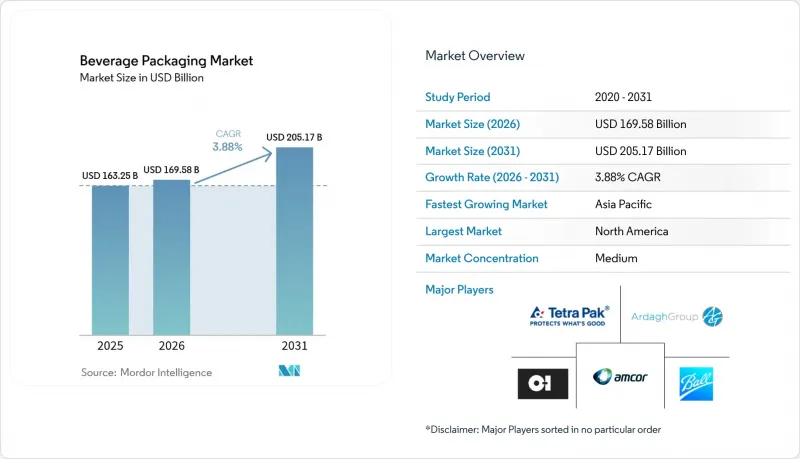
本報告按材料類型(塑膠、金屬、玻璃、紙板)、產品類型(瓶裝、罐裝、袋裝、紙盒裝、啤酒桶裝)、包裝類型(無菌包裝、熱填充、冷灌裝/碳酸飲料、蒸餾等)、飲料類型(碳酸飲料、酒精飲料、瓶裝水、牛奶等)和地區進行細分。市場預測以美元(USD)為單位。
全球飲料包裝市場趨勢與洞察
即飲飲料的優質化
高階即飲(RTD)產品的推出正推動品牌商從普通塑膠容器轉向玻璃和精緻的鋁製包裝,從而在滿足可回收材料含量要求的同時,實現更高的商店價格。在英國,烈酒市場預計到2024年將達到168億英鎊(212億美元),2023年新增酒廠超過50家,預計到2030年,即飲烈酒市場將以每年16.2%的速度成長。玻璃容器供應商正將這一高階趨勢視為商機,因為92%的美國消費者將玻璃與「品質」和「無限可回收性」聯繫起來。品牌商正在將高透明度的容器與智慧瓶蓋和QR碼標籤結合,使消費者能夠獲取產地資訊、會員權益和認證回收流程。飲料包裝市場正受惠於高階產品每公升包裝成本的上漲,從而抵消了主流碳酸飲料銷售量疲軟的影響。
鋁罐產能快速擴張
鋁材無限的可回收性和超過70%的閉合迴路回收率正在加速全球擴大產能的競爭。波爾公司已在佛羅裡達州新增一條生產線,並於2024年在奧勒岡州動工興建一家工廠。諾貝麗斯公司正在阿拉巴馬州建設一座年產60萬噸的軋鋼廠,這是該公司與阿爾達格公司簽訂的長期供應協議的一部分,旨在滿足預計到2031年罐體軋延需求每年4%的成長。因此,綜合金屬供應商在訊息包裝市場獲得了成本優勢和永續發展方面的領導地位,並對啤酒和氣泡水產業的塑膠製品構成了壓力。
原生樹脂價格波動劇烈
由於原油價格波動和煉油廠停產,PTA和MEG的成本預計將在2025年初上漲,迫使中國和歐洲的聚酯瓶蓋生產商暫時停產以調整庫存。持有現貨樹脂合約的包裝加工商面臨利潤率壓力,導致期貨合約的使用增加,並開始採用機械回收方式。因此,飲料包裝市場越來越傾向於選擇可回收原料比例較高的供應商,從而保護客戶免受價格波動風險的影響。
細分市場分析
預計到2025年,塑膠將佔銷售額的41.30%,這得益於其成熟的供應鏈和成本優勢。然而,關於再生材料含量的法規以及押金返還計劃的擴大正在威脅PET的市場主導地位。塑膠飲料包裝市場整體預計僅以3.88%的複合年成長率成長,儘管輕量化和化學回收技術取得了進展,但其市場佔有率預計仍將放緩。紙板預計將以6.29%的複合年成長率成長,在所有材料中增速最高。鋁罐的復興清楚地表明了監管機構對可再生或無限循環利用基材的支持以及消費者需求的成長。 Graphic Packaging International的「Boardio」紙板罐和「EnviroClip」包裝盒瞄準了碳酸飲料的多包裝市場,該市場曾經以收縮膜為主導。綜合造紙企業正利用國內纖維供應和75%的回收率來抵禦原生樹脂價格的波動。
在飲料包裝產業,儘管與物流相關的排放量不斷增加,玻璃作為一種「優質材料」的地位正被重新評估。 OI Glass 已投資 1.5 億美元對其位於英國Alore 的工廠進行現代化改造,引入了混合熔爐和輕質瓶,目標是到 2030 年將二氧化碳排放量減少 25%。鋁的閉合迴路回收率超過 70%,Novelis 計畫建造的工廠也反映了對長期需求的信心。綜上所述,這些變化表明,到 2030 年,飲料包裝材料將呈現多元化的格局,人口成長將帶動絕對處理量增加,而塑膠在飲料包裝市場的佔有率預計將會下降。
由於瓶裝飲料用途廣泛,可盛裝包括碳酸飲料、水、乳製品替代品和酒精飲料在內的多種飲品,預計到2025年,瓶裝飲料將佔飲料市場銷售額的37.35%。在瓶裝飲料日益多樣化的背景下,以瓶裝飲料為主導的飲料包裝市場預計將以3.52%的年均成長率穩步成長至2031年。透過採用符合法規要求的繫繩式瓶蓋和先進的阻隔塗層(例如等離子塗層和二氧化矽塗層),瓶身重量正在進一步減輕。同時,由於每公升包裝的材料重量比瓶裝飲料輕60-80%,且更適合電商銷售,預計軟包裝袋將以6.82%的複合年成長率顯著成長。
用於葡萄酒和雞尾酒的多包裝袋採用單一材料複合材料,可承受跌落測試,降低運輸成本,並越來越被家庭垃圾回收計劃所接受。紙盒繼續用於無菌乳製品、果汁以及現在的植物來源拿鐵,這得益於利樂公司超高溫瞬時滅菌灌裝生產線節能25%。罐裝產品在精釀啤酒、能量飲料和氣泡水中仍佔有一席之地,其快速冷卻的特性有助於提升品牌忠誠度。啤酒桶屬於小眾產品,出貨量不到3%,但其不銹鋼回收週期長達25年以上,符合「零浪費」理念。
區域分析
北美地區人均飲料消費量高,且優質化空間龐大,預計2025年將佔全球銷售額的26.60%。皇冠控股公司(Crown Holdings)2024年北美銷售量成長5%,這主要得益於維吉尼亞和內華達州新運作的易拉罐生產線。然而,各州對瓶蓋緊固方式的監管以及與擴大生產者責任相關的費用增加了合規的複雜性,這有利於多元化的跨國公司。加拿大到2030年統一的rPET回收率目標正在促進區域回收基礎設施的發展,並進一步支持飲料包裝市場中以循環經濟為導向的供應商。同時,來自亞太地區輕質瓶進口帶來的日益激烈的競爭壓力,也為國內加工商帶來了成本上的挑戰。
亞太地區預計2031年將維持5.32%的複合年成長率,主要得益於都市化和可支配所得的成長。在中國,2023年前10個月飲料產量增加了2.7%,啤酒產量更是激增了22%。印度將於2025年4月起強制實施30%的rPET(再生PET)使用率,將增加對再生材料的需求,同時對違規行為處以懲罰性課稅。一些跨國公司(例如可口可樂在菲律賓的「PETValue」工廠)在內部進行回收利用,並逐漸佔據市場主導地位,而小規模的加工商則面臨原料短缺的問題。日本加工商正專注於「即食」和健康型飲料,並積極推廣使用無菌包裝袋來包裝攜帶式營養食品。
歐洲在嚴格的監管方面處於主導地位。將於2025年2月生效的《包裝和包裝廢棄物法規》(PPWR)規定,到2028年所有包裝材料必須可回收,到2030年30%的寶特瓶必須使用再生PET(rPET)。因此,歐盟飲料包裝市場正轉向可回收設計方案,例如單一材料套筒和水性油墨。食品級rPET的供需失衡導致其價格居高不下,從而促進了填充商和回收商之間的合作。由於環境、社會和治理(ESG)方面的限制,玻璃瓶產能的合理化導致區域葡萄酒和頂級烈酒的供應趨緊,有助於保持其價值。隨著各成員國的零售商努力製定塑膠減量藍圖,軟性紙基解決方案正日益受到關注。
其他好處:
- Excel格式的市場預測(ME)表
- 3個月的分析師支持
目錄
第1章:引言
- 研究假設和市場定義
- 調查範圍
第2章:調查方法
第3章執行摘要
第4章 市場狀況
- 市場概覽
- 市場促進因素
- 即飲飲料的優質化
- 鋁罐產能正在快速擴張。
- 關於PET產品和繫繩瓶蓋減重的規定。
- 電子商務中多包裝商品(主要是酒精飲料)的成長
- 數位浮水印(以不顯眼的形式)的興起,推動了循環經濟的發展。
- 飲料濃縮液和「家用蘇打水」的生態系統(一個被忽視的領域)
- 市場限制因素
- 原生樹脂價格波動
- 再生PET薄片供應瓶頸
- 加速推動一次性塑膠製品監管政策(即使是那些尚未公開實施的政策)
- 投資者對 ESG 因素的審查日益嚴格,正在抑制對玻璃產業的資本投資(儘管這一點並未引起太多關注)。
- 價值鏈分析
- 監理情勢
- 技術展望
- 波特五力分析
- 市場宏觀經濟趨勢的評估
第5章 市場規模與成長預測
- 依材料類型
- 塑膠
- 金屬
- 玻璃
- 紙板
- 依產品類型
- 瓶子
- 坎
- 小袋
- 紙盒
- 啤酒桶
- 按包裝類型
- 無菌
- 熱填充
- 冷灌碳酸飲料
- 適用於蒸餾。
- 可在室溫下儲存
- 冷鏈配送
- 按飲料類型
- 碳酸飲料
- 酒精飲料
- 瓶裝水
- 牛奶
- 果菜汁
- 能量飲料
- 植物來源飲料
- 其他類型的飲料
- 按地區
- 北美洲
- 美國
- 加拿大
- 墨西哥
- 歐洲
- 英國
- 德國
- 法國
- 義大利
- 西班牙
- 奧地利
- 波蘭
- 俄羅斯
- 其他歐洲國家
- 亞太地區
- 中國
- 印度
- 日本
- 澳洲
- 其他亞太國家
- 南美洲
- 巴西
- 阿根廷
- 其他南美國家
- 中東
- 沙烏地阿拉伯
- 阿拉伯聯合大公國
- 土耳其
- 其他中東國家
- 非洲
- 南非
- 其他非洲國家
- 北美洲
第6章 競爭情勢
- 市場集中度
- 策略趨勢
- 市佔率分析
- 公司簡介
- Amcor plc
- Ball Corporation
- Tetra Laval International SA
- OI Glass Inc.
- Crown Holdings Inc.
- Ardagh Group SA
- Ardagh Metal Packaging SA
- Verallia SA
- Vidrala SA
- Vetropack Holding Ltd.
- Silgan Holdings Inc.
- Berry Global Group Inc.
- Mondi plc
- Sonoco Products Company
- CCL Industries Inc.
- Smurfit Kappa Group plc
- CANPACK SA
- Huhtamaki Oyj
- Toyo Seikan Group Holdings Ltd.
- Nampak Ltd.
- Krones AG
- Guala Closures Group
第7章 市場機會與未來展望
According to Mordor Intelligence, the beverage packaging market size is expected to grow from USD 163.25 billion in 2025 to USD 169.58 billion in 2026 and is forecast to reach USD 205.17 billion by 2031 at 3.88% CAGR over 2026-2031.
This report is Segmented by Material Type (Plastic, Metal, Glass, and Paperboard), Product Type (Bottles, Cans, Pouches, Cartons, and Beer Kegs), Packaging Format (Aseptic, Hot-Fill, Cold-Fill/Carbonated, Retortable, and More), Beverage Type (Carbonated Drinks, Alcoholic Beverages, Bottled Water, Milk, and More), and Geography. The Market Forecasts are Provided in Terms of Value (USD).
Global Beverage Packaging Market Trends and Insights
Premiumisation in Ready-to-Drink Beverages
Premium RTD launches are prompting brands to upgrade from commoditized plastics to glass and sleek aluminum, enabling higher shelf price points while still meeting recycled-content requirements. In the United Kingdom, a spirits sector worth GBP 16.8 billion (USD 21.2 billion) in 2024 recorded more than 50 new distilleries during 2023, and RTD spirits are projected to expand 16.2% per year to 2030. Glass suppliers are capitalizing on premium cues, with 92% of US consumers associating glass with quality and infinite recyclability. Brand owners are pairing high-clarity containers with smart closures and QR-coded labels that unlock provenance data, loyalty rewards, and authenticated recycling instructions. The beverage packaging market benefits as premium SKUs carry higher packaging spend per liter, offsetting volume softness in mainstream carbonates.
Surge in Aluminium-Can Capacity Expansions
Aluminum's infinite recyclability and closed-loop recovery rates above 70% have spurred a global capacity race. Ball Corporation added a Florida line and broke ground on an Oregon plant in 2024. Novelis is building a 600,000-tonne rolling mill in Alabama under long-term supply agreements with Ardagh to accommodate forecast 4% annual can-sheet demand growth through 2031. The beverage packaging market therefore sees integrated metal suppliers gaining cost leverage and sustainability messaging advantages, pressuring plastics in beer and sparkling water.
Volatile Virgin-Resin Prices
Crude oil swings and refinery outages pushed PTA and MEG costs higher in early 2025, forcing polyester bottle-chip producers in China and Europe to idle capacity to re-balance inventories. Packaging converters on spot resin contracts saw margin compression, encouraging forward contracts or integration into mechanical recycling. The beverage packaging market therefore tilts toward suppliers holding equity stakes in recycle-ready feedstock, shielding customers from volatility.
Other drivers and restraints analyzed in the detailed report include:
- PET Lightweighting and Tethered-Cap Regulations
- Growth of E-commerce Multipacks
- Supply Bottlenecks for Recycled PET Flakes
For complete list of drivers and restraints, kindly check the Table Of Contents.
Segment Analysis
Plastic retained 41.30% of 2025 revenue, underlining entrenched supply chains and cost advantages. Yet recycled-content directives and deposit-return expansion are challenging PET's dominance. The beverage packaging market size for plastic is projected to advance only at the overall 3.88% CAGR, tempering its share despite ongoing lightweighting and chemical-recycling projects. Paperboard's 6.29% CAGR-highest among materials-and metal's comeback via aluminum cans illustrate regulatory pull and consumer push toward renewable or infinitely recyclable substrates. Graphic Packaging International's launch of Boardio paperboard canisters and EnviroClip carriers targets carbonated soft drink multipacks once controlled by shrink-film. Integrated mills leverage domestic fiber supply and 75% recycling rates, cushioning them against virgin-resin volatility.
The beverage packaging industry is also witnessing glass repositioned as a prestige material notwithstanding higher logistics emissions. O-I Glass committed USD 150 million to modernize its Alloa, UK plant with hybrid furnaces and lightweight bottles, aiming for a 25% CO2 cut by 2030. Aluminum enjoys a closed-loop rate above 70%, and Novelis' forthcoming mill signals confidence in long-term demand. Collectively, these shifts suggest a diversified material mix by 2030, with plastics losing points of beverage packaging market share even as absolute tonnage rises in line with population growth.
Bottles accounted for 37.35% of 2025 revenue thanks to versatility across carbonates, water, dairy alternates, and alcohol. The beverage packaging market size attributed to bottles is projected to grow modestly at 3.52% to 2031 amid format diversification. Tethered-cap compliance and advanced barrier coatings (e.g., plasma or silicon oxide) are unlocking incremental weight savings. However, pouches are set to capture outsized gains via a 6.82% CAGR, reflecting 60-80% lower material weight per liter and suitability for e-commerce.
Multipack wine and cocktail pouches withstand drop tests, reduce shipping costs, and utilize mono-material laminates increasingly accepted in curbside programs. Cartons continue to service aseptic dairy, juice, and now plant-based lattes, propelled by Tetra Pak's UHT filling lines with energy cuts of 25%. Cans sustain relevance through craft beer, energy drinks, and sparkling water, and their rapid chilling characteristics underpin brand loyalty. Beer kegs remain a niche at under 3% of volume, but stainless-steel re-use cycles of 25+ years align with zero-waste narratives.
Complete Report Scope:
- By Material Type
- Plastic
- Metal
- Glass
- Paperboard
- By Product Type
- Bottles
- Cans
- Pouches
- Cartons
- Beer Kegs
- By Packaging Format
- Aseptic
- Hot-Fill
- Cold-Fill/Carbonated
- Retortable
- Shelf-Stable Ambient
- Chilled Distribution
- By Beverage Type
- Carbonated Drinks
- Alcoholic Beverages
- Bottled Water
- Milk
- Fruit and Vegetable Juices
- Energy Drinks
- Plant-based Drinks
- Other Beverage Types
- By Geography
- North America
- United States
- Canada
- Mexico
- Europe
- United Kingdom
- Germany
- France
- Italy
- Spain
- Austria
- Poland
- Russia
- Rest of Europe
- Asia-Pacific
- China
- India
- Japan
- Australia
- Rest of Asia-Pacific
- South America
- Brazil
- Argentina
- Rest of South America
- Middle East
- Saudi Arabia
- United Arab Emirates
- Turkey
- Rest of Middle East
- Africa
- South Africa
- Rest of Africa
- North America
Geography Analysis
North America captured 26.60% of 2025 revenue due to to high per-capita beverage intake and premiumization headroom. Crown Holdings registered 5% North American volume growth in 2024, boosted by new Virginia and Nevada can lines. Yet state-level legislation on tethered caps and expanded-producer-responsibility fees creates compliance complexity that favors diversified multinationals. Canada's harmonized rPET targets to 2030 incent regional reclamation infrastructure, further bolstering circular-ready suppliers within the beverage packaging market. Competitive pressures arise from Asia-Pacific imports of lightweight bottles, challenging domestic converters on cost.
Asia-Pacific is forecast to post a 5.32% CAGR through 2031, underpinned by urbanization and rising disposable incomes. China recorded 2.7% output growth in beverages across the first ten months of 2023 while beer production jumped 22%. India's rPET mandate at 30% from April 2025 introduces both demand for recycled feedstock and punitive taxes for non-compliance. Multinationals with in-house recycling (e.g., Coca-Cola's PETValue facility in the Philippines) gain a foothold, whereas small converters face input scarcity. Japanese processors focus on "ready-to-eat" and healthy beverages, encouraging aseptic pouch uptake for portable nutrition.
Europe commands stringent regulatory leadership with the PPWR effective February 2025 mandating all packaging be recyclable by 2028 and 30% rPET in PET bottles by 2030. The beverage packaging market in the bloc therefore pivots toward design-for-recycling protocols such as monomaterial sleeves and water-based inks. Supply-demand imbalances in food-grade rPET keep premiums elevated, encouraging partnerships between fillers and recyclers. Glass capacity rationalization amid ESG constraints tightens supply for regional wine and premium spirits, supporting value retention. Flexible paper-based solutions gain traction as retailers commit to plastic reduction roadmaps across member states.
- Amcor plc
- Ball Corporation
- Tetra Laval International SA
- O-I Glass Inc.
- Crown Holdings Inc.
- Ardagh Group S.A.
- Ardagh Metal Packaging S.A.
- Verallia S.A.
- Vidrala S.A.
- Vetropack Holding Ltd.
- Silgan Holdings Inc.
- Berry Global Group Inc.
- Mondi plc
- Sonoco Products Company
- CCL Industries Inc.
- Smurfit Kappa Group plc
- CANPACK S.A.
- Huhtamaki Oyj
- Toyo Seikan Group Holdings Ltd.
- Nampak Ltd.
- Krones AG
- Guala Closures Group
Additional Benefits:
- The market estimate (ME) sheet in Excel format
- 3 months of analyst support
TABLE OF CONTENTS
1 INTRODUCTION
- 1.1 Study Assumptions and Market Definition
- 1.2 Scope of the Study
2 RESEARCH METHODOLOGY
3 EXECUTIVE SUMMARY
4 MARKET LANDSCAPE
- 4.1 Market Overview
- 4.2 Market Drivers
- 4.2.1 Premiumisation in ready-to-drink (RTD) beverages
- 4.2.2 Surge in aluminium-can capacity expansions
- 4.2.3 PET lightweighting and tethered-cap regulations
- 4.2.4 Growth of e-commerce multipacks (mainly alcohol)
- 4.2.5 Rise of digital watermarks for circularity (under-radar)
- 4.2.6 Beverage concentrates and "soda-at-home" ecosystems (under-radar)
- 4.3 Market Restraints
- 4.3.1 Volatile virgin-resin prices
- 4.3.2 Supply bottlenecks for recycled PET flakes
- 4.3.3 Anti-single-use plastics policy acceleration (under-radar)
- 4.3.4 Investor ESG scrutiny curbing cap-ex in glass (under-radar)
- 4.4 Value Chain Analysis
- 4.5 Regulatory Landscape
- 4.6 Technological Outlook
- 4.7 Porter's Five Forces Analysis
- 4.7.1 Bargaining Power of Suppliers
- 4.7.2 Bargaining Power of Buyers/Consumers
- 4.7.3 Threat of New Entrants
- 4.7.4 Threat of Substitutes
- 4.7.5 Intensity of Competitive Rivalry
- 4.8 Assessment of Macro Economic Trends on the Market
5 MARKET SIZE AND GROWTH FORECASTS (VALUES)
- 5.1 By Material Type
- 5.1.1 Plastic
- 5.1.2 Metal
- 5.1.3 Glass
- 5.1.4 Paperboard
- 5.2 By Product Type
- 5.2.1 Bottles
- 5.2.2 Cans
- 5.2.3 Pouches
- 5.2.4 Cartons
- 5.2.5 Beer Kegs
- 5.3 By Packaging Format
- 5.3.1 Aseptic
- 5.3.2 Hot-Fill
- 5.3.3 Cold-Fill/Carbonated
- 5.3.4 Retortable
- 5.3.5 Shelf-Stable Ambient
- 5.3.6 Chilled Distribution
- 5.4 By Beverage Type
- 5.4.1 Carbonated Drinks
- 5.4.2 Alcoholic Beverages
- 5.4.3 Bottled Water
- 5.4.4 Milk
- 5.4.5 Fruit and Vegetable Juices
- 5.4.6 Energy Drinks
- 5.4.7 Plant-based Drinks
- 5.4.8 Other Beverage Types
- 5.5 By Geography
- 5.5.1 North America
- 5.5.1.1 United States
- 5.5.1.2 Canada
- 5.5.1.3 Mexico
- 5.5.2 Europe
- 5.5.2.1 United Kingdom
- 5.5.2.2 Germany
- 5.5.2.3 France
- 5.5.2.4 Italy
- 5.5.2.5 Spain
- 5.5.2.6 Austria
- 5.5.2.7 Poland
- 5.5.2.8 Russia
- 5.5.2.9 Rest of Europe
- 5.5.3 Asia-Pacific
- 5.5.3.1 China
- 5.5.3.2 India
- 5.5.3.3 Japan
- 5.5.3.4 Australia
- 5.5.3.5 Rest of Asia-Pacific
- 5.5.4 South America
- 5.5.4.1 Brazil
- 5.5.4.2 Argentina
- 5.5.4.3 Rest of South America
- 5.5.5 Middle East
- 5.5.5.1 Saudi Arabia
- 5.5.5.2 United Arab Emirates
- 5.5.5.3 Turkey
- 5.5.5.4 Rest of Middle East
- 5.5.6 Africa
- 5.5.6.1 South Africa
- 5.5.6.2 Rest of Africa
- 5.5.1 North America
6 COMPETITIVE LANDSCAPE
- 6.1 Market Concentration
- 6.2 Strategic Moves
- 6.3 Market Share Analysis
- 6.4 Company Profiles (includes Global level Overview, Market level overview, Core Segments, Financials as available, Strategic Information, Market Rank/Share for key companies, Products and Services, and Recent Developments)
- 6.4.1 Amcor plc
- 6.4.2 Ball Corporation
- 6.4.3 Tetra Laval International SA
- 6.4.4 O-I Glass Inc.
- 6.4.5 Crown Holdings Inc.
- 6.4.6 Ardagh Group S.A.
- 6.4.7 Ardagh Metal Packaging S.A.
- 6.4.8 Verallia S.A.
- 6.4.9 Vidrala S.A.
- 6.4.10 Vetropack Holding Ltd.
- 6.4.11 Silgan Holdings Inc.
- 6.4.12 Berry Global Group Inc.
- 6.4.13 Mondi plc
- 6.4.14 Sonoco Products Company
- 6.4.15 CCL Industries Inc.
- 6.4.16 Smurfit Kappa Group plc
- 6.4.17 CANPACK S.A.
- 6.4.18 Huhtamaki Oyj
- 6.4.19 Toyo Seikan Group Holdings Ltd.
- 6.4.20 Nampak Ltd.
- 6.4.21 Krones AG
- 6.4.22 Guala Closures Group
7 MARKET OPPORTUNITIES AND FUTURE OUTLOOK
- 7.1 White-space and Unmet-Need Assessment

 2026-2030年全球飲料包裝市場
 飲料容器:市場佔有率分析、產業趨勢與統計、成長預測(2026-2031)
 包裝飲料市場報告:趨勢、預測與競爭分析(至2035年)美國飲料包裝:市場佔有率分析、行業趨勢和統計數據、成長預測(2026-2031)
 全球飲料包裝器材市場規模、佔有率、趨勢和成長分析報告(2026-2034年)
 飲料包裝市場預測至2034年-按材料、包裝類型、飲料類型、技術和地區分類的全球分析
 非酒精飲料包裝市場規模、佔有率和成長分析:按包裝類型、材料類型、飲料類型、應用、最終用戶、分銷管道和地區分類-2026-2033年產業預測
 飲料包裝市場:2026-2032年全球市場預測(依飲料類型、材料類型、包裝形式、營運模式、包裝功能及通路分類)全球飲料容器市場規模、佔有率、趨勢和成長分析報告(2026-2034)2034年環保飲料包裝市場預測-按產品類型、材料類型、包裝形式、飲料類型、最終用戶、通路和地區分類的全球分析