


 |
市場調查報告書
商品編碼
2121781
歐洲活性碳:市場佔有率分析、產業趨勢與統計、成長預測(2026-2031)Europe Activated Carbon - Market Share Analysis, Industry Trends & Statistics, Growth Forecasts (2026 - 2031) |
||||||

※ 本網頁內容可能與最新版本有所差異。詳細情況請與我們聯繫。
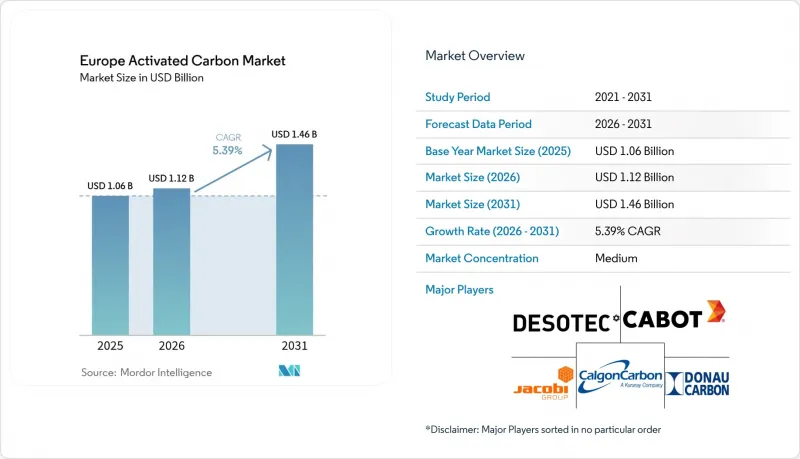
根據 Mordor Intelligence 預測,歐洲活性碳市場規模預計將在 2025 年達到 10.6 億美元,2026 年達到 11.2 億美元,到 2031 年達到 14.6 億美元,2026 年至 2031 年的複合年成長率為 5.39%。
本報告按類型(粉末活性碳、顆粒狀活性碳、擠壓/造粒活性碳)、應用(氣體淨化、水淨化、金屬提取、製藥及其他工業過程)和地區(德國、英國、法國、義大利、西班牙及其他歐洲國家)進行細分。市場預測以美元計價。
歐洲活性碳市場的趨勢與洞察
地方政府供水事業。
供水事業正在加快訂購符合2026年飲用水指令要求的設備,該指令規定2029年1月為PFAS監測和去除的具有法律約束力的最後期限。 2025年12月,德國聯邦環境署宣布,23%的地下水採樣井中PFAS含量已超過0.10微克/公升的限值,促使巴伐利亞州和黑森州啟動緊急競標。法國威立雅公司已投資8,500萬歐元,用於維修14座水質淨化廠,採用新型GAC(顆粒活性碳)層及PAC(聚合氯化鋁)注入式撬裝設備。該公司明確表示,傳統吸附劑無法達到短鏈PFAS的目標濃度。供應鏈前置作業時間已延長至2026年第三季度,產品規格現在強調使用椰殼衍生的中孔碳,這種材料對四碳PFBA分子具有更高的吸附能力。受此影響,顆粒活性碳(PAC)和顆粒活性碳(GAC)的現貨價格均顯著上漲,但鑑於違規罰款最高可達每次50萬歐元,公共產業似乎願意支付這些高價。這一趨勢為歐洲活性碳市場帶來了一定的短期成長動力,同時也凸顯了靈活計量技術的重要性。
煤炭和生質能混燒汞排放上限。
2024 年最佳利用技術 (BAT) 的結論大幅降低了 300 兆瓦以上大型燃燒電廠的汞排放限值,迫使業者將活性碳 (PAC) 的注入量增加一倍甚至兩倍。波蘭 PGE Energia 公司目前在其 Berchatow 和 Tulow 兩座電廠每年消耗 1200 噸溴化活性碳,以將廢氣中的汞濃度維持在 1 微克/標準立方公尺以下。 RWE 公司的 Neurath 褐煤聯合循環電廠也採取了類似的措施,擴大了其註入設施,並與特種碳供應商簽訂了多年供應合約。雖然溴化會使單位成本增加 30-40%,但在考慮歐盟排放交易體系 (EU-ETS) 下的碳排放權成本時,活性碳在生命週期成本模型中仍然比催化吸附劑更具優勢。小規模生質能混燒機組也面臨類似的挑戰。這些裝置本身汞含量基準較低,且原料波動較大,因此需要持續添加聚合活性碳作為安全措施。由此產生了持續且略微反週期的需求,從而促進了歐洲活性碳市場的收入多元化。
椰子殼和煤炭原料價格波動
2025年,颱風「瑪瓦魯」和氣旋「摩卡」擾亂了椰殼供應鏈,導致斯里蘭卡木炭出口下降24%,鹿特丹活性碳現貨價格從1月的每噸2100歐元上漲至9月的每噸2480歐元。受TTF天然氣期貨價格上漲的影響,無菸煤價格也隨之飆漲。 2025年12月,當天然氣價格達到每兆瓦時45歐元時,無菸煤價格較上季上漲14%。椰子和煤炭市場之間並無相關性,且避險選擇有限,供應商幾乎沒有辦法抵銷供應短缺的影響,導致整個歐洲活性碳產業的毛利率下降。採用固定價格競標的電力公司受到的衝擊最大,有時不得不援引不可抗力條款來彌補損失。
細分市場分析
預計到2025年,粉末活性碳(PAC)的銷售額將占到總量的47.65%,其在歐洲活性碳市場的佔有率預計將以5.67%的複合年成長率穩步成長,直至2031年。供水事業非常重視在檢測到河流來源的PFAS和土臭素後數小時內直接向化糞池添加PAC的能力,而固定台GAC系統則無法實現柔軟性。威立雅2025年的競標要求在48小時內交付3,200噸粉末活性碳(PAC),這凸顯了供應鏈應對力作為採購標準的一項重要考量。儘管GAC的成長速度有所放緩,但它仍然是持續淨化和工業再利用循環的核心。荷蘭Waternet公司最初投入了400萬歐元的資本,但將其主要處理設施更換為GAC後,年碳消耗量減少了35%。儘管擠壓成型和顆粒狀活性碳的市場佔有率仍然較小,但它對於需要低壓損的氣相VOC回收至關重要。卡博特公司推出的比表面積為1100 m²/g的木質顆粒提供了符合CBAM(碳邊界調整機制)要求的替代方案,並預示著原料發展的新趨勢。產品成分的這種演變凸顯了歐洲活性碳市場的深度。
其他好處:
- Excel格式的市場預測(ME)表
- 3個月的分析師支持
目錄
第1章:引言
- 研究假設和市場定義
- 調查範圍
第2章:調查方法
第3章執行摘要
第4章 市場狀況
- 市場概覽
- 市場促進因素
- 地方政府供水事業。
- 煤與生質能混燒汞排放上限
- 加強對地下水中 PFAS 移除的監管
- 再生碳重新運作服務合約正在蓬勃發展。
- 歐洲啤酒和硬蘇打水過濾線擴建
- 市場限制因素
- 椰子殼和煤炭原料價格波動
- 人工生物炭替代品的可用性
- 煤基燃料碳邊境調節機制(CBAM)的成本
- 價值鏈分析
- 波特五力模型
第5章 市場規模與成長預測
- 依產品類型
- 粉末活性碳(PAC)
- 顆粒活性碳(GAC)
- 擠出成型/顆粒狀活性碳
- 透過使用
- 水質淨化
- 氣體純化
- 金屬精煉
- 製藥
- 其他工業製程(溶劑回收和能量儲存)
- 按地區
- 德國
- 英國
- 法國
- 義大利
- 西班牙
- 其他歐洲國家
第6章 競爭情勢
- 市場集中度
- 策略趨勢
- 市佔率和排名分析
- 公司簡介
- AdFiS products GmbH
- Albemarle Corporation
- Cabot Corporation
- Calgon Carbon Corporation(Kuraray)
- Carbon Activated Corporation
- CarboTech Group
- Desotec
- Donau Carbon GmbH
- Haycarb PLC
- Ingevity
- JACOBI CARBONS GROUP
- KUREHA CORPORATION
- Norit
- Puragen
第7章 市場機會與未來展望
According to Mordor Intelligence, the Europe activated carbon market size is projected to be USD 1.06 billion in 2025, USD 1.12 billion in 2026, and reach USD 1.46 billion by 2031, growing at a CAGR of 5.39% from 2026 to 2031.
This report is Segmented by Type (Powdered Activated Carbons, Granular Activated Carbons, and Extruded or Pelletized Activated Carbons), Application (Gas Purification, Water Purification, Metal Extraction, Medicine, and Other Industrial Processes), and Geography (Germany, United Kingdom, France, Italy, Spain, and Rest of Europe). The Market Forecasts are Provided in Terms of Value (USD).
Europe Activated Carbon Market Trends and Insights
Surging Demand From Municipal Water Utilities
Utility buyers are front-loading orders to comply with the 2026 Drinking Water Directive, which fixes a binding deadline of January 2029 for PFAS monitoring and removal. Germany's Federal Environment Agency disclosed in December 2025 that 23% of sampled groundwater wells already exceed the 0.10 µg/L ceiling, prompting emergency tenders across Bavaria and Hesse. French operator Veolia committed EUR 85 million to retrofit 14 plants with fresh GAC beds and PAC-dosing skids, explicitly citing the inability of legacy media to meet short-chain PFAS targets. Supply-chain lead times have lengthened into Q3 2026, and product specifications now emphasize mesoporous carbons derived from coconut shell, which show higher uptake for four-carbon PFBA molecules. The ripple effect is a measurable uplift in spot pricing for both PAC and GAC, yet utilities appear willing to pay the premium because regulatory penalties for non-compliance can reach EUR 500,000 per incident. This dynamic injects near-term momentum into the Europe activated carbon market while foregrounding the importance of agile dosing technologies.
Mercury-Emissions Cap in Coal & Biomass Co-Firing
The 2024 BAT conclusions slashed mercury limits for large combustion plants above 300 MW th, compelling operators to double or even triple PAC injection rates. Poland's PGE Energia is now consuming 1,200 t of brominated PAC annually across Belchatow and Turow to hold stack concentrations below 1 µg/Nm3. RWE's Neurath lignite complex followed a similar path, scaling injection equipment and entering multi-year supply contracts with specialty carbon vendors. Bromination raises unit prices by 30%-40%, but life-cycle cost models still favor PAC over catalytic sorbents when carbon-allowance expenses under the EU-ETS are factored in. Smaller biomass co-firing units confront the same threshold; their inherently lower baseline mercury is offset by wide variability in feedstock, forcing continuous PAC dosing as a guardrail. The upshot is sustained, moderately counter-cyclical demand that shores up revenue diversity inside the Europe activated carbon market.
Price Volatility of Coconut-Shell & Coal Feedstocks
Typhoon Mawar and Cyclone Mocha disrupted coconut-shell supply chains in 2025, slashing Sri Lankan charcoal exports by 24% and sending Rotterdam PAC spot prices from EUR 2,100/t in January to EUR 2,480/t by September. Parallel spikes in anthracite followed TTF gas futures upward; when gas touched EUR 45/MWh in December 2025, anthracite climbed 14% month on month. Because coconut and coal markets are uncorrelated and lack hedging instruments, suppliers had little room to offset squeezes, narrowing gross margins across the Europe activated carbon industry. Utilities on fixed-price tenders bore the brunt, occasionally invoking force-majeure clauses to recover costs.
Other drivers and restraints analyzed in the detailed report include:
- Rising PFAS Removal Mandates in Groundwater
- Regenerative Carbon-Reactivation Service Contracts Gaining Traction
- Carbon Border Adjustment Mechanism Cost on Coal-Based Grades
For complete list of drivers and restraints, kindly check the Table Of Contents.
Segment Analysis
Powdered activated carbon controlled 47.65% of revenue in 2025, and its share of the Europe activated carbon market size is projected to increase steadily at a 5.67% CAGR to 2031. Water utilities value the ability to spike PAC directly into clarifiers within hours of detecting river-borne PFAS or geosmin episodes, a flexibility unattainable with fixed-bed GAC systems. Veolia's 2025 tender demanded 48-hour delivery for 3,200 t of PAC, underscoring how supply-chain responsiveness has become a procurement criterion. GAC, although slower growing, remains the backbone for continuous remediation and industrial reuse loops; Netherlands-based Waternet cut annual carbon consumption by 35% after switching a major plant to GAC despite paying EUR 4 million in upfront capex. Extruded and pelletized grades retain a smaller share but are indispensable in gas-phase VOC recovery where low pressure drop matters. Cabot's launch of a wood-based pellet with 1,100 m2/g surface area offered a CBAM-friendly alternative and illustrates feedstock migration trends. This product mix evolution reinforces the depth of the Europe activated carbon market.
Complete Report Scope:
- By Product Type
- Powdered Activated Carbon (PAC)
- Granular Activated Carbon (GAC)
- Extruded / Pelletized Activated Carbon
- By Application
- Water Purification
- Gas Purification
- Metal Purification
- Medicine
- Other Industrial Processes (solvent recovery and energy storage)
- By Geography
- Germany
- United Kingdom
- France
- Italy
- Spain
- Rest of Europe
List of Companies Covered in this Report:
- AdFiS products GmbH
- Albemarle Corporation
- Cabot Corporation
- Calgon Carbon Corporation (Kuraray)
- Carbon Activated Corporation
- CarboTech Group
- Desotec
- Donau Carbon GmbH
- Haycarb PLC
- Ingevity
- JACOBI CARBONS GROUP
- KUREHA CORPORATION
- Norit
- Puragen
Additional Benefits:
- The market estimate (ME) sheet in Excel format
- 3 months of analyst support
TABLE OF CONTENTS
1 Introduction
- 1.1 Study Assumptions & Market Definition
- 1.2 Scope of the Study
2 Research Methodology
3 Executive Summary
4 Market Landscape
- 4.1 Market Overview
- 4.2 Market Drivers
- 4.2.1 Surging demand from municipal water utilities
- 4.2.2 Mercury-emissions cap in coal & biomass co-firing
- 4.2.3 Rising PFAS removal mandates in groundwater
- 4.2.4 Regenerative carbon-reactivation service contracts gaining traction
- 4.2.5 Expansion of European beer & hard-seltzer filtration lines
- 4.3 Market Restraints
- 4.3.1 Price volatility of coconut-shell & coal feedstocks
- 4.3.2 Availability of engineered biochar substitutes
- 4.3.3 Carbon Border Adjustment Mechanism cost on coal-based grades
- 4.4 Value Chain Analysis
- 4.5 Porter's Five Forces
- 4.5.1 Bargaining Power of Suppliers
- 4.5.2 Bargaining Power of Buyers
- 4.5.3 Threat of New Entrants
- 4.5.4 Threat of Substitutes
- 4.5.5 Degree of Rivalry
5 Market Size & Growth Forecasts (Value)
- 5.1 By Product Type
- 5.1.1 Powdered Activated Carbon (PAC)
- 5.1.2 Granular Activated Carbon (GAC)
- 5.1.3 Extruded / Pelletized Activated Carbon
- 5.2 By Application
- 5.2.1 Water Purification
- 5.2.2 Gas Purification
- 5.2.3 Metal Purification
- 5.2.4 Medicine
- 5.2.5 Other Industrial Processes (solvent recovery and energy storage)
- 5.3 By Geography
- 5.3.1 Germany
- 5.3.2 United Kingdom
- 5.3.3 France
- 5.3.4 Italy
- 5.3.5 Spain
- 5.3.6 Rest of Europe
6 Competitive Landscape
- 6.1 Market Concentration
- 6.2 Strategic Moves
- 6.3 Market Share(%)/Ranking Analysis
- 6.4 Company Profiles (includes Global level Overview, Market level overview, Core Segments, Financials as available, Strategic Information, Products & Services, and Recent Developments)
- 6.4.1 AdFiS products GmbH
- 6.4.2 Albemarle Corporation
- 6.4.3 Cabot Corporation
- 6.4.4 Calgon Carbon Corporation (Kuraray)
- 6.4.5 Carbon Activated Corporation
- 6.4.6 CarboTech Group
- 6.4.7 Desotec
- 6.4.8 Donau Carbon GmbH
- 6.4.9 Haycarb PLC
- 6.4.10 Ingevity
- 6.4.11 JACOBI CARBONS GROUP
- 6.4.12 KUREHA CORPORATION
- 6.4.13 Norit
- 6.4.14 Puragen
7 Market Opportunities & Future Outlook
- 7.1 White-Space & Unmet-Need Assessment

 2026-2030年全球活性碳市場
 活性碳:市場佔有率分析、行業趨勢和統計數據、成長預測(2026-2031)美國活性碳:市場佔有率分析、行業趨勢和統計數據、成長預測(2026-2031)
 活性碳市場:2026-2032年全球市場預測(依產品類型、原料、孔徑分佈、活化製程、終端應用產業及應用領域分類)碳排放預測和情境建模軟體:市場佔有率分析、行業趨勢和統計數據、成長預測(2026-2031 年)
 煤的活性炭市場規模、佔有率和成長分析:按產品類型、活化製程、應用、終端用戶產業和地區分類-2026-2033年產業預測
 活性碳產品市場-全球產業規模、佔有率、趨勢、機會和預測:按原料、應用、分銷通路、地區和競爭格局分類,2021-2031年煤的活性炭:市場佔有率分析、產業趨勢與統計、成長預測(2026-2031)
 活性碳市場:依產品類型、原料類型、最終用戶和地區分類廢氣吸附淨化系統市場:依技術、吸附劑類型、產品類型、運作模式、流量、應用和最終用戶分類-2026-2032年全球預測