


 |
市場調查報告書
商品編碼
2120618
北美防護包裝:市佔率分析、產業趨勢與統計及成長預測(2026-2031 年)North America Protective Packaging - Market Share Analysis, Industry Trends & Statistics, Growth Forecasts (2026 - 2031) |
||||||

※ 本網頁內容可能與最新版本有所差異。詳細情況請與我們聯繫。
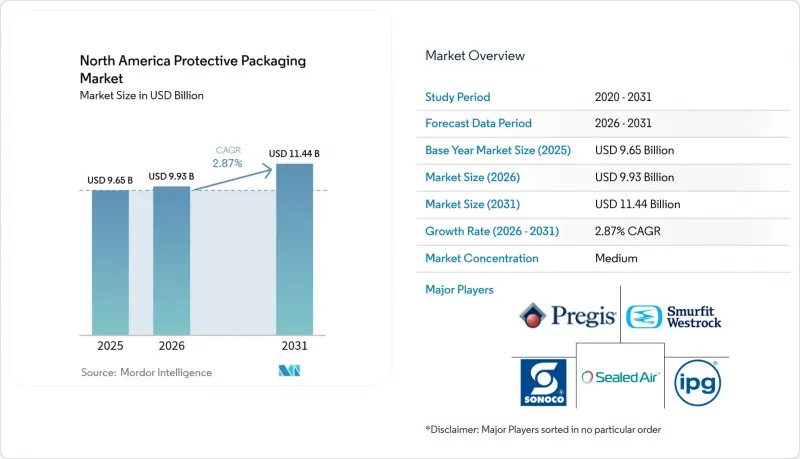
根據 Mordor Intelligence 預測,北美防護包裝市場規模將從 2025 年的 96.5 億美元成長到 2026 年的 99.3 億美元,到 2031 年將達到 114.4 億美元,2026 年至 2031 年的複合年成長率為 2.87%。
本報告按材料類型(紙張、塑膠、發泡材、生物基材料)、產品類型(硬質、軟質、發泡材)、功能(緩衝、填充縫隙、隔熱)、最終用戶(食品、工業、製藥、電子、電子商務)、技術(發泡、模塑紙漿、保溫容器)和地區進行細分。市場預測以美元(USD)為單位。
北美防護包裝市場趨勢及洞察
電子商務的蓬勃發展和小包裹處理量的增加。
小包裹量的激增持續重塑防護包裝市場的需求。自動化履約中心正利用預成型信封和空氣枕,將包裝時間縮短高達 40%,並確保及時送達。希悅爾公司 (Sealed Air) 預測,2024 年其電子商務銷售額將強勁成長,並指出與高速生產線無縫整合的自動化解決方案是成長要素。同時,零售商正廣泛採用體積最佳化軟體來減少空間浪費,從而在出貨量增加的同時降低材料用量。這種雙重趨勢推動了自動化配送的持續成長,同時限制了傳統填充材噸位的成長。
向永續和可回收材料過渡
儘管成本較高,但跨國公司對永續性的承諾正在加速纖維基和可堆肥解決方案的採用。雀巢公司已撥款15億歐元(16億美元)用於永續包裝,目標是在2025年前投資生物基緩衝材料和模塑紙漿內襯。加拿大衛生署將於2024年12月起禁止使用一次性塑膠,將淘汰多種化石基包裝形式,加速北美供應鏈的材料替代品。儘管成本溢價高達20-25%,但在品牌所有者的ESG目標和消費者偏好變化的推動下,植物來源薄膜、澱粉基緩衝材料和菌絲體緩衝材料的研發正在穩步推進。
對一次性塑膠製品和生物分解性制定嚴格的規定。
加拿大衛生署的禁令禁止使用塑膠購物袋、刀叉餐具和指定包裝形式,迫使加工商迅速重新設計產品,並承擔巨額研發成本。同時,美國環保署 (EPA)提案限制食品接觸塗層中的全氟烷基和多氟烷基物質 (PFAS),這將使傳統的含氟聚合物阻隔層無法用於保護性包裝。合規成本已佔研發預算的 8% 至 12%,而實施日期的不確定性也阻礙了對替代化學品的投資。
細分市場分析
預計到2025年,塑膠將佔銷售額的51.45%,並將繼續作為防護包裝市場中防潮和防穿刺屏障的重要組成部分。然而,受監管壓力和企業ESG目標的影響,生物基材料市場正以5.49%的複合年成長率快速成長。防護包裝產業在研發方面展現出強勁勢頭,向美國專利商標局(USPTO)提交的與PHA薄膜和菌絲泡沫相關的專利申請數量增加了35%。儘管價格溢價持續存在,製造商仍在增加對可擴展、可堆肥樹脂的資本投入。
紙質和模塑纖維替代品因其高可回收性而受益,但由於纖維價格波動,其成本優勢正在減弱。發泡塑膠因其處置難題而備受關注,但它們對於易碎和對溫度敏感的包裝而言仍具有寶貴的隔熱性能。防護包裝市場日益兩極化,一方面是高性能聚合物應用,另一方面是專注於永續性纖維或可堆肥材料的細分市場,像希悅爾這樣的製造商已投入1.5億美元用於循環材料的開發。
隨著電商出貨商尋求輕巧且易於自動化的包裝方案,預計到2025年,軟質郵袋、氣泡膜和氣空氣枕的銷售額將佔總銷售額的46.12%。以體積重量計費的運費進一步放大了這一優勢,推動了對小體積包裝解決方案的需求。由於醫藥冷鏈的擴展,發泡材也呈現成長勢頭,預計2031年將維持4.38%的年複合成長率(CAGR)。輝瑞公司斥資20億美元加強冷鏈的計畫凸顯了生物製藥產業對耐用隔熱材料的需求。
儘管硬質瓦楞紙板插片在工業供應鏈中仍佔據主導地位,但隨著原始設備製造商 (OEM) 為了滿足回收法規的要求而從 EPS 材料轉向纖維材料,模塑紙漿在電子產品領域的市場佔有率正在不斷成長。在防護包裝市場,智慧產品的可選升級功能日益普及,例如溫度感測器、QR碼追蹤和防篡改功能,這使得加工商提升銷售高性能產品。
其他福利
- Excel格式的市場預測(ME)表
- 3個月的分析師支持
目錄
第1章:引言
- 研究假設和市場定義
- 調查範圍
第2章:調查方法
第3章執行摘要
第4章 市場狀況
- 市場概覽
- 市場促進因素
- 電子商務的蓬勃發展和小包裹處理量的增加。
- 向永續和可回收材料過渡
- 食品和製藥領域冷鏈的擴展
- 貨運法規以重量與體積比為基礎,有利於輕巧且高度柔軟性的形式。
- 由於逆向物流的興起,對可重複使用防護材料的需求增加。
- 人工智慧驅動的履約中心現場包裝自動化
- 市場限制因素
- 對一次性塑膠製品和生物分解性制定嚴格的規定。
- 樹脂和纖維價格波動
- 透過最佳化倉庫容積來減少空置空間。
- 智慧包裝器材的高額資本支出(CAPEX)
- 產業價值鏈分析
- 波特五力分析
- 宏觀經濟因素對市場的影響
- 監理情勢
- 技術展望
第5章 市場規模與成長預測
- 依材料類型
- 紙張和紙板
- 塑膠
- 發泡塑膠
- 生物基和可堆肥材料
- 依產品類型
- 難的
- 紙板保護材料
- 模塑紙漿
- 保溫運輸貨櫃
- 柔軟的
- 防護郵寄袋
- 氣泡膜
- 空氣枕/氣囊
- 紙漿
- 發泡材
- 模壓發泡體
- 原位發泡(FIP)
- 散裝填充物
- 泡棉卷材
- 難的
- 按功能
- 緩衝
- 阻擋和支撐
- 填補空白
- 絕緣
- 包裝和表面保護
- 其他
- 按最終用戶行業分類
- 飲食
- 產業
- 製藥
- 家用電子產品
- 化妝品和居家醫療
- 電子商務與物流
- 其他終端用戶產業
- 透過技術
- 充氣的
- 模塑紙漿和纖維
- 懸浮/保持型包裝
- 保溫容器
- 緩衝材質和夾層墊
- 蜂窩紙解決方案
- 國家
- 美國
- 加拿大
- 墨西哥
第6章 競爭情勢
- 市場集中度
- 策略趨勢
- 市佔率分析
- 公司簡介
- Sealed Air Corporation
- Pregis LLC
- Sonoco Products Company
- Intertape Polymer Group Inc.
- Smurfit WestRock
- International Paper Company
- Amcor plc
- Storopack Hans Reichenecker GmbH
- Huhtamaki Oyj
- UFP Technologies, Inc.
- Ranpak Holdings Corp.
- Pro-Pac Packaging Limited
- 3M Company
- Mondi plc
- Veritiv Corporation
- ProAmpac LLC
- Dow Inc.
第7章 市場機會與未來展望
According to Mordor Intelligence, the North America protective packaging market size is expected to grow from USD 9.65 billion in 2025 to USD 9.93 billion in 2026 and is forecast to reach USD 11.44 billion by 2031 at 2.87% CAGR over 2026-2031.
This report is Segmented by Material Type (Paper, Plastics, Foam, and Bio-Based), Product Type (Rigid, Flexible, and Foam), Functionality (Cushioning, Void Fill, and Insulation), End-User (Food, Industrial, Pharma, Electronics, E-Commerce), Technology (Inflatable, Molded Pulp, and Insulated Containers), and Geography. The Market Forecasts are Provided in Terms of Value (USD).
North America Protective Packaging Market Trends and Insights
E-commerce boom and parcel-volume growth
Surging parcel volumes continue to redefine protective packaging market requirements. Automated fulfillment centers rely on pre-formed mailers and air pillows that cut packing time by up to 40%, keeping pace with same-day delivery promises. Sealed Air reported robust e-commerce sales in 2024, attributing growth to automation-ready solutions that integrate seamlessly with high-speed lines. Retailers, however, increasingly deploy cube-optimization software that trims excess void, reducing material intensity even as shipment counts climb. This duality sustains volume growth for automation-compatible formats while capping runaway tonnage gains for traditional void-fill.
Shift toward sustainable and recycled materials
Sustainability commitments from multinationals accelerate the adoption of fiber-based and compostable solutions despite cost premiums. Nestle earmarked EUR 1.5 billion (USD 1.6 billion) for sustainable packaging through 2025, funneling funds toward bio-based cushioning and molded-pulp inserts. Health Canada's single-use plastics prohibition, effective December 2024, eliminates several fossil-based formats, prompting rapid material substitution across North American supply chains. Despite 20-25% cost premiums, brand-owner ESG targets and consumer preference shifts underpin a steady pipeline of plant-derived films, starch loose-fill, and mycelium cushioning.
Stringent regulations on single-use plastics and degradability
Health Canada's prohibition eliminates checkout bags, cutlery, and defined packaging types, forcing rapid reformulation and significant R&D outlays for converters. Simultaneously, the U.S. EPA proposed limits on PFAS in food-contact coatings, removing conventional fluoropolymer barriers from the protective packaging toolbox. Compliance spending already absorbs 8-12% of development budgets, and uncertainty over enforcement timelines postpones investment in alternative chemistries.
Other drivers and restraints analyzed in the detailed report include:
- Cold-chain expansion in food and pharma
- Dim-weight freight rules favoring light flexible formats
- Volatile resin and fiber prices
For complete list of drivers and restraints, kindly check the Table Of Contents.
Segment Analysis
Plastics secured 51.45% of 2025 revenue and remain indispensable for moisture and puncture barriers in the protective packaging market. However, the bio-based segment advances at a 5.49% CAGR, reflecting regulatory pressure and corporate ESG targets. The protective packaging industry logged a 35% rise in USPTO patent filings for PHA films and mycelium foams, signaling R&D momentum. Producers channel capex toward scalable compostable resins even as price premiums persist.
Paper and molded-fiber alternatives benefit from recyclability perceptions, though fiber price volatility narrows cost advantages. Foam plastics face scrutiny for disposal challenges yet retain irreplaceable insulation properties for fragile or temperature-sensitive loads. The protective packaging market is increasingly split into high-performance polymer applications and sustainability-driven fiber or compostable niches, with converters like Sealed Air earmarking USD 150 million for circular-material development.
Flexible mailers, bubble wrap, and air pillows captured 46.12% of 2025 revenue as e-commerce shippers chase lightweight, automation-friendly options. Dim-weight freight economics amplify this edge, reinforcing demand for low-cube solutions. Foam regained momentum through pharmaceutical cold-chain expansion, registering the highest 4.38% CAGR outlook to 2031. Pfizer's USD 2 billion cold-chain push underscores durable insulation demand for biologics.
Rigid corrugated inserts persist in industrial supply chains, while molded pulp gains share in electronics as OEMs swap EPS for fiber to meet recycling mandates. The protective packaging market sees discretionary upgrades toward smart variants embedding temperature sensors, QR tracking, and tamper evidence, enabling converters to upsell performance without proportionate material increases.
Complete Report Scope:
- By Material Type
- Paper and Paperboard
- Plastics
- Foam Plastics
- Bio-based and Compostable Materials
- By Product Type
- Rigid
- Corrugated Paperboard Protectors
- Molded Pulp
- Insulated Shipping Containers
- Flexible
- Protective Mailers
- Bubble Wraps
- Air Pillows/Air Bags
- Paper Fill
- Foam
- Molded Foam
- Foam-in-Place (FIP)
- Loose Fill
- Foam Rolls/Sheets
- Rigid
- By Functionality
- Cushioning
- Blocking and Bracing
- Void Fill
- Insulation
- Wrapping and Surface Protection
- Other Functionalities
- By End-user Vertical
- Food and Beverage
- Industrial
- Pharmaceuticals
- Consumer Electronics
- Cosmetics and Home Care
- E-commerce and Logistics
- Other End-user Verticals
- By Packaging Technology
- Inflatable Packaging Systems
- Molded Pulp and Fiber-based Systems
- Suspension and Retention Packaging
- Insulated Shipping Containers
- Dunnage and Layer Pads
- Honeycomb Paper Solutions
- By Country
- United States
- Canada
- Mexico
List of Companies Covered in this Report:
- Sealed Air Corporation
- Pregis LLC
- Sonoco Products Company
- Intertape Polymer Group Inc.
- Smurfit WestRock
- International Paper Company
- Amcor plc
- Storopack Hans Reichenecker GmbH
- Huhtamaki Oyj
- UFP Technologies, Inc.
- Ranpak Holdings Corp.
- Pro-Pac Packaging Limited
- 3M Company
- Mondi plc
- Veritiv Corporation
- ProAmpac LLC
- Dow Inc.
Additional Benefits:
- The market estimate (ME) sheet in Excel format
- 3 months of analyst support
TABLE OF CONTENTS
1 INTRODUCTION
- 1.1 Study Assumptions and Market Definition
- 1.2 Scope of the Study
2 RESEARCH METHODOLOGY
3 EXECUTIVE SUMMARY
4 MARKET LANDSCAPE
- 4.1 Market Overview
- 4.2 Market Drivers
- 4.2.1 E-commerce boom and parcel-volume growth
- 4.2.2 Shift toward sustainable and recycled materials
- 4.2.3 Cold-chain expansion in food and pharma
- 4.2.4 Dim-weight freight rules favoring light flexible formats
- 4.2.5 Reverse-logistics uptick demanding re-usable protection
- 4.2.6 On-site AI-driven packaging automation at fulfilment hubs
- 4.3 Market Restraints
- 4.3.1 Stringent regulations on single-use plastics and degradability
- 4.3.2 Volatile resin and fiber prices
- 4.3.3 Warehouse cube-optimization reducing void-fill volumes
- 4.3.4 High CAPEX for smart-packaging machinery
- 4.4 Industry Value Chain Analysis
- 4.5 Porter's Five Forces Analysis
- 4.5.1 Bargaining Power of Suppliers
- 4.5.1.1 Bargaining Power of Buyers
- 4.5.1.2 Threat of New Entrants
- 4.5.1.3 Threat of Substitutes
- 4.5.1.4 Intensity of Competitive Rivalry
- 4.5.1 Bargaining Power of Suppliers
- 4.6 The Impact of Macroeconomic Factors on the Market
- 4.7 Regulatory Landscape
- 4.8 Technological Outlook
5 MARKET SIZE AND GROWTH FORECASTS (VALUE)
- 5.1 By Material Type
- 5.1.1 Paper and Paperboard
- 5.1.2 Plastics
- 5.1.3 Foam Plastics
- 5.1.4 Bio-based and Compostable Materials
- 5.2 By Product Type
- 5.2.1 Rigid
- 5.2.1.1 Corrugated Paperboard Protectors
- 5.2.1.2 Molded Pulp
- 5.2.1.3 Insulated Shipping Containers
- 5.2.2 Flexible
- 5.2.2.1 Protective Mailers
- 5.2.2.2 Bubble Wraps
- 5.2.2.3 Air Pillows/Air Bags
- 5.2.2.4 Paper Fill
- 5.2.3 Foam
- 5.2.3.1 Molded Foam
- 5.2.3.2 Foam-in-Place (FIP)
- 5.2.3.3 Loose Fill
- 5.2.3.4 Foam Rolls/Sheets
- 5.2.1 Rigid
- 5.3 By Functionality
- 5.3.1 Cushioning
- 5.3.2 Blocking and Bracing
- 5.3.3 Void Fill
- 5.3.4 Insulation
- 5.3.5 Wrapping and Surface Protection
- 5.3.6 Other Functionalities
- 5.4 By End-user Vertical
- 5.4.1 Food and Beverage
- 5.4.2 Industrial
- 5.4.3 Pharmaceuticals
- 5.4.4 Consumer Electronics
- 5.4.5 Cosmetics and Home Care
- 5.4.6 E-commerce and Logistics
- 5.4.7 Other End-user Verticals
- 5.5 By Packaging Technology
- 5.5.1 Inflatable Packaging Systems
- 5.5.2 Molded Pulp and Fiber-based Systems
- 5.5.3 Suspension and Retention Packaging
- 5.5.4 Insulated Shipping Containers
- 5.5.5 Dunnage and Layer Pads
- 5.5.6 Honeycomb Paper Solutions
- 5.6 By Country
- 5.6.1 United States
- 5.6.2 Canada
- 5.6.3 Mexico
6 COMPETITIVE LANDSCAPE
- 6.1 Market Concentration
- 6.2 Strategic Moves
- 6.3 Market Share Analysis
- 6.4 Company Profiles (includes Global level Overview, Market level overview, Core Segments, Financials as available, Strategic Information, Market Rank/Share for key companies, Products and Services, and Recent Developments)
- 6.4.1 Sealed Air Corporation
- 6.4.2 Pregis LLC
- 6.4.3 Sonoco Products Company
- 6.4.4 Intertape Polymer Group Inc.
- 6.4.5 Smurfit WestRock
- 6.4.6 International Paper Company
- 6.4.7 Amcor plc
- 6.4.8 Storopack Hans Reichenecker GmbH
- 6.4.9 Huhtamaki Oyj
- 6.4.10 UFP Technologies, Inc.
- 6.4.11 Ranpak Holdings Corp.
- 6.4.12 Pro-Pac Packaging Limited
- 6.4.13 3M Company
- 6.4.14 Mondi plc
- 6.4.15 Veritiv Corporation
- 6.4.16 ProAmpac LLC
- 6.4.17 Dow Inc.
7 MARKET OPPORTUNITIES AND FUTURE OUTLOOK
- 7.1 White-space and Unmet-Need Assessment

 2026-2030年全球紙張護角市場
 瓦楞紙棧板市場規模、佔有率、成長、全球產業分析、區域趨勢及2026-2034年預測。
 防護包裝:市場佔有率分析、產業趨勢與統計、成長預測(2026-2031)
 防護包裝市場:全球預測,2026-2032年
 全球防護包裝市場全球防護包裝市場:市場規模、佔有率、趨勢和成長分析(2026-2034)
 2026年全球夾層托盤門網市場報告
 2034年防護包裝市場預測-按產品類型、材料類型、功能、分銷管道、最終用戶和地區分類的全球分析
 防護包裝市場機會、成長要素、產業趨勢分析及2026-2035年預測防護包裝市場規模、佔有率、成長及全球產業分析:按類型、應用和地區分類的洞察,2026-2034 年預測