


 |
市場調查報告書
商品編碼
2120405
防護包裝:市場佔有率分析、產業趨勢與統計、成長預測(2026-2031)Protective Packaging - Market Share Analysis, Industry Trends & Statistics, Growth Forecasts (2026 - 2031) |
||||||

※ 本網頁內容可能與最新版本有所差異。詳細情況請與我們聯繫。
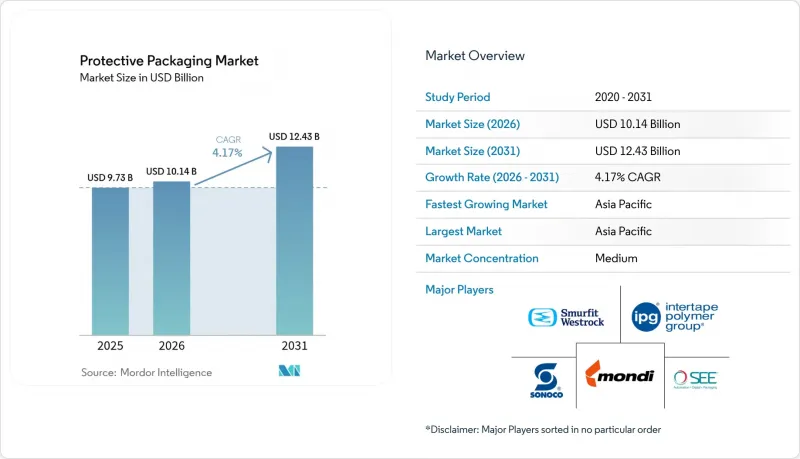
根據 Mordor Intelligence 預測,防護包裝市場規模將從 2025 年的 97.3 億美元成長到 2026 年的 101.4 億美元,然後在 2031 年達到 124.3 億美元,2026 年至 2031 年的複合年成長率為 4.17%。
本報告按產品類型(硬質、軟質、發泡)、材料(紙、塑膠、發泡聚合物、可生物分解材料)、功能(緩衝、填充縫隙、包裝、其他)、終端用戶產業(食品飲料、電子、製藥、電子商務)和地區(北美、歐洲、亞太、中東和非洲、南美)進行細分。市場預測以美元(USD)計價。
全球防護包裝市場趨勢及洞察
電子商務出貨量激增
小包裹的快速成長重塑了防護包裝市場的物流結構,迫使品牌商減少包裝體積,並轉向符合承運商體積重量標準的紡織材料。惠普重新設計了其一體機電腦的包裝,減少了98%的發泡聚乙烯用量,體積減少了高達67%,同時提高了27吋機型的托盤裝載密度,從而降低了運輸成本和碳排放。羅技計畫在2025年前完成全線產品包裝的紙質化,每年減少660噸塑膠垃圾和6,000噸二氧化碳排放量。此外,61%的受訪買家傾向於使用可回收包裝材料。因此,品牌商不再僅僅將防護包裝市場視為一項成本支出,而是將其視為在「送貨上門經濟」時代維繫客戶維繫的重要手段。
推動制定相關法規,以提高產品安全性並減少損害
新法規的範圍已超越可回收性,將包裝視為消費者安全的重要組成部分。歐洲的《通用產品安全法規》(GPSR) 要求製造商檢驗包裝的完整性,確保其能防止污染和竄改。賽默飛世爾科技的瓦楞紙箱具備防篡改功能,可承受低至-80 度C的低溫,無需黏合劑,並且可根據不同尺寸的管瓶進行擴展。在美國,序列化法規要求在包裝上整合追蹤碼和緩衝材料,從而推動了對智慧標籤的需求。合規時間表要求製造商在實施前數年就開始為防護性包裝市場做好準備。
針對塑膠和EPS的嚴格環境法規
在歐洲,到2040年將回收率提高到15%的強制性要求以及對某些PFAS(保護性葉酸)的禁用,正在推動材料替代的即時推進,加重了生產者延伸責任制(EPR)的成本負擔,並擠壓了加工商的利潤空間。在英國,EPR將於2025年10月實施,這意味著全部處置成本將轉嫁給品牌商;而在加州,除非能夠證明產品將作為生活垃圾收集,否則使用回收標誌將受到限制。這些措施增加了合規成本,延長了發泡材設備投資的回收期,並減緩了防護包裝市場的成長速度。
細分市場分析
在防護包裝市場,預計到2025年,軟包裝將佔銷售額的64.88%,這反映出其能夠以最小的體積處理大量小包裹,並降低運輸成本。發泡體包裝雖然目前規模仍然較小,但其成長速度正在加快,預計到2031年將以6.52%的複合年成長率成長,這主要得益於電子和生物製藥行業對具有靜電放電(ESD)防護功能的客製化模具的需求。隨著冷鏈的發展,發泡材防護包裝市場預計將進一步擴張,這將使發泡材製造商能夠根據其高阻隔性能設定溢價。
Sealed Air 的「KORRVU」懸吊系統證明,紙張和瓦楞紙板可以複製泡棉的回彈力,使其能夠在家中回收,並可實現扁平包裝運輸,從而降低運輸成本。同時,硬質瓦楞紙板在大型白色家電和機械設備中仍然發揮著至關重要的作用,因為這些設備對承載能力要求很高。產品組合也呈現明顯的差異。軟性產品滿足了電子商務降低成本的需求,而科技泡棉則在那些需要精準緩衝和隔熱且價格較高的領域表現出色。
儘管到2025年塑膠仍將佔總處理量的57.70%,但發泡聚合物預計將以7.06%的複合年成長率成為成長最快的材料,這主要得益於高附加價值電子和生命科學領域的成長。大麥衍生生質塑膠和再生聚乙烯薄膜正在試驗生產線上擴大生產規模,證明了其大規模應用的可行性。雖然生物複合材料在防護包裝市場的佔有率仍然小規模,但隨著食品和製藥採購商對可堆肥或生物基密封劑的需求不斷成長,其市場佔有率正在擴大。
紙張和紙板加工商正在改進阻隔塗層,使纖維包裝材料能夠防潮防油。維吉尼亞大學的低壓纖維素處理技術增強了紙張強度,同時保持了透明度,使其更適合用於生鮮食品的「商店展示」。透過將這些技術進步與碳足跡揭露相結合,製造商正在將材料創新轉化為防護包裝市場的採購優勢。
區域分析
預計到2025年,亞太地區將佔全球銷售額的40.05%,年複合成長率達7.41%,這主要得益於該地區製造業的集中、行動裝置的快速普及以及扶持性政策(儘管這些政策本身也日益嚴格)。中國佔全球塑膠產量的一半,為加工商提供了豐富的在地採購樹脂來源;而日本正在探索能夠滿足高階電子產品出口商需求的發泡紙。為了確保防護包裝市場能夠跟上跨境電商蓬勃發展的步伐,各國政府正試行對自動化包裝生產線的補貼。
北美地區的優質化趨勢仍在持續。惠普和亞馬遜等美國品牌正在試驗推行「零塑膠」計劃,這些計劃隨後將推廣至全球,使北美成為這一趨勢的領導者。以加州SB 343法案為開端,各州將陸續引入「生產者延伸責任制(EPR)」法規,強制要求到2026年實現可回收性標籤化,並為保護性包裝市場的早期採用者提供激勵措施。加拿大正在推廣閉合迴路紙張回收,而墨西哥則透過近岸外包擴大家電和電子產品的出口,增加了工廠對緩衝材料的需求。
歐洲在監管發展方面處於主導。 《包裝及包裝廢棄物條例》設定了回收和再利用率的配額,已成為全球採購政策的標竿。德國的押金制度和英國的塑膠稅正在加速纖維材料的普及應用。由於市場參與企業必須應對因不同聚合物而異的複雜環境調整費用,跨國公司正將其研發中心集中到該地區,以實現面向未來的配方。因此,全面合規性是整個防護包裝市場競爭優勢的關鍵。
其他好處:
- Excel格式的市場預測(ME)表
- 3個月的分析師支持
目錄
第1章:引言
- 研究假設和市場定義
- 調查範圍
第2章:調查方法
第3章執行摘要
第4章 市場狀況
- 市場概覽
- 市場促進因素
- 電子商務出貨量激增
- 監管機構為提高產品安全性和減輕危害所做的努力
- 家用電器需求不斷成長
- 偏好輕便柔軟性的防護形式
- 按需包裝自動化的引入
- 擴大冷鏈生技藥品和疫苗的供應
- 市場限制因素
- 對塑膠和EPS(聚苯乙烯泡沫塑膠)有嚴格的環境法規。
- 原物料價格波動
- 都市區最後一公里配送中心的空間限制
- 產品重新設計最大限度地減少了對保護性包裝的需求。
- 供應鏈分析
- 監理情勢
- 技術展望
- 波特五力分析
第5章 市場規模與成長預測
- 依產品類型
- 死板的
- 紙板保護材料
- 模塑紙漿
- 保溫運輸貨櫃
- 其他剛性類型
- 靈活的
- 防護郵寄袋
- 氣泡膜
- 空氣枕/氣囊
- 紙漿
- 其他軟性包裝類型(鋁箔袋、拉伸膜和收縮膜)
- 形式
- 模壓發泡體
- 原位發泡(FIP)
- 散裝填充物
- 泡棉捲/片
- 其他形狀類型(例如角塊)
- 死板的
- 材料
- 紙張和紙板
- 塑膠
- 聚乙烯(PE)
- 聚丙烯(PP)
- 聚對苯二甲酸乙二醇酯(PET)
- 發泡聚合物
- 發泡聚苯乙烯(EPS)
- 發泡聚乙烯(EPE)
- 發泡聚丙烯(EPP)
- 可生物分解和可堆肥
- 模塑纖維
- 澱粉類
- 聚乳酸(PLA)
- 其他材料
- 按功能
- 緩衝功能
- 阻擋和支撐
- 填充物
- 隔熱和溫度控制
- 包裝
- 墊材等人
- 按最終用戶行業分類
- 食品/飲料
- 工業產品
- 製藥和生命科學
- 家用電子產品
- 美容及居家護理
- 汽車和航太
- 電子商務與零售履約
- 其他終端用戶產業
- 按地區
- 北美洲
- 美國
- 加拿大
- 墨西哥
- 歐洲
- 德國
- 英國
- 法國
- 義大利
- 西班牙
- 俄羅斯
- 其他歐洲國家
- 亞太地區
- 中國
- 日本
- 印度
- 韓國
- 澳洲和紐西蘭
- 其他亞太國家
- 中東和非洲
- 中東
- 沙烏地阿拉伯
- 阿拉伯聯合大公國
- 土耳其
- 其他中東國家
- 非洲
- 南非
- 埃及
- 奈及利亞
- 其他非洲國家
- 中東
- 南美洲
- 巴西
- 阿根廷
- 智利
- 其他南美國家
- 北美洲
第6章 競爭情勢
- 市場集中度
- 策略趨勢
- 市佔率分析
- 公司簡介
- Sealed Air Corporation
- Pregis LLC
- Intertape Polymer Group Inc.
- Sonoco Products Company
- Smurfit Westrock
- Mondi Group
- International Paper Company
- Storopack Hans Reichenecker GmbH
- Ranpak Holdings Corp.
- Huhtamaki Oyj
- Signode Industrial Group LLC
- Crown Holdings Inc.
- Amcor plc
- Pro-Pac Packaging Ltd.
- ProAmpac Holdings Inc.
- Reflex Packaging LLC
- Pactiv Evergreen Inc.
- AirPack Systems Ltd.
- Polyair Inter Pack Inc.
第7章 市場機會與未來展望
According to Mordor Intelligence, the protective packaging market size is expected to grow from USD 9.73 billion in 2025 to USD 10.14 billion in 2026 and is forecast to reach USD 12.43 billion by 2031 at 4.17% CAGR over 2026-2031.
This report is Segmented by Product Type (Rigid, Flexible, Foam), Materials (Paper, Plastics, Foam Polymers, Biodegradable), Function (Cushioning, Void Fill, Wrapping, Others), End-User Industry (Food & Beverage, Electronics, Pharmaceuticals, E-Commerce), and Geography (North America, Europe, Asia-Pacific, MEA, South America). Market Forecasts are in Value (USD).
Global Protective Packaging Market Trends and Insights
Surging E-commerce Shipping Volumes
Exponential parcel growth is redefining protective packaging market logistics, compelling brands to shrink cube sizes and pivot toward fiber formats that meet carrier dimensional weight thresholds. HP's redesign of its All-in-One PC packaging eliminated 98% of expanded polyethylene, reduced volume by up to 67%, and raised pallet density for the 27-inch model, trimming freight spend and carbon load. Logitech completed a portfolio-wide switch to paper in 2025, removing 660 tons of plastic and 6,000 tons of CO2 each year, while 61% of surveyed buyers favored recyclable packs . Brands thus regard the protective packaging market not only as a cost line but as a retention lever in a doorstep economy.
Regulatory Push for Product Safety and Damage Reduction
New statutes go beyond recyclability to treat packaging as intrinsic to consumer safety. Europe's General Product Safety Regulation obliges manufacturers to validate that pack integrity prevents contamination or tampering.Thermo Fisher's carton with built-in tamper evidence withstands -80 °C, discards glue, and scales across vial sizes. In the United States, serialization laws link tracking codes with cushioning layers, catalyzing smart-label demand. Compliance timetables push producers to confirm protective packaging market readiness years ahead of enforcement.
Stringent Environmental Rules on Plastics and EPS
Europe mandates reusable targets climbing to 15% by 2040 and bans certain PFAS, triggering immediate material substitutions and extended-producer fees that squeeze converters' margins. The United Kingdom's October 2025 EPR rollout shifts full disposal costs onto brands, while California restricts the recycling symbol unless curbside acceptance is documented. These moves inflate compliance costs and lengthen payback periods for foam installations, dragging on the protective packaging market growth curve.
Other drivers and restraints analyzed in the detailed report include:
- Growing Consumer Electronics Demand
- Preference for Lightweight Flexible Protective Formats
- Raw-material Price Volatility
For complete list of drivers and restraints, kindly check the Table Of Contents.
Segment Analysis
Flexible formats generated 64.88% of 2025 sales within the protective packaging market, reflecting their ability to serve high-volume parcels with minimal cube and lower freight spend. Foam categories, though smaller, are accelerating at 6.52% CAGR toward 2031 as electronics and biologics rely on custom molds with electrostatic discharge yields. The protective packaging market size for foam is projected to widen in tandem with cold-chain expansion, positioning foam makers for premium pricing aligned with higher barrier performance.
Sealed Air's KORRVU suspension format illustrates how paper and corrugate can mimic foam resilience, offering curbside recyclability and shipping flat to cut inbound freight. Rigid corrugated, meanwhile, remains relevant for large white-goods and machinery where stacking strength matters. The product mix signals a divide: flexibles satisfy cost-down mandates in e-commerce, whereas technical foams win where precision cushioning and thermal insulation command a price premium.
Plastics still supplied 57.70% of 2025 tonnage, yet foam polymers log the quickest 7.06% CAGR, tracking growth in high-value electronics and life sciences. Barley-based bioplastics and recycled polyethylene films are scaling pilot lines, proving viability for mass adoption. Protective packaging market share for biocomposites remains modest but expands as food and pharma buyers seek compostable or bio-based seals.
Paper and board converters upgrade barrier coatings so that fiber wraps repel moisture and grease. Virginia Tech's low-pressure cellulose treatment strengthens paper while preserving transparency, unlocking shelf-ready appeal for perishables. Producers bundle such advances with carbon footprint disclosures, translating material innovation into procurement gains within the protective packaging market.
Complete Report Scope:
- By Product Type
- Rigid
- Corrugated Paperboard Protectors
- Molded Pulp
- Insulated Shipping Containers
- Other Rigid Types
- Flexible
- Protective Mailers
- Bubble Wrap
- Air Pillows / Air Bags
- Paper Fill
- Other Flexible Types (Foil Pouches, Stretch and Shrink Films)
- Foam
- Molded Foam
- Foam-in-Place (FIP)
- Loose Fill
- Foam Rolls / Sheets
- Other Foam Types (Corner Blocks etc.)
- Rigid
- By Materials
- Paper and Paperboard
- Plastics
- Polyethylene (PE)
- Polypropylene (PP)
- Polyethylene Terephthalate (PET)
- Foam Polymers
- Expanded Polystyrene (EPS)
- Expanded Polyethylene (EPE)
- Expanded Polypropylene (EPP)
- Biodegradable and Compostable
- Molded Fiber
- Starch-based
- Polylactic Acid (PLA)
- Other Materials
- By Function
- Cushioning
- Blocking and Bracing
- Void Fill
- Insulation and Temperature Control
- Wrapping
- Dunnage and Others
- By End-user Industry
- Food and Beverage
- Industrial Goods
- Pharmaceuticals and Life Sciences
- Consumer Electronics
- Beauty and Home Care
- Automotive and Aerospace
- E-commerce and Retail Fulfilment
- Other End-user Industry
- By Geography
- North America
- United States
- Canada
- Mexico
- Europe
- Germany
- United Kingdom
- France
- Italy
- Spain
- Russia
- Rest of Europe
- Asia-Pacific
- China
- Japan
- India
- South Korea
- Australia and New Zealand
- Rest of Asia-Pacific
- Middle East and Africa
- Middle East
- Saudi Arabia
- United Arab Emirates
- Turkey
- Rest of Middle East
- Africa
- South Africa
- Egypt
- Nigeria
- Rest of Africa
- Middle East
- South America
- Brazil
- Argentina
- Chile
- Rest of South America
- North America
Geography Analysis
Asia-Pacific controlled 40.05% revenue in 2025 and is set for 7.41% CAGR, underpinned by dense manufacturing, rapid mobile penetration, and supportive yet tightening policy. China funnels half of global plastic output, offering localized resin access that favors converters, while Japan advances foamed paper research that can satisfy premium electronics exporters. Countries pilot government subsidies for automated packing lines, ensuring the protective packaging market keeps pace with cross-border e-commerce surges.
North America follows through premiumization. United States brands like HP and Amazon test zero-plastic pilots that later migrate worldwide, positioning the region as a trend bellwether. State-level Extended Producer Responsibility rules, beginning with California SB 343, compel recyclability declarations by 2026, rewarding early adopters in the protective packaging market. Canada promotes closed-loop paper recycling, whereas Mexico leverages near-shoring to grow appliance and electronics exports, widening demand for in-plant cushioning.
Europe leads rulemaking. The Packaging and Packaging Waste Regulation locks in recyclability and reuse quotas that benchmark global sourcing policies. Germany's deposit systems and the UK's plastic tax accelerate fiber uptake. Market entrants must navigate complex eco-modulation fees that vary by polymer, so multinationals cluster R&D hubs in the region to future-proof formulations. Compliance mastery therefore becomes a commercial edge across the protective packaging market.
- Sealed Air Corporation
- Pregis LLC
- Intertape Polymer Group Inc.
- Sonoco Products Company
- Smurfit Westrock
- Mondi Group
- International Paper Company
- Storopack Hans Reichenecker GmbH
- Ranpak Holdings Corp.
- Huhtamaki Oyj
- Signode Industrial Group LLC
- Crown Holdings Inc.
- Amcor plc
- Pro-Pac Packaging Ltd.
- ProAmpac Holdings Inc.
- Reflex Packaging LLC
- Pactiv Evergreen Inc.
- AirPack Systems Ltd.
- Polyair Inter Pack Inc.
Additional Benefits:
- The market estimate (ME) sheet in Excel format
- 3 months of analyst support
TABLE OF CONTENTS
1 INTRODUCTION
- 1.1 Study Assumptions and Market Definition
- 1.2 Scope of the Study
2 RESEARCH METHODOLOGY
3 EXECUTIVE SUMMARY
4 MARKET LANDSCAPE
- 4.1 Market Overview
- 4.2 Market Drivers
- 4.2.1 Surging e-commerce shipping volumes
- 4.2.2 Regulatory push for product safety and damage reduction
- 4.2.3 Growing consumer electronics demand
- 4.2.4 Preference for lightweight flexible protective formats
- 4.2.5 Adoption of on-demand packaging automation
- 4.2.6 Expansion of cold-chain biologics and vaccines
- 4.3 Market Restraints
- 4.3.1 Stringent environmental rules on plastics and EPS
- 4.3.2 Raw-material price volatility
- 4.3.3 Space constraints at urban last-mile hubs
- 4.3.4 Product redesign minimising protective-packaging need
- 4.4 Supply-Chain Analysis
- 4.5 Regulatory Landscape
- 4.6 Technological Outlook
- 4.7 Porter's Five Forces Analysis
- 4.7.1 Bargaining Power of Suppliers
- 4.7.2 Bargaining Power of Buyers
- 4.7.3 Threat of New Entrants
- 4.7.4 Threat of Substitute Products
- 4.7.5 Intensity of Competitive Rivalry
5 MARKET SIZE AND GROWTH FORECASTS (VALUE)
- 5.1 By Product Type
- 5.1.1 Rigid
- 5.1.1.1 Corrugated Paperboard Protectors
- 5.1.1.2 Molded Pulp
- 5.1.1.3 Insulated Shipping Containers
- 5.1.1.4 Other Rigid Types
- 5.1.2 Flexible
- 5.1.2.1 Protective Mailers
- 5.1.2.2 Bubble Wrap
- 5.1.2.3 Air Pillows / Air Bags
- 5.1.2.4 Paper Fill
- 5.1.2.5 Other Flexible Types (Foil Pouches, Stretch and Shrink Films)
- 5.1.3 Foam
- 5.1.3.1 Molded Foam
- 5.1.3.2 Foam-in-Place (FIP)
- 5.1.3.3 Loose Fill
- 5.1.3.4 Foam Rolls / Sheets
- 5.1.3.5 Other Foam Types (Corner Blocks etc.)
- 5.1.1 Rigid
- 5.2 By Materials
- 5.2.1 Paper and Paperboard
- 5.2.2 Plastics
- 5.2.2.1 Polyethylene (PE)
- 5.2.2.2 Polypropylene (PP)
- 5.2.2.3 Polyethylene Terephthalate (PET)
- 5.2.3 Foam Polymers
- 5.2.3.1 Expanded Polystyrene (EPS)
- 5.2.3.2 Expanded Polyethylene (EPE)
- 5.2.3.3 Expanded Polypropylene (EPP)
- 5.2.4 Biodegradable and Compostable
- 5.2.4.1 Molded Fiber
- 5.2.4.2 Starch-based
- 5.2.4.3 Polylactic Acid (PLA)
- 5.2.5 Other Materials
- 5.3 By Function
- 5.3.1 Cushioning
- 5.3.2 Blocking and Bracing
- 5.3.3 Void Fill
- 5.3.4 Insulation and Temperature Control
- 5.3.5 Wrapping
- 5.3.6 Dunnage and Others
- 5.4 By End-user Industry
- 5.4.1 Food and Beverage
- 5.4.2 Industrial Goods
- 5.4.3 Pharmaceuticals and Life Sciences
- 5.4.4 Consumer Electronics
- 5.4.5 Beauty and Home Care
- 5.4.6 Automotive and Aerospace
- 5.4.7 E-commerce and Retail Fulfilment
- 5.4.8 Other End-user Industry
- 5.5 By Geography
- 5.5.1 North America
- 5.5.1.1 United States
- 5.5.1.2 Canada
- 5.5.1.3 Mexico
- 5.5.2 Europe
- 5.5.2.1 Germany
- 5.5.2.2 United Kingdom
- 5.5.2.3 France
- 5.5.2.4 Italy
- 5.5.2.5 Spain
- 5.5.2.6 Russia
- 5.5.2.7 Rest of Europe
- 5.5.3 Asia-Pacific
- 5.5.3.1 China
- 5.5.3.2 Japan
- 5.5.3.3 India
- 5.5.3.4 South Korea
- 5.5.3.5 Australia and New Zealand
- 5.5.3.6 Rest of Asia-Pacific
- 5.5.4 Middle East and Africa
- 5.5.4.1 Middle East
- 5.5.4.1.1 Saudi Arabia
- 5.5.4.1.2 United Arab Emirates
- 5.5.4.1.3 Turkey
- 5.5.4.1.4 Rest of Middle East
- 5.5.4.2 Africa
- 5.5.4.2.1 South Africa
- 5.5.4.2.2 Egypt
- 5.5.4.2.3 Nigeria
- 5.5.4.2.4 Rest of Africa
- 5.5.4.1 Middle East
- 5.5.5 South America
- 5.5.5.1 Brazil
- 5.5.5.2 Argentina
- 5.5.5.3 Chile
- 5.5.5.4 Rest of South America
- 5.5.1 North America
6 COMPETITIVE LANDSCAPE
- 6.1 Market Concentration
- 6.2 Strategic Moves
- 6.3 Market Share Analysis
- 6.4 Company Profiles (includes Global level Overview, Market level overview, Core Segments, Financials as available, Strategic Information, Market Rank/Share for key companies, Products and Services, and Recent Developments)
- 6.4.1 Sealed Air Corporation
- 6.4.2 Pregis LLC
- 6.4.3 Intertape Polymer Group Inc.
- 6.4.4 Sonoco Products Company
- 6.4.5 Smurfit Westrock
- 6.4.6 Mondi Group
- 6.4.7 International Paper Company
- 6.4.8 Storopack Hans Reichenecker GmbH
- 6.4.9 Ranpak Holdings Corp.
- 6.4.10 Huhtamaki Oyj
- 6.4.11 Signode Industrial Group LLC
- 6.4.12 Crown Holdings Inc.
- 6.4.13 Amcor plc
- 6.4.14 Pro-Pac Packaging Ltd.
- 6.4.15 ProAmpac Holdings Inc.
- 6.4.16 Reflex Packaging LLC
- 6.4.17 Pactiv Evergreen Inc.
- 6.4.18 AirPack Systems Ltd.
- 6.4.19 Polyair Inter Pack Inc.
7 MARKET OPPORTUNITIES AND FUTURE OUTLOOK
- 7.1 White-space and Unmet-need Assessment

 2026-2030年全球紙張護角市場
 瓦楞紙棧板市場規模、佔有率、成長、全球產業分析、區域趨勢及2026-2034年預測。
 北美防護包裝:市佔率分析、產業趨勢與統計及成長預測(2026-2031 年)
 防護包裝市場:全球預測,2026-2032年
 全球防護包裝市場全球防護包裝市場:市場規模、佔有率、趨勢和成長分析(2026-2034)
 2026年全球夾層托盤門網市場報告
 2034年防護包裝市場預測-按產品類型、材料類型、功能、分銷管道、最終用戶和地區分類的全球分析
 防護包裝市場機會、成長要素、產業趨勢分析及2026-2035年預測防護包裝市場規模、佔有率、成長及全球產業分析:按類型、應用和地區分類的洞察,2026-2034 年預測