


 |
市場調查報告書
商品編碼
2120386
北美無菌包裝:市場佔有率分析、產業趨勢與統計及成長預測(2026-2031 年)North America Aseptic Packaging - Market Share Analysis, Industry Trends & Statistics, Growth Forecasts (2026 - 2031) |
||||||

※ 本網頁內容可能與最新版本有所差異。詳細情況請與我們聯繫。
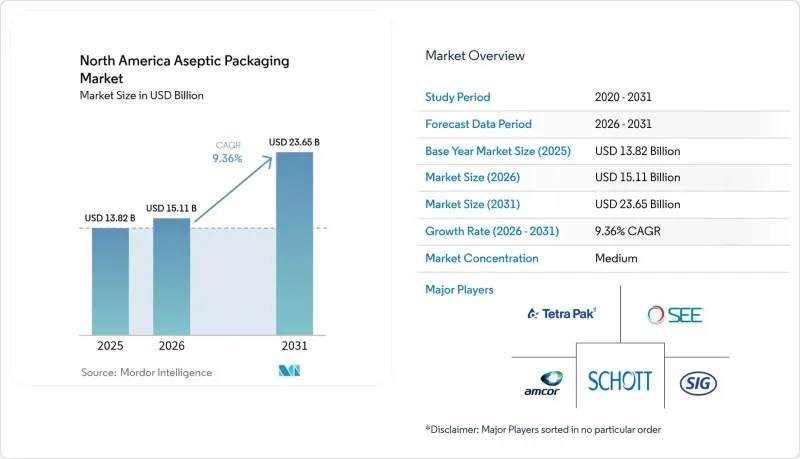
根據 Mordor Intelligence 預測,北美無菌包裝市場規模將從 2025 年的 138.2 億美元成長到 2026 年的 151.1 億美元,然後在 2031 年達到 236.5 億美元,2026 年至 2031 年的複合年成長率為 9.36%。
本報告按包裝材料(紙和紙板、塑膠、玻璃、鋁箔和金屬、多層複合材料)、產品類型(瓶、紙盒、袋和包裝袋等)、終端用戶行業(製藥、飲料、食品及其他)、技術(無菌液體包裝、吹灌封等)以及國家/地區進行細分。市場預測以美元計價。
北美無菌包裝市場趨勢及洞察
降低冷鏈物流成本的需求日益成長
由於溫控運輸佔分銷預算的15%至25%,取消冷藏可以迅速提高利潤率。例如,從墨西哥進口的牛奶如果採用常溫運輸,可以避免每公升0.15至0.30美元的運費附加費。雀巢公司計劃在2025年至2027年間投資10億美元在墨西哥興建無菌包裝生產線,以充分利用此成本節約效應。類似的計算也適用於美國農村地區,這些地區的冷藏倉庫有限。而加拿大乳製品生產商則依賴常溫包裝將產品運送到偏遠的北部社區,這些地區的物流成本往往高於產品價格。在柴油價格上漲和司機長期短缺的背景下,北美無菌包裝市場正透過縮短冷藏運輸距離來獲得持續優勢。
優先選擇保存期限為12個月或以上的產品。
由於疫情期間囤積食品導致大宗購買,都市區市場上的常溫保存產品價格上漲了20%至30%。利樂公司的一項調查顯示,67%的家庭更重視產品的保存期限而非品牌忠誠度。在製藥業,肖特製藥公司在北卡羅來納州新建了一座價值3.71億美元的工廠,將在室溫下穩定保存36個月的注射器產量提高了兩倍。都市區消費者將更長的保存期限與便利性和緊急準備聯繫起來,促使飲料生產商重新配製能夠耐受室溫儲存的產品。因此,北美無菌包裝市場正從超市貨架和醫院庫存中獲得成長動力。
無菌灌裝生產線需要高額資本投入和較長的投資回收期。
承包系統的成本在1000萬美元到5000萬美元之間,加上製藥業驗證所需的200萬美元到500萬美元,投資回收期為7到10年。規模小規模的加工商難以資金籌措如此龐大的支出,尤其考慮到技術人員的薪資高出25%到30%。租賃模式大多不適用於客製化的無菌灌裝設備,因此企業擴張主要依賴併購或股權資金籌措。結果,儘管需求激增,但產業整合仍在進行,北美無菌包裝市場的成長速度正在放緩。
細分市場分析
預計到2025年,紙板將佔銷售額的61.78%。這清楚地表明了成熟的供應鏈以及消費者對可再生纖維的信心。此外,該領域符合各州關於再生材料含量的法規,為北美無菌包裝市場提供了監管方面的利多。同時,受製藥業對化學惰性需求的推動,玻璃預計到2031年將以10.24%的複合年成長率成長。康寧公司的Valor玻璃等創新技術解決了長期存在的分層問題,而肖特公司的預滅菌管瓶則縮短了填充和封裝流程。塑膠在軟包裝領域仍佔有一席之地,但對一次性產品的更嚴格審查正在阻礙其成長。鋁箔仍然是確保敏感生技藥品超低氧滲透性的關鍵材料。多層複合材料兼具這些特性,但面臨前文所述的回收挑戰。總體而言,北美無菌包裝產業的材料選擇取決於在無菌性、永續性和成本目標之間取得平衡。
展望未來,玻璃包裝正展現出超越其小眾定位的潛力。製藥廠商看重其與冷凍乾燥生物製劑的兼容性以及對萃取物的耐受性,因此即使重量稍重也無妨。同時,飲料品牌繼續使用紙盒包裝常溫果汁、植物奶和湯品,因為紙盒的纖維特性更受消費者青睞。在監管壓力日益增大的情況下,聚合物容器並未被完全淘汰,而是逐漸轉向生物基塗層。這些趨勢共同推動了基材的多樣化,從而保護了北美無菌包裝市場免受原料價格波動的影響。
紙盒憑藉數十年來在常溫飲料生產線上的應用以及高效的托盤利用率,在2025年佔總出貨量的41.95%。然而,管瓶和小瓶以10.79%的複合年成長率超越其他所有包裝形式,這主要得益於生技藥品注射市場的成長,而這類注射劑需要無菌初級包裝。該細分市場受益於「即用型」包裝,交付清洗和熱封處理,縮短了製藥公司的生產週期。吹灌封式單劑量包裝也因其無需針頭操作而受到疫苗項目的關注。因此,製藥業正推動北美無菌包裝市場朝著更小的包裝容器和更高的單位價值發展。
瓶裝產品適用於高階冷萃咖啡和營養奶昔等需要使用厚玻璃或PET材質的產品。袋裝產品則適用於湯料和醬料品牌,這些產品需要輕巧且靈活的包裝。同時,整合到新型填充頭中的線上人工智慧檢測技術,透過顯著降低無菌缺陷率,進一步提升了產品的差異化優勢。因此,隨著各個產品類別競相利用便利性或合規性來爭奪市場佔有率,高度靈活的生產平台對於加工商而言已成為至關重要的策略選擇。
其他好處:
- Excel格式的市場預測(ME)表
- 3個月的分析師支持
目錄
第1章:引言
- 研究假設和市場定義
- 調查範圍
第2章:調查方法
第3章執行摘要
第4章 市場狀況
- 市場概覽
- 市場促進因素
- 降低冷鏈物流成本的需求日益成長
- 最好選擇保存期限為 12 個月或以上的產品。
- 印刷和輕型格式的永續發展舉措
- 美國乳製品廠無菌生產能力迅速擴張
- 對生技藥品和需要無菌包裝的即用型注射藥物的需求激增。
- 人工智慧驅動的線上無菌監測可減少產品召回。
- 市場限制因素
- 無菌灌裝生產線需要高額資本投入和較長的投資回收期。
- 複雜的多材料回收基礎設施存在缺口
- 因污染導致的召回正在削弱品牌信譽和盈利能力。
- 聚合物和紙板價格飆升,給工商帶來了壓力。
- 產業價值鏈分析
- 波特五力分析
- 宏觀經濟因素對市場的影響
- 監理情勢
第5章 市場規模與成長預測
- 透過包裝材料
- 紙張和紙板
- 塑膠
- 玻璃
- 鋁箔/金屬
- 多層複合材料
- 依產品類型
- 瓶子
- 紙盒
- 袋子和小袋
- 病毒安瓿
- 其他產品類型
- 按最終用戶行業分類
- 製藥
- 飲料
- 果汁飲料
- 牛奶和其他乳類飲料
- 即飲型(RTD)
- 其他類型的飲料
- 食物
- 主要由水果製成的食品
- 乳製品
- 加工食品
- 湯和肉湯
- 其他食物類型
- 個人護理化妝品
- 產業
- 其他終端用戶產業
- 透過技術
- 無菌液體包裝
- 吹灌封(BFS)
- 泡棉填充密封(FFS)
- 電子束滅菌
- 超高溫滅菌(UHT)/高溫瞬時滅菌(HTST)
- 國家
- 美國
- 加拿大
- 墨西哥
第6章 競爭情勢
- 市場集中度
- 策略趨勢
- 市佔率分析
- 公司簡介
- Tetra Pak International SA
- SIG Combibloc Group AG
- Amcor plc
- Sealed Air Corporation
- Smurfit WestRock
- Schott AG
- Scholle IPN Corporation
- International Paper Company
- Elopak ASA
- Mondi plc
- Reynolds Group Holdings Ltd.
- Sonoco Products Company
- Stora Enso Oyj
- UFlex Limited
- Greatview Aseptic Packaging Co., Ltd.
- Ecolean AB
- Graphic Packaging Holding Company
第7章 市場機會與未來展望
According to Mordor Intelligence, the North America aseptic packaging market size is expected to grow from USD 13.82 billion in 2025 to USD 15.11 billion in 2026 and is forecast to reach USD 23.65 billion by 2031 at 9.36% CAGR over 2026-2031.
This report is Segmented by Packaging Material (Paper and Paperboard, Plastics, Glass, Aluminum Foil/Metal, and Multilayer Composites), Product Type (Bottles, Cartons, Bags and Pouches, and More), End-User Industry (Pharmaceutical, Beverage, Food, and More), Technology (Aseptic Liquid Packaging, Blow-Fill-Seal, and More), and Country. The Market Forecasts are Provided in Terms of Value (USD).
North America Aseptic Packaging Market Trends and Insights
Growing Demand to Cut Cold-Chain Logistics Costs
Temperature-controlled transport absorbs 15-25% of distribution budgets, so eliminating refrigeration quickly improves margins. Mexican milk imports, for instance, avoid USD 0.15-0.30 per liter in freight premiums when shipped ambient. Nestle has earmarked USD 1 billion for aseptic lines in Mexico between 2025 and 2027 to exploit the savings. Rural U.S. counties with limited cold storage echo the calculus, while Canadian dairies rely on shelf-stable packs to reach remote northern communities where logistics costs often exceed product value. As diesel prices and driver shortages linger, the North America aseptic packaging market finds a durable advantage in cutting refrigerated miles.
Preference for Products with >=12-Month Shelf Life
Bulk buying expanded during pandemic pantry stocking, and ambient-stable items now fetch 20-30% mark-ups in city markets. Tetra Pak surveys show 67% of households rank shelf life above brand loyalty. In pharma, SCHOTT Pharma's USD 371 million North Carolina plant triples syringe output that holds room-temperature stability for 36 months. Urban shoppers equate longer life with convenience and emergency readiness, prompting beverage reformulations that withstand ambient warehousing. As a result, the North America aseptic packaging market gains momentum from both grocery aisles and hospital inventories.
High Cap-Ex and Long ROI for Aseptic Filling Lines
Turnkey systems cost USD 10-50 million, and pharmaceutical validation adds another USD 2-5 million, extending payback to 7-10 years. Smaller processors struggle to finance such outlays, especially when technical talent commands 25-30% wage premiums. Leasing models seldom suit bespoke aseptic rigs, so mergers and private equity funding dominate expansion. Consolidation, therefore, rises even as demand surges, tempering the growth curve of the North America aseptic packaging market.
Other drivers and restraints analyzed in the detailed report include:
- Sustainability Push for Paper-Based and Lightweight Formats
- Rapid Expansion of Aseptic Capacity in U.S. Dairy Plants
- Complex Multi-Material Recycling Infrastructure Gaps
For complete list of drivers and restraints, kindly check the Table Of Contents.
Segment Analysis
Paperboard contributed 61.78% revenue in 2025, a testament to entrenched supply chains and consumer trust in renewable fibers. The segment also aligns with state recycled-content statutes, adding regulatory tailwind to the North America aseptic packaging market. Yet glass records a 10.24% CAGR through 2031, propelled by pharma's need for chemical inertness. Innovations such as Corning Valor Glass solve historic delamination issues, while SCHOTT's pre-sterilized vials shrink fill-finish steps. Plastics keep a foothold in flexibles, but single-use scrutiny caps upside. Aluminum foil remains essential for ultra-low oxygen transmission in sensitive biologics. Multilayer composites blend these attributes but confront recycling headwinds already outlined. Overall, material choice in the North America aseptic packaging industry depends on striking an equilibrium among sterility, sustainability, and cost targets.
The outlook shows glass emerging from niche status. Pharma manufacturers value its compatibility with lyophilized biologics and its immunity to extractables, justifying higher weight penalties. Conversely, beverage brands retain paper cartons for ambient juices, plant milks, and broths where fiber-based stories resonate with shoppers. Polymer barrels of regulatory pressure spur a gradual pivot toward bio-based coatings rather than outright abandonment. Collectively, these currents reinforce a diversified substrate mix that shields the North America aseptic packaging market from raw-material shocks.
Cartons captured 41.95% of 2025 volume thanks to decades-old shelf-stable beverage lines and efficient pallet utilization. Nonetheless, vials and ampoules outpace all other formats at a 10.79% CAGR, buoyed by expanding biologic injections that need pristine primary packs. The segment benefits from ready-to-use configurations that arrive washed and depyrogenated, trimming drugmaker cycle times. Blow-fill-seal single-dose designs also attract vaccine programs that require needle-free workstreams. Consequently, pharmaceuticals tilt the North America aseptic packaging market toward container miniaturization and higher unit value.
Bottles serve premium cold brew coffees and nutritional shakes that justify heavier glass or PET. Pouches address soup and sauce brands needing flexible geometry at low gram weight. Meanwhile, in-line AI inspection embedded in new filling heads adds another layer of differentiation by slashing sterile failure rates. Every product family, therefore, jockeys for share via either convenience or compliance, making adaptive production platforms a strategic must for converters.
Complete Report Scope:
- By Packaging Material
- Paper and Paperboard
- Plastics
- Glass
- Aluminum Foil/Metal
- Multilayer Composites
- By Product Type
- Bottles
- Cartons
- Bags and Pouches
- Vials and Ampoules
- Other Product Types
- By End-User Industry
- Pharmaceutical
- Beverage
- Fruit-based Drinks
- Milk and Other Dairy Beverages
- Ready-to-Drink (RTD)
- Other Beverage Types
- Food
- Fruit-based Foods
- Dairy Food
- Processed Foods
- Soups and Broths
- Other Food Types
- Personal Care and Cosmetics
- Industrial
- Other End-User Industries
- By Technology
- Aseptic Liquid Packaging
- Blow-Fill-Seal (BFS)
- Form-Fill-Seal (FFS)
- Electron-Beam Sterilization
- Ultra-High-Temperature (UHT) / HTST
- By Country
- United States
- Canada
- Mexico
List of Companies Covered in this Report:
- Tetra Pak International S.A.
- SIG Combibloc Group AG
- Amcor plc
- Sealed Air Corporation
- Smurfit WestRock
- Schott AG
- Scholle IPN Corporation
- International Paper Company
- Elopak ASA
- Mondi plc
- Reynolds Group Holdings Ltd.
- Sonoco Products Company
- Stora Enso Oyj
- UFlex Limited
- Greatview Aseptic Packaging Co., Ltd.
- Ecolean AB
- Graphic Packaging Holding Company
Additional Benefits:
- The market estimate (ME) sheet in Excel format
- 3 months of analyst support
TABLE OF CONTENTS
1 INTRODUCTION
- 1.1 Study Assumptions and Market Definition
- 1.2 Scope of the Study
2 RESEARCH METHODOLOGY
3 EXECUTIVE SUMMARY
4 MARKET LANDSCAPE
- 4.1 Market Overview
- 4.2 Market Drivers
- 4.2.1 Growing demand to cut cold-chain logistics costs
- 4.2.2 Preference for products with >=12-month shelf life
- 4.2.3 Sustainability push for paper-based and lightweight formats
- 4.2.4 Rapid expansion of aseptic capacity in U.S. dairy plants
- 4.2.5 Surge in biologics and RTU injectables needing sterile packs
- 4.2.6 AI-enabled inline sterility monitoring reducing recalls
- 4.3 Market Restraints
- 4.3.1 High cap-ex and long ROI for aseptic filling lines
- 4.3.2 Complex multi-material recycling infrastructure gaps
- 4.3.3 Contamination recalls eroding brand trust and margins
- 4.3.4 Rising polymer and paperboard prices squeezing converters
- 4.4 Industry Value Chain Analysis
- 4.5 Porter's Five Forces Analysis
- 4.5.1 Bargaining Power of Suppliers
- 4.5.2 Bargaining Power of Buyers
- 4.5.3 Threat of New Entrants
- 4.5.4 Threat of Substitute Products
- 4.5.5 Intensity of Competitive Rivalry
- 4.6 Impact of Macroeconomic Factors on the Market
- 4.7 Regulatory Landscape
5 MARKET SIZE AND GROWTH FORECASTS (VALUE)
- 5.1 By Packaging Material
- 5.1.1 Paper and Paperboard
- 5.1.2 Plastics
- 5.1.3 Glass
- 5.1.4 Aluminum Foil/Metal
- 5.1.5 Multilayer Composites
- 5.2 By Product Type
- 5.2.1 Bottles
- 5.2.2 Cartons
- 5.2.3 Bags and Pouches
- 5.2.4 Vials and Ampoules
- 5.2.5 Other Product Types
- 5.3 By End-User Industry
- 5.3.1 Pharmaceutical
- 5.3.2 Beverage
- 5.3.2.1 Fruit-based Drinks
- 5.3.2.2 Milk and Other Dairy Beverages
- 5.3.2.3 Ready-to-Drink (RTD)
- 5.3.2.4 Other Beverage Types
- 5.3.3 Food
- 5.3.3.1 Fruit-based Foods
- 5.3.3.2 Dairy Food
- 5.3.3.3 Processed Foods
- 5.3.3.4 Soups and Broths
- 5.3.3.5 Other Food Types
- 5.3.4 Personal Care and Cosmetics
- 5.3.5 Industrial
- 5.3.6 Other End-User Industries
- 5.4 By Technology
- 5.4.1 Aseptic Liquid Packaging
- 5.4.2 Blow-Fill-Seal (BFS)
- 5.4.3 Form-Fill-Seal (FFS)
- 5.4.4 Electron-Beam Sterilization
- 5.4.5 Ultra-High-Temperature (UHT) / HTST
- 5.5 By Country
- 5.5.1 United States
- 5.5.2 Canada
- 5.5.3 Mexico
6 COMPETITIVE LANDSCAPE
- 6.1 Market Concentration
- 6.2 Strategic Moves
- 6.3 Market Share Analysis
- 6.4 Company Profiles (includes Global level Overview, Market level overview, Core Segments, Financials as available, Strategic Information, Market Rank/Share for key companies, Products and Services, and Recent Developments)
- 6.4.1 Tetra Pak International S.A.
- 6.4.2 SIG Combibloc Group AG
- 6.4.3 Amcor plc
- 6.4.4 Sealed Air Corporation
- 6.4.5 Smurfit WestRock
- 6.4.6 Schott AG
- 6.4.7 Scholle IPN Corporation
- 6.4.8 International Paper Company
- 6.4.9 Elopak ASA
- 6.4.10 Mondi plc
- 6.4.11 Reynolds Group Holdings Ltd.
- 6.4.12 Sonoco Products Company
- 6.4.13 Stora Enso Oyj
- 6.4.14 UFlex Limited
- 6.4.15 Greatview Aseptic Packaging Co., Ltd.
- 6.4.16 Ecolean AB
- 6.4.17 Graphic Packaging Holding Company
7 MARKET OPPORTUNITIES AND FUTURE OUTLOOK
- 7.1 White-space and Unmet-need Assessment

 2026-2030年全球無菌包裝市場
 無菌包裝:市場佔有率分析、產業趨勢與統計、成長預測(2026-2031)
 無菌包裝市場:2026-2032年全球市場預測(依產品類型、材料、滅菌方法、填充技術、應用、最終用戶及通路分類)
 2026 年至 2035 年無菌加工包裝材料的市場機會、成長促進因素、產業趨勢分析與預測。
 2034年乳製品無菌包裝市場預測-按包裝形式、材料、技術、產品類型、最終用戶和地區分類的全球分析
 無菌包裝市場報告:按類型、材料、應用和地區分類(2026-2034 年)
 全球無菌包裝市場分析:市場規模、佔有率、應用及預測(2018-2034)
 無菌包裝市場:依材料、類型、應用、地區分類全球無菌包裝市場:市場規模、趨勢與預測(2034 年)
 無菌包裝食品市場規模、佔有率和成長分析:按材料類型、包裝類型、應用、最終用途和地區分類-2026-2033年產業預測