


 |
市場調查報告書
商品編碼
2119080
南美洲水耕技術:市場佔有率分析、產業趨勢與統計、成長預測(2026-2031)South America Hydroponics - Market Share Analysis, Industry Trends & Statistics, Growth Forecasts (2026 - 2031) |
||||||

※ 本網頁內容可能與最新版本有所差異。詳細情況請與我們聯繫。
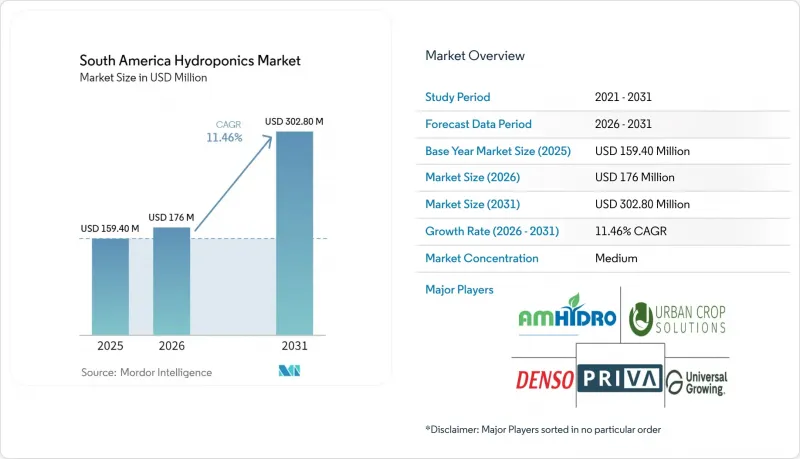
根據 Mordor Intelligence 預測,南美水耕市場規模預計將在 2025 年達到 1.594 億美元,從 2026 年的 1.76 億美元成長到 2031 年的 3.028 億美元,在 2026 年至 2031 年的預測成長率內,1.46%將達到 1.46%。
本報告按系統類型(整合系統、液體系統、滴灌系統)、栽培方式(商業溫室、垂直農場、室內農場、貨櫃農場)、作物類型(綠葉蔬菜、香草、番茄、黃瓜、草莓等)和地區(巴西、阿根廷、智利等)進行細分。市場預測以美元計價。
南美水耕市場的趨勢與洞察
新鮮、無農藥農產品的需求日益成長
消費者對新鮮、無農藥蔬菜的偏好日益成長,正加速水耕技術在南美洲的普及。這一趨勢在尋求持續高品質、可追溯農產品的零售商和餐飲服務企業中尤其明顯。水耕技術能夠在可控環境中實現全年生產,同時最大限度地減少土壤傳播害蟲的侵害。根據巴西國家衛生監督局(ANVISA)的農藥殘留分析計畫(PARA)的數據,在分析的3084份食品樣本中,有20.6%的樣本農藥殘留超標,這凸顯了消費者和零售商對食品安全和無殘留農產品的重視。這一趨勢正在推動全部區域對水耕綠葉蔬菜和香草的需求。資料來源:巴西國家衛生監督局(ANVISA),農藥殘留分析計畫(PARA),2025年。
水資源短缺及高效用水的必要性
隨著水資源短缺促使生產者尋求能夠最大限度提高用水效率的生產系統,水耕技術在南美洲的商業前景日益光明。水耕技術透過循環營養液,與傳統的土壤耕作相比,能夠顯著減少水分流失,同時確保作物在可控環境下穩定生長。根據聯合國糧食及農業組織(糧農組織)發布的《2025年水資源資料簡介》(AQUASTAT Water Data Snapshot 2025),淡水資源壓力持續上升。該報告於2024年更新,數據顯示,在那些取水量經常超過可再生淡水供應的國家,水資源壓力處於「高」或「極高」水平。這一趨勢正在推動全部區域對節水型水耕系統的投資。
缺乏受控環境農業的專業知識
南美洲缺乏可控環境農業的技術專長,持續限制水耕技術的應用。水耕技術需要營養管理、pH值調節、水質管理、氣候控制和病蟲害防治等方面的專業技能,這些都與傳統農業實踐截然不同。據阿根廷國家農業技術研究所(INTA)(2025)稱,該研究所已專門為南極水耕模組(MAPHI)開設了操作人員培訓課程,培訓內容包括水耕系統操作、營養液配製和設備管理。這種專業培訓的需求反映出熟練操作人員的短缺,這增加了水耕技術推廣的風險,並減緩了其在全部區域的商業化發展。
細分市場分析
到2025年,聚合式水耕系統將佔據南美水耕市場48.2%的最大佔有率。這些系統仍然是首選的生產方式,因為它們能夠提供穩定的根系支撐,並且與全部區域已建立的溫室栽培體系相容。透過使用岩絨、椰糠和珍珠岩等栽培基質,種植者可以在可控條件下種植蔬菜和水果,同時降低生產風險。聚合式水耕系統的柔軟性使其能夠逐步擴展,而無需大規模的基礎設施改造,因此非常適合尋求可靠作物產量、高效養分管理和全年穩定生產的商業種植者。
預計2026年至2031年間,滴灌系統將以15.1%的複合年成長率(CAGR)達到最高成長。這些系統透過可控制的發送器將養分直接輸送到根系區域,在提高作物產量的同時,最大限度地減少水肥流失。滴灌系統與自動化施肥系統的兼容性、精準的養分管理以及對番茄、黃瓜、辣椒、草莓和香草等高價值作物的適應性,正推動著商業種植戶的廣泛應用。預計對溫室基礎設施、節水耕作技術和精密農業的投資增加,將進一步推動滴灌系統在南美洲的持續普及。
其他好處:
- Excel格式的市場預測(ME)表
- 3個月的分析師支持
目錄
第1章:引言
- 市場分析與定義的前提條件
- 分析範圍
第2章 分析方法
第3章執行摘要
第4章 市場狀況
- 市場概覽
- 市場促進因素
- 對不含農藥的新鮮農產品的需求日益成長
- 水資源短缺及高效用水的必要性
- 城市農業和短距離供應鏈的擴張
- 氣候變遷的嚴峻性正在推動保護性耕作方式的普及。
- 巴西和智利商業溫室部署現狀
- 技術成本降低,使得人們更容易取得可控環境農業。
- 市場限制因素
- 需要大量的初始資金。
- 空調系統的能源強度
- 缺乏受控環境下的農業技術專業知識
- 外匯波動和對進口設備的依賴
- 監理情勢
- 技術展望
- 價值鍊和供應鏈分析
- 波特五力分析
第5章:預測市場規模與成長率
- 依系統類型
- 整合系統
- 液體系統
- 滴灌系統
- 依栽培方式類型
- 商業溫室
- 垂直農業
- 室內農場
- 貨櫃農場
- 按作物類型
- 綠葉蔬菜
- 草藥
- 番茄
- 黃瓜
- 草莓
- 其他作物類型
- 按地區
- 巴西
- 阿根廷
- 智利
- 其他南美國家
第6章 競爭情勢
- 策略趨勢
- 市佔率分析
- 公司簡介
- Grupo HidroGood
- H2H Hidroponia
- Hidroponia FIL
- Ramos Hidroponicos
- Mundo Hidroponia
- Universal Growing
- Vequa Hidroponia
- HidroBio SA
- AmHydro, LLC
- Urban Crop Solutions NV
- Certhon Build BV(DENSO Corporation)
- Priva Holding BV
第7章 市場機會與未來展望
According to Mordor Intelligence, the South America hydroponics market was valued at USD 159.40 million in 2025 and is projected to grow from USD 176.0 million in 2026 to USD 302.80 million by 2031, at a CAGR of 11.46% during the forecast period from 2026 to 2031.
This report is Segmented by System Type (Aggregate Systems, Liquid Systems, and Drip Systems), by Farming Type (Commercial Greenhouses, Vertical Farms, Indoor Farms, and Container Farms), by Crop Type (Leafy Vegetables, Herbs, Tomatoes, Cucumbers, Strawberries, and More), and by Geography (Brazil, Argentina, Chile, and More). The Market Forecasts are Provided in Terms of Value (USD).
South America Hydroponics Market Trends and Insights
Rising Demand for Pesticide-Free Fresh Produce
Growing consumer preference for pesticide-free fresh vegetables is accelerating hydroponic adoption across South America, particularly among retailers and food service operators seeking consistent, traceable produce. Hydroponic cultivation minimizes exposure to soil-borne pests while enabling year-round production in controlled environments. According to the Brazilian Health Regulatory Agency (ANVISA) Pesticide Residue Analysis Program (PARA), 20.6% of the 3,084 food samples analyzed showed non-compliance with pesticide regulations, highlighting consumer and retailer focus on food safety and residue-free produce. This trend is driving demand for hydroponically grown leafy vegetables and herbs across the region. Source: Brazilian Health Regulatory Agency (ANVISA), Pesticide Residue Analysis Program (PARA), 2025.
Water Scarcity and Efficient Water Use Requirements
Water scarcity is strengthening the business case for hydroponic farming across South America as growers seek production systems that maximize water efficiency. Hydroponic cultivation recirculates nutrient solutions, significantly reducing water losses compared to conventional soil-based agriculture while ensuring consistent crop growth under controlled conditions. According to the Food and Agriculture Organization of the United Nations (FAO) AQUASTAT Water Data Snapshot 2025, pressure on freshwater resources continues to increase, with updated 2024 AQUASTAT data showing high or very high water stress in countries where water withdrawals regularly exceed renewable freshwater supplies. This trend is driving investment in water-efficient hydroponic production systems across the region.
Limited Controlled Environment Agronomy Expertise
Limited technical expertise in controlled-environment agriculture continues to constrain hydroponic adoption across South America. Hydroponic production requires specialized skills in nutrient management, pH regulation, water quality, climate control, and disease prevention, which differ substantially from conventional farming practices. According to the National Institute of Agricultural Technology (INTA), Argentina (2025), the organization conducted a dedicated Operator Training Course for the Antarctic Hydroponic Production Module (MAPHI) to train personnel in hydroponic system operation, nutrient solution preparation, and equipment management. The need for such specialized training reflects a shortage of skilled operators, which increases implementation risks and slows commercial hydroponic expansion across the region.
Other drivers and restraints analyzed in the detailed report include:
- Urban Agriculture and Short Supply Chain Expansion
- Commercial Greenhouse Adoption in Brazil and Chile
- Currency Volatility and Imported Equipment Dependence
For complete list of drivers and restraints, kindly check the Table Of Contents.
Segment Analysis
Aggregate systems accounted for the largest 48.2% of the South America Hydroponics Market Share in 2025. These systems remain the preferred production method because they provide stable root support and are compatible with established greenhouse operations across the region. Growing media such as rockwool, coconut coir, and perlite allow producers to cultivate vegetables and fruits under controlled conditions while reducing production risks. Their flexibility enables gradual expansion without major infrastructure changes, making aggregate systems suitable for commercial growers seeking dependable crop performance, efficient nutrient management, and consistent year-round production.
Drip systems are projected to register the fastest CAGR of 15.1% during 2026-2031. These systems deliver nutrient solutions directly to the root zone through controlled drip emitters, minimizing water and fertilizer losses while improving crop productivity. Their compatibility with automated fertigation systems, precise nutrient management, and adaptability to high-value crops such as tomatoes, cucumbers, peppers, strawberries, and herbs are driving adoption among commercial growers. Increasing investments in greenhouse infrastructure, water-efficient cultivation technologies, and precision agriculture are expected to support the continued expansion of drip systems across South America.
Complete Report Scope:
- By System Type
- Aggregate Systems
- Liquid Systems
- Drip Systems
- By Farming Type
- Commercial Greenhouses
- Vertical Farms
- Indoor Farms
- Container Farms
- By Crop Type
- Leafy Vegetables
- Herbs
- Tomatoes
- Cucumbers
- Strawberries
- Other Crop Types
- By Geography
- Brazil
- Argentina
- Chile
- Rest of South America
List of Companies Covered in this Report:
- Grupo HidroGood
- H2H Hidroponia
- Hidroponia FIL
- Ramos Hidroponicos
- Mundo Hidroponia
- Universal Growing
- Vequa Hidroponia
- HidroBio S.A.
- AmHydro, LLC
- Urban Crop Solutions N.V.
- Certhon Build B.V. (DENSO Corporation)
- Priva Holding B.V.
Additional Benefits:
- The market estimate (ME) sheet in Excel format
- 3 months of analyst support
TABLE OF CONTENTS
1 Introduction
- 1.1 Study Assumptions and Market Definition
- 1.2 Scope of the Study
2 Research Methodology
3 Executive Summary
4 Market Landscape
- 4.1 Market Overview
- 4.2 Market Drivers
- 4.2.1 Rising demand for pesticide-free fresh produce
- 4.2.2 Water scarcity and efficient water use requirements
- 4.2.3 Urban agriculture and short supply chain expansion
- 4.2.4 Climate volatility driving protected cultivation
- 4.2.5 Commercial greenhouse adoption in Brazil and Chile
- 4.2.6 Declining technology costs improving the accessibility of controlled-environment agriculture
- 4.3 Market Restraints
- 4.3.1 High initial capital requirement
- 4.3.2 Energy intensity of climate-controlled systems
- 4.3.3 Limited controlled environment agronomy expertise
- 4.3.4 Currency volatility and imported equipment dependence
- 4.4 Regulatory Landscape
- 4.5 Technological Outlook
- 4.6 Value and Supply-Chain Analysis
- 4.7 Porter's Five Forces Analysis
- 4.7.1 Threat of New Entrants
- 4.7.2 Bargaining Power of Suppliers
- 4.7.3 Bargaining Power of Buyers
- 4.7.4 Threat of Substitutes
- 4.7.5 Intensity of Competitive Rivalry
5 Market Size and Growth Forecasts (Value)
- 5.1 By System Type
- 5.1.1 Aggregate Systems
- 5.1.2 Liquid Systems
- 5.1.3 Drip Systems
- 5.2 By Farming Type
- 5.2.1 Commercial Greenhouses
- 5.2.2 Vertical Farms
- 5.2.3 Indoor Farms
- 5.2.4 Container Farms
- 5.3 By Crop Type
- 5.3.1 Leafy Vegetables
- 5.3.2 Herbs
- 5.3.3 Tomatoes
- 5.3.4 Cucumbers
- 5.3.5 Strawberries
- 5.3.6 Other Crop Types
- 5.4 By Geography
- 5.4.1 Brazil
- 5.4.2 Argentina
- 5.4.3 Chile
- 5.4.4 Rest of South America
6 Competitive Landscape
- 6.1 Strategic Moves
- 6.2 Market Share Analysis
- 6.3 Company Profiles (Includes Global Level Overview, Market Level Overview, Core Segments, Financials as Available, Strategic Information, Market Rank/Share for Key Companies, Products and Services, and Recent Developments)
- 6.3.1 Grupo HidroGood
- 6.3.2 H2H Hidroponia
- 6.3.3 Hidroponia FIL
- 6.3.4 Ramos Hidroponicos
- 6.3.5 Mundo Hidroponia
- 6.3.6 Universal Growing
- 6.3.7 Vequa Hidroponia
- 6.3.8 HidroBio S.A.
- 6.3.9 AmHydro, LLC
- 6.3.10 Urban Crop Solutions N.V.
- 6.3.11 Certhon Build B.V. (DENSO Corporation)
- 6.3.12 Priva Holding B.V.
7 Market Opportunities and Future Outlook

 水耕家庭園藝市場預測至2034年-按組件、系統類型、作物類型、通路、最終用戶和地區分類的全球分析
 被動式水耕全球市場規模、佔有率、趨勢和成長分析報告(2026-2034)
 無土栽培基質市場-2026-2032年全球市場預測
 水耕法:市佔率分析、產業趨勢與統計、成長預測(2026-2031)無土栽培市場預測至2034年-按栽培系統、生長介質、設施類型、應用、最終用戶和地區分類的全球分析
 水耕市場:依類型、作物、種植面積及地區分類
 2026年全球水耕市場報告全球水耕種植介質市場規模、佔有率、趨勢和成長分析報告(2026-2034)
 被動式水耕市場規模、佔有率和趨勢分析報告:按類型、應用、地區和細分市場預測(2026-2033 年)全球水耕栽培系統市場預測(至2032年):依系統類型、組件、結構類型、作物類型、技術、最終用戶及地區分類