

 |
市場調查報告書
商品編碼
2117608
非洲飼料益生菌:市場佔有率分析、產業趨勢與統計及成長預測(2026-2031 年)Africa Feed Probiotics - Market Share Analysis, Industry Trends & Statistics, Growth Forecasts (2026 - 2031) |
||||||

※ 本網頁內容可能與最新版本有所差異。詳細情況請與我們聯繫。
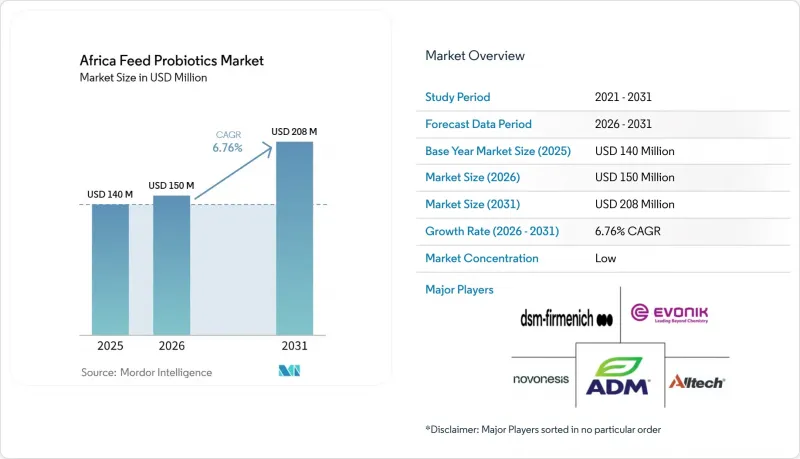
根據 Mordor Intelligence 預測,非洲飼料益生菌市場規模預計將在 2025 年達到 1.4 億美元,2026 年擴大到 1.5 億美元,到 2031 年成長到 2.08 億美元,2026 年至 2031 年的複合年成長率為 6.76%。
本報告按產品(雙歧桿菌、腸球菌、乳桿菌、片球菌、鏈球菌及其他益生菌)、動物種類(水產養殖、家禽、反芻動物、豬及其他動物)和地區(埃及、肯亞、南非及其他非洲地區)進行細分。市場預測以價值(美元)和數量(公噸)為單位。
非洲飼料益生菌市場趨勢與洞察
向不使用抗菌劑的畜牧業過渡
儘管非洲各國正逐步推動淘汰抗生素生長促進劑的政策轉變,但各國的進展卻不盡相同。 PubMed Central (PMC) 於 2025 年發表的一項綜述發現,在接受調查的 31 個非洲國家中,僅有 8 個國家頒布了明確禁止使用抗生素生長促進劑的法律,而 17 個國家在其畜牧養殖系統中實施了某種形式的抗生素處方管制。儘管情況不盡相同,非洲對飼料益生菌的需求依然強勁。在監管嚴格的市場中,生產商正在迅速改進其配方;即使在監管較少的市場中,他們也面臨來自買家的壓力,這些買家更傾向於無抗生素的生產系統。肯亞的抗菌素抗藥性框架已涵蓋畜牧業和漁業,衣索比亞也於 2025 年 11 月發布了其第四個國家抗菌素抗藥性 (AMR) 行動計畫(2026-2030 年)。該計劃繼續將合理使用抗生素作為畜牧業的關鍵政策議題。益生菌的商業性價值得到了同行評審研究的支持,這些研究表明,使用益生菌可以提高家禽、豬、牛和水產養殖動物的體重增加、營養利用效率和抗病能力。
擴大非洲家禽和水產養殖規模
在非洲飼料益生菌市場,家禽業是最大的需求領域,這主要是由於其與商業飼料的密切相關。根據糧農組織統計資料庫(FAOSTAT)的數據,南非家禽業規模龐大,足以支撐添加劑的常規使用,僅肉雞養殖業到2025年就將消耗約400萬噸飼料。在該產業,飼料成本佔總生產成本的70%。水產養殖是動物產業中成長最快的領域,凸顯了益生菌在養殖密度和水質壓力等因素影響存活率和飼料轉換率的物種中的重要性。聯合國糧食及農業組織(糧農組織)的「藍色轉型」藍圖在2025年強調,將撒哈拉以南非洲永續水產養殖的擴張作為產業發展的優先事項,並支持在吳郭魚和非洲鯰魚養殖系統中採用以微生物組為導向的飼料解決方案。此外,世界魚類中心於2025年下半年透過「非洲魚類創新中心和水產養殖規模化(FASA)」計畫推進了這項計劃。該計畫旨在推廣永續魚飼料的使用方法,使撒哈拉以南非洲地區的5000家中小規模水產養殖戶受益。
熱帶水產養殖環境中菌株性能的差異
非洲飼料益生菌市場面臨的主要阻礙因素之一是實驗室性能與熱帶地區實際應用性能之間的差異。製粒溫度高、運輸距離長以及儲存條件不當會導致產品到達農場前活菌數量下降,尤其是對於非芽孢桿菌或未包埋菌株而言。這造成了可靠性問題,因為養殖戶往往根據短期可見效果而非標籤上列出的微生物指標來判斷產品的價值。 Animal BioSciences公司2025年的一項研究強調了加強菌株保護的必要性。研究表明,與未包埋配方相比,微膠囊化配方能夠提高熱帶肉雞養殖環境下的益生菌性能。除非更多產品能持續適應非洲飼料廠和物流條件,否則除管理最完善的商業體系外,非洲飼料益生菌市場的複購率可能仍將不穩定。
細分市場分析
預計到2025年,乳酸菌將佔非洲飼料益生菌市場的34.0%佔有率,成為目前市場結構中主要的添加劑類型之一。這一主導地位源於其在畜禽品種中廣泛的臨床檢驗,尤其是在乳牛和母豬飼養方案中,腸道菌群的穩定性直接影響生產性能。腸球菌在牛和仔豬的幼畜飼料中保持著重要的地位,而雙歧桿菌、片球菌和鏈球菌的市場佔有率仍然小規模,這是由於適用菌種有限,且在非洲飼料加工條件下對穩定性要求更為嚴格。因此,非洲飼料益生菌市場仍然依賴那些在科學認知和適應溫暖氣候分銷系統方面都取得平衡的成熟菌株。
其他益生菌,包括枯草桿菌、地衣芽孢桿菌、多菌株菌群以及適用於高溫氣候下操作和製粒的包埋混合物,預計到2031年將以8.5%的複合年成長率成長。發表於《獸醫學前沿》(Frontiers in Veterinary Science)的一項2025年研究也表明,在非洲畜牧環境中,本地分離的乳酸菌表現優於進口參考菌株,這支持了開發非洲特有菌株的長期價值。飼料添加劑配方正逐漸轉向多菌株、多功能產品,將腸道菌叢穩定、病原體抑制和消化支持功能結合於單一配方中。預計在整個預測期內,這種轉變將進一步擴大耐熱且易於操作的產品在非洲飼料益生菌市場中的作用。
其他好處:
- Excel格式的市場預測(ME)表
- 3個月的分析師支持
目錄
第1章:引言
- 本研究的假設與市場定義
- 調查範圍
第2章:調查方法
第3章執行摘要
第4章:主要產業趨勢
- 動物數量
- 家禽
- 反芻動物
- 豬
- 飼料生產
- 水產養殖
- 家禽
- 反芻動物
- 豬
- 法律規範
- 南非
- 埃及
- 肯亞
- 坦尚尼亞
- 衣索比亞
- 奈及利亞
- 蘇丹
- 烏干達
- 阿爾及利亞
- 摩洛哥
- 安哥拉
- 迦納
- 象牙海岸共和國
- 價值鍊和通路分析
- 市場促進因素
- 不使用抗菌劑的畜牧養殖正在擴張。
- 在非洲擴大家禽和水產養殖業務
- 耐熱性和封裝應變的採用
- 飼料廠功能性添加劑使用量增加
- 由於低溫運輸分散和儲存限制,乾貨具有優勢。
- 農場診斷檢測率低,導致人們對預防腸道健康解決方案的需求增加。
- 市場限制因素
- 熱帶農場環境下不同品種的生長表現有差異。
- 該廠缺乏發酵和混合能力。
- 法規不一致和註冊延遲
- 小規模生產者對價格高度敏感
- 波特五力分析
第5章 市場規模與成長預測
- 透過亞加性
- 雙歧桿菌
- 腸球菌
- 乳酸菌
- 片球菌
- 鏈球菌
- 其他益生菌
- 動物
- 水產養殖
- 魚
- 蝦
- 其他水產養殖物種
- 家禽
- 肉雞
- 產蛋母雞
- 其他家禽
- 反芻動物
- 肉牛
- 乳牛
- 其他反芻動物
- 豬
- 其他動物
- 水產養殖
- 按地區
- 埃及
- 肯亞
- 南非
- 其他非洲國家
第6章 競爭情勢
- 市場集中度
- 策略趨勢
- 市佔率分析
- 公司簡介
- Alltech Inc.
- DSM-Firmenich AG
- Novonesis
- IFF
- Evonik Industries AG
- Kemin Industries, Inc.
- ADM
- Chr. Hansen Holding A/S
- Novus International, Inc.
- Kerry Group plc
- Provita Animal Health
- Phibro Animal Health Corporation
- Nutreco NV
- Biomin Holding GmbH
- Cargill, Incorporated
第7章 市場機會與未來展望
According to Mordor Intelligence, the Africa feed probiotics market was valued at USD 140.00 million in 2025 and is projected to grow from USD 150.00 million in 2026 to USD 208.00 million by 2031, growing at a CAGR of 6.76% during 2026-2031.
This report is Segmented by Sub Additive (Bifidobacteria, Enterococcus, Lactobacilli, Pediococcus, Streptococcus, and Other Probiotics), by Animal (Aquaculture, Poultry, Ruminants, Swine, and Other Animal Types), and by Geography (Egypt, Kenya, South Africa, and the Rest of Africa). The Market Forecasts are Provided in Terms of Value (USD) and Volume (Metric Tons).
Africa Feed Probiotics Market Trends and Insights
Rising Antimicrobial-Free Livestock Production
The policy shift away from antibiotic growth promoters is advancing across Africa, though progress remains uneven from one country to another. A 2025 review indexed in PubMed Central (PMC) found that only 8 of 31 African countries surveyed had explicit laws against the use of antibiotic growth promoters, while 17 had some form of prescription control for antibiotics in livestock systems. This uneven pattern is not slowing demand in the Africa feed probiotics market, as producers in stricter markets are reformulating sooner, while producers in less regulated markets still face pressure from buyers who prefer antibiotic-free production systems. Kenya's antimicrobial resistance framework already covers livestock and fisheries, and Ethiopia launched its Fourth National Action Plan on Antimicrobial Resistance (AMR) 2026-2030 in November 2025, which keeps livestock antibiotic stewardship high on the policy agenda. The commercial case for probiotics is strengthened by peer-reviewed work showing that probiotic use can support weight gain, nutrient use, and disease resilience across poultry, swine, cattle, and aquaculture species
Poultry and Aquaculture Scale-Up in Africa
Poultry represents the largest demand segment in the Africa feed probiotics market, primarily driven by its association with commercial feed usage. In South Africa, the poultry industry is substantial enough to sustain regular additive use, with the broiler industry consuming approximately 4 million metric tons of feed in 2025, according to FAOSTAT. Feed costs account for 70% of total production expenses in this sector. Aquaculture is the fastest-growing animal segment, underscoring the importance of probiotics in species where factors such as stocking density and water-quality stressors impact survival rates and feed conversion efficiency. In 2025, the Food and Agriculture Organization (FAO)'s Blue Transformation roadmap emphasizes sustainable aquaculture expansion in Sub-Saharan Africa as a key focus for sector development, supporting the adoption of microbiome-based feed solutions in tilapia and African catfish farming systems. Additionally, WorldFish advanced this initiative in late 2025 through its Fish for Africa Innovation Hub and Scaling Aquaculture (FASA) program, which aims to scale sustainable aquafeed practices to benefit 5,000 smallholder fish farmers across Sub-Saharan Africa.
Strain Performance Variability Across Tropical Farm Conditions
A key restraint for the Africa feed probiotics market is the gap between laboratory and field performance under tropical conditions. High pelleting temperatures, long transport routes, and inconsistent storage can weaken viable counts before the product reaches the farm, especially for strains that are not spore-forming or encapsulated. This creates a credibility issue because farmers judge product value by visible short-cycle results rather than by microbiological specifications on a label. The need for better strain protection is clear from the 2025 Animal Bioscience study, which showed microencapsulation improved performance under tropical broiler conditions compared with non-encapsulated preparations. Until more products consistently match African feed mill and logistics conditions, repeat purchase rates in the Africa feed probiotics market can remain uneven outside the best-managed commercial systems.
Other drivers and restraints analyzed in the detailed report include:
- Heat-Stable and Encapsulated Strain Adoption
- Rising Feed Mill Incorporation of Functional Additives
- High Price Sensitivity Among Smallholder Producers
For complete list of drivers and restraints, kindly check the Table Of Contents.
Segment Analysis
Lactobacilli captured 34.0% of the Africa feed probiotics market share in 2025, making them the leading sub-additive type in the current market structure. Their lead comes from broad clinical validation across livestock species, especially in dairy cattle and sow feeding programs where gut stability has a direct production impact. Enterococcus retained niche importance in calf and piglet starter feeds, while Bifidobacteria, Pediococcus, and Streptococcus stayed smaller because they face narrower species fit or more demanding stability requirements under African feed-processing conditions. The Africa probiotics feed market, therefore, still relies on established strain families that balance scientific familiarity with practical use in warm-climate distribution systems.
Other Probiotics is projected to grow at 8.5% CAGR through 2031, supported by Bacillus subtilis, Bacillus licheniformis, multi-strain consortia, and encapsulated blend formats that are better suited to hot-climate handling and pelleting. A 2025 study cited in Frontiers in Veterinary Science also indicated that locally isolated lactic acid bacteria can perform better than imported reference strains in African livestock environments, supporting the longer-term value of Africa-specific strain development. The sub additive mix is gradually moving toward multi-strain and multi-function products that combine gut stabilization, pathogen control, and digestive support in a single formulation. That shift should keep widening the role of heat-tolerant and operationally simpler formats inside the Africa feed probiotics market over the forecast period
Complete Report Scope:
- By Sub Additive
- Bifidobacteria
- Enterococcus
- Lactobacilli
- Pediococcus
- Streptococcus
- Other Probiotics
- By Animal
- Aquaculture
- Fish
- Shrimp
- Other Aquaculture Species
- Poultry
- Broiler
- Layer
- Other Poultry Birds
- Ruminants
- Beef Cattle
- Dairy Cattle
- Other Ruminants
- Swine
- Other Animals
- Aquaculture
- By Geography
- Egypt
- Kenya
- South Africa
- Rest of Africa
List of Companies Covered in this Report:
- Alltech Inc.
- DSM-Firmenich AG
- Novonesis
- IFF
- Evonik Industries AG
- Kemin Industries, Inc.
- ADM
- Chr. Hansen Holding A/S
- Novus International, Inc.
- Kerry Group plc
- Provita Animal Health
- Phibro Animal Health Corporation
- Nutreco N.V.
- Biomin Holding GmbH
- Cargill, Incorporated
Additional Benefits:
- The market estimate (ME) sheet in Excel format
- 3 months of analyst support
TABLE OF CONTENTS
1 Introduction
- 1.1 Study Assumption and Market Definition
- 1.2 Scope of the Study
2 Research Methodology
3 Executive Summary
4 Key Industry Trends
- 4.1 Animal Headcount
- 4.1.1 Poultry
- 4.1.2 Ruminants
- 4.1.3 Swine
- 4.2 Feed Production
- 4.2.1 Aquaculture
- 4.2.2 Poultry
- 4.2.3 Ruminants
- 4.2.4 Swine
- 4.3 Regulatory Framework
- 4.3.1 South Africa
- 4.3.2 Egypt
- 4.3.3 Kenya
- 4.3.4 Tanzania
- 4.3.5 Ethiopia
- 4.3.6 Nigeria
- 4.3.7 Sudan
- 4.3.8 Uganda
- 4.3.9 Algeria
- 4.3.10 Morocco
- 4.3.11 Angola
- 4.3.12 Ghana
- 4.3.13 Ivory Coast
- 4.4 Value Chain and Distribution Channel Analysis
- 4.5 Market Drivers
- 4.5.1 Rising antimicrobial-free livestock production
- 4.5.2 Poultry and aquaculture scale-up in Africa
- 4.5.3 Heat-stable and encapsulated strain adoption
- 4.5.4 Rising feed mill incorporation of functional additives
- 4.5.5 Fragmented cold-chain and storage constraints favor dry formats
- 4.5.6 Low on-farm diagnostic coverage creates demand for preventive gut health solutions
- 4.6 Market Restraints
- 4.6.1 Strain performance variability across tropical farm conditions
- 4.6.2 Limited local fermentation and blending capacity
- 4.6.3 Regulatory fragmentation and registration delays
- 4.6.4 High price sensitivity among smallholder producers
- 4.7 Porter's Five Forces Analysis
- 4.7.1 Bargaining Power of Suppliers
- 4.7.2 Bargaining Power of Buyers
- 4.7.3 Threat of New Entrants
- 4.7.4 Threat of Substitute Products
- 4.7.5 Intensity of Competitive Rivalry
5 Market Size and Growth Forecasts (Value and Volume)
- 5.1 By Sub Additive
- 5.1.1 Bifidobacteria
- 5.1.2 Enterococcus
- 5.1.3 Lactobacilli
- 5.1.4 Pediococcus
- 5.1.5 Streptococcus
- 5.1.6 Other Probiotics
- 5.2 By Animal
- 5.2.1 Aquaculture
- 5.2.1.1 Fish
- 5.2.1.2 Shrimp
- 5.2.1.3 Other Aquaculture Species
- 5.2.2 Poultry
- 5.2.2.1 Broiler
- 5.2.2.2 Layer
- 5.2.2.3 Other Poultry Birds
- 5.2.3 Ruminants
- 5.2.3.1 Beef Cattle
- 5.2.3.2 Dairy Cattle
- 5.2.3.3 Other Ruminants
- 5.2.4 Swine
- 5.2.5 Other Animals
- 5.2.1 Aquaculture
- 5.3 By Geography
- 5.3.1 Egypt
- 5.3.2 Kenya
- 5.3.3 South Africa
- 5.3.4 Rest of Africa
6 Competitive Landscape
- 6.1 Market Concentration
- 6.2 Strategic Moves
- 6.3 Market Share Analysis
- 6.4 Company Profiles (Includes Global Level Overview, Market-Level Overview, Core Segments, Financials as Available, Strategic Information, Market Rank/Share for Key Companies, Products and Services, and Recent Developments)
- 6.4.1 Alltech Inc.
- 6.4.2 DSM-Firmenich AG
- 6.4.3 Novonesis
- 6.4.4 IFF
- 6.4.5 Evonik Industries AG
- 6.4.6 Kemin Industries, Inc.
- 6.4.7 ADM
- 6.4.8 Chr. Hansen Holding A/S
- 6.4.9 Novus International, Inc.
- 6.4.10 Kerry Group plc
- 6.4.11 Provita Animal Health
- 6.4.12 Phibro Animal Health Corporation
- 6.4.13 Nutreco N.V.
- 6.4.14 Biomin Holding GmbH
- 6.4.15 Cargill, Incorporated


