


 |
市場調查報告書
商品編碼
2113624
南美洲飼料益生菌:市場佔有率分析、產業趨勢與統計及成長預測(2026-2031 年)South America Feed Probiotics - Market Share Analysis, Industry Trends & Statistics, Growth Forecasts (2026 - 2031) |
||||||

※ 本網頁內容可能與最新版本有所差異。詳細情況請與我們聯繫。
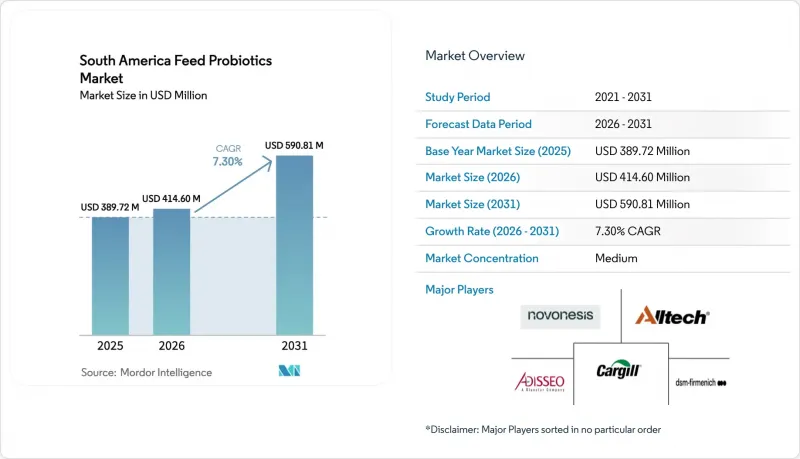
預計到 2025 年,南美洲飼料益生菌市場規模將達到 3.8972 億美元,到 2026 年將達到 4.146 億美元,到 2031 年將達到 5.9081 億美元,2026 年至 2031 年的複合年成長率為 7.30%。
本報告按產品類型(雙歧桿菌、腸球菌、乳桿菌等)、動物種類(反芻動物、家禽、豬、水產養殖動物及其他動物)和國家(巴西、阿根廷、智利、哥倫比亞及其他南美國家)進行細分。報告以價值(美元)和數量(公噸)兩種方式呈現市場規模。
南美飼料益生菌市場趨勢與洞察
肉類需求不斷成長以及無抗生素蛋白質的趨勢
預計2025年,巴西人均禽肉消費量將達44.6公斤。巴西雞肉產量達1,530萬噸,出口商完全有能力滿足亞太地區和中東地區對無抗生素認證雞肉日益成長的需求。超級市場調查顯示,國內消費者願意為標示「無抗生素」的雞肉支付15%至20%的溢價,這促使一體化生產商在配方生產的各個階段都添加益生菌。 2024年《生物投入法》將註冊期限縮短了一半,使供應商能夠加快產品上市速度並更快地改進菌株。在聖保羅州和巴拉那州進行的商業肉雞試驗表明,使用乳酸桿菌混合物可使飼料轉換閾值提高3%以上,證實即使添加劑成本高出兩到三倍,投資回報率仍然很高。這種連鎖反應也蔓延到了豬肉和牛肉行業,加工商們正努力將產品貼上「不含抗生素」的標籤,以打入高階零售和出口市場。隨著零售商擴大自有品牌無抗生素產品的銷售,益生菌的銷售量也相應成長,從而提升了南美飼料益生菌市場的價值。
監管機構禁止使用抗生素生長促進劑
智利農業和畜牧業部(Servicio Agricola y Ganadero)已全面禁用抗生素生長促進劑,迫使每年生產39.4億枚雞蛋的蛋雞養殖場轉而依賴益生菌和有機酸來提高產量。在巴西,泰樂菌素、林可黴素和硫胺素的使用於2020年被禁用,使家禽和豬飼料中傳統抗生素的使用量減少了約40%。這意味著生產商必須承擔1.83億美元的添加劑替代成本,但益生菌已成為事實上的替代品。在阿根廷和哥倫比亞,關鍵抗生素的使用受到限制,迫使飼料生產商設計適用於多個地區的多菌株混合物。農業、畜牧業和食品供應部(MAPA)2024年的指導方針強制要求菌株保藏、菌落形成單位(CFU)保證和抗菌素抗藥性檢測,這增加了合規成本,但也增強了市場信心。巴西和智利監管政策的快速推進預計將在24個月內加速市場需求,而阿根廷監管政策協調進程的放緩則延長了供應商進行宣傳活動的寬限期。這些監管方面的進展預計將推動市場複合年成長率成長2.5個百分點,從而支撐南美飼料益生菌市場的持續擴張。
與傳統添加劑相比,價格溢價
益生菌每公斤售價5-15美元,而有機酸和酵素的價格為每公斤2-5美元,因此飼料生產商希望飼料轉換率至少提高3%,才能證明額外成本的合理性。阿根廷的肉牛育肥場利潤微薄,每公斤活重僅能賺取0.05-0.10美元,因此他們更傾向於價格低廉且增重穩定的離子載體。巴拉圭和玻利維亞的小規模養豬戶由於缺乏追蹤生產績效的工具,只能依靠每袋的價格來決定是否購買益生菌。一些大型企業透過將益生菌與技術支援和生產績效保證捆綁銷售來緩解高價帶來的影響,但這些方案僅對每年加工量超過1萬頭的養殖戶有效。高利率進一步推高了營運資金成本,使得養殖戶對價格溢價的負擔能力下降。
細分市場分析
預計到2025年,南美飼料益生菌市場中,乳酸桿菌屬將佔總銷售額的38%。儘管乳酸桿菌屬佔據主導地位,但其成長速度最快,複合年成長率高達9.6%。這主要歸功於其優異的耐熱性,使其在製粒閾值超過80 度C時無需進行昂貴的包埋處理。在禽類和豬類養殖領域,嗜酸乳桿菌、植物乳桿菌和羅伊氏乳桿菌仍是關鍵產品,因為它們能夠持續提高飼料轉換率。乳酸片球菌在水產養殖和高溫飼料廠的應用日益廣泛,每公斤飼料可降低2-3美元的配比成本,並提高厄瓜多爾蝦場的利潤率。雙歧桿菌目前市佔率較小,但新的微膠囊化專利有望延長其保存期限,從而為進入反芻動物市場創造機會。糞腸球菌在巴西的試驗中被證實能以 1 × 10⁹ CFU/kg 的劑量適度緩解斷奶後腹瀉,因此獲得了豬獸醫的認可。監管菌株註冊要求使擁有廣泛菌株庫的供應商具有優勢,像 Christian Hansen 和 DSM-Firmenich 這樣的公司正在將其發酵工藝本地化,以加快核准速度,並為富含木薯的飼料提供客製化混合物。
除乳酸菌以外的其他益生菌類別正逐漸成為新的致勝法寶。芽孢桿菌孢子被歸類為“其他益生菌”,由於其對製粒的耐受性,克服了乳酸桿菌面臨的穩定性挑戰,實現了強勁成長。酵母來源的後生元,例如 Levucell SB,正吸引希望在不使用抗生素的情況下控制瘤胃 pH 值的乳牛和肉牛養殖戶。巴西新建的噴霧乾燥和脂質基質包埋生產線縮短了供應鏈,將進口產品的前置作業時間從 90 天縮短至國產產品的 30 天。隨著片球菌在顆粒飼料細分市場佔據主導地位,芽孢桿菌在水產養殖領域不斷擴大市場佔有率,產品類型格局瞬息萬變,為靈活的配料商提供了空間,使其能夠逐步削弱老牌企業的壟斷地位,並引領整個南美飼料益生菌市場。
其他好處:
- Excel格式的市場預測(ME)表
- 3個月的分析師支持
目錄
第1章:引言
- 研究假設和市場定義
- 調查範圍
第2章:調查方法
第3章執行摘要
第4章 市場狀況
- 市場概覽
- 市場促進因素
- 肉類需求不斷成長以及無抗生素蛋白質的發展趨勢
- 監管機構禁止使用抗生素生長促進劑
- 畜牧業的擴張
- 農民對腸道健康影響的看法
- 厄瓜多爾的蝦類養殖業蓬勃發展,帶動了海鮮需求。
- 用於熱帶飼料的本土芽孢桿菌菌株
- 市場限制因素
- 與傳統添加劑相比,價格溢價
- 益生菌在製粒和儲存過程中的穩定性
- 巴拉圭和玻利維亞的農村貿易差距
- 使用本地採購的飼料原料時,會觀察到細菌菌株的有效性有差異。
- 監理情勢
- 技術展望
- 波特五力分析
第5章 市場規模與成長預測
- 依產品類型
- 雙歧桿菌
- 腸球菌
- 乳酸菌
- 片球菌
- 鏈球菌
- 其他益生菌
- 依動物類型
- 家禽
- 肉雞
- 產蛋母雞
- 其他家禽
- 豬
- 反芻動物
- 肉牛
- 乳牛
- 其他反芻動物
- 水產養殖
- 魚
- 蝦
- 其他養殖物種
- 其他動物
- 家禽
- 國家
- 巴西
- 阿根廷
- 智利
- 哥倫比亞
- 其他南美國家
第6章 競爭情勢
- 市場集中度
- 策略趨勢
- 市佔率分析
- 公司簡介
- Cargill, Incorporated
- Novonesis Group
- DSM-Firmenich AG
- Adisseo(Bluestar Adisseo Company)
- Alltech Inc.
- Lallemand Animal Nutrition(Lallemand Inc.)
- Kemin Industries, Inc
- Evonik Industries AG
- Nutreco NV(SHV Holdings)
- Novus International, Inc
- Calpis Co., Ltd.(Asahi Group Holdings)
- Pancosma(ADM)
- Biorigin(Zilor)
- Orffa(Marubeni Corporation)
- Unique Biotech Limited
第7章 市場機會與未來展望
According to Mordor Intelligence, the South America feed probiotics market size is projected to be USD 389.72 million in 2025, USD 414.60 million in 2026, and reach USD 590.81 million by 2031, growing at a CAGR of 7.30% from 2026 to 2031.
This report is Segmented by Product Type (Bifidobacteria, Enterococcus, Lactobacilli, and More), by Animal Type (Ruminant, Poultry, Swine, Aquaculture, and Other Animals), and by Country (Brazil, Argentina, Chile, Colombia, and Rest of South America). The Report Offers the Market Size and Forecasts in Terms of Value (USD) and Volume (Metric Tons).
South America Feed Probiotics Market Trends and Insights
Rising Meat Demand and Antibiotic-Free Protein Trend
Per-capita poultry consumption climbed to 44.6 kg in 2025, and Brazil's 15.3 million metric tons of chicken meat output positions exporters to meet Asia-Pacific and Middle-East orders that increasingly require antibiotic-free certifications. Supermarket audits show domestic consumers paying 15-20% premiums for chicken labeled "raised without antibiotics," prompting integrators to embed probiotics into every formulation tier. The 2024 Bio-inputs Law halved registration timelines, letting suppliers capture faster shelf entry and iterate strains more rapidly. Commercial broiler trials in Sao Paulo and Parana demonstrated 3% or better feed-conversion improvements with Lactobacillus blends, clearing the payback threshold even at a two-to-three-times additive cost premium. The pull effect extends to swine and beef channels where processors seek "no-antibiotic-ever" labels to enter premium retail and export segments. As retailers expand private-label antibiotic-free lines, probiotic volumes scale proportionally, boosting the South America feed probiotics market value in tandem.
Regulatory Bans on Antibiotic Growth Promoters
Chile's Servicio Agricola y Ganadero now prohibits every antibiotic growth promoter, forcing layer operations that produce 3.94 billion eggs to rely on probiotics and organic acids for performance enhancement. Brazil's 2020 ban on tylosin, lincomycin, and thiamulin erased roughly 40% of the antibiotic volume previously used in poultry and swine diets, costing producers USD 183 million in additive substitution but establishing probiotics as the de facto replacement. Argentina and Colombia restrict critically important antibiotics, compelling feed formulators to design multi-strain blends capable of cross-jurisdiction efficacy. Ministry of Agriculture, Livestock and Food Supply's (MAPA) 2024 guidelines require strain deposit, Colony Forming Unit (CFU) guarantees, and antimicrobial-resistance testing, increasing compliance costs but elevating market credibility. Rapid enforcement in Brazil and Chile accelerates demand within 24 months, while slower rule harmonization in Argentina extends the window for supplier education. The regulatory push adds 2.5% points to the forecast CAGR, underpinning the sustained expansion of the South America feed probiotics market.
Price Premium Versus Conventional Additives
Probiotics are priced at USD 5-15/kg compared with USD 2-5/kg for organic acids and enzymes, so feed formulators demand at least a 3% feed-conversion gain to justify the incremental spend. Argentine beef feedlots operating on slim margins of USD 0.05-0.10/kg live-weight prefer cheaper ionophores that deliver predictable weight gain. In smallholder swine systems across Paraguay and Bolivia, limited performance tracking tools make cost per bag the decisive factor, relegating probiotics to a discretionary purchase. Integrators mitigate sticker shock by bundling technical support and performance guarantees, but such programs only work above 10,000 heads annual throughput. High interest rates further raise working-capital costs, amplifying resistance to price premiums.
Other drivers and restraints analyzed in the detailed report include:
- Expansion of Industrial Livestock Operations
- Farmer Awareness of Gut-Health Benefits
- Probiotic Stability During Pelleting and Storage
For complete list of drivers and restraints, kindly check the Table Of Contents.
Segment Analysis
The South America feed probiotics market size for Lactobacilli accounted for 38% of the overall revenue in 2025. Despite this leadership, Pediococcus posted the highest trajectory with a 9.6% CAGR, reflecting superior heat tolerance that avoids costly encapsulation above 80 °C pelleting thresholds. In poultry and swine, Lactobacillus acidophilus, L. plantarum, and L. reuteri remain staples because of consistent feed-conversion gains. Pediococcus acidilactici is infiltrating aquaculture and high-temperature feed mills, trimming formulation costs by USD 2-3/kg and widening profit margins in Ecuadorian shrimp ponds. Bifidobacteria currently hold a minimal share, but new micro-encapsulation patents promise shelf-life extensions that could unlock ruminant opportunities. Enterococcus faecium demonstrated a moderate reduction in post-weaning diarrhea during Brazilian trials at a dose of 1 X 10⁹ CFU/kg and is gaining recognition among swine veterinarians. Regulatory strain-deposit mandates now favor suppliers with large libraries, pushing Chr. Hansen and DSM-Firmenich to localize fermentation for faster approvals and bespoke blends tuned to cassava-rich diets.
Non-lactic acid categories are emerging as wild cards. Bacillus spores, classified within 'Other Probiotics,' logged strong growth as their pelleting resilience addresses stability gaps affecting Lactobacilli. Yeast-based postbiotics such as Levucell SB attract dairy and beef producers who want rumen pH control without antibiotics. Spray-drying and lipid-matrix encapsulation lines now installed in Brazil shorten supply chains, lowering lead times from 90 days import to 30 days domestic. As Pediococcus captures pelleted-feed niches and Bacillus gains share in aquaculture, the product-type landscape remains fluid, giving nimble formulators room to chip away at incumbent dominance while propelling the broader South America feed probiotics market.
Complete Report Scope:
- By Product Type
- Bifidobacteria
- Enterococcus
- Lactobacilli
- Pediococcus
- Streptococcus
- Other Probiotics
- By Animal Type
- Poultry
- Broiler
- Layer
- Other Poultry Birds
- Swine
- Ruminants
- Beef Cattle
- Dairy Cattle
- Other Ruminants
- Aquaculture
- Fish
- Shrimp
- Other Aquaculture Species
- Other Animals
- Poultry
- By Country
- Brazil
- Argentina
- Chile
- Colombia
- Rest of South America
List of Companies Covered in this Report:
- Cargill, Incorporated
- Novonesis Group
- DSM-Firmenich AG
- Adisseo (Bluestar Adisseo Company)
- Alltech Inc.
- Lallemand Animal Nutrition (Lallemand Inc.)
- Kemin Industries, Inc
- Evonik Industries AG
- Nutreco N.V. (SHV Holdings)
- Novus International, Inc
- Calpis Co., Ltd. (Asahi Group Holdings)
- Pancosma (ADM)
- Biorigin (Zilor)
- Orffa (Marubeni Corporation)
- Unique Biotech Limited
Additional Benefits:
- The market estimate (ME) sheet in Excel format
- 3 months of analyst support
TABLE OF CONTENTS
1 Introduction
- 1.1 Study Assumptions and Market Definition
- 1.2 Scope of the Study
2 Research Methodology
3 Executive Summary
4 Market Landscape
- 4.1 Market Overview
- 4.2 Market Drivers
- 4.2.1 Rising meat demand and antibiotic-free protein trend
- 4.2.2 Regulatory bans on antibiotic growth promoters
- 4.2.3 Expansion of industrial livestock operations
- 4.2.4 Farmer awareness of gut-health benefits
- 4.2.5 Shrimp farming boom in Ecuador driving aquatic use
- 4.2.6 Indigenous Bacillus strains for tropical diets
- 4.3 Market Restraints
- 4.3.1 Price premium versus conventional additives
- 4.3.2 Probiotic stability during pelleting and storage
- 4.3.3 Rural distribution gaps in Paraguay and Bolivia
- 4.3.4 Variable strain efficacy with local feed ingredients
- 4.4 Regulatory Landscape
- 4.5 Technological Outlook
- 4.6 Porter's Five Forces Analysis
- 4.6.1 Threat of New Entrants
- 4.6.2 Bargaining Power of Suppliers
- 4.6.3 Bargaining Power of Buyers
- 4.6.4 Threat of Substitutes
- 4.6.5 Intensity of Competitive Rivalry
5 Market Size and Growth Forecasts (Value and Volume)
- 5.1 By Product Type
- 5.1.1 Bifidobacteria
- 5.1.2 Enterococcus
- 5.1.3 Lactobacilli
- 5.1.4 Pediococcus
- 5.1.5 Streptococcus
- 5.1.6 Other Probiotics
- 5.2 By Animal Type
- 5.2.1 Poultry
- 5.2.1.1 Broiler
- 5.2.1.2 Layer
- 5.2.1.3 Other Poultry Birds
- 5.2.2 Swine
- 5.2.3 Ruminants
- 5.2.3.1 Beef Cattle
- 5.2.3.2 Dairy Cattle
- 5.2.3.3 Other Ruminants
- 5.2.4 Aquaculture
- 5.2.4.1 Fish
- 5.2.4.2 Shrimp
- 5.2.4.3 Other Aquaculture Species
- 5.2.5 Other Animals
- 5.2.1 Poultry
- 5.3 By Country
- 5.3.1 Brazil
- 5.3.2 Argentina
- 5.3.3 Chile
- 5.3.4 Colombia
- 5.3.5 Rest of South America
6 Competitive Landscape
- 6.1 Market Concentration
- 6.2 Strategic Moves
- 6.3 Market Share Analysis
- 6.4 Company Profiles (includes Global Level Overview, Market Level Overview, Core Segments, Financials as Available, Strategic Information, Market Rank/Share for Key Companies, Products and Services, and Recent Developments)
- 6.4.1 Cargill, Incorporated
- 6.4.2 Novonesis Group
- 6.4.3 DSM-Firmenich AG
- 6.4.4 Adisseo (Bluestar Adisseo Company)
- 6.4.5 Alltech Inc.
- 6.4.6 Lallemand Animal Nutrition (Lallemand Inc.)
- 6.4.7 Kemin Industries, Inc
- 6.4.8 Evonik Industries AG
- 6.4.9 Nutreco N.V. (SHV Holdings)
- 6.4.10 Novus International, Inc
- 6.4.11 Calpis Co., Ltd. (Asahi Group Holdings)
- 6.4.12 Pancosma (ADM)
- 6.4.13 Biorigin (Zilor)
- 6.4.14 Orffa (Marubeni Corporation)
- 6.4.15 Unique Biotech Limited


