


 |
市場調查報告書
商品編碼
2117351
馬來西亞廂型車:市場佔有率分析、產業趨勢與統計及成長預測(2026-2031)Malaysia Box Truck - Market Share Analysis, Industry Trends & Statistics, Growth Forecasts (2026 - 2031) |
||||||

※ 本網頁內容可能與最新版本有所差異。詳細情況請與我們聯繫。
據 Mordor Intelligence 稱,馬來西亞廂型車市場預計到 2026 年價值 5.8871 億美元,高於 2025 年的 5.5823 億美元,預計到 2031 年將達到 7.6791 億美元,2026 年至 2031 年的複合年成長率為 5.46%。
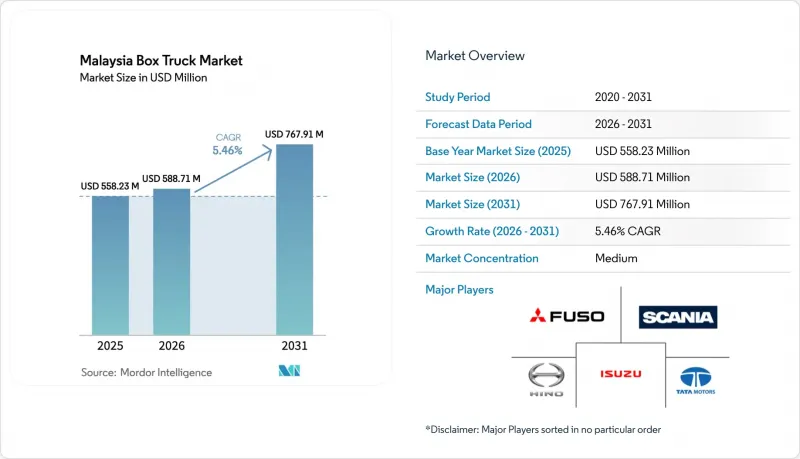
本報告按卡車尺寸/等級(例如,小型(2-3級))、燃料類型(例如,柴油、汽油、電力)、車身類型(例如,乾貨廂式貨車、冷藏廂式貨車)、所有權類型(公司自有、租賃、出租)和最終用戶(例如,運輸公司、零售商/批發商)進行分類。市場預測以貨幣價值(美元)表示。
馬來西亞廂型車市場的趨勢與洞察
電子商務的快速成長和最後一公里配送的激增
馬來西亞廂型車市場持續受益於線上零售量激增,對頻繁小包裹包裹遞送的需求日益成長。 DHL投資3億馬幣興建吉隆坡門戶中心,並在巴生谷周邊部署自動化分類中心,凸顯了包裹量的持續成長。小型廂型車能夠穿梭於狹窄道路,每日多次遞送且停靠次數極少,因此在都市區收貨中心備受青睞。包括Yes Fleet提供的5G解決方案在內的遠端資訊處理平台,如今能夠實現即時診斷和路線最佳化,使高運轉率車輛每月節省超過4000公升燃油。在東協海關過境系統(ACTS)24小時清關窗口下流通的跨境小包裹,也增加了對密封、符合海關規定的車輛的需求。這些變化共同推動了電子商務物流從週期性成長轉變為結構性成長,從而促進了車輛採購和車隊數位轉型。
政府主導的道路基礎建設
馬來西亞正在進行的高速公路拓寬和新走廊項目正在縮短境內運輸時間,減少車輛磨損,並逐步刺激貨運需求成長。重點措施包括柔佛-新加坡長堤的維修、吉隆坡至加叻之間的擴容以及泛婆羅洲高速公路的升級改造,所有這些項目都涉及增加車道、加固路面和實施行駛中重量(WIM)測量。道路品質的提升減少了因維護造成的運作,提高了資產運轉率。此外,它還允許單班次運輸更長距離的貨物,從而促進了中型車輛車隊的擴張。整合智慧感測器的即時交通資訊平台使承運商能夠選擇避開擁塞路段的路線,從而降低燃油成本。
電動廂型車初始成本高
即使享有進口關稅豁免,純電動卡車的價格也比同類柴油車高出70%,阻礙了小規模運輸企業的普及。此外,由於技術上的不確定性,金融公司低估了電動卡車的殘值,導致其每月供給高於柴油車。在充電站充電需要對電氣設備維修,每個充電站的成本高達10萬馬幣。同時,主要高速公路以外的充電網路仍然稀少,全國各地運作中的充電樁不到1000個。雖然對於高里程用戶而言,五年後總擁有成本會更有利,但現金流的限制阻礙了許多營運商儘早進行轉換,減緩了電氣化預期帶來的短期市場成長。
細分市場分析
到2025年,輕型商用車將佔馬來西亞廂型車市場的53.05%,預計到2031年將以5.78%的複合年成長率成長。這些緊湊型貨車能夠穿梭於擁擠的街道,輕鬆抵達客戶家門口,且對駕駛員的駕照要求較低,隨著住宅倉庫採用樞紐輻射式物流系統,它們正成為宅配業者和經銷商的理想之選。隨著營運頻率的增加,對配備貫通式駕駛室和尾都市區的更靈活的底盤的需求也隨之成長。
中型貨車主要用於城際低溫運輸運輸和建築材料配送,這些應用場景需要較大的負載容量,但又不需要重型貨車的全部載貨能力。而重型貨車則主要負責連接巴生港、檳城港和柔佛港的大批量運輸,但由於軸重法規的日益嚴格,負載容量也受到限制。諸如高級駕駛輔助系統(ADAS)、防碰撞功能和即時負載容量監控等技術正從重型貨車領域向輕型貨車領域推廣,導致不同細分市場之間的整合。這推高了馬來西亞廂型車市場的平均售價,並擴大了售後市場需求。
截至2025年,柴油引擎車輛在馬來西亞廂型車市場佔有85.62%的佔有率。此細分市場擁有諸多優勢,例如完善的加油基礎設施、優異的扭力特性和較高的殘值。然而,補貼的取消導致營運成本上升,促使人們越來越關注燃油效率的提升,例如啟動/停止系統、低滾動阻力輪胎和高壓燃油噴射系統。
在關稅豁免和2040年電動車滲透率達到38%的國家目標的支持下,電動廂型車預計將呈現最高的成長率,到2031年年複合成長率(CAGR)將達到6.04%。宅配和外送公司主導的車隊部署試驗表明,車輛返回基地的時間表與200-300公里的電池續航里程相符。混合動力汽車和CNG/LPG平台佔據了過渡性細分市場,但缺乏零排放動力系統所獲得的政策支援。從長遠來看,電池成本的下降和聯邦稅額扣抵電動車佔有率在2031年超過10.00%,這有望使馬來西亞廂型車市場的能源結構更加多元化。
其他好處:
- Excel格式的市場預測(ME)表
- 3個月的分析師支持
目錄
第1章:引言
- 研究假設和市場定義
- 調查範圍
第2章:調查方法
第3章執行摘要
第4章 市場狀況
- 市場概覽
- 市場促進因素
- 電子商務的快速成長和最後一公里配送的激增
- 政府主導的道路基礎建設
- 擴大生鮮食品和藥品低溫運輸
- 企業車輛更新換代是由歐VI排放標準的採用所推動的。
- 清真物流合規性正在推動對專用廂型車的需求。
- 鼓勵輕量化設計的道路使用者收費系統。
- 市場限制因素
- 電動廂型車初始成本高
- 柴油價格的劇烈波動給貨運利潤帶來了壓力。
- 工業電動車充電基礎設施短缺
- 嚴格的軸荷規定會降低負載容量。
- 價值供應鏈分析
- 監理情勢
- 技術展望
- 波特五力模型
第5章 市場規模與成長預測
- 卡車尺寸/級別
- 小型卡車(2-3級)
- 中型卡車(4-6級)
- 大型卡車(7-8級)
- 按燃料類型
- 柴油引擎
- 汽油
- 電的
- 混合
- CNG/LPG
- 依體型
- 乾果盒
- 冷藏箱
- 簾式側盒
- 帶尾板的貨箱
- 自有車型
- 本公司自有車輛
- 租賃車輛
- 租賃車輛
- 最終用戶
- 運輸公司
- 零售商和批發商
- 宅配及小包裹服務
- 建設公司
- 政府機構
第6章 競爭情勢
- 市場集中度
- 策略趨勢
- 市佔率分析
- 公司簡介
- Isuzu Motors Limited
- Hino Motors Sales(Malaysia)Sdn Bhd.
- Mitsubishi Fuso Truck and Bus Corporation
- Scania(Malaysia)Sdn Bhd.
- Volvo Trucks Malaysia
- MAN Truck and Bus Malaysia
- Tata Motors Limited
- JAC Motors Malaysia
- Dongfeng Commercial Vehicles(Malaysia)Sdn Bhd.
- Iveco SpA(Malaysia)
第7章 市場機會與未來展望
According to Mordor Intelligence, Malaysia box truck market size in 2026 is estimated at USD 588.71 million, growing from 2025 value of USD 558.23 million with 2031 projections showing USD 767.91 million, growing at 5.46% CAGR over 2026-2031.
This report is Segmented by Truck Size/Class (Light-Duty (Class 2-3), and More), Fuel Type (Diesel, Gasoline, Electric, and More), Body Type (Dry Freight Box, Refrigerated Box, and More), Ownership Model (Company-Owned Fleet, Leased Fleet, and Rental Fleet), End User (Transportation Companies, Retailers and Wholesalers, and More). The Market Forecasts are Provided in Terms of Value (USD).
Malaysia Box Truck Market Trends and Insights
E-Commerce Boom and Last-Mile Delivery Surge
The Malaysia box truck market continues to benefit from a sharp rise in online retail volumes that require frequent, small-parcel dispatches. Investments such as DHL's RM300 million Kuala Lumpur Gateway facility and the introduction of automated sortation hubs around Klang Valley confirm sustained parcel throughput growth . Urban consolidation centers favor light-duty box trucks able to navigate narrow streets and execute multiple daily stops with minimal dwell time. Telematics platforms, including 5G-enabled solutions offered by Yes Fleet, now deliver real-time diagnostics and route optimization that lower monthly fuel use by more than 4,000 liters for high-utilization vehicles. Cross-border parcels flowing under the ASEAN Customs Transit System's 24-hour clearance window boost demand for sealed, customs-compliant bodies. Collectively, these shifts embed e-commerce logistics as a structural, not cyclical, catalyst for additional vehicle purchases and fleet digitalization.
Government-Led Road Infrastructure Upgrades
Ongoing highway widening and new corridor projects shorten intra-Malaysia transit times, reduce vehicle wear and tear, and spur incremental freight demand. Key initiatives include the Johor-Singapore Causeway overhaul, KL-Karak capacity expansion, and the Pan Borneo Highway rollout, each of which involves adding lanes, reinforcing pavements, and introducing weigh-in-motion enforcement . Improved road quality reduces maintenance downtimes, which raises asset utilization and encourages medium-duty fleet additions that can now complete longer hauls in a single shift. Real-time traffic platforms linked to smart sensors also enable carriers to trim fuel costs by rerouting around congestion.
High Upfront Cost of Electric Box Trucks
Battery-electric models carry price tags 70% higher than comparable diesel units, even after import-duty exemptions, which constrains adoption among small carriers. Finance houses also discount residual values due to technological uncertainty, pushing monthly installments higher than those for diesel alternatives. Depot charging requires electrical upgrades that cost up to RM100,000 per site. Meanwhile, the charging network density outside major corridors remains sparse, with fewer than 1,000 operational points nationwide. Although the total cost of ownership becomes favorable after five years under high mileage, cash-flow constraints deter many operators from early transition, tempering the short-term lift that electrification could otherwise provide to the market.
Other drivers and restraints analyzed in the detailed report include:
- Cold-Chain Expansion for Perishables and Pharma
- Corporate Fleet Renewal Driven by Euro VI Standards
- Volatile Diesel Prices Compressing Freight Margins
For complete list of drivers and restraints, kindly check the Table Of Contents.
Segment Analysis
Light-duty vehicles hold 53.05% of Malaysia's box truck market share in 2025, representing a 5.78% CAGR outlook through 2031. These compact trucks maneuver through congested lanes, reach residential doorsteps, and minimize driver license requirements, making them the default choice of courier and retail distributors as urban warehousing adopts hub-and-spoke designs. As trip frequency rises, demand for nimble chassis with walk-through cabs and tail-lift options also increases.
Medium-duty trucks service inter-city cold-chain and construction supply runs that require greater payload but not the full capacity of heavy rigs. Meanwhile, heavy-duty classes cater to high-volume corridors linking Port Klang, Penang Port, and Johor Port, but they face payload caps under stricter axle-weight enforcement. Technology features such as advanced driver assistance systems, collision avoidance, and real-time load monitoring are spreading from heavy to lighter segments, creating cross-segment convergence that lifts average selling prices and deepens aftermarket demand within the Malaysia box truck market.
Diesel engines powered 85.62% of Malaysia's box truck market share in 2025. The segment benefits from established refueling infrastructure, attractive torque curves, and robust residual values. Nonetheless, subsidy removal magnifies operating-cost exposure and accelerates interest in efficiency upgrades, such as start-stop systems, low-rolling-resistance tires, and high-pressure fuel injection.
Electric box trucks, supported by duty exemptions and a 38% national EV penetration target by 2040, are projected to grow at the fastest rate, with a 6.04% CAGR through 2031. Fleet pilots led by swift-parcel and food-delivery operators demonstrate that depot-return schedules match battery ranges of 200-300 kilometers. Hybrid and CNG/LPG platforms fill transitional niches but lack the policy impetus offered to zero-emission drivetrains. Long-term, declining battery costs and federal tax credits are forecast to lift the electric share above 10.00% by 2031, thereby diversifying energy exposure for the Malaysian box truck market.
Complete Report Scope:
- By Truck Size/Class
- Light-Duty (Class 2-3)
- Medium-Duty (Class 4-6)
- Heavy-Duty (Class 7-8)
- By Fuel Type
- Diesel
- Gasoline
- Electric
- Hybrid
- CNG/LPG
- By Body Type
- Dry Freight Box
- Refrigerated Box
- Curtain Side Box
- Tail-Lift Box
- By Ownership Model
- Company-Owned Fleet
- Leased Fleet
- Rental Fleet
- By End User
- Transportation Companies
- Retailers and Wholesalers
- Courier and Parcel Services
- Construction Firms
- Government Agencies
List of Companies Covered in this Report:
- Isuzu Motors Limited
- Hino Motors Sales (Malaysia) Sdn Bhd.
- Mitsubishi Fuso Truck and Bus Corporation
- Scania (Malaysia) Sdn Bhd.
- Volvo Trucks Malaysia
- MAN Truck and Bus Malaysia
- Tata Motors Limited
- JAC Motors Malaysia
- Dongfeng Commercial Vehicles (Malaysia) Sdn Bhd.
- Iveco S.p.A. (Malaysia)
Additional Benefits:
- The market estimate (ME) sheet in Excel format
- 3 months of analyst support
TABLE OF CONTENTS
1 Introduction
- 1.1 Study Assumptions and Market Definition
- 1.2 Scope of the Study
2 Research Methodology
3 Executive Summary
4 Market Landscape
- 4.1 Market Overview
- 4.2 Market Drivers
- 4.2.1 E-Commerce Boom and Last-Mile Delivery Surge
- 4.2.2 Government-Led Road Infrastructure Upgrades
- 4.2.3 Cold-Chain Expansion for Perishables and Pharma
- 4.2.4 Corporate Fleet Renewal Driven by Euro VI Standards
- 4.2.5 Halal-Logistics Compliance Driving Specialized Box Trucks
- 4.2.6 Road-User-Charging Scheme Favoring Weight-Efficient Designs
- 4.3 Market Restraints
- 4.3.1 High Upfront Cost of Electric Box Trucks
- 4.3.2 Volatile Diesel Prices Compressing Freight Margins
- 4.3.3 Limited Industrial EV-Charging Infrastructure
- 4.3.4 Strict Axle-Weight Enforcement Lowering Payloads
- 4.4 Value / Supply-Chain Analysis
- 4.5 Regulatory Landscape
- 4.6 Technological Outlook
- 4.7 Porter's Five Forces
- 4.7.1 Threat of New Entrants
- 4.7.2 Bargaining Power of Suppliers
- 4.7.3 Bargaining Power of Buyers
- 4.7.4 Threat of Substitutes
- 4.7.5 Industry Rivalry
5 Market Size and Growth Forecasts (Value (USD))
- 5.1 By Truck Size/Class
- 5.1.1 Light-Duty (Class 2-3)
- 5.1.2 Medium-Duty (Class 4-6)
- 5.1.3 Heavy-Duty (Class 7-8)
- 5.2 By Fuel Type
- 5.2.1 Diesel
- 5.2.2 Gasoline
- 5.2.3 Electric
- 5.2.4 Hybrid
- 5.2.5 CNG/LPG
- 5.3 By Body Type
- 5.3.1 Dry Freight Box
- 5.3.2 Refrigerated Box
- 5.3.3 Curtain Side Box
- 5.3.4 Tail-Lift Box
- 5.4 By Ownership Model
- 5.4.1 Company-Owned Fleet
- 5.4.2 Leased Fleet
- 5.4.3 Rental Fleet
- 5.5 By End User
- 5.5.1 Transportation Companies
- 5.5.2 Retailers and Wholesalers
- 5.5.3 Courier and Parcel Services
- 5.5.4 Construction Firms
- 5.5.5 Government Agencies
6 Competitive Landscape
- 6.1 Market Concentration
- 6.2 Strategic Moves
- 6.3 Market Share Analysis
- 6.4 Company Profiles (Includes Global level Overview, Market level overview, Core Segments, Financials as available, Strategic Information, Market Rank/Share for key companies, Products & Services, and Recent Developments)
- 6.4.1 Isuzu Motors Limited
- 6.4.2 Hino Motors Sales (Malaysia) Sdn Bhd.
- 6.4.3 Mitsubishi Fuso Truck and Bus Corporation
- 6.4.4 Scania (Malaysia) Sdn Bhd.
- 6.4.5 Volvo Trucks Malaysia
- 6.4.6 MAN Truck and Bus Malaysia
- 6.4.7 Tata Motors Limited
- 6.4.8 JAC Motors Malaysia
- 6.4.9 Dongfeng Commercial Vehicles (Malaysia) Sdn Bhd.
- 6.4.10 Iveco S.p.A. (Malaysia)
7 Market Opportunities & Future Outlook

 全履帶公路市場機會、成長促進因素、產業趨勢分析及2026-2035年預測
 2026-2030年全球零擔運輸市場
 整車公路運輸市場規模、佔有率和趨勢分析報告:按卡車類型、服務、運輸方式、最終用途、地區和細分市場預測(2026-2033 年)
 高空作業車市場規模、佔有率和成長分析:按車輛類型、驅動方式、工作高度、裝載方式、應用、最終用戶和地區分類-2026-2033年產業預測
 2026-2030年全球卡車運輸市場商用卡車市場機會、成長要素、產業趨勢分析及2026-2035年預測高空作業車市場機會、成長要素、產業趨勢分析及2026-2035年預測
 卡車運輸市場:按規模、應用和區域分類小包裹運輸市場:依運輸重量、最終用途產業和地區分類。
 2026年全球林業產品卡車運輸市場報告