


 |
市場調查報告書
商品編碼
2117270
歐洲鋁塑複合板:市場佔有率分析、產業趨勢與統計及成長預測(2026-2031)Europe Aluminium Composite Panel - Market Share Analysis, Industry Trends & Statistics, Growth Forecasts (2026 - 2031) |
||||||

※ 本網頁內容可能與最新版本有所差異。詳細情況請與我們聯繫。
根據 Mordor Intelligence 預測,歐洲鋁複合板市場規模將從 2025 年的 19.7 億美元成長到 2026 年的 20.7 億美元,然後在 2031 年達到 26.8 億美元,2026 年至 2031 年的複合年成長率為 5.29%。
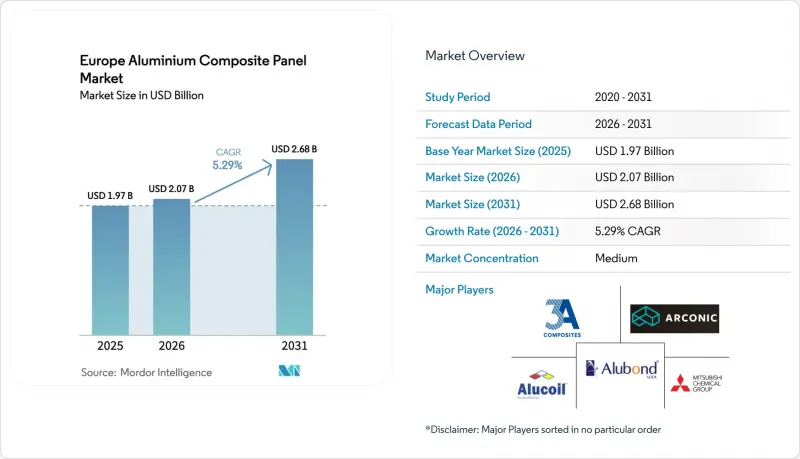
本報告按面漆類型(PE、PVDF 及其他面漆)、應用領域(室內裝飾、標誌及其他)、終端用戶行業(建築、交通運輸及其他終端用戶行業)和地區(德國、英國、法國、義大利、西班牙、北歐國家及其他歐洲國家)進行細分。市場預測以美元計價。
歐洲鋁複合板市場趨勢與洞察
歐盟 (EU) 消防安全標準的日益嚴格,推動了對 A2 和 FR 芯材需求的成長。
格倫費爾大火之後,多個成員國推出法規,將聚乙烯芯材板排除在高層建築規範之外。英國於2018年禁止在18公尺以上的建築物中使用易燃外牆;德國也對7公尺以上的建築物實施了類似的限制;法國則對28公尺以上的摩天大樓採用了A2-s2,d0標準。儘管礦物填充芯材的價格每平方公尺高出15-20歐元,但這些措施仍增加了市場對其的需求。雖然各國之間的測試標準仍存在差異,但高層建築安全工作小組(EUMEPS)在2024年制定的標準協調方案方面取得了進展。已經獲得全面外牆認證的供應商有望從這些變更中受益。
歐盟綠色交易下的「翻新浪潮」要求使用輕質覆材。
「翻新浪潮」計畫旨在2030年維修3,500萬棟建築,並將年度節能維修率翻倍。輕質鋁塑複合板(ACP)覆層每平方公尺僅增加5-7公斤重量,使承包商無需進行結構加固即可安裝新的隔熱材料。波蘭、德國和西班牙正在利用其「復甦與韌性基金」來開展這些計畫。修訂後的《建築能源性能指令》性能標準也將從2028年起實施。專案進度取決於簡化核准程序和確保熟練承包商的加入,但從長遠來看,到2050年,需求量將保持在較低水準。
烏克蘭戰爭後鋁價波動
針對俄羅斯金屬的製裁、歐洲能源成本飆升以及運費溢價,已將倫敦金屬交易所 (LME) 的鋁價推高至每噸 2400 美元,預計到 2024 年初將達到這一價格。與 2019 年相比,區域冶煉廠的產量已削減了 15%,而且在美國 2025 年採取關稅措施後,進口關稅預計將進一步提高。加工商正在對沖未來 3-6 個月的價格波動風險,但利潤率仍面臨壓力。許多公司目前採購價格優惠 200-300 美元且含碳量減少 95% 的再生鋁捲,但由於表面品質的限制,建築級鋁材中再生材料的含量低於 30%。
細分市場分析
PVDF塗層在歐洲鋁複合板市場佔據主導地位,預計到2025年將佔據59.65%的市場佔有率,並在2031年之前以6.35%的複合年成長率成長。 PVDF塗層在歐洲鋁複合板市場的規模得益於其25年的保固標準以及在嚴苛氣候條件下久經考驗的卓越性能。德國、法國和西班牙沿海地區的建築師越來越將聚酯塗層視為生命週期成本風險。儘管聚酯塗層的脆弱性在2024年的供應短缺中暴露無遺,但由於保固要求和保色政策的限制,轉向其他替代方案的趨勢仍然有限。
PVDF 每平方公尺5-8 歐元的溢價僅佔幕牆安裝成本的不到 1%,這使得 A 級辦公室、機場和飯店等場所更容易做出升級決策。像 3A Composites 這樣的捲材塗裝公司,透過自主管理氟聚合物採購,即使在樹脂短缺的情況下也能確保交貨時間,從而進一步增強了自身的競爭力。聚酯材料在室內和臨時標誌領域保持一定的市場佔有率,但其成長速度落後於整體市場成長。
其他好處:
- Excel格式的市場預測(ME)表
- 3個月的分析師支持
目錄
第1章:引言
- 研究假設和市場定義
- 調查範圍
第2章:調查方法
第3章執行摘要
第4章 市場狀況
- 市場概覽
- 市場促進因素
- 歐盟 (EU) 消防安全標準的日益嚴格,推動了對 A2 和 FR 芯材需求的成長。
- 歐盟綠色新政推動的翻新浪潮需要輕質覆材。
- PVDF塗層迅速普及,它兼具耐用性和美觀性。
- 智慧幕牆和 DOOH 廣告的 ACP(廣告處理程序)成長。
- 氫燃料鐵路車輛對輕質鋁塑複合板外板的需求
- 市場限制因素
- 烏克蘭戰爭後鋁價波動
- 負責涉及易燃聚乙烯芯材的外牆維修
- 由於電池行業的需求, 供不應求。
- 價值鏈分析
- 波特五力模型
第5章 市場規模與成長預測
- 頂塗層
- PE(聚酯)
- PVDF(聚二氟亞乙烯)
- 其他面漆
- 目的
- 室內裝潢
- 廣告標牌
- 隔熱材料
- 覆材
- 鐵路營運商
- 柱罩和樑包覆
- 終端用戶產業
- 建築/施工
- 交通運輸(鐵路、公路、公車、船)
- 其他終端用戶產業
- 按地區
- 德國
- 英國
- 法國
- 義大利
- 西班牙
- 北歐國家
- 其他歐洲國家
第6章 競爭情勢
- 市場集中度
- 策略趨勢
- 市佔率和排名分析
- 公司簡介
- 3A Composites
- Alubond USA
- ALUCOIL
- Alumax Europe GmbH
- Arconic Inc.
- Euramax
- Euro Panel Products Pvt Ltd
- Fairview
- Guangzhou Goodsense Decorative Building Materials Co., Ltd.
- Jyi Shyang Industrial Co., Ltd.
- Mitsubishi Chemical Corporation
- Mulford
- STACBOND
- Valcan
- Xxentria
- Yingjia Aluminium Co. Ltd
第7章 市場機會與未來展望
According to Mordor Intelligence, the european aluminium composite panel market size is expected to grow from USD 1.97 billion in 2025 to USD 2.07 billion in 2026 and is forecast to reach USD 2.68 billion by 2031 at 5.29% CAGR over 2026-2031.
This report is Segmented by Top Coating (PE, PVDF, Other Top Coatings), Application (Interior Decoration, Hoarding and Signage, and More), End-User Industry (Building and Construction, Transportation, and Other End-User Industries), and Geography (Germany, United Kingdom, France, Italy, Spain, NORDICS Countries, and Rest of Europe). The Market Forecasts are Provided in Terms of Value (USD).
Europe Aluminium Composite Panel Market Trends and Insights
Stricter European Union Fire-Safety Codes Boosting A2 and FR Cores
Post-Grenfell regulations eliminated polyethylene-core panels from high-rise specifications across several member states. The UK banned combustible facades above 18 m in 2018, Germany adopted similar limits for buildings above 7 m, and France applied A2-s2,d0 rules on towers over 28 m. These measures have raised demand for mineral-filled cores despite a EUR 15-20 per m2 price premium. National testing differences continue, yet a 2024 working group under EUMEPS signaled progress toward harmonization. Suppliers that already hold full-scale facade certifications are poised to benefit.
Renovation Wave Under EU Green Deal Needs Lightweight Cladding
The Renovation Wave aims to retrofit 35 million buildings by 2030, doubling the annual energy renovation rate. Lightweight ACP over-cladding adds only 5-7 kg per m2, enabling installers to place new insulation without structural reinforcement. Poland, Germany, and Spain earmark Recovery and Resilience funds for such work, and performance standards in the recast Energy Performance of Buildings Directive kick in from 2028. The project flow depends on streamlined permitting and a trained installer base; however, the long-term horizon secures a demand floor through 2050.
Aluminium Price Volatility Post-Ukraine War
Sanctions on Russian metal, high European energy tariffs, and freight premiums lifted LME aluminium to USD 2,400 per tonne in early 2024. Regional smelters curtailed output by 15% compared with 2019, and import duties rose further after the 2025 U.S. tariff round. Fabricators hedge three to six months of exposure but still face margin compression. Many now source recycled coils that carry a USD 200-300 discount and 95% lower embodied carbon, though surface-quality limits keep recycled content below 30% in architectural grades.
Other drivers and restraints analyzed in the detailed report include:
- Rapid Uptake of PVDF Coatings for Durability and Aesthetics
- Growth of Digitally Printed ACPs for Smart Facades and DOOH Ads
- Re-Cladding Liabilities on Combustible PE Cores
For complete list of drivers and restraints, kindly check the Table Of Contents.
Segment Analysis
PVDF finishes dominated the European aluminium composite panel market, accounting for a 59.65% share in 2025, and are on track for a 6.35% CAGR to 2031. The European aluminium composite panel market size for PVDF-coated products benefits from 25-year warranty norms and a proven track record in harsh climates. Architects in coastal regions of Germany, France, and Spain are increasingly viewing polyester as a lifecycle cost risk. Supply tightness in 2024 exposed vulnerabilities, yet substitution remained limited due to warranty requirements and color-retention policies.
PVDF's premium of EUR 5-8 per m2 equates to less than 1% of installed facade cost, making the upgrade decision straightforward for Class A offices, airports, and hospitality assets. Coil coaters that control their own fluoropolymer sourcing, such as 3A Composites, preserved delivery slots even during resin shortages, reinforcing their competitive edge. Polyester retains its share in interior decoration and temporary signage, but its growth lags the headline market.
Complete Report Scope:
- Top Coating
- PE (Polyester)
- PVDF (Polyvinylidene Fluoride)
- Other Top Coatings
- Application
- Interior Decoration
- Hoarding and Signage
- Insulation
- Cladding
- Railway Carrier
- Column Cover and Beam Wrap
- End-User Industry
- Building and Construction
- Transportation (Rail, Auto, Bus, Marine)
- Other End-User Industries
- By Geography
- Germany
- United Kingdom
- France
- Italy
- Spain
- NORDICS Countries
- Rest of Europe
List of Companies Covered in this Report:
- 3A Composites
- Alubond USA
- ALUCOIL
- Alumax Europe GmbH
- Arconic Inc.
- Euramax
- Euro Panel Products Pvt Ltd
- Fairview
- Guangzhou Goodsense Decorative Building Materials Co., Ltd.
- Jyi Shyang Industrial Co., Ltd.
- Mitsubishi Chemical Corporation
- Mulford
- STACBOND
- Valcan
- Xxentria
- Yingjia Aluminium Co. Ltd
Additional Benefits:
- The market estimate (ME) sheet in Excel format
- 3 months of analyst support
TABLE OF CONTENTS
1 Introduction
- 1.1 Study Assumptions and Market Definition
- 1.2 Scope of the Study
2 Research Methodology
3 Executive Summary
4 Market Landscape
- 4.1 Market Overview
- 4.2 Market Drivers
- 4.2.1 Stricter European Union fire-safety codes boosting A2 and FR cores
- 4.2.2 Renovation wave under EU Green Deal needs lightweight cladding
- 4.2.3 Rapid uptake of PVDF coatings for durability and aesthetics
- 4.2.4 Growth of digitally printed ACPs for smart facades and DOOH ads
- 4.2.5 Hydrogen-rail car lightweighting demand for ACP skins
- 4.3 Market Restraints
- 4.3.1 Aluminium price volatility post-Ukraine war
- 4.3.2 Re-cladding liabilities on combustible PE cores
- 4.3.3 PVDF resin shortages due to battery-sector demand
- 4.4 Value Chain Analysis
- 4.5 Porter's Five Forces
- 4.5.1 Bargaining Power of Suppliers
- 4.5.2 Bargaining Power of Consumers
- 4.5.3 Threat of New Entrants
- 4.5.4 Threat of Substitute Products and Services
- 4.5.5 Degree of Competition
5 Market Size and Growth Forecasts (Value)
- 5.1 Top Coating
- 5.1.1 PE (Polyester)
- 5.1.2 PVDF (Polyvinylidene Fluoride)
- 5.1.3 Other Top Coatings
- 5.2 Application
- 5.2.1 Interior Decoration
- 5.2.2 Hoarding and Signage
- 5.2.3 Insulation
- 5.2.4 Cladding
- 5.2.5 Railway Carrier
- 5.2.6 Column Cover and Beam Wrap
- 5.3 End-User Industry
- 5.3.1 Building and Construction
- 5.3.2 Transportation (Rail, Auto, Bus, Marine)
- 5.3.3 Other End-User Industries
- 5.4 By Geography
- 5.4.1 Germany
- 5.4.2 United Kingdom
- 5.4.3 France
- 5.4.4 Italy
- 5.4.5 Spain
- 5.4.6 NORDICS Countries
- 5.4.7 Rest of Europe
6 Competitive Landscape
- 6.1 Market Concentration
- 6.2 Strategic Moves
- 6.3 Market Share(%)/Ranking Analysis
- 6.4 Company Profiles (includes Global level Overview, Market level overview, Core Segments, Financials as available, Strategic Information, Market Rank/Share for key companies, Products and Services, and Recent Developments)
- 6.4.1 3A Composites
- 6.4.2 Alubond USA
- 6.4.3 ALUCOIL
- 6.4.4 Alumax Europe GmbH
- 6.4.5 Arconic Inc.
- 6.4.6 Euramax
- 6.4.7 Euro Panel Products Pvt Ltd
- 6.4.8 Fairview
- 6.4.9 Guangzhou Goodsense Decorative Building Materials Co., Ltd.
- 6.4.10 Jyi Shyang Industrial Co., Ltd.
- 6.4.11 Mitsubishi Chemical Corporation
- 6.4.12 Mulford
- 6.4.13 STACBOND
- 6.4.14 Valcan
- 6.4.15 Xxentria
- 6.4.16 Yingjia Aluminium Co. Ltd
7 Market Opportunities and Future Outlook
- 7.1 White-space and Unmet-Need Assessment

 2026-2030年全球鋁複合板市場
 鋁塑複合板市場:2026-2032年全球市場預測(按產品、最終用途、分銷管道和最終用途行業分類)
 全球鋁複合板市場
 鋁塑複合板市場規模、佔有率、趨勢和預測:按底漆類型、面板類型、配置、應用和地區分類,2026-2034年
 全球鋁塑複合板市場規模、佔有率、趨勢及成長分析報告(2026-2034年)
 2026年全球鋁塑複合板市場報告
 鋁塑複合板市場-全球產業規模、佔有率、趨勢、機會、預測:按類型、底漆類型、成分、地區和競爭對手分類,2021-2031年
 鋁塑複合板市場規模、佔有率及成長分析(按塗層類型、類型、結構和地區分類):產業預測(2026-2033 年)
 美國鋁複合材料市場規模、佔有率和趨勢分析報告:按應用和細分市場預測,2025-2033 年鋁複合材料市場規模、佔有率和趨勢分析報告:按應用、地區和細分市場預測,2025-2033 年