


 |
市場調查報告書
商品編碼
2116601
歐洲輕型商用車租賃:市場佔有率分析、產業趨勢與統計及成長預測(2026-2031 年)Europe LCV Rental - Market Share Analysis, Industry Trends & Statistics, Growth Forecasts (2026 - 2031) |
||||||

※ 本網頁內容可能與最新版本有所差異。詳細情況請與我們聯繫。
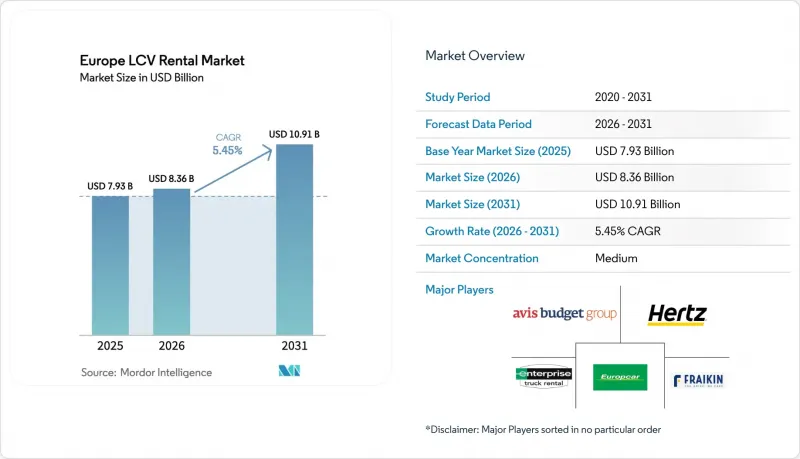
據 Mordor Intelligence 稱,2025 年歐洲輕型商用車租賃市場價值為 79.3 億美元,預計到 2031 年將從 2026 年的 83.6 億美元成長至 109.1 億美元,預測期(2026-2031 年)的複合年成長率為 5.45%。
本報告按預訂類型(線上和線下預訂)、租賃類型(短期和長期)、車輛類型(小型貨車、重型貨車、皮卡和雙排座皮卡、廂式貨車)、動力類型(柴油車、電池式電動車和替代燃料汽車)、終端用戶行業(CEP和電子商務等)以及國家/地區進行細分。市場預測以美元計價。
歐洲輕型商用車租賃市場的趨勢與洞察
電子商務導致小包裹數量激增
線上零售的爆炸式成長導致每日小包裹處理量激增,因此靈活使用貨車對於應對旺季至關重要。隨著當日達和隔天達需求的成長,對分散式配送中心的需求預計也將進一步上升,而只有歐洲龐大的輕型商用車租賃市場網路才能滿足這一需求。黑色星期五和假期季節期間的短期需求高峰在全年小包裹總量中所佔比例越來越大,進一步推高了對日租和周租的需求。租賃車輛還能幫助配送公司避免在淡季期間車輛閒置的負擔,這比擁有車輛節省了一大筆成本。隨著倉庫位置向人口密集的城市地區轉移,小型貨車的重要性日益凸顯。將全國性網路與即時預訂API相結合的營運商在車輛運轉率和獲利能力方面均優於競爭對手。
向輕資產零工經濟配送車隊轉型
像 Uber Eats 和 Gorillas 這樣的平台型外送服務要求司機自備車輛,但許多司機缺乏資金租用車輛。歐洲輕型商用車 (LCV) 租賃市場提供了一種擴充性的解決方案,具有靈活的合約條款和基於使用量的收費系統。 TIMOCOM 的一份報告指出,2024 年的貨運需求量將逐年顯著成長,凸顯了傳統車輛規劃日益沉重的負擔。租賃公司目前正在開發針對零工經濟的客製化方案,結合短期合約、低押金和基於應用程式的報名手續。這些服務幫助獨立司機最大限度地降低營運成本,同時遵守保險和排放氣體法規。為此,大型租賃公司也推出了針對外帶高峰時段的「僅限週末」和「僅限夜間」費率方案。
歐盟27個國家嚴格的WLTP排放氣體法規推高了車輛成本。
隨著WLTP各階段的實施,租車公司被迫購買價格更高的歐6e排放標準車輛和電動車。在德國,2025年的修訂擴大了報告要求,增加了管理成本,並要求在交付前對車輛進行遠端資訊處理追蹤系統的改裝。在法國,除了歐盟法規外,還根據車輛重量徵收罰款,進一步推高了柴油貨車的採購價格。除非以附加費的形式轉嫁給客戶,否則這些成本將對EBITDA獲利率構成壓力;但徵收附加費可能會抑制對價格敏感的中小型企業客戶的需求。許多業者正在加快電動車的訂單,以確保在補貼到期前獲得補貼,這暫時增加了資本支出。從長遠來看,更嚴格的標準將間接加速車輛現代化,提高殘值,並降低每個租賃日的維護頻率。
細分市場分析
2025年,線下合約(52.84%)在歐洲輕型商用車租賃市場佔據最大佔有率,顯示多年期物流合約中基於關係的採購模式正在形成。同時,線上平台的複合年成長率達到5.49%,預計到2031年將持續維持高於整體市場成長率的速度。
數位預訂量的成長反映了配送中心經理和零工經濟司機對智慧型手機的日益普及。 SIXT 於 2024 年推出的應用程式內支付功能,展示了應用程式介面 (API) 如何簡化輔助服務並鼓勵重複預訂。線上平台透過提供動態定價和即時可用性資訊來提高車輛運轉率,而這些資訊是線下管道無法實現的。隨著人工智慧驅動的需求預測日趨成熟,數位管道將透過將每日定價與每個郵遞區號區域的小包裹量波動掛鉤,從而支持更高的利潤率。因此,預計混合模式將在歐洲輕型商用車租賃市場佔據主導地位,在這種模式下,業務經理負責管理框架契約,並在需求高峰期透過應用程式接受預訂。
到2025年,長期租賃將佔歐洲輕型商用車租賃市場的63.05%,為營運商提供可預測的現金流,以支援多年車輛融資。同時,受小包裹處理量波動和按需食品配送新創企業的影響,短期租賃正以5.52%的複合年成長率快速成長。
長期租賃使大型物流公司能夠以固定價格獲得符合排放氣體標準的貨車,從而避免因殘值波動而影響預算。租賃公司可以調整折舊免稅額計劃,以配合WLTP的分階段實施,並維持較高的運轉率。同時,短期租賃的擴張得益於週末限時搶購和假日高峰期,這些時段的宅配需求將在短短幾天內激增。透過使用遠端資訊處理儀錶板,營運商可以在夜間調配閒置車輛,從而最大限度地降低重新部署成本。隨著訂閱經濟從乘用車擴展到輕型商用車,3至12個月的中期合約可能會模糊歐洲輕型商用車租賃市場中傳統的「長期」和「短期」界線。
其他好處:
- Excel格式的市場預測(ME)表
- 3個月的分析師支持
目錄
第1章:引言
- 研究假設和市場定義
- 調查範圍
第2章:調查方法
第3章執行摘要
第4章 市場狀況
- 市場概覽
- 市場促進因素
- 電子商務導致小包裹數量激增
- 轉型為資產最少的零工經濟配送車隊。
- 企業環境、社會及公司治理 (ESG) 目標正在推動電動輕型商用車的租賃。
- 英國脫歐後跨境租賃的綜效
- 實施即時遠端資訊處理和基於使用量的收費。
- 輕型商用車OEM和專屬式訂閱試點項目
- 市場限制因素
- 歐盟27個國家嚴格的WLTP排放氣體推高了車輛的總成本。
- 半導體短缺導致交貨延遲
- 零工經濟駕駛的保險費正在上漲。
- 超低排放區內柴油貨車的市政通行費
- 價值供應鏈分析
- 監理情勢
- 技術展望
- 波特五力模型
第5章 市場規模與成長預測
- 按預訂類型
- 線上預訂
- 線下預訂
- 租賃類型
- 短期
- 長期
- 按車輛類型
- 小型廂型車(總重量小於3.0噸)
- 大型貨車(總重3.0-3.5噸)
- 皮卡和雙排座皮卡
- 廂型車(3.5至7.5噸)
- 依推進類型
- 柴油引擎
- 電池式電動車
- 混合動力和替代燃料(CNG/LNG/H2)
- 按最終用戶行業分類
- 快遞運輸與電子商務物流
- 快速消費品和零售
- 建築/公共產業
- 乘客接駁車和共乘
- 國家
- 德國
- 英國
- 法國
- 西班牙
- 義大利
- 其他歐洲國家
第6章 競爭情勢
- 市場集中度
- 策略趨勢
- 市佔率分析
- 公司簡介
- Enterprise Holdings Inc.
- Europcar Mobility Group
- Sixt SE
- Avis Budget Group
- The Hertz Corporation
- Fraikin SAS
- LeasePlan Corp NV
- ALD Automotive
- Northgate plc
- Ryder System Inc
- Penske Truck Leasing
第7章 市場機會與未來展望
According to Mordor Intelligence, the Europe LCV rental market size was valued at USD 7.93 billion in 2025 and estimated to grow from USD 8.36 billion in 2026 to reach USD 10.91 billion by 2031, at a CAGR of 5.45% during the forecast period (2026-2031).
This report is Segmented by Booking Type (Online Booking and Offline Booking), Rental Type (Short-Term and Long-Term), Vehicle Type (Compact Vans, Large Vans, Pick-Ups & Crew-Cabs, and Box Trucks), Propulsion Type (Diesel, Battery-Electric, and Hybrid & Alternative Fuels), End-User Industry (CEP & E-Commerce Logistics and More), and Country. The Market Forecasts are Provided in Terms of Value (USD).
Europe LCV Rental Market Trends and Insights
Accelerated E-Commerce Parcel Volumes
Explosive online retail activity lifts daily parcel counts, making flexible van access indispensable for peak-season coverage . Same-day and next-day delivery promises to intensify the call for distributed depots that only large European LCV rental market networks can satisfy. Short-term peaks tied to Black Friday and holiday surges now account for an increasingly large slice of annual parcel flows, sharpening demand for daily and weekly hires. Rental fleets also help couriers avoid the idle-asset burden during off-peak months, a key cost distinction versus ownership. Compact van formats become even more vital as warehouse footprints migrate closer to dense city cores. Operators combining a nationwide footprint with real-time booking APIs outperform peers on utilization and yield.
Shift to Asset-Light Gig-Economy Delivery Fleets
Platform-based couriers such as Uber Eats and Gorillas push drivers to furnish their own vehicles, yet many lack the capital for outright purchases. The European LCV rental market offers a scalable workaround with flexible terms and usage-based pricing. TIMOCOM reported a high year-on-year jump in freight requests in 2024, underlining the strain on traditional fleet planning at . Rental providers now craft gig-focused packages that blend short-duration contracts, lower deposits, and app-enabled onboarding. Such offerings help independent drivers comply with insurance and emission rules while minimizing working-capital exposure. In response, mainstream rental firms are rolling out weekend-only or evening-only rates aligned with peak food-delivery slots.
Tight EU-27 WLTP Emission Caps Raising Fleet Costs
Successive WLTP stages oblige rental firms to purchase pricier Euro 6e and electric models. Germany's 2025 updates expand reporting obligations, adding administrative costs and pre-delivery retrofit work for telematics tracking . France complements EU rules with weight-based penalties that further elevate diesel van acquisition prices. These costs squeeze EBITDA margins unless passed through as surcharges, which can temper demand from price-sensitive SME clients. Many operators respond by front-loading electric orders to secure subsidies before expiry, temporarily inflating capital outlays. Over the long term, stricter standards indirectly accelerate fleet modernization, lifting residual values and lowering maintenance events per rental day.
Other drivers and restraints analyzed in the detailed report include:
- Corporate ESG Targets Boosting Electric LCV Leasing
- Post-Brexit Cross-Border Rental Synergies
- Chip-Shortage-Induced Delivery Lags
For complete list of drivers and restraints, kindly check the Table Of Contents.
Segment Analysis
Offline contracts controlled the most significant slice of the European LCV rental market share in 2025 at 52.84%, underscoring entrenched relationship-based procurement for multi-year logistics agreements. Online portals, however, posted a 5.49% CAGR and are forecast to keep outpacing overall market growth through 2031.
Growth in digital reservations reflects rising smartphone penetration among depot managers and gig-economy drivers. SIXT's 2024 roll-out of in-app charging integration showcased how application programming interfaces streamline ancillary services, driving repeat bookings. Online platforms offer dynamic pricing and real-time availability that offline channels cannot replicate, lifting fleet utilization. As artificial intelligence-based demand forecasting matures, digital channels will underpin margin expansion by aligning day-to-day pricing with parcel activity fluctuations across postal codes. Therefore, the European LCV rental market will see hybrid models where account managers handle framework contracts while tactical peaks flow through apps.
Long-term leases contributed 63.05% to the Europe LCV rental market size in 2025, giving operators predictable cash flows that support multi-year fleet financing. Short-term hires are growing faster at 5.52% CAGR, a trend fueled by volatile parcel volumes and on-demand food delivery startups.
Extended leases allow logistics majors to lock in emission-compliant vans at fixed rates, shielding budgets from residual-value swings. Rental firms can align depreciation schedules with WLTP phase-ins, keeping utilization high. Short-term expansion, meanwhile, is underpinned by weekend flash sales and festival peaks where courier demand multiplies for a few days. Telematics dashboards let operators shift idle inventory across depots overnight, minimizing repositioning costs. As subscription economics spread from passenger cars to light commercials, mid-length contracts of 3-12 months may blur the conventional long-versus short-term divide within the European LCV rental market.
Complete Report Scope:
- By Booking Type
- Online Booking
- Offline Booking
- By Rental Type
- Short-Term
- Long-Term
- By Vehicle Type
- Compact Vans (<3.0 t GVW)
- Large Vans (3.0-3.5 t GVW)
- Pick-ups & Crew-cabs
- Box Trucks (3.5-7.5 t)
- By Propulsion Type
- Diesel
- Battery-Electric
- Hybrid & Alternative Fuels (CNG/LNG/H2)
- By End-User Industry
- CEP & E-commerce Logistics
- FMCG & Retail
- Construction & Utilities
- Passenger Shuttle & Ride-pool
- By Country
- Germany
- United Kingdom
- France
- Spain
- Italy
- Rest of Europe
List of Companies Covered in this Report:
- Enterprise Holdings Inc.
- Europcar Mobility Group
- Sixt SE
- Avis Budget Group
- The Hertz Corporation
- Fraikin SAS
- LeasePlan Corp NV
- ALD Automotive
- Northgate plc
- Ryder System Inc
- Penske Truck Leasing
Additional Benefits:
- The market estimate (ME) sheet in Excel format
- 3 months of analyst support
TABLE OF CONTENTS
1 Introduction
- 1.1 Study Assumptions & Market Definition
- 1.2 Scope of the Study
2 Research Methodology
3 Executive Summary
4 Market Landscape
- 4.1 Market Overview
- 4.2 Market Drivers
- 4.2.1 Accelerated E-Commerce Parcel Volumes
- 4.2.2 Shift To Asset-Light Gig-Economy Delivery Fleets
- 4.2.3 Corporate ESG Targets Boosting Electric LCV Leasing
- 4.2.4 Post-Brexit Cross-Border Rental Synergies
- 4.2.5 Adoption Of Real-Time Telematics & Usage-Based Billing
- 4.2.6 OEM-Captive Subscription Pilots For LCVs
- 4.3 Market Restraints
- 4.3.1 Tight EU-27 WLTP Emission Caps Raising Fleet Costs
- 4.3.2 Chip-Shortage-Induced Delivery Lags
- 4.3.3 Rising Insurance Premiums For Gig-Economy Drivers
- 4.3.4 Municipal Access Charges For Diesel Vans In ULEZ Zones
- 4.4 Value / Supply-Chain Analysis
- 4.5 Regulatory Landscape
- 4.6 Technological Outlook
- 4.7 Porter's Five Forces
- 4.7.1 Threat of New Entrants
- 4.7.2 Bargaining Power of Buyers/Consumers
- 4.7.3 Bargaining Power of Suppliers
- 4.7.4 Threat of Substitute Products
- 4.7.5 Intensity of Competitive Rivalry
5 Market Size & Growth Forecasts (Value (USD))
- 5.1 By Booking Type
- 5.1.1 Online Booking
- 5.1.2 Offline Booking
- 5.2 By Rental Type
- 5.2.1 Short-Term
- 5.2.2 Long-Term
- 5.3 By Vehicle Type
- 5.3.1 Compact Vans (<3.0 t GVW)
- 5.3.2 Large Vans (3.0-3.5 t GVW)
- 5.3.3 Pick-ups & Crew-cabs
- 5.3.4 Box Trucks (3.5-7.5 t)
- 5.4 By Propulsion Type
- 5.4.1 Diesel
- 5.4.2 Battery-Electric
- 5.4.3 Hybrid & Alternative Fuels (CNG/LNG/H2)
- 5.5 By End-User Industry
- 5.5.1 CEP & E-commerce Logistics
- 5.5.2 FMCG & Retail
- 5.5.3 Construction & Utilities
- 5.5.4 Passenger Shuttle & Ride-pool
- 5.6 By Country
- 5.6.1 Germany
- 5.6.2 United Kingdom
- 5.6.3 France
- 5.6.4 Spain
- 5.6.5 Italy
- 5.6.6 Rest of Europe
6 Competitive Landscape
- 6.1 Market Concentration
- 6.2 Strategic Moves
- 6.3 Market Share Analysis
- 6.4 Company Profiles {(Includes Global level Overview, Market level overview, Core Segments, Financials as available, Strategic Information, Market Rank/Share for key companies, Products & Services, and Recent Developments)}
- 6.4.1 Enterprise Holdings Inc.
- 6.4.2 Europcar Mobility Group
- 6.4.3 Sixt SE
- 6.4.4 Avis Budget Group
- 6.4.5 The Hertz Corporation
- 6.4.6 Fraikin SAS
- 6.4.7 LeasePlan Corp NV
- 6.4.8 ALD Automotive
- 6.4.9 Northgate plc
- 6.4.10 Ryder System Inc
- 6.4.11 Penske Truck Leasing
7 Market Opportunities & Future Outlook
- 7.1 White-space & Unmet-need Assessment

 全球氫動力重型機械市場規模、佔有率、趨勢和成長分析報告(2026-2034)
 2026-2030年全球氫燃料重型機械市場
 工業車輛:市場佔有率分析、產業趨勢及統計、成長預測(2026-2031)
 氫氣輔助重型機械市場分析及預測(至2035年):類型、產品、服務、技術、組件、應用、製程、最終用戶、安裝方式、設備氫動力重型機械市場規模、佔有率、成長、全球產業分析、區域趨勢及2026年至2034年預測。
 工業車輛市場-2026-2032年全球市場預測氫動力重型機械市場分析及預測(至2035年):依類型、產品、服務、技術、組件、應用、形式、材質、部署形式及最終用戶分類
 零排放重型設備市場:商業機會、成長要素、產業趨勢分析及2026-2035年預測工業用車輛市場分析與預測(至2035年):類型、產品、技術、組件、應用、最終用戶、功能、設備、解決方案
 全球商用車自排變速箱市場