


 |
市場調查報告書
商品編碼
2116111
北美UPVC門窗:市場佔有率分析、產業趨勢與統計及成長預測(2026-2031年)North America UPVC Doors And Windows - Market Share Analysis, Industry Trends & Statistics, Growth Forecasts (2026 - 2031) |
||||||

※ 本網頁內容可能與最新版本有所差異。詳細情況請與我們聯繫。
根據 Mordor Intelligence 預測,北美 UPVC 門窗市場規模將從 2025 年的 118.4 億美元成長到 2026 年的 122.5 億美元,到 2031 年將達到 148.6 億美元,2026 年至 2031 年的複合成長率為 3.44%。
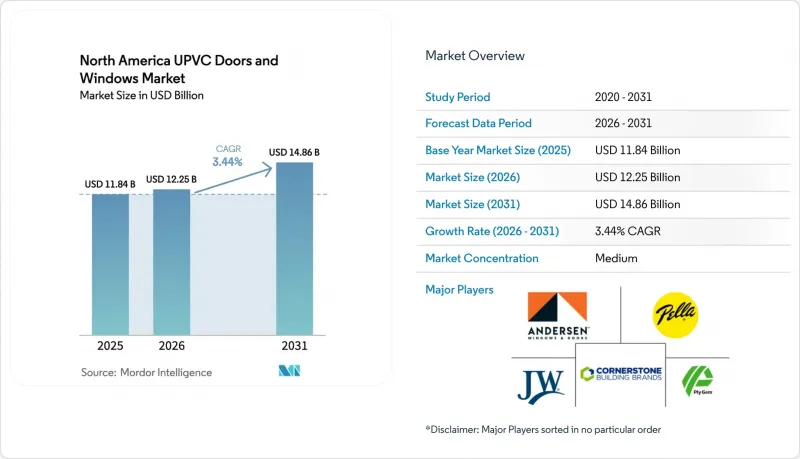
本報告按產品類型(UPVC門、UPVC窗)、最終用戶(住宅、商業、工業/公共)、安裝類型(新建、維修/更換)、分銷通路(直銷(製造商)、經銷商/經銷商網路、線上零售)和地區(美國、加拿大、墨西哥)進行細分。市場預測以美元計價。
北美UPVC門窗市場趨勢與洞察
嚴格的能源效率法規和獎勵
全部區域的能源效率標準持續收緊,能源之星7.0版要求降低U值,並提高高性能窗戶材料的太陽能熱增益係數(SHGC)要求。這實際上促使北部地區許多高階住宅產品系列轉向三層玻璃窗。聯邦政府透過各項計畫和津貼,推動各轄區向更有效率的規範過渡,從而促進了該地區對節能產品的採用。這鼓勵建築商和改造商採用符合2024年國際節能規範(IECC)標準的低U值窗戶,或獲得基於性能的積分。美國能源局(DOE)的指導方針和節能框架解釋了低輻射(Low-E)玻璃和先進玻璃如何降低供暖和製冷負荷,這些節能效果與獎勵計劃和住宅稅額扣抵掛鉤,從而提高了門窗維修的投資回報率(ROI)。美國國家門窗委員會 (NFRC) 於 2023 年對 U 值和 SHGC 測量程序進行了技術更新,加強了產品測試與標籤值在實際環境中的相關性,從而有助於減少保固糾紛,並支持各建築規範管轄區的合規性。加州於 2025 年修訂了第 24 章第六節,該修訂案推動加州朝著更嚴格的建築圍護結構和熱泵標準邁進,這通常會提高門窗的性能標準,從而影響全國範圍內的產品系列開發和庫存策略。
房屋裝修主導需求激增。
受老舊住宅和日益成長的能源成本敏感性的推動,北美UPVC門窗市場持續成長,其主要驅動力在於對建築圍護結構進行升級改造,從而顯著提升舒適度並節省能源成本。修訂後的建築規範和稅額扣抵使住宅能夠輕鬆選擇符合規範的產品,透過標準化表格申請稅收優惠,並推進原本可能延期的多開門維修項目。公共產業計畫和社區主導的措施增加了可疊加的補貼,進一步縮短了投資回收期。即使在利率上升和住宅供應緊張的時期,這些因素也保持了強勁的更換需求。國家協會和評級機構已將U值和太陽能熱增益係數(SHGC)的評估標準標準化,簡化了不同品牌門窗的規格和比較,減少了更換決策過程中的阻力。製造商推出了安裝系統,可以實現更快速、更清潔的室內更換作業。這減少了施工對日常生活的影響和人工成本,提高了每個施工團隊的處理能力,並有助於緩解因熟練工人短缺造成的瓶頸。
與隔熱鋁的競爭
為了滿足日益嚴格的建築規範閾值,保溫鋁合金隔間的U值和組裝工藝不斷改進,這在一定程度上降低了UPVC在某些商業和豪華住宅項目中的隔熱優勢。在適用2024版IECC和ASHRAE 90.1標準的冷氣候地區,整合隔熱層、暖邊隔條和三層玻璃的鋁合金系統能夠達到符合相關標準的性能水準。此外,建築師也傾向於選擇視線較窄、跨度較大的鋁合金隔間,以滿足更大的開口需求。建築規範的採納趨勢正在提高固定開口和可開啟開口的最低標準,這些基準值使得鋁合金產品能夠在滿足商業應用場景中的美觀和結構要求的同時,也符合相關標準。在沿海地區,鋁合金產品廣泛採用耐腐蝕和抗衝擊塗層。這些特性,再加上符合建築規範,使得鋁合金產品在需要更高或更寬開口的專案設計中,成為UPVC的可靠替代方案。即使安裝成本很高,但鋁材的耐用性和形態特徵使其成為在嚴格的建築規範約束下,兼顧生命週期考慮、外觀設計和專案預算時的一個合理選擇。
細分市場分析
預計到2025年,UPVC門窗將佔北美UPVC門窗市場佔有率的65.83%,並預計在2031年之前以4.13%的複合年成長率成長。能源之星標準的日益嚴格以及國際節能規範(IECC)的修訂提高了住宅和小規模商業建築開口(門窗)的性能標準。實際上,無論氣候區如何,門窗都有助於實現建築圍護結構的目標U值和太陽能熱增益係數(SHGC),因此門窗規格至關重要。符合能源之星「最高效」標準並滿足更嚴格建築規範的產品,可為住宅和建築商簡化退稅和稅額扣抵申請流程。美國國家門窗評估委員會(NFRC)更新的標籤檢視和性能檢驗程序進一步簡化了建築規範檢查,並在交付時統一了U值和SHGC的預期,從而減少了返工和保固索賠。對於業主和設施管理人員來說,全面的生命週期評估考慮了隔熱性能、安裝成本和維護的便利性,這推動了北美UPVC門窗市場在住宅和小規模商業項目的整體常見開口中採用UPVC。
由於沿海各州對抗衝擊門體的建築規範和保險要求日益嚴格,以及隔熱UPVC門系統在維持經濟實惠的更換安裝成本的同時,還能實現優異的R值,UPVC門市場持續成長。隨著各地區能源標準在2026年轉向更高的建築圍護結構基準值,製造商正致力於改進核心材料和玻璃選擇,以滿足需要自然採光的半透光和全透光門設計的U值目標。 NFRC框架使買家能夠根據統一標準比較門窗性能,這種透明度促進了按性能等級分類的UPVC產品的普及。領先品牌推出的安裝工具和可拆卸框架選項縮短了安裝時間,從而提高了每個團隊的工作效率,並降低了時間緊迫的翻新專案的整體擁有成本。在整個預測期內,專注於熱橋、五金整合和智慧功能的產品開發,確保了北美UPVC門窗市場的門窗產品能夠持續滿足不斷變化的建築標準和使用者體驗期望。
住宅市場受益於成熟的房屋更換週期和鼓勵全住宅維修的稅額扣抵,仍將是銷量最大的細分市場,到2025年將佔據58.14%的市場佔有率。同時,商業市場成長最快,複合年成長率達3.92%,這主要得益於符合ASHRAE 90.1標準的規範和性能主導建築標準。基於性能的能源模型和不斷變化的市政標準促使商業地產業主考慮改進建築圍護結構,以降低建築的整體負荷,這可能會推動規範轉向更高性能的門窗配置。公共產業項目和公共部門採購標準鼓勵選擇具有清晰性能文件、環境透明度和耐久性的產品,這與符合認證標準且價格具有競爭力的UPVC產品相契合。機構投資者往往非常重視生命週期和保固支持,因此,製造商營運的安裝和服務項目正在不斷擴展,以確保產品性能和符合法規要求。由於家庭利用稅額扣抵抵免,住宅市場仍然強勁,建築商依靠合格製造商識別號碼 (QMID) 等標準化文件來簡化計費程序。
對於商業買家而言,跨多個司法管轄區的標籤檢視的可靠性是顯著優勢。這降低了在北美UPVC門窗市場進行大規模維修工程時的合規風險。對於機構和輕工業建築而言,預算和維護方面的實際情況要求材料即使在頻繁使用的環境中也能提供可靠的隔熱性能和成本控制。在這方面,UPVC適用於標準尺寸的非結構性開口。在辦公大樓改建為住宅和適應性再利用專案中,UPVC的隔熱和隔音性能,結合合適的玻璃和隔間技術,通常足以滿足建築規範和舒適度目標。如果專案能夠證明其符合建築規範,並透過圍護結構維修(作為建築整體節能計畫的一部分)提升性能,則可獲得公共獎勵的進一步支持。這些需求趨勢解釋了為什麼儘管住宅仍然佔據很大佔有率,但北美UPVC門窗市場的商業市場成長速度可能略高於住宅市場。
其他好處
- Excel格式的市場預測(ME)表
- 3個月的分析師支持
目錄
第1章:引言
- 研究假設和市場定義
- 調查範圍
第2章:調查方法
第3章執行摘要
第4章 市場狀況
- 市場概覽
- 市場促進因素
- 嚴格的能源效率法規和獎勵
- 房屋裝修主導需求激增。
- 與木材和鋁材相比,具有材料成本優勢。
- 保險引發了抗颶風UPVC產品的普及。
- 利用回收材料擴大擠出成型產能
- 採用智慧感測器相容設定檔
- 市場限制因素
- PVC樹脂價格波動
- 來自絕緣鋁的競爭
- 對原生PVC的ESG限制
- 熟練安裝人員短缺
- 產業價值鏈分析
- 監理情勢
- 波特五力分析
- 洞察最新市場趨勢與創新
- 近期市場趨勢分析(新產品發布、策略性舉措、投資、合作、合資、業務擴張、併購等)
第5章 市場規模與成長預測
- 依產品類型
- UPVC門
- 拉門
- 鉸鏈門
- 傾斜旋轉門
- 法式門
- 其他
- UPVC窗戶
- 推拉窗
- 平開窗
- 傾斜旋轉窗
- 其他(觀景窗、固定窗、外開窗)
- UPVC門
- 最終用戶
- 住宅
- 商業
- 工業和公共設施
- 按安裝類型
- 新建工程
- 維修和更換
- 透過分銷管道
- 直銷(製造商)
- 銷售代理商/經銷商網路
- 線上零售
- 國家
- 美國
- 加拿大
- 墨西哥
第6章 競爭情勢
- 市場集中度
- 策略趨勢
- 市佔率分析
- 公司簡介
- Andersen Corporation
- Pella Corporation
- JELD-WEN Holding Inc.
- Cornerstone Building Brands(MI Windows)
- Ply Gem
- Marvin Windows & Doors
- Milgard Manufacturing
- Harvey Building Products
- Atrium Windows & Doors
- Viwinco
- Simonton Windows & Doors
- Soft-Lite LLC
- YKK AP America
- Crystal Window & Door Systems
- REHAU
- VEKA AG
- Deceuninck NV
- Profine Group(Kommerling)
- Aluplast GmbH
- Eurocell plc
第7章 市場機會與未來展望
According to Mordor Intelligence, the North America UPVC doors and windows market size is expected to grow from USD 11.84 billion in 2025 to USD 12.25 billion in 2026 and is forecast to reach USD 14.86 billion by 2031 at 3.44% CAGR over 2026-2031.
This report is Segmented by Product Type (uPVC Doors, UPVC Windows), End User (Residential, Commercial, Industrial & Institutional), Installation (New Construction, Renovation & Replacement), Distribution Channel (Direct Sales Manufacturers, Distributor Dealer Network, Retail & Online), and Geography (United States, Canada, Mexico). The Market Forecasts are Provided in Terms of Value USD.
North America UPVC Doors And Windows Market Trends and Insights
Stringent Energy-Efficiency Regulations & Incentives
Energy-efficiency criteria continue to tighten across the region, with ENERGY STAR Version 7.0 pushing U-factors lower and raising SHGC expectations for high-performance fenestration, which effectively steers many premium residential lines toward triple-pane options in northern zones. Federal support bolsters local adoption through programs and grants that help jurisdictions move to more efficient model codes, which in turn nudge builders and remodelers toward low U-factor windows that meet the prescriptive path or earn credits under performance paths within the 2024 IECC. DOE guidance and the Energy Saver framework document how low-e and advanced glazing reduce heating and cooling loads, and those savings tie into incentive programs and homeowner tax credits that improve ROI on fenestration upgrades. NFRC's 2023 technical updates to U-factor and SHGC procedures strengthen the linkage between product testing and real-world label values, which helps mitigate warranty disputes and supports compliance across code jurisdictions. California's Title 24 Part 6 2025 update moves the state toward tighter envelope baselines and heat pump norms, and it often raises the performance bar for windows and doors in ways that cascade into product development and stocking strategies across national portfolios.
Renovation-Led Demand Surge
Replacement momentum remains a defining growth axis for the North America uPVC doors and windows market as aging housing and energy-bill sensitivity prioritize envelope improvements that deliver measurable comfort and utility-bill outcomes. Code updates and available credits make it easier for homeowners to pick compliant products, claim tax benefits through standardized forms, and move forward with multi-opening projects that would otherwise be delayed. Utility programs and local initiatives add stackable rebates that further compress the payback period, keeping replacement activity resilient during phases of higher interest rates and constrained new-home supply. National associations and rating councils have standardized rating protocols for U-factor and Solar Heat Gain Coefficient (SHGC), which simplifies specifying and comparing windows and doors across brands, and this reduces friction in the sales process for replacement decisions. Manufacturers have introduced installation systems that allow faster, cleaner replacements from the interior, which lowers project disruption and labour hours, raising throughput per crew and helping alleviate skilled installer bottlenecks.
Competition from Thermally Broken Aluminum
Thermally broken aluminum continues to improve U-factors and assembly techniques to meet stricter code thresholds, which narrows uPVC's thermal advantage in certain commercial and high-end residential specifications. In cold climate zones under 2024 IECC and ASHRAE 90.1, aluminum systems that integrate thermal breaks, warm-edge spacers, and triple glazing can achieve performance levels that satisfy prescriptive paths, and architects often prefer the slimmer sightlines and span capacity for larger openings. Code adoption trends elevate minimums for fixed and operable fenestration, and these thresholds open pathways for aluminum products to qualify while maintaining aesthetic and structural preferences in commercial use cases. In coastal markets, corrosion-resistant finishes and impact-rated configurations are widely available for aluminum, which, when combined with code compliance, present credible alternatives to uPVC where project design requires tall or wide spans. Even with higher installed costs, aluminum's durability and form factor can justify specifications where lifecycle considerations, facade design, and project budgets align under strict code constraints.
Other drivers and restraints analyzed in the detailed report include:
- Material Cost-Advantage vs. Wood & Aluminum
- Smart-Sensor-Ready Profile Adoption
- Skilled Installer Shortage
For complete list of drivers and restraints, kindly check the Table Of Contents.
Segment Analysis
uPVC windows captured 65.83% of the 2025 North America uPVC doors and windows market share, and are set to grow at a 4.13% CAGR through 2031. Intensifying ENERGY STAR criteria and IECC updates elevate the required performance for residential and light commercial fenestration, which in practice keeps window specifications front and centre due to their contribution to envelope U-factors and Solar Heat Gain Coefficient (SHGC) targets across climate zones. Products that meet ENERGY STAR Most Efficient thresholds or comply with stretch codes gain an advantage by simplifying rebate and tax credit documentation for homeowners and builders. Labelling and performance verification through the National Fenestration Rating Council's updated procedures further streamlines code inspections and aligns expectations for delivered U-factor and SHGC, which reduces rework and warranty claims. For owners and facility managers, the lifecycle equation pairs thermal performance with installed cost and maintenance profile, which supports the use of uPVC across a wide span of typical openings in residential and smaller commercial projects in the North America uPVC doors and windows market.
uPVC doors maintain growth parity because code and insurance requirements for impact-rated entries remain prominent in coastal states, and because insulated uPVC door systems can reach attractive R-values while keeping installed costs accessible for replacement projects. As jurisdictional energy standards move toward higher envelope baselines in 2026, manufacturers have focused on improved cores and glazing options to meet U-factor targets for half-light and full-light door designs where daylighting is desired. The NFRC framework helps buyers compare door and window performance on a uniform basis, and this transparency supports broader adoption of performance-tiered uPVC offerings. Installation tools and knockdown frame options introduced by leading brands shorten install times, which raises throughput per crew and lowers total cost of ownership for time-sensitive remodelling projects. Over the forecast period, product development targeting thermal bridging, hardware integration, and smart-ready features keeps both windows and doors aligned with evolving code and user-experience expectations across the North America uPVC doors and windows market.
The residential segment remained the largest by volume with 58.14% share in 2025, benefiting from an entrenched replacement cycle and tax credits that promote whole-home upgrades, while the commercial segment is the fastest growing with a 3.92% CAGR on specifications tied to ASHRAE 90.1 and performance-led code paths. Energy modelling for performance-based compliance and evolving municipal standards push commercial owners to evaluate envelope improvements that reduce whole-building loads, which can tilt specifications toward higher-performing fenestration configurations. Utility programs and public-sector procurement standards encourage the selection of products with clear performance documentation, environmental transparency, and durability, which aligns with uPVC offerings that meet certified thresholds at competitive cost. Institutional buyers often weigh lifecycle and warranty support heavily, an area where manufacturer-direct installation and service programs have grown to ensure product performance and compliance alignment. Residential momentum remains resilient as households leverage tax credits, while installers rely on standardized documentation like Qualified Manufacturer Identification Numbers to simplify claims.
Commercial buyers also benefit from code consistency and labelling assurance across multi-jurisdiction portfolios, which reduces compliance risk when deploying retrofit programs at scale in the North America uPVC doors and windows market. For institutional facilities and light industrial buildings, budgets and maintenance practicalities favour materials that deliver reliable thermal performance and cost control under frequent use, which positions uPVC for non-structural, standard-size openings. In office-to-residential conversions and adaptive reuse, uPVC's thermal and acoustic characteristics are often sufficient when paired with appropriate glazing and spacer technologies to meet code and comfort goals. Public incentives, where available, add further support when projects can document code or performance gains for envelope upgrades as part of whole-building energy plans. This demand profile underscores why commercial growth can edge ahead of residential, even as residential retains the larger share in the North America uPVC doors and windows market.
Complete Report Scope:
- By Product Type
- uPVC Doors
- Sliding Doors
- Casement Doors
- Tilt & Turn Doors
- French Doors
- Others
- uPVC Windows
- Sliding Windows
- Casement Windows
- Tilt & Turn Windows
- Others (Picture / Fixed Windows,Awning Windows)
- uPVC Doors
- By End User
- Residential
- Commercial
- Industrial & Institutional
- By Installation
- New Construction
- Renovation & Replacement
- By Distribution Channel
- Direct Sales (Manufacturers)
- Distributor / Dealer Network
- Retail & Online
- By Country
- United States
- Canada
- Mexico
List of Companies Covered in this Report:
- Andersen Corporation
- Pella Corporation
- JELD-WEN Holding Inc.
- Cornerstone Building Brands (MI Windows)
- Ply Gem
- Marvin Windows & Doors
- Milgard Manufacturing
- Harvey Building Products
- Atrium Windows & Doors
- Viwinco
- Simonton Windows & Doors
- Soft-Lite LLC
- YKK AP America
- Crystal Window & Door Systems
- REHAU
- VEKA AG
- Deceuninck NV
- Profine Group (Kommerling)
- Aluplast GmbH
- Eurocell plc
Additional Benefits:
- The market estimate (ME) sheet in Excel format
- 3 months of analyst support
TABLE OF CONTENTS
1 Introduction
- 1.1 Study Assumptions & Market Definition
- 1.2 Scope of the Study
2 Research Methodology
3 Executive Summary
4 Market Landscape
- 4.1 Market Overview
- 4.2 Market Drivers
- 4.2.1 Stringent energy-efficiency regulations & incentives
- 4.2.2 Renovation-led demand surge
- 4.2.3 Material cost-advantage vs. wood & aluminum
- 4.2.4 Insurance-driven uptake of hurricane-rated uPVC
- 4.2.5 Recycled-content extrusion capacity expansion
- 4.2.6 Smart-sensor-ready profile adoption
- 4.3 Market Restraints
- 4.3.1 PVC resin price volatility
- 4.3.2 Competition from thermally-broken aluminum
- 4.3.3 ESG limits on virgin PVC
- 4.3.4 Skilled installer shortage
- 4.4 Industry Value Chain Analysis
- 4.5 Regulatory Landscape
- 4.6 Porter's Five Forces Analysis
- 4.6.1 Bargaining Power of Suppliers
- 4.6.2 Bargaining Power of Buyers
- 4.6.3 Threat of New Entrants
- 4.6.4 Threat of Substitutes
- 4.6.5 Competitive Rivalry
- 4.7 Insights into the Latest Trends and Innovations in the Market
- 4.8 Insights into Recent Developments (New Product Launches, Strategic Initiatives, Investments, Partnerships, JVs, Expansion, M&As, etc.) in the Market
5 Market Size & Growth Forecasts
- 5.1 By Product Type
- 5.1.1 uPVC Doors
- 5.1.1.1 Sliding Doors
- 5.1.1.2 Casement Doors
- 5.1.1.3 Tilt & Turn Doors
- 5.1.1.4 French Doors
- 5.1.1.5 Others
- 5.1.2 uPVC Windows
- 5.1.2.1 Sliding Windows
- 5.1.2.2 Casement Windows
- 5.1.2.3 Tilt & Turn Windows
- 5.1.2.4 Others (Picture / Fixed Windows,Awning Windows)
- 5.1.1 uPVC Doors
- 5.2 By End User
- 5.2.1 Residential
- 5.2.2 Commercial
- 5.2.3 Industrial & Institutional
- 5.3 By Installation
- 5.3.1 New Construction
- 5.3.2 Renovation & Replacement
- 5.4 By Distribution Channel
- 5.4.1 Direct Sales (Manufacturers)
- 5.4.2 Distributor / Dealer Network
- 5.4.3 Retail & Online
- 5.5 By Country
- 5.5.1 United States
- 5.5.2 Canada
- 5.5.3 Mexico
6 Competitive Landscape
- 6.1 Market Concentration
- 6.2 Strategic Moves
- 6.3 Market Share Analysis
- 6.4 Company Profiles {(includes Global level Overview, Market level overview, Core Segments, Financials as available, Strategic Information, Market Rank/Share for key companies, Products & Services, and Recent Developments)}
- 6.4.1 Andersen Corporation
- 6.4.2 Pella Corporation
- 6.4.3 JELD-WEN Holding Inc.
- 6.4.4 Cornerstone Building Brands (MI Windows)
- 6.4.5 Ply Gem
- 6.4.6 Marvin Windows & Doors
- 6.4.7 Milgard Manufacturing
- 6.4.8 Harvey Building Products
- 6.4.9 Atrium Windows & Doors
- 6.4.10 Viwinco
- 6.4.11 Simonton Windows & Doors
- 6.4.12 Soft-Lite LLC
- 6.4.13 YKK AP America
- 6.4.14 Crystal Window & Door Systems
- 6.4.15 REHAU
- 6.4.16 VEKA AG
- 6.4.17 Deceuninck NV
- 6.4.18 Profine Group (Kommerling)
- 6.4.19 Aluplast GmbH
- 6.4.20 Eurocell plc
7 Market Opportunities & Future Outlook
- 7.1 Closed-Loop Recycling & Reprocessed uPVC Feedstock
- 7.2 Smart-Ready Retrofit Systems

 2026-2030年全球UPVC門窗市場
 印度UPVC門窗:市場佔有率分析、產業趨勢與統計及成長預測(2026-2031年)UPVC門窗:市場佔有率分析、產業趨勢與統計、成長預測(2026-2031年)
 UPVC門窗市場-全球產業規模、佔有率、趨勢、機會和預測:按產品類型、最終用戶、分銷管道、地區和競爭格局分類,2021-2031年
 塑鋼門窗市場規模、佔有率及趨勢分析報告:依產品、應用、地區及細分市場預測(2026-2033 年)
 PVC-U門窗市場:依玻璃類型、產品類型、表面處理、型材腔體、銷售管道、窗戶系統類型、門系統類型、最終用戶、應用領域分類,全球預測(2026-2032)
 全球PVC窗框型材市場規模、佔有率、趨勢及成長分析報告(2026-2034年)
 2026年全球商用聚氯乙烯(PVC)窗型材市場報告住宅用UPVC門窗市場-全球產業規模、佔有率、趨勢、機會及預測(依產品類型、配銷通路、地區及競爭格局分類,2021-2031年預測)
 硬質PVC門窗:全球市佔率及排名、總收入及需求預測(2025-2031年)