


 |
市場調查報告書
商品編碼
2115860
美國工業氣體:市場佔有率分析、行業趨勢和統計數據以及成長預測(2026-2031 年)United States Industrial Gas - Market Share Analysis, Industry Trends & Statistics, Growth Forecasts (2026 - 2031) |
||||||

※ 本網頁內容可能與最新版本有所差異。詳細情況請與我們聯繫。
根據 Mordor Intelligence 預測,美國工業氣體市場將從 2025 年的 3.772 億噸成長到 2026 年的 3.9184 億噸,然後在 2031 年達到 4.7399 億噸,2026 年至 2031 年的複合年成長率為 3.88%。
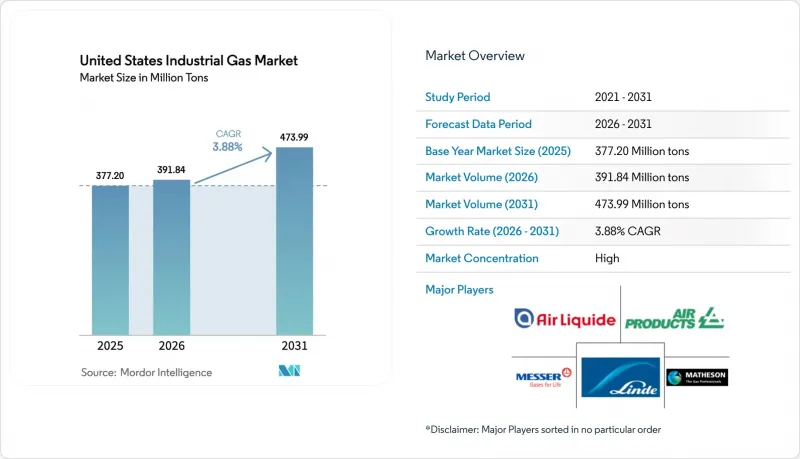
本報告按產品類型(氮氣、氧氣、二氧化碳、氫氣、氦氣、氬氣、氨氣、甲烷等)和終端用戶行業(化學加工和精煉、電子、食品飲料、石油天然氣、金屬製造和加工、醫療製藥、汽車和運輸等)進行細分。市場預測以數量(噸)為單位。
美國工業氣體市場的趨勢與洞察
來自醫療領域的需求增加
疫情期間,隨著醫院擴大重症監護能力並維持家庭氧氣療法項目,醫用氧氣的出貨量激增並保持在高位。美國食品藥物管理局 (FDA) 現行的良好生產規範 (cGMP) 法規(21 CFR 第 211 部分)要求進行批次記錄、純度測試和經過驗證的填充程序,這增加了醫用氧氣的生產成本,使其高於工業級氧氣。製藥公司正在生技藥品潔淨室中擴大超高純氮氣的使用,因為無塵室中的氧氣濃度必須保持在 1 ppm 以下,以防止氧化劣化。遠端醫療在農村地區的普及推動了對攜帶式氧氣濃縮機的需求。霍爾斯頓氣體公司 (Holston Gases) 和 nexAir 等區域經銷商正透過訂閱模式滿足此細分市場的需求。這些趨勢共同鞏固了美國工業氣體市場對醫用級可靠性和可追溯性的關注。
冷凍和包裝食品的需求不斷成長
液態氮隧道溫度可達-196 度C ,正在取代機械式速凍機,因為它們能在數秒內鎖住產品中的水分,減少水分流失,保持產品質地。調氣包裝以氮氣或二氧化碳取代氧氣,可減緩微生物生長,使新鮮切好的農產品無需防腐劑即可運輸長達10天。美國農業部2024年的一項低溫運輸現代化津貼支持了當地肉類和乳製品加工廠的氮氣注入系統,加速了中型加工商對此系統的採用。受飲料業對二氧化碳注入的需求以及物流業對乾冰的需求所推動,二氧化碳的需求也不斷成長。液化空氣集團2024年在田納西州投資興建的空氣分離工廠,將二氧化碳液化廠與當地食品加工產業的供應連結起來。這些因素正在推動美國工業氣體市場中食品產業的快速成長。
氦氣供應持續波動,價格不斷上漲
2024年,克利夫賽德氣田區塊的關閉意味著失去了一個至關重要的緩衝帶,而這個緩衝帶曾保障了美國國內氦氣供應長達半個世紀的穩定。儘管梅塞爾公司收購聯邦氦氣系統公司引入了私營部門的監管,但氦氣現貨價格仍然出現了顯著的年度波動。使用核磁共振掃描儀的醫院正在投資建造閉合迴路氦氣回收系統,以減少氦氣的消耗。與此同時,航太和光纖製造商一直在探索氫氣和氖氣作為替代氣體,但技術上的權衡取捨阻礙了它們的廣泛應用。這種價格波動正在減緩美國工業氣體市場的成長動能。
細分市場分析
預計氮氣將以每年4.68%的速度成長,成為成長最快的產品類型。同時,預計到2025年,氧氣將保持在美國工業氣體市場31.94%的佔有率。半導體製造廠對氮氣需求的成長以及食品加工商對低溫冷卻技術的應用,是推動氮氣市場成長的主要因素。
由於二氧化碳注入飲料和碳捕集、利用與封存(CCUS)項目的擴展,二氧化碳排放量正在增加,例如Messer和LSBLSB Industries在阿拉巴馬州的2025年投資項目。隨著墨西哥灣沿岸煉油廠轉向符合45V和45Q激勵政策的低碳路徑,氫氣處理量也增加。氦氣供應仍短缺,導致價格持續高漲。氬氣的前景取決於輕型汽車製造業的焊接需求,而氨、甲烷、丙烷和丁烷則繼續在冷凍、原料和金屬加工加熱等領域發揮特殊作用。
其他好處:
- Excel格式的市場預測(ME)表
- 3個月的分析師支持
目錄
第1章:引言
- 研究假設和市場定義
- 調查範圍
第2章:調查方法
第3章執行摘要
第4章 市場狀況
- 市場概覽
- 市場促進因素
- 來自醫療領域的需求增加
- 冷凍和包裝食品需求不斷成長
- 能源轉型中對低碳氫化合物的需求日益成長
- 半導體製造廠的擴張需要超高純度特殊氣體
- 擴大低碳氨和永續航空燃料的生產
- 市場限制因素
- 嚴格的環境和安全法規增加了合規成本。
- 氦氣供應持續波動,導致價格飆升。
- 耗能密集型空分裝置會受到電價上漲的影響。
- 價值鏈分析
- 波特五力模型
第5章 市場規模與成長預測
- 依產品類型
- 氮
- 氧
- 二氧化碳
- 氫
- 氦
- 氬氣
- 氨
- 甲烷
- 丙烷
- 丁烷
- 其他
- 按最終用戶行業分類
- 化學加工與純化
- 電子設備
- 食品/飲料
- 石油和天然氣
- 金屬製造/加工
- 醫療和製藥
- 汽車和交通運輸
- 能源與電力
- 其他
第6章 競爭情勢
- 市場集中度
- 策略趨勢
- 市佔率和排名分析
- 公司簡介
- Air Liquide
- Air Products and Chemicals Inc.
- AIR WATER INC.
- American Gas Products
- Atlas Copco North America LLC.
- BASF
- Cryoin Engineering Ltd.
- GENERON
- Holston Gases.
- Iwatani Corporation
- Linde PLC
- Matheson Tri-Gas Inc.
- Messer North America, Inc.
- nexAir LLC
- Norco Inc.
- Peak Scientific Instruments
- UIG
- Western International Gas and Cylinders, Inc.(WIGC)
第7章 市場機會與未來展望
According to Mordor Intelligence, the United States industrial gas market size is expected to grow from 377.20 Million tons in 2025 to 391.84 Million tons in 2026 and is forecast to reach 473.99 Million tons by 2031 at 3.88% CAGR over 2026-2031.
This report is Segmented by Product Type (Nitrogen, Oxygen, Carbon Dioxide, Hydrogen, Helium, Argon, Ammonia, Methane, and More), End-User Industry (Chemical Processing and Refining, Electronics, Food and Beverage, Oil and Gas, Metal Manufacturing and Fabrication, Medical and Pharmaceutical, Automotive and Transportation, and More). The Market Forecasts are Provided in Terms of Volume (Tons).
United States Industrial Gas Market Trends and Insights
Increasing Demand from the Healthcare Sector
Medical oxygen volumes surged during the pandemic and have remained structurally higher as hospitals sustained expanded intensive-care capacity and home-oxygen programs. The FDA's current good manufacturing practice rules under 21 CFR Part 211 impose batch-record documentation, purity testing, and validated filling procedures, adding to production cost compared with industrial-grade oxygen. Pharmaceutical manufacturers are boosting ultra-high-purity nitrogen use for biologics cleanrooms, where oxygen levels must stay below 1 ppm to prevent oxidative degradation. Telehealth expansion in rural regions is lifting demand for portable concentrators, a niche that regional distributors such as Holston Gases and nexAir serve through subscription models. These dynamics combine to keep the United States industrial gas market firmly oriented toward medical-grade reliability and traceability.
Rising Demand for Frozen and Packaged Food Applications
Liquid-nitrogen tunnels reaching -196 °C are displacing mechanical blast freezers because they lock in product moisture within seconds, cutting drip loss and preserving texture. Modified-atmosphere packaging that replaces oxygen with nitrogen or carbon dioxide slows microbial growth, enabling fresh-cut produce to travel up to 10 days without preservatives. USDA cold-chain modernization grants issued in 2024 subsidized nitrogen-injection systems for regional meat-packing and dairy plants, accelerating adoption by mid-size processors. Carbon-dioxide demand is climbing in parallel for beverage carbonation and dry-ice logistics; Air Liquide's 2024 Tennessee air-separation investment pairs a CO2 liquefaction train with regional food processing supply. These factors underpin the fast-growing food segment within the United States industrial gas market.
Persistent Helium Supply Volatility and Price Spikes
In 2024, the closure of the Cliffside Field reserve removed a crucial buffer that had ensured the stability of the domestic helium supply for half a century. While Messer's acquisition of the Federal Helium System introduced a layer of private oversight, helium spot prices experienced notable fluctuations compared to the previous year. To mitigate helium consumption, hospitals operating MRI scanners are investing in closed-loop helium recovery systems. Meanwhile, while aerospace and fiber-optic manufacturers have explored hydrogen and neon as potential substitutes, technical trade-offs have hindered widespread adoption. This price volatility is dampening the growth momentum of the United States industrial gas market.
Other drivers and restraints analyzed in the detailed report include:
- Growing Need for Low-Carbon Hydrogen in Energy Transition
- Expansion of Semiconductor Fabs Requiring Ultra-High-Purity Specialty Gases
- Stringent Environmental and Safety Regulations Raising Compliance Costs
For complete list of drivers and restraints, kindly check the Table Of Contents.
Segment Analysis
Nitrogen is forecast to grow at 4.68% annually, the quickest pace among product types, while oxygen retained 31.94% of the United States industrial gas market share in 2025. Rising semiconductor demand for nitrogen per fab and food processors' adoption of cryogenic freezing underpin nitrogen's trajectory.
The United States industrial gas market size for carbon dioxide is expanding as beverage carbonation and CCUS projects scale, illustrated by Messer's 2025 investment with LSB Industries in Alabama. Hydrogen volumes are climbing as Gulf Coast refiners pivot to low-carbon pathways qualified for 45V and 45Q incentives. Helium remains constrained, supporting premium pricing. Argon's outlook is tied to welding demand in lightweight-vehicle manufacturing, while ammonia, methane, propane, and butane retain specialized roles in refrigeration, feedstocks, and metal-fabrication heating.
Complete Report Scope:
- By Product Type
- Nitrogen
- Oxygen
- Carbon Dioxide
- Hydrogen
- Helium
- Argon
- Ammonia
- Methane
- Propane
- Butane
- Other Product Types
- By End-User Industry
- Chemical Processing and Refining
- Electronics
- Food and Beverage
- Oil and Gas
- Metal Manufacturing and Fabrication
- Medical and Pharmaceutical
- Automotive and Transportation
- Energy and Power
- Other End-user Industries
List of Companies Covered in this Report:
- Air Liquide
- Air Products and Chemicals Inc.
- AIR WATER INC.
- American Gas Products
- Atlas Copco North America LLC.
- BASF
- Cryoin Engineering Ltd.
- GENERON
- Holston Gases.
- Iwatani Corporation
- Linde PLC
- Matheson Tri-Gas Inc.
- Messer North America, Inc.
- nexAir LLC
- Norco Inc.
- Peak Scientific Instruments
- UIG
- Western International Gas and Cylinders, Inc. (WIGC)
Additional Benefits:
- The market estimate (ME) sheet in Excel format
- 3 months of analyst support
TABLE OF CONTENTS
1 Introduction
- 1.1 Study Assumptions and Market Definition
- 1.2 Scope of the Study
2 Research Methodology
3 Executive Summary
4 Market Landscape
- 4.1 Market Overview
- 4.2 Market Drivers
- 4.2.1 Increasing demand from the healthcare sector
- 4.2.2 Rising demand for frozen and packaged food applications
- 4.2.3 Growing need for low-carbon hydrogen in energy transition
- 4.2.4 Expansion of semiconductor fabs requiring ultra-high-purity specialty gases
- 4.2.5 Growth in low-carbon ammonia and sustainable aviation-fuel production
- 4.3 Market Restraints
- 4.3.1 Stringent environmental and safety regulations raising compliance costs
- 4.3.2 Persistent helium supply volatility and price spikes
- 4.3.3 Energy-intensive ASUs exposed to electricity price inflation
- 4.4 Value Chain Analysis
- 4.5 Porter's Five Forces
- 4.5.1 Bargaining Power of Suppliers
- 4.5.2 Bargaining Power of Consumers
- 4.5.3 Threat of New Entrants
- 4.5.4 Threat of Substitute Products and Services
- 4.5.5 Degree of Competition
5 Market Size and Growth Forecasts (Volume)
- 5.1 By Product Type
- 5.1.1 Nitrogen
- 5.1.2 Oxygen
- 5.1.3 Carbon Dioxide
- 5.1.4 Hydrogen
- 5.1.5 Helium
- 5.1.6 Argon
- 5.1.7 Ammonia
- 5.1.8 Methane
- 5.1.9 Propane
- 5.1.10 Butane
- 5.1.11 Other Product Types
- 5.2 By End-User Industry
- 5.2.1 Chemical Processing and Refining
- 5.2.2 Electronics
- 5.2.3 Food and Beverage
- 5.2.4 Oil and Gas
- 5.2.5 Metal Manufacturing and Fabrication
- 5.2.6 Medical and Pharmaceutical
- 5.2.7 Automotive and Transportation
- 5.2.8 Energy and Power
- 5.2.9 Other End-user Industries
6 Competitive Landscape
- 6.1 Market Concentration
- 6.2 Strategic Moves
- 6.3 Market Share/Ranking Analysis
- 6.4 Company Profiles (includes Global level Overview, Market level overview, Core Segments, Financials as available, Strategic Information, Market Rank/Share for key companies, Products and Services, and Recent Developments)
- 6.4.1 Air Liquide
- 6.4.2 Air Products and Chemicals Inc.
- 6.4.3 AIR WATER INC.
- 6.4.4 American Gas Products
- 6.4.5 Atlas Copco North America LLC.
- 6.4.6 BASF
- 6.4.7 Cryoin Engineering Ltd.
- 6.4.8 GENERON
- 6.4.9 Holston Gases.
- 6.4.10 Iwatani Corporation
- 6.4.11 Linde PLC
- 6.4.12 Matheson Tri-Gas Inc.
- 6.4.13 Messer North America, Inc.
- 6.4.14 nexAir LLC
- 6.4.15 Norco Inc.
- 6.4.16 Peak Scientific Instruments
- 6.4.17 UIG
- 6.4.18 Western International Gas and Cylinders, Inc. (WIGC)
7 Market Opportunities and Future Outlook
- 7.1 White-space and Unmet-Need Assessment

 中東工業氣體:市場佔有率分析、產業趨勢與統計及成長預測(2026-2031 年)工業氣體:市場佔有率分析、產業趨勢與統計、成長預測(2026-2031)
 2026-2030年全球工業氣體市場
 工業氣體市場預測至2034年-按氣體類型、分銷方式、應用、最終用戶和地區分類的全球分析
 美國工業氣體市場規模、佔有率和趨勢分析報告:按產品、應用和細分市場預測(2026-2033 年)
 塑膠和橡膠產業工業氣體市場:2026-2032年全球市場預測(按氣體類型、應用、供應形式、包裝、純度等級和分銷管道分類)工業氣體市場:按類型、相態、供應形式、應用和最終用戶分類-2026-2032年全球市場預測
 工業氣體市場:依類型、供應類型、終端用戶產業和地區劃分 - 全球預測至 2036 年
 工業氣體市場分析及預測(至2035年):類型、產品類型、應用、技術、最終用戶、形式、製程、服務、設備、解決方案
 工業氣體市場規模、佔有率、趨勢及預測(按類型、應用、供應類型及地區分類),2026-2034年