


 |
市場調查報告書
商品編碼
2113649
北美飼料預混合料:市佔率分析、產業趨勢與統計及成長預測(2026-2031 年)North America Feed Premix - Market Share Analysis, Industry Trends & Statistics, Growth Forecasts (2026 - 2031) |
||||||

※ 本網頁內容可能與最新版本有所差異。詳細情況請與我們聯繫。
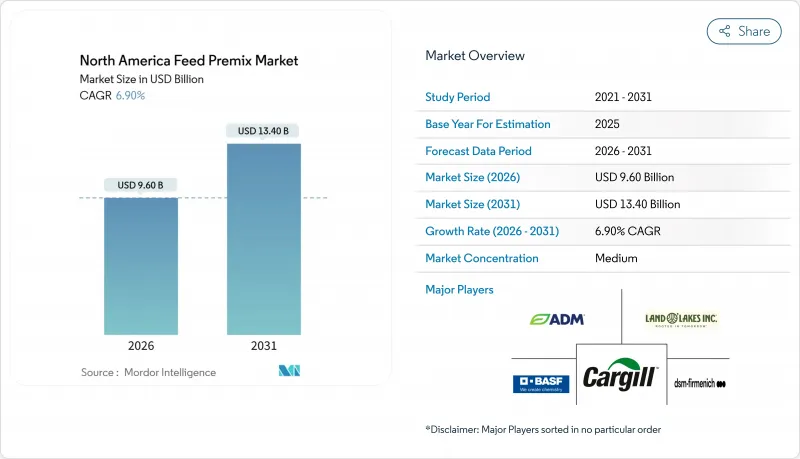
根據 Mordor Intelligence 估計,北美飼料預混合料市場在 2026 年的價值為 96 億美元,預計到 2031 年將達到 134 億美元,在預測期(2026-2031 年)內以 6.90% 的複合年成長率成長。
本報告按類型(維生素預混合料、礦物質預混合料、胺基酸預混合料等)、形態(乾粉和液體)、畜牧業(反芻動物、家禽、豬、水產養殖等)和地區(美國、加拿大、墨西哥及其他北美地區)進行細分。報告以價值(美元)和銷售量(公噸)兩種單位呈現市場規模。
北美飼料預混合料市場趨勢與洞察
美國對複合飼料的需求增加
預計到2025年,飼料產量將達到2.83億噸,年增2.8%。由於每噸飼料含有5至15公斤的維生素和礦物質混合物,產量的成長直接轉化為預混合料用量的增加。泰森食品公司將飼料生產整合到一家能夠一次性處理20噸預混合料的大型工廠,從而將其作為一體化生產商的營運資本減少了約13%。威斯康辛州和加州的酪農目前正在將螯合微量元素添加到全混合飼料(TMR)中,以減少跛行並提高受孕率,這導致微量元素預混合料的使用量增加。更大的批量生產實現了即時配製,從而減少了工廠和供應商的庫存。因此,即使飼料轉換率提高,北美飼料預混合料市場仍受益於持續的需求外溢效應。
商業家禽生產能力的擴張
該地區家禽業在2024年新增了4,700萬平方英尺的設施,與2023年相比實現了顯著的年度成長。 2024年肉雞產量達93.3億隻,比2023年增加1%。嘉吉公司計劃在其位於喬治亞的肉雞養殖場附近建立一座維生素混合廠,旨在降低22%的物流成本。加拿大家禽市場實施供應管理配額制度。然而,不列顛哥倫比亞省和安大略省的生產商正在投資建造高密度雞舍,以提高飼料轉換率。此舉間接增加了每公斤活重所需的預混合料用量。預計該產業的飼料轉換率將從2020年的1.82提高到2025年的1.68,使每隻雞達到上市體重所需的飼料量減少7.6%。同時,由於基因進步需要促進生長和提高生物可利用微量營養素的攝取量,每公噸預混合料的添加率從 0.48% 增加到 0.53%。
維生素A和E原料價格的波動
維生素A棕櫚酸酯和維生素E醋酸酯的合成需要使用芳樟醇和三甲基氫醌等石油化學中間體,這些中間體的價格彈性較高。 2024年4月,BASF位於德國路德維希港的檸檬醛工廠關閉,導致維生素E醋酸酯現貨價格上漲。小規模的化合物生產商,尤其是那些沒有長期供應合約或避險機制的生產商,更容易受到這種影響。維生素生產集中在三大供應商——BASF、帝斯曼-菲美意和浙江醫藥——手中,這進一步限制了買家的議價能力。因此,畜牧養殖戶正在調整飼料配方,以降低維生素的比例。喬治亞大學在2025年進行的一項田間試驗表明,每公斤飼料中添加8800國際單位維生素A的肉雞,其增重和飼料轉化率與按行業標準每公斤飼料添加11000國際單位維生素A的肉雞相同。這些結果表明,先前的混合比例包含了20%至25%的安全裕度。因此,預計此次調整將導致每年對預混合料的需求下降。
細分市場分析
維生素預混合料在2025年佔總銷售額的38.8%,凸顯了其在滿足美國國家營養研究委員會(NRC)對家禽、豬和乳牛營養需求方面的重要作用。在北美飼料預混合料市場,富含維生素的混合飼料市場規模預計將在2031年之前保持適度成長,這主要得益於精準計量帶來的浪費減少。螯合礦物質產品的需求正在成長,預計到2025年,有機微量礦物質將佔據礦物質銷售的很大一部分。胺基酸預混合料的複合年成長率顯著,這主要得益於市場對低蛋白飼料的需求,這類飼料能夠減少氮流失並符合各州的營養法規。
核苷酸預混合料正以12.8%的複合年成長率快速成長,這主要得益於加拿大衛生署限制使用具有重要醫療價值的抗生素後,鮭魚和蝦類養殖場為維持其免疫力所採取的措施。目前,不列顛哥倫比亞省鮭魚飼料中核苷酸預混料的添加量已提高至1.4公斤/噸,這在一定程度上抵消了成熟維生素市場銷售量受限的影響。纖維預混合料和其他特殊混合物的成長速度低於市場平均水平,但受益於其功能性宣稱,例如增強蛋殼強度,凱敏公司在薑黃和薑黃素的臨床試驗中已證實了這一點。
其他好處:
- Excel格式的市場預測(ME)表
- 3個月的分析師支持
目錄
第1章:引言
- 研究假設和市場定義
- 調查範圍
第2章:調查方法
第3章執行摘要
第4章 市場狀況
- 市場概覽
- 市場促進因素
- 美國對複合飼料的需求增加
- 商業家禽生產能力的擴張
- 畜牧養殖戶轉型為富含微量元素飼料的飼料
- 擴大我們專為寵物營養最佳化的專用預混合料產品系列。
- 鼓勵飼料添加劑碳足跡標示標註的獎勵
- 由於精準發酵技術的應用,維生素的成本正在下降。
- 市場限制因素
- 維生素A和E原料價格的波動
- 美國FDA實施更嚴格的預混合料報名手續。
- 預混合料供應鏈中黴菌毒素污染的風險
- 與一步式特殊飼料添加劑的競爭
- 監理情勢
- 技術展望
- 波特五力模型
第5章 市場規模與成長預測
- 按類型
- 維生素預混合料
- 礦物預混合料
- 氨基酸預混合料
- 核苷酸預混合料
- 纖維預混合料
- 其他
- 按形式
- 乾燥
- 液體
- 畜牧業
- 反芻動物
- 家禽
- 豬
- 水產養殖
- 寵物
- 其他
- 國家
- 美國
- 加拿大
- 墨西哥
- 其他北美國家
第6章 競爭情勢
- 市場集中度
- 策略趨勢
- 市佔率分析
- 公司簡介
- Cargill Incorporated
- DSM-Firmenich AG
- Archer Daniels Midland Company
- Purina Animal Nutrition LLC(Land O'Lakes Inc.)
- Nutreco NV
- Alltech, Inc
- BASF SE
- Kent Nutrition Group(Kent Corporation)
- Bluestar Adisseo Company
- Zinpro Corporation
- Phibro Animal Health Corporation
- Kemin Industries, Inc
- Novus International(Mitsui & Co.)
- Bio-Agri Mix
- NEOTERRA
第7章 市場機會與未來展望
According to Mordor Intelligence, the North America feed premix market size is estimated at USD 9.60 billion in 2026, and is anticipated to reach USD 13.40 billion by 2031, at a CAGR of 6.90% during the forecast period (2026-2031).
This report is Segmented by Type (Vitamins Premix, Minerals Premix, Amino Acids Premix, and More), by Form (Dry and Liquid), by Livestock (Ruminants, Poultry, Swine, Aquaculture, and More), and by Geography (United States, Canada, Mexico, and the Rest of North America). The Report Offers the Market Sizes in Value (USD) and Market Volume (Metric Tons).
North America Feed Premix Market Trends and Insights
Rising Demand for Compound Feed in the United States
Compound feed output reached 283 million metric tons in 2025, up 2.8% year-on-year. Each metric ton contains 5 to 15 kilograms of vitamin-mineral blends, so volume growth directly lifts premix uptake. Tyson Foods consolidated feed production into higher-capacity mills that accept 20 metric tons of bulk premix loads, cutting integrator working capital by roughly 13%. Dairy herds in Wisconsin and California now incorporate chelated trace minerals into total-mixed rations to reduce lameness and improve conception, thereby increasing the use of trace-mineral premixes. Larger batch sizes enable just-in-time blending, reducing in-store inventory for mills and suppliers alike. As a result, the North America feed premix market experiences a durable pull-through, even when feed conversion efficiency improves.
Growth in Commercial Poultry Production Capacity
The poultry sector in the region added 47 million square feet of housing in 2024, marking a significant annual increase from 2023. In 2024, 9.33 billion broilers were produced, up 1% from 2023. Cargill Incorporated plans to establish a vitamin-blending site adjacent to a Georgia broiler complex, aiming to reduce logistics costs by 22%. Canada's poultry market operates under supply management quotas. However, producers in British Columbia and Ontario are investing in higher-density barns to enhance feed conversion ratios. This development has indirectly increased premix intensity per kilogram of live weight. Feed-conversion efficiency in the sector is projected to improve from 1.82 in 2020 to 1.68 in 2025, resulting in a 7.6% reduction in feed required per bird to reach market weight. Simultaneously, the premix inclusion rate per metric ton has increased from 0.48% to 0.53%, driven by genetic advancements that promote faster growth and require higher levels of bioavailable micro-nutrients.
Volatility in Vitamin A and E Raw-Material Prices
Vitamin A palmitate and vitamin E acetate are synthesized using petrochemical intermediates, such as linalool and trimethylhydroquinone, which exhibit high price elasticity. In April 2024, BASF's shutdown at its citral plant in Ludwigshafen, Germany, led to an increase in the spot price of vitamin E acetate. Smaller formulators, particularly those without long-term supply contracts or hedging mechanisms, are particularly vulnerable. The concentration of vitamin production among three key suppliers, such as BASF, DSM-Firmenich, and Zhejiang Medicine, further limits buyers' negotiating power. In response, livestock producers are reformulating feed rations to lower vitamin inclusion rates. A 2025 field trial by the University of Georgia demonstrated that broilers fed 8,800 international units of vitamin A per kilogram of feed achieved the same weight gain and feed conversion efficiency as those receiving 11,000 international units, the previous industry standard. This finding suggests that historical inclusion rates included a 20% to 25% safety margin. As a result, this recalibration is estimated to reduce premix demand annually.
Other drivers and restraints analyzed in the detailed report include:
- Shift Toward Micro-Nutrient Dense Rations
- Expansion of Specialty Premix Lines for Pet Nutrition
- Stringent U.S. FDA Premix Registration Processes
For complete list of drivers and restraints, kindly check the Table Of Contents.
Segment Analysis
The vitamin premix retained a 38.8% share of 2025 revenue, underscoring its role in meeting NRC requirements for poultry, swine, and dairy. The North America feed premix market size for vitamin-rich blends is projected to expand at a moderate rate through 2031, as precision dosing reduces wastage. Chelated mineral offerings capture substitution gains, with organic trace minerals accounting for a good amount of mineral sales by 2025. Amino-acid premix posts a significant CAGR, driven by low-protein diets that ameliorate nitrogen run-off and comply with state nutrient rules.
Nucleotide premix is racing ahead at a 12.8% CAGR, fueled by salmon and shrimp farms that seek immune support after Health Canada restricted medically important antimicrobials. Elevated inclusion levels, now 1.4 kilograms per metric ton in British Columbia salmon feed, offset volume constraints in mature vitamin segments. Fiber premix and other specialty blends grow below the market pace but still benefit from functional claims like eggshell strength improvements documented by Kemin's turmeric-curcumin trials.
Complete Report Scope:
- By Type
- Vitamin Premix
- Mineral Premix
- Amino Acid Premix
- Nucleotide Premix
- Fiber Premix
- Others
- By Form
- Dry
- Liquid
- By Livestock
- Ruminants
- Poultry
- Swine
- Aquaculture
- Pet Animals
- Others
- By Country
- United States
- Canada
- Mexico
- Rest of North America
List of Companies Covered in this Report:
- Cargill Incorporated
- DSM-Firmenich AG
- Archer Daniels Midland Company
- Purina Animal Nutrition LLC (Land O'Lakes Inc.)
- Nutreco N.V.
- Alltech, Inc
- BASF SE
- Kent Nutrition Group (Kent Corporation)
- Bluestar Adisseo Company
- Zinpro Corporation
- Phibro Animal Health Corporation
- Kemin Industries, Inc
- Novus International (Mitsui & Co.)
- Bio-Agri Mix
- NEOTERRA
Additional Benefits:
- The market estimate (ME) sheet in Excel format
- 3 months of analyst support
TABLE OF CONTENTS
1 Introduction
- 1.1 Study Assumptions and Market Definition
- 1.2 Scope of the Study
2 Research Methodology
3 Executive Summary
4 Market Landscape
- 4.1 Market Overview
- 4.2 Market Drivers
- 4.2.1 Rising demand for compound feed in the United States
- 4.2.2 Growth in commercial poultry production capacity
- 4.2.3 Livestock producers' shift toward micro-nutrient dense rations
- 4.2.4 Expansion of specialty premix lines tailored for pet nutrition
- 4.2.5 Carbon-footprint labeling incentives on feed additives
- 4.2.6 Precision-fermentation vitamin cost declines
- 4.3 Market Restraints
- 4.3.1 Volatility in vitamin A and E raw-material prices
- 4.3.2 Stringent U.S. FDA premix registration processes
- 4.3.3 Mycotoxin contamination risk in premix supply chain
- 4.3.4 Competition from single-step specialty feed additives
- 4.4 Regulatory Landscape
- 4.5 Technological Outlook
- 4.6 Porter's Five Forces
- 4.6.1 Threat of New Entrants
- 4.6.2 Bargaining Power of Suppliers
- 4.6.3 Bargaining Power of Buyers
- 4.6.4 Threat of Substitutes
- 4.6.5 Intensity of Competitive Rivalry
5 Market Size and Growth Forecasts (Value, USD)
- 5.1 By Type
- 5.1.1 Vitamin Premix
- 5.1.2 Mineral Premix
- 5.1.3 Amino Acid Premix
- 5.1.4 Nucleotide Premix
- 5.1.5 Fiber Premix
- 5.1.6 Others
- 5.2 By Form
- 5.2.1 Dry
- 5.2.2 Liquid
- 5.3 By Livestock
- 5.3.1 Ruminants
- 5.3.2 Poultry
- 5.3.3 Swine
- 5.3.4 Aquaculture
- 5.3.5 Pet Animals
- 5.3.6 Others
- 5.4 By Country
- 5.4.1 United States
- 5.4.2 Canada
- 5.4.3 Mexico
- 5.4.4 Rest of North America
6 Competitive Landscape
- 6.1 Market Concentration
- 6.2 Strategic Moves
- 6.3 Market Share Analysis
- 6.4 Company Profiles (includes Global level Overview, Market Level Overview, Core Segments, Financials as available, Strategic Information, Market Rank / Share for Key Companies, Products and Services, and Recent Developments)
- 6.4.1 Cargill Incorporated
- 6.4.2 DSM-Firmenich AG
- 6.4.3 Archer Daniels Midland Company
- 6.4.4 Purina Animal Nutrition LLC (Land O'Lakes Inc.)
- 6.4.5 Nutreco N.V.
- 6.4.6 Alltech, Inc
- 6.4.7 BASF SE
- 6.4.8 Kent Nutrition Group (Kent Corporation)
- 6.4.9 Bluestar Adisseo Company
- 6.4.10 Zinpro Corporation
- 6.4.11 Phibro Animal Health Corporation
- 6.4.12 Kemin Industries, Inc
- 6.4.13 Novus International (Mitsui & Co.)
- 6.4.14 Bio-Agri Mix
- 6.4.15 NEOTERRA
7 Market Opportunities and Future Outlook

 歐洲飼料預混合料:市佔率分析、產業趨勢與統計及成長預測(2026-2031 年)
 飼料預混合料市場:2026-2032年全球市場預測(按類型、目標動物、形態、原料來源、應用、分銷管道和最終用戶分類)飼料預混合料:市佔率分析、產業趨勢與統計、成長預測(2026-2031)
 全球飼料預混合料市場規模、佔有率、趨勢和成長分析報告(2026-2034年)飼料預混合料市場-2026-2031年預測
 家禽飼料預混合料市場規模、佔有率及成長分析(按類型、動物、形態及地區分類)-2026-2033年產業預測
 飼料預混料市場-全球產業規模、佔有率、趨勢、機會及預測(按成分類型、牲畜、形式、地區和競爭細分,2020-2030 年)