


 |
市場調查報告書
商品編碼
2100609
法律產業的AI軟體:市佔率分析、產業趨勢與統計及成長預測(2026-2031年)AI Software In Legal Industry - Market Share Analysis, Industry Trends & Statistics, Growth Forecasts (2026 - 2031) |
||||||

※ 本網頁內容可能與最新版本有所差異。詳細情況請與我們聯繫。
預計到 2026 年,法律產業人工智慧軟體的市場規模將達到 26.7 億美元,高於 2025 年的 24.2 億美元,預計到 2031 年將達到 44.2 億美元。
預計從 2026 年到 2031 年,其複合年成長率將達到 10.53%。
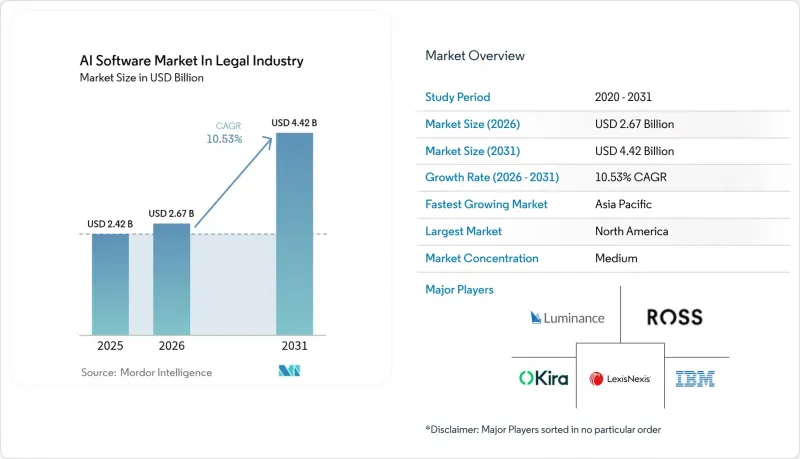
本報告按元件(解決方案和服務)、部署模式(本地部署和雲端部署)、應用程式(法律調查、合約審查和管理等)、最終用戶(律師事務所、公司法務部門等)和地區進行細分。市場預測以美元計價。
法律產業人工智慧軟體市場的洞察與趨勢
訴訟案件數量的增加推動了對自動化需求的成長。
訴訟團隊目前正面臨前所未有的大量資料審查,這促使他們採用電子取證套件,該套件可將審查的文件數量減少高達 85%,並將週期縮短一半。自動化也縮短了檔案建立時間,系統將過去需要數小時的準備工作壓縮到幾分鐘,從而降低了 80% 的成本。越來越多的法院開始採用人工智慧友善的規則,例如新南威爾斯州修訂的程序規則,這進一步使這些工具合法化,並鼓勵全球各地的法律部門在不相應增加人員配置的情況下擴展自動化應用。
人工智慧驅動的法律調查工具的廣泛應用
生成式人工智慧引擎能夠收集最新的判例法,不受司法管轄區的限制,並在幾分鐘內提供經過驗證的先例。法學院現在紛紛開設人工智慧相關課程,例如新加坡管理大學 (SMU) 的混合式課程,培養出精通人工智慧研究的畢業生。這種世代轉變正在加速律師事務所對人工智慧的採用,研究自動化正成為日常營運的一部分。
對資料隱私和保密性的擔憂
512號官方意見要求美國律師在披露特權資訊前審查供應商的安全保障措施。同時,歐盟法規也限制跨境資料流動,而近期的一些訴訟要求人工智慧供應商保留使用者日誌,這與保密規則產生了衝突。各公司正在透過制定自身政策並實施區域性解決方案來應對這些挑戰,以平衡人工智慧帶來的益處與保護特權資訊的義務。
細分市場分析
2025年,集研究、撰寫和分析功能於一體的整合套件解決方案將成為各機構的首選,佔據人工智慧軟體市場66.30%的佔有率。在法律產業的人工智慧軟體市場,這些功能強大的平台正被用於簡化供應商管理,同時滿足保密要求。 Harvey等供應商的強勁發展勢頭印證了這一趨勢,該公司在成立三年內就實現了1億美元的經常性收入。然而,服務業的成長速度相對較慢,年複合成長率僅12.32%,因為成功實施需要培訓、變革管理和管治諮詢。持續的模式微調和道德審計不斷強化人們的認知:技術應用是一個長期的轉型過程,而不是一次性的授權費用。
目前,預算佔有率正在擴大,企業正增加對整合專家的投資,這些專家能夠將人工智慧的輸出結果整合到案件管理、計費和知識管理系統中。因此,法律行業的人工智慧軟體市場正在努力平衡「即插即用」的理想與客製化工作流程和司法管轄區限制的現實。在預測期內,提供基於結果的服務(例如與文件審查速度掛鉤的性能保證)的供應商預計將超越純粹的許可經銷商,從而進一步推動其服務的成長。
2025年,雲端配置將佔人工智慧軟體市場規模的73.20%,年複合成長率達12.10%,主要得益於企業對協作和行動性的日益重視。供應商與超大規模雲端供應商之間強大的夥伴關係,提供了加密、區域資料居住要求和可擴展的GPU,從而緩解了以往的安全隱患。在法規和客戶合約要求本地託管的情況下,本地部署仍然存在,但整合要求往往使其成本高昂。因此,即使是監管嚴格的律師事務所也開始嘗試採用私有雲端方案,以實現分散式訪問,同時保留其本地管理架構。
法律產業的AI軟體市場正受惠於雲端訂閱經營模式,這降低了中型律師事務所的進入門檻,並加快了價值實現速度。同時,多重雲端策略正日益普及,以避免被供應商的專有模式鎖定,並在資料主權要求與業界領先的功能之間取得平衡。能夠提供可在律師事務所防火牆內運行的容器化架構的供應商,在吸引那些尋求分階段遷移路徑、風險規避型用戶方面佔據了有利地位。
區域分析
北美以美元計價的市場機會依然最大,主要得益於資本流入和完善的專業架構。該地區的律師事務所率先將大規模語言模式整合到傳統的調查平台中,而美國律師協會 (ABA) 的持續指導在保護律師特權的同時,也鼓勵了各種實驗性方法的探索。創業融資和重大收購鞏固了該領域成熟且仍保持成長動能的生態系統。因此,面向法律產業的 AI 軟體市場將湧現新的服務層級,包括針對特定細分領域的高階、情境化模型。
亞太地區的成長故事主要得益於旨在降低技術障礙的政策獎勵。新加坡的監管沙盒鼓勵企業在無需承擔全面許可風險的情況下開展試點項目,而日本企業則利用人工智慧來管理複雜的多語言契約,並推動跨境合規需求。東南亞經濟的快速數位化進一步促進了軟體的普及,區域企業正跨越式地採用新技術,擺脫舊有系統。
歐洲的系統性方法兼顧了機會與監管。歐盟人工智慧法強制要求風險分類和文件記錄,引導買家選擇具備內建審計追蹤功能的供應商。產學合作,例如牛津大學的「人工智慧助力英國法律」計畫(該計畫提供40萬個案例先例),正在推動演算法的進步。東歐律師事務所正成為新的採用者,他們被以分析為基礎的案件評估為優先的跨歐洲訴訟資金籌措模式所吸引。
其他好處:
- Excel格式的市場預測(ME)表
- 3個月的分析師支持
目錄
第1章:引言
- 研究假設和市場定義
- 調查範圍
第2章:調查方法
第3章執行摘要
第4章 市場狀況
- 市場概覽
- 市場促進因素
- 訴訟案件數量的增加推動了對自動化技術的需求。
- 人工智慧驅動的法律研究工具的使用越來越普遍。
- 合約生命週期管理(CLM)平台的快速擴張
- 削減成本的壓力和法律人員短缺
- 生成式人工智慧在寫作和總結方面取得突破性進展。
- 開放司法資料政策以促進人工智慧學習
- 市場限制因素
- 對資料隱私和保密性的擔憂
- 人工智慧可解釋性的局限性損害了律師的信譽。
- 由於專有模型而存在供應商鎖定風險
- 與人工智慧偏見相關的訴訟和倫理合規負擔
- 監理情勢
- 技術展望
- 波特五力分析
- 評估新冠肺炎疫情的影響
第5章 市場規模與成長預測
- 按組件
- 解決方案
- 服務
- 不同的發展
- 現場
- 雲
- 透過使用
- 法律調查
- 合約審查與管理
- 電子帳單
- 電子取證
- 遵守
- 病例預測
- 其他用途
- 最終用戶
- 律師事務所
- 公司法務部
- 替代法律服務提供者(ALSP)
- 其他最終用戶
- 按地區
- 北美洲
- 南美洲
- 歐洲
- 亞太地區
- 中東和非洲
第6章 競爭情勢
- 市場集中度
- 策略趨勢
- 市佔率分析
- 公司簡介
- Thomson Reuters Corporation
- RELX PLC(LexisNexis Legal and Professional)
- OpenText Corporation
- International Business Machines Corporation
- CS Disco, Inc.
- Luminance Technologies Ltd.
- Kira Systems Inc.
- iManage, LLC
- Veritone, Inc.
- Everlaw, Inc.
- LawGeex Ltd.
- ContractPodAi Group Ltd.
- Litify, Inc.
- Relativity ODA, LLC
- Brainspace Corporation(A Reveal Company)
- Neota Logic Inc.
- Smokeball Inc.
- Casetext, Inc.
- ROSS Intelligence, Inc.
- Text IQ, Inc.
- Klarity Inc.
- Ravel Law, Inc.
第7章 市場機會與未來展望
According to Mordor Intelligence, the AI software market size in legal industry market size in 2026 is estimated at USD 2.67 billion, growing from 2025 value of USD 2.42 billion with 2031 projections showing USD 4.42 billion, growing at 10.53% CAGR over 2026-2031.
This report is Segmented by Component (Solutions and Services), Deployment (On-Premises and Cloud), Application (Legal Research, Contract Review and Management, and More), End-User (Law Firms, Corporate Legal Departments, and More), and Geography. The Market Forecasts are Provided in Terms of Value (USD).
Insights and Trends of AI Software Market In Legal Industry
Growing Demand for Automation Amid Rising Litigation Volume
Litigation teams now sift through unprecedented data, prompting e-discovery suites that remove up to 85% of documents from review and cut cycle times by half.Automation also shortens drafting; systems condense hours of brief preparation into minutes, slicing costs by 80%. Courts embracing AI-friendly rules, such as New South Wales' procedural update, further legitimize these tools, pushing global legal departments to scale automation without proportional headcount increases.
Increasing Adoption of AI-Assisted Legal-Research Tools
Generative engines pull live case law across jurisdictions, returning vetted precedents in minutes. Law schools now embed AI coursework, exemplified by Singapore Management University's blended curriculum, producing graduates fluent in AI-enhanced research. This generational shift accelerates firm-wide adoption and embeds research automation into everyday practice.
Data-Privacy and Confidentiality Concerns
Formal Opinion 512 obliges U.S. attorneys to vet vendor safeguards before exposing privileged data. Parallel EU mandates restrict cross-border data flows, and recent litigation compels AI vendors to preserve user logs, raising conflicts with confidentiality rules. Firms respond with bespoke policies and localized deployments to balance AI benefit with privilege obligations.
Other drivers and restraints analyzed in the detailed report include:
- Rapid Expansion of Contract-Lifecycle-Management Platforms
- Cost-Reduction Pressure and Legal-Talent Scarcity
- Limited AI Explainability Reducing Lawyer Trust
For complete list of drivers and restraints, kindly check the Table Of Contents.
Segment Analysis
Solutions represented 66.30% of AI software market share in 2025 as organizations favored unified suites bundling research, drafting, and analytics. The AI software market in legal industry relies on these broad platforms to satisfy confidentiality demands while simplifying vendor management. Strong traction from providers such as Harvey, which reached USD 100 million in recurring revenue within three years, validates this preference. Services, however, post the segment's 12.32% CAGR because successful rollouts demand training, change management, and governance consulting. Constant model tuning and ethical audits reinforce the notion that technology adoption is a long-term transformation rather than a one-time license expenditure.
A growing share of budgets now funds integration specialists who embed AI outputs into matter-management, billing, and knowledge-management systems. The AI software market in legal industry therefore balances plug-and-play ambition with the reality of bespoke workflows and jurisdictional constraints. Over the forecast, vendors offering outcome-based services-such as performance guarantees tied to document-review speed-are expected to outpace pure license sellers, extending the service growth trajectory.
Cloud configurations captured 73.20% of the AI software market size in 2025, expanding at a 12.10% CAGR as firms prioritize collaboration and mobility. Bedrock partnerships between providers and hyperscale cloud vendors furnish encryption, regional data residency, and scalable GPUs, mitigating earlier security apprehensions. On-premise deployments persist where statutes or client contracts mandate local hosting, yet integration demands often render them costlier. Consequently, even highly regulated practices now pilot private-cloud variants that mirror on-prem controls while permitting distributed access.
The AI software market in legal industry benefits from cloud's subscription economics, lowering entry barriers for midsize firms and accelerating time-to-value. In parallel, multi-cloud strategies gain favor to avoid proprietary-model lock-in and to balance sovereign data requirements with best-in-class functionality. Vendors offering containerized architectures capable of running behind firm firewalls are poised to capture risk-averse adopters seeking incremental transition paths.
Complete Report Scope:
- By Component
- Solutions
- Services
- By Deployment
- On-premises
- Cloud
- By Application
- Legal Research
- Contract Review and Management
- E-billing
- E-discovery
- Compliance
- Case Prediction
- Other Applications
- By End-User
- Law Firms
- Corporate Legal Departments
- Alternative Legal-Service Providers (ALSPs)
- Other End-Users
- By Geography
- North America
- South America
- Europe
- Asia Pacific
- Middle East and Africa
Geography Analysis
North America's USD-denominated opportunity remains the largest, propelled by capital inflows and a supportive professional framework. The region's firms were first to embed large language models within legacy research platforms, and continued guidance from the American Bar Association facilitates experimentation while safeguarding privilege. Venture funding and blockbuster acquisitions confirm a maturing yet still growth-oriented ecosystem. As a result, the AI software market in legal industry will see new service tiers, including premium context-specific models targeting niche practice areas.
Asia Pacific's growth narrative centers on policy incentives that lower technological barriers. Singapore's regulatory sandbox encourages pilots without full-term licensing exposure, while Japanese corporates use AI to manage complex multilingual contracts, driving cross-border compliance demand. Rapid economic digitization in Southeast Asia further boosts software uptake as regional firms leapfrog legacy systems.
Europe's methodical approach blends opportunity with oversight. The EU AI Act enforces risk categorization and documentation, nudging buyers toward vendors with embedded audit trails. Academic-industry collaboration, such as Oxford's AI for English Law program accessing 400,000 cases, fuels algorithmic sophistication. Eastern European firms are emerging adopters, attracted by cross-European litigation funding that prioritizes analytics-backed case evaluation.
- Thomson Reuters Corporation
- RELX PLC (LexisNexis Legal and Professional)
- OpenText Corporation
- International Business Machines Corporation
- CS Disco, Inc.
- Luminance Technologies Ltd.
- Kira Systems Inc.
- iManage, LLC
- Veritone, Inc.
- Everlaw, Inc.
- LawGeex Ltd.
- ContractPodAi Group Ltd.
- Litify, Inc.
- Relativity ODA, LLC
- Brainspace Corporation (A Reveal Company)
- Neota Logic Inc.
- Smokeball Inc.
- Casetext, Inc.
- ROSS Intelligence, Inc.
- Text IQ, Inc.
- Klarity Inc.
- Ravel Law, Inc.
Additional Benefits:
- The market estimate (ME) sheet in Excel format
- 3 months of analyst support
TABLE OF CONTENTS
1 INTRODUCTION
- 1.1 Study Assumptions and Market Definition
- 1.2 Scope of the Study
2 RESEARCH METHODOLOGY
3 EXECUTIVE SUMMARY
4 MARKET LANDSCAPE
- 4.1 Market Overview
- 4.2 Market Drivers
- 4.2.1 Growing demand for automation amid rising litigation volume
- 4.2.2 Increasing adoption of AI-assisted legal-research tools
- 4.2.3 Rapid expansion of contract-lifecycle-management (CLM) platforms
- 4.2.4 Cost-reduction pressure and legal-talent scarcity
- 4.2.5 Generative-AI breakthroughs for drafting and summarization
- 4.2.6 Open-justice data policies enabling AI training
- 4.3 Market Restraints
- 4.3.1 Data-privacy and confidentiality concerns
- 4.3.2 Limited AI explainability reducing lawyer trust
- 4.3.3 Proprietary-model vendor lock-in risk
- 4.3.4 AI-bias litigation and ethics compliance burden
- 4.4 Regulatory Landscape
- 4.5 Technological Outlook
- 4.6 Porter's Five Forces Analysis
- 4.6.1 Bargaining Power of Suppliers
- 4.6.2 Bargaining Power of Buyers
- 4.6.3 Threat of New Entrants
- 4.6.4 Threat of Substitutes
- 4.6.5 Intensity of Competitive Rivalry
- 4.7 Assessment of COVID-19 Impact
5 MARKET SIZE AND GROWTH FORECASTS (VALUE)
- 5.1 By Component
- 5.1.1 Solutions
- 5.1.2 Services
- 5.2 By Deployment
- 5.2.1 On-premises
- 5.2.2 Cloud
- 5.3 By Application
- 5.3.1 Legal Research
- 5.3.2 Contract Review and Management
- 5.3.3 E-billing
- 5.3.4 E-discovery
- 5.3.5 Compliance
- 5.3.6 Case Prediction
- 5.3.7 Other Applications
- 5.4 By End-User
- 5.4.1 Law Firms
- 5.4.2 Corporate Legal Departments
- 5.4.3 Alternative Legal-Service Providers (ALSPs)
- 5.4.4 Other End-Users
- 5.5 By Geography
- 5.5.1 North America
- 5.5.2 South America
- 5.5.3 Europe
- 5.5.4 Asia Pacific
- 5.5.5 Middle East and Africa
6 COMPETITIVE LANDSCAPE
- 6.1 Market Concentration
- 6.2 Strategic Moves
- 6.3 Market Share Analysis
- 6.4 Company Profiles (includes Global level Overview, Market level overview, Core Segments, Financials as available, Strategic Information, Market Rank/Share for key companies, Products and Services, and Recent Developments)
- 6.4.1 Thomson Reuters Corporation
- 6.4.2 RELX PLC (LexisNexis Legal and Professional)
- 6.4.3 OpenText Corporation
- 6.4.4 International Business Machines Corporation
- 6.4.5 CS Disco, Inc.
- 6.4.6 Luminance Technologies Ltd.
- 6.4.7 Kira Systems Inc.
- 6.4.8 iManage, LLC
- 6.4.9 Veritone, Inc.
- 6.4.10 Everlaw, Inc.
- 6.4.11 LawGeex Ltd.
- 6.4.12 ContractPodAi Group Ltd.
- 6.4.13 Litify, Inc.
- 6.4.14 Relativity ODA, LLC
- 6.4.15 Brainspace Corporation (A Reveal Company)
- 6.4.16 Neota Logic Inc.
- 6.4.17 Smokeball Inc.
- 6.4.18 Casetext, Inc.
- 6.4.19 ROSS Intelligence, Inc.
- 6.4.20 Text IQ, Inc.
- 6.4.21 Klarity Inc.
- 6.4.22 Ravel Law, Inc.
7 MARKET OPPORTUNITIES AND FUTURE OUTLOOK
- 7.1 White-space and Unmet-Need Assessment

 工業機器人智慧軟體:市場佔有率分析、產業趨勢與統計、成長預測(2026-2031)
 2026年全球神經多樣性員工生產力工具市場報告人工智慧睡眠技術:市場佔有率分析、產業趨勢與統計及成長預測(2026-2031)
 人工智慧生產力工具市場規模、佔有率和成長分析:按組件、部署模式/架構、組織規模、威脅狩獵調查方法和目標產業分類-2026-2033年產業預測人力資源知識庫和自助服務平台:市場佔有率分析、行業趨勢和統計數據以及成長預測(2026-2031 年)
 AI生產力工具市場規模、佔有率和趨勢分析報告:按交付方式、部署方式、最終用途、地區和細分市場預測(2026-2033年)2026年全球命名實體連結人工智慧市場報告
 衡量人工智慧的實際使用情況
 2026-2030年全球人工智慧運行時最佳化市場
 人工智慧驅動設計工具市場分析與預測(至2035年):類型、服務、技術、組件、應用、部署模式、最終用戶及功能