


 |
市場調查報告書
商品編碼
2099993
亞太地區乾草、飼料和收割機械:市場佔有率分析、行業趨勢和統計數據以及成長預測(2026-2031 年)Asia-Pacific Haying, Forage and Harvesting Machinery - Market Share Analysis, Industry Trends & Statistics, Growth Forecasts (2026 - 2031) |
||||||

※ 本網頁內容可能與最新版本有所差異。詳細情況請與我們聯繫。
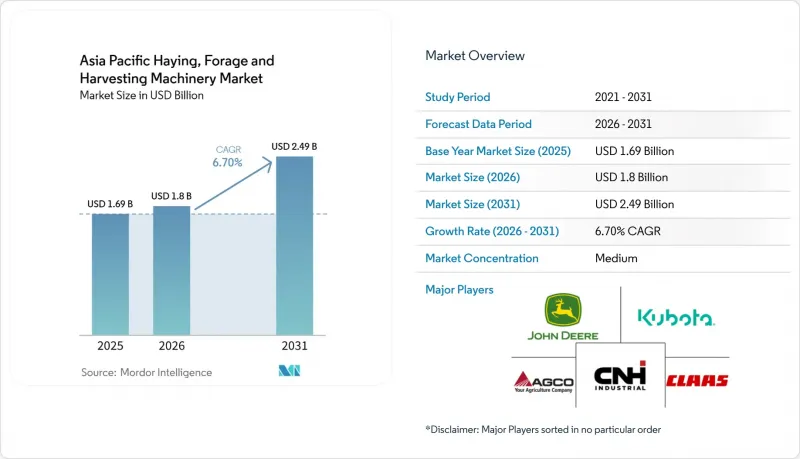
根據 Mordor Intelligence 預測,亞太地區的乾草、飼料和收割機械市場預計將在 2025 年達到 16.9 億美元,在 2026 年成長到 18 億美元,並在 2031 年達到 24.9 億美元,在 2026 年至 2031 年的預測期內,複合年成長率將達到 6.70%。
本報告按產品類型(收割機/調理機、打包機、飼料收割機等)、運作(曳引機式等)、動力來源(柴油和混合動力)、應用領域(乾草生產等)以及地區(中國、印度、日本、韓國、澳洲等)進行分類。市場預測以美元計價。
亞太地區乾草、飼料和收割機械市場的趨勢和見解。
農業管理中人事費用上升和勞動力短缺
亞太地區勞動力短缺和農業勞動力老化正推動著飼料收割機械化解決方案的普及。聯合國糧食及農業組織(糧農組織)發布的《農業食品系統中的青年》(2025年)報告指出,在工業化的農業食品系統中,農村青年僅佔總人口的5%,這意味著東亞等地區的農業勞動力預計將會下降。隨著越來越多的年輕勞工湧向都市區就業,飼料生產商在收割旺季面臨勞動力短缺的嚴峻挑戰。因此,農場紛紛投資購買打包機、飼料收割機和自走式乾草收割機,以提高作業效率、減少對勞動力的依賴並維持飼料品質。這一趨勢正在推動亞太地區乾草、飼料和收割機械市場的成長。
政府對農業機械化的補貼和農業機械貸款
政府扶持計畫透過降低設備購買成本,加速了全部區域乾草、飼料和收割機械的普及。根據國家發展和改革委員會(發改委)(2025年)的報告,中國擴大了農機報廢和更新補貼計劃,並提高了特定類別設備的補貼標準。在試辦實施架構下,符合條件的農機可獲得高達售價50%的補助。這些獎勵措施鼓勵農民和承包商投資購買最新的打包機、飼料收割機、割草機及相關飼料設備,進而提高機械化效率,並促進市場成長。
土地零散限制了機械的使用。
在亞太地區,分散的農地所有權結構持續阻礙先進乾草和飼料機械的有效利用。根據印度國家轉型委員會(NITI Ayaog,2025)的數據,超過86%的印度農民是小規模,他們管理的土地面積相對較小且分散。這種土地結構降低了田間作業效率,增加了作業操作時間,並降低了高容量打包機、飼料收割機和自走式機械的年運轉率。因此,農民在機械投資上的盈利下降,投資回收期延長,這限制了大規模收割系統的普及,並限制了亞太地區乾草、飼料和收割機械市場的成長。
細分市場分析
預計到2025年,打包機將在亞太地區的乾草、飼料和收割機械市場佔據31.0%的最大市場。打包機能保持主導地位,是因為它們在飼料保存、提高儲存效率以及簡化畜牧系統中的飼料物流方面發揮著至關重要的作用。市場對緊湊、易於運輸的飼料產品的需求不斷成長,這些產品能夠簡化處理流程並最大限度地減少儲存損失,從而推動了打捆機的普及。大規模酪農和牛養殖業者持續依賴打包機設備來最佳化飼料管理效率。此外,該領域還受益於設備的更新換代需求以及與各種飼料作物的兼容性,這使得打包機成為區域農業系統中不可或缺的重要機械類別。
預計飼料收割機將呈現最高的成長率,2026年至2031年的複合年成長率將達到6.8%。這一成長主要得益於青貯飼料飼餵系統的日益普及以及商業性畜牧業對優質飼料需求的不斷成長。現代飼料生產強調快速收割、精準作物加工和穩定的飼料質量,這些因素都推動了飼料收割機的應用。酪農的密集程度不斷提高以及對全年飼料需求的成長,進一步提升了這些機械的利用率。此外,該領域也受惠於與機械化飼料管理方法的廣泛整合,進一步提升了全部區域對先進收割解決方案的需求。
到2025年,自走式設備將佔據最大的市場佔有率,達到42.0%。其在該領域的主導地位反映了其適用於需要高田間作業能力、操作柔軟性和減少對多台機器依賴的商業規模作業。自走式平台透過整合收割系統提高生產力,並在廣闊的飼料生產區域提供卓越的機動性。此外,它們能夠相容於先進的自動化、操作員輔助功能和精密農業技術,使其對專業操作人員更具吸引力。由於勞動力短缺日益嚴重以及對營運效率的日益重視,該地區整個飼料收割產業對自走式設備的需求持續成長。
此外,預計2026年至2031年間,自走式機械將以7.4%的複合年成長率呈現最高成長率。這一成長主要得益於商業飼料生產商和農業承包商為提高收割效率而不斷推進的機械化進程。大規模農場優先考慮能夠提供更高加工能力並最大限度減少所需勞動力和停機時間的機械。數位監控系統、自動化機器控制和精準收割技術的日益普及進一步推動了市場需求。雖然曳引機式和牽引式機械在小規模農業系統中仍然很重要,但投資趨勢正日益傾向於自走式平台,規模、生產力和操作穩定性是其主要購買因素。
其他好處:
- Excel格式的市場預測(ME)表
- 3個月的分析師支持
目錄
第1章:引言
- 研究假設和市場定義
- 調查範圍
第2章:調查方法
第3章執行摘要
第4章 市場狀況
- 市場概覽
- 市場促進因素
- 農業管理中人事費用上升和勞動力短缺
- 政府對農業機械化的補貼和農業機械貸款
- 乳牛和飼料密集型畜牧養殖系統的擴張
- 精密貝氏體、遠端資訊處理和機器自動化的引入
- 承包商使用的車輛數量增加以及對合約收割的需求增加。
- 小規模農戶對小型電動乾草收割設備的需求。
- 市場限制因素
- 前期投資成本高,投資回收期長。
- 土地碎片化限制了機械的運轉率。
- 當地市場技術人員和零件短缺。
- 遵守排放氣體法規和認證程序的複雜性
- 監理情勢
- 科技趨勢
- 波特五力分析
第5章 市場規模與成長預測
- 依產品類型
- 割草機和草坪調節器
- 打包機
- 飼料收割機
- 耙草機和耙子
- 自走式風力牽引機
- 其他乾草和飼料機械
- 透過運作方法
- 聯結機式
- 自推進式
- 拖車類型和被牽引類型
- 透過電源
- 柴油引擎
- 電的
- 混合
- 透過使用
- 乾草生產
- 青貯飼料生產
- 飼料收割
- 牧場管理
- 按地區
- 中國
- 印度
- 日本
- 韓國
- 澳洲
- 印尼
- 越南
- 泰國
- 其他亞太國家
第6章 競爭情勢
- 市場集中度
- 策略趨勢
- 市佔率分析
- 公司簡介
- Deere and Company
- Kubota Corporation
- CNH Industrial NV
- AGCO Corporation
- CLAAS KGaA mbH
- Mahindra and Mahindra Ltd
- Iseki and Co., Ltd.
- KUHN SAS(Bucher Industries AG)
- Vermeer Corporation
- Yanmar Holdings Co., Ltd.
- Maschinenfabrik Bernard Krone GmbH & Co. KG(Bernard Krone Holding SE & Co. KG)
- Pottinger Landtechnik GmbH
- Yantai Lansu Measurement and Control Instrument Co., Ltd.
- Weichai Lovol Intelligent Agricultural Technology Co., Ltd.(Shandong Heavy Industry Group Co., Ltd.)
- China National Machinery Industry Corporation
第7章 市場機會與未來展望
According to Mordor Intelligence, the Asia-Pacific haying, forage, and harvesting machinery market was valued at USD 1.69 billion in 2025 and is projected to grow from USD 1.80 billion in 2026 to USD 2.49 billion by 2031, registering a CAGR of 6.70% during the forecast period from 2026 to 2031.
This report is Segmented by Product Type (Mowers and Conditioners, Balers, Forage Harvesters, and More), by Operation Type (Tractor Mounted and More), by Power Source (Diesel and Hybrid), by Application (Hay Production and More), and by Geography (China, India, Japan, South Korea, Australia, and More). The Market Forecasts are Provided in Terms of Value (USD).
Asia-Pacific Haying, Forage and Harvesting Machinery Market Trends and Insights
Rising Labor Costs and Labor Scarcity in Farm Operations
Labor shortages and an aging agricultural workforce in the Asia-Pacific region are driving the adoption of mechanized forage harvesting solutions. According to the Food and Agriculture Organization of the United Nations (FAO) in its "The Status of Youth in Agrifood Systems" report (2025), rural youth account for only 5% of the population in industrial agrifood systems, indicating a declining future agricultural labor pool in areas such as East Asia. With younger workers increasingly shifting to urban employment, forage producers face significant challenges in securing labor during critical harvesting periods. As a result, farms are investing in balers, forage harvesters, and self-propelled haying equipment to enhance operational efficiency, reduce reliance on labor, and maintain forage quality. This trend is contributing to the growth of the Asia-Pacific haying, forage, and harvesting machinery market.
Government Mechanization Subsidies and Farm Equipment Financing
Government support programs are accelerating the adoption of haying, forage, and harvesting machinery across the Asia-Pacific region by reducing equipment acquisition costs. According to the National Development and Reform Commission (NDRC) of China (2025), the country expanded its agricultural machinery scrappage and renewal subsidy program and increased subsidy standards for selected equipment categories, with support reaching up to 50% of the sales price for certain eligible machinery under pilot implementation arrangements. These incentives encourage farmers and contractors to invest in modern balers, forage harvesters, mowers, and related forage equipment, improving mechanization efficiency and supporting market growth.
Fragmented Landholdings Limiting Machine Utilization
Fragmented landholdings continue to hinder the efficient use of advanced haying and forage machinery in the Asia-Pacific region. According to the National Institution for Transforming India (NITI) Aayog (2025), over 86% of Indian farmers are smallholders, managing relatively small and fragmented land parcels. These land structures reduce field efficiency, increase maneuvering time, and lower the annual utilization rates of high-capacity balers, forage harvesters, and self-propelled equipment. Consequently, farmers experience weaker returns on machinery investments and longer payback periods, which limit the adoption of larger harvesting systems and constrain the growth of the haying, forage, and harvesting machinery market in the Asia-Pacific.
Other drivers and restraints analyzed in the detailed report include:
- Precision Baling, Telematics, and Machine Automation Adoption
- Contractor Fleet Expansion and Custom Harvesting Demand
- Emissions Compliance and Certification Complexity
For complete list of drivers and restraints, kindly check the Table Of Contents.
Segment Analysis
The Asia-Pacific haying, forage, and harvesting machinery market share for balers accounted for the largest 31.0% in 2025. Balers maintain their leading position due to their critical role in forage preservation, enhancing storage efficiency, and streamlining feed logistics in livestock production systems. Their adoption is driven by the increasing demand for compact and transportable forage products, which simplify handling and minimize storage losses. Large-scale dairy and beef operations continue to depend on baling equipment to optimize feed management efficiency. Additionally, the segment benefits from replacement demand and compatibility with various forage crops, establishing balers as a key machinery category in regional farming systems.
Forage harvesters are forecast to grow at the fastest 6.8% CAGR from 2026 to 2031. This growth is supported by the increasing adoption of silage-based feeding systems and the rising need for higher forage quality in commercial livestock operations. Modern forage production emphasizes rapid harvesting, precise crop processing, and improved feed consistency, all of which drive the deployment of forage harvesters. Expanding dairy intensification and the growing demand for year-round feed availability are further boosting equipment utilization rates. The segment also benefits from broader integration with mechanized forage management practices, fostering stronger demand for advanced harvesting solutions across the region.
Self-propelled equipment held the largest 42.0% share in 2025. The segment's leadership reflects its suitability for commercial-scale operations requiring high field capacity, operational flexibility, and reduced dependence on multiple machines. Self-propelled platforms offer improved productivity through integrated harvesting systems and greater maneuverability in large forage production areas. Their ability to support advanced automation, operator-assistance functions, and precision agriculture technologies further enhances their appeal among professional operators. Growing labor constraints and increasing emphasis on operational efficiency continue to reinforce demand for self-propelled equipment throughout the regional forage harvesting sector.
Self-propelled equipment is also forecast to grow at the fastest 7.4% CAGR from 2026 to 2031. Expansion is being driven by increasing mechanization among commercial forage producers and agricultural contractors seeking greater harvesting efficiency. Larger operations are prioritizing equipment capable of delivering higher throughput while minimizing labor requirements and downtime. The growing adoption of digital monitoring systems, automated machine controls, and precision harvesting technologies is further supporting demand. Although tractor-mounted and trailed machinery remain important across smaller farming systems, investment trends increasingly favor self-propelled platforms where scale, productivity, and operational consistency are primary purchasing considerations.
Complete Report Scope:
- By Product Type
- Mowers and Conditioners
- Balers
- Forage Harvesters
- Tedders and Rakes
- Self-Propelled Windrowers
- Other Haying and Forage Machinery
- By Operation Type
- Tractor Mounted
- Self-Propelled
- Trailed and Pull-Type
- By Power Source
- Diesel
- Electric
- Hybrid
- By Application
- Hay Production
- Silage Making
- Forage Harvesting
- Pasture Management
- By Geography
- China
- India
- Japan
- South Korea
- Australia
- Indonesia
- Vietnam
- Thailand
- Rest of Asia-Pacific
List of Companies Covered in this Report:
- Deere and Company
- Kubota Corporation
- CNH Industrial N.V.
- AGCO Corporation
- CLAAS KGaA mbH
- Mahindra and Mahindra Ltd
- Iseki and Co., Ltd.
- KUHN SAS (Bucher Industries AG)
- Vermeer Corporation
- Yanmar Holdings Co., Ltd.
- Maschinenfabrik Bernard Krone GmbH & Co. KG (Bernard Krone Holding SE & Co. KG)
- Pottinger Landtechnik GmbH
- Yantai Lansu Measurement and Control Instrument Co., Ltd.
- Weichai Lovol Intelligent Agricultural Technology Co., Ltd. (Shandong Heavy Industry Group Co., Ltd.)
- China National Machinery Industry Corporation
Additional Benefits:
- The market estimate (ME) sheet in Excel format
- 3 months of analyst support
TABLE OF CONTENTS
1 Introduction
- 1.1 Study Assumptions and Market Definition
- 1.2 Scope of the Study
2 Research Methodology
3 Executive Summary
4 Market Landscape
- 4.1 Market Overview
- 4.2 Market Drivers
- 4.2.1 Rising labor costs and labor scarcity in farm operations
- 4.2.2 Government mechanization subsidies and farm equipment financing
- 4.2.3 Expansion of dairy and forage intensive livestock systems
- 4.2.4 Precision baling, telematics, and machine automation adoption
- 4.2.5 Contractor fleet expansion and custom harvesting demand
- 4.2.6 Smallholder demand for compact electrified hay tools
- 4.3 Market Restraints
- 4.3.1 High upfront capital cost and long payback cycles
- 4.3.2 Fragmented landholdings limiting machine utilization
- 4.3.3 Technician and spare parts service gaps in rural markets
- 4.3.4 Emissions compliance and certification complexity
- 4.4 Regulatory Landscape
- 4.5 Technology Outlook
- 4.6 Porter's Five Forces Analysis
- 4.6.1 Bargaining Power of Suppliers
- 4.6.2 Bargaining Power of Buyers
- 4.6.3 Threat of New Entrants
- 4.6.4 Threat of Substitutes
- 4.6.5 Intensity of Competitive Rivalry
5 Market Size and Growth Forecasts (Value)
- 5.1 By Product Type
- 5.1.1 Mowers and Conditioners
- 5.1.2 Balers
- 5.1.3 Forage Harvesters
- 5.1.4 Tedders and Rakes
- 5.1.5 Self-Propelled Windrowers
- 5.1.6 Other Haying and Forage Machinery
- 5.2 By Operation Type
- 5.2.1 Tractor Mounted
- 5.2.2 Self-Propelled
- 5.2.3 Trailed and Pull-Type
- 5.3 By Power Source
- 5.3.1 Diesel
- 5.3.2 Electric
- 5.3.3 Hybrid
- 5.4 By Application
- 5.4.1 Hay Production
- 5.4.2 Silage Making
- 5.4.3 Forage Harvesting
- 5.4.4 Pasture Management
- 5.5 By Geography
- 5.5.1 China
- 5.5.2 India
- 5.5.3 Japan
- 5.5.4 South Korea
- 5.5.5 Australia
- 5.5.6 Indonesia
- 5.5.7 Vietnam
- 5.5.8 Thailand
- 5.5.9 Rest of Asia-Pacific
6 Competitive Landscape
- 6.1 Market Concentration
- 6.2 Strategic Moves
- 6.3 Market Share Analysis
- 6.4 Company Profiles (Includes Global Level Overview, Market Level Overview, Core Segments, Financials as Available, Strategic Information, Market Rank/Share for Key Companies, Products and Services, and Recent Developments)
- 6.4.1 Deere and Company
- 6.4.2 Kubota Corporation
- 6.4.3 CNH Industrial N.V.
- 6.4.4 AGCO Corporation
- 6.4.5 CLAAS KGaA mbH
- 6.4.6 Mahindra and Mahindra Ltd
- 6.4.7 Iseki and Co., Ltd.
- 6.4.8 KUHN SAS (Bucher Industries AG)
- 6.4.9 Vermeer Corporation
- 6.4.10 Yanmar Holdings Co., Ltd.
- 6.4.11 Maschinenfabrik Bernard Krone GmbH & Co. KG (Bernard Krone Holding SE & Co. KG)
- 6.4.12 Pottinger Landtechnik GmbH
- 6.4.13 Yantai Lansu Measurement and Control Instrument Co., Ltd.
- 6.4.14 Weichai Lovol Intelligent Agricultural Technology Co., Ltd. (Shandong Heavy Industry Group Co., Ltd.)
- 6.4.15 China National Machinery Industry Corporation
7 Market Opportunities and Future Outlook

 飼料和牧草種子市場:全球市場預測,2026-2032年
 農業乾草和飼料機械市場報告:按機械類型、銷售管道和地區分類(2026-2034 年)
 2026年全球牧草市場報告2026年全球牧草種子市場報告飼料收割機市場:按類型、作物、產量、應用、最終用戶和技術分類-2026-2032年全球市場預測乾草收割機械市場:依產品類型、功率輸出、驅動系統、技術、應用、最終用戶和銷售管道分類-2026-2032年全球預測
 牧草種子市場規模、佔有率、成長及全球產業分析:按類型和應用分類,區域洞察及2026-2034年預測2026年全球乾草機械市場報告全球牧草市場-2026-2031年預測
 2030年飼料機械市場預測:按類型、自動化程度、動力來源、應用和地區進行的全球分析