


 |
市場調查報告書
商品編碼
2099244
美國冷藏倉庫:市場佔有率分析、產業趨勢與統計及成長預測(2026-2031 年)United States Cold Storage - Market Share Analysis, Industry Trends & Statistics, Growth Forecasts (2026 - 2031) |
||||||

※ 本網頁內容可能與最新版本有所差異。詳細情況請與我們聯繫。
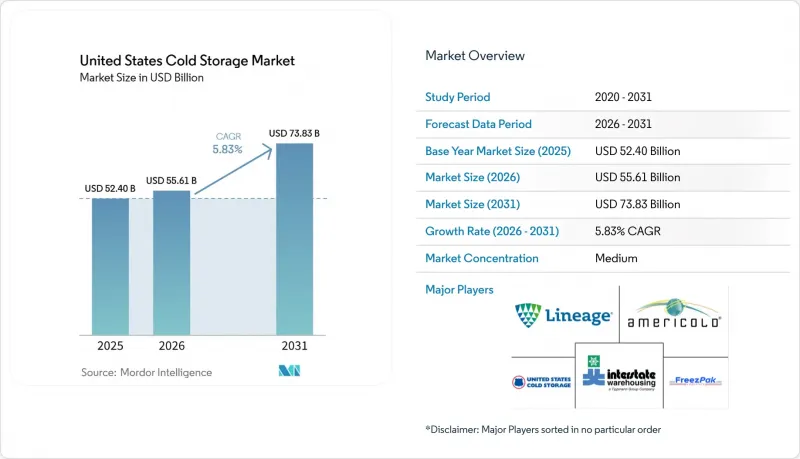
據 Mordor Intelligence 稱,美國冷藏倉庫市場在 2025 年的價值將達到 524 億美元,預計到 2031 年將達到 738.3 億美元,而 2026 年為 556.1 億美元,在 2026 年至 2031 年的成長率內,複合年的成長率將達到 5.83%。
美國冷藏市場的當前擴張反映了食品分銷和醫藥物流從短期庫存補給向區域溫控網路的轉變。本報告按溫度類型(冷藏、冷凍及其他)、自動化程度(傳統設施和自動化冷庫)、應用領域(水果和蔬菜、肉類和家禽、魚貝類、乳製品和冷凍甜點、即食食品及其他)以及地區(東北部、東南部、中西部及其他)進行細分。市場預測以美元計價。
美國冷藏市場趨勢與洞察
對溫控食品履約的需求日益成長
美國冷藏倉庫市場正受益於與線上食品銷售和直接送餐服務相關的冷藏履約基礎設施的穩定擴張。食品零售商正在重新思考其物流網路,使生鮮食品、冷凍和已調理食品透過更可控的處理場所而非普通倉庫進行運輸。這推動了對能夠滿足多溫區儲存、快速裝卸和重複配送需求的都市區冷藏設施的需求。 NAIOP大規模區域食品配送中心的投入運作,美國冷藏倉庫市場對靠近人口密集都市區配送區域的小規模填充式位置的需求也在不斷成長。
將醫藥低溫運輸擴展到食品物流之外。
美國冷藏市場的發展也受到醫藥物流快速擴張的推動,醫藥物流正逐漸擺脫以食品為中心的傳統倉儲模式。生技藥品、生物相似藥和先進療法需要比普通食品更嚴格的儲存規程、更細緻的檢驗以及更一致的儲存歷史管理。這迫使營運商投資建造經認證的冷藏庫和超低溫環境,以滿足高價值產品和更嚴格的審核要求。雖然目前需求仍集中在東北部,但隨著德克薩斯州和北卡羅來納州等州的生命科學製造活動不斷成長,其範圍正在擴大。因此,醫藥處理業務已成為美國冷藏市場中成長最強勁、以品質為導向的領域之一。對於能夠將溫度控制、文件管理和先進基礎設施整合到單一網路中的營運商而言,這一趨勢尤其顯著。
冷凍電力高成本且易受尖峰負載。
由於冷凍是大多數冷庫的主要電力消耗,美國冷庫市場利潤率正面臨持續的電力成本壓力。此外,高需求地區的營運商更容易受到尖峰負載的影響,這可能導致夏季和其他運轉率高峰期電費大幅上漲。在電價已經很高或即使是短期負載高峰也需支付需求費用的地區,這個問題尤其嚴重。根據中央谷冷庫公司的數據,預計到2026年,太平洋煤氣電力公司(PG&E)的商業高峰時段電價將在每千瓦時0.32美元至0.45美元之間,這凸顯了加州主要運營商必須應對的成本壓力。過渡到《AIM法案》將進一步加重成本負擔,因為升級冷凍系統雖然可以帶來長期的性能提升,但需要在完全實現成本節約之前進行前期投資。
細分市場分析
到2025年,冷凍(-18至0°C)儲存將占美國冷藏倉儲市場佔有率的46.44%,成為以金額為準最高的溫度區域。這一地位反映了冷凍倉儲在蛋白質加工、冷凍食品、蔬菜和餐飲服務業等行業龐大的分銷規模,這些行業擁有成熟的供應鏈。此外,中西部和東南部地區的廣泛部署也使這一細分市場受益,這些地區的製造商和加工商擁有穩定的處理量。冷藏倉儲對於生鮮食品、乳製品和部分藥品的配送仍然至關重要,尤其是在零售補貨環節,因為這些環節需要更靠近需求點的快速存貨周轉。常溫冷藏倉儲則繼續滿足一些更具體的需求,例如巧克力、葡萄酒和對溫度敏感的物料,這些物料需要溫度控制,但不需要完全冷藏。
預計到2031年,超低溫(低於-20 度C)冷藏倉庫將以11.09%的複合年成長率成長,使其成為美國冷藏倉庫市場最具吸引力的成長領域之一。這一細分市場的成長主要得益於對細胞和基因治療儲存、疫苗處理以及檢驗的超低溫基礎設施的廣泛需求。這促使投資轉向能夠容納多個溫度區域並維持更嚴格監控標準的設施。 NewCold公司位於印第安納州的「黎巴嫩三期」專案就是一個很好的例子,它展示了營運商如何整合製冷和冷凍功能,以提高整個高規格需求流的柔軟性。在美國,缺乏自動化和先進控制能力的舊式超低溫冷藏設施不太可能獲得高品質生物製藥和專業醫療保健產品的合約。
其他好處:
- Excel格式的市場預測(ME)表
- 3個月的分析師支持
目錄
第1章:引言
- 研究假設和市場定義
- 調查範圍
第2章:調查方法
第3章執行摘要
第4章 市場狀況
- 市場概況及冷藏倉庫在物流中的作用
- 市場促進因素
- 對溫控食品履約的需求日益成長
- 將醫藥低溫運輸擴展到食品物流之外。
- 現代化、自動化設施正在滿足租戶的需求。
- 透過提高能源效率和維修來改善營運經濟效益
- 合約產能作為對沖現貨庫存週期波動的工具
- GLP-1 和低溫運輸健康食品引起的食物成分變化
- 市場限制因素
- 冷凍用電成本高,且面臨尖峰負載。
- 新建設和改建工程需要非常高的資本密集度。
- 冷庫和自動化操作領域技術純熟勞工短缺
- 現有資產老化和注重品質的租戶流失。
- 法律規範
- 價值鍊和分銷管道的結構分析
- 技術創新前景
- 波特五力分析
- 冷藏倉庫產業的變化
- 冷藏倉庫裝置容量及擴大趨勢分析
- 公共部門和私營部門之間的能力分配
- 重大基礎建設項目
- 永續性和ESG評估
- 地緣政治事件對供應鏈變化的影響
第5章 市場規模及成長預測(價值,2026-2031 年)
- 按溫度類型
- 冷藏(0-5 度C)
- 冷凍(-18~0 度C)
- 環境的
- 超低溫(低於-20 度C)
- 自動化等級(儲存)
- 傳統設施
- 自動化倉庫(AS/RS、機器人)
- 透過使用
- 水果和蔬菜
- 肉類/家禽
- 魚貝類
- 乳製品和冷凍甜點
- 麵包糖果甜點
- 即食餐
- 藥品和生技藥品
- 疫苗和臨床試驗樣本
- 化學品/特殊材料
- 其他生鮮食品
- 按地區
- 東北
- 東南
- 中西部
- 西南
- 西方
第6章 競爭情勢
- 市場集中度
- 關鍵策略趨勢
- 市佔率分析
- 公司簡介
- Lineage, Inc.
- Americold Realty Trust
- United States Cold Storage
- Interstate Warehousing
- FreezPak Logistics
- Vertical Cold Storage
- Arcadia Cold Storage & Logistics
- NewCold
- Burris Logistics
- RLS Logistics
- NFI Industries
- Penske Logistics
- Kenco Logistics
- Tippmann Group
- Congebec
- Conestoga Cold Storage
- ColdPoint Logistics
- Seafrigo Group
- Envision Cold
- Eskimo Cold Storage
- Nordic Logistics & Warehousing
- Frialsa USA
第7章 市場機會與未來展望
According to Mordor Intelligence, the United States cold storage market was valued at USD 52.40 billion in 2025 and is estimated to grow from USD 55.61 billion in 2026 to reach USD 73.83 billion by 2031, at a CAGR of 5.83% during the forecast period 2026-2031.
The current expansion of the United States' cold storage market reflects a wider shift in food distribution and pharmaceutical logistics toward regional temperature-controlled networks rather than short-cycle inventory additions. This report is Segmented by Temperature Type (Chilled, Frozen, and More), by Automation Level (Conventional Facilities and Automated Cold Stores), by Application (Fruits and Vegetables, Meat and Poultry, Fish and Seafood, Dairy and Frozen Desserts, Ready-To-Eat Meals, and More), and by Region (Northeast, Southeast, Midwest, and More). The Market Forecasts are Provided in Terms of Value (USD).
United States Cold Storage Market Trends and Insights
Rising Demand for Temperature-Controlled Grocery Fulfillment
The United States cold storage market is benefiting from the steady buildout of refrigerated fulfillment infrastructure tied to online grocery and direct-to-consumer food delivery. Grocery retailers are reworking their distribution networks so that fresh, frozen, and prepared foods can move through more controlled handling points rather than general warehouse space. This raises the need for multi-temperature rooms, fast dock turnover, and urban cold nodes that can support repeat delivery cycles. NAIOP noted that the United States online grocery sales are on track to surpass USD 150 billion in 2026, supporting the case for continued investment in specialized refrigerated real estate. As larger regional food distribution assets come online, the United States cold storage market is also seeing linked demand for smaller infill locations closer to dense metro delivery zones.
Pharmaceutical Cold Chain Expansion Beyond Food Logistics
The United States cold storage market is also being lifted by the rapid expansion of pharmaceutical logistics beyond the food-centered warehouse model. Biologics, biosimilars, and advanced therapies require tighter storage protocols, deeper validation, and more consistent chain-of-custody controls than typical food accounts. This pushes operators to invest in qualified chilled and ultra-low environments that can support higher-value products and stricter audit requirements. Demand remains concentrated in the Northeast, but the footprint is broadening as life sciences manufacturing activity grows in states such as Texas and North Carolina. This makes pharmaceutical handling one of the strongest quality-driven growth paths in the United States cold storage market, especially for operators that can combine temperature control, documentation, and modern infrastructure within a single network.
High Cost of Refrigeration Power and Peak Load Exposure
The United States' cold storage market faces persistent margin pressure from electricity costs, as refrigeration is the main power draw in most facilities. Operators in large demand centers also face high peak-load exposure, which can sharply lift bills during summer and high-utilization periods. This is especially difficult in regions where power pricing is already elevated and where demand charges punish short periods of load spikes. Central Valley Cold Storage showed PG&E commercial peak-period rates of USD 0.32 to USD 0.45 per kWh in 2026, underscoring the cost pressure major California operators must manage. The AIM Act transition adds another layer of cost because refrigeration system upgrades may improve long-run performance but require upfront spending before savings are fully realized.
Other drivers and restraints analyzed in the detailed report include:
- Automation-Ready Modern Facilities Capturing Occupier Demand
- Energy-Efficiency Retrofits Improving Operating Economics
- Very High Capital Intensity for New Build and Modernization
For complete list of drivers and restraints, kindly check the Table Of Contents.
Segment Analysis
Frozen (-18-0 °C) storage accounted for 46.44% of the United States cold storage market share in 2025, making it the largest temperature band by value. That position reflects the scale of protein processing, frozen meals, vegetables, and food service distribution across long-established supply chains. The segment also benefits from a deep installed base in the Midwest and Southeast, where manufacturers and processors generate steady throughput. Chilled storage remains important for fresh food, dairy, and some pharmaceutical flows, especially where retail replenishment requires faster cycling closer to demand centers. Ambient cold storage continues to serve narrower needs such as chocolates, wines, and temperature-sensitive materials that need control without full refrigeration.
Deep-frozen/ultra-low (less than -20 °C) is projected to grow at a 11.09% CAGR, giving it one of the most attractive expansion profiles in the United States cold storage market through 2031. The segment is being supported by cell and gene therapy storage, vaccine handling, and the broader need for validated ultra-low infrastructure. This is shifting investment toward facilities that can handle multiple temperature bands and maintain tighter monitoring standards. NewCold's Lebanon Phase 3 project in Indiana shows how operators are building chilled and frozen capability together to improve flexibility across high-specification demand streams. In the United States, older deep-freeze capacity without automation or advanced controls is less likely to compete for premium biologics and specialty healthcare contracts.
Complete Report Scope:
- By Temperature Type
- Chilled (0-5 °C)
- Frozen (-18-0 °C)
- Ambient
- Deep-Frozen / Ultra-Low (Less than -20 °C)
- By Automation Level (Storage)
- Conventional Facilities
- Automated Cold Stores (AS/RS, Robotics)
- By Application
- Fruits & Vegetables
- Meat & Poultry
- Fish & Seafood
- Dairy & Frozen Desserts
- Bakery & Confectionery
- Ready-to-Eat Meals
- Pharmaceuticals & Biologics
- Vaccines & Clinical Trial Materials
- Chemicals & Specialty Materials
- Other Perishables
- By Region
- Northeast
- Southeast
- Midwest
- Southwest
- West
List of Companies Covered in this Report:
- Lineage, Inc.
- Americold Realty Trust
- United States Cold Storage
- Interstate Warehousing
- FreezPak Logistics
- Vertical Cold Storage
- Arcadia Cold Storage & Logistics
- NewCold
- Burris Logistics
- RLS Logistics
- NFI Industries
- Penske Logistics
- Kenco Logistics
- Tippmann Group
- Congebec
- Conestoga Cold Storage
- ColdPoint Logistics
- Seafrigo Group
- Envision Cold
- Eskimo Cold Storage
- Nordic Logistics & Warehousing
- Frialsa USA
Additional Benefits:
- The market estimate (ME) sheet in Excel format
- 3 months of analyst support
TABLE OF CONTENTS
1 Introduction
- 1.1 Study Assumptions & Market Definition
- 1.2 Scope of the Study
2 Research Methodology
3 Executive Summary
4 Market Landscape
- 4.1 Market Overview and Role of Cold Storage in Logistics
- 4.2 Market Drivers
- 4.2.1 Rising Demand for Temperature-Controlled Grocery Fulfillment
- 4.2.2 Pharmaceutical Cold Chain Expansion Beyond Food Logistics
- 4.2.3 Automation-Ready Modern Facilities Capturing Occupier Demand
- 4.2.4 Energy-Efficiency Retrofits Improving Operating Economics
- 4.2.5 Contracted Capacity as a Hedge Against Volatile Spot Inventory Cycles
- 4.2.6 GLP-1 Driven Shifts in Food Mix and Cold-Chain Health Products
- 4.3 Market Restraints
- 4.3.1 High Cost of Refrigeration Power and Peak Load Exposure
- 4.3.2 Very High Capital Intensity for New Build and Modernization
- 4.3.3 Shortage of Skilled Labor for Cold-Room and Automation Operations
- 4.3.4 Legacy Asset Obsolescence and Occupier Flight to Quality
- 4.4 Regulatory Framework
- 4.5 Value Chain and Distribution Channel Architecture Analysis
- 4.6 Technology Innovations Outlook
- 4.7 Porter's Five Forces Analysis
- 4.7.1 Threat of New Entrants
- 4.7.2 Bargaining Power of Suppliers
- 4.7.3 Bargaining Power of Buyers
- 4.7.4 Threat of Substitutes
- 4.7.5 Rivalry Among Competitors
- 4.8 Evolution of the Cold Storage Industry
- 4.9 Cold Storage Installed Capacity and Expansion Trend Analysis
- 4.10 Public vs Private Capacity Split
- 4.11 Key Infrastructure Projects
- 4.12 Sustainability and ESG Assessment
- 4.13 Impact of Geo-Political Events on Supply Chain Shifts
5 Market Size & Growth Forecasts (Value, 2026-2031)
- 5.1 By Temperature Type
- 5.1.1 Chilled (0-5 °C)
- 5.1.2 Frozen (-18-0 °C)
- 5.1.3 Ambient
- 5.1.4 Deep-Frozen / Ultra-Low (Less than -20 °C)
- 5.2 By Automation Level (Storage)
- 5.2.1 Conventional Facilities
- 5.2.2 Automated Cold Stores (AS/RS, Robotics)
- 5.3 By Application
- 5.3.1 Fruits & Vegetables
- 5.3.2 Meat & Poultry
- 5.3.3 Fish & Seafood
- 5.3.4 Dairy & Frozen Desserts
- 5.3.5 Bakery & Confectionery
- 5.3.6 Ready-to-Eat Meals
- 5.3.7 Pharmaceuticals & Biologics
- 5.3.8 Vaccines & Clinical Trial Materials
- 5.3.9 Chemicals & Specialty Materials
- 5.3.10 Other Perishables
- 5.4 By Region
- 5.4.1 Northeast
- 5.4.2 Southeast
- 5.4.3 Midwest
- 5.4.4 Southwest
- 5.4.5 West
6 Competitive Landscape
- 6.1 Market Concentration
- 6.2 Key Strategic Moves
- 6.3 Market Share Analysis
- 6.4 Company Profiles (includes Global level Overview, Market level overview, Core Segments, Financials as available, Strategic Information, Market Rank/Share for key companies, Products & Services, and Recent Developments)
- 6.4.1 Lineage, Inc.
- 6.4.2 Americold Realty Trust
- 6.4.3 United States Cold Storage
- 6.4.4 Interstate Warehousing
- 6.4.5 FreezPak Logistics
- 6.4.6 Vertical Cold Storage
- 6.4.7 Arcadia Cold Storage & Logistics
- 6.4.8 NewCold
- 6.4.9 Burris Logistics
- 6.4.10 RLS Logistics
- 6.4.11 NFI Industries
- 6.4.12 Penske Logistics
- 6.4.13 Kenco Logistics
- 6.4.14 Tippmann Group
- 6.4.15 Congebec
- 6.4.16 Conestoga Cold Storage
- 6.4.17 ColdPoint Logistics
- 6.4.18 Seafrigo Group
- 6.4.19 Envision Cold
- 6.4.20 Eskimo Cold Storage
- 6.4.21 Nordic Logistics & Warehousing
- 6.4.22 Frialsa USA
7 Market Opportunities & Future Outlook
- 7.1 White-space & Unmet-Need Assessment

 冷藏保管市場:全球預測,2026-2032年
 中國冷藏倉庫:市場佔有率分析、產業趨勢與統計及成長預測(2026-2031年)印度冷藏倉庫:市場佔有率分析、產業趨勢與統計及成長預測(2026-2031)
 全球冷庫市場規模、佔有率、趨勢及成長分析報告(2026-2034)
 冷資料儲存市場規模、佔有率和成長分析:按類型、溫度類型、儲存方法、應用和地區分類-2026-2033年產業預測
 2026年全球冷資料儲存市場報告2026年全球分散式冷資料儲存市場報告
 2026-2030年全球冷藏冷凍倉庫市場
 冷庫市場分析及預測(至2035年):依類型、產品類型、服務、技術、組件、應用、形式、材質、部署類型及最終用戶分類水產品冷資料儲存市場按儲存類型、產品類型、技術和最終用途分類-2026-2032年全球預測