


 |
市場調查報告書
商品編碼
2072901
南美洲昆蟲飼料:市場佔有率分析、產業趨勢與統計及成長預測(2026-2031 年)South America Insect Feed - Market Share Analysis, Industry Trends & Statistics, Growth Forecasts (2026 - 2031) |
||||||

※ 本網頁內容可能與最新版本有所差異。詳細情況請與我們聯繫。
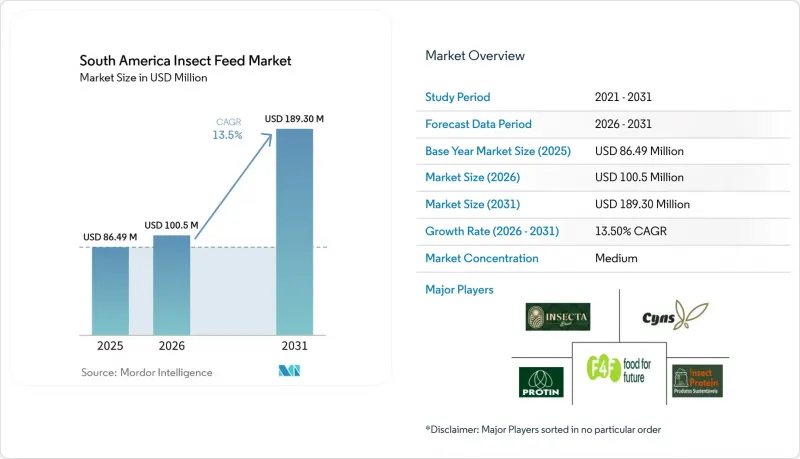
據 Mordor Intelligence 稱,2025 年南美洲昆蟲飼料市場價值 8,649 萬美元,預計到 2031 年將達到 1.893 億美元,而 2026 年為 1.005 億美元,預測期(2026-2031 年)的複合年成長率為 13.50%。
本報告按昆蟲種類(黑蚋、穀蟲、家蠅等)、產品形態(蛋白粉、乾幼蟲、昆蟲油、糞肥)、動物種類(水產養殖、家禽、豬、反芻動物、寵物)和地區(巴西、阿根廷、智利、哥倫比亞及其他南美國家)進行細分。報告以美元計價,呈現市場規模和預測數據。
南美洲昆蟲飼料市場趨勢與洞察
水產飼料生產商正在尋找魚粉的替代品。
南美洲的昆蟲飼料市場主要受水產養殖業驅動,因為鮭魚、蝦子和吳郭魚的養殖戶都面臨魚粉價格波動帶來的持續壓力。秘魯安喬貝塔魚捕撈量的漁獲量持續影響全部區域的飼料經濟,促使飼料生產商積極評估替代蛋白。提高產量對南美洲昆蟲飼料市場意義重大,因為蝦、鮭魚和吳郭魚產量的增加都會提高對可靠蛋白質來源的需求,而這些蛋白質來源受海洋原料價格波動的影響較小。 BioMar、InnovaFeed 和 Auchan 已於 2025 年 9 月透過與厄瓜多爾蝦飼料鏈的合作,成功地將這項挑戰推向了商業化規模。這顯示昆蟲粉正從一種實驗性概念轉變為一種實用的原料。此外,昆蟲粉兼具蛋白質和功能性價值,縮小了其與水產養殖飼料配方中傳統原料之間的巨大差距,從而惠及南美洲昆蟲飼料市場。
寵物食品優質化以及對低致敏蛋白的需求
寵物食品正在推動南美洲昆蟲飼料市場出現不同類型的需求。這是因為該通路的買家對通用蛋白質的價格波動較不敏感。昆蟲蛋白質對許多寵物來說是一種新型蛋白質,可以支撐其高階定位,使其適用於排除飲食和消化器官系統。 2025年2月,希爾思寵物營養在巴西推出了「敏感腸胃及皮膚」系列產品。此次上市表明,昆蟲蛋白已超越小眾實驗階段,進入主流零售市場。隨後,Special Dog於2025年8月推出了「BioNatural Sensitive」系列產品,同年10月,Circular Pet在智利推出了一款使用低致敏性昆蟲蛋白的狗糧。這證實了這種需求模式正在向多個國家蔓延。這對南美洲昆蟲飼料市場具有重大意義。因為與家禽和豬飼料相比,高階寵物食品更容易消化不斷上漲的原料成本,使其成為當地生產者重要的初始收入來源。雖然發展速度仍取決於監管方面的進展,但這些產品的上市已經釋放出明顯的商業性訊號。
大豆粕和魚粉的價格差異
南美昆蟲飼料市場最大的商業性限制因素仍然是價格。大豆粕在區域飼料配方中仍佔有重要地位,這得益於大規模的國內生產體系,而昆蟲飼料生產商在規模上尚未趕上。當魚粉市場供應趨緊時,價格差距會縮小;但當傳統蛋白質市場供應穩定時,價格差距又會擴大,這表明某些應用領域的需求呈現週期性波動而非穩定趨勢。儘管2020年至2025年間生產體係有所改進,但南美洲許多工廠的營運規模仍不足以透過自動化養殖和加工大幅降低成本。因此,南美昆蟲飼料市場在高階應用和配方控制嚴格的應用領域中表現最為強勁,而非在廣泛的通用用途領域。
細分市場分析
預計到2025年,黑水虻將佔據南美昆蟲飼料市場61.6%的佔有率,這反映了其在生產規模、飼料轉換率以及對當地有機產品類別的適應性方面的優勢。穀蟲是成長最快的細分市場,預計到2031年將以12.9%的複合年成長率成長,這主要得益於高階寵物食品和其他高價值營養應用的需求。黑水虻歷來主導南美昆蟲飼料市場,因為與其他物種相比,它們更適合該地區的主要用途,例如水產養殖、家禽養殖和生豬養殖。當地生產商,例如Cyns和Bioconversion,圍繞黑水虻衍生原料企業發展,進一步鞏固了黑水虻的市場主導地位。
穀蟲正透過瞄準那些與黑水虻主要大宗應用領域不直接競爭的需求領域來擴大其市場佔有率。巴西昆蟲公司(Insecta Brasil)將其穀蟲產品定位於魚類、家禽、豬和寵物營養領域,這表明該物種正在專業營養領域開闢利基市場,而不是試圖取代黑水虻在大宗飼料市場的地位。蟋蟀在南美昆蟲飼料市場中繼續扮演小眾角色,與主流飼料配方相比,它們在寵物和新奇產品領域佔據著更重要的地位。家蠅和其他昆蟲物種仍處於商業化初期,其進展大多局限於先導計畫和選擇性產品開發,而非大規模市場供應。因此,預計南美昆蟲飼料市場在大宗應用領域仍將由黑水虻主導,而穀蟲將在高階買家能夠維持價格水平的細分市場中繼續成長。
其他好處:
- Excel格式的市場預測(ME)表
- 3個月的分析師支持
目錄
第1章:引言
- 研究假設和市場定義
- 調查範圍
第2章:調查方法
第3章執行摘要
第4章 市場狀況
- 市場概覽
- 市場促進因素
- 一家水產飼料負責人正在尋找魚粉的替代品。
- 消費者對優質寵物食品和低致敏蛋白的需求日益成長。
- 將農產品和工業產品回收作為幼蟲培養基
- 家禽和豬飼料多樣化,以減少對大豆的依賴
- 出口脫碳審計優先考慮低碳飼料原料。
- 透過糞便(蟲糞)貨幣化提高昆蟲養殖設施的單位經濟效益。
- 市場限制因素
- 大豆粕和魚粉的價格差異
- 飼料和有機廢棄物。
- 符合相關規定的消費前原料供應的季節性變化。
- 缺乏大規模生產所需的乾燥和油脂穩定基礎設施
- 監理情勢
- 技術展望
- 波特五力模型
第5章 市場規模與成長預測
- 昆蟲種類
- 黑果蠅
- 穀蟲
- 蒼蠅
- 其他
- 按產品形式
- 蛋白質餐
- 乾燥幼蟲(整隻)
- 昆蟲油
- 糞肥
- 依動物類型
- 水產養殖
- 家禽
- 豬
- 反芻動物
- 寵物
- 按地區
- 巴西
- 阿根廷
- 智利
- 哥倫比亞
- 其他南美國家
第6章 競爭情勢
- 市場集中度
- 策略趨勢
- 市佔率分析
- 公司簡介
- Cyns
- Protin Biotech
- !nsect Protein
- Insecta Brasil
- Food for the Future
- BIOPROT
- Buzz Fly
- Insectius
- Protix BV
- InnovaFeed SAS
- Entobel
- HiProMine SA
- Hexafly
- Beta Hatch
- Sentara Group
第7章 市場機會與未來展望
According to Mordor Intelligence, the south america insect feed market size was valued at USD 86.49 million in 2025 and is estimated to grow from USD 100.50 million in 2026 to reach USD 189.30 million by 2031, at a CAGR of 13.50% during the forecast period (2026-2031).
This report is Segmented by Insect Species (Black Soldier Fly, Mealworm, Housefly, and Others), by Product Form (Protein Meal, Whole Dried Larvae, Insect Oil, and Frass Fertilizer), by Animal Type (Aquaculture, Poultry, Swine, Ruminants, and Pets), and by Geography (Brazil, Argentina, Chile, Colombia, and Rest of South America). The Report Offers the Market Size and Forecasts in Terms of Value (USD).
South America Insect Feed Market Trends and Insights
Aquaculture Feed Formulators Seeking Fishmeal Replacement
The South America insect feed market is getting one of its strongest boosts from aquaculture, as salmon, shrimp, and tilapia producers all face periodic pressure on fishmeal prices. Peru's anchoveta catch variability continues to affect feed economics across the region, keeping alternative proteins in active evaluation by formulators. Production growth matters for the South America insect feed market because each step up in shrimp, salmon, and tilapia output increases the need for reliable protein inputs less exposed to marine raw material swings. BioMar, InnovaFeed, and Auchan moved this issue closer to commercial scale in September 2025 through a partnership with Ecuador's shrimp feed chain, demonstrating that insect meal is being positioned as a practical ingredient rather than a trial concept. The South America insect feed market also benefits when insect meal delivers both protein and functional value, as this reduces the effective gap with conventional ingredients in aquafeed formulas.
Pet Food Premiumization and Hypoallergenic Protein Demand
Pet food is driving a different type of demand in the South America insect feed market, as buyers in this channel are less sensitive to commodity protein pricing. Insect protein fits well into elimination diets and sensitive-digestion formulas because it is a novel protein for many pets and can support premium positioning. Hill's Pet Nutrition launched its Sensitive Stomach and Skin line in Brazil in February 2025, and the launch showed that insect protein had moved into a mainstream retail setting instead of remaining a niche experiment. Special Dog followed in August 2025 with Bionatural Sensitive, and Circular Pet launched a hypoallergenic insect-protein dog food in Chile in October 2025, confirming that the demand pattern was spreading across multiple countries. This matters for the South America insect feed market because premium pet food can absorb higher ingredient costs more easily than poultry or swine feed, making it an important early revenue stream for regional producers. The pace is still linked to regulatory progress, but the commercial signal from these launches is already clear.
Price Gap Versus Soybean Meal and Fishmeal
The biggest commercial restraint on the South America insect feed market is still price. Soybean meal remains deeply embedded in regional feed formulas, and it is supported by large domestic production systems that insect producers have not yet matched in scale. The gap narrows when fishmeal markets tighten, but it widens again when conventional protein markets stabilize, making demand more cyclical than steady in some applications. Production systems have improved between 2020 and 2025, but many South American plants are still operating at a scale where automated rearing and processing cannot drive a major cost reset. That keeps the South America insect feed market strongest in premium applications and controlled inclusion rates rather than broad commodity adoption.
Other drivers and restraints analyzed in the detailed report include:
- Circular Use of Agro-Industrial Byproducts for Larvae Substrate
- Poultry and Swine Feed Diversification Away from Soy Dependence
- Regulatory Inconsistency Across Feed and Organic Waste Rules
For complete list of drivers and restraints, kindly check the Table Of Contents.
Segment Analysis
Black Soldier Fly held 61.6% of the South America insect feed market share in 2025, reflecting its lead in scale, feed conversion, and adaptability to local organic side streams. Mealworm is the fastest-growing species segment, with a 12.9% CAGR through 2031, and its momentum is mainly driven by premium pet food and other higher-value nutrition applications. The South America insect feed market has favored black soldier fly so far because it fits the region's main applications in aquaculture, poultry, and swine more directly than other species. That lead is also supported by the fact that regional producers such as Cyns and Bioconversion have built their commercial positioning around black soldier fly-based ingredients.
Mealworm is expanding its presence by targeting demand areas that do not directly compete with the primary volume applications of black soldier fly. Insecta Brasil has positioned mealworm-based products for use in fish, bird, swine, and pet nutrition, indicating that this species is carving out a niche in specialized nutrition rather than attempting to replace black soldier fly in bulk feed markets. Crickets continue to occupy a niche role in the South America insect feed market, with greater relevance in pet and novelty products compared to mainstream feed formulations. Houseflies and other insect species remain in the early stages of commercialization, with most advancements limited to pilot projects and selective product development rather than widespread market supply. Consequently, the South America insect feed market is projected to remain focused on black soldier fly for high-volume applications, while mealworm continues to grow in segments where premium buyers can sustain its pricing.
Complete Report Scope:
- By Insect Species
- Black Soldier Fly
- Mealworm
- Housefly
- Others
- By Product Form
- Protein Meal
- Whole Dried Larvae
- Insect Oil
- Frass Fertilizer
- By Animal Type
- Aquaculture
- Poultry
- Swine
- Ruminants
- Pets
- By Geography
- Brazil
- Argentina
- Chile
- Colombia
- Rest of South America
List of Companies Covered in this Report:
- Cyns
- Protin Biotech
- !nsect Protein
- Insecta Brasil
- Food for the Future
- BIOPROT
- Buzz Fly
- Insectius
- Protix B.V.
- InnovaFeed SAS
- Entobel
- HiProMine S.A.
- Hexafly
- Beta Hatch
- Sentara Group
Additional Benefits:
- The market estimate (ME) sheet in Excel format
- 3 months of analyst support
TABLE OF CONTENTS
1 Introduction
- 1.1 Study Assumptions and Market Definition
- 1.2 Scope of the Study
2 Research Methodology
3 Executive Summary
4 Market Landscape
- 4.1 Market Overview
- 4.2 Market Drivers
- 4.2.1 Aquaculture feed formulators seeking fishmeal replacement
- 4.2.2 Pet food premiumization and hypoallergenic protein demand
- 4.2.3 Circular use of agro-industrial byproducts for larvae substrate
- 4.2.4 Poultry and swine feed diversification away from soy dependence
- 4.2.5 Export decarbonization audits favoring low-footprint feed inputs
- 4.2.6 Frass monetization improving insect plant unit economics
- 4.3 Market Restraints
- 4.3.1 Price gap versus soybean meal and fishmeal
- 4.3.2 Regulatory inconsistency across feed and organic waste rules
- 4.3.3 Seasonal inconsistency in compliant pre-consumer feedstock streams
- 4.3.4 Limited drying and oil-stabilization infrastructure for scale
- 4.4 Regulatory Landscape
- 4.5 Technological Outlook
- 4.6 Porter's Five Forces
- 4.6.1 Threat of New Entrants
- 4.6.2 Bargaining Power of Suppliers
- 4.6.3 Bargaining Power of Buyers
- 4.6.4 Threat of Substitutes
- 4.6.5 Intensity of Competitive Rivalry
5 Market Size and Growth Forecasts (Value)
- 5.1 By Insect Species
- 5.1.1 Black Soldier Fly
- 5.1.2 Mealworm
- 5.1.3 Housefly
- 5.1.4 Others
- 5.2 By Product Form
- 5.2.1 Protein Meal
- 5.2.2 Whole Dried Larvae
- 5.2.3 Insect Oil
- 5.2.4 Frass Fertilizer
- 5.3 By Animal Type
- 5.3.1 Aquaculture
- 5.3.2 Poultry
- 5.3.3 Swine
- 5.3.4 Ruminants
- 5.3.5 Pets
- 5.4 By Geography
- 5.4.1 Brazil
- 5.4.2 Argentina
- 5.4.3 Chile
- 5.4.4 Colombia
- 5.4.5 Rest of South America
6 Competitive Landscape
- 6.1 Market Concentration
- 6.2 Strategic Moves
- 6.3 Market Share Analysis
- 6.4 Company Profiles (Includes Global Level Overview, Market Level Overview, Core Segments, Financials as Available, Strategic Information, Market Rank/Share for Key Companies, Products and Services, and Recent Developments)
- 6.4.1 Cyns
- 6.4.2 Protin Biotech
- 6.4.3 !nsect Protein
- 6.4.4 Insecta Brasil
- 6.4.5 Food for the Future
- 6.4.6 BIOPROT
- 6.4.7 Buzz Fly
- 6.4.8 Insectius
- 6.4.9 Protix B.V.
- 6.4.10 InnovaFeed SAS
- 6.4.11 Entobel
- 6.4.12 HiProMine S.A.
- 6.4.13 Hexafly
- 6.4.14 Beta Hatch
- 6.4.15 Sentara Group


