


 |
市場調查報告書
商品編碼
2062315
東南亞汽車經銷商:市場佔有率分析、產業趨勢與統計及成長預測(2026-2031)South East Asia Automotive Dealership - Market Share Analysis, Industry Trends & Statistics, Growth Forecasts (2026 - 2031) |
||||||

※ 本網頁內容可能與最新版本有所差異。詳細情況請與我們聯繫。
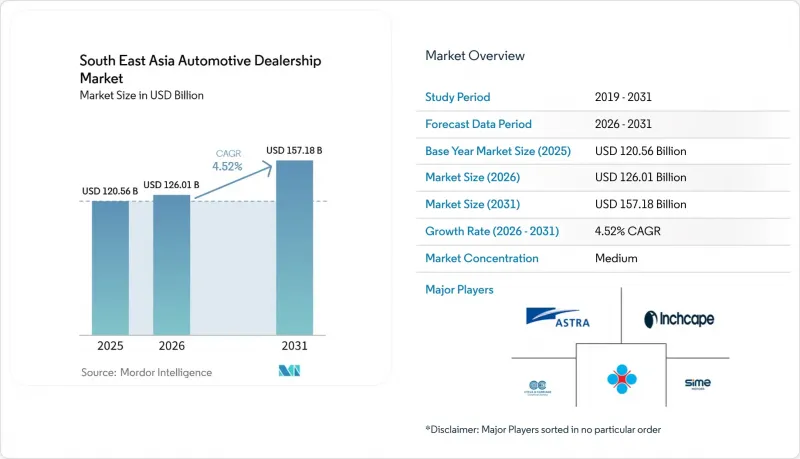
根據 Mordor Intelligence 預測,東南亞汽車經銷市場規模預計將從 2025 年的 1,205.6 億美元成長到 2026 年的 1,260.1 億美元,到 2031 年達到 1,571.8 億美元,在預測期(2026-2031 年內複合年成長率為 4.2%。
本報告按類型(新車經銷店、二手車經銷店、零件及服務、其他)、零售商(特許經營零售商、非特許經營零售商)、車輛類型(乘用車、其他)、驅動方式(內燃機車輛、電動汽車)和國家/地區(印尼、泰國、其他國家)進行分類。市場預測以美元計價。
東南亞汽車經銷市場趨勢與洞察
印尼、泰國和越南新車需求激增
這三個市場的新車註冊量總合已達到相當可觀的水平,使得經銷商集團有理由開設新的銷售據點和服務中心。印尼汽車集團Indomobil正在考慮增設位置,以擴大在雅加達、萬隆和泗水的業務。同時,越南THACO正在農村地區開設展示室,以便為客戶提供更便利的維修保養服務。在泰國,公共基礎建設的投入提振了商用車的強勁銷售前景,進一步刺激了對輕型卡車的需求。經銷商的金融部門正透過提供低首付方案和廠商現金回饋等優惠措施,吸引那些在疫情期間延後購車的首次購車者。這些因素不僅增加了客流量,也凸顯了線上配置器在購車決策早期階段日益成長的影響力。
零售和全通路購買流程的快速數位化
如今,消費者期望價格透明、虛擬看車和居家試駕,東南亞汽車經銷商市場正朝著透過應用程式和展示室平板電腦實現庫存完全可視化的方向發展。豐田菲律賓公司端到端的SAP系統實施縮短了報價時間,並同步了零件庫存,從而提高了轉換率和服務續約率。廣汽集團和Grab等夥伴關係正在將共乘資料整合到駕駛座介面中,這表明經銷商在管理車輛運作方面具有未來訂閱收入的潛力。 VinFast的入口網站可在幾分鐘內完成90%的貸款核准,提高了貸款處理速度的競爭標準。採用「點擊購買」流程的經銷商可以收集瀏覽行為數據來指南庫存決策,而依賴到店客戶的傳統經銷商正在被數位化原生競爭對手蠶食市場佔有率。
多品牌展示室需要大量的資本投資和營運資金。
旗艦店若整合電動車充電樁、數位螢幕和認證服務中心,投資額可能超過1000萬美元,這將對經銷商的槓桿率帶來壓力。 Perodua的資本計畫凸顯了預測現金流出的難度,尤其是在生產、零售和服務投資重疊的情況下。隨著車型數量的增加,為了滿足即時交付的需求,維持充足的庫存勢必會推高庫存持有成本。小規模、無法利用OEM聯合投資計畫的獨立營業單位往往會被大型集團收購,加速產業整合。同時,獲得綠色金融和供應商管理庫存(VMI)計畫的機會正成為影響網路擴張速度的關鍵差異化因素。
細分市場分析
在東南亞汽車經銷市場,預計到2025年,新車經銷店將佔市場佔有率的55.33%,並在2031年之前以6.12%的複合年成長率成長。汽車製造商在電動車部署中優先考慮這些管道,並提供聯合融資的充電站建設方案以縮短投資回收期。 BMW在雅加達的新店配備了數位化配置器和休息區,以增強品牌故事的敘述。隨著電池式電動車(BEV)日益普及,庫存正向毛利率更高的車型傾斜。這種調整有助於緩解因線上價格透明化而帶來的價格下行壓力。
二手車市場雖然分散,但盈利依然豐厚。各平台都利用人工智慧估值技術,突破傳統實體銷售空間的限制。經銷商集團正與保險公司合作,將延保服務作為一攬子交易的一部分。與二手車交易相關的金融和保險產品創造了額外收入,彌補了車輛銷售利潤率的下降。此外,新車經銷商也擴大開設相鄰的認證二手車經銷店。這種模式能夠快速轉售置換車輛,降低因獨立電商平台搶佔銷售機會的風險。
到2025年,特許零售商將佔據東南亞汽車銷售市場佔有率的64.47%,預計到2031年將以6.21%的複合年成長率成長。這反映了汽車製造商致力於打造符合品牌標準的環境,並配備電動車充電樁和軟體更新區。多品牌經銷商可以降低每個品牌的資本投入,而區域性集團可以利用集中式零件倉庫以更少的庫存支援數十個品牌。數位整合使客戶能夠透過單一登入無縫地從網站導航至展示室和服務車間,從而提高客戶維繫。
獨立經銷商在靈活性和價格競爭力方面擁有顯著優勢,尤其是在二手車領域。 Carsome 突破性的盈利正迫使特許經營商效仿其 7 天回購保證。非特許經營經銷商通常會將業務重心轉向特許經營目錄中未涵蓋的小眾進口車型和高性能車型。隨著代理模式的日益普及,特許經營集團可能會轉型為以服務為中心的企業,放棄對交易的控制權,同時向汽車製造商收取交付和維護費用。
其他好處:
- Excel格式的市場預測(ME)表
- 3個月的分析師支持
目錄
第1章:引言
- 研究假設和市場定義
- 調查範圍
第2章:調查方法
第3章執行摘要
第4章 市場狀況
- 市場概覽
- 市場促進因素
- 印尼、泰國和越南新車需求激增
- 快速的數位零售和全通路購買流程
- 原始設備製造商經銷商集團擴大售後服務(零件和服務)
- 二手車平台和分類廣告網站快速成長
- 透過政府獎勵促進純電動車經銷商的發展
- 東協二手車跨境交易灰色市場的自由化
- 市場限制因素
- 多品牌展示室需要大量的資本投資和營運資金。
- 全球汽車製造商開展的線上消費者銷售試點項目
- 馬來西亞和泰國二手車進口配額和關稅存在不確定性
- 認證電動車技術人員和診斷工具短缺
- 價值供應鏈分析
- 監理情勢
- 技術展望
- 波特五力分析
第5章 市場規模與成長預測
- 按類型
- 新車經銷店
- 二手車經銷店
- 零件和服務
- 金融和保險
- 按銷售管道
- 特許經營零售商
- 非特許經營零售商
- 車輛類型
- 搭乘用車
- 商用車輛
- 摩托車
- 透過推進力
- 內燃機車
- 電動車
- 國家
- 印尼
- 泰國
- 馬來西亞
- 菲律賓
- 越南
- 新加坡
- 其他東南亞國家
第6章 競爭情勢
- 市場集中度
- 策略趨勢
- 市佔率分析
- 公司簡介
- PT Astra International Tbk
- Sime Darby Motors
- Cycle and Carriage(Jardine Matheson)
- Tan Chong Motor Holdings Berhad
- Inchcape plc
- Naza Automotive Group
- PT Indomobil Sukses Internasional Tbk
- Hasjrat Abadi
- VinFast Trading and Production
- Truong Hai Auto(THACO)
- TC Subaru(Singapore)
- Honda Cars Thailand
- Bermaz Auto Berhad
- UMW Toyota Motor Malaysia
- United Tractors Indonesia
- Berjaya Auto Philippines
- Motor Image Enterprises
- Boon Siew Honda Malaysia
- MBM Resources Berhad
- Vinacar(Philippines)
第7章 市場機會與未來展望
According to Mordor Intelligence, the southeast asia automotive dealership market size is expected to grow from USD 120.56 billion in 2025 to USD 126.01 billion in 2026 and is forecast to reach USD 157.18 billion by 2031, advancing at a 4.52% CAGR during the forecast period (2026-2031).
This report is Segmented by Type (New-Vehicle Dealership, Used-Vehicle Dealership, Parts and Service, and More), Retailer (Franchised Retailer and Non-Franchised Retailer), Vehicle Type (Passenger Cars and More), Propulsion (Internal-Combustion-Engine and Electric Vehicles), and Country (Indonesia, Thailand, and More). The Market Forecasts are Provided in Terms of Value (USD).
South East Asia Automotive Dealership Market Trends and Insights
Surging New-Vehicle Demand Across Indonesia, Thailand and Vietnam
Combined new-vehicle registrations across three markets surpassed significant volumes, enabling dealer groups to justify the establishment of new outlets and service bays. Indonesian conglomerate Indomobil is eyeing additional sites to enhance its presence in Jakarta, Bandung, and Surabaya. Meanwhile, Vietnam's THACO is setting up rural showrooms to make maintenance services more convenient for customers. In Thailand, robust commercial vehicle pipelines are bolstered by public infrastructure spending, which in turn fuels demand for light trucks. Dealer financiers are enticing first-time buyers-who had delayed purchases during the pandemic-with bundled low-down-payment offers and manufacturer cash rebates. These combined factors not only bolster foot traffic but also highlight the growing influence of online configurators in the early stages of vehicle consideration.
Rapid Digital Retailing and Omnichannel Buying Journeys
Consumers now expect price transparency, virtual vehicle walk-arounds, and at-home test drives, pushing the Southeast Asia automotive dealership market toward full inventory visibility across apps and showroom tablets. Toyota Philippines' end-to-end SAP rollout reduces quotation time and synchronizes parts availability, boosting conversion rates and service retention. Partnerships such as GAC-Grab fold ride-hailing data into cockpit interfaces, hinting at future subscription revenue for dealers that manage fleet uptime. VinFast's web portal allows 90% financing approvals within minutes, raising the competitive bar on loan processing speed. Dealers embracing click-to-buy funnels can capture browsing signals that guide stocking decisions, whereas legacy outlets reliant on walk-ins lose share to digitally native rivals .
High Capex and Working-Capital Needs for Multi-Brand Showrooms
Flagship outlets integrating EV chargers, digital screens, and certified workshops can top USD 10 million, stretching dealer leverage ratios. Perodua's capital plan underscores the unpredictable nature of cash outflows, especially when investments in production, retail, and services converge. As the proliferation of models demands a deeper stock to meet immediate fulfillment expectations, inventory carrying costs inevitably escalate. Small independent entities, lacking OEM co-investment programs, frequently merge into larger groups, hastening consolidation. Meanwhile, access to green financing and vendor-managed inventory programs emerges as a key differentiator, influencing the speed of network expansion.
Other drivers and restraints analyzed in the detailed report include:
- After-Sales Expansion by OEM-Backed Dealer Groups
- Booming Pre-Owned Vehicle Platforms and Classifieds
- Direct-to-Consumer Online Sales Pilots by Global OEMs
For complete list of drivers and restraints, kindly check the Table Of Contents.
Segment Analysis
The Southeast Asia automotive dealership market size for new-vehicle outlets accounted for 55.33% in 2025 and is projected to grow at a 6.12% CAGR to 2031. OEMs prioritize these channels for EV rollouts, offering co-funded charger installations that reduce payback periods. BMW's new store in Jakarta features digital configurators and lounge spaces, enhancing the brand's storytelling. As battery-electric vehicles gain popularity, inventory is shifting toward models with higher gross margins. This adjustment helps mitigate the downward pressure caused by online price transparency.
Used-vehicle operations, though fragmented, remain a profitable market. Platforms are utilizing AI for valuations to expand beyond traditional physical lot capacities. Dealer groups are also partnering with insurers to offer bundled extended warranties. Finance and insurance products tied to pre-owned purchases generate additional yield, offsetting narrower profit margins on vehicle sales. Additionally, new-vehicle dealers are increasingly operating adjacent certified lots. This approach enables them to quickly recycle trade-ins, reducing the risk of losing sales to independent e-commerce marketplaces.
Franchised retailers accounted for 64.47% of the Southeast Asia automotive dealership market share in 2025 and are projected to grow at a 6.21% CAGR through 2031, underscoring OEM commitment to brand-compliant environments that host EV chargers and software update zones. Multi-brand halls lower per-brand capex, and regional conglomerates leverage centralized parts warehouses to support dozens of badges with leaner inventory. Digital integration lets customers transition from the website to the showroom to the service bay under a single sign-on, bolstering retention rates.
Independent dealers excel in agility and price competition, particularly in the used-car arena. Carsome's profitability milestone is pressuring franchised operators to match its seven-day buyback guarantees. Non-aligned outlets often pivot to niche imports or performance models excluded from franchised catalogs. As agency sales models spread, franchised groups may morph into service-centric businesses, charging OEMs for handover and maintenance while ceding transactional control.
List of Companies Covered in this Report:
- PT Astra International Tbk
- Sime Darby Motors
- Cycle and Carriage (Jardine Matheson)
- Tan Chong Motor Holdings Berhad
- Inchcape plc
- Naza Automotive Group
- PT Indomobil Sukses Internasional Tbk
- Hasjrat Abadi
- VinFast Trading and Production
- Truong Hai Auto (THACO)
- TC Subaru (Singapore)
- Honda Cars Thailand
- Bermaz Auto Berhad
- UMW Toyota Motor Malaysia
- United Tractors Indonesia
- Berjaya Auto Philippines
- Motor Image Enterprises
- Boon Siew Honda Malaysia
- MBM Resources Berhad
- Vinacar (Philippines)
Additional Benefits:
- The market estimate (ME) sheet in Excel format
- 3 months of analyst support
TABLE OF CONTENTS
1 Introduction
- 1.1 Study Assumptions and Market Definition
- 1.2 Scope of the Study
2 Research Methodology
3 Executive Summary
4 Market Landscape
- 4.1 Market Overview
- 4.2 Market Drivers
- 4.2.1 Surging New-Vehicle Demand Across Indonesia, Thailand and Vietnam
- 4.2.2 Rapid Digital Retailing and Omnichannel Buying Journeys
- 4.2.3 After-Sales (Parts and Service) Expansion By OEM-Backed Dealer Groups
- 4.2.4 Booming Pre-Owned Vehicle Platforms and Classifieds
- 4.2.5 EV-Exclusive Dealership Formats Encouraged by Government Incentives
- 4.2.6 ASEAN Grey-Market Liberalisation for Used-Vehicle Cross-Border Flows
- 4.3 Market Restraints
- 4.3.1 High Capex and Working-Capital Needs for Multi-Brand Showrooms
- 4.3.2 Direct-To-Consumer Online Sales Pilots by Global Oems
- 4.3.3 Import Quota / Tariff Uncertainty for Used Cars in Malaysia and Thailand
- 4.3.4 Shortage Of Certified EV Technicians and Diagnostic Tooling
- 4.4 Value / Supply-Chain Analysis
- 4.5 Regulatory Landscape
- 4.6 Technological Outlook
- 4.7 Porter's Five Forces Analysis
- 4.7.1 Threat of New Entrants
- 4.7.2 Bargaining Power of Buyers
- 4.7.3 Bargaining Power of Suppliers
- 4.7.4 Threat of Substitutes
- 4.7.5 Intensity of Competitive Rivalry
5 Market Size and Growth Forecasts (Value, USD)
- 5.1 By Type
- 5.1.1 New-Vehicle Dealership
- 5.1.2 Used-Vehicle Dealership
- 5.1.3 Parts and Service
- 5.1.4 Finance and Insurance
- 5.2 By Retailer
- 5.2.1 Franchised Retailer
- 5.2.2 Non-franchised Retailer
- 5.3 By Vehicle Type
- 5.3.1 Passenger Cars
- 5.3.2 Commercial Vehicles
- 5.3.3 Two-Wheelers
- 5.4 By Propulsion
- 5.4.1 Internal-Combustion-Engine Vehicles
- 5.4.2 Electric Vehicles
- 5.5 By Country
- 5.5.1 Indonesia
- 5.5.2 Thailand
- 5.5.3 Malaysia
- 5.5.4 Philippines
- 5.5.5 Vietnam
- 5.5.6 Singapore
- 5.5.7 Rest of South East Asia
6 Competitive Landscape
- 6.1 Market Concentration
- 6.2 Strategic Moves
- 6.3 Market Share Analysis
- 6.4 Company Profiles (Includes Global level Overview, Market level overview, Core Segments, Financials as available, Strategic Information, Market Rank/Share for key companies, Products and Services, and Recent Developments)
- 6.4.1 PT Astra International Tbk
- 6.4.2 Sime Darby Motors
- 6.4.3 Cycle and Carriage (Jardine Matheson)
- 6.4.4 Tan Chong Motor Holdings Berhad
- 6.4.5 Inchcape plc
- 6.4.6 Naza Automotive Group
- 6.4.7 PT Indomobil Sukses Internasional Tbk
- 6.4.8 Hasjrat Abadi
- 6.4.9 VinFast Trading and Production
- 6.4.10 Truong Hai Auto (THACO)
- 6.4.11 TC Subaru (Singapore)
- 6.4.12 Honda Cars Thailand
- 6.4.13 Bermaz Auto Berhad
- 6.4.14 UMW Toyota Motor Malaysia
- 6.4.15 United Tractors Indonesia
- 6.4.16 Berjaya Auto Philippines
- 6.4.17 Motor Image Enterprises
- 6.4.18 Boon Siew Honda Malaysia
- 6.4.19 MBM Resources Berhad
- 6.4.20 Vinacar (Philippines)
7 Market Opportunities and Future Outlook
- 7.1 White-space and Unmet-Need Assessment

 美國汽車經銷商:市場佔有率分析、行業趨勢和統計數據以及成長預測(2026-2031 年)
 2026-2034年全球汽車輪胎線上零售市場規模、佔有率、趨勢和成長分析報告
 汽車API管理市場預測至2034年-按組件、部署模式、API類型、組織規模、應用、最終用戶和地區分類的全球分析
 汽車配件市場規模、佔有率和成長分析:按產品類型、車輛類型、銷售管道、分銷通路、價格範圍和地區分類-2026-2033年產業預測
 汽車電子商務市場分析及至2035年預測:按類型、產品、服務、技術、組件、應用、部署、最終用戶、解決方案和模式
 汽車輪胎線上零售市場規模、佔有率和成長分析:按輪胎類型、季節、銷售管道、車輛類型、分銷模式、最終用戶和地區分類-2026-2033年產業預測小鵬汽車策略概況:全球,2026年
 2026年全球汽車售後市場報告智慧經銷商CRM市場預測至2034年:按類型、功能、應用和區域分類的全球分析
 2026-2030年全球汽車售後市場電子商務零售市場