


 |
市場調查報告書
商品編碼
1939722
美國地板材料:市場佔有率分析、產業趨勢與統計、成長預測(2026-2031)United States Floor Covering - Market Share Analysis, Industry Trends & Statistics, Growth Forecasts (2026 - 2031) |
||||||

※ 本網頁內容可能與最新版本有所差異。詳細情況請與我們聯繫。
2025年美國地板市場價值454.7億美元,預計到2031年將達到661.4億美元,高於2026年的484億美元。
預計在預測期(2026-2031 年)內,複合年成長率將達到 6.44%。
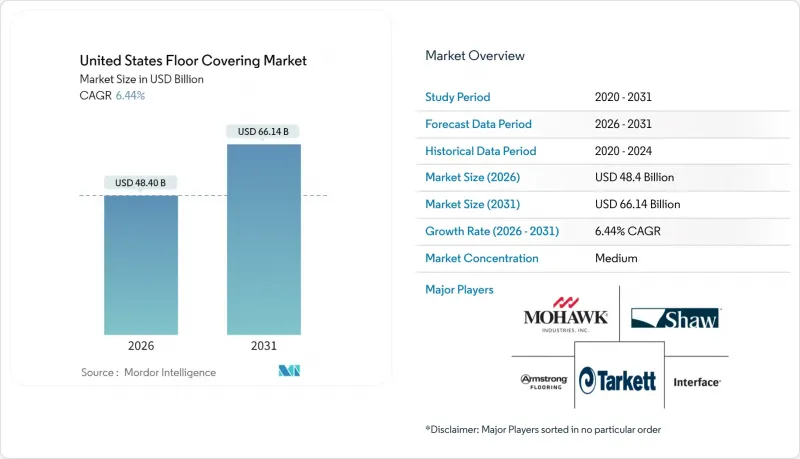
目前,美國地板市場正受到住宅維修活動活性化、彈性地板材料產品創新以及陽光地帶人口成長的推動。商業維修需求旺盛,加上稅收優惠抵消了高額借貸成本的影響,進一步支撐了市場。領先的製造商正專注於防水和耐刮擦技術,而直接面對消費者的電子商務模式正在迅速改變市場准入模式。然而,原物料價格持續上漲和安裝人員嚴重短缺仍然是主要的成本壓力,給美國地板市場的樂觀前景蒙上了一層陰影。
美國地板材料市場趨勢與分析
受IRA支持的商業維修稅收優惠政策加速了地板材料更換。
免稅實體資格的擴大刺激了政府機構和非營利機構的需求,這些機構先前因種種原因推遲了地板材料更換。維修與疫情後的室內佈局調整相契合,而兼具隔音和隔熱性能的地板材料升級方案也成為首要考慮因素。隨著設計公司調整競標以適應稅務申報時間表,訂單在人口密集的商業區也看到了穩定的訂單積壓。這種轉變推動了對採用再生材料並符合節能目標的優質彈性地板材料和地毯磚的需求。
靈活辦公空間的快速成長正在推動辦公室和共享辦公空間對模組化地板材料的需求。
混合辦公模式的興起推動了對模組化地板材料的需求,這種地板可以根據座位安排的變化進行拆卸和重新安裝。受企業需要快速應對租賃續約的推動,地毯磚的銷售量超過了疫情前的商業預期。在融合住宅和商業空間的「耐用型」設計中,設計師們選擇的產品既要提供舒適的腳感,又要保證滾輪的耐用性,從而將柔軟的質感與硬朗的元素相結合。吸音背襯系統有助於降低開放式空間的噪音,並支援健康認證。卡扣式系統因其能最大限度地減少停機時間而成為小規模安裝區域的首選——這一特性對於透過空間輪換來盈利的共同工作空間來說至關重要。因此,供應商正在投資染料噴印技術,該技術能夠實現快速客製化,而無需延長前置作業時間。
高利率抑制了新的辦公大樓和零售建築項目。
預計2023年商業房地產交易量將下降37%,2024年將進一步下降14%。開發商推遲了投機性新建設,抑制了大規模核心筒計劃對地板材料的需求。現有辦公大樓的空置率延長了維修週期,迫使業主進行漸進式升級,而不是徹底更換地板。隨著電子商務佔據自由裁量權支配支出的大部分,零售業的資本支出也同樣謹慎。因此,美國地板材料市場正將重心轉向預算範圍內可行的維修項目。提案提供成本節約型工程產品系列以及資金籌措支持,但主要都會區的需求不足仍限制整體成長。
細分市場分析
到2025年,地毯和地墊將占美國地板材料市場35.62%的佔有率,這主要得益於它們在多用戶住宅和辦公室的隔音效果。然而,彈性地板材料預計將以7.80%的複合年成長率成長,比美國整體地板材料市場成長高出約1.4個百分點。兼具防水和易維護特性的豪華乙烯基瓷磚(LVT)和硬芯地板產品正在推動其普及。這種轉變導致入門級價位的非彈性硬質地板(例如現場塗飾木地板和瓷磚)的市場佔有率下降。尤其值得一提的是,不含PVC的彈性地板材料系列,例如Mohawk的PureTec系列,正受到永續性的消費者的青睞。
碳酸鈣填料成本的穩定性也提振了2024年彈性地板材料市場,為翻新高峰期的促銷價格提供了支撐。因此,SPC卡扣式地板在社交平臺銷售的消費套裝中佔據了重要地位。製造商透過採用享有延長保固期的專有耐磨層來提高利潤率,這項特性吸引了重視長期價值的住宅。
美國地板材料市場按產品類型(地毯、彈性地板材料、豪華乙烯基瓷磚(LVT)等)、最終用戶(住宅、商業辦公室)、分銷管道(專業地板材料零售商、大型五金建材超市等)和地區(東北部、東南部等)進行細分。市場預測以美元(USD)為以金額為準。
其他福利:
- Excel格式的市場預測(ME)表
- 3個月的分析師支持
目錄
第1章 引言
- 研究假設和市場定義
- 調查範圍
第2章調查方法
第3章執行摘要
第4章 市場情勢
第5章 市場概覽
- 市場促進因素
- 根據《美國再投資與就業法案》(IRA)提供的商業設施維修稅收優惠政策,地板材料更換速度加快。
- 靈活辦公空間的快速成長正在推動辦公室和共享辦公空間對模組化地板的需求。
- 醫療設施建設的快速成長對低揮發性有機化合物(VOC)和耐磨地板材料提出了更高的要求。
- 由於電子商務倉庫的擴張,耐用硬地面材料的安裝量增加。
- 住宅和維修活動的成長
- 消費者越來越偏好永續性和低維護成本。
- 市場限制
- 高利率抑制了新的辦公大樓和零售建築項目。
- 石油化學原料價格的波動給乙烯基和橡膠製品的利潤率帶來了壓力。
- 熟練承包商短缺導致人事費用上升和計劃延期。
- 由於強制要求避免將地毯丟棄掩埋,導致地毯處理成本增加。
- 價值/供應鏈分析
- 監理展望
- 技術展望
- 波特五力模型
- 供應商的議價能力
- 買方的議價能力
- 新進入者的威脅
- 替代品的威脅
- 產業間競爭
- 定價分析
第6章 市場規模與成長預測
- 依產品類型
- 地毯和毛毯
- 寬幅地毯
- 地毯磚
- 塊毯
- 彈性地板材料
- 豪華乙烯基瓷磚(LVT)
- 乙烯基板材和VCT
- 橡膠地板
- 油布
- 非彈性硬質地板
- 陶瓷和陶瓷瓷磚
- 天然石瓷磚
- 實木地板
- 工程木地板
- 複合地板
- 竹子和軟木地板
- 地毯和毛毯
- 最終用戶
- 住宅
- 商業的
- 零售
- 飯店及休閒
- 衛生保健
- 教育
- 公共和公共機構
- 其他
- 透過分銷管道
- 專業地板零售商
- 大型家居建材商店
- 獨立承包商/零售商
- 直接面對消費者(電子商務)
- 批發商/經銷商
- 按地區(美國)
- 東北
- 東南
- 中西部
- 西南
- 西
第7章 競爭情勢
- 市場集中度
- 策略趨勢
- 市佔率分析
- 公司簡介:莫霍克工業公司
- Shaw Industries Group Inc.
- Tarkett SA
- Armstrong Flooring Inc.
- Interface Inc.
- Mannington Mills Inc.
- Gerflor Group
- Forbo Flooring Systems
- LG Hausys(Hanwha)
- Beaulieu International Group
- The Dixie Group Inc.
- Milliken & Company
- Engineered Floors LLC
- Karndean Designflooring
- Roppe Corporation
- Congoleum Corporation
- AHF Products(Bruce)
- Somerset Hardwood Flooring
- Quick-Step USA
- LL Flooring Holdings Inc.
- COREtec Floors
- Tandus Centiva(Tarkett)
- Market Opportunities & Future Outlook
- White-Space & Unmet-Need Assessment
The US flooring market was valued at USD 45.47 billion in 2025 and estimated to grow from USD 48.4 billion in 2026 to reach USD 66.14 billion by 2031, at a CAGR of 6.44% during the forecast period (2026-2031).
Residential renovation activity, resilient product innovation, and strong population growth in Sunbelt states underpin the current momentum of the US flooring market. Demand is reinforced by tax-advantaged commercial retrofits that offset the drag from high borrowing costs. Scale manufacturers concentrate on waterproof and scratch-resistant technologies, while direct-to-consumer e-commerce rapidly reshapes go-to-market models. Sustained raw-material inflation and an acute installer shortage remain the key cost pressures that temper the otherwise upbeat outlook of the US flooring market.
United States Floor Covering Market Trends and Insights
IRA-Backed Commercial Retrofit Tax Incentives Accelerating Flooring Upgrades
Expanded eligibility for tax-exempt entities unlocks demand from government and nonprofit facilities that have historically delayed floor replacements. Retrofits dovetail with post-pandemic reconfiguration of interiors, so flooring upgrades that deliver both acoustic and thermal performance rise to the top of specification lists. Design firms are aligning bids with tax schedules, creating a steady backlog for installers in dense commercial districts. The change supports premium resilient and carpet-tile platforms that incorporate recycled content while meeting energy targets.
Flexible Workspace Boom Driving Modular Flooring Demand in Offices and Co-working Hubs
Hybrid work models catalyze demand for modular flooring that can be lifted and re-laid when seating plans change. Carpet tile volumes surpassed pre-pandemic commercial forecasts as operators seek quick-turn solutions during lease renegotiations. Resimercial aesthetics blend soft textures with hard-surface accents so designers specify collections that balance underfoot comfort with chair-castor durability. Acoustic backing systems mitigate noise in open plans and support wellness certifications. Smaller installation zones favour click-lock systems that minimize downtime, a feature prized by co-working providers that monetize space churn. Suppliers are therefore investing in dye-infusion print technologies that enable rapid customization without extending lead times.
High Interest Rates Suppressing New Office and Retail Build-outs
Transaction volumes in commercial real estate fell 37% in 2023 and a further 14% in 2024 . Developers defer speculative ground-ups, curbing floor covering demand in large core-shell projects. Vacancies in legacy office towers extend retrofit cycles, pushing landlords to phase upgrades rather than execute full-floor replacements. Retail capital expenditure is similarly cautious as e-commerce captures discretionary spending. The US flooring market thus shifts focus toward refurbishment programs that can proceed under constrained budgets. Suppliers bundle value-engineered lines with financing support, yet volume shortfalls in gateway cities continue to temper overall growth.
Other drivers and restraints analyzed in the detailed report include:
- Healthcare Construction Surge Requiring Low-VOC Resilient Surfaces
- E-commerce Warehouse Expansion Increasing Durable Hard-Surface Installations
- Skilled Installer Shortage Elevating Labor Costs and Project Delays
For complete list of drivers and restraints, kindly check the Table Of Contents.
Segment Analysis
Carpets and rugs retained 35.62% of the US flooring market in 2025 due to acoustic benefits in multifamily housing and offices. However, resilient flooring is forecast to grow at a 7.80% CAGR, almost 1.4 percentage points above the overall US flooring market. Luxury vinyl tile and rigid core collections spearhead adoption because they deliver waterproof performance and easy maintenance. The shift pulls share from non-resilient hard surfaces such as site-finished wood and ceramic in entry-level price tiers. Notably, PVC-free resilient lines led by Mohawk's PureTech have broadened acceptance among sustainability-focused buyers.
In 2024, the resilient category also benefited from cost stabilization in calcium carbonate fillers, supporting aggressive promotional pricing during peak remodeling season. As a result, SPC click-lock planks featured prominently in direct-to-consumer bundles marketed through social platforms. Manufacturers augment margins through proprietary wear layers that qualify for extended warranties, a feature that resonates with homeowners concerned about long-term value.
The US Floor Covering Market Segments Into by Product Type (Carpet and Rugs, Resilient Flooring Luxury Vinyl Tile (LVT), and More), End-User (Residential, and Commercial Office), Distribution Channel (Specialty Flooring Retailers, Big-Box Home Centers, and More), Region (Northeast, Southeast, and More). The Market Forecasts are Provided in Terms of Value (USD).
List of Companies Covered in this Report:
- Shaw Industries Group Inc.
- Tarkett S.A.
- Armstrong Flooring Inc.
- Interface Inc.
- Mannington Mills Inc.
- Gerflor Group
- Forbo Flooring Systems
- LG Hausys (Hanwha)
- Beaulieu International Group
- The Dixie Group Inc.
- Milliken & Company
- Engineered Floors LLC
- Karndean Designflooring
- Roppe Corporation
- Congoleum Corporation
- AHF Products (Bruce)
- Somerset Hardwood Flooring
- Quick-Step USA
- LL Flooring Holdings Inc.
- COREtec Floors
- Tandus Centiva (Tarkett)
Additional Benefits:
- The market estimate (ME) sheet in Excel format
- 3 months of analyst support
TABLE OF CONTENTS
1 Introduction
- 1.1 Study Assumptions & Market Definition
- 1.2 Scope of the Study
2 Research Methodology
3 Executive Summary
4 Market Landscape
5 Market Overview
- 5.1 Market Drivers
- 5.1.1 IRA-Backed Commercial Retrofit Tax Incentives Accelerating Flooring Upgrades
- 5.1.2 Flexible Workspace Boom Driving Modular Flooring Demand in Offices & Co-working Hubs
- 5.1.3 Healthcare Construction Surge Requiring Low-VOC Resilient Surfaces
- 5.1.4 E-commerce Warehouse Expansion Increasing Durable Hard-Surface Installations
- 5.1.5 Growth in Residential Construction and Renovation Activity
- 5.1.6 Rising Consumer Preferences for Sustainability and Low Maintenance
- 5.2 Market Restraints
- 5.2.1 High Interest Rates Suppressing New Office & Retail Build-outs
- 5.2.2 Petrochemical Feedstock Volatility Compressing Vinyl & Rubber Margins
- 5.2.3 Skilled Installer Shortage Elevating Labor Costs & Project Delays
- 5.2.4 Landfill Diversion Mandates Raising Carpet End-of-Life Costs
- 5.3 Value / Supply-Chain Analysis
- 5.4 Regulatory Outlook
- 5.5 Technological Outlook
- 5.6 Porter's Five Forces
- 5.6.1 Bargaining Power of Suppliers
- 5.6.2 Bargaining Power of Buyers
- 5.6.3 Threat of New Entrants
- 5.6.4 Threat of Substitutes
- 5.6.5 Industry Rivalry
- 5.7 Pricing Analysis
6 Market Size & Growth Forecasts (Value)
- 6.1 By Product Type
- 6.1.1 Carpets & Rugs
- 6.1.1.1 Broadloom Carpet
- 6.1.1.2 Carpet Tiles
- 6.1.1.3 Area Rugs
- 6.1.2 Resilient Flooring
- 6.1.2.1 Luxury Vinyl Tile (LVT)
- 6.1.2.2 Vinyl Sheet & VCT
- 6.1.2.3 Rubber Flooring
- 6.1.2.4 Linoleum
- 6.1.3 Non-Resilient Hard Surface
- 6.1.3.1 Ceramic & Porcelain Tile
- 6.1.3.2 Natural Stone Tile
- 6.1.3.3 Solid Wood Flooring
- 6.1.3.4 Engineered Wood Flooring
- 6.1.3.5 Laminate Flooring
- 6.1.3.6 Bamboo & Cork Flooring
- 6.1.1 Carpets & Rugs
- 6.2 By End-User
- 6.2.1 Residential
- 6.2.2 Commercial
- 6.2.2.1 Retail
- 6.2.2.2 Hospitality & Leisure
- 6.2.2.3 Healthcare
- 6.2.2.4 Education
- 6.2.2.5 Public & Institutional
- 6.2.2.6 Others
- 6.3 By Distribution Channel
- 6.3.1 Specialty Flooring Retailers
- 6.3.2 Big-Box Home Centers
- 6.3.3 Independent Contractors / Dealers
- 6.3.4 Direct-to-Consumer E-commerce
- 6.3.5 Wholesale / Distributors
- 6.4 By Region (U.S.)
- 6.4.1 Northeast
- 6.4.2 Southeast
- 6.4.3 Midwest
- 6.4.4 Southwest
- 6.4.5 West
7 Competitive Landscape
- 7.1 Market Concentration
- 7.2 Strategic Moves
- 7.3 Market Share Analysis
- 7.4 Company Profiles (includes Global level Overview, Market level overview, Core Segments, Financials as available, Strategic Information, Market Rank/Share for key companies, Products & Services, and Recent Developments)Mohawk Industries Inc.
- 7.4.1 Shaw Industries Group Inc.
- 7.4.2 Tarkett S.A.
- 7.4.3 Armstrong Flooring Inc.
- 7.4.4 Interface Inc.
- 7.4.5 Mannington Mills Inc.
- 7.4.6 Gerflor Group
- 7.4.7 Forbo Flooring Systems
- 7.4.8 LG Hausys (Hanwha)
- 7.4.9 Beaulieu International Group
- 7.4.10 The Dixie Group Inc.
- 7.4.11 Milliken & Company
- 7.4.12 Engineered Floors LLC
- 7.4.13 Karndean Designflooring
- 7.4.14 Roppe Corporation
- 7.4.15 Congoleum Corporation
- 7.4.16 AHF Products (Bruce)
- 7.4.17 Somerset Hardwood Flooring
- 7.4.18 Quick-Step USA
- 7.4.19 LL Flooring Holdings Inc.
- 7.4.20 COREtec Floors
- 7.4.21 Tandus Centiva (Tarkett)
- 7.5 Market Opportunities & Future Outlook
- 7.5.1 White-Space & Unmet-Need Assessment

 全球地板材料市場規模、佔有率、趨勢和成長分析報告(2026-2034年)
 地板材料市場規模、佔有率和成長分析:按產品類型、應用、分銷管道和地區分類-2026-2033年產業預測
 地板材料市場:2026-2032年全球市場預測(依產品類型、安裝方式、銷售管道及最終用戶分類)
 英國地板覆蓋材料:市場佔有率分析、產業趨勢與統計、成長預測(2026-2031)
 2026年全球家居佈置和地板覆蓋材料市場報告地板材料:市場佔有率分析、產業趨勢與統計、成長預測(2026-2031)
 日本地面鋪裝材料市場報告(按材料、配銷通路、最終用戶和地區分類,2026-2034年)
 地板覆蓋市場-全球產業規模、佔有率、趨勢、機會和預測,按材料(彈性、非彈性、軟地板覆蓋)、按應用(住宅、商業、工業)、按地區、按競爭細分,2020-2030 年預測彈性地板材料:市場佔有率分析、產業趨勢、統計數據和成長預測(2025-2030 年)印尼地板樹脂:市場佔有率分析、行業趨勢和統計、成長預測(2025-2030 年)