


 |
市場調查報告書
商品編碼
1937306
美國罐車運輸:市場佔有率分析、行業趨勢和統計數據、成長預測(2026-2031 年)United States Tank Trucking - Market Share Analysis, Industry Trends & Statistics, Growth Forecasts (2026 - 2031) |
||||||

※ 本網頁內容可能與最新版本有所差異。詳細情況請與我們聯繫。
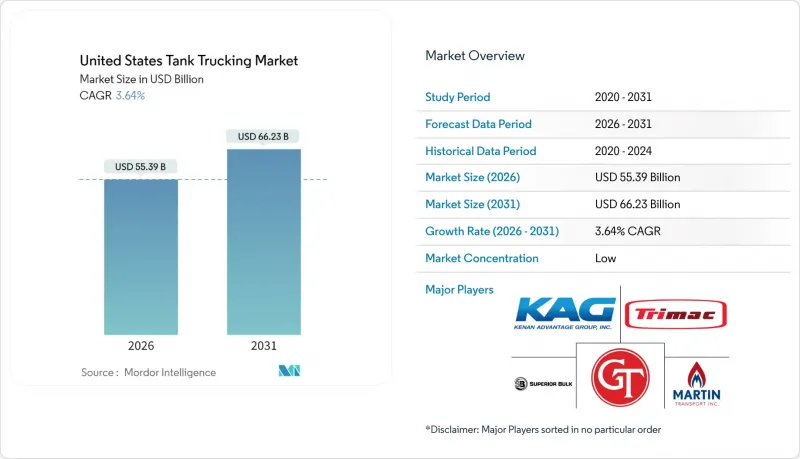
美國油輪運輸市場預計到 2026 年將達到 553.9 億美元,高於 2025 年的 534.5 億美元。
預計到 2031 年將達到 662.3 億美元,2026 年至 2031 年的複合年成長率為 3.64%。
這種持續擴張反映了其適應不斷變化的能源結構、日益嚴格的安全法規以及波動的投入成本的能力。可再生柴油、特殊化學品和溫控食品配料的運輸量增加擴大了貨物基礎,而數位化調度工具和更輕的罐體配置則提高了資產利用率。同時,司機短缺、危險物品違規處罰以及自動駕駛卡車試驗等挑戰正在影響營運經濟效益,迫使承運商重新評估路線規劃、車隊配置和資本規劃。儘管面臨這些挑戰,美國罐車運輸市場仍持續吸引私募股權資本,目前正在進行收購,以擴大合規基礎並獲得小眾、高收益貨物的運輸權。
美國罐車運輸市場趨勢與洞察
對石油和精煉產品的需求不斷成長
生質燃料生產的快速發展正在重塑石油物流路線,因為工廠需要可靠的原料「第一公里」運輸和成品燃料「最後一公里」配送。預計到2035年,美國生質燃料日產量將達到130萬桶,這趨勢直接增加了對專用油輪的需求。墨西哥灣沿岸的煉油廠和西海岸的可再生柴油生產商依賴經過認證的油罐來運輸高閃點燃料,這推動了船隊升級,從而減輕了船舶的空載重量並加快了周轉速度。加州修訂後的低碳燃料標準要求承運商在2046年前擴大其運輸的低碳燃料範圍,這進一步推動了對保溫專用設備的需求。高價值特種產品的溢價抵消了長途運輸成本的增加,並有助於在全國柴油消費量逐步下降的情況下維持獲利能力。
美國化學品生產規模擴大
在經歷了2024年的短期萎縮之後,預計到2025年底,化學品產量將增加1.9%,這主要得益於工業需求的改善以及乙烷原料供應充足帶來的運轉率提高。來自美國沿岸地區和中西部工廠的乙烯、丙烯和特殊電池材料的運輸正在推動始發地和目的地之間的重新調整,使得油輪運輸比鐵路運輸更受青睞,以便及時將貨物裝入出口集裝箱。石化生產商依靠專用承運商來最大限度地降低污染風險,並在沿海碼頭獲得出口溢價。對半導體級化學品工廠的投資正在推動貨物結構的進一步多元化,從而形成穩定的合約量,緩解煉油廠季節性波動的影響。
增加營業時間限制 (HOS) 和危險物質合規成本
美國聯邦汽車運輸安全管理局 (FMCSA) 的民事罰款大幅飆升,危險物品違規行為的罰款最高可達每次違規 102,348 美元。管道和危險物質安全管理局 (PHMSA) 對小型運輸公司的註冊費上漲了 50%,貨罐檢查不合格可能面臨 8,000 美元的罰款。使用電子記錄設備的數位化審核揭露了以往例行的調度問題,導致運轉率下降。為了遵守法規,需要增加人手。無法負責人的小型企業被迫關閉或出售,這加速了行業整合,同時也減少了可用的運輸能力。
細分市場分析
到2025年,石油產品將佔總營收的46.30%,支撐美國罐車運輸市場規模。這主要得益於煉油廠產能的強勁成長以及可再生柴油混合燃料市場的不斷擴大。可再生燃料生產商傾向於使用特製不銹鋼或鋁製油桶來維持產品質量,從而增強了對長期合約的需求。食品飲料產業預計在2026年至2031年間實現4.24%的複合年成長率,成為成長最快的產業,這主要得益於乳製品現代化帶來的運輸距離延長以及飲料產品種類的增加。化學工業將繼續保持其第二大收入驅動力的地位,這主要得益於美國沿岸地區的擴張以及中西部地區化肥產量的增加。化肥運輸高峰出現在播種季節,導致現貨運費大幅上漲,承運商會利用此機會調整區域間的運輸流量。
加強低碳燃料標準 (LCFS) 正在推動對可再生原料物流的投資,並凸顯生物基液體燃料的未來成長潛力。儘管從 2027 年起,隨著可再生燃料的擴張,石油部分的市場佔有率可能會下降,但總運輸量仍將持續成長,這表明燃料物流在美國罐車運輸市場的重要性仍然不容忽視。同時,美國食品藥物管理局 (FDA) 的食品安全法規賦予了特種運輸公司定價權,使其能夠在清潔設施成本不斷上漲的情況下保障利潤率。這些趨勢共同建構了一個多元化的貨物基礎,從而緩解了單一商品運輸線的週期性波動。
到2025年,重型卡車將佔總收入的51.85%,裝載率的提高將增加單次運輸量並分散固定成本。 DOT-412標準的實施進一步擴大了負載容量範圍,凸顯了重型車輛在長途石化運輸路線上的重要性。儘管輕型卡車市場規模較小,但由於都市區規劃限制了大型拖車的通行,以及電商加油站對短週期、高頻次加油的需求,預計2026年至2031年間,輕型卡車市場將以3.72%的複合年成長率實現最高成長。中型卡車則服務於危險物品運輸這一細分市場,在該市場中,繞行有重量限制的橋樑比提高負載容量更為重要。
電氣化試點計畫主要集中在輕型車輛領域,因為其電池續航里程足以滿足日常城市通勤需求,且重量減輕可彌補有效負載容量的減少;而氫燃料和液化天然氣(LNG)則對希望在不犧牲負載容量的前提下延長續航里程的大型牽引車極具吸引力。這種技術差異化確保了所有容量等級的車輛都能走上清晰的成長道路,從而惠及設備製造商和車隊營運商。
其他福利:
- Excel格式的市場預測(ME)表
- 3個月的分析師支持
目錄
第1章 引言
- 研究假設和市場定義
- 調查範圍
第2章調查方法
第3章執行摘要
第4章 市場情勢
- 市場概覽
- 市場促進因素
- 對石油和精煉產品的需求不斷成長
- 美國擴大化學品生產
- 食品級散裝和液體運輸的成長
- 液化天然氣加註通道的開發
- 採用DOT-412標準油箱以提高負載容量
- 擴大可再生柴油和生質燃料的生產將加速特種油輪運輸。
- 市場限制
- 遵守營業時間規定 (HOS) 和危險物品運輸法規的成本增加
- 燃油價格波動
- 促進要素和技術人員嚴重短缺
- 恢復鐵路罐車運輸能力
- 價值/供應鏈分析
- 監管環境
- 技術展望
- 波特五力模型
- 新進入者的威脅
- 買方的議價能力
- 供應商的議價能力
- 替代品的威脅
- 競爭對手之間的競爭
- 新冠疫情與地緣政治事件的影響
第5章 市場規模與成長預測
- 按產品類型
- 原油
- 石油產品
- 化學品
- 食品/飲料
- 肥料
- 其他產品類型
- 按產能
- 輕型車輛
- 中型車輛
- 大型車輛
- 目的地
- 國內的
- 國際的
- 按運輸距離
- 長途
- 短程交通
- 透過使用
- 住宅
- 商業的
- 工業的
第6章 競爭情勢
- 市場集中度
- 策略趨勢
- 市佔率分析
- 公司簡介
- Kenan Advantage Group
- Trimac Transportation
- Groendyke Transport
- Superior Bulk Logistics
- Martin Transport
- Miller Transporters
- Dupre Logistics
- Eagle Transport
- Tankstar USA
- Florida Rock & Tank Lines
- Mission Petroleum Carriers
- Genox Transportation
- J&M Tank Lines
- CLI Transport
- Tidewater Transit
- Service Transport Company
- Andrews Logistics
- CTL Transportation
- Coastal Transport
- Viessman Trucking
第7章 市場機會與未來展望
United States Tank Trucking Market size in 2026 is estimated at USD 55.39 billion, growing from 2025 value of USD 53.45 billion with 2031 projections showing USD 66.23 billion, growing at 3.64% CAGR over 2026-2031.
The sustained expansion reflects the market's capacity to adapt to shifting energy mixes, stricter safety rules, and volatile input costs. Rising movements of renewable diesel, specialty chemicals, and temperature-controlled food ingredients are expanding the freight base, while digital dispatch tools and lighter tank specifications are pushing asset productivity higher. In parallel, driver shortages, hazmat compliance penalties, and disruptive pilot programs for autonomous trucks are pressuring operating economics and forcing carriers to re-evaluate route design, fleet mix, and capital plans. Despite these challenges, the United States tank trucking market continues to attract private equity capital, with acquisitions aimed at scaling compliance infrastructure and expanding access to niche, higher-margin cargoes.
United States Tank Trucking Market Trends and Insights
Rising Demand for Oil & Refined Products
Biofuel manufacturing momentum is redrawing petroleum logistics corridors as plants require dependable first-mile feedstock deliveries and last-mile finished fuel distribution. United States biofuel output is projected to reach 1.3 million barrels of oil equivalent per day by 2035, a trend that directly increases specialized tank requirements. Gulf Coast refiners and West Coast renewable diesel producers rely on tanks certified for elevated flash-point fuels, driving fleet upgrades that cut tare weight and speed turnarounds. California's updated Low-Carbon Fuel Standard compels carriers to handle a widening slate of low-carbon fuels through 2046, reinforcing demand for insulated, dedicated equipment. Higher-value specialty products pay premiums that offset longer haul distances, securing revenues even as total diesel consumption gradually declines nationwide.
Expansion of U.S. Chemical Production
After the brief 2024 contraction, chemical output is set to advance 1.9% by the end of 2025 as improved industrial demand and a favorable ethane feedstock gap lift utilization rates. Ethylene, propylene, and specialty battery materials moving from Gulf Coast and Midwest plants spur origin-destination realignment that favors tank trucks over rail for just-in-time export container stuffing. Petrochemical producers lean on dedicated carriers to minimize contamination risks and capture higher export premiums at coastal terminals. Investments in semiconductor-grade chemical plants further diversify the freight mix, creating steady contract carriage volumes that smooth seasonal refinery swings.
Tightening HOS & Hazmat Compliance Costs
FMCSA civil penalties have surged, with hazmat violations now costing up to USD 102,348 per count. PHMSA registration fees for small carriers rose 50%, while cargo-tank inspection failures can trigger USD 8,000 fines. Digital audits from electronic logging devices expose once-routine schedule adjustments, cutting utilization and requiring additional headcount to keep fleets legal. Smaller operators lacking compliance personnel are either exiting or selling, accelerating consolidation but trimming available capacity.
Other drivers and restraints analyzed in the detailed report include:
- Growth in Food-Grade Bulk/Liquid Shipping
- LNG Refueling Corridor Build-Out
- Acute Driver & Technician Shortages
For complete list of drivers and restraints, kindly check the Table Of Contents.
Segment Analysis
Petroleum products supplied 46.30% of 2025 revenue, underpinning the United States tank trucking market size with resilient refinery throughput and a growing renewable diesel blend pool. Renewable-fuel producers favor dedicated stainless or aluminum barrels to safeguard product integrity, reinforcing long-term contract demand. Food and beverages register the fastest 4.24% CAGR (2026-2031), supported by dairy modernization and beverage SKU proliferation that lengthen haul distances. Chemicals remain the second-largest revenue pillar, lifted by Gulf Coast expansion and Midwest fertilizer output. Fertilizer shipments peak around planting seasons yet drive pronounced spot-rate spikes that carriers exploit to balance regional flows.
Intensifying LCFS requirements steer investment toward renewable feedstock logistics, weighting future growth toward bio-derived liquids. The petroleum segment's share may ease post-2027 as renewable volumes scale, yet absolute barrels shipped continue to rise, underscoring the enduring role of fuels logistics in the United States tank trucking market. Meanwhile, FDA food-safety mandates grant specialized carriers pricing power, securing margins amid climbing wash-bay costs. Together, these trends cement a diverse cargo base that tempers cyclical swings in any single commodity line.
Heavy trucks generated 51.85% of 2025 revenue, benefitting from larger load factors that spread fixed costs over more gallons per trip. DOT-412 retrofits further expand payload windows, reinforcing the heavy-duty fleet's central role in long-haul petrochemical corridors. The light-duty bracket, though smaller, produces the strongest 3.72% CAGR (2026-2031) as urban zoning curbs large trailer access and e-commerce fuel stations demand shorter, more frequent replenishment cycles. Medium-duty assets fill hazmat niches where routing around weight-restricted bridges trumps load size.
Electrification pilots focus on the light-duty class because battery range suffices for daily metro loops, and weight savings offset cargo penalties. Conversely, hydrogen and LNG options appeal to heavy tractors seeking extended range without payload sacrifice. These technology splits assure all capacity classes retain defined growth paths, supporting equipment manufacturers as well as carriers.
The United States Tank Trucking Market Report is Segmented by Product Category (Crude Petroleum, Petroleum Products, Chemicals, Food and Beverages, Fertilizers, and Others), Capacity (Light Duty, Medium Duty, and Heavy Duty), Destination (Domestic and International), Distance (Long Haul and Short Haul), Application (Residential, Commercial, and Industrial). The Market Forecasts are Provided in Terms of Value (USD).
List of Companies Covered in this Report:
- Kenan Advantage Group
- Trimac Transportation
- Groendyke Transport
- Superior Bulk Logistics
- Martin Transport
- Miller Transporters
- Dupre Logistics
- Eagle Transport
- Tankstar USA
- Florida Rock & Tank Lines
- Mission Petroleum Carriers
- Genox Transportation
- J&M Tank Lines
- CLI Transport
- Tidewater Transit
- Service Transport Company
- Andrews Logistics
- CTL Transportation
- Coastal Transport
- Viessman Trucking
Additional Benefits:
- The market estimate (ME) sheet in Excel format
- 3 months of analyst support
TABLE OF CONTENTS
1 Introduction
- 1.1 Study Assumptions & Market Definition
- 1.2 Scope of the Study
2 Research Methodology
3 Executive Summary
4 Market Landscape
- 4.1 Market Overview
- 4.2 Market Drivers
- 4.2.1 Rising Demand for Oil & Refined Products
- 4.2.2 Expansion of U.S. Chemical Production
- 4.2.3 Growth in Food-Grade Bulk/Liquid Shipping
- 4.2.4 LNG Refueling Corridor Build-Out
- 4.2.5 Adoption of Heavier-Payload DOT-412 Spec Tanks
- 4.2.6 Expansion of Renewable Diesel & Biofuel Production Accelerates Specialized Tank Moves
- 4.3 Market Restraints
- 4.3.1 Tightening HOS & Hazmat Compliance Costs
- 4.3.2 Fuel-Price Volatility
- 4.3.3 Acute Driver & Technician Shortages
- 4.3.4 Rail Tank-Car Capacity Rebound
- 4.4 Value / Supply-Chain Analysis
- 4.5 Regulatory Landscape
- 4.6 Technological Outlook
- 4.7 Porter's Five Forces
- 4.7.1 Threat of New Entrants
- 4.7.2 Bargaining Power of Buyers
- 4.7.3 Bargaining Power of Suppliers
- 4.7.4 Threat of Substitutes
- 4.7.5 Competitive Rivalry
- 4.8 Impact of COVID-19 & Geo-Political Events
5 Market Size & Growth Forecasts
- 5.1 By Product Category
- 5.1.1 Crude Petroleum
- 5.1.2 Petroleum Products
- 5.1.3 Chemicals
- 5.1.4 Food and Beverages
- 5.1.5 Fertilizers
- 5.1.6 Other Product Categories
- 5.2 By Capacity
- 5.2.1 Light Duty
- 5.2.2 Medium Duty
- 5.2.3 Heavy Duty
- 5.3 Destination
- 5.3.1 Domestic
- 5.3.2 International
- 5.4 By Distance
- 5.4.1 Long Haul
- 5.4.2 Short Haul
- 5.5 By Application
- 5.5.1 Residential
- 5.5.2 Commercial
- 5.5.3 Industrial
6 Competitive Landscape
- 6.1 Market Concentration
- 6.2 Strategic Moves
- 6.3 Market Share Analysis
- 6.4 Company Profiles (includes Global level Overview, Market level overview, Core Segments, Financials as available, Strategic Information, Market Rank/Share for key companies, Products & Services, and Recent Developments)
- 6.4.1 Kenan Advantage Group
- 6.4.2 Trimac Transportation
- 6.4.3 Groendyke Transport
- 6.4.4 Superior Bulk Logistics
- 6.4.5 Martin Transport
- 6.4.6 Miller Transporters
- 6.4.7 Dupre Logistics
- 6.4.8 Eagle Transport
- 6.4.9 Tankstar USA
- 6.4.10 Florida Rock & Tank Lines
- 6.4.11 Mission Petroleum Carriers
- 6.4.12 Genox Transportation
- 6.4.13 J&M Tank Lines
- 6.4.14 CLI Transport
- 6.4.15 Tidewater Transit
- 6.4.16 Service Transport Company
- 6.4.17 Andrews Logistics
- 6.4.18 CTL Transportation
- 6.4.19 Coastal Transport
- 6.4.20 Viessman Trucking
7 Market Opportunities & Future Outlook
- 7.1 White-space & Unmet-need Assessment

 卡車市場規模、佔有率和趨勢分析報告:按車輛類型、負載容量、燃料類型、應用、地區和細分市場預測(2026-2033 年)
 卡車市場分析及至2035年預測:類型、產品類型、服務、技術、零件、應用、部署狀況、最終用戶、功能
 印度卡車市場:市場佔有率分析、產業趨勢與統計及成長預測(2025-2030 年)二手車市場分析與預測(至2035年):類型、產品類型、服務、技術、零件、應用、流程、最終用戶、形式
 全球汽車電動尾門市場規模、佔有率、趨勢和成長分析報告(2026-2034)
 卡車市場商機、成長要素、產業趨勢分析及2026-2035年預測。
 2026年全球拖車市場報告2026年全球混合動力卡車市場報告輕型卡車市場規模、市場佔有率和成長率、全球行業分析、按類型、應用和地區分類的細分以及未來預測(2026-2034 年)。
 食品油輪市場:依罐體材質、容量範圍及終端用戶產業分類-2026-2032年全球預測