


 |
市場調查報告書
商品編碼
2154999
南美洲主動式和智慧包裝:市場佔有率分析、行業趨勢和統計數據以及成長預測(2026-2031 年)South America Active and Intelligent Packaging - Market Share Analysis, Industry Trends & Statistics, Growth Forecasts (2026 - 2031) |
||||||

※ 本網頁內容可能與最新版本有所差異。詳細情況請與我們聯繫。
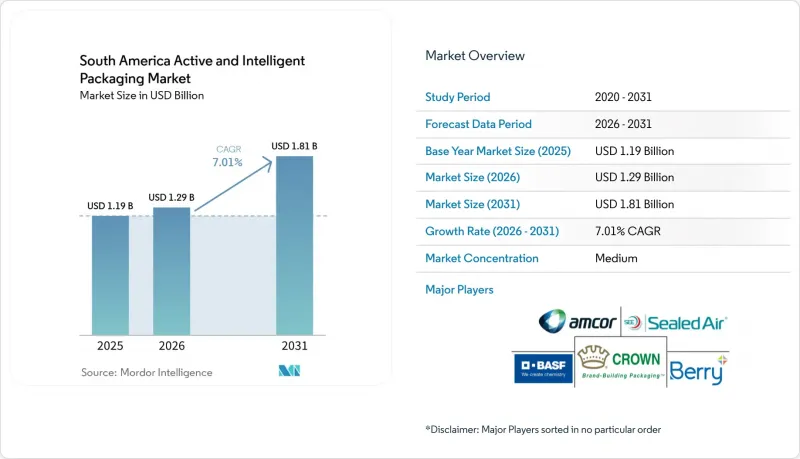
根據 Mordor Intelligence 預測,南美洲主動式智慧包裝市場規模將從 2025 年的 11.9 億美元成長到 2026 年的 12.9 億美元,然後在 2031 年達到 18.1 億美元,2026 年至 2031 年的複合年成長率為 7.01%。
南美主動智慧包裝市場趨勢與洞察
延長產品保存期限的需求日益成長
延長保存期限仍是南美洲採用主動式包裝的最直接原因。巴西蛋白質出口商需要一種能夠在冷藏運輸至中國、歐洲和中東期間(運輸時間可達30至90天)保持產品品質的包裝。不符合這些要求的貨物可能會失去出口資格,從而對出口商造成重大的商業性損失。 2026年6月,安姆科在巴西巴拉曼薩食品公司(Barra Mansa Alimentos)部署了其Moda Vac旋轉真空室密封技術,用其在一條去骨生產線上取代了多達九台傳統的皮帶式真空室密封機。這項措施表明,一家大型加工商如何利用真空密封技術在延長保存期限的同時提高生產線產能。此外,關於主動式包裝的研究表明,與被動式包裝相比,乙烯清除劑、氣體釋放劑和調氣包裝可以將生鮮食品的保存期限延長40%至60%,從而有可能減少智利、哥倫比亞和秘魯等國出口路線上的損失。
食品安全和品質要求
在南美洲的智慧活性包裝市場,食品安全法規不僅推動了基本標籤檢視合規性的變革,也影響包裝規格的發展。巴西國家衛生監督局 (ANVISA) 發布了 RDC 961/2025 號法規,修訂了食品接觸塑膠容器用單體和聚合物的正面表列。這項變更凸顯了為食品加工商提供服務的加工商記錄材料選擇和檢驗食品接觸的重要性。因此,檢驗的功能性材料不僅在材料價格方面具有競爭力,而且在性能驗證和合規支援方面也更具優勢。 2025 年發表的一項研究表明,植物來源的氧氣清除劑,包括兒茶和碳酸鈣基材料,可以支持食品安全應用中的可生物分解功能性包裝。這為能夠兼顧保存期限性能、法規文件和環保材料選擇的供應商創造了新的機會。
高昂的實施和檢驗成本
對於考慮採用先進包裝系統的中型食品加工企業而言,成本仍然是最迫切的障礙。 RFIDRFID讀取器網路、配備感測器的填充線和氣體沖洗設備,每條生產線的成本可能高達數十萬美元。此外,企業還必須承擔食品接觸材料和藥品合規框架要求的材料檢驗工作成本。 ABRE和FGV IBRE的一份報告指出,巴西的包裝產量預計在2025年僅成長0.4%,而2024年則成長了6.7%,這使得加工商的投資環境更具挑戰性。大規模跨國公司可以透過更高的產量和區域採購計畫來分攤檢驗成本。同時,巴西和哥倫比亞的中小型加工企業在收入規模小規模的情況下,卻面臨類似的合規成本,這限制了智慧包裝在南美市場的廣泛應用。
細分市場分析
2025年,在南美洲,以包裝功能分類,「產品保鮮」包裝佔了43.18%的智慧包裝市場。這一領先地位反映了蛋白質、新鮮農產品和加工食品出口通路對阻隔性能和氣體控制的需求。食品公司將保存期限管理視為出口要求,因為冷藏產品必須在長途運輸和處理過程中保持品質。能夠控制氧氣、水分和氣體成分的包裝有助於在不改變產品本身的前提下,保持產品的外觀、質地和保存期限。
這種功能的規模也反映了該地區對冷鏈農產品貿易的高度依賴。牛肉、雞肉、起司、烘焙產品和生鮮食品都需要從加工廠到國際分銷環節一致的包裝性能。出口商可以利用主動式包裝來降低產品在到達目標市場之前變質的風險。因此,南美洲的主動式智慧包裝市場正在建立一個基於營運需求的基礎,而不僅僅是包裝的可選升級方案。
預計到2031年,品牌保護將以7.94%的複合年成長率成長,成為包裝功能中成長最快的領域。製藥公司和高階食品品牌正在利用真偽驗證功能來打擊假冒偽劣產品,並方便產品檢驗。支援NFC功能的標籤有助於真偽驗證,而基於QR碼的格式則有助於提供產品資訊和與消費者互動。當品牌擁有者需要建立實體包裝與可信賴數位記錄之間的清晰聯繫時,這些方法尤其有效。
在電子商務和藥品分銷領域,供應鏈管理和產品資訊功能的重要性日益凸顯。基於QR碼的追溯技術和智慧標籤有助於追蹤產品在包裝、倉儲、履約和交付過程中的責任歸屬。即使包裝不需要高成本的感測器或RFID基礎設施,這些功能也同樣實用。消費者便利性功能目前規模較小;在巴西和阿根廷,微波爐適用包裝正逐步提升已調理食品的普及度。
至2025年,主動式包裝將佔包裝技術領域的63.21%。氣體淨化劑、濕度控制包裝和氣調包裝系統仍然是貫穿長分銷鏈的成熟保鮮選擇。這些包裝形式滿足了實體包裝需求,並且無需像智慧替代技術那樣依賴領導者網路和數據系統。它們在食品保鮮方面的成熟經驗使其成為需要可靠保鮮措施的加工商的實用之選。
對活性包裝的偏好也與該地區食品和農產品的出口結構密切相關。加工商無需建置新的數位資料採集流程,即可利用包裝內的氧氣和水分控制功能。這使得即使是資訊科技基礎設施有限的企業也能輕鬆採用這項技術。這種實用性解釋了為什麼活性包裝系統在南美洲的活性智慧包裝市場仍然佔據著很大的佔有率。
預計到2031年,智慧包裝將以8.36%的複合年成長率成長。其最具應用前景的領域是醫藥和物流行業,在這些行業中,產品追蹤和狀態資訊能夠創造可衡量的營運價值。 RFID、NFC、編碼和智慧標籤等技術支援物品識別、產品認證和物流追蹤。因此,當使用者有明確的理由收集和讀取包裝上的資訊並據此採取行動時,這項技術才能發揮最大價值。
最新的混合系統將氧氣吸收等主動功能與指示這些功能何時使用的數位感測器結合。這種組合模糊了兩種技術類別之間的界限,使得在單一形式中同時提供保護和資訊成為可能。艾利丹尼森公司報告稱,其智慧標籤業務到2024年將實現15%的成長,並計劃在南美洲相關的食品和製藥應用領域實現類似的長期內部成長。因此,南美洲的主動式智慧包裝市場可以在那些附加資訊能夠直接支援加工、品質或可追溯性決策的應用中採用智慧形式。
其他好處:
- Excel格式的市場預測(ME)表
- 3個月的分析師支持
目錄
第1章:引言
- 研究假設和市場定義
- 調查範圍
第2章:調查方法
第3章執行摘要
第4章 市場狀況
- 市場概覽
- 市場促進因素
- 延長產品保存期限的需求日益成長
- 食品安全和品質要求
- 出口導向食品飲料供應鏈
- 藥品序列化和可追溯性
- 利用QR碼和智慧標籤實現低成本的數位連接
- 活性物質的本地化和包裝技術的進步
- 市場限制因素
- 實施和檢驗成本高昂
- 監管和食品接觸合規性的複雜性。
- 對RFID、NFC、感測器和電子元件進口的依賴。
- 多成分智慧包裝回收基礎設施不平衡
- 產業價值鏈分析
- 監理情勢
- 技術展望
- 波特五力分析
- 宏觀經濟因素對市場的影響
第5章 市場規模與成長預測
- 透過包裝功能
- 供應鏈管理
- 產品新鮮度
- 消費者便利性
- 品牌保護
- 產品資訊
- 產品技術
- 活性包裝
- 智慧包裝
- 活性包裝的類型
- 氣體淨化劑/發送器
- 乾燥劑
- 微波基座
- 其他活性包裝類型
- 按智慧包類型
- 編碼和標記
- 天線、RFID、NFC
- 感測器和輸出設備
- 其他類型的智慧包
- 按最終用戶行業分類
- 食物
- 飲料
- 製藥
- 產業
- 物流
- 其他終端用戶產業
- 國家
- 巴西
- 阿根廷
- 哥倫比亞
- 其他南美國家
第6章 競爭情勢
- 市場集中度
- 策略趨勢
- 市佔率分析
- 公司簡介
- Amcor plc
- Sealed Air Corporation
- BASF SE
- Crown Holdings, Inc.
- Ball Corporation
- Berry Global, Inc.
- Smurfit Westrock plc
- Avery Dennison Corporation
- CCL Industries Inc.
- Tetra Pak International SA
- Huhtamaki Oyj
- Sonoco Products Company
- Mondi plc
- Stora Enso Oyj
- Braskem SA
- Multisorb Technologies
- Timestrip Ltd
- Zebra Technologies Corporation
- Impinj, Inc.
- Loftware, Inc.
- Markem-Imaje
- Haco Etiquetas Ltda.
第7章 市場機會與未來展望
According to Mordor Intelligence, the South America active and intelligent packaging market size is expected to grow from USD 1.19 billion in 2025 to USD 1.29 billion in 2026 and is forecast to reach USD 1.81 billion by 2031 at 7.01% CAGR over 2026-2031.
South America Active and Intelligent Packaging Market Trends and Insights
Rising Demand for Extended Product Shelf Life
Extended shelf life remains the most immediate reason for active packaging adoption across South America. Brazil's protein exporters need packaging that preserves product condition during refrigerated journeys lasting 30-90 days to China, Europe, and the Middle East. A shipment that does not meet these requirements can lose export eligibility and expose exporters to substantial commercial losses. In June 2026, Amcor installed its Moda Vac rotary vacuum chamber sealing technology at Barra Mansa Alimentos in Brazil, replacing up to 9 conventional belt chamber machines on 1 deboning line. The installation shows how a major processor is using vacuum sealing to extend shelf life while increasing line throughput. Research on active formats also reported that ethylene scavengers, gas emitters, and modified-atmosphere packaging can extend fresh-produce shelf life by 40-60% compared with passive packaging, which can reduce losses in Chilean, Colombian, and Peruvian export corridors.
Food Safety and Quality Requirements
Food safety rules are changing packaging specifications beyond basic label compliance in the South America active and intelligent packaging market. Brazil's ANVISA issued RDC No. 961/2025, which changed the positive list of monomers and polymers authorized for plastic containers in food contact. The change increases the importance of documented material selection and food-contact validation for converters serving food processors. Validated active materials can therefore compete on demonstrated performance and compliance support, rather than on material price alone. Research published in 2025 found that plant-based oxygen scavengers, including catechu-calcium carbonate systems, could support biodegradable active packaging with food-safety applications. This creates an opening for suppliers that can combine shelf-life performance, regulatory documentation, and lower-impact material options.
High Implementation and Validation Costs
Cost remains the most immediate obstacle for mid-tier food processors considering advanced packaging systems. RFID reader networks, sensor-compatible filling lines, and gas-flush equipment can require hundreds of thousands of USD for each production line. Companies must also fund material validation work required by food-contact and pharmaceutical compliance frameworks. ABRE and FGV IBRE reported that Brazilian packaging production rose only 0.4% in 2025, following 6.7% expansion in 2024, indicating a more constrained investment setting for converters. Large multinationals can spread validation expenses across broader volumes and regional procurement programs. Smaller Brazilian and Colombian processors bear similar compliance costs against a much smaller revenue base, which limits wider deployment in the South America active and intelligent packaging market.
Other drivers and restraints analyzed in the detailed report include:
- Export-Oriented Food and Beverage Supply Chains
- Pharmaceutical Serialization and Traceability
- Regulatory and Food-Contact Compliance Complexity
For complete list of drivers and restraints, kindly check the Table Of Contents.
Segment Analysis
Product Freshness held 43.18% of the South America active and intelligent packaging market share by packaging function in 2025. The leading position reflects the need for barrier performance and gas management across protein, fresh produce, and processed-food export routes. Food companies view shelf-life control as an export requirement because chilled products must maintain quality during extended transit and handling periods. Packaging that controls oxygen, moisture, and gas composition can help preserve appearance, texture, and usable life without changing the product itself.
The scale of this function also reflects the region's reliance on cold-chain-dependent agricultural trade. Beef, poultry, cheese, bakery products, and fresh produce each require packaging performance that remains consistent from the processing plant through overseas distribution. Exporters can use active formats to reduce the risk that the product condition deteriorates before products reach the destination market. This gives the South America active and intelligent packaging market a foundation in operational requirements rather than discretionary packaging upgrades.
Brand Protection is projected to expand at a 7.94% CAGR through 2031, making it the fastest-moving packaging function. Pharmaceutical manufacturers and premium food brands are using authentication features to make counterfeiting harder and product verification easier. NFC-enabled labels can support authentication, while QR-based formats can provide product information and consumer engagement. These approaches are particularly useful where brand owners need to establish a clear connection between a physical pack and a trusted digital record.
Supply Chain Management and Product Information functions are also gaining relevance in e-commerce and pharmaceutical distribution. QR-code-based traceability and smart labels can support accountability as products move through packing, storage, fulfillment, and delivery. These functions can be useful even when a pack does not need a high-cost sensor or RFID infrastructure. Consumer Convenience remains the smallest function, although microwave-susceptor packaging is gradually supporting ready-to-cook products in Brazil and Argentina.
Active Packaging held 63.21% of the packaging technology segment in 2025. Gas scavengers, moisture-control formats, and modified-atmosphere systems remain established choices for preservation across long distribution chains. These formats address a physical packaging requirement and do not always need the reader networks or data systems required by intelligent alternatives. Their established use in food preservation makes them practical for processors that first need dependable freshness protection.
The preference for active formats is also connected to the region's food and agricultural export profile. A processor can apply an oxygen or moisture-control function within the pack without building a new digital data-capture process. This makes the technology easier to use for operations with limited information technology infrastructure. This practical fit explains why active systems retain the larger position in the South America active and intelligent packaging market.
Intelligent Packaging is projected to expand at an 8.36% CAGR through 2031. Its strongest use cases occur in pharmaceutical and logistics applications where tracking and product-condition information produce measurable operational value. RFID, NFC, coding, and smart labels can support item identification, product authentication, and movement visibility. The technology is therefore most relevant when the user has a defined reason to collect, read, and act on the information carried by the pack.
Newer hybrid systems pair an active function, such as oxygen scavenging, with a digital sensor that shows when the function has been used. This combination can blur the boundary between the two technology categories and can provide both protection and information in 1 format. Avery Dennison reported that its intelligent labels business achieved a 15% growth by 2024 and targeted the same long-term organic rate, with food and pharmaceutical uses relevant to South America. The South America active and intelligent packaging market can therefore adopt intelligent formats in applications where the added information directly supports a processing, quality, or traceability decision.
Complete Report Scope:
- By Packaging Function
- Supply Chain Management
- Product Freshness
- Consumer Convenience
- Brand Protection
- Product Information
- By Packaging Technology
- Active Packaging
- Intelligent Packaging
- By Active Packaging Type
- Gas Scavengers/Emitters
- Moisture Scavengers
- Microwave Susceptors
- Other Active Packaging Types
- By Intelligent Packaging Type
- Coding and Markings
- Antenna, RFID and NFC
- Sensors and Output Devices
- Other Intelligent Packaging Types
- By End-user Industry
- Food
- Beverages
- Pharmaceuticals
- Industrial
- Logistics
- Other End-user Industries
- By Country
- Brazil
- Argentina
- Colombia
- Rest of South America
List of Companies Covered in this Report:
- Amcor plc
- Sealed Air Corporation
- BASF SE
- Crown Holdings, Inc.
- Ball Corporation
- Berry Global, Inc.
- Smurfit Westrock plc
- Avery Dennison Corporation
- CCL Industries Inc.
- Tetra Pak International S.A.
- Huhtamaki Oyj
- Sonoco Products Company
- Mondi plc
- Stora Enso Oyj
- Braskem S.A.
- Multisorb Technologies
- Timestrip Ltd
- Zebra Technologies Corporation
- Impinj, Inc.
- Loftware, Inc.
- Markem-Imaje
- Haco Etiquetas Ltda.
Additional Benefits:
- The market estimate (ME) sheet in Excel format
- 3 months of analyst support
TABLE OF CONTENTS
1 INTRODUCTION
- 1.1 Study Assumptions and Market Definition
- 1.2 Scope of the Study
2 RESEARCH METHODOLOGY
3 EXECUTIVE SUMMARY
4 MARKET LANDSCAPE
- 4.1 Market Overview
- 4.2 Market Drivers
- 4.2.1 Rising Demand for Extended Product Shelf Life
- 4.2.2 Food Safety and Quality Requirements
- 4.2.3 Export-Oriented Food and Beverage Supply Chains
- 4.2.4 Pharmaceutical Serialization and Traceability
- 4.2.5 Low-Cost Digital Connectivity Through QR Codes and Smart Labels
- 4.2.6 Localization of Active Materials and Packaging Intelligence
- 4.3 Market Restraints
- 4.3.1 High Implementation and Validation Costs
- 4.3.2 Regulatory and Food-Contact Compliance Complexity
- 4.3.3 Dependence on Imported RFID, NFC, Sensor, and Electronic Components
- 4.3.4 Uneven Recycling Infrastructure for Multicomponent Smart Packs
- 4.4 Industry Value Chain Analysis
- 4.5 Regulatory Landscape
- 4.6 Technological Outlook
- 4.7 Porter's Five Forces Analysis
- 4.7.1 Bargaining Power of Suppliers
- 4.7.2 Bargaining Power of Buyers
- 4.7.3 Threat of New Entrants
- 4.7.4 Threat of Substitutes
- 4.7.5 Competitive Rivalry
- 4.8 Impact of Macroeconomic Factors on the Market
5 MARKET SIZE AND GROWTH FORECASTS (VALUE)
- 5.1 By Packaging Function
- 5.1.1 Supply Chain Management
- 5.1.2 Product Freshness
- 5.1.3 Consumer Convenience
- 5.1.4 Brand Protection
- 5.1.5 Product Information
- 5.2 By Packaging Technology
- 5.2.1 Active Packaging
- 5.2.2 Intelligent Packaging
- 5.3 By Active Packaging Type
- 5.3.1 Gas Scavengers/Emitters
- 5.3.2 Moisture Scavengers
- 5.3.3 Microwave Susceptors
- 5.3.4 Other Active Packaging Types
- 5.4 By Intelligent Packaging Type
- 5.4.1 Coding and Markings
- 5.4.2 Antenna, RFID and NFC
- 5.4.3 Sensors and Output Devices
- 5.4.4 Other Intelligent Packaging Types
- 5.5 By End-user Industry
- 5.5.1 Food
- 5.5.2 Beverages
- 5.5.3 Pharmaceuticals
- 5.5.4 Industrial
- 5.5.5 Logistics
- 5.5.6 Other End-user Industries
- 5.6 By Country
- 5.6.1 Brazil
- 5.6.2 Argentina
- 5.6.3 Colombia
- 5.6.4 Rest of South America
6 COMPETITIVE LANDSCAPE
- 6.1 Market Concentration
- 6.2 Strategic Moves
- 6.3 Market Share Analysis
- 6.4 Company Profiles (includes Global Level Overview, Market Level Overview, Core Segments, Financials as available, Strategic Information, Market Rank/Share, Products and Services, Recent Developments)
- 6.4.1 Amcor plc
- 6.4.2 Sealed Air Corporation
- 6.4.3 BASF SE
- 6.4.4 Crown Holdings, Inc.
- 6.4.5 Ball Corporation
- 6.4.6 Berry Global, Inc.
- 6.4.7 Smurfit Westrock plc
- 6.4.8 Avery Dennison Corporation
- 6.4.9 CCL Industries Inc.
- 6.4.10 Tetra Pak International S.A.
- 6.4.11 Huhtamaki Oyj
- 6.4.12 Sonoco Products Company
- 6.4.13 Mondi plc
- 6.4.14 Stora Enso Oyj
- 6.4.15 Braskem S.A.
- 6.4.16 Multisorb Technologies
- 6.4.17 Timestrip Ltd
- 6.4.18 Zebra Technologies Corporation
- 6.4.19 Impinj, Inc.
- 6.4.20 Loftware, Inc.
- 6.4.21 Markem-Imaje
- 6.4.22 Haco Etiquetas Ltda.
7 MARKET OPPORTUNITIES AND FUTURE OUTLOOK
- 7.1 White-space and Unmet-Need Assessment

 主動式智慧玻璃市場:全球市場預測,2026-2032年
 主動式智慧包裝技術市場預測至2034年—按技術類型、材料、功能、應用、最終用戶和地區分類的全球分析2034年智慧包裝市場預測-全球技術、材料、包裝形式、功能、最終用戶與區域分析
 主動式智慧包裝:市場佔有率分析、產業趨勢與統計、成長預測(2026-2031)主動式、智慧式和智慧式包裝市場:2026-2032年全球市場預測(按材料、包裝形式、技術、包裝層級和最終用途產業分類)主動式溫控包裝市場預測至2034年-按包裝類型、材料類型、技術、應用、最終用戶和地區分類的全球分析智慧產品包裝市場預測至2034年-按包裝類型、材料類型、技術組件、應用、最終用戶和地區分類的全球分析智慧食品包裝市場預測至2034年—全球技術、組件、材料、包裝形式、食品類別、最終用戶和區域分析智慧包裝市場預測至2034年:按組件、包裝類型、材料、功能、技術、最終用戶和地區分類的全球分析
 2026年全球主動式智慧包裝市場報告