


 |
市場調查報告書
商品編碼
2154880
南美洲身臨其境型娛樂:市場佔有率分析、產業趨勢與統計及成長預測(2026-2031 年)South America Immersive Entertainment - Market Share Analysis, Industry Trends & Statistics, Growth Forecasts (2026 - 2031) |
||||||

※ 本網頁內容可能與最新版本有所差異。詳細情況請與我們聯繫。
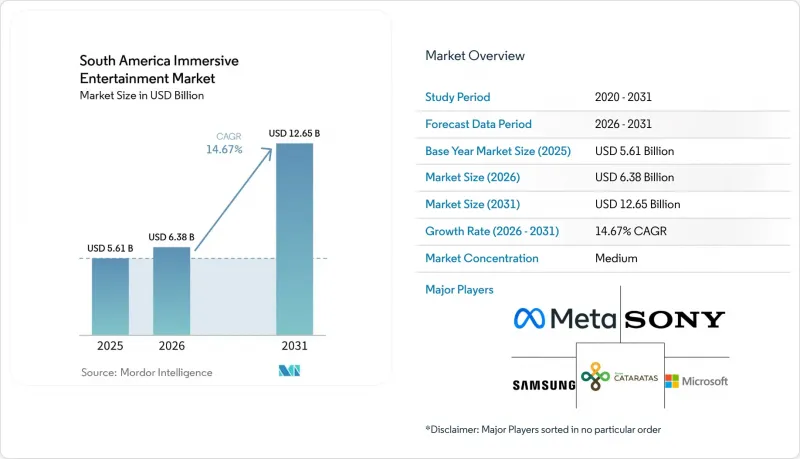
根據 Mordor Intelligence 的數據顯示,2025 年南美洲身臨其境型娛樂市場價值 56.1 億美元,2026 年價值 63.8 億美元。預計在預測期(2026-2031 年)內,該市場將以 14.67% 的複合年成長率成長,到 2031 年達到 126.5 億美元。
南美洲身臨其境型娛樂市場趨勢與洞察
購物中心內基於位置的娛樂設施的擴張
隨著電子商務的興起,實體店的角色也在發生變化,購物中心正將閒置的零售空間改造成娛樂場所。這降低了那些需要交通便利的都市區和穩定客流量的企業的進入門檻。聖保羅、布宜諾斯艾利斯和聖地牙哥的購物中心業主正為娛樂租戶提供收益分成租賃協議和室內裝修支援。這些安排減輕了中型身臨其境型娛樂設施的初始投資負擔。到2026年,企業將繼續利用其購物中心的位置提供多人遊戲和混合實境(MR)體驗,並經常與現有的電影院和餐廳形成協同效應。南美洲身臨其境型娛樂市場正受惠於購物中心將身臨其境型娛樂設施定位為核心景點,而非只是閒置空間的臨時使用者,進而吸引遊客。
VR遊樂場與家庭娛樂中心的成長
VR遊樂場正從以體驗為中心的景點轉變為旨在吸引遊客多次光顧和促進團體參與的場所。無線頭戴裝置的引入減少了每個體驗站對固定電腦設備的需求,簡化了設施運作。 2026年1月,Mixtou Experience和Hopi Hari在現有主題樂園內開設了專屬VR體驗區,引進了模擬器並增加了付費體驗計畫。 Mixtou計劃在未來五年內在巴西開設60家分店,投資額為1億巴西幣(以新聞稿中引用的2025年外匯計算,約1,720萬美元)。這種經營模式強調標準化設備、知名遊戲以及可在整個零售區域部署的小規模商店。這使得營運商無需建造大規模新設施即可將業務拓展到以目的地為核心的主題樂園之外,從而支持南美身臨其境型娛樂市場的發展。
身臨其境型娛樂設施的初始建造成本很高
高昂的初始成本持續限制身臨其境型體驗設施在二、三線城市的普及。即使是中型設施,也需要20萬至50萬美元用於投影系統、空間音訊、觸覺回饋、自由漫遊設備和場地準備。規模大規模的目的地體驗設施則需要額外支出用於佈景、專用系統和授權內容。目前,巴西有78個遊樂和娛樂項目正在開發中,總投資額達94億雷亞爾(約16.2億美元,以報告數據中的外匯計算)。如此高的投資規模有利於那些擁有強大資金籌措能力的成熟開發商、大規模區域營運商和全球授權商。因此,南美洲身臨其境型娛樂市場主要依靠特許經營和收益分成模式來維持小規模設施的商業性可行性。
細分市場分析
到2025年,主題娛樂將佔南美洲身臨其境型娛樂市場27.45%的佔有率。這一地位反映了主題樂園和購物中心能夠將數位元素融入遊客熟悉的體驗中。現有場所可以利用客流量、餐飲服務和營運團隊來支援新的業務模式。這使得主題概念比必須從零開始建立需求的獨立場所更具實際優勢。這種模式還允許在不徹底改造整個景點基礎設施的情況下進行專案調整。其現有的市場地位為希望針對現有遊客試行新技術的業者提供了有益的基礎。恐怖景點和密室逃脫遊戲已在巴西和哥倫比亞建立了穩定的中端市場。身臨其境型劇院和體驗式博物館也透過與機構的合作獲得了支持。隨著消費品牌採用感官體驗形式來推廣新產品和舉辦節慶活動,展覽和零售店的裝置仍然非常重要。 Elvive 膠原蛋白 Lifter 將於 2026 年 2 月至 3 月在里約熱內盧和聖保羅開設身臨其境型快閃店,據報道,裡約熱內盧的場次在 24 小時內售罄。
預計2026年至2031年間,身臨其境型現場遊戲活動將以14.95%的複合年成長率成長。這種形式將肢體活動與遊戲世界、互動挑戰和群體參與結合。遊戲內容的版權所有擁有者可以利用其現有的粉絲群來吸引參與者體驗現場活動。這些活動也為同一場地內的商品銷售、餐飲服務以及品牌相關活動創造了機會。大規模製作需要內容擁有者的協調。雖然這種協調對小規模業者來說可能是一個進入門檻,但它也為經驗豐富的本地供應商提供了合作機會。南美身臨其境型娛樂產業可以利用全球遊戲系列來吸引那些已經熟悉其智慧財產權的觀眾。隨著大規模製作的開展,布宜諾斯艾利斯作為戶外娛樂活動舉辦地的知名度也將隨之提高,布宜諾斯艾利斯將從中受益。組織者需要根據當地情況調整日程安排、支付方式和參與者支援。這將決定全球模式在首輪活動結束後能否產生重複需求。
截至2025年,從技術細分來看,虛擬實境(VR)在南美洲身臨其境型娛樂市場佔據了35.42%的佔有率。獨立式頭戴設備在街機廳、家庭中心和主題公園等場所鞏固了這一地位。這些設備減少了對有線電腦的依賴,並有助於部署多站式佈局。它們還能讓場館更容易根據客流量的變化重新配置空間。這種柔軟性對於必須在有限空間內運作的購物中心至關重要。擴增實境(AR)正被應用於品牌推廣和戶外活動中,數位疊加層可以與實體環境相輔相成。空間音訊正擴大應用於劇院、遊戲場所和展覽。在許多場所,它更多是作為一種體驗增強手段,而非一種獨立的體驗類別。由於需要更高的協調性和投資,觸覺和多感官系統仍然主要應用於旗艦體驗。這些技術的結合反映了人們對能夠在零售和娛樂環境中可靠運作的技術形式的偏好。
混合實境(MR)預計到2031年將以15.17%的複合年成長率成長。透視攝影機允許參觀者在觀看周圍物理環境的同時,將數位內容疊加在其上。這減少了對大型投影穹頂和大規模建設的需求。此外,由於參觀者始終感知同一實體空間,這種形式也適用於協作體驗。據報道,Realigate公司於2025年至2026年在里約熱內盧的巴拉達蒂茹卡區營運了一個130平方公尺的自由漫遊混合實境體驗館。由於記憶體晶片成本上漲,Meta公司於2026年4月提高了Quest 3S和Quest 3的標價。即使獨立系統仍然比有線安裝更便宜,設備成本的上漲也會影響擴展預算。低資產負擔的混合實境服務可以利用現有的零售空間,而無需建造完全專用的主題樂園。如果這種模式能夠提供可靠的內容和持續的技術支持,南美的身臨其境型娛樂產業就能從中受益。營運商需要在柔軟性與設備更換和軟體支援的相關成本之間取得平衡。
其他好處:
- Excel格式的市場預測(ME)表
- 3個月的分析師支持
目錄
第1章:引言
- 研究假設和市場定義
- 調查範圍
第2章:調查方法
第3章執行摘要
第4章 市場狀況
- 市場概覽
- 宏觀經濟因素對市場的影響
- 市場促進因素
- 購物中心內基於位置的娛樂設施的擴張
- VR娛樂設施和家庭娛樂中心的成長
- 對身臨其境型文化和藝術體驗的需求日益成長
- 增加品牌重塑和企業活動的支出
- 拓展巴西的旅遊與景點生態系統
- 獨立式VR硬體和無線頭戴裝置價格下降
- 市場限制因素
- 安裝身臨其境型娛樂設備需要較高的前期成本。
- 專業內容和技術人員供應有限。
- 暈動病、無障礙設施、健康與安全問題
- 外匯波動和對進口硬體的依賴
- 產業價值鏈分析
- 監理情勢
- 技術展望
- 波特五力分析
第5章 市場規模與成長預測
- 透過使用
- 主題娛樂
- 恐怖景點和密室逃脫遊戲
- 身臨其境型戲劇
- 體驗式博物館
- 展覽和零售商店設施
- 沉浸式遊戲現場活動
- 透過技術
- 虛擬實境(VR)
- 擴增實境(AR)
- 3D音訊和空間音效
- 混合實境(MR)
- 觸覺和多感官技術
- 依場地類型
- 主題樂園與遊樂園
- 家庭/室內娛樂中心
- 博物館和美術館
- 獨立身臨其境型設施
- 臨時和快閃設施
- 按收入來源
- 門票銷售
- 食品/飲料
- 商品
- 贊助和品牌合作
- 知識產權許可和版稅
- 定期訂閱和會員計劃
- 按地區
- 巴西
- 阿根廷
- 哥倫比亞
- 其他南美國家
第6章 競爭情勢
- 市場集中度
- 策略趨勢
- 市佔率分析
- 公司簡介
- 3dar
- Apple Inc.
- Barco NV
- Casa Mais
- Google LLC
- Grupo Cataratas
- Hello Park LLC
- HTC Corporation
- HQSoftware
- IMAX Corporation
- Meta Platforms, Inc.
- Microsoft Corporation
- Mixtou Experience
- MultiVerso Experience
- Novaworks
- Qualcomm Incorporated
- Samsung Electronics Co., Ltd.
- Sense Arq
- Sony Group Corporation
- Storyland Studios
- Universal Destinations & Experiences
- Visualfarm
- VR do Brasil
- VRMKT
第7章 市場機會與未來展望
According to Mordor Intelligence, the South America immersive entertainment market size was valued at USD 5.61 billion in 2025 and USD 6.38 billion in 2026, and is projected to reach USD 12.65 billion by 2031, at a CAGR of 14.67% during the forecast period (2026-2031).
South America Immersive Entertainment Market Trends and Insights
Expansion of Location-Based Entertainment in Shopping Malls
Shopping malls are converting retail vacancies into entertainment space as e-commerce changes the role of physical stores. This is lowering barriers for operators that need accessible urban locations and predictable visitor traffic. Mall owners in Sao Paulo, Buenos Aires, and Santiago are offering revenue-share leases and fit-out support to entertainment tenants. These arrangements reduce the initial capital burden for mid-sized immersive sites. In 2026, operators continued to use mall locations for multiplayer and mixed-reality experiences, often alongside existing cinema and food-service traffic. The South America immersive entertainment market benefits when malls treat immersive venues as visitor anchors rather than temporary users of vacant space.
Growth of VR Arcades and Family Entertainment Centers
VR arcades are moving from trial-oriented attractions toward venues designed for repeat visits and group participation. Wireless headsets reduce the need for fixed computing equipment at every station and simplify venue operations. Mixtou Experience and Hopi Hari opened a dedicated VR area in January 2026, using simulators that added paid experiences within an existing theme park. Mixtou stated that it planned 60 new units in Brazil over 5 years, with BRL 100 million in investment (USD 17.2 million) at the 2025 exchange rate cited in the reported information. The model favors standardized equipment, recognizable games, and smaller sites that can be replicated across retail corridors. This supports the South America immersive entertainment market by allowing operators to extend beyond destination parks without building large greenfield facilities.
High Upfront Cost of Immersive Entertainment Installations
High installation costs continue to limit the spread of immersive venues into secondary and tertiary cities. Mid-sized formats can require USD 200,000 to USD 500,000 for projection systems, spatial audio, haptics, free-roam equipment, and site preparation. Larger destination experiences require additional spending on scenery, specialized systems, and licensed content. Brazil has 78 amusement and entertainment projects under development, backed by BRL 9.4 billion (USD 1.62 billion) using the exchange rate cited in the reported information. This level of investment favors established developers, large regional operators, and global licensors with access to funding. The South America immersive entertainment market, therefore, depends on franchises and revenue-share structures to make smaller locations commercially possible.
Other drivers and restraints analyzed in the detailed report include:
- Rising Demand for Immersive Cultural and Art Experiences
- Increasing Brand Activation and Corporate Event Spending
- Limited Availability of Specialized Content and Technical Talent
For complete list of drivers and restraints, kindly check the Table Of Contents.
Segment Analysis
Themed entertainment held 27.45% of the South America immersive entertainment market in 2025. Its position reflects the ability of theme parks and malls to add digital elements to familiar guest experiences. Existing venues can use their visitor traffic, food service, and operating teams to support new formats. This gives themed concepts a practical advantage over a stand-alone launch that must build demand from the beginning. The format also supports changes to programming without replacing the wider attraction infrastructure. Its established presence provides a useful base for operators that want to test new technology with existing guests. Haunted attractions and escape rooms have built a stable middle segment in Brazil and Colombia. Immersive theaters and experiential art museums are also gaining support through institutional partnerships. Exhibitions and retail installations remain relevant because consumer brands are using sensory formats during launches and festivals. Elseve Collagen Lifter operated immersive pop-ups in Rio de Janeiro and Sao Paulo from February through March 2026, with Rio sessions selling out within 24 hours according to the reported information.
Live immersive gaming events are projected to expand at a 14.95% CAGR between 2026 and 2031. The format combines physical navigation with game worlds, interactive challenges, and group participation. Gaming properties can use established fan communities to support attendance at live experiences. The events also create opportunities for merchandise, food service, and branded activities at the same site. Large productions require content owners, technical suppliers, producers, and local venue partners to work together. That coordination creates entry barriers for small operators but opens partnership opportunities for experienced local providers. The South America immersive entertainment industry can use global gaming franchises to attract audiences that already recognize the intellectual property. Buenos Aires benefits when major productions strengthen its profile as a location for large outdoor entertainment events. Operators must still adapt scheduling, payment methods, and visitor support to local conditions. This helps determine whether a global format can build repeat demand after its first launch.
Virtual reality held 35.42% of the South America immersive entertainment market by technology in 2025. Standalone headsets have supported this position in arcades, family centers, and theme park attractions. They reduce dependence on tethered computers and make multi-station layouts easier to deploy. The devices also make it easier for venues to reconfigure space as visitor volumes change. This flexibility matters in malls where operators may work within compact footprints. Augmented reality has found use in brand activations and outdoor events where digital overlays can complement physical settings. Spatial audio is increasingly embedded across theaters, gaming spaces, and exhibitions. It functions as an enabling feature rather than a separate destination category in many venues. Haptics and multisensory systems remain concentrated in flagship experiences because they require more calibration and investment. The technology mix reflects the preference for formats that can operate reliably within retail and attraction environments.
Mixed reality is projected to expand at a 15.17% CAGR through 2031. Pass-through cameras allow a visitor to see physical surroundings while digital content is placed over them. This can reduce the need for large projection domes and extensive construction. The format can also support shared activity because visitors remain aware of the same physical space. Realigate operated a 130-square-meter free-roam mixed-reality arena in Rio de Janeiro's Barra da Tijuca during 2025 and 2026, according to reported information. Meta increased the listed prices of Quest 3S and Quest 3 devices in April 2026 because of higher memory-chip costs. Higher device costs can affect expansion budgets, even where standalone systems remain less costly than tethered installations. Asset-light mixed-reality services can use existing retail space without a full destination-park buildout. The South America immersive entertainment industry may benefit from these models when they provide reliable content and ongoing technical support. Operators must balance this flexibility with spending on device replacement and software support.
Complete Report Scope:
- By Application
- Themed Entertainment
- Haunted Attractions and Escape Rooms
- Immersive Theatres
- Experiential Art Museums
- Exhibitions and Retail Installations
- Live Immersive Gaming Events
- By Technology
- Virtual Reality (VR)
- Augmented Reality (AR)
- 3D Audio and Spatial Sound
- Mixed Reality (MR)
- Haptics and Multisensory Tech
- By Venue Type
- Theme and Amusement Parks
- Family/Indoor Entertainment Centers
- Museums and Galleries
- Stand-Alone Immersive Venues
- Pop-Up and Temporary Installations
- By Revenue Stream
- Ticket Sales
- Food and Beverage
- Merchandise
- Sponsorship and Brand Partnerships
- IP Licensing and Royalties
- Subscription and Memberships
- By Geography
- Brazil
- Argentina
- Colombia
- Rest of South America
List of Companies Covered in this Report:
- 3dar
- Apple Inc.
- Barco NV
- Casa Mais
- Google LLC
- Grupo Cataratas
- Hello Park LLC
- HTC Corporation
- HQSoftware
- IMAX Corporation
- Meta Platforms, Inc.
- Microsoft Corporation
- Mixtou Experience
- MultiVerso Experience
- Novaworks
- Qualcomm Incorporated
- Samsung Electronics Co., Ltd.
- Sense Arq
- Sony Group Corporation
- Storyland Studios
- Universal Destinations & Experiences
- Visualfarm
- VR do Brasil
- VRMKT
Additional Benefits:
- The market estimate (ME) sheet in Excel format
- 3 months of analyst support
TABLE OF CONTENTS
1 INTRODUCTION
- 1.1 Study Assumptions and Market Definition
- 1.2 Scope of the Study
2 RESEARCH METHODOLOGY
3 EXECUTIVE SUMMARY
4 MARKET LANDSCAPE
- 4.1 Market Overview
- 4.2 Impact of Macroeconomic Factors on the Market
- 4.3 Market Drivers
- 4.3.1 Expansion of Location-Based Entertainment in Shopping Malls
- 4.3.2 Growth of VR Arcades and Family Entertainment Centers
- 4.3.3 Rising Demand for Immersive Cultural and Art Experiences
- 4.3.4 Increasing Brand Activation and Corporate Event Spending
- 4.3.5 Expansion of Brazil's Tourism and Attraction Ecosystem
- 4.3.6 Falling Cost of Standalone VR Hardware and Wireless Headsets
- 4.4 Market Restraints
- 4.4.1 High Upfront Cost of Immersive Entertainment Installations
- 4.4.2 Limited Availability of Specialized Content and Technical Talent
- 4.4.3 Motion Sickness, Accessibility, and Health-Safety Concerns
- 4.4.4 Volatile Currency and Imported Hardware Exposure
- 4.5 Industry Value Chain Analysis
- 4.6 Regulatory Landscape
- 4.7 Technological Outlook
- 4.8 Porter's Five Forces Analysis
- 4.8.1 Bargaining Power of Suppliers
- 4.8.2 Bargaining Power of Buyers
- 4.8.3 Threat of New Entrants
- 4.8.4 Threat of Substitutes
- 4.8.5 Competitive Rivalry
5 MARKET SIZE AND GROWTH FORECASTS (VALUE)
- 5.1 By Application
- 5.1.1 Themed Entertainment
- 5.1.2 Haunted Attractions and Escape Rooms
- 5.1.3 Immersive Theatres
- 5.1.4 Experiential Art Museums
- 5.1.5 Exhibitions and Retail Installations
- 5.1.6 Live Immersive Gaming Events
- 5.2 By Technology
- 5.2.1 Virtual Reality (VR)
- 5.2.2 Augmented Reality (AR)
- 5.2.3 3D Audio and Spatial Sound
- 5.2.4 Mixed Reality (MR)
- 5.2.5 Haptics and Multisensory Tech
- 5.3 By Venue Type
- 5.3.1 Theme and Amusement Parks
- 5.3.2 Family/Indoor Entertainment Centers
- 5.3.3 Museums and Galleries
- 5.3.4 Stand-Alone Immersive Venues
- 5.3.5 Pop-Up and Temporary Installations
- 5.4 By Revenue Stream
- 5.4.1 Ticket Sales
- 5.4.2 Food and Beverage
- 5.4.3 Merchandise
- 5.4.4 Sponsorship and Brand Partnerships
- 5.4.5 IP Licensing and Royalties
- 5.4.6 Subscription and Memberships
- 5.5 By Geography
- 5.5.1 Brazil
- 5.5.2 Argentina
- 5.5.3 Colombia
- 5.5.4 Rest of South America
6 COMPETITIVE LANDSCAPE
- 6.1 Market Concentration
- 6.2 Strategic Moves
- 6.3 Market Share Analysis
- 6.4 Company Profiles (includes Global Level Overview, Market Level Overview, Core Segments, Financials as available, Strategic Information, Market Rank/Share, Products and Services, Recent Developments)
- 6.4.1 3dar
- 6.4.2 Apple Inc.
- 6.4.3 Barco NV
- 6.4.4 Casa Mais
- 6.4.5 Google LLC
- 6.4.6 Grupo Cataratas
- 6.4.7 Hello Park LLC
- 6.4.8 HTC Corporation
- 6.4.9 HQSoftware
- 6.4.10 IMAX Corporation
- 6.4.11 Meta Platforms, Inc.
- 6.4.12 Microsoft Corporation
- 6.4.13 Mixtou Experience
- 6.4.14 MultiVerso Experience
- 6.4.15 Novaworks
- 6.4.16 Qualcomm Incorporated
- 6.4.17 Samsung Electronics Co., Ltd.
- 6.4.18 Sense Arq
- 6.4.19 Sony Group Corporation
- 6.4.20 Storyland Studios
- 6.4.21 Universal Destinations & Experiences
- 6.4.22 Visualfarm
- 6.4.23 VR do Brasil
- 6.4.24 VRMKT
7 MARKET OPPORTUNITIES AND FUTURE OUTLOOK
- 7.1 White-Space and Unmet-Need Assessment

 全球身臨其境型娛樂市場規模、佔有率、趨勢和成長分析報告(2026-2034)身臨其境型娛樂市場規模、佔有率、成長、全球產業分析、區域趨勢及2026年至2034年預測
 身臨其境型娛樂:市場佔有率分析、產業趨勢與統計、成長預測(2026-2031)
 身臨其境型娛樂市場分析及預測(至2035年):依類型、產品類型、服務、技術、組件、應用、設備、最終用戶、解決方案、模式
 身臨其境型娛樂市場規模、佔有率和趨勢分析報告:按技術類型、應用、地區和細分市場預測(2026-2033 年)
 身臨其境型娛樂的全球市場
 亞太地區沉浸式娛樂市場預測至 2031 年 - 區域分析 - 按組件、技術(虛擬實境、擴增實境、混合實境等)和最終用戶
 北美沉浸式娛樂市場預測至 2031 年 - 區域分析 - 按組件、技術(虛擬實境、擴增實境、混合實境等)和最終用戶
 歐洲沉浸式娛樂市場預測至 2031 年 - 區域分析 - 按組件、技術(虛擬實境、擴增實境、混合實境等)和最終用戶