


 |
市場調查報告書
商品編碼
2154209
綠色和生物基塑膠添加劑:市場佔有率分析、行業趨勢和統計數據以及成長預測(2026-2031 年)Green and Bio-based Plastic Additives - Market Share Analysis, Industry Trends & Statistics, Growth Forecasts (2026 - 2031) |
||||||

※ 本網頁內容可能與最新版本有所差異。詳細情況請與我們聯繫。
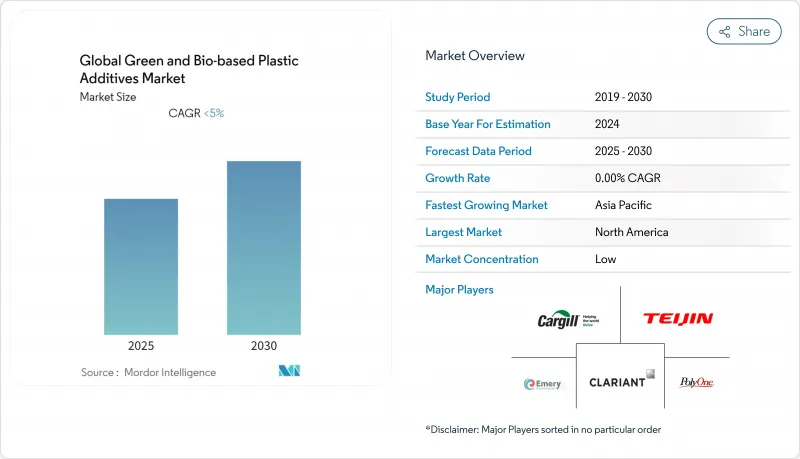
據 Mordor Intelligence 稱,2025 年綠色和生物基塑膠添加劑市場價值為 31.2 億美元,預計到 2031 年將從 2026 年的 33.4 億美元成長至 47.2 億美元,預測期(2026-2031 年)的複合年成長率為 7.15%。
全球綠色和生物基塑膠添加劑市場趨勢與洞察
透過監管鄰苯二甲酸酯和鹵代化學品進行替代
監管替代是綠色和生物基塑膠添加劑市場需求的主要促進因素。 2025年12月31日,美國環保署(EPA)宣布計畫根據《有毒物質管制法》(TSCA)對鄰苯二甲酸丁芐酯、鄰苯二甲酸二丁酯、鄰苯二甲酸二環己酯、鄰苯二甲酸二乙基己酯和鄰苯二甲酸異丁酯的某些使用二酸異丁酯的某些使用中進行監管。 EPA認定鄰苯二甲酸二乙基己酯的10種使用條件會對工人構成不公平的風險,20種使用條件會對環境構成風險。在歐洲,鄰苯二甲酸二乙基己酯、鄰苯二甲酸二丁酯、鄰苯二甲酸丁芐酯和鄰苯二甲酸二異丁酯在增塑消費品中的濃度超過0.1%(重量比)時受到監管。同樣在德國,2025年1月啟動了一項資金申請,用於開發和工業化應用生物基添加劑,包括鄰苯二甲酸酯替代品。這些努力提高了無需使用受管制化學品即可滿足性能和合規要求的配方的價值。
永續食品和電子商務包裝的成長
包裝是綠色和生物基塑膠添加劑市場中最大的終端用戶領域,預計到2025年將佔據52.38%的市場。食品接觸包裝的要求更重視純度、遷移行為和可記錄的材料成分。 《包裝和包裝廢棄物法規》於2025年2月生效,並將於2026年8月12日起實施,該法規為歐盟範圍內的循環包裝要求奠定了更強力的政策基礎。品牌所有者對可再生成分的期望也從樹脂擴展到添加劑體系,從而推動了基於國際永續碳認證PLUS (ISCC PLUS)、REDcert2或ASTM International (ASTM) D6866等認證文件的產品的發展。 2026年7月,BASF擴大了其用於建築塗料的REDcert2認證生質能平衡添加劑產品線,顯示認證產品正日益被定位為可直接取代現有產品,而非僅限於特定用途的特種產品。科萊恩的 Licocare RBW Vita 米糠蠟添加劑於 2026 年 2 月獲得歐盟委員會批准,並於 2026 年 5 月獲得美國食品藥物管理局(FDA) 批准,用於特定的食品接觸應用。
原物料供應量和價格的波動
原料的供應和價格波動仍然是綠色和生物基塑膠添加劑市場面臨的直接限制因素。動物脂肪、廢棄食用油和其他可再生原料也被用於燃料和化學價值鏈,導致供應競爭加劇。對於依賴植物油和廢棄物油脂的油脂化學品塑化劑和穩定劑而言,穩定的原料供應尤其重要。嘉吉公司的Vikoflex生物基塑化劑系列產品含有高達100%的生物基有機碳,凸顯了取得農業原料在該領域的重要性。成本的不確定性會減緩產能擴張,並促使添加劑生產商和原料供應商簽訂長期供應合約。如果買家難以將增加的成本轉嫁到供應鏈中,成本不確定性還會擴大與化石基替代品之間的價格差距。
細分市場分析
到2025年,生物基塑膠添加劑將佔市場收入的71.56%,這些添加劑已在聚氯乙烯、聚烯和生物聚合物領域中獲得多年商業性應用。 ASTM D6866測試為買家提供了一種驗證生物來源碳含量的方法,並支持可再生成分含量的聲明。嘉吉公司提供「Vikoflex」環氧酯塑化劑,其生物基有機碳含量高達100%。擁有成熟加工數據的供應商可以為加工商提供更高的可靠性,以滿足特定的性能要求。這些因素鞏固了嘉吉公司在綠色和生物基塑膠添加劑市場的領先地位。
預計到2031年,環保塑膠添加劑市場將以7.93%的複合年成長率成長。此類別包括含有可再生原料的材料,以及低毒性、無鹵、與回收材料相容且低碳的配方。食品接觸應用和醫療行業的買家往往優先考慮可再生碳認證,而電子和電動汽車行業的應用則可能更重視無鹵特性和低煙密度。 2026年5月,BASF公佈了一項生物基半芳香族共COPOLYAMIDES組合物的專利,該組合物含有10%至17%的無鹵化阻燃劑。綠色和生物基塑膠添加劑市場正朝著能夠在單一配方中同時滿足認證和性能要求的產品方向發展。
區域分析
預計到2025年,亞太地區將佔全球市場收入的36.24%,並將以8.11%的複合年成長率成長至2031年。該地區綠色和生物基塑膠添加劑市場的發展受到大規模塑膠加工能力以及對有害添加劑、食品接觸材料和循環包裝等不斷變化的要求的共同影響。中國在減少塑膠製品中的有害物質方面取得了進展,而印度則在加強對不含鄰苯二甲酸酯的兒童產品和塑膠廢棄物管理的標準。日本的《塑膠資源回收法》正在推動包裝和電子產業配方的重新檢視。在韓國,食品接觸材料的遷移限制正在實施,這支撐了對具有明確遷移特性的添加劑的需求。
隨著客戶對規模化生產和合規性支援的需求日益成長,亞太地區的綠色和生物基塑膠添加劑市場正吸引供應商的注意。科萊恩在上海舉行的2026年中國國際塑膠橡膠工業展覽會(CHINAPLAS 2026)上發布了其Licocare RBW Vita產品組合以及正在進行的熱塑性聚氨酯研發計畫。巴斯夫也在同一展會上發表了Ultrason P 3010 BMB。在北美,美國針對五種鄰苯二甲酸酯的監管發展計畫預計將對建築、工業和消費品應用領域的BASF決策產生影響。BASF於2026年3月在路易斯安那州蓋斯馬開始商業化生產生質能平衡聚醚多元醇,並於2026年4月在北美推出了聚氨酯泡沫塗料。
在歐洲,市場需求正受到《包裝及包裝廢棄物法規》和對某些鄰苯二甲酸酯的限制的影響。該地區的環保和生物基塑膠添加劑市場必須同時滿足循環利用、食品接觸和可追溯性要求。南美洲、中東和非洲以及歐洲的小規模市場仍處於需求的早期階段,但巴西的生質燃料政策正在支持原料開發,沙烏地阿拉伯則在支持對與油脂化學原料相關的特種化學品的投資。在全球品牌規範訂定之前,這些地區的需求可能會隨之成長,而當地法規的嚴格程度可能尚未達到相同的水準。
其他好處:
- Excel格式的市場預測(ME)表
- 3個月的分析師支持
目錄
第1章:引言
- 研究假設和市場定義
- 調查範圍
第2章:調查方法
第3章執行摘要
第4章 市場狀況
- 市場概覽
- 市場促進因素
- 透過監管鄰苯二甲酸酯和鹵代化學品進行替代
- 品牌驅動的需求,促使消費者對經認證的可再生能源含量做出貢獻
- 永續食品和電子商務包裝市場的成長
- 生物基添加劑在醫療設備中的合格
- 回收材料加工要求與循環經濟
- 市場限制因素
- 原物料供應狀況和價格波動
- 認證週期和性能等效性要求
- 回收過程中添加劑適用性的限制
- 價值鏈分析
- 波特五力分析
- 技術展望
第5章 市場規模與成長預測
- 依產品
- 生物基塑膠添加劑
- 環保塑膠添加劑
- 依功能類型
- 塑化劑
- 抗菌劑
- 抗靜電劑
- 阻燃劑
- 穩定器
- 強化劑
- 其他函數類型
- 按最終用戶行業分類
- 包裝
- 電子設備
- 醫療器材
- 紡織品
- 消費品
- 其他終端用戶產業
- 按地區
- 亞太地區
- 中國
- 印度
- 日本
- 韓國
- 東南亞國協
- 其他亞太國家
- 北美洲
- 美國
- 加拿大
- 墨西哥
- 歐洲
- 德國
- 英國
- 法國
- 義大利
- 北歐國家
- 其他歐洲國家
- 南美洲
- 巴西
- 阿根廷
- 其他南美國家
- 中東和非洲
- 沙烏地阿拉伯
- 南非
- 其他中東和非洲國家
- 亞太地區
第6章 競爭情勢
- 市場集中度
- 策略趨勢
- 市佔率和排名分析
- 公司簡介
- ADEKA CORPORATION
- Avient Corporation
- BASF
- Cargill, Incorporated
- CLARIANT
- Corbion NV
- Croda International Plc
- DIC Corporation
- Dow
- Emery Oleochemicals
- Evonik Industries AG
- LANXESS
- Matrica SpA
- NatureWorks LLC
- Solvay
第7章 市場機會與未來展望
According to Mordor Intelligence, the green and Bio-Based Plastic Additives Market size was valued at USD 3.12 billion in 2025 and is estimated to grow from USD 3.34 billion in 2026 to reach USD 4.72 billion by 2031, at a CAGR of 7.15% during the forecast period (2026-2031).
Global Green and Bio-based Plastic Additives Market Trends and Insights
Regulatory Substitution of Phthalates and Halogenated Chemistries
Regulatory substitution is a central demand driver for the green and bio-based plastic additives market. On December 31, 2025, the U.S. Environmental Protection Agency announced its intent to regulate specific conditions of use for butyl benzyl phthalate, dibutyl phthalate, dicyclohexyl phthalate, diethylhexyl phthalate, and diisobutyl phthalate under the Toxic Substances Control Act. The agency identified 10 conditions of use with unreasonable worker risk and 20 with environmental risk for diethylhexyl phthalate. In Europe, restrictions cover diethylhexyl phthalate, dibutyl phthalate, butyl benzyl phthalate, and diisobutyl phthalate at concentrations above 0.1% by weight in plasticized consumer articles. Germany also opened a January 2025 funding call for the development and industrial use of bio-based additives, including phthalate substitution. These actions increase the value of formulations that can meet performance and compliance requirements without restricted chemistries.
Growth of Sustainable Food and E-Commerce Packaging
Packaging is the largest end-user area in the green and bio-based plastic additives market, accounting for 52.38% of the market share in 2025. Food-contact packaging requirements place greater emphasis on purity, migration behavior, and documented material composition. The Packaging and Packaging Waste Regulation entered into force in February 2025 and applies from August 12, 2026, adding a stronger policy basis for circular packaging requirements across the European Union. Brand owners are also extending renewable-content expectations from resins to additive systems, which favors products supported by International Sustainability and Carbon Certification PLUS (ISCC PLUS), REDcert2, or ASTM International (ASTM) D6866 documentation. BASF expanded its REDcert2-certified biomass-balance additives range for architectural coatings in July 2026, showing how certified products are being positioned as drop-in options rather than narrow specialty offerings. CLARIANT received European Commission approval in February 2026 and Food and Drug Administration authorization in May 2026 for Licocare RBW Vita rice bran wax additives in specified food-contact applications.
Feedstock Availability and Price Volatility
Feedstock availability and price volatility remain a direct restraint on the green and bio-based plastic additives market. Animal fats, used cooking oil, and other renewable feedstocks are also used in fuel and chemical value chains, which create competition for supply. The need for stable sourcing is particularly relevant for oleochemical plasticizers and stabilizers that depend on vegetable or waste-derived oils. Cargill, Incorporated supports its Vikoflex bio-based plasticizer range with products that contain up to 100% bio-based organic carbon, illustrating the role of agricultural feedstock access in this field. Cost uncertainty can delay capacity additions or require longer-term supply agreements between additive producers and feedstock providers. It can also widen the price gap with fossil-derived alternatives when buyers have limited ability to pass higher costs through the supply chain.
Other drivers and restraints analyzed in the detailed report include:
- Recycled-Content Processing and Circularity Requirements
- Qualification of Bio-Based Additives in Medical Devices
- Qualification Cycles, Performance Parity Requirements
For complete list of drivers and restraints, kindly check the Table Of Contents.
Segment Analysis
Bio-based plastic additives held 71.56% of the market revenue in 2025 and had longer commercial use across polyvinyl chloride, polyolefins, and biopolymers. ASTM D6866 testing gives buyers a method to document biogenic carbon content, which supports renewable-content claims. Cargill, Incorporated offers Vikoflex epoxidized ester plasticizers with up to 100% bio-based organic carbon. Suppliers with established processing data can offer converters more confidence when a formulation must meet defined performance requirements. These factors support their leading position in the green and bio-based plastic additives market.
Green plastic additives are projected to advance at a 7.93% CAGR through 2031. This category includes lower-toxicity, halogen-free, recyclate-compatible, and lower-carbon formulations, alongside materials with renewable content. Food-contact and medical buyers may prioritize renewable-carbon certification, while electronics and electric vehicle applications may place greater weight on halogen-free properties and low smoke density. BASF published a May 2026 patent for a bio-based semi-aromatic copolyamide composition containing 10% to 17% halogen-free flame retardant. The green and bio-based plastic additives market is moving toward products that can address both certification and performance requirements in one formulation.
Complete Report Scope:
- By Product Basis
- Bio-Based Plastic Additives
- Green Plastic Additives
- By Functionality Type
- Plasticizers
- Antimicrobial Agents
- Antistatic Agents
- Flame Retardants
- Stabilizers
- Reinforcing Agents
- Other Functionality Types
- By End-User Industry
- Packaging
- Electronics
- Medical Devices
- Textiles
- Consumer Goods
- Other End-User Industries
- By Geography
- Asia-Pacific
- China
- India
- Japan
- South Korea
- ASEAN Countries
- Rest of Asia-Pacific
- North America
- United States
- Canada
- Mexico
- Europe
- Germany
- United Kingdom
- France
- Italy
- NORDIC Countries
- Rest of Europe
- South America
- Brazil
- Argentina
- Rest of South America
- Middle East and Africa
- Saudi Arabia
- South Africa
- Rest of Middle East and Africa
- Asia-Pacific
Geography Analysis
Asia-Pacific held 36.24% of the market revenue in 2025 and is projected to advance at an 8.11% CAGR through 2031. The green and bio-based plastic additives market in the region combines large plastics-processing capacity with changing requirements for hazardous additives, food-contact materials, and circular packaging. China is reducing hazardous materials in plastic products, while India is tightening specifications for phthalate-free children's products and plastic-waste management. Japan's Plastic Resource Circulation Act supports reformulation across packaging and electronics. South Korea applies migration limits for food-contact materials, which supports demand for additives with established migration profiles.
The green and bio-based plastic additives market in Asia-Pacific attracts supplier activity because customers need scale and compliance support. CLARIANT presented its Licocare RBW Vita portfolio and ongoing thermoplastic polyurethane development at CHINAPLAS 2026 in Shanghai. BASF presented Ultrason P 3010 BMB at the same event. In North America, planned U.S. rulemaking on 5 phthalates is expected to influence formulation decisions in construction, industrial, and consumer applications. BASF began commercial production of biomass-balance polyether polyols at Geismar, Louisiana, in March 2026 and introduced a biomass-balance spray polyurethane foam isocyanate product for North America in April 2026.
Europe has demand shaped by the Packaging and Packaging Waste Regulation and restrictions on several phthalates. The green and bio-based plastic additives market in the region must meet circularity, food-contact, and traceability requirements at the same time. South America, the Middle East and Africa, and smaller European markets remain earlier-stage demand areas, although Brazil's biofuels policy supports feedstock development and Saudi Arabia is supporting specialty chemical investment near oleochemical feedstocks. Global brand specifications can create demand in these regions before local rules become equally stringent.
- ADEKA CORPORATION
- Avient Corporation
- BASF
- Cargill, Incorporated
- CLARIANT
- Corbion N.V.
- Croda International Plc
- DIC Corporation
- Dow
- Emery Oleochemicals
- Evonik Industries AG
- LANXESS
- Matrica S.p.A.
- NatureWorks LLC
- Solvay
Additional Benefits:
- The market estimate (ME) sheet in Excel format
- 3 months of analyst support
TABLE OF CONTENTS
1 Introduction
- 1.1 Study Assumptions and Market Definition
- 1.2 Scope of the Study
2 Research Methodology
3 Executive Summary
4 Market Landscape
- 4.1 Market Overview
- 4.2 Market Drivers
- 4.2.1 Regulatory Substitution of Phthalates and Halogenated Chemistries
- 4.2.2 Brand-Led Demand for Verified Renewable Content
- 4.2.3 Growth of Sustainable Food and E-Commerce Packaging
- 4.2.4 Qualification of Bio-Based Additives in Medical Devices
- 4.2.5 Recycled-Content Processing and Circularity Requirements
- 4.3 Market Restraints
- 4.3.1 Feedstock Availability and Price Volatility
- 4.3.2 Qualification Cycles and Performance Parity Requirements
- 4.3.3 Additive Compatibility Constraints in Recycling Streams
- 4.4 Value Chain Analysis
- 4.5 Porter's Five Forces Analysis
- 4.5.1 Threat of New Entrants
- 4.5.2 Bargaining Power of Suppliers
- 4.5.3 Bargaining Power of Buyers
- 4.5.4 Threat of Substitutes
- 4.5.5 Competitive Rivalry
- 4.6 Technological Outlook
5 Market Size and Growth Forecasts (Value)
- 5.1 By Product Basis
- 5.1.1 Bio-Based Plastic Additives
- 5.1.2 Green Plastic Additives
- 5.2 By Functionality Type
- 5.2.1 Plasticizers
- 5.2.2 Antimicrobial Agents
- 5.2.3 Antistatic Agents
- 5.2.4 Flame Retardants
- 5.2.5 Stabilizers
- 5.2.6 Reinforcing Agents
- 5.2.7 Other Functionality Types
- 5.3 By End-User Industry
- 5.3.1 Packaging
- 5.3.2 Electronics
- 5.3.3 Medical Devices
- 5.3.4 Textiles
- 5.3.5 Consumer Goods
- 5.3.6 Other End-User Industries
- 5.4 By Geography
- 5.4.1 Asia-Pacific
- 5.4.1.1 China
- 5.4.1.2 India
- 5.4.1.3 Japan
- 5.4.1.4 South Korea
- 5.4.1.5 ASEAN Countries
- 5.4.1.6 Rest of Asia-Pacific
- 5.4.2 North America
- 5.4.2.1 United States
- 5.4.2.2 Canada
- 5.4.2.3 Mexico
- 5.4.3 Europe
- 5.4.3.1 Germany
- 5.4.3.2 United Kingdom
- 5.4.3.3 France
- 5.4.3.4 Italy
- 5.4.3.5 NORDIC Countries
- 5.4.3.6 Rest of Europe
- 5.4.4 South America
- 5.4.4.1 Brazil
- 5.4.4.2 Argentina
- 5.4.4.3 Rest of South America
- 5.4.5 Middle East and Africa
- 5.4.5.1 Saudi Arabia
- 5.4.5.2 South Africa
- 5.4.5.3 Rest of Middle East and Africa
- 5.4.1 Asia-Pacific
6 Competitive Landscape
- 6.1 Market Concentration
- 6.2 Strategic Moves
- 6.3 Market Share (%)/Ranking Analysis
- 6.4 Company Profiles (includes Global Overview, Market Overview, Core Segments, Financials as available, Strategic Information, Products and Services, and Recent Developments)
- 6.4.1 ADEKA CORPORATION
- 6.4.2 Avient Corporation
- 6.4.3 BASF
- 6.4.4 Cargill, Incorporated
- 6.4.5 CLARIANT
- 6.4.6 Corbion N.V.
- 6.4.7 Croda International Plc
- 6.4.8 DIC Corporation
- 6.4.9 Dow
- 6.4.10 Emery Oleochemicals
- 6.4.11 Evonik Industries AG
- 6.4.12 LANXESS
- 6.4.13 Matrica S.p.A.
- 6.4.14 NatureWorks LLC
- 6.4.15 Solvay
7 Market Opportunities and Future Outlook
- 7.1 White-Space and Unmet-Need Assessment

 2026年全球汽車塑膠添加劑市場報告
 電解液成膜添加劑市場:全球市場預測,2026-2032年
 高性能聚合物添加劑市場預測至2034年—按添加劑類型、聚合物類型、應用、功能、最終用戶和地區分類的全球分析生物分解性塑膠用抗氧化劑市場:全球市場預測,2026-2032年
 2026-2030年全球聚烯相容材料市場
 塑膠添加劑:市場佔有率分析、產業趨勢與統計、成長預測(2026-2031)汽車塑膠添加劑市場:依添加劑類型、聚合物類型、車輛類型和應用分類-2026-2032年全球市場預測塑膠添加劑市場:按類型、原料、產品形式、可回收性、塑膠類型和最終用戶分類-2026-2032年全球市場預測
 塑膠添加劑市場報告:按添加劑類型、塑膠類型、應用、功能和地區分類,2026-2034年
 全球汽車塑膠添加劑市場規模、佔有率、趨勢和成長分析報告:2026-2034年