


 |
市場調查報告書
商品編碼
2125563
美國氫氣生產:市場佔有率分析、行業趨勢和統計數據以及成長預測(2026-2031 年)United States Hydrogen Generation - Market Share Analysis, Industry Trends & Statistics, Growth Forecasts (2026 - 2031) |
||||||

※ 本網頁內容可能與最新版本有所差異。詳細情況請與我們聯繫。
根據 Mordor Intelligence 預測,美國氫氣生產市場規模將從 2025 年的 352.5 億美元和 2026 年的 365.8 億美元成長到 2031 年的 441.6 億美元,2026 年至 2031 年的年複合成長率(CAGR)為 3.84%。
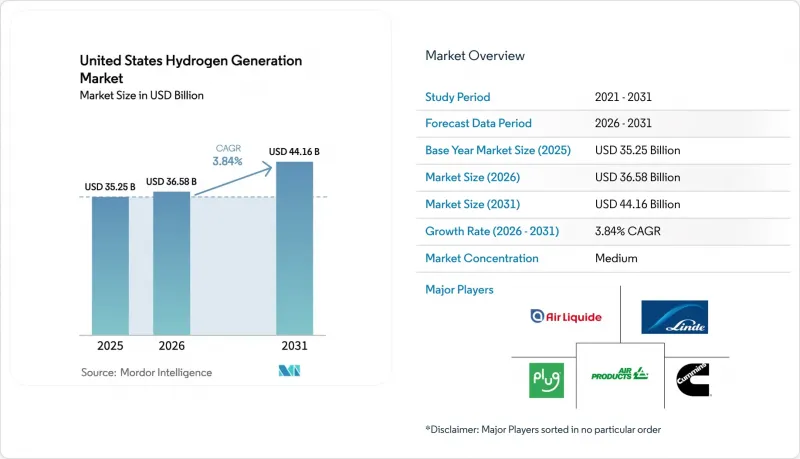
本報告按原料(灰氫、藍氫、綠氫、青色氫、粉紅氫)、技術(蒸汽甲烷重整、煤炭氣化、自發性熱重組、部分氧化法、電解)和應用(石油煉製、化學加工、鋼鐵、運輸燃料、電力和儲能、住宅和商業供暖)進行分類。
美國氫氣生產市場的趨勢與洞察
根據《通膨抑制法案》(IRA) 提供的生產稅額扣抵
第45V條將於2025年1月生效,該條款規定,對於生命週期排放量低於每公斤0.45公斤二氧化碳當量(CO2e)的氫氣,將提供每公斤最高3美元的稅額扣抵,具體抵免額度需透過GREET模型檢驗。此稅額扣抵可轉讓,有效期為10年,並將使該項目的加權平均資本成本降低約150個基點。為符合該方案的資格,開發商必須將電解安裝在與新建可再生能源資產相同的地點,並按小時匹配電解供應。這項要求將使資本成本增加20-30%,但可確保達到碳強度閾值。這項獎勵促使眾多開發商宣布計劃部署數十吉瓦的電解槽,但由於採購瓶頸和漫長的併網等待時間,最終投資決策的進展仍然有限。這種信用額度的確定性使得結構化購電協議成為可能,該協議允許將離峰時段的風能和太陽能電力貨幣化為低碳燃料,而不是作為剩餘電力釋放到電網中。
美國在難以減排的產業中承擔脫碳義務
加州擬議的2024年低碳燃料標準(LCFS)修正案等州級政策將為重型運輸中使用的綠色氫氣提供每公斤1.20至1.50美元的合規積分。鋼鐵製造商正在進行向高爐注入氫氣的試驗,目標是用氫氣取代高達30%的焦煤。克利夫蘭克里夫斯公司預計將於2026年在印第安納港啟動一個試點項目,此前該公司已投資1.5億美元用於設施維修。水泥和玻璃產業也正在進行類似的試驗,這進一步強化了氫氣在電氣化不可行的產業中的作用。將於2026年最終確定的聯邦採購指南將優先考慮低碳原料,並鼓勵公共工程承包商使用經認證的氫氣。由於缺乏全國性的碳定價機制,氫氣的應用主要集中在沿海和五大湖地區,這些地區可再生能源供應過剩,且擁有明確的碳排放強度目標。
高LCOH與現有「灰氫」的比較
小規模氫氣生產商(SMR)若不採取減排措施,則以每公斤1.00至1.50美元的價格向墨西哥灣沿岸的買家供應氫氣;而併網電解的成本在享受獎勵前為每公斤4.00至6美元。即使充分利用每公斤3美元的碳排放抵免,交付的綠色氫氣價格通常仍維持在每公斤1.50至2.50美元,這意味著50%至100%的溢價,如果沒有明確的碳定價機制,大多數氨和煉油廠買家都難以承受。藍氫已將價格差距縮小至每公斤2.00至2.50美元(不含稅額扣抵),但這需要可用的碳封存場地和長期的二氧化碳回收合約。目前,PEM電解槽的資本投資已降至每千瓦800至900美元,預計這一差距還將進一步縮小,但如果沒有進一步的政策支持,預計要到2030年左右才能實現與灰色氫氣的價格持平。
細分市場分析
到2025年,灰氫將佔全球總產量的77.5%,這些灰氫主要來自墨西哥灣沿岸煉油廠和中西部氨廠附近100多個老舊的蒸汽甲烷重整(SMR)裝置。這些裝置大多已完成折舊免稅額,且天然氣價格徘徊在每百萬英熱單位(MMBtu)3美元左右,因此它們可以以低於每公斤1美元的價格供應灰氫,除非聯邦政府徵收碳排放稅,否則獲利能力。隨著業者在現有重整裝置上加裝碳捕集設備,藍氫的產能正在不斷提升。埃克森美孚位於貝城的工廠維修預計將從2026年開始每年封存130萬噸二氧化碳,而CF工業公司位於唐納森維爾的計畫目標是到2028年每年封存200萬噸二氧化碳。甲烷熱解制取的藍氫目前仍屬於小眾產品,但Monolith Materials公司位於內布拉斯加州的工廠年產量為1.4萬噸,如果其固體炭黑產品能與輪胎行業簽訂長期契約,產量有望進一步擴大。 Exelon 和衛星群的粉紅氫試點計畫展示了利用核能發電電解氫氣生產的潛力,但將核能發電廠與氫氣提取聯繫起來的許可框架仍在製定中。
2025年,綠色氫氣產量僅佔總產量的3-4%,但預計以32.9%的複合年成長率成長,到2031年將達到15-20%的市場佔有率。 Plug Power公司位於羅徹斯特的120兆瓦水力發電廠於2025年12月投入運作,日產量為50噸,補貼前成本約為每公斤2.50美元。加州政府計畫在2035年實現100%零排放卡車運輸,為此,液化空氣集團和殼牌公司計劃在洛杉磯盆地周邊建造12座加氫站。總體而言,如果已公佈的項目都能達到預期產能,到2031年,美國綠色氫氣市場規模可能超過90億美元,但由於更嚴格的資訊揭露規定,灰色氫氣的收入預計將趨於平穩。
其他好處:
- Excel格式的市場預測(ME)表
- 3個月的分析師支持
目錄
第1章:引言
- 研究假設和市場定義
- 調查範圍
第2章:調查方法
第3章執行摘要
第4章 市場狀況
- 市場概覽
- 市場促進因素
- 根據《通貨膨脹控制法案》(IRA) 提供的生產稅額扣抵
- 美國在難以減排的產業中承擔脫碳義務
- 煉油廠和氨生產設施維修以生產藍氫。
- 美國能源部「氫能中心」計畫的資金支持使區域計畫得以實現。
- 購買因減產而無處可去的可再生能源。
- 市場限制因素
- 與現有的灰氫相比,LCOH 的成本更高。
- 氫氣管道和儲存基礎設施的建設進展緩慢。
- 採用SMR方法的生產商的天然氣採購價格波動
- 與公用事業規模電解用水許可證相關的風險
- 供應鏈分析
- 監理情勢
- 技術展望
- 波特五力模型
- PESTLE分析
第5章 市場規模與成長預測
- 按原料
- 灰氫
- 藍氫
- 綠氫能
- 綠松石氫
- 粉紅氫
- 透過技術
- 蒸汽甲烷重整(SMR)
- 煤炭氣化
- 自發性熱重組(ATR)
- 部分氧化法(POX)
- 電解法(鹼性電解、質子交換膜電解 (PEM)、固體氧化物電解(SOE))
- 透過使用
- 煉油
- 化學處理(氨、甲醇)
- 鋼(直接還原鐵,H2-BF)
- 運輸燃料(燃料電池電動車、船舶、航空)
- 電力和儲能
- 住宅和商業供暖
第6章 競爭情勢
- 市場集中度
- 策略趨勢(併購、聯盟、購電協議)
- 市場佔有率分析(主要公司的市場排名和佔有率)
- 公司簡介
- Air Products and Chemicals Inc.
- Linde plc
- Air Liquide SA
- Plug Power Inc.
- Cummins Inc.
- Engie SA
- FuelCell Energy Inc.
- Messer Group GmbH
- Bloom Energy Corp.
- Nikola Corp.
- Chart Industries Inc.
- Taiyo Nippon Sanso Holdings Corp.
- ITM Power plc
- McPhy Energy SA
- Enapter AG
第7章 市場機會與未來展望
According to Mordor Intelligence, the United States hydrogen generation market size is projected to expand from USD 35.25 billion in 2025 and USD 36.58 billion in 2026 to USD 44.16 billion by 2031, registering a CAGR of 3.84% between 2026 to 2031.
This report is Segmented by Source (Grey Hydrogen, Blue Hydrogen, Green Hydrogen, Turquoise Hydrogen, and Pink Hydrogen), Technology (Steam Methane Reforming, Coal Gasification, Auto-Thermal Reforming, Partial Oxidation, and Electrolysis), and Application (Oil Refining, Chemical Processing, Iron and Steel, Transportation Fuel, Power and Energy Storage, and Residential and Commercial Heating).
United States Hydrogen Generation Market Trends and Insights
Inflation Reduction Act Production Tax Credits
Section 45V, effective January 2025, offers up to USD 3 per kg for hydrogen with lifecycle emissions below 0.45 kg CO2e per kg H2, verified through the GREET model. The credit is transferable for 10 years, cutting the project's weighted-average cost of capital by roughly 150 basis points. To qualify, developers must co-locate electrolyzers with new renewable assets and match electricity hourly, a requirement that raises capital by 20-30% but guarantees the carbon-intensity threshold. The incentive has prompted dozens of gigawatt-scale electrolyzer announcements, yet progress to final investment decision remains selective as developers navigate procurement bottlenecks and long interconnection queues. The credit's certainty is enabling structured power-purchase agreements where off-peak wind and solar are monetized into low-carbon fuel rather than spilled on the grid.
U.S. Decarbonization Mandates Across Hard-to-Abate Sectors
State policies such as California's 2024 Low Carbon Fuel Standard amendment award compliance credits worth USD 1.20-1.50 per kg for green hydrogen in heavy-duty transport. Steelmakers are testing hydrogen injection in blast furnaces to replace up to 30% of coking coal; Cleveland-Cliffs expects its Indiana Harbor pilot to start in 2026 under a USD 150 million retrofit. Similar trials are underway in cement and glass, reinforcing hydrogen's role where electrification is impractical. Federal procurement guidelines finalized in 2026 now favor low-carbon inputs, nudging public-works contractors toward certified hydrogen. Absent a nationwide carbon price, adoption clusters in coastal and Great Lakes states that combine renewable overbuild with explicit carbon-intensity targets.
High LCOH Versus Incumbent Gray Hydrogen
Unabated SMR delivers hydrogen to Gulf Coast buyers at USD 1.00-1.50 per kg, whereas grid-connected electrolysis costs USD 4.00-6.00 per kg prior to incentives. Even with the full USD 3 credit, delivered green hydrogen often sits at USD 1.50-2.50 per kg, a 50-100% premium that most ammonia and refinery offtakers cannot absorb without explicit carbon pricing. Blue hydrogen narrows the gap at USD 2.00-2.50 per kg before credits but requires available sequestration sites and durable CO2 offtake contracts. Declining electrolyzer capex, now USD 800-900 per kW for PEM, will compress the delta, yet parity with grey hydrogen is generally expected closer to 2030, absent further policy support.
Other drivers and restraints analyzed in the detailed report include:
- Rising Refinery & Ammonia Retrofit Demand for Blue Hydrogen
- DOE Hydrogen Hub Funding Unlocking Regional Projects
- Sparse Hydrogen Pipeline & Storage Infrastructure
For complete list of drivers and restraints, kindly check the Table Of Contents.
Segment Analysis
Grey hydrogen controlled 77.5% of 2025 output due to more than 100 aging SMR facilities clustered around Gulf Coast refineries and Midwest ammonia plants. These units, many long since depreciated, deliver product below USD 1 per kg when natural gas remains near USD 3 per MMBtu, maintaining viability absent federal carbon fees. Blue hydrogen capacity is rising as operators bolt carbon capture onto existing reformers; ExxonMobil's Baytown upgrade will sequester 1.3 million t/yr CO2 from 2026, and CF Industries' Donaldsonville scheme targets 2 million t/yr by 2028. Turquoise hydrogen via methane pyrolysis remains niche, Monolith Materials' Nebraska facility produces 14,000 t/yr, but could scale if the solid carbon black by-product wins long-term tire-industry contracts. Pink hydrogen pilots from Exelon and Constellation illustrate nuclear-powered electrolysis potential, yet licensing frameworks for coupling nuclear plants and hydrogen offtake are still evolving.
Green hydrogen occupied only 3-4% of 2025 volumes, yet its 32.9% CAGR positions it to reach 15-20% penetration by 2031. Plug Power's 120 MW hydropower-backed plant in Rochester, online since December 2025, produces 50 t/day at roughly USD 2.50 per kg pre-credit. California's mandate for 100% zero-emission drayage trucks by 2035 underpins a dozen refueling stations planned by Air Liquide and Shell around the Los Angeles basin. Overall, the United States hydrogen generation market size for green pathways could exceed USD 9 billion by 2031 if announced projects reach nameplate capacity, while grey revenues plateau amid tightening disclosure rules.
Complete Report Scope:
- By Source
- Grey Hydrogen
- Blue Hydrogen
- Green Hydrogen
- Turquoise Hydrogen
- Pink Hydrogen
- By Technology
- Steam Methane Reforming (SMR)
- Coal Gasification
- Auto-Thermal Reforming (ATR)
- Partial Oxidation (POX)
- Electrolysis (Alkaline Electrolysis, Proton Exchange Membrane (PEM), Solid Oxide Electrolysis (SOE))
- By Application
- Oil Refining
- Chemical Processing (Ammonia, Methanol)
- Iron and Steel (DRI, H2-BF)
- Transportation Fuel (FCEV, Marine, Aviation)
- Power and Energy Storage
- Residential and Commercial Heating
List of Companies Covered in this Report:
- Air Products and Chemicals Inc.
- Linde plc
- Air Liquide SA
- Plug Power Inc.
- Cummins Inc.
- Engie SA
- FuelCell Energy Inc.
- Messer Group GmbH
- Bloom Energy Corp.
- Nikola Corp.
- Chart Industries Inc.
- Taiyo Nippon Sanso Holdings Corp.
- ITM Power plc
- McPhy Energy SA
- Enapter AG
Additional Benefits:
- The market estimate (ME) sheet in Excel format
- 3 months of analyst support
TABLE OF CONTENTS
1 Introduction
- 1.1 Study Assumptions & Market Definition
- 1.2 Scope of the Study
2 Research Methodology
3 Executive Summary
4 Market Landscape
- 4.1 Market Overview
- 4.2 Market Drivers
- 4.2.1 Inflation Reduction Act (IRA) production tax credits
- 4.2.2 U.S. decarbonization mandates across hard-to-abate sectors
- 4.2.3 Rising refinery & ammonia retrofit demand for blue hydrogen
- 4.2.4 DOE "Hydrogen Hub" funding unlocking regional projects
- 4.2.5 Curtailment-driven offtake for stranded renewable power
- 4.3 Market Restraints
- 4.3.1 High LCOH versus incumbent gray hydrogen
- 4.3.2 Sparse hydrogen pipeline & storage infrastructure
- 4.3.3 Volatile natural-gas input prices for SMR-based producers
- 4.3.4 Water-use permitting risks for utility-scale electrolysis
- 4.4 Supply-Chain Analysis
- 4.5 Regulatory Landscape
- 4.6 Technological Outlook
- 4.7 Porter's Five Forces
- 4.7.1 Threat of New Entrants
- 4.7.2 Bargaining Power of Suppliers
- 4.7.3 Bargaining Power of Buyers
- 4.7.4 Threat of Substitutes
- 4.7.5 Industry Rivalry
- 4.8 PESTLE Analysis
5 Market Size & Growth Forecasts
- 5.1 By Source
- 5.1.1 Grey Hydrogen
- 5.1.2 Blue Hydrogen
- 5.1.3 Green Hydrogen
- 5.1.4 Turquoise Hydrogen
- 5.1.5 Pink Hydrogen
- 5.2 By Technology
- 5.2.1 Steam Methane Reforming (SMR)
- 5.2.2 Coal Gasification
- 5.2.3 Auto-Thermal Reforming (ATR)
- 5.2.4 Partial Oxidation (POX)
- 5.2.5 Electrolysis (Alkaline Electrolysis, Proton Exchange Membrane (PEM), Solid Oxide Electrolysis (SOE))
- 5.3 By Application
- 5.3.1 Oil Refining
- 5.3.2 Chemical Processing (Ammonia, Methanol)
- 5.3.3 Iron and Steel (DRI, H2-BF)
- 5.3.4 Transportation Fuel (FCEV, Marine, Aviation)
- 5.3.5 Power and Energy Storage
- 5.3.6 Residential and Commercial Heating
6 Competitive Landscape
- 6.1 Market Concentration
- 6.2 Strategic Moves (M&A, Partnerships, PPAs)
- 6.3 Market Share Analysis (Market Rank/Share for key companies)
- 6.4 Company Profiles (includes Global level Overview, Market level overview, Core Segments, Financials as available, Strategic Information, Products & Services, and Recent Developments)
- 6.4.1 Air Products and Chemicals Inc.
- 6.4.2 Linde plc
- 6.4.3 Air Liquide SA
- 6.4.4 Plug Power Inc.
- 6.4.5 Cummins Inc.
- 6.4.6 Engie SA
- 6.4.7 FuelCell Energy Inc.
- 6.4.8 Messer Group GmbH
- 6.4.9 Bloom Energy Corp.
- 6.4.10 Nikola Corp.
- 6.4.11 Chart Industries Inc.
- 6.4.12 Taiyo Nippon Sanso Holdings Corp.
- 6.4.13 ITM Power plc
- 6.4.14 McPhy Energy SA
- 6.4.15 Enapter AG
7 Market Opportunities & Future Outlook
- 7.1 White-space & Unmet-need Assessment

 下一代水處理膜市場分析與預測(至2035年):按類型、產品、技術、組件、應用、材料類型、製程、最終用戶、功能和安裝配置分類
 歐洲氫氣生產:市場佔有率分析、產業趨勢與統計及成長預測(2026-2031 年)
 氫氣生產市場:按類型、生產方法、原料、產品、應用和終端用戶產業分類-2026-2032年全球市場預測
 綠色氫能和電能轉氣市場預測至2034年-按技術、應用、最終用戶和地區分類的全球分析
 石油煉製領域自產氫氣市場-全球產業規模、佔有率、趨勢、機會和預測:按製造流程、應用、類型、最終用途產業、地區和競爭格局專屬式,2021-2031年蒸汽甲烷重整(SMR)市場-全球產業規模、佔有率、趨勢、機會、預測:依原料、轉化技術、應用、區域、競爭格局分類,2021-2031年可再生氫市場預測至2034年-全球分析(依再生能源來源、技術、生產規模、純度、儲存與運輸、分銷通路、應用、終端用戶產業及地區分類)生質能衍生綠色氫氣生產市場預測至 2034 年—按製程類型、原料類型、技術、應用、最終用戶和地區進行全球分析。蒸汽甲烷重整氫氣市場預測至2034年:全球產能、技術、應用與區域分析高溫氫電解系統市場預測至2034年-全球分析(按電解槽類型、組件、動作溫度、系統容量、應用、最終用戶和地區分類)