


 |
市場調查報告書
商品編碼
2125402
英國穿戴式科技:市場佔有率分析、產業趨勢與統計及成長預測(2026-2031)United Kingdom Wearable Technology - Market Share Analysis, Industry Trends & Statistics, Growth Forecasts (2026 - 2031) |
||||||

※ 本網頁內容可能與最新版本有所差異。詳細情況請與我們聯繫。
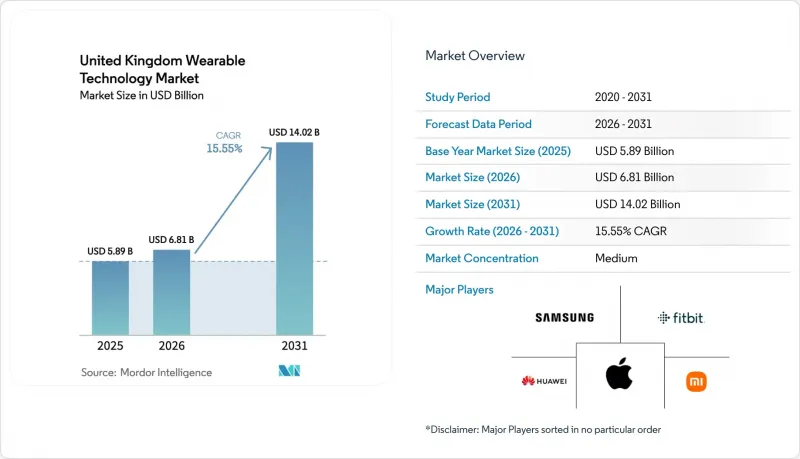
根據 Mordor Intelligence 預測,英國穿戴式科技市場預計將從 2025 年的 58.9 億美元成長到 2026 年的 68.1 億美元,然後在 2031 年達到 140.2 億美元,2026 年至 2031 年的複合年成長率為 15.55%。
本報告按裝置類型(智慧型手錶、頭戴式顯示器、腕帶等)、連接技術(藍牙、蜂窩網路等)、作業系統(watchOS、Wear OS等)、應用領域(消費者健身、健康監測等)、分銷管道(線上零售等)和地區進行細分。市場預測以美元計價。
英國穿戴式科技市場趨勢與洞察
英國國家醫療服務體系(NHS)數位健康舉措擴大
到2024年,英國將有400萬名患者使用虛擬病房,西約克郡、亨伯、北約克郡以及劍橋和彼得伯勒的綜合護理委員會正在計劃擴大服務範圍。統一的採購框架正在加速從臨床檢驗到全國部署的進程,獲得英國藥品和保健產品監管署(MHRA)批准的配備生物感測器的設備供應商將獲得優先考慮。蘇格蘭和威爾斯正在效仿英格蘭的模式,展示遠端患者監護在全國範圍內的應用,這支撐了對檢驗的穿戴式設備的穩定需求。英國國家醫療服務體系(NHS)的目標優先考慮慢性呼吸系統疾病和心血管疾病項目,這與智慧型手錶的血壓和脈搏血氧飽和度分析儀功能相契合。預測分析平台透過將原始數據轉化為可供護理團隊操作的警報,進一步增強了設備的效用。
將穿戴式裝置與英國金融科技生態系統結合,以促進健康保險獎勵的實施。
金融科技保險公司將步數、心率變異性和睡眠評分與動態保費折扣掛鉤,以此吸引年輕一代,尤其是數位原住民。開放銀行標準和英國金融行為監理局 (FCA) 的監管確保了穿戴式應用和金融儀錶板之間安全的資料交換,增強了用戶對此類產品的信心。雇主也利用同樣的數據流提供健康獎金並降低團體健康保險成本。設備製造商可以透過讓保險公司補貼硬體成本,換取長期數據進入許可權權限,從而獲得持續的收入。跨平台 API 提升了使用者體驗,增強了生態系統的留存率,並降低了解約率。
GDPR實施後,英國的資料隱私法規更加嚴格。
英國資訊專員辦公室 (ICO) 正在加強對健康數據處理者的審計,並對未獲得用戶同意的情況處以重罰,迫使小規模的品牌將有限的資金用於合規,否則就只能退出英國市場。強制性的資料保護影響評估正在減緩新功能的部署速度,並延長產品上市時間。跨境資料傳輸到美國雲端伺服器需要額外的合約保障措施,這增加了營運成本。成熟的供應商利用其完善的隱私基礎設施,甚至正在重新設計使用者流程,以便在不影響用戶參與度的前提下獲得更細緻的同意。現今,包裝上關於隱私保護效果的訊息對購買決策的影響力,即便不超過電池續航時間或防水性能,也至少與電池續航時間或防水性能同等重要。
細分市場分析
到2025年,智慧型手錶將佔據英國穿戴式科技市場56.16%的佔有率,並創造最大的收入。蘋果手錶獲準用於治療高血壓,證明了其臨床效用。耳戴式設備將以16.11%的複合年成長率引領成長,這主要得益於Meta公司的AR音訊眼鏡和蘋果公司的AirPods,後者配備了大量感測器,可以隱密地記錄腦電圖(EEG)和肌電圖(EMG)訊號。
市場需求正朝著智慧戒指和整合於紡織品中的智慧穿戴產品方向多元化發展。 Oura計劃在2025年將戒指出貨量加倍,這表明市場對簡約設計的強勁需求,這種設計能夠實現持續監測,而不會像螢幕那樣造成疲勞。在養老機構進行的智慧穿戴產品試點部署,透過可水洗紡織品記錄跌倒風險和水分攝取量數據,預示著時尚、醫療監測和符合ESG標準的材料未來將融合發展。
儘管預計到2025年藍牙將佔據65.95%的連接市場佔有率,但隨著醫院和倉庫等場所對厘米級室內定位的需求日益成長,超寬頻的普及率正以每年16.80%的速度成長。此外,用於需要不間斷遠端患者監護的高風險患者的蜂窩腕帶也開始整合5G數據機。
網狀網路韌體使智慧戒指能夠將資料傳輸到手錶,然後再傳輸到智慧型手機,從而在保持即時傳輸的同時降低功耗。 Ofcom 的頻寬分配確保了頻段共存,使設備製造商能夠設計雙頻無線電晶片組,並根據頻寬需求和電池狀態自動切換。
其他好處:
- Excel格式的市場預測(ME)表
- 3個月的分析師支持
目錄
第1章:引言
- 研究假設和市場定義
- 調查範圍
第2章:調查方法
第3章執行摘要
第4章 市場狀況
- 市場概覽
- 市場促進因素
- 英國國家醫療服務體系(NHS)數位健康舉措擴大
- 將穿戴式裝置與英國金融科技生態系統結合,以促進健康保險獎勵。
- 在消費級穿戴裝置中引入人工智慧驅動的預測性健康分析。
- 英國職場健康法規的興起
- 英國5G和物聯網基礎設施的擴展
- 在高齡化社會中,對遠端患者監護的需求日益成長。
- 市場限制因素
- GDPR實施後,英國的資料隱私法規更加嚴格。
- 穿戴式裝置增值稅分類的風險
- 電池廢棄物管理條例增加了合規成本。
- 消費者對生物感測器的長期準確性持懷疑態度
- 產業生態系分析
- 監理情勢
- 宏觀經濟因素的影響
- 技術展望
- 波特五力分析
第5章 市場規模與成長預測
- 依設備類型
- 智慧型手錶
- 頭戴式顯示器
- 腕帶
- 耳掛式穿戴裝置
- 智慧服裝
- 智慧戒指
- 其他設備類型
- 透過連接技術
- Bluetooth
- Wi-Fi
- 細胞
- NFC
- 超寬頻
- 5G
- 其他連接技術
- 透過作業系統
- watchOS
- Wear OS
- 專有作業系統
- RTOS
- Linux
- 其他作業系統
- 透過使用
- 消費者健身
- 健康監測
- 遠端患者監護
- 企業健康
- 運動表現
- 醫學診斷
- 其他用途
- 透過分銷管道
- 線上零售
- 離線家用電器
- 健康食品專賣店
- 藥局
- 百貨公司
- 其他分銷管道
- 按地區
- 英格蘭
- 蘇格蘭
- 威爾斯
- 北愛爾蘭
第6章 競爭情勢
- 市場集中度
- 策略趨勢
- 市佔率分析
- 公司簡介
- Apple Inc.
- Samsung Electronics Co. Ltd.
- Fitbit LLC
- Huawei Technologies Co. Ltd.
- Xiaomi Inc.
- Garmin Ltd.
- Fossil Group Inc.
- OnePlus Technology(Shenzhen)Co. Ltd.
- Sekonda Ltd.
- Honor Device Co.
- Huami Corporation(Amazfit)Ltd.
- Withings SA
- Polar Electro Oy
- Suunto Oy
- Oura Health Oy
第7章 市場機會與未來展望
According to Mordor Intelligence, the UK wearable technology market size is expected to grow from USD 5.89 billion in 2025 to USD 6.81 billion in 2026 and is forecast to reach USD 14.02 billion by 2031 at 15.55% CAGR over 2026-2031.
This report is Segmented by Device Type (Smart Watches, Head-Mounted Displays, Wristbands, and More), Connectivity Technology (Bluetooth, Cellular, and More), Operating System (watchOS, Wear OS, and More), Application (Consumer Fitness, Healthcare Monitoring, and More), Distribution Channel (Online Retail, and More), and Geography. The Market Forecasts are Provided in Terms of Value (USD).
United Kingdom Wearable Technology Market Trends and Insights
Proliferation of NHS Digital Health Initiatives
Virtual wards supported 4 million UK patients in 2024 and integrated care boards across West Yorkshire, Humber and North Yorkshire, and Cambridge and Peterborough plan broader coverage. Unified procurement frameworks shorten the path from clinical validation to national rollout, so device vendors with MHRA-cleared biosensors receive preferential consideration. Scotland and Wales mirror England's model, evidencing nation-wide adoption of remote patient monitoring that underpins steady demand for validated wearables. NHS targets prioritize chronic respiratory and cardiovascular programs, aligning with smart-watch blood-pressure and pulse-ox features. Predictive analytics platforms further amplify device utility by translating raw data into actionable care-team alerts.
Integration of Wearables with UK Fintech Ecosystem for Health-Insurance Incentives
Fintech insurers link step counts, heart-rate variability, and sleep scores to dynamic premium discounts, spurring usage across younger, digitally native groups. Open banking standards and FCA oversight ensure secure data exchange between wearable apps and financial dashboards, improving adoption confidence. Employers deploy the same data flows to trigger wellness bonuses that lower group health-cover costs. Device makers benefit from recurring revenue when insurers subsidize hardware in exchange for long-term data access. Cross-platform APIs reduce user friction, reinforcing ecosystem stickiness and keeping churn low.
Stricter UK Data Privacy Enforcement Post-GDPR
The Information Commissioner's Office intensifies audits of health-data processors and levies heavy fines for consent mis-steps, so smaller brands divert scarce funds into compliance or retreat from the UK. Mandatory data-protection-impact assessments slow new-feature rollouts, stretching time-to-market. Cross-border transfers to U.S. cloud servers trigger additional contractual safeguards that elevate operating expense. Established vendors capitalize on their mature privacy infrastructures, yet even they redesign user flows to gain granular consent without hurting engagement. Clear privacy victory messages on packaging now influence purchasing almost as strongly as battery life or waterproof ratings.
Other drivers and restraints analyzed in the detailed report include:
- Adoption of AI-Powered Predictive Health Analytics in Consumer Wearables
- Rise of Workplace Wellness Regulations in the UK
- Consumer Skepticism on Long-Term Accuracy of Biosensors
For complete list of drivers and restraints, kindly check the Table Of Contents.
Segment Analysis
Smart watches accounted for 56.16% of UK wearable technology market share in 2025 and generated the highest revenue as Apple Watch's hypertension clearance validated clinical utility. Ear-wearables lead growth at 16.11% CAGR, propelled by Meta's AR audio glasses and Apple's sensor-rich AirPods that discreetly record EEG and EMG signals.
Demand diversifies into smart rings and textile-embedded smart clothing. Oura doubled 2025 ring shipments, demonstrating appetite for minimalist form factors that deliver continuous monitoring without screen fatigue. Smart clothing pilots in elder-care homes record fall risk and hydration data through washable fibers, pointing to future convergence between fashion, medical monitoring, and ESG-compliant materials.
Bluetooth covered 65.95% of connections in 2025, but Ultra-Wideband adoption is rising 16.80% annually as hospitals and warehouses seek centimeter-level indoor location. 5G modems appear in cellular wristbands targeted at high-risk patients who require uninterrupted remote patient monitoring.
Mesh networking firmware lets smart rings relay data to a watch, then to a phone, cutting power draw while maintaining real-time transmission. Ofcom spectrum allocations guarantee coexistence, and device makers design dual-radio chipsets that switch automatically based on bandwidth needs and battery status.
Complete Report Scope:
- By Device Type
- Smart Watches
- Head-mounted Displays
- Wristbands
- Ear-wearables
- Smart Clothing
- Smart Rings
- Other Device Types
- By Connectivity Technology
- Bluetooth
- Wi-Fi
- Cellular
- NFC
- Ultra-Wideband
- 5G
- Other Connectivity Technologies
- By Operating System
- watchOS
- Wear OS
- Proprietary OS
- RTOS
- Linux
- Other Operating Systems
- By Application
- Consumer Fitness
- Healthcare Monitoring
- Remote Patient Monitoring
- Corporate Wellness
- Sports Performance
- Medical Diagnostics
- Other Applications
- By Distribution Channel
- Online Retail
- Offline Consumer Electronics
- Specialist Health Stores
- Pharmacies
- Department Stores
- Other Distribution Channels
- By Geography
- England
- Scotland
- Wales
- Northern Ireland
List of Companies Covered in this Report:
- Apple Inc.
- Samsung Electronics Co. Ltd.
- Fitbit LLC
- Huawei Technologies Co. Ltd.
- Xiaomi Inc.
- Garmin Ltd.
- Fossil Group Inc.
- OnePlus Technology (Shenzhen) Co. Ltd.
- Sekonda Ltd.
- Honor Device Co.
- Huami Corporation (Amazfit) Ltd.
- Withings SA
- Polar Electro Oy
- Suunto Oy
- Oura Health Oy
Additional Benefits:
- The market estimate (ME) sheet in Excel format
- 3 months of analyst support
TABLE OF CONTENTS
1 INTRODUCTION
- 1.1 Study Assumptions and Market Definition
- 1.2 Scope of the Study
2 RESEARCH METHODOLOGY
3 EXECUTIVE SUMMARY
4 MARKET LANDSCAPE
- 4.1 Market Overview
- 4.2 Market Drivers
- 4.2.1 Proliferation of NHS Digital Health Initiatives
- 4.2.2 Integration of Wearables with UK Fintech Ecosystem for Health Insurance Incentives
- 4.2.3 Adoption of AI-Powered Predictive Health Analytics in Consumer Wearables
- 4.2.4 Rise of Workplace Wellness Regulations in the UK
- 4.2.5 Expansion of 5G and IoT Infrastructure Across the UK
- 4.2.6 Growing Demand for Remote Patient Monitoring in Ageing Population
- 4.3 Market Restraints
- 4.3.1 Stricter UK Data Privacy Enforcement Post-GDPR
- 4.3.2 Wearable Device VAT Reclassification Risk
- 4.3.3 Battery Waste Regulations Increasing Compliance Cost
- 4.3.4 Consumer Skepticism on Long-Term Accuracy of Biosensors
- 4.4 Industry Ecosystem Analysis
- 4.5 Regulatory Landscape
- 4.6 Impact of Macroeconomic Factors
- 4.7 Technological Outlook
- 4.8 Porter's Five Forces Analysis
- 4.8.1 Bargaining Power of Suppliers
- 4.8.2 Bargaining Power of Consumers
- 4.8.3 Threat of New Entrants
- 4.8.4 Threat of Substitutes
- 4.8.5 Intensity of Competitive Rivalry
5 MARKET SIZE AND GROWTH FORECASTS (VALUE)
- 5.1 By Device Type
- 5.1.1 Smart Watches
- 5.1.2 Head-mounted Displays
- 5.1.3 Wristbands
- 5.1.4 Ear-wearables
- 5.1.5 Smart Clothing
- 5.1.6 Smart Rings
- 5.1.7 Other Device Types
- 5.2 By Connectivity Technology
- 5.2.1 Bluetooth
- 5.2.2 Wi-Fi
- 5.2.3 Cellular
- 5.2.4 NFC
- 5.2.5 Ultra-Wideband
- 5.2.6 5G
- 5.2.7 Other Connectivity Technologies
- 5.3 By Operating System
- 5.3.1 watchOS
- 5.3.2 Wear OS
- 5.3.3 Proprietary OS
- 5.3.4 RTOS
- 5.3.5 Linux
- 5.3.6 Other Operating Systems
- 5.4 By Application
- 5.4.1 Consumer Fitness
- 5.4.2 Healthcare Monitoring
- 5.4.3 Remote Patient Monitoring
- 5.4.4 Corporate Wellness
- 5.4.5 Sports Performance
- 5.4.6 Medical Diagnostics
- 5.4.7 Other Applications
- 5.5 By Distribution Channel
- 5.5.1 Online Retail
- 5.5.2 Offline Consumer Electronics
- 5.5.3 Specialist Health Stores
- 5.5.4 Pharmacies
- 5.5.5 Department Stores
- 5.5.6 Other Distribution Channels
- 5.6 By Geography
- 5.6.1 England
- 5.6.2 Scotland
- 5.6.3 Wales
- 5.6.4 Northern Ireland
6 COMPETITIVE LANDSCAPE
- 6.1 Market Concentration
- 6.2 Strategic Moves
- 6.3 Market Share Analysis
- 6.4 Company Profiles (includes Global level Overview, Market level overview, Core Segments, Financials as available, Strategic Information, Market Rank/Share for key companies, Products and Services, and Recent Developments)
- 6.4.1 Apple Inc.
- 6.4.2 Samsung Electronics Co. Ltd.
- 6.4.3 Fitbit LLC
- 6.4.4 Huawei Technologies Co. Ltd.
- 6.4.5 Xiaomi Inc.
- 6.4.6 Garmin Ltd.
- 6.4.7 Fossil Group Inc.
- 6.4.8 OnePlus Technology (Shenzhen) Co. Ltd.
- 6.4.9 Sekonda Ltd.
- 6.4.10 Honor Device Co.
- 6.4.11 Huami Corporation (Amazfit) Ltd.
- 6.4.12 Withings SA
- 6.4.13 Polar Electro Oy
- 6.4.14 Suunto Oy
- 6.4.15 Oura Health Oy
7 MARKET OPPORTUNITIES AND FUTURE OUTLOOK
- 7.1 White-space and Unmet-need Assessment

 穿戴式科技:市場佔有率分析、產業趨勢與統計、成長預測(2026-2031)
 穿戴式科技市場:2026-2032年全球市場預測(按設備類型、組件、操作方式、應用、最終用戶和分銷管道分類)
 全球穿戴式科技市場:依科技、連結方式、產業、分銷通路、作業系統、組件、產品、營運模式、類型、應用和地區分類-預測至2032年
 穿戴式科技市場:依產品、產品類型、應用、技術、國家及地區分類-全球產業分析、市場規模、市場佔有率及2026年至2033年預測
 穿戴式科技市場-全球產業規模、佔有率、趨勢、機會和預測:按產品、技術、組件、應用、地區和競爭格局分類,2021-2031年
 全球穿戴式科技市場課堂穿戴科技市場:依產品類型、應用、最終用戶和分銷管道分類-2026-2032年全球市場預測
 2026年全球穿戴式科技市場報告
 全球穿戴式科技市場:市場規模、佔有率和趨勢分析(按產品、應用和地區分類),細分市場預測(2026-2033 年)全球穿戴式科技市場規模、佔有率、趨勢和成長分析報告(2026-2034年)